No. ABOLTINS2024-002
Riga Alksnāja Street rib bullroarer
Latvia · Riga old town · Europe · Baltic
Play / practical
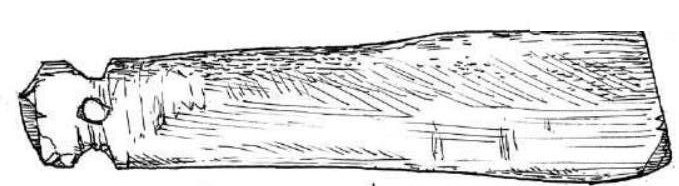
Beneath Alksnāja Street, archaeologists found up to five metres of Old Riga's undisturbed household layers: timber buildings, ovens stacked one above another, and the debris of fishing and boneworking. From this thirteenth- to seventeenth-century city life came a fourteen-centimetre bullroarer cut from a cattle rib. Its broad blade narrows sharply into a waist beneath the suspension hole—the same rib-bone design recognized at Cēsis Castle and among medieval snorrebot farther west.
Līdzīgs priekšmets, kas līdz šim nav ticis identificēts, iegūts arī Rīgā, izrakumos Alksnāja ielā.
A similar object, which until now had not been identified, was also recovered in Riga, in the excavations on Alksnāja Street.
Viesturs Āboltiņš, Cēsu pils raksti V (2024), p. 52
Particulars
- Object
- Bullroarer cut from a cattle rib (VI 258:69), 14 cm long, 2.3–3.4 cm wide and 0.7 cm thick, with a waist cut into the narrower end below a round suspension hole. Excavated from deposits of thirteenth- to seventeenth-century Riga.
- Function
- Entertainment object: whirled on a cord at one end to produce a low, roaring or clattering sound.