No. TOLNAI1920-001
Arad Maros zúgattyú bullroarer
Romania · Arad · Maros (Mures) embankment · Eastern Europe
Play / practical
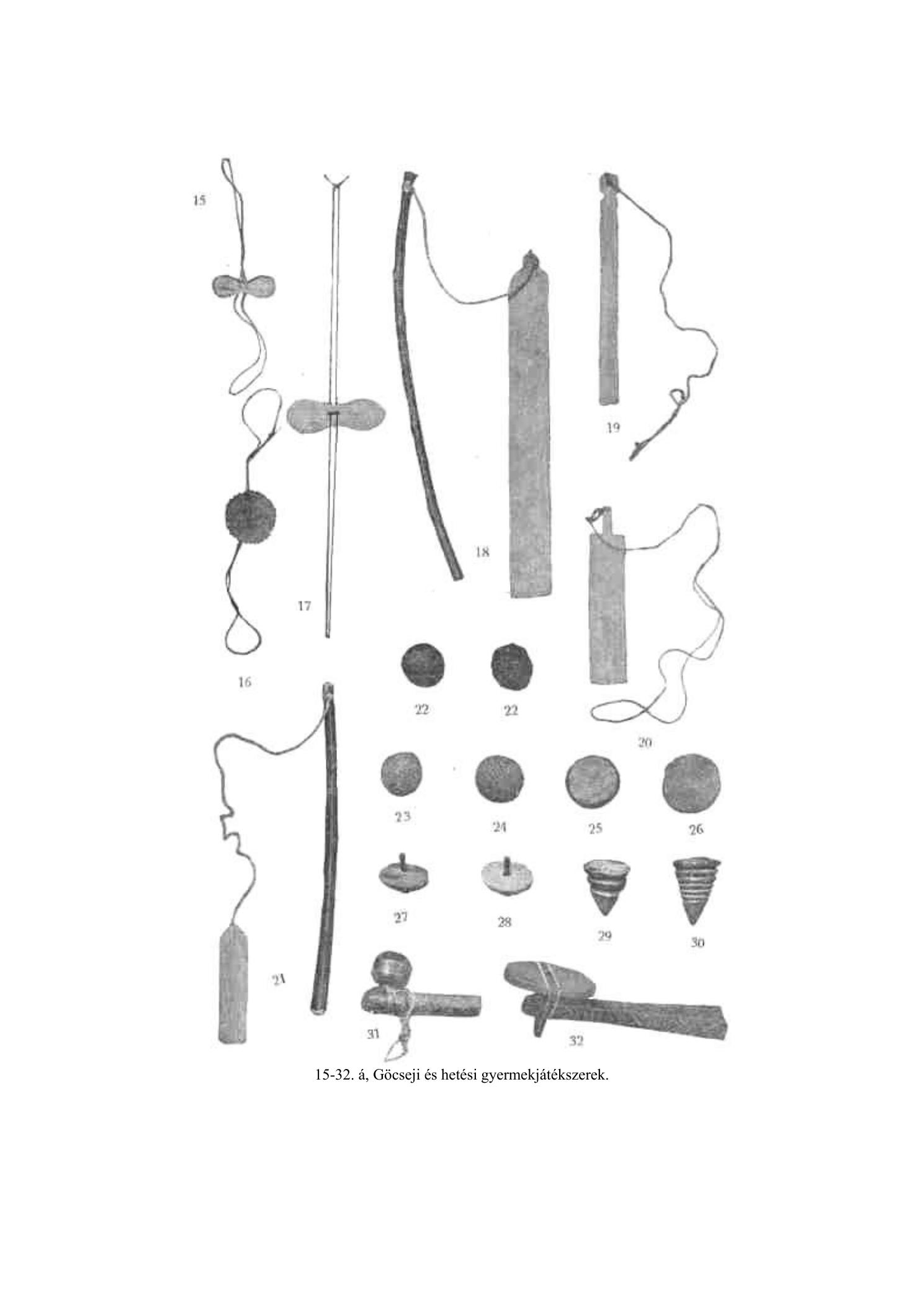
zúgattyú
zúgattyú = Hungarian whirring-board / bullroarer term in Tolnai’s article.
Remembering Arad in the early 1880s, Tolnai recalled children taking the zúgattyú out to the Maros embankment. Its thin board, tied to a half- to one-metre cord and sometimes worked from a stick handle, was spun in a broad circle.
A múlt század nyolcvanas éveinek elején Aradon tízen-tizenöten is kiállottunk a Maros töltésére és fáradhatatlanul „hajtottuk” a zúgattyut; ha jobb karunk belefáradt, a ballal, és fölváltva.
Early in the 1880s, in Arad, as many as ten or fifteen of us would stand out on the Maros embankment and tirelessly 'drive' the zúgattyú; when our right arms tired, with the left, and so by turns.
Tolnai Vilmos, 'Zúgattyú,' Ethnographia 31 (1920), p. 114
Particulars
- Object
- Thin board with a terminal hole or narrowed neck, on a half- to one-metre cord, sometimes with a stick handle, spun in a large circle.
- Function
- Children's toy
Source
Tolnai Vilmos, 'Zúgattyú,' Ethnographia 31 (1920), p. 114