No. LUND2020-003
Scania Sweden bat-attracting bullroarer magic
Sweden · Scania · Skåne · Northern Europe
Sacred / spirit
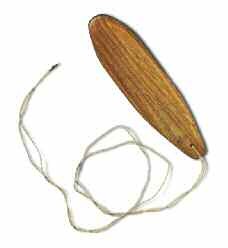
Source term: traditional wooden bullroarer
In Scania, in southern Sweden, young men were still using bullroarers to attract bats as late as the 1940s. The captured animals were killed, dried, and pulverised, then used to brew an aphrodisiac potion. The music archaeologist Cajsa S. Lund, who records the practice, illustrates it with a traditional wooden bullroarer from Scania, the kind swung in wide circles to produce a low, carrying buzz.
In Scania, Sweden, as late as in the 1940s, young men attracted bats with bullroarers. The animals were killed, dried, pulverised and then used for brewing an aphrodisiac potion.
Cajsa S. Lund, "The Bullroarer. A Global and Timeless Sound Instrument," in Music and Sounds in Ancient Europe (EMAP), p. 31
Particulars
- Object
- Lund reports that in Scania, Sweden, as late as the 1940s young men attracted bats with bullroarers for an aphrodisiac-brewing practice.
- Function
- Folk-magic bullroarer use connected with bat capture and aphrodisiac preparation.
Source
Cajsa S. Lund, “The Bullroarer. A Global and Timeless Sound Instrument,” in Music and Sounds in Ancient Europe (EMAP), p. 31, fig. 1