No. HAD1898-005
Ancient Greek Dionysiac rhombos
Greece · Europe · Mediterranean
Restricted
rhombos
Source term: rhombos / konos
rhombos / konos (Greek): in the Dionysiac mysteries, the wood-on-a-cord whirled to make a roaring noise — a bullroarer; distinct from the dictionary sense "spinning-top" or "magic wheel."
Etymology. Greek name for a whirled object — spinning-top, magic wheel, or bull-roarer — here the whirled sounding instrument of the Dionysiac mysteries.
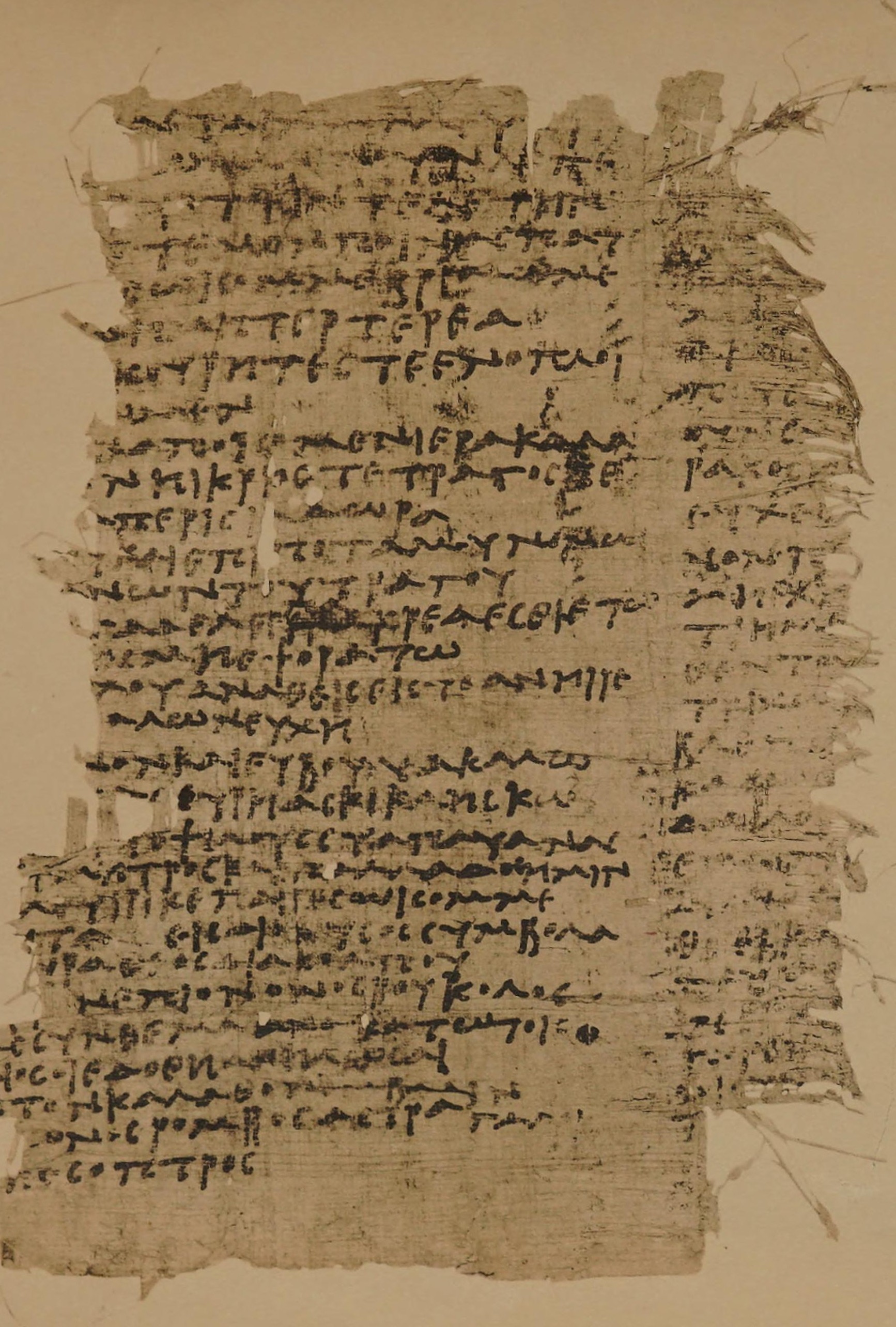
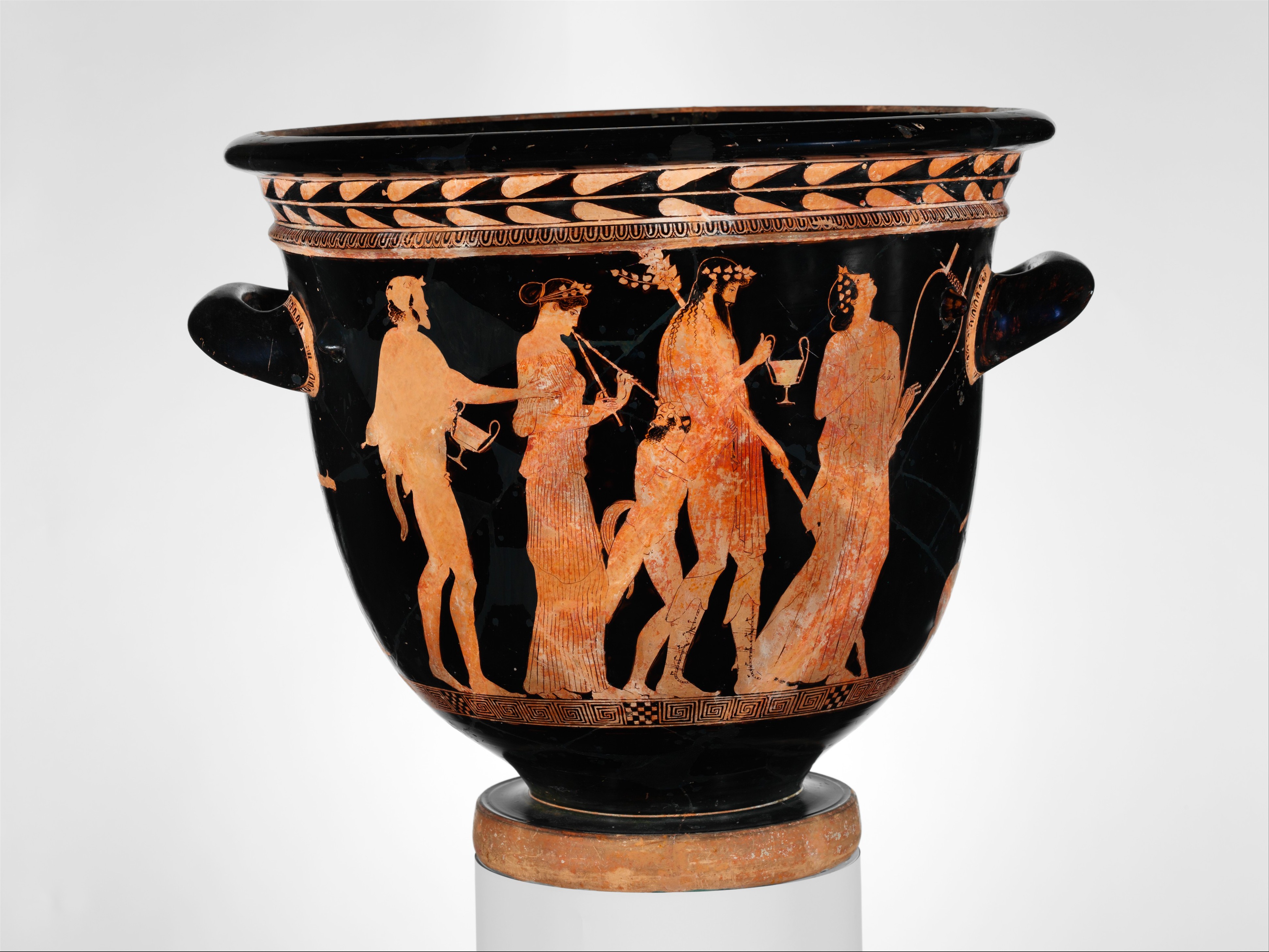
In a lost Orphic poem quoted by Clement of Alexandria, the Titans lure the child Dionysus to his death with a handful of toys: "Cone, and spinning-top, and limb-moving rattles, / And fair golden apples from the clear-toned Hesperides." The ancient scholiast on Clement fixes one of these, the konos, beyond doubt: a scrap of wood tied to a string and whirled in the mysteries until it roared — a bullroarer, named among the Dionysiac mystery toys. The murder left its mark on the rite itself. Initiates into these mysteries were daubed with clay, and the story told to explain it was that the Titans had painted themselves with clay or gypsum so they would not be known when they fell on the child and tore him to pieces; Demosthenes jeers at Aeschines for helping his mother bedaub her initiates with clay and bran, and Nonnus shows the practice still alive in the late Bacchic mysteries. Andrew Lang, reading the scholiast's gloss, called it "a brief but complete description" of the Australian turndun, and set the whirled wood of the torn god beside the sacred bullroarers of the bush. Jane Ellen Harrison heard the same instrument sounding offstage in tragedy: reading Aeschylus's lost Edonoi, she found its chorus describing "bull-voices" that "roar thereto from somewhere out of the unseen, fearful semblances, and from a drum an image as it were of thunder underground is borne on the air heavy with dread" — bullroarers heard but not seen, the same device turned to theatre. A separate Ptolemaic-era papyrus listing the toys of the child Dionysus for a ritual reenactment names the rhombos outright alongside the cone, the knuckle-bones and the mirror, tokens to be dropped into a basket — the same handful Clement preserves, set down on papyrus centuries before he wrote it out.
The κωνος is a little piece of wood, to which a string is fastened, and in the mysteries it is whirled round to make a roaring noise.
Ancient scholiast on Clement, quoted in Lang 1884, "The Bull-Roarer," Custom and Myth
Particulars
- Function
- Whirled on its cord to roar at Dionysiac initiation rites.
Source
Clement of Alexandria, Protrepticus II.17-18, with the scholiast on Clement (Lobeck, Aglaophamus, 1829, i.700); Demosthenes, De Corona 259; Lang, Custom and Myth (1884), 'The Bull-Roarer'; Harrison, Annual of the British School at Athens 15 (1908-09), pp. 321-322, and Themis (1912), pp. 61-62; P.Gurob 1 col. i 28-30 (Hordern, ZPE 129, 2000)