No. MUS2026-184
Duxford Cambridgeshire serrated bullroarer
United Kingdom · Cambridgeshire · Duxford · Europe
Play / practical
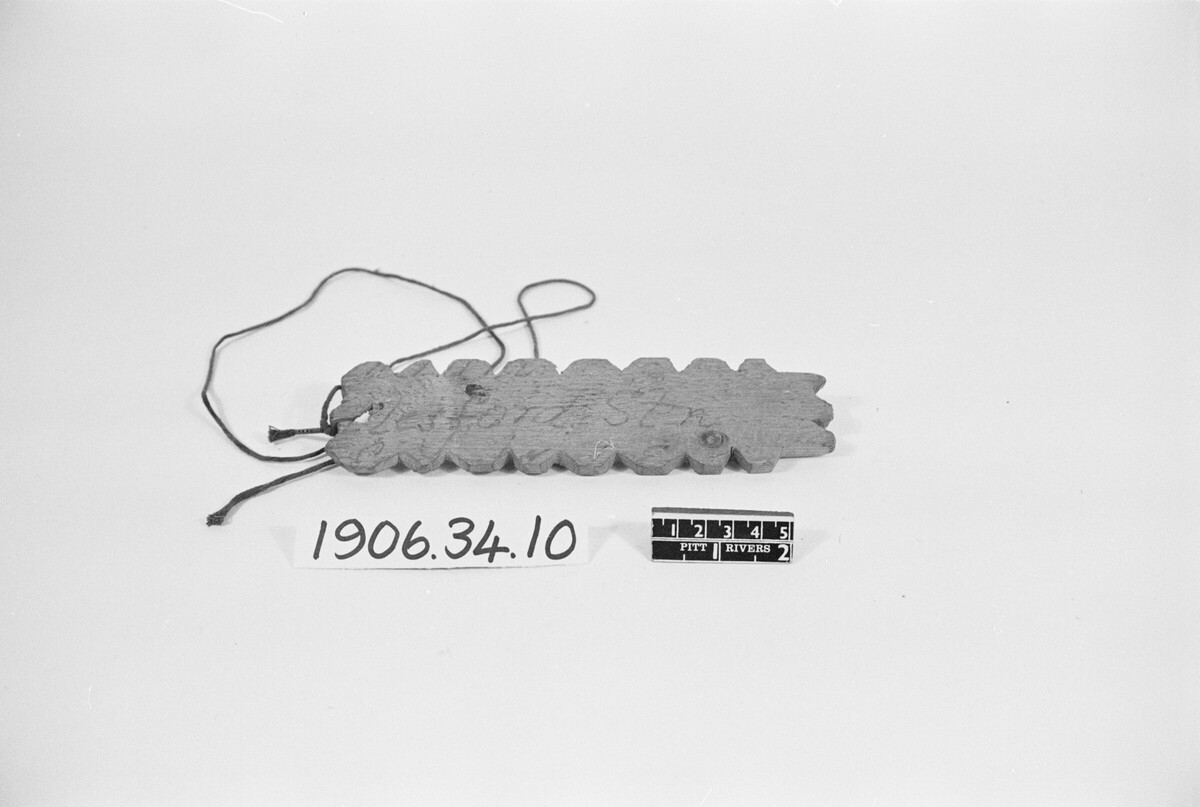
Source term: Bullroarer
Someone in Duxford cut a row of blunt teeth down both edges of this small blade, scorched it, and knotted a cord through the hole at one end. In 1906 the finished roarer went to the Pitt Rivers Museum, presented by Charles Gabriel Seligman, the anthropologist whose expeditions had taken him to the Torres Strait and New Guinea, where the bullroarer was a guarded men's secret. The one he handed over from an English village needed no guarding: the museum shelves it among children's toys, cord still in place.
"bull-roarer," Duxford, near Cambridge. Presented by Dr. Seligmann.
Pitt Rivers Museum Annual Report, 1906
Particulars
- Object
- Carved wooden blade, 203 x 54 mm, serrated along both edges and burnt, with one terminal perforation retaining its single cord.
- Function
- Boys' toy — Haddon's Cambridgeshire informants knew the instrument as the 'bull'; the Pitt Rivers files this Duxford blade under Toy and Game.
Source
Pitt Rivers Museum 1906.34.10; Pitt Rivers Museum Annual Report, 1906