No. POLIKARPOVICH1941-001Europe
Eliseevichi engraved ivory plaques
Russia · Eliseevichi, Sudost' valley, Bryansk Oblast · Eastern Europe
Function not recorded Candidate only
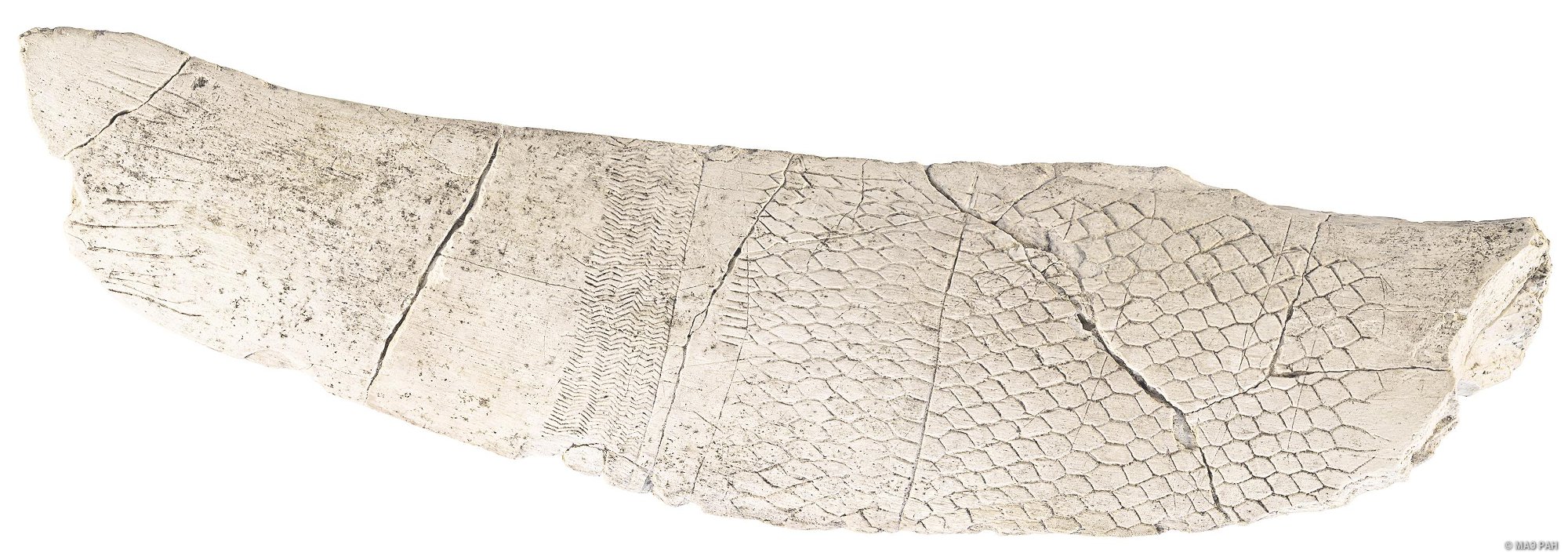
Source term: пластины из бивня («чуринги»)
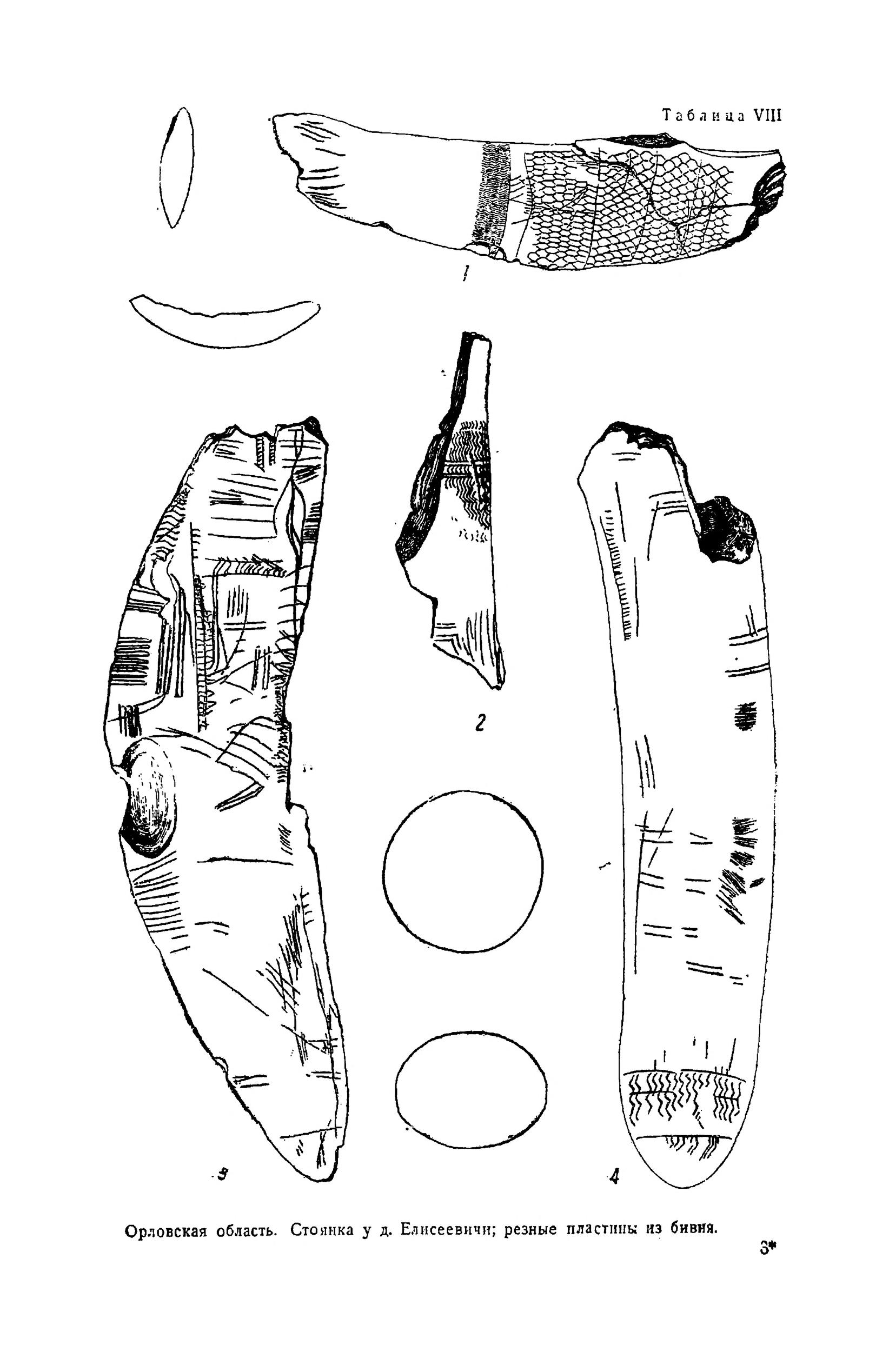
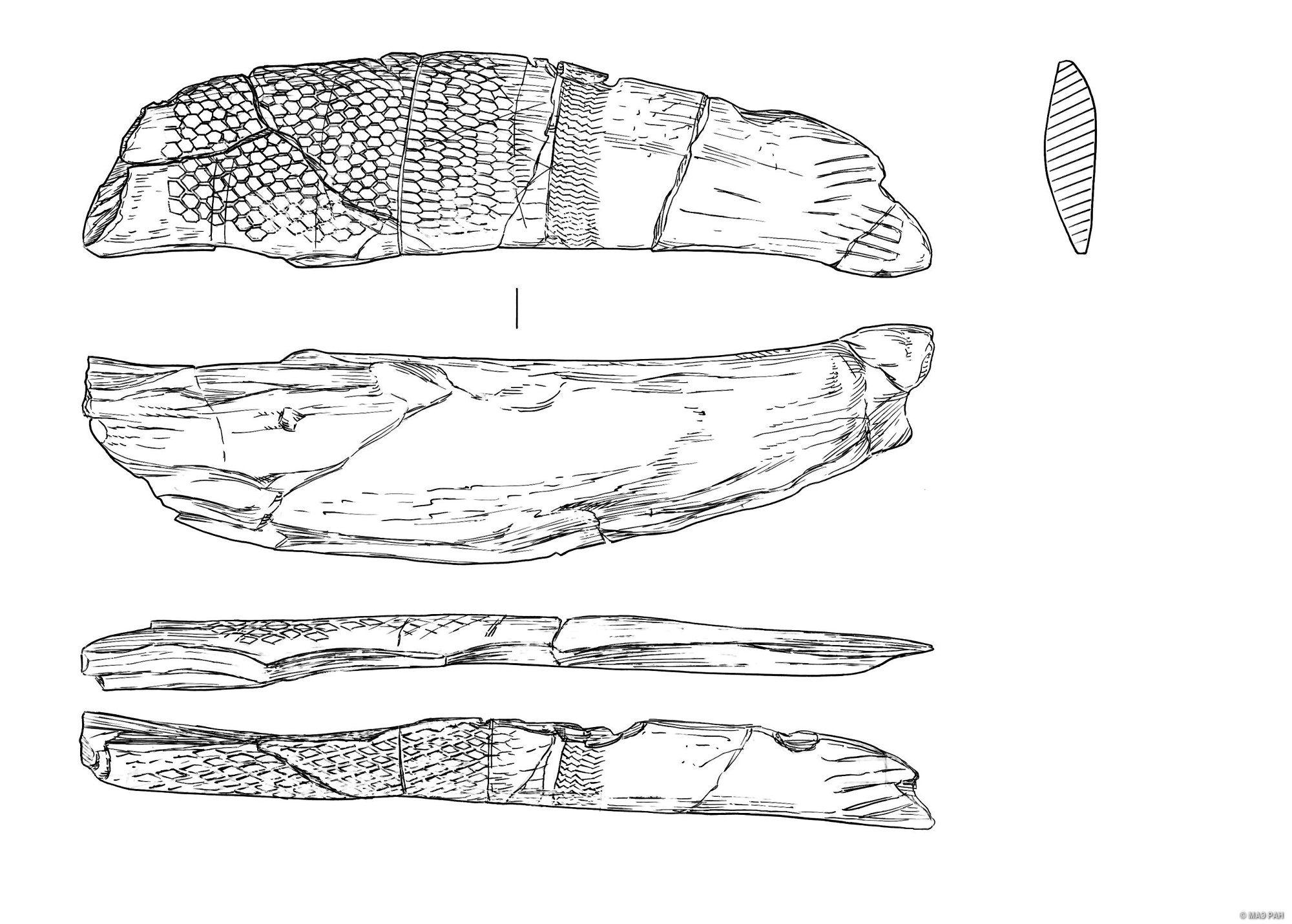
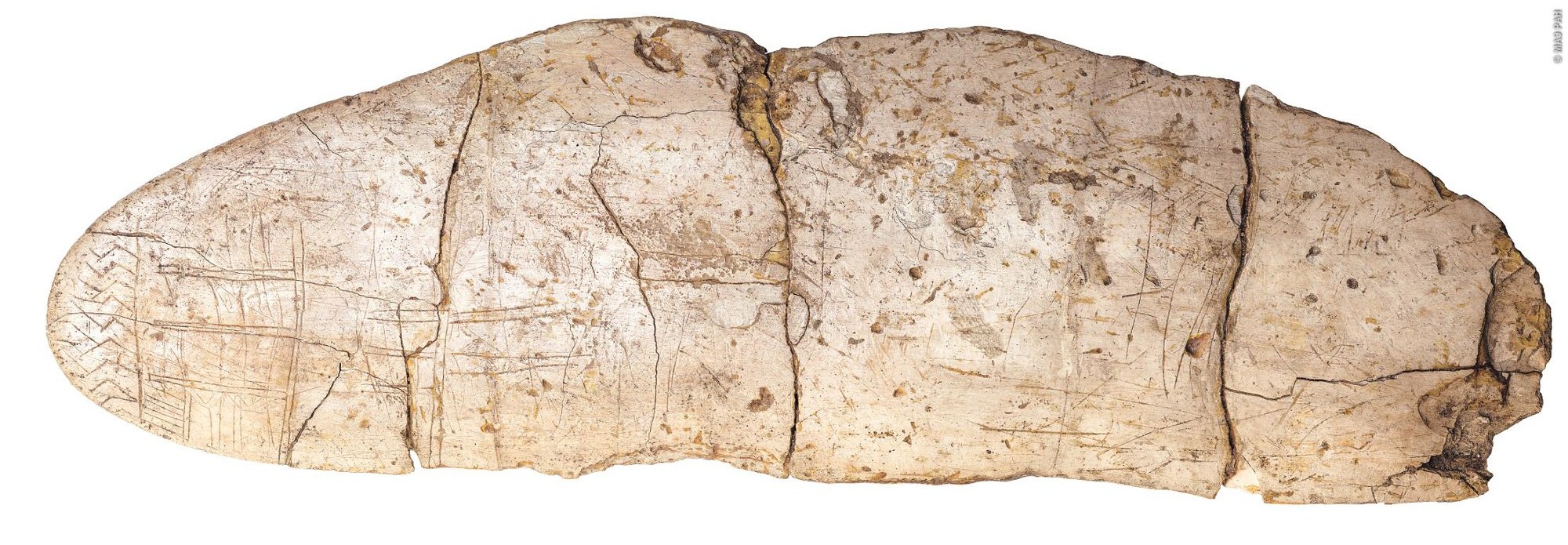
Late in the last Ice Age, on a loess promontory above the Sudost', mammoth hunters piled a heap of bone a metre and a half long and ringed it with mammoth skulls, most of them set tusk sockets down. In the heap lay more than thirty tusks of young mammoths, mostly just the tips, and with them more than ten oval plaques of ivory, 15 to 25 cm long, engraved with geometric patterns: three roof-shaped figures on one, a close net like fish scales on another. At the very bottom was an ivory woman without head or arms. Konstantin Polikarpovich, who dug the heap in 1935, compared the plaques to the churinga of Aboriginal Australia, and Johannes Maringer later likened them to the bullroarer of La Roche. Two metres from the skulls lay the skull of one of the earliest known dogs.
Описанные пластины сопоставляются с «чурингами» австралийцев.
The plaques described are comparable with the "churingas" of the Australians.
K. M. Polikarpovich, Arkheologicheskie issledovaniya v RSFSR 1934-1936 (1941), p. 36
3 more plates
Particulars
- Object
- More than ten oval plaques of mammoth ivory, about 15-25 cm long, mostly engraved with geometric designs; one carries three roof-shaped figures, another a close lattice like fish scales.
Discussed in one essay
 The Original Spin: Where the Bullroarer Began
Source
K. M. Polikarpovich, 'Der. Eliseevichi i dr.', in Arkheologicheskie issledovaniya v RSFSR 1934-1936 gg. (Moscow-Leningrad: Izd. AN SSSR, 1941), pp. 32-37, pl. VIII; Johannes Maringer, The Gods of Prehistoric Man (London: Weidenfeld and Nicolson, 1960), p. 63
Nearby in the atlas
 Novgorod tanged whirring laths13th–14th centuries AD · Russia · Function not recorded
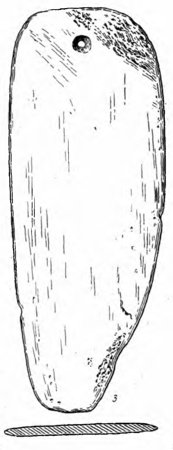 Oleniy Ostrov slate bladesc. 6300–6050 BC · Russia · Function not recorded
 Devil's Gate nephrite blades, two cord-wornc. 5750–4750 BC · Russia · Function not recorded
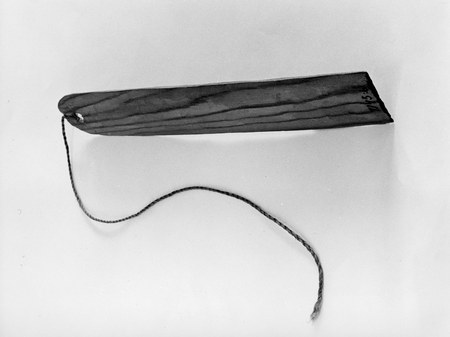 Kildin Sámi navv’t beast-howlerRussia · Murmansk Oblast / Kola Peninsula · Function not recorded
 Kondon nephrite blesny / Lower Amur slat-lurec. 3350–3050 BC · Russia · Function not recorded
 Novopokrovka nephrite slat-luresc. 5000–3000 BC · Russia · Function not recorded