No. MUS2026-119
English folk bullroarer, Suffolk (Lovett collection, NMAH)
United Kingdom · Suffolk, England · Europe · British Isles
Play / practical
woozer
Source term: bull-roarer
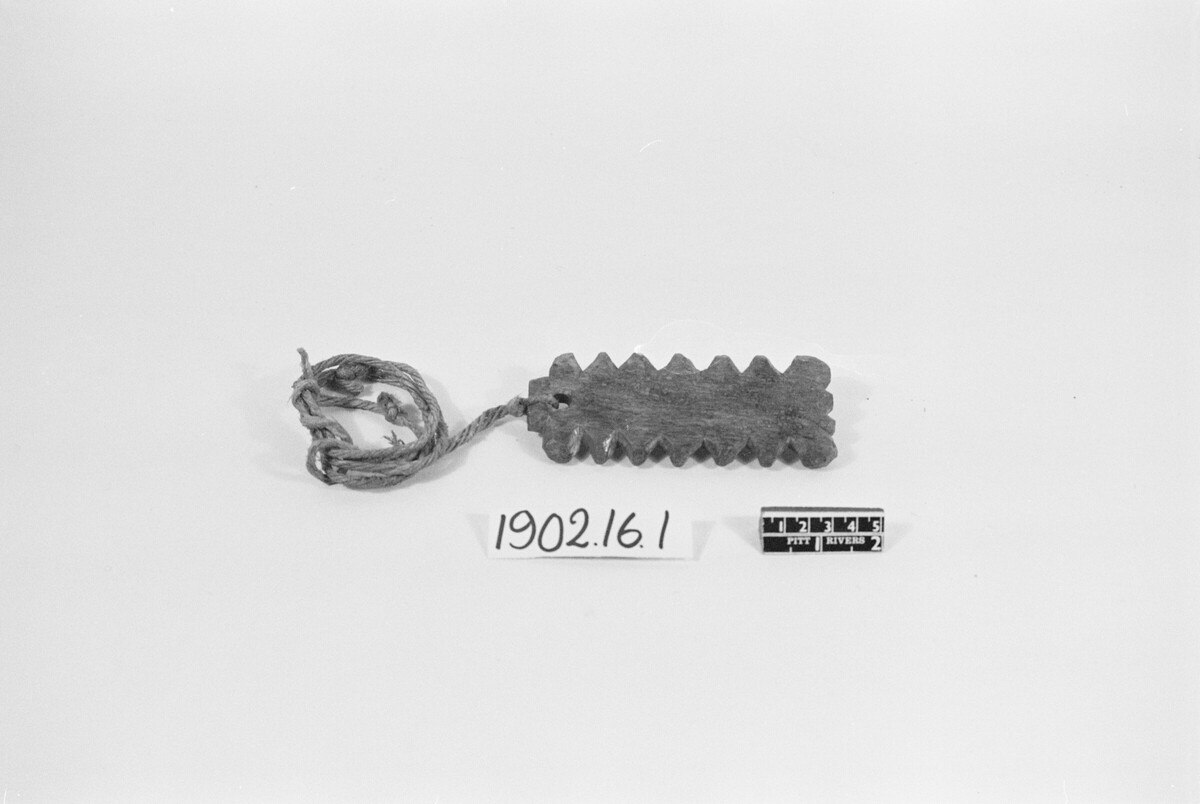
woozer = Suffolk name for the bullroarer, recorded in 1902 with a deeply side-notched blade.
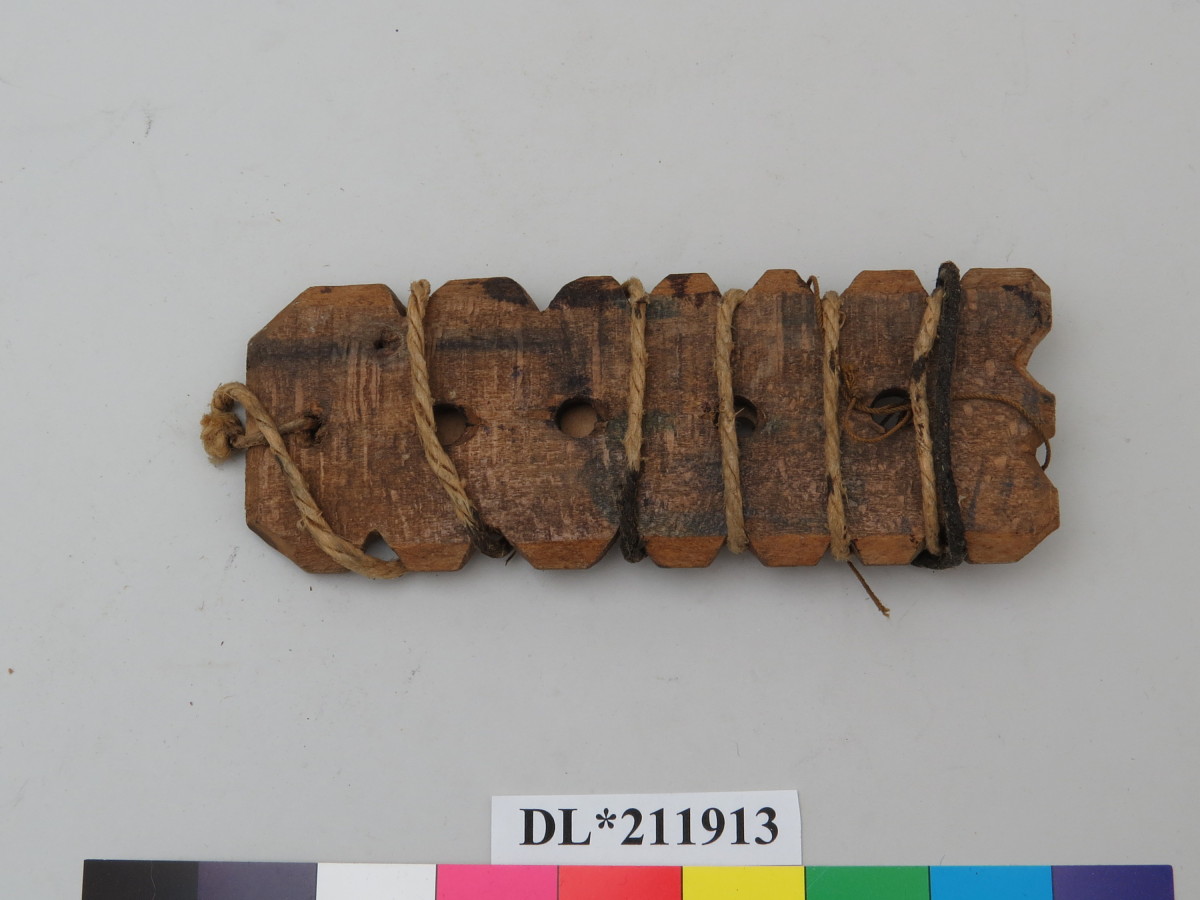
While Victorian anthropologists compared the secret bullroarers of Australia and New Guinea, the same instrument still rattled through English childhood. Edward Lovett's Suffolk specimen is a six-and-a-half-inch wooden blade with its rope wound neatly around it, ready to be carried in a pocket and unwound for play.
Particulars
- Object
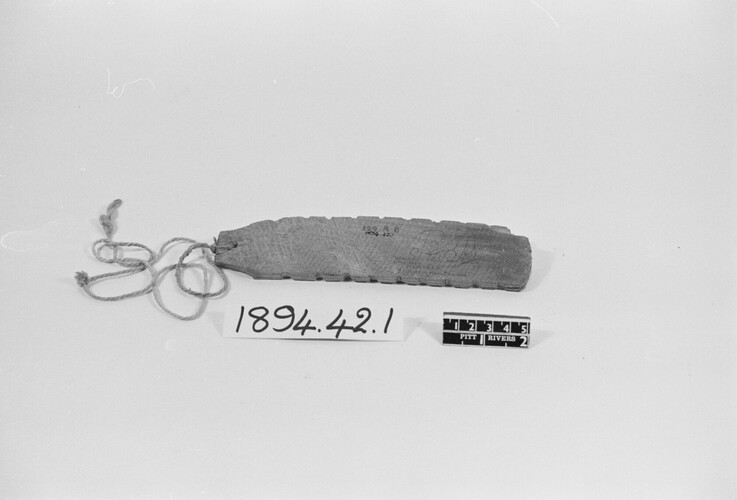
- Three wooden Suffolk bullroarers: Edward Lovett's blade with its rope coiled round it; a 203 mm slat from Bungay, roughly cut from a wooden box and notched all along; and the woozer, 139 x 61 mm, with deeply indented sides.
- Function
- English children’s folk toy.
Source
Smithsonian National Museum of American History, DL.211913 (Suffolk, England; Edward Lovett collection); Pitt Rivers Museum, Oxford, 1894.42.1 and 1902.16.1