No. LUND1998-001
Tuv Saltstraumen shale bullroarer
Norway · Nordland · Saltstraumen · Northern Europe
Function not recorded Candidate only
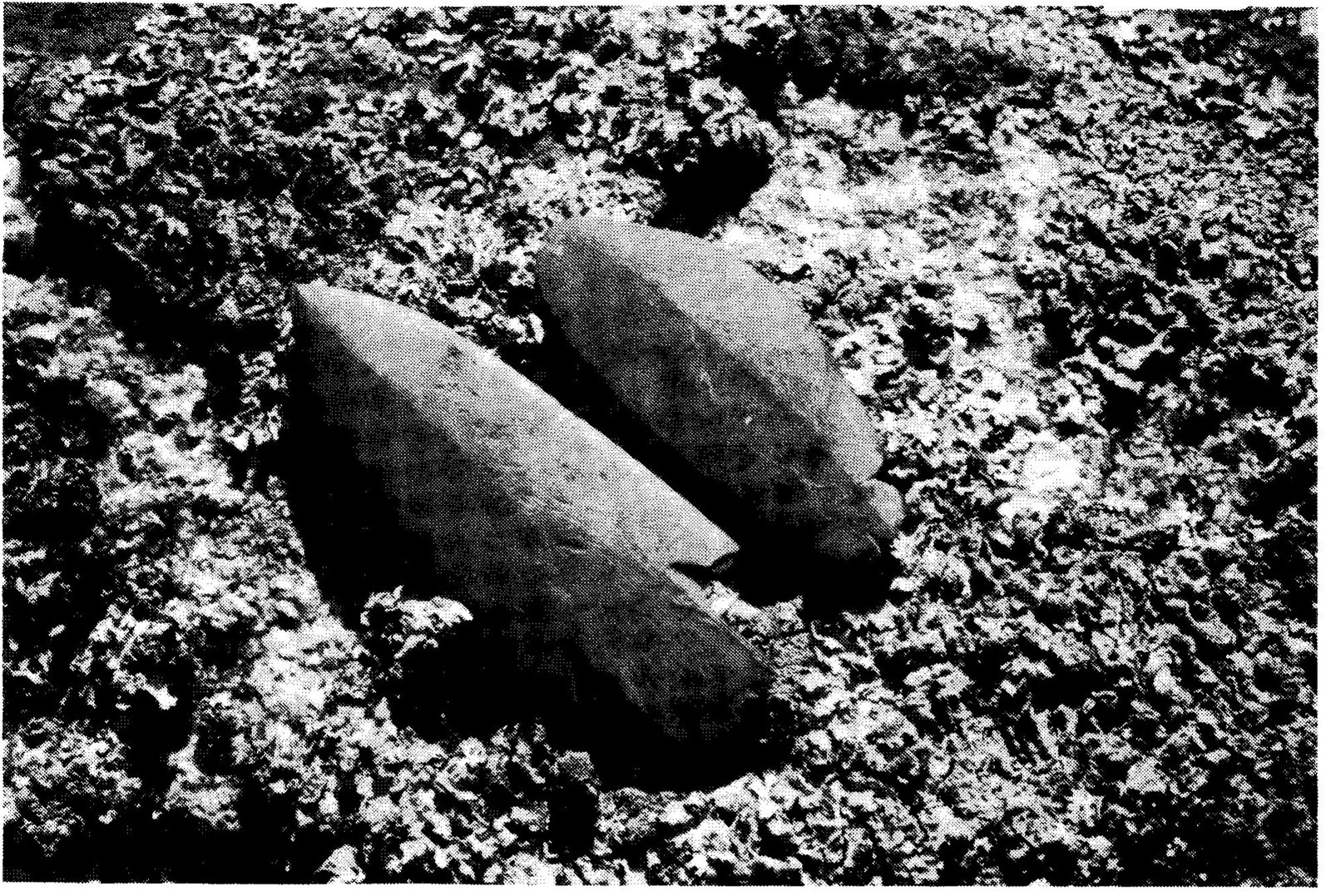
Source term: bullroarer (?) / shale propeller blade
In the spring of 1991, excavators at Tuv on the Saltstraumen tidal strait in Bodø municipality, northern Norway, lifted from a Stone Age cultural layer a reddish-brown shale object the size of a little propeller blade: 6.4 cm long, 2.7 cm wide, 9 grams, with three notches cut into one end. Beside it lay a greyish-green shale spearhead, and charcoal from the settlement layer was later dated to 3040–2620 BC. The field archaeologist in charge, Hein Bjartmann Bjerck, first wondered whether it was a knife blade or a piece of jewellery, then settled on the idea that it was a bullroarer — which would make it unique of its kind in Norway. He fastened a fishing line and swung it: "It was a fantastic experience to hear the shrill, powerful sound that was made," he wrote to the music archaeologist Cajsa Lund, who reported the find. Lund judged the interpretation plausible but refused to let the noise settle the matter, noting that a ruler, a key, a spoon-bait or an empty yoghurt container can all be made to whirr without any of them being a bullroarer.
Jeg måtte stanse og starte på nytt, mer flabring ... men plutselig falt (gudskjelov) brummeren inn i balansert rotasjon og hugg i med sine mollstemte, langstrakte og skjærende hvin, som bølget frem og tilbake i en sakte puls.
I had to stop and start again, more flapping … but suddenly (thank God) the bullroarer fell into balanced rotation and struck up its minor-key, long-drawn, piercing whine, surging back and forth in a slow pulse.
Hein B. Bjerck, «Brummeren fra Tuv», Primitive tider 12 (2010), p. 8, on sounding the original at the findspot in 1991
Particulars
- Object
- Ts 9680a: a reddish-brown propeller-blade of polished red shale, 6.4 x 2.7 cm, 2-4 mm thick, 9 g, with three notches at one end; the notches support a half-hitch cord reconstruction, and replicas made a strong shrill sound.
- Function
- Not recorded.
Sources
- Cajsa S. Lund, “What is Wrong with Music Archaeology?” (1998), pp. 19–20, figs. 2–3 View · archived
- Hein B. Bjerck, “Brummeren fra Tuv,” Primitive tider 12 (2010):1–8, fig. 3, Ts 9680a
- Cajsa S. Lund, “The Bullroarer: A Global and Timeless Sound Instrument,” in Music and Sounds in Ancient Europe, EMAP (2020), p. 30, fig. 3