No. MUS2026-185
Tewkesbury whizzing stick bullroarer
United Kingdom · Gloucestershire · Tewkesbury · Europe
Play / practical
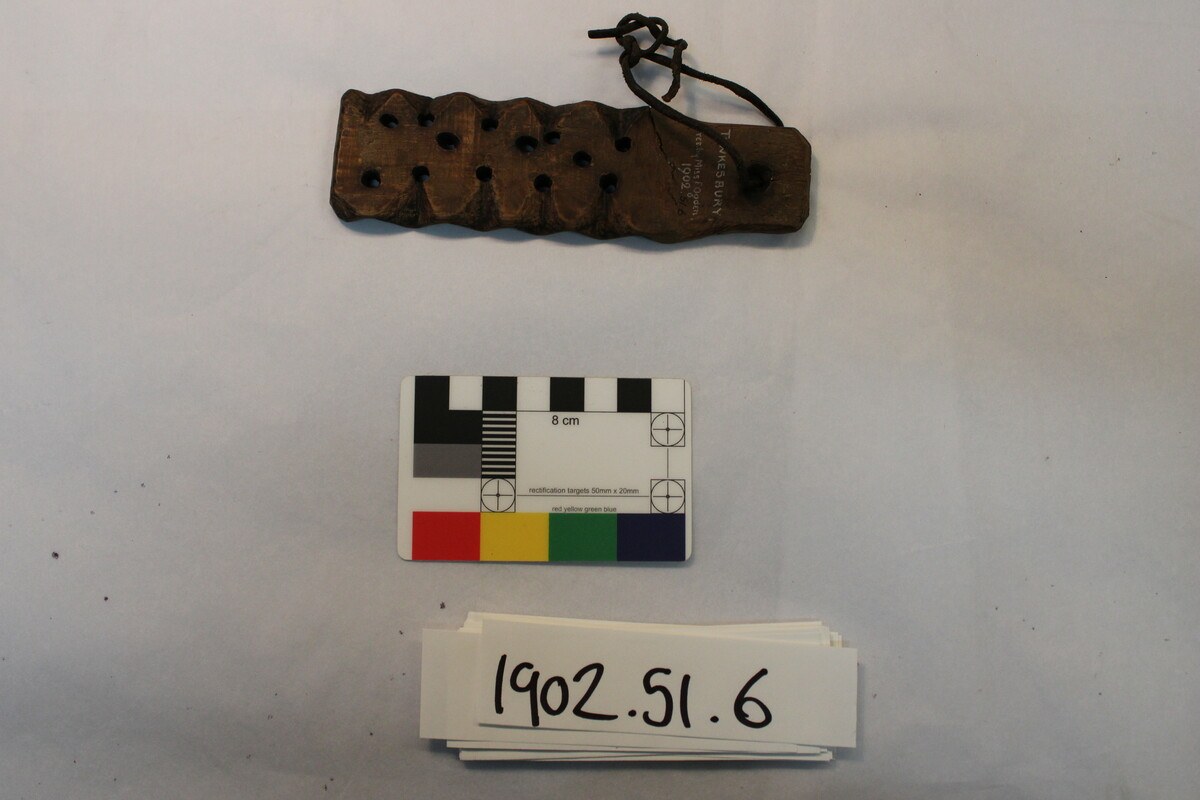
Whizzing stick
Source term: Bullroarer
Whizzing stick: the blade's English folk name, with 'buzzer' recorded as an alternative.
Thirteen holes burnt clean through its face and both edges carved into deep waves make the Tewkesbury blade the showiest of the English folk whirlers Miss Ogden of Oxford's High Street gave the Pitt Rivers Museum in 1902 — someone inked the town's name straight onto the wood. A single cord still hangs knotted through its end, and the museum keeps its plain folk name too: whizzing stick.
Wooden 'Bullroarer' with 13 holes burnt into it and deeply indented sides.
Pitt Rivers Museum 1902.51.6
Particulars
- Object
- Carved wooden slat, 145 x 45 mm, with deeply indented sides, thirteen burnt holes across the face, and a single cord knotted through the suspension end.
- Function
- Boys' toy; its other name, buzzer, is the one Haddon heard in Bedfordshire and Norfolk.
Source
Pitt Rivers Museum 1902.51.6; donated November 1902 by Miss F. E. Ogden