Atlas Essay —
The Bridegroom of Blood
On the origins of circumcision
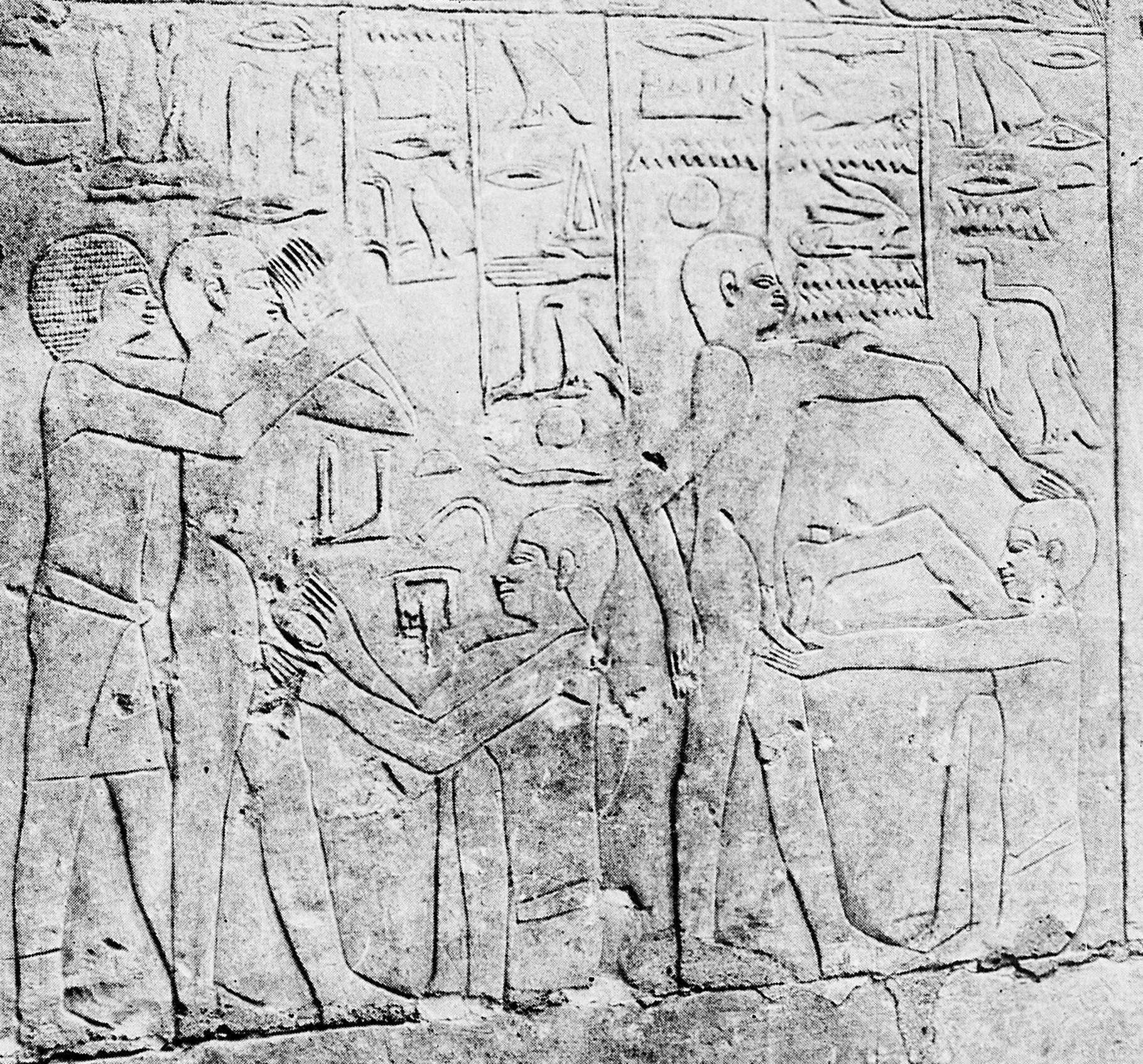
On the Tami Islands, off the north-east coast of Papua New Guinea, the boys were told that a monster would swallow them. Behind the screen the bullroarers roared its voice. When the boys came out again they had been circumcised, and the men gave the wound a name: the monster’s tooth. It had bitten them in the penis as it swallowed them.
Circumcision is what is left of a far bloodier rite. The first operation slit boys’ testicles, burned them with fire, or let them bleed to death, and the peoples who still cut their boys say so. Over time the rite was cut back to the foreskin, and in some places to a scratch on the back or to nothing at all. The wound still carries the name of the thing that once took the whole boy.
In brief
- The first cut killed. The founder of the Kai rite, in north-eastern Papua New Guinea, slit a boy’s testicles and the child died; the first initiator of the Nyikina, in the Kimberley of north-western Australia, burned the boys; the Coast Pomo of California kept the name “cut cut” after nobody was cut.
- The wound is a bite. On the Tami Islands the cut is the “kani-tooth” (Bamler 1911, p. 496); among the Bembe of the eastern Congo the circumcision is called “the corpse.”
- The bullroarer is sounded at circumcision in four regions and nowhere else: northern and central Australia, the north-east coast of New Guinea, Malekula in Vanuatu, and Africa’s belt of circumcision lodges. There the blood is caught and carried off, to the mother to drink, into a spirit’s pot, or back onto the roarer.
- The men who bled said what the blood was. On Wogeo, off the north coast of New Guinea, the cut penis was the male counterpart of menstruation; Kipsigis initiates in Kenya must call their wounds vaginas.
- Where people wrote their myths down, the gods cut themselves. The Aztec Quetzalcoatl bled his penis over the ground bones of the dead, and people were born; the drops from the Egyptian sun-god’s phallus became the gods of speech and understanding.
- The cut buys back a life. The Phoenician god El sacrificed his only son and circumcised himself in the same breath; in Exodus the Lord seeks to kill Moses and is turned away with a foreskin: “a bridegroom of blood.”

The first cut killed
Ask the peoples who cut their boys where the cut came from, and from New Guinea to California they give the same answer: it used to be worse. The Kai, in the mountains above the Huon Gulf on the north-east coast of Papua New Guinea, say their founder slit the first boy’s testicles open and the child died; only with the second boy did he take the foreskin alone, and that boy lived (Keysser 1911, pp. 34–35). The Nyikina of the Kimberley, in north-western Australia, say their first initiator, Kumbaruga, never cut the boys at all. He burned them with a glowing stick, and many of them died, until a second hero, Golwilir, brought djimare, the white stone knife, and ruled that the blood be drawn from the arm (Südkamp, after Petri, pp. 260–261). The Wiradjuri of New South Wales say that Dhuramoolan, whose voice was the bullroarer, wrenched out the boys’ front teeth with his own and “sometimes bit the entire face off the boy and devoured him” (Mathews 1896, pp. 297–298). Of the Great Tamate society of the Banks Islands, in northern Vanuatu, Edwin Loeb wrote flatly: “Whipping takes the place of actual mutilation” (Loeb 1929, p. 258).
In California the Pomo had a ceremony called the cutting. Loeb, who worked among them in the 1920s, judged it older than all their other rites: “The actual cutting is a blood sacrificial custom, and, as such, must be extremely ancient among the Pomo” (Pomo Folkways, 1926, p. 382). It had begun, he thought, in the Ghost religion, their oldest initiation, and at first it was done only to boys. Among the Inland Pomo the head of the secret society went round the children laid naked about the centre pole and scratched the small of each back with a broken piece of shell money. “The cut was usually deep enough to draw blood,” and it was not unusual for a boy to cry out or a girl to faint (p. 383). Among the Coast Pomo, “at a still later period the actual performance of the cutting was omitted” (p. 382), though the rite kept its name. One Coast Pomo ceremony was called djaka djaka, “cut cut.” Nobody was cut. The boys and girls were herded into a pit dug the night before, and Loeb took the pit for a grave (p. 359).
Each people remembers its own rite as the shrunken form of something worse. The Kai kept the foreskin. The Nyikina kept a stone knife and a cut arm. The Wiradjuri kept a knocked-out tooth. The Inland Pomo kept a bloody scratch, the Coast Pomo a grave with nobody cut, the Banks Islanders a beating. Circumcision is one of these leftovers, and the commonest.
Theodor Reik, Freud’s pupil, saw in 1915 that the puberty rites had once ended in real killing, and then balked at the next step: “Circumcision does not take the place of the human sacrifice; the killing and the circumcision are two separate acts” (Ritual, 1931, p. 124). The Kai had already answered him. Their rite remembers its first victim, and says in plain words that the foreskin is what was left when the killing stopped.
“Originally the punishment of death was actually carried out by the infuriated fathers.”Theodor Reik, Ritual (1931), p. 120
The monster’s tooth
The German missionaries who lived on the Huon Gulf in the first years of the twentieth century wrote down what the coastal peoples told their boys. Among the Tami islanders, at the mouth of the Gulf, Georg Bamler heard it from the men:
The kani must swallow the boy … In swallowing, the kani bites him in the penis. The cut is therefore called “kani-tooth” … It swallows him into the pig’s stomach. In return for a pig it gives him back out again.
Georg Bamler, “Tami,” in R. Neuhauss, Deutsch Neu-Guinea III (1911), p. 496
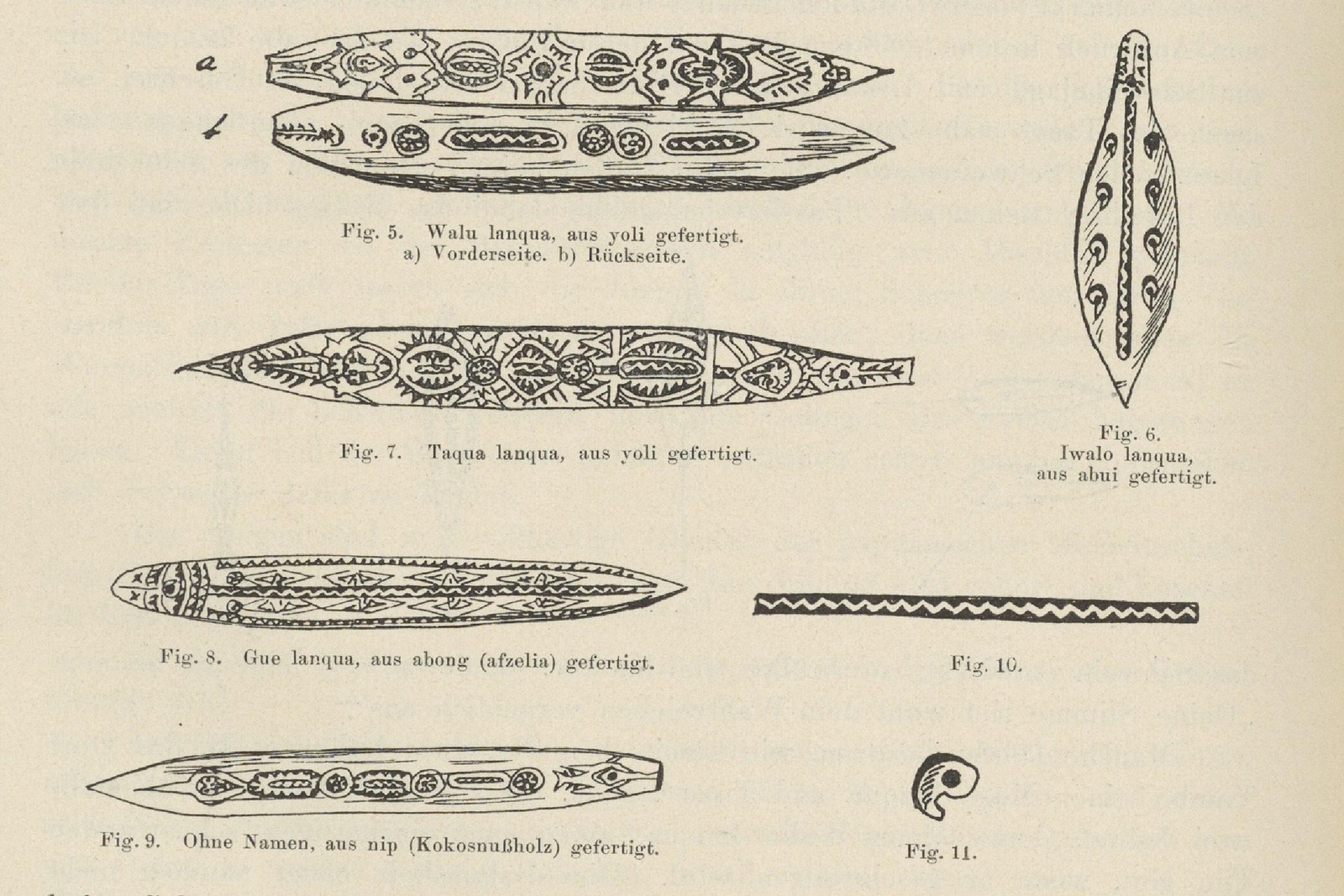
To the women and children the kani was a dragon-like monster that had to be bound to great trees with the strongest lianas. Its voice was the bullroarer, and the man who led the rite was its master. A few miles along the coast, among the Bukaua, the missionary Stefan Lehner recorded the same being under the name balum. It swallowed the boys and would not give them up until enough pigs were killed to make it vomit them out, and as it spewed them out it bit or scratched them, and that wound was the circumcision (Lehner 1911, p. 407). Heinrich Zahn heard of the same swallowing monster among their neighbours the Yabim. The one word balum named the monster, the roarer and the souls of the dead. One of the named roarers Lehner drew carries the little sea-snake as a zigzag band down its blade.
The monster swallows the boy, bites his penis and spits him out a man. The bite was real. At the balum ground, Lehner wrote, a boy bled to death “not all that rarely” (p. 408), and his mother was told the monster had kept him. Across the Gulf at Busama, on its southern shore, Ian Hogbin was told that the creature was an enormous crocodile, and the bites and scratches it left behind were the circumcision wound (Transformation Scene, 1951, pp. 214–215).
Inland, in the mountains of the Huon Peninsula, the Burum-Mindik have a single word, esöŋ, for the ancestral cult, the circumcision of the boys, the ancestral spirit and the bullroarer. The phrase for the rite is “the ancestral spirit swallowed up the boys” (Olkkonen and Olkkonen 2007, p. 29).
Half a world away, in the forests of South Kivu in the eastern Democratic Republic of the Congo, the Bembe call the circumcision itself Butende or Etomba, “the corpse.” The circumciser who “kills” and “swallows” the initiate with his adze becomes Tembwe, the leopard-god whose voice is the bullroarer (Gossiaux, pp. 10, 33, 90). From the Kwanyama of Angola to the Gbunde of Liberia, a boy who died under the knife stayed in the monster’s stomach (Loeb 1948, p. 27; Schwab 1947, p. 284). Mircea Eliade, surveying the African lodges in Rites and Symbols of Initiation (1958, p. 23), found that the circumcisers in their leopard skins incarnate “the divinities in animal form who in mythical times first performed initiatory murder,” and that “circumcision is expressed by the verb ‘to kill.’”
Where bullroarers sound at circumcision
The bullroarer has sounded from the caves of Ice Age France to the Amazon, but it is sounded at circumcision in only four regions of the world (the map above). In about a hundred and ten of its traditions the operation is named, and every one of them falls in those four.
| Region | Bullroarer traditions naming the operation (of all known in the wider region) | What the cut is said to be |
|---|---|---|
| Northern and central Australia | 42 of 194 | circumcision, then subincision; the blood drunk, smeared, pressed with the roarer |
| Huon Gulf and Morobe coast, Papua New Guinea, with the Siassi Islands and west New Britain | 17 of 212 in New Guinea | the monster’s bite as it swallows and spews the boy |
| Malekula, Vanuatu | 3 of 19 in Island Melanesia | a ghost drawn by the smell of the blood |
| Africa’s circumcision-lodge belt, Guinea to Kenya and Angola | 47 of 256 in Africa | death, the swallowing, the leopard’s claw |
| The Americas, Europe and Asia | none of 599 | — |
In Australia circumcision spread from the north. The south-east, where the boys’ front teeth were knocked out and the voice of Daramulun roared over them, has almost no circumcision. Baldwin Spencer and Francis Gillen learned in the Centre that circumcision and subincision came “at a later time, and again from the north,” and that the southernmost tribes were the last to give up the older tooth-knocking rite (Northern Tribes, 1904, p. 18). The people of the north say who brought it. Among the Bunuba of the Kimberley, Bernard Moizo was told that it was the rainbow serpents who brought circumcision to the Kimberley: the great snakes of Kimberley belief, who lie in the deep waterholes and send the rain (Moizo 2007, p. 734). The two brothers of the Karadjeri, on the Kimberley coast, who founded the circumcision rite and first used the stone knife and the bullroarer, ended as water-snakes. Among the Mungarai of the Northern Territory, the spirit-children of Kunapippi, the ancestor who carried the first bullroarers, “taught them circumcision and subincision” (Spencer 1914, p. 213). Among the Western Arrernte of Hermannsburg, west of Alice Springs, Carl Strehlow was told of Tuanjiraka, a being wound about with living snakes. At initiation he strikes off the boy’s head with a lizard’s tail and leaves the body until it is full of maggots and stinking; at noon the next day he sets the head back on, and the boy lives. After circumcision the boy is shown a bullroarer and told to call it Tuanjiraka (Strehlow 1907, p. 102).
In the Americas no people cut the penis to the roar of a bullroarer. There the lords cut themselves. The Maya kings drove stingray spines through their penises in front of their people, and the god Quetzalcoatl had done it first.
What the blood was for
Circumcision is often explained as a mark: a scar that shows a man belongs to his people. A mark needs nothing done with the blood. Yet wherever the bullroarer sounds at circumcision, the blood is collected and given to someone.
Among the Warumungu of Tennant Creek, in central Australia, the boy heard the roar of the murtu-murtu behind him and was “too frightened to do anything” (Spencer and Gillen 1904, p. 351). Men pinned him across two bodies, pressed a tassel into his mouth, and circumcised him with a stone knife. “The blood from the wound was collected in a shield” and carried to his mother’s camp, and she had to drink some of it (p. 352).
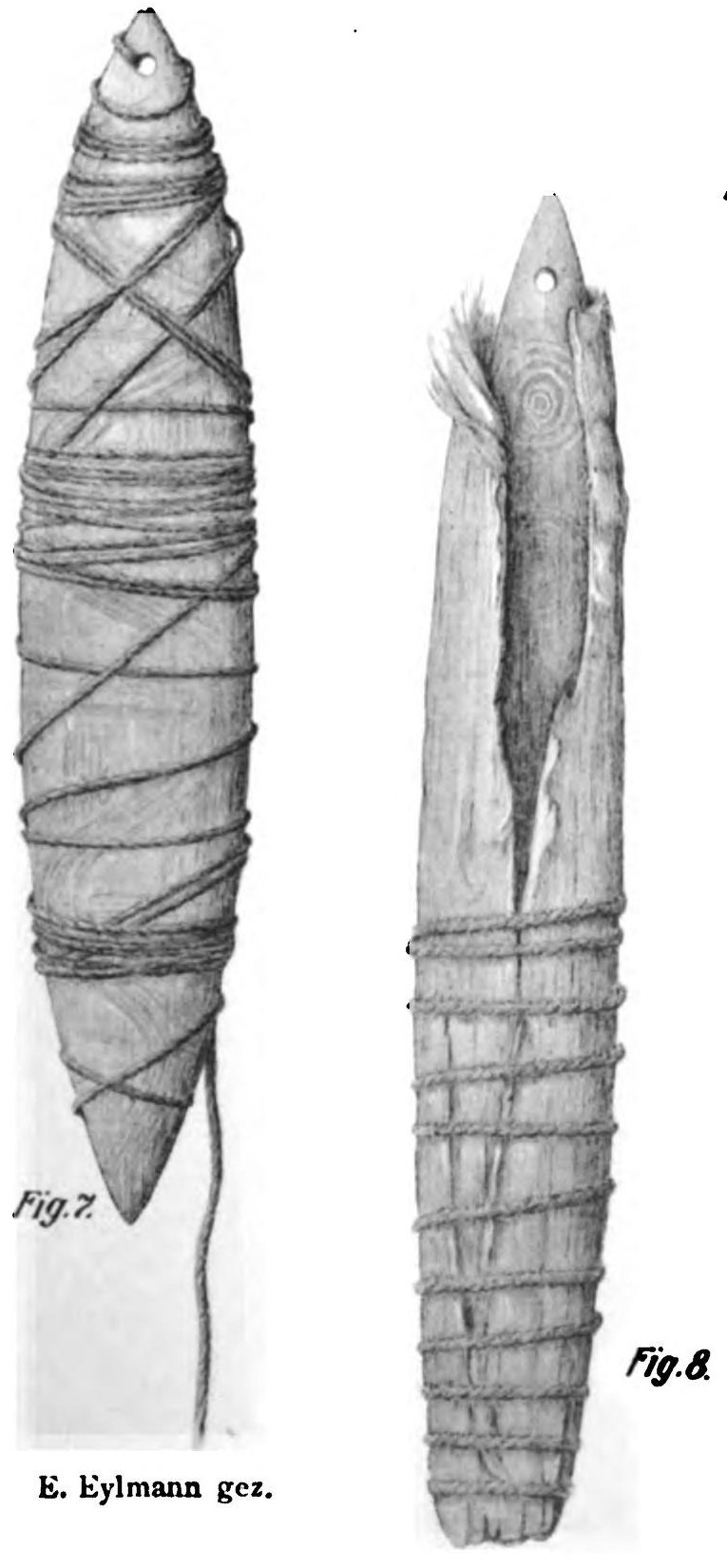
Among the Arrernte of Alice Springs, bullroarers roared all round the ground while the boy was cut, and the women in their camp were told it was the voice of Twanyirika, the same being the Western Arrernte call Tuanjiraka, come to take the boy away into the bush. The boy’s blood ran into a shield. Then Spencer and Gillen watched the secret given to him in the blood itself:
While he was still bleeding an Okilia brought up some of the bull-roarers and, pressing them on the wound, told him that it was these and not Twanyirika which made the sound, that they were sacred Churinga and must never be shown or even mentioned to the women.
Baldwin Spencer and F. J. Gillen, The Native Tribes of Central Australia (1899), p. 248
The Okilia was a man of his elder brothers’ class. Later the oldest of them handed the boy a bundle of wooden churinga: “Here is Twanyirika, of which you have heard so much, they are Churinga, and will help to heal you quickly” (p. 249). The being who took the boy, the roar, the wooden blades and the wound were one thing.
In the eastern Congo the Nyanga cut their boys in a lodge ruled by a female being, nyabungubungu, whose voice is the bullroarer. The circumcision blood drips into “the pot of nyabungubungu.” When the boys have healed they beat the place of the operation, which, Daniel Biebuyck was told, “represents sex with nyabungubungu,” and the mothers who handed their sons to the circumciser said that there was no payment for it: “it is a form of death” (Biebuyck, pp. 13, 18, 15). On Malekula in Vanuatu, at Lambumbu, the bullroarers sounded from hiding while the newly incised boys ran a gauntlet of whips in the dark, and the women were told it was “the voice of a ghost who, enticed by the smell of blood, comes nosing round the incision wounds” (Deacon 1934, p. 252).
In the Western Desert the operation went further. After circumcision came subincision, the opening of the underside of the penis along its length, and the wound was reopened in later rites so that it would bleed again. The Antakirinya, of the desert north of Ooldea in South Australia, told Ronald Berndt that the first bullroarer was made for the first subincision. Two iguana ancestors, Kuruka’di and Mumba, marked it like an iguana’s back; Kuruka’di swung it first, and then the two men subincised each other and founded the rite (Berndt 1941, pp. 7–10). In a story the Antakirinya also knew, the same heroes speared a great mother snake whose blood, urine and excreta became the red, yellow and white ochres of the country (p. 17).
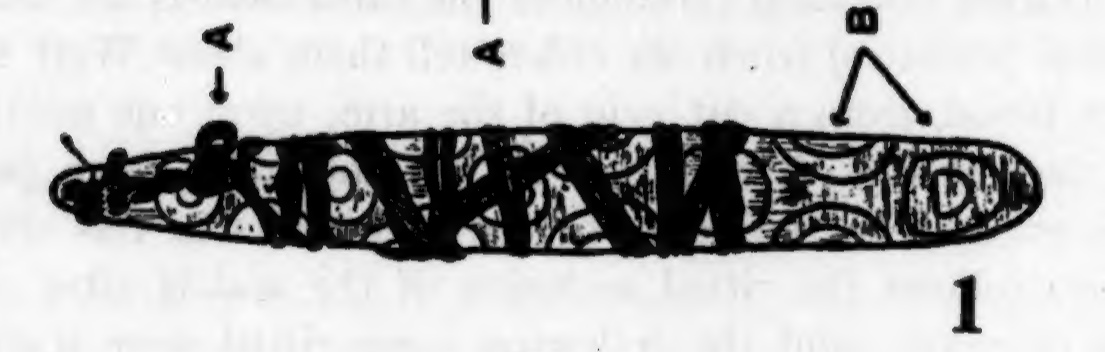
At Ooldea, on the edge of the Nullarbor Plain in South Australia, a young man made a small love-roarer and cut two snakes into one side of it, a male and a female; “the snake is said to resemble the man’s penis.” The great madaki rite there included penile bloodletting, and the roarer swung on the afternoons that followed “draws” the women (Berndt and Berndt 1943, pp. 141–142). At Jay Creek, near Alice Springs, the Luritja men who circumcised a group of boys in 1953 kept a small pointed stick for piercing their own cut organs, so that the blood dripped onto the celebrants and the feathers would stick to their bodies. Among the Murinbata of Port Keats, on the north-west coast of the Northern Territory, the novices are told they will be “swallowed alive by Karwadi and then vomited up” (Stanner, On Aboriginal Religion, p. 6). They are smeared from head to foot with blood, and when the roar comes near and the swingers spring into view, each youth’s brother-in-law rubs a new bullroarer across his bloodied breast and loins and thrusts it between his thighs, where it stands up like an erect penis (p. 8).
The peoples who did these things said plainly what the blood was. On Wogeo, off the north coast of New Guinea, men cut the penis to make it bleed, and reckoned it the male counterpart of menstruation; Ian Hogbin named his book on them The Island of Menstruating Men (1970). Among the Kipsigis of Kenya, Robert Daniels was told, the newly circumcised “must refer to their wounds as vaginas, and any blood they shed must be called menstrual blood” (By Rites a Man, ch. 3). Among the Yolngu of Arnhem Land, in northern Australia, the blood drawn from the men’s arms at the Kunapipi is “the blood of the Spring Women,” the sisters swallowed by the great python (Berndt, Kunapipi, 1951, p. 36). These men were not speaking in figures. A woman’s blood makes children, and they slit their penises to bleed like women.
The gods cut themselves
Where people wrote their myths down, the gods do it to themselves.
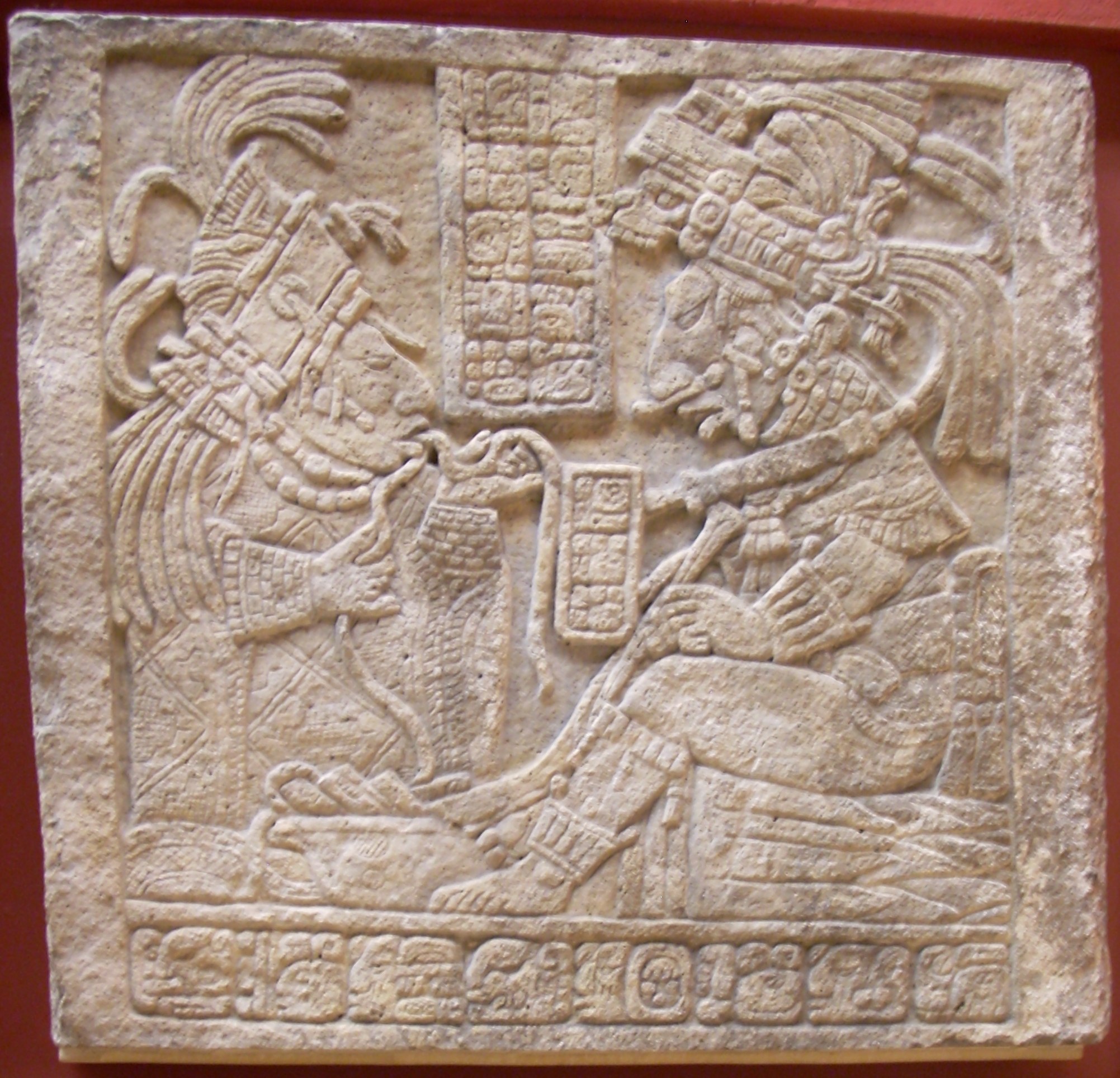
The Legend of the Suns, written in Nahuatl in the 1550s, tells how the people of this world were made. Quetzalcoatl, the Feathered Serpent, went down to the land of the dead for the bones of the earlier humanity, died there and came back to life. Snake Woman ground the bones in a precious bowl. “Over it Quetzalcoatl bled his member,” and all the gods did penance after him, and the people were born (Velázquez 1945, pp. 120–121). His story goes on to human sacrifice, but the first scene is enough: a god just back from the dead pierced his penis over the ground bones of the dead, and human beings came of the blood. Mesoamerican lords had been piercing their own penises for two thousand years before the myth was written down. The Maya kings of the Classic period drove stingray spines and bone awls through the penis and caught the blood on bark paper to burn. In the smoke they saw the Vision Serpent, a huge rearing snake with an ancestor coming out of its jaws. At Yaxchilan, on the Usumacinta River in southern Mexico, a king is carved seated with the perforator in his hand while his wife draws a rope through her tongue.
In Egypt, the land where the oldest picture of circumcision was carved, the Book of the Dead tells where the first gods of the mind came from. In the long seventeenth chapter, the dead man is asked a series of riddles about the creation, and one answer runs:
They are the drops of blood which came forth from the phallus of Ra when he went forth to perform mutilation upon himself. They sprang into being as the gods Hu and Sa (Sia), who are in the following of Ra.
Book of the Dead, chapter 17, Papyrus of Ani, trans. E. A. Wallis Budge (1895)
Hu is the creative word, the utterance that makes a thing so; Sia is perception, understanding. In the Egyptian telling, speech and understanding were born from the blood that ran from the sun-god’s penis when he cut it.
Phoenicia remembered the worst of it, a castration. Philo of Byblos, a city on the coast of Lebanon, in the second century AD put into Greek a history he said came from the ancient priest Sanchuniathon, and Eusebius preserved it. In it El, whom the Greeks called Kronos, waylays his father Ouranos, Heaven, “and emasculates him near some fountains and rivers. There Uranus was deified: and as he breathed his last, the blood from his wounds dropped into the fountains and into the waters of the rivers” (Eusebius, Praeparatio Evangelica 1.10, trans. Gifford).
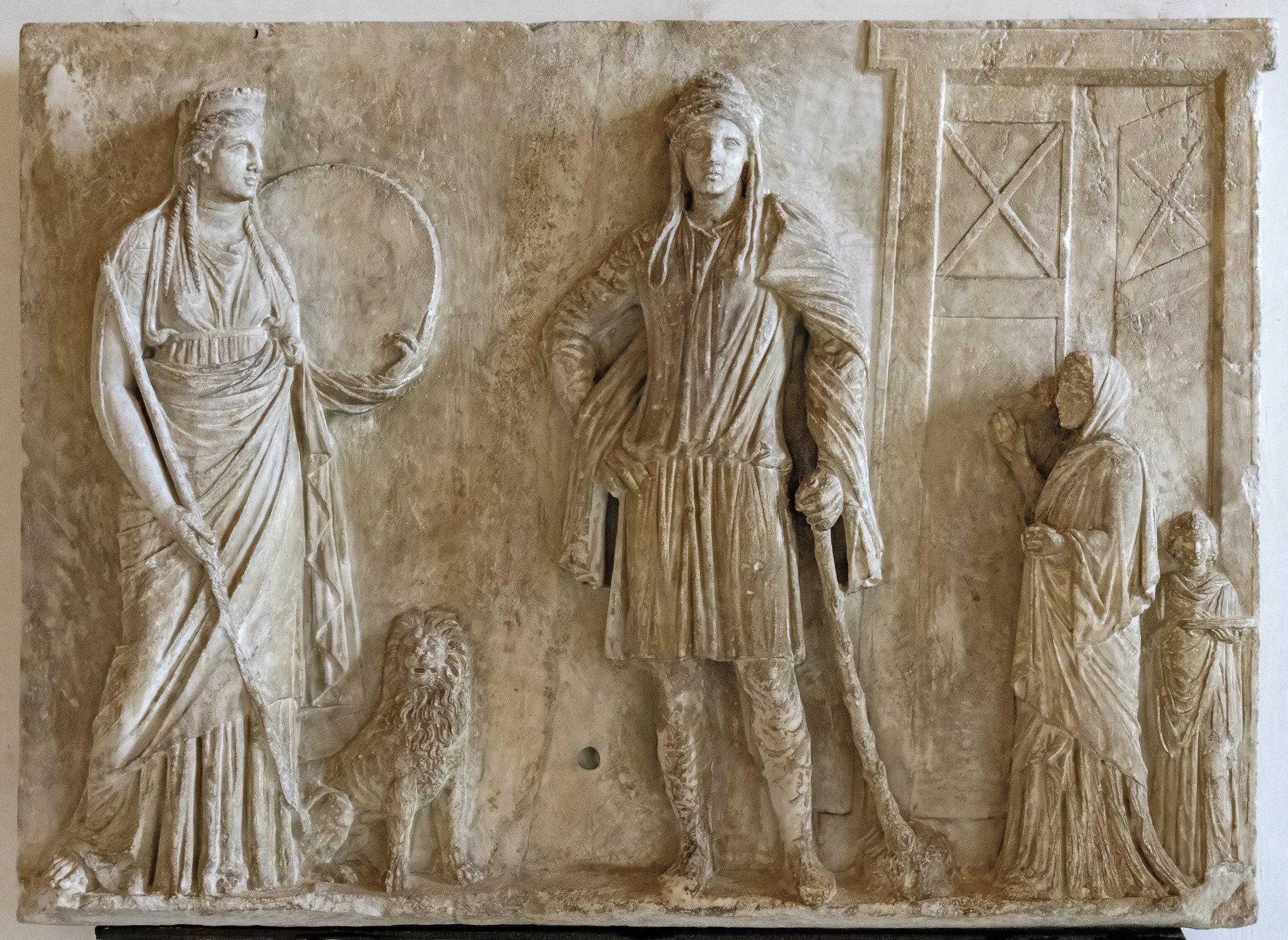
In Phrygia, in what is now central Turkey, the gods cut off the penis of Agdistis, a being with both sexes, and “there grew up from it an almond-tree with its fruit ripe”; a river’s daughter laid an almond in her bosom and bore Attis. When Attis grew, he went mad at his own wedding “and cut off his genitals,” and the gods granted that his body “should neither rot at all nor decay” (Pausanias 7.17.10–12). In the rites of his mother Cybele, where the rhombos sounded on her mountain in Phrygia, the priests called galli castrated themselves in his memory, and on the Day of Blood each spring her votaries cut their arms.
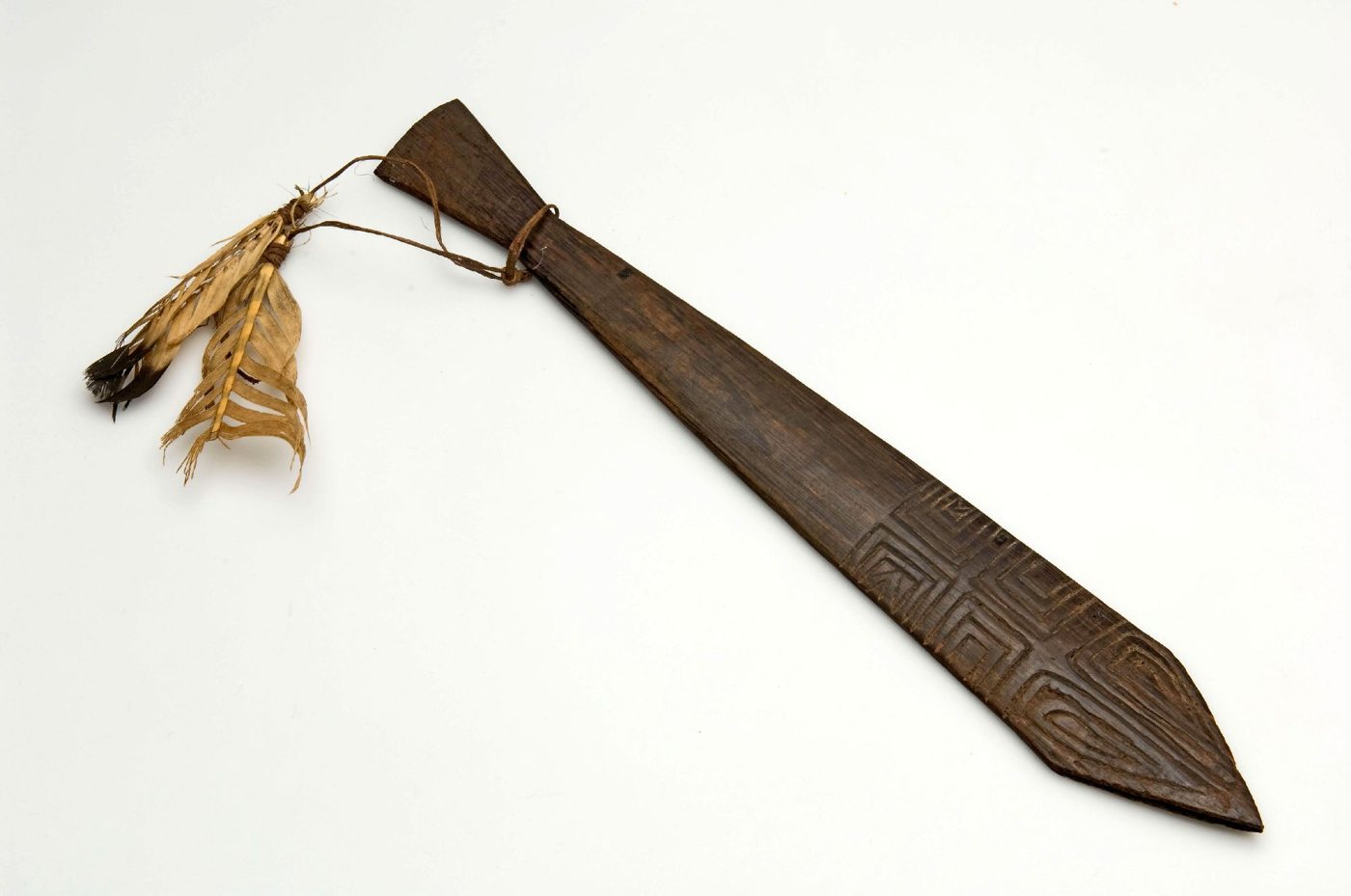
The Marind of the south coast of New Guinea, in Indonesian Papua, whom older travellers called the Kaya-Kaya, tell it of a giant. Sosom, a roaring giant who killed novices, was caught fast in the act of love, and the girl’s mother cut off his penis. In the coastal telling the severed penis fell into the river and became a water-snake. Reading the traditions together, Jan van Baal concluded that it was the first bullroarer, and that Sosom’s voice is in it still (Dema, 1966, pp. 267–273).
Bridegroom of blood
The same history of Philo goes on. When plague and death came upon the land, El “offers his only begotten son as a whole burnt-offering to his father Uranus, and circumcises himself, compelling his allies also to do the same.” In one sentence the old rite stands in both its broken halves. The son is killed outright; the father cuts himself and lives, and makes his followers do the same. Elsewhere Philo explains that in great crises the rulers of a city would “give up the most beloved of their children for sacrifice as a ransom to the avenging daemons,” and that they were “sacrificed with mystic rites” (Praeparatio Evangelica 1.10). A ransom: the same word the Kai used for the pig that buys back each boy (Keysser 1911, p. 38).
The same book also tells of the serpent. Taautos, the Phoenician sage, “regarded as divine” the nature of the dragon and of serpents, for the snake is long-lived, “and its nature is to put off its old skin, and so not only to grow young again, but also to assume a larger growth.” For this reason, Philo says, it was adopted “in temples and in mystic rites.” A snake peels off its own skin and comes out new and larger. The circumciser peels the skin from the end of a boy’s penis and sends him out a man.
The Hebrew Bible keeps the oldest form of its own covenant in a night scene at a lodging on the road. Moses is going back to Egypt with his wife Zipporah and their son, carrying God’s threat to Pharaoh: “Israel is my son, even my firstborn … I will slay thy son, even thy firstborn.” Then, in the next verse:
And it came to pass by the way in the inn, that the LORD met him, and sought to kill him. Then Zipporah took a sharp stone, and cut off the foreskin of her son, and cast it at his feet, and said, Surely a bloody husband art thou to me. So he let him go: then she said, A bloody husband thou art, because of the circumcision.
Exodus 4:24–26, King James Version
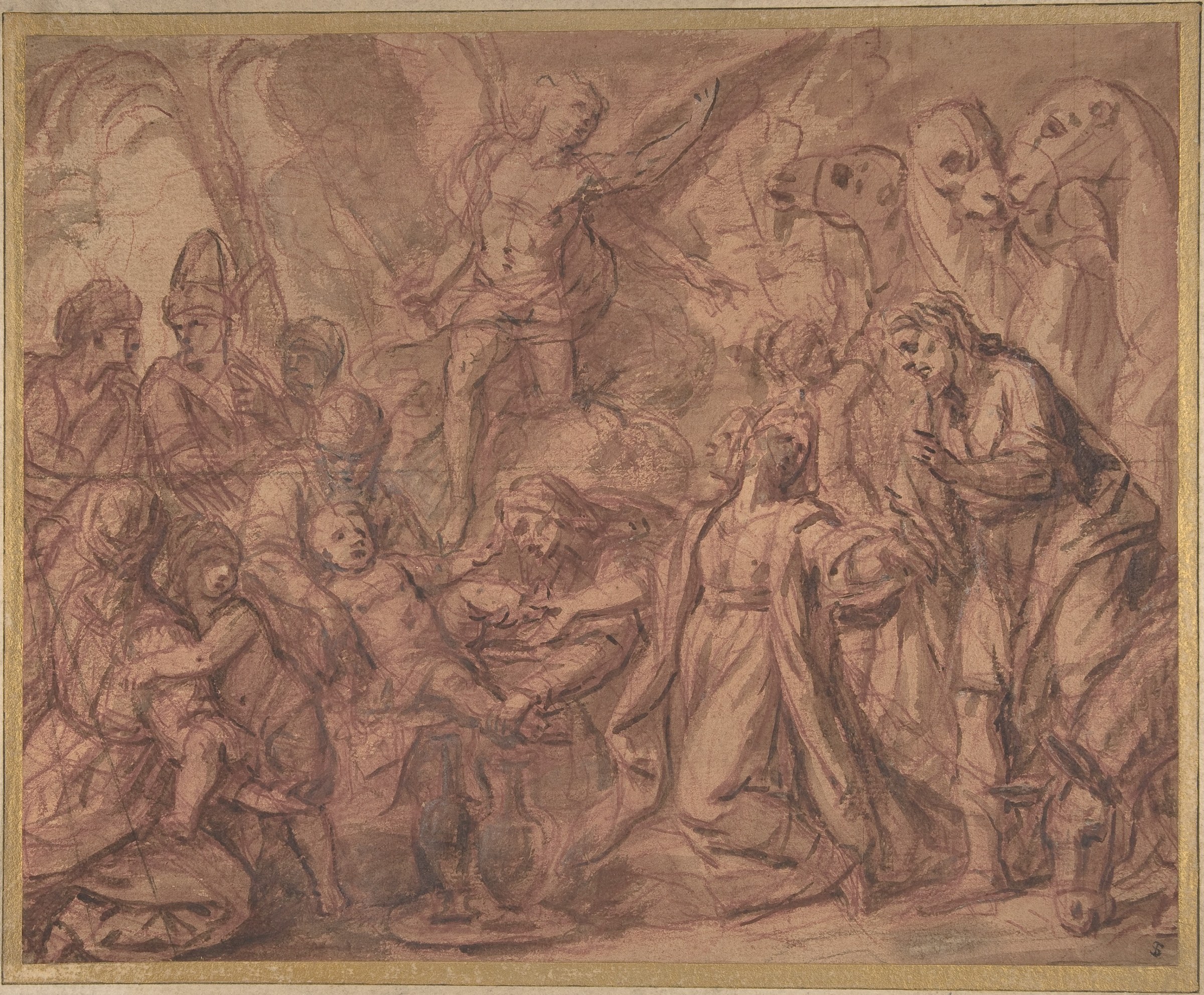
The Hebrew is ḥătan dāmîm, “a bridegroom of blood.” A god comes in the night to kill. A woman cuts her son with a flint and touches him with the blood, and the god lets him go. The foreskin buys back a life. The cut takes the place of the death, as it did for the Kai, and the Tami paid the rest in pigs. The firstborn of Egypt die a few chapters later, and the firstborn of Israel are spared by the blood on the doorposts.
The covenant of Genesis is the rite after its taming: “ye shall circumcise the flesh of your foreskin; and it shall be a token of the covenant betwixt me and you” (17:11), and of the uncircumcised man “that soul shall be cut off from his people” (17:14). It keeps the knife of stone. When Joshua brought the Israelites into Canaan he made “sharp knives” of flint and circumcised the whole people at a place called the hill of the foreskins (Joshua 5:2–3), as Golwilir brought the white stone knife to the Kimberley.
Then Paul took the last step, and made the cut without a knife. “In whom also ye are circumcised with the circumcision made without hands, in putting off the body of the sins of the flesh by the circumcision of Christ: Buried with him in baptism, wherein also ye are risen with him” (Colossians 2:11–12). The “putting off of the body” is the shed skin again. The burial and the rising are the old ordeal, the boy swallowed and given back. The knife is gone, and the only blood left is Christ’s.
The history runs one way. At first the boys’ testicles were slit, or the boys were burned, or they were handed to a being who ate them, and some of them died. Their blood was caught and given away: to the mother to drink, to the spirit’s pot, to the ground. The Kai remember when the cut killed. The Nyikina remember when the fire did. The Bukaua were still losing boys to it in 1911. Then the cut was trimmed back to the foreskin, which a boy can lose and live, and a pig paid for the rest. In Israel the cut became the token of the covenant, and Paul carried it into baptism, a burial and a rising with no knife at all. Between the first killing and the last sacrament, most peoples who kept the rite stopped at circumcision: a wound small enough to live through, still bitten by the monster’s tooth.
Key sources
Keysser, C. 1911. “Aus dem Leben der Kaileute.” In R. Neuhauss, Deutsch Neu-Guinea, vol. III, pp. 3–242. Berlin: Reimer — the first operation and the boy who died (pp. 34–35); the ransom pig (p. 38).
Bamler, G. 1911. “Tami.” In Neuhauss, Deutsch Neu-Guinea III — the kani’s bite and the “kani-tooth” (p. 496).
Lehner, S. 1911. “Bukaua.” In Neuhauss, Deutsch Neu-Guinea III, pp. 397–485 — the balum’s bite as the circumcision (p. 407); boys bleeding to death “nicht allzu selten” (p. 408); balum plate (p. 412). Zahn, H. 1911. “Die Jabim.” In Neuhauss, Deutsch Neu-Guinea III (p. 333). Frazer, J. G. 1913. The Belief in Immortality and the Worship of the Dead, vol. I. London: Macmillan — the Huon Gulf balum (pp. 250–261, 290–291).
Hogbin, I. 1951. Transformation Scene: The Changing Culture of a New Guinea Village. London: Routledge — the Busama crocodile (pp. 214–215). Olkkonen, S. and Olkkonen, K. 2007. Somba-Siawari (Burum Mindik) – English Dictionary. Ukarumpa: SIL — esöŋ (p. 29).
Südkamp, H. Wondjina: Der göttliche Tiermensch (online edition), appendix III,3, after H. Petri, Sterbende Welt in Nordwest-Australien (1954) — Kumbaruga’s burning and Golwilir’s stone knife (pp. 260–261).
Mathews, R. H. 1896. “The Būrbŭng of the Wiradthuri Tribes.” Journal of the Anthropological Institute 25: 295–318 — Dhuramoolan (pp. 297–298, n. 2). Loeb, E. M. 1929. “Tribal Initiations and Secret Societies.” University of California Publications in American Archaeology and Ethnology 25 (3) — the Banks Islands Tamate (p. 258).
Loeb, E. M. 1926. Pomo Folkways. University of California Publications in American Archaeology and Ethnology 19 (2) — djaka djaka and the pit (p. 359); the cutting ceremony, a “blood sacrificial custom,” and its omission (pp. 382–383).
Reik, T. 1931. “The Puberty Rites of Savages.” In Ritual: Psycho-analytic Studies, trans. D. Bryan. London: Hogarth — the killing once real (p. 120); circumcision and sacrifice as “two separate acts” (p. 124). German original 1915.
Gossiaux, P.-P. Le Bwame du Léopard des Babembe (Kivu-Congo). Authored digital edition — Tembwe, the god-bullroarer (p. 33); circumcision as Butende or Etomba, “the corpse” (pp. 10, 90). Loeb, E. M. 1948. “Transition Rites of the Kuanyama Ambo.” African Studies 7 (1) — the boy left in the monster’s stomach (p. 27). Schwab, G. 1947. Tribes of the Liberian Hinterland, ed. G. W. Harley. Papers of the Peabody Museum 31 — the dead who stay in the Big Devil’s belly (p. 284). Eliade, M. 1958. Birth and Rebirth (reissued as Rites and Symbols of Initiation). New York: Harper — “initiatory murder” and the verb “to kill” (p. 23).
Spencer, B. and Gillen, F. J. 1904. The Northern Tribes of Central Australia. London: Macmillan — circumcision and subincision “again from the north” (p. 18); the Warumungu boy “too frightened to do anything” (p. 351) and the blood taken to his mother (p. 352). Spencer, B. and Gillen, F. J. 1899. The Native Tribes of Central Australia. London: Macmillan — Twanyirika (p. 246, n. 1); the bullroarers pressed on the bleeding wound (p. 248); “Here is Twanyirika” (p. 249). Spencer, B. 1914. Native Tribes of the Northern Territory of Australia. London: Macmillan — Kunapippi’s children (p. 213).
Moizo, B. 1992. “La circoncision, un rite d’initiation australien.” In L’État du monde en 1492, pp. 419–420. Moizo, B. 2007. “« Les serpents arc-en-ciel viennent toujours du nord ».” In Le symbolisme des animaux — the rainbow serpents who brought circumcision (p. 734). Piddington, R. 1932. “Karadjeri Initiation.” Oceania 3 (1): 46–87. Strehlow, C. 1907. Die Aranda- und Loritja-Stämme in Zentral-Australien, Teil I. Frankfurt: Baer — Tuanjiraka (p. 102).
Biebuyck, D. P. “Circumcision Rites among the Nyanga” (mukumo field documentation from fieldwork of 1952–56; online edition, 2017) — the pot of nyabungubungu (p. 13); “a form of death” (p. 15); “sex with nyabungubungu” (p. 18). Deacon, A. B. 1934. Malekula: A Vanishing People in the New Hebrides. London: Routledge — the ghost drawn by the smell of blood (p. 252).
Berndt, R. M. 1941. “Tribal Migrations and Myths Centring on Ooldea, South Australia.” Oceania 12 (1): 1–20 — the first bullroarer and the first subincision (pp. 7–10); the mother snake (p. 17). Berndt, R. M. and Berndt, C. H. 1943. “A Preliminary Report on Field Work in the Ooldea Region, Western South Australia.” Oceania 14 (2): 124–158 — the snake-marked love-roarer and the madaki (pp. 141–142). Nationalmuseet, Copenhagen, I.7025 and I.7169 — the Jay Creek bullroarer and piercing stick, 1953. Stanner, W. E. H. On Aboriginal Religion (Sydney University Press edition, 2014) — Karwadi’s swallowing (p. 6) and the new bullroarers (p. 8).
Hogbin, I. 1970. The Island of Menstruating Men: Religion in Wogeo, New Guinea. Scranton: Chandler. Daniels, R. E. 1970. By Rites a Man. PhD dissertation, University of Chicago (revised online edition, 2020), ch. 3, “Male Initiations.” Berndt, R. M. 1951. Kunapipi. Melbourne: Cheshire — “the blood of the Spring Women” (p. 36).
Velázquez, P. F., trans. 1945. Códice Chimalpopoca: Anales de Cuauhtitlan y Leyenda de los Soles. Mexico: UNAM — Quetzalcoatl bleeds his member over the bones (pp. 120–121). Schele, L. and Miller, M. E. 1986. The Blood of Kings: Dynasty and Ritual in Maya Art. Fort Worth: Kimbell Art Museum.
Budge, E. A. W., trans. 1895. The Book of the Dead: The Papyrus of Ani, chapter 17. Eusebius, Praeparatio Evangelica 1.10, preserving Philo of Byblos, trans. E. H. Gifford (1903). Pausanias, Description of Greece 7.17.10–12, trans. W. H. S. Jones. van Baal, J. 1966. Dema. The Hague: Nijhoff — Sosom and the first bullroarer (pp. 267–273).
Scripture quoted from the King James Version: Genesis 17:10–14; Exodus 4:22–26; Joshua 5:2–3; Colossians 2:11–12.