Atlas Essay —
You Were the Sacrifice
On the origins of human sacrifice
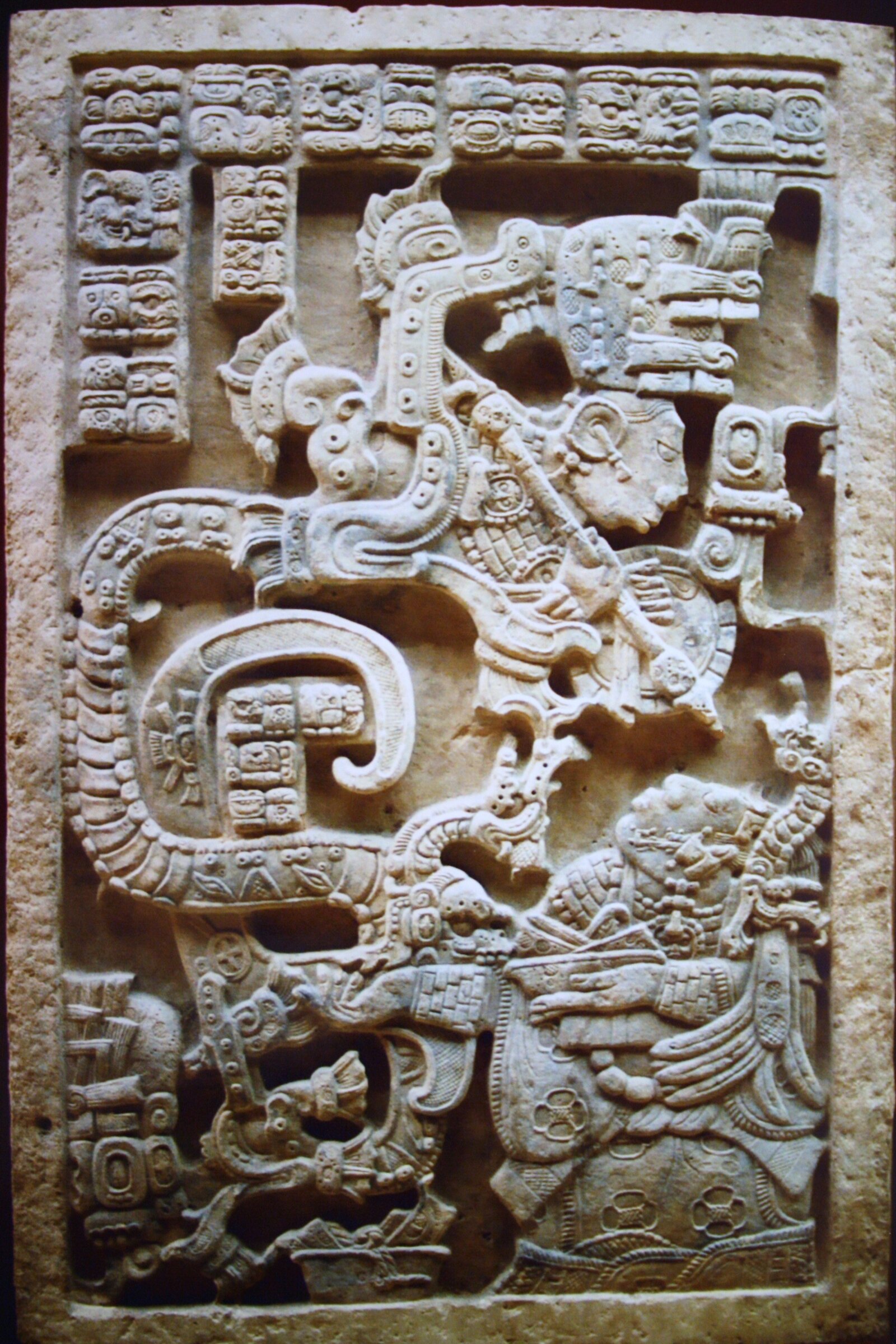
In the Maya book of creation, two boys who have already died once dance before the Lords of Death. The lords ask for a wonder: kill a man, but not so that he really dies. The boys cut out his heart and raise him up again. Then the lords beg to be killed in the same way, and the boys kill them and leave them dead. Every human sacrifice on earth is in that scene.
Human sacrifice is everywhere because it grew out of a primordial snake cult, whose central mystery was an ordeal that brought the initiate close to death. Whether by cutting, burning or venom, the brush with death was the active ingredient. It remade a man; he was born again. The initiation was bound up, too, with what life means and where it comes from. Given such beginnings, it is no wonder that culture after culture, each on its own, arrived at human sacrifice. Sacrifice is the ordeal’s death without its rebirth.
In brief
- Human sacrifice was everywhere. Ritual killing was found in 40 of 93 Austronesian societies across the Pacific, a quarter even of the near-egalitarian villages; Mexico, Peru, Shang China, Ur, Carthage, Vedic India, Uppsala and Dahomey join them.
- Behind it stands an ancient snake cult that spread across the world. Its ordeal took the initiate to the edge of death by the knife, by fire or by a serpent’s venom, and brought him back born again. It taught that life comes out of a death, and the victim of the oldest rite was the initiate himself.
- Where the rebirth was lost, the death stayed. Beside the bullroarer the killing went on unsoftened. On the Purari delta of Papua New Guinea raiders cut up their victims with bullroarers; the rain-king of the Katla, in Sudan’s Nuba Mountains, was killed every few years; the Oro society of the Yoruba, in Nigeria, whose roarer was the “voice of Oro,” was the state’s executioner.
- Where the return was kept, the death became a sign: a ram for Isaac, a god of amaranth dough broken and eaten by the Aztecs, a Christian buried with Christ in baptism and eating his body in bread.
- Two gods each go through the whole ordeal. The Aztec Feathered Serpent died in the land of the dead, bled his member over the bones to make mankind, and rose from his pyre as the morning star; the Easter Vigil hails the risen Christ as lucifer, “the morning star that never sets,” and the Gospel makes him the lifted serpent.

Sacrifice him, but not so that he really dies
The Popol Vuh, the book of the K’iche’ Maya of highland Guatemala, written down in the sixteenth century from older tellings, follows two brothers, Hunahpu and Xbalanque, into Xibalba, the underworld. The lords there are named One Death and Seven Death, and they have already killed the boys’ father. The twins pass every trap the lords set. At the end they walk into the lords’ pit oven on purpose, arms spread, and burn. The lords grind their bones and throw the meal into the river. Five days later the boys come up out of the water, alive, “as chosen boys, for thus they had become.”
Dressed as two poor orphans, they go back down to Xibalba as dancers and wonder-workers. Word of them reaches the lords, who summon them to court:
“Sacrifice my dog, then revive him again,” they were told. “All right,” they replied. So they sacrificed his dog and then revived him once more. The dog was truly happy when they revived him. He vigorously wagged his tail when they brought him back to life. …
“Now kill a person. Sacrifice him, but not so that he really dies,” they were told. “Very well,” they said. So they grabbed a person and sacrificed him. They extracted the heart of one of them and placed it before the lords. Now One Death and Seven Death marveled at this, for immediately that person was revived again by them. When he had been revived, his heart greatly rejoiced.
Popol Vuh, trans. Allen J. Christenson (2003), pp. 170–171
Then the lords ask the twins to do it to each other. Xbalanque cuts Hunahpu apart, legs and arms, the head set far off, the heart dug out and laid on a leaf, and calls “Arise!” and his brother stands up. The lords of death are so carried away that “it was as if they themselves were dancing.” Then they ask for it themselves:
“Do it to us! Sacrifice us!” they said. … The first to be sacrificed was the very head of all the lords, One Death by name, the lord of Xibalba. He was dead then, this One Death. Next they grabbed Seven Death. But they didn’t revive them. … Straightaway the one lord was executed and not revived.
Popol Vuh, trans. Christenson, pp. 171–172
Read it as the history of a rite. The twins are the masters of a technique. They go into death and come out again, and they can take others through: a dog, a stranger, each other. That is initiation: the boy is killed, the boy is raised, and he comes back different, “chosen.” The rite is so overwhelming that Death itself wants it. And when Death has it, the second half is withheld. The heart comes out and does not go back in. That is sacrifice. It is the same act with the return taken away.
The order in the Maya story is the order in history. The twins themselves went through the oldest rite before they ever performed it: they burned in the oven, their bones were ground, and they rose from the river born again, “chosen.” Long ago there was a cult of that kind, a snake cult whose mystery was an ordeal that brought the initiate as close to dying as a person can come, and sometimes over the edge, by the knife, by fire or by a serpent’s venom. It carried a theology of where life comes from: that life is given by a death and comes back through one. The cult was very old and it travelled far, and that is why human sacrifice, its broken half, turns up everywhere people have lived. Many peoples remember killing their boys and then softening the rite; the road runs on from there to the altar and the bread.
Human sacrifice was everywhere
The first thing to see is how ordinary human sacrifice was. It is not the vice of a few blood-soaked empires. It is the human default, and the societies without it are the ones that need explaining.
In 2016 a team led by Joseph Watts and Russell Gray coded ninety-three Austronesian cultures, the peoples who spread from Taiwan across the Pacific and the Indian Ocean, for ritual killing. Forty of the ninety-three practised it. People were killed at the funeral of a chief, at the launching of a new canoe or the raising of a house, and as the punishment for breaking a taboo. Among the most stratified societies two in three did it. Among the least stratified, the nearly egalitarian villages, one in four still did.
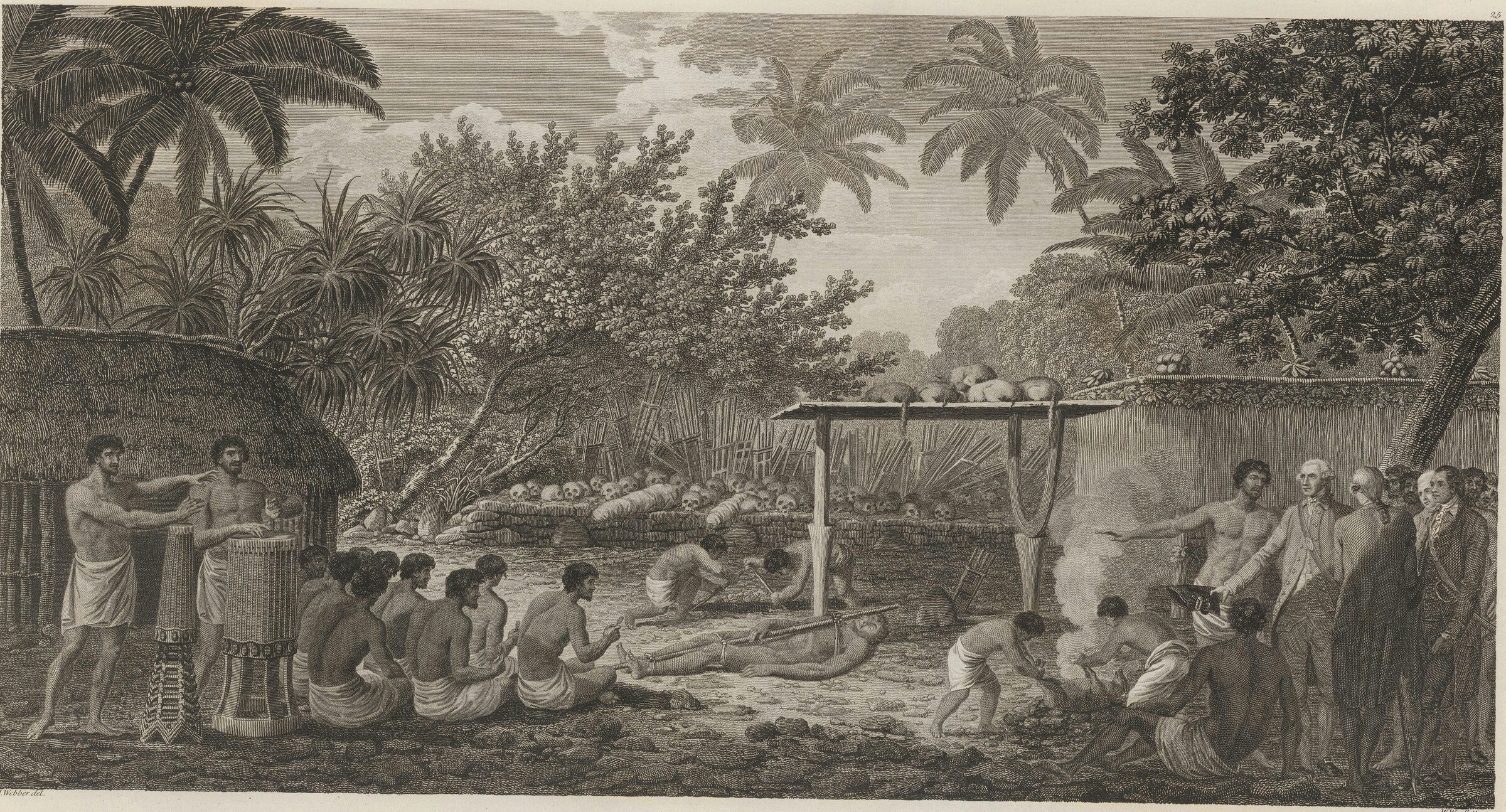
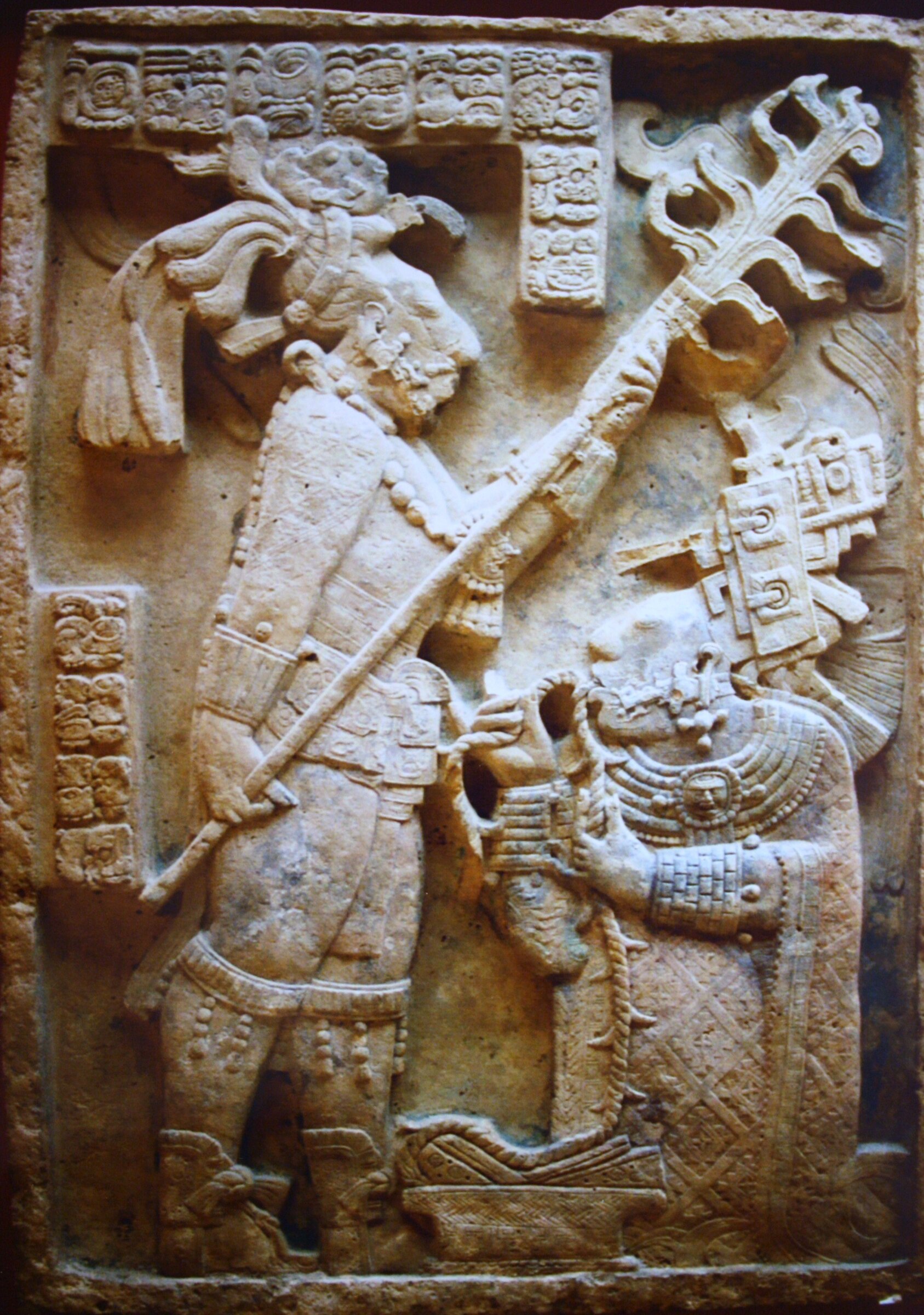
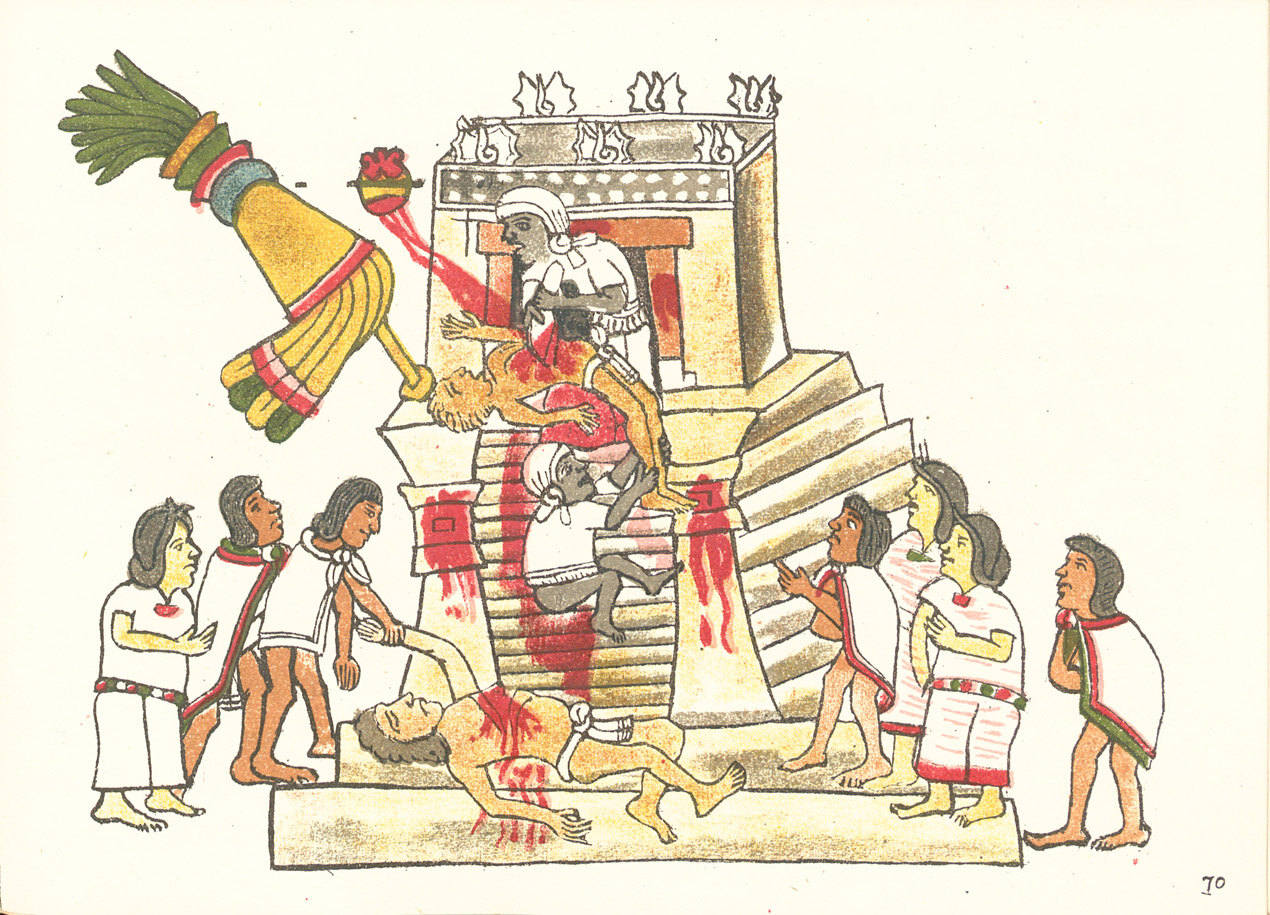
Run the same question across the rest of the map and the answer does not change. In the Valley of Mexico the Aztecs fed the sun with hearts on the summit of the Templo Mayor and racked the skulls in the great tzompantli. In the Andes the Inca sent children up the high peaks in the capacocha. The girl found in 1999 on Llullaillaco, a volcano of more than 6,700 metres on the border of Argentina and Chile, had been given coca leaf for a year before she died and drink in her last weeks, and she still had a quid between her teeth. At Anyang, in northern China, the Shang kings recorded their offerings on oracle bones, and the inscriptions count more than thirteen thousand people killed for the royal ancestors. At Ur, in southern Iraq, the “Great Death Pit” held seventy-four attendants laid out in their finery, who went into the ground with their lord. The first kings of Egypt were buried with hundreds of retainers around them. At Carthage, in what is now Tunisia, the tophet holds thousands of urns of burned infants, and the Hebrew prophets damned the same rite in the valley outside Jerusalem.
The Vedic hymn of Purusha makes the world itself from a man the gods sacrificed. Adam of Bremen, writing in the 1070s, describes the grove at Uppsala in Sweden where, every nine years, nine males of every kind, men among them, hung from the trees. Lindow Man, in an English bog, was struck on the head, garrotted and had his throat cut: killed three times over. The kings of Dahomey, in what is now Benin, held their Annual Customs with mass killings into the 1860s. In the hills of Orissa, on India’s east coast, the Khonds bought or bred a victim, the meriah, for the Earth Goddess, and when British officers came to suppress the rite they wrote down how it was done.
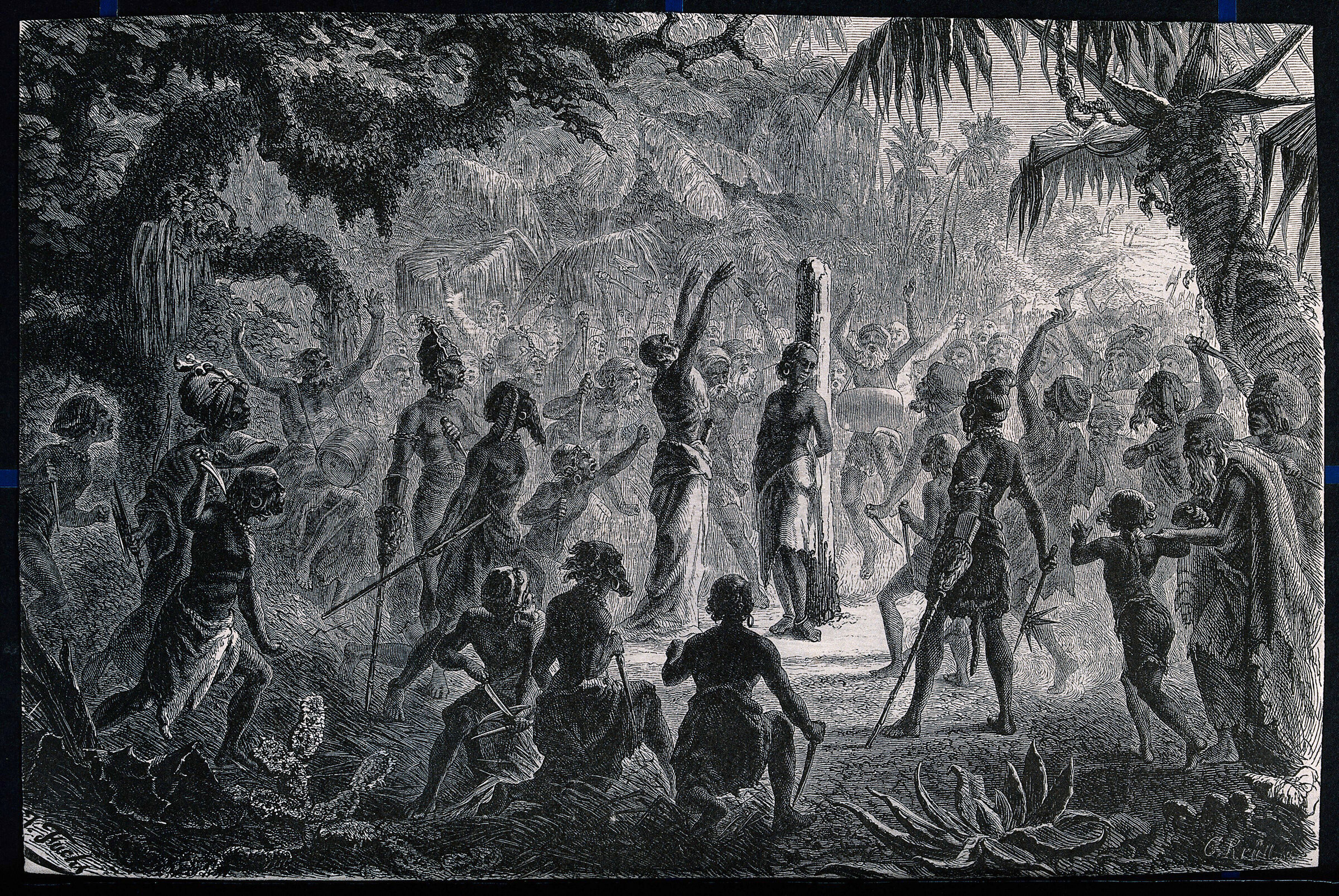
Frazer gives the officers’ reports at length. The flesh, he notes, was not simply an offering:
Another very common mode of sacrifice in the same district was to fasten the victim to the proboscis of a wooden elephant, which revolved on a stout post, and, as it whirled round, the crowd cut the flesh from the victim while life remained. … A part of the flesh certainly was offered to the Earth Goddess, but the rest was buried by each householder in his fields, and the ashes of the other parts of the body were scattered over the fields, laid as paste on the granaries, or mixed with the new corn.
J. G. Frazer, The Golden Bough (abridged ed., 1922), ch. 47 §3
That is a slain being whose body becomes the food, the same figure as the slain god of New Guinea and Australia, from whose body the food plants grew. It also says what the victim was for. The Khonds held that turmeric “could not have a deep red colour without the shedding of blood.” Life comes out of a death. That idea is older than any of these kingdoms.
The usual explanation is power: kings killed to frighten their subjects, and Watts and Gray found exactly that, that sacrifice sustained the rule of the few. But power explains why sacrifice grew, not why it was there to be used. Kings did not invent the idea that a killing makes life. They inherited it. A quarter of the egalitarian societies already had it, with no kings to serve. Something older was being drawn on.
Why would peoples who never met all arrive at the same idea? Either Aztec priests, Shang diviners and Khond farmers each invented it on their own, or they inherited it from a rite older than any of them, carried wherever people went. The pieces travel as a set: the serpent, the roar, the boy taken to death and brought back, the god whose body becomes the food. Things that travel as a set were carried, not reinvented, and the rite travelled from people to people across the world. What travelled was the rite, not the altar. It was carried so far and for so long that each people who had it broke it in its own way, and culture after culture, on its own, broke it into sacrifice.
The victim was the initiate
The French critic René Girard spent his life on that older thing. In Violence and the Sacred (1972) he argued that violence is the hidden root of every religion: “Violence is the heart and secret soul of the sacred.” Societies at war with themselves turn on a single victim, kill him together, and find peace; the peace is so complete that the dead man is made a god, and the killing is repeated as ritual ever after. Girard’s first victim is a scapegoat. But when he came to the rites of initiation he saw something else, and wrote it down:
Instead of avoiding the crisis, the neophyte must advance to meet it, as his ancestors did before him. Instead of fleeing the most painful and terrifying aspects of reciprocal violence, he must submit to each and every one of them in the proper sequence. The postulant must endure hardship, hunger, even torture, because these ordeals were part of the original experience. In some instances it is not enough to submit to violence; one must also inflict violence. … In some societies cannibalism, prohibited at all other times, forms the essence of the initiation rites. For the Tupinamba the murder of a prisoner constitutes the rite. Indeed, in many societies the ultimate act of initiation is the killing of an animal or a human being.
René Girard, Violence and the Sacred (trans. Gregory, 1977), ch. 11
And on the same page he describes the initiate himself. The boy in the bush becomes “a lion or a leopard for the duration of the initiatory crisis, expressing himself solely in growls and roars.” At an initiation, what roars is the bullroarer.
Girard saw, too, that the rites decay. “With regular repetition and a pattern of success, these rites are gradually transformed into simple tests or trials, becoming increasingly ‘symbolic’ and formalistic. The sacrificial nature of the rites tends to become obscured with the passage of time until finally it is hard to say what the symbols are intended to symbolize.” And they work only while they hurt: initiation “can fulfill a function only as long as” it keeps “its character as impressive, painful, and at times almost unendurable ordeals.”
Theodor Reik, a pupil of Freud, had gone further in 1915. Reading the Australian and Pacific reports of boys killed and raised again at puberty, he concluded that the killing had once been real:
It must not be overlooked that these rites represent an advanced stage in the development of ‘savage’ peoples. Originally the punishment of death was actually carried out by the infuriated fathers. A long path is traversed in the development of the peoples from the actual killing of the youths and the consequent strong remorse of the fathers up to the two-period rite-sequences which say in effect, ‘We love you, but we must rid you of your infantilisms’.
Theodor Reik, “The Puberty Rites of Savages” (1915), in Ritual: Psycho-analytic Studies (1931), p. 120
Of the Fijian Nanga, where the novices crawl over men laid out as corpses and smeared with pig’s blood until a yell brings the dead men to their feet, Reik wrote in a footnote: “It may be surmised that originally the men were actually dead” (p. 108). Mircea Eliade, gathering the same reports in 1958, made the African circumcisers in their leopard skins the incarnation of “the divinities in animal form who in mythical times first performed initiatory murder” (Rites and Symbols of Initiation, p. 23).
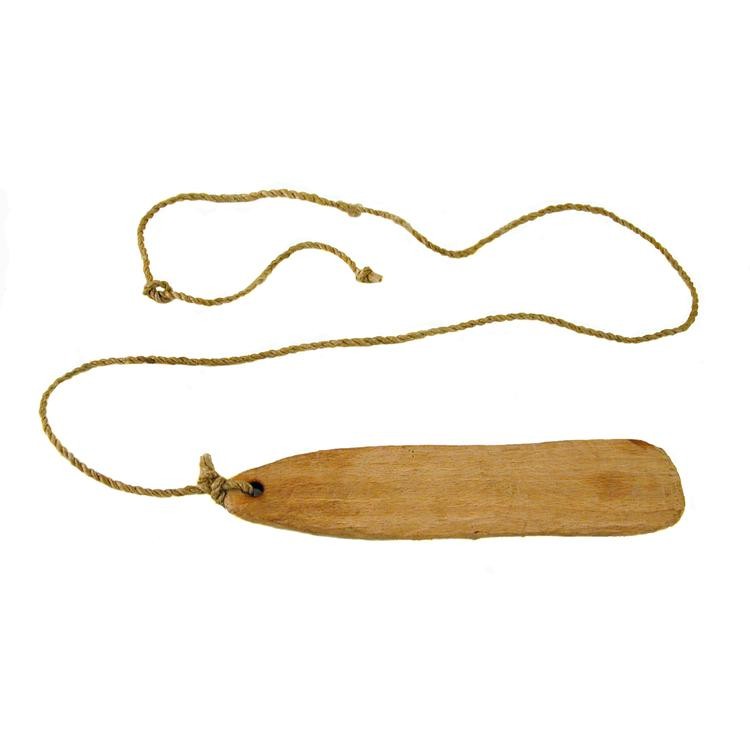
The myths tell it in their own words: the Kai of the mountains above the Huon Gulf, in north-east New Guinea, whose first initiator slit a boy’s testicles and killed him, and at the next rite took only the foreskin; the Bedik of Senegal, whose spirit Nyandemém demands that the novices’ heads really be cut off, until Gindam holds him back and orders a mock execution; the Dalabon of Arnhem Land, in Australia’s far north, whose serpent Lumaluma swallowed the men given to her until they “put bullroarers in her place.” Where the killing was never softened, the bullroarer stands beside it.
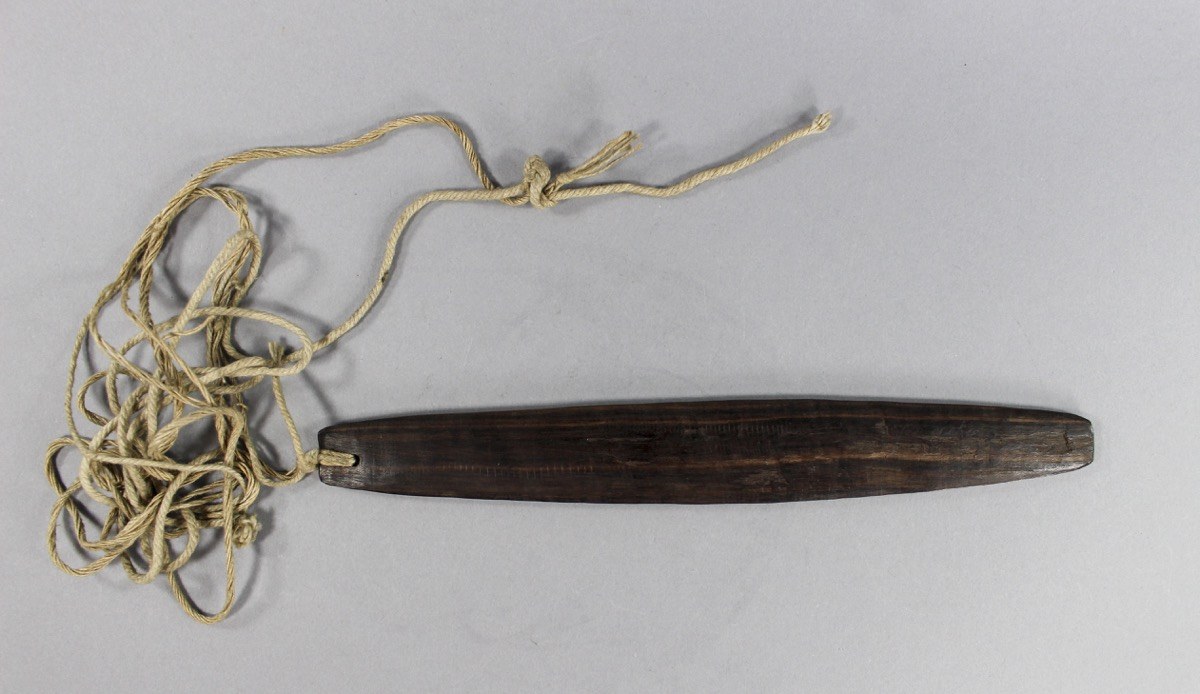
On the Purari delta of Papua New Guinea the men’s house kept great basketwork monsters, the kopiravi, with gaping jaws, and the bullroarers lay beneath them. When a raid brought home its victims, H. C. Cardew reported, “the dead bodies of victims are thrust inside the kopiravi and left there all night … Next morning the bodies were brought out … The bodies were cut up with bull-roarers, cooked, and eaten” (Haddon 1919, p. 178). Swallowed by the monster in the night, cut by the roarer in the morning: it is the initiation, done to an enemy and not undone.
Among the Katla of the Nuba Mountains in Sudan, Leo Frobenius was told that “until not long ago the Gombil of the Katla had to die the sacrificial death every few years,” or no rain would fall. The Gombil was the high priest, the king, and the master of the iron bullroarers that roar at the first-fruits (Frobenius 1913, p. 113). Among the Jóola of Guinea-Bissau, before the initiates leave the sacred forest, “the oldest initiate, the man who declared that ‘the knife is ripe,’ must die,” and through the three months of the rite no sacrifice may be made (Journet-Diallo 2021, p. 137). Among the Egba and the other Yoruba the Oro society that whirled the “voice of Oro” was the state’s executioner. Among the Wimbum of Cameroon, execution was “done by the incarnated ancestors and thus blood feuds are avoided” (Jeffreys 1962). That last line is Girard’s whole theory in a sentence: when the dead do the killing, no kinsman is left to take revenge.
Walter Burkert, the great historian of Greek religion, put the deepest version of the claim in the first pages of Homo Necans (1972):
Sacrificial killing is the basic experience of the ‘sacred.’ Homo religiosus acts and attains self-awareness as homo necans.
Walter Burkert, Homo Necans (trans. Bing, 1983), p. 3
Self-awareness, attained by killing. Burkert traced it to the Palaeolithic hunt. But the hunt explains why men killed animals. It does not explain why so many of the victims in the record were the community’s own youths, its own daughters, its own king. Burkert himself saw the link: “If it is followed by a predetermined … lifestyle, the sacrifice becomes an initiation. Those who have undergone the unspeakable are both exonerated and consecrated” (p. 40), and “the rituals of sacrifice, funeral, and initiation are so closely related that they can be interpreted through the same myths and may even partially overlap” (p. 56). The link runs both ways, and initiation came first.
The knife, the fire and the serpent
What was the first ordeal? Across the bullroarer’s range the answer keeps coming back as a serpent. The Rainbow Serpent swallows the novices of northern Australia and vomits them out new. The Murinbata of the Northern Territory coast say the Old Woman swallowed them, and they are “swallowed alive by Karwadi and then vomited up” to the roar. The bullroarer of the Marind of south New Guinea is the severed member of the being Sosom, which became a water snake. The Dogon Great Mask is the serpent into which the first ancestor to die was reborn. At Walpi, a Hopi village in Arizona, the Snake priests dance with live rattlers in their teeth while a warrior whirls a roarer painted as a snake, and in Athens the Sabazian initiate had the god, a live serpent, drawn through his clothing over his breast.
The ordeal had three instruments, and the myths remember all of them. The first is the knife. Boys were circumcised, subincised, scarred and knocked about until they bled, and the Maya lords drew thorned cords through their tongues and members. The second is fire. The Popol Vuh twins walk into the oven; the Aztec gods made the sun by throwing one of their own into the flames; in south-eastern Australia the novices came home from the bush with the hair of their heads singed off. The third is the serpent itself. Venom does what no other natural substance does: it brings a fully conscious person, by a bite, to the experience of dying. A neurotoxic bite paralyses the body while the mind stays awake; the bitten person feels the body fail and watches from inside it. Among the Nama of southern Africa a snake-doctor’s training began when his father rubbed dried cobra venom into two small cuts above each elbow, and the doses grew from there. The ancients knew the rule that makes it work: venom does nothing swallowed, everything in a wound. So the first rite was not a meal. It was a bite, and a cut.
Knife, fire and venom, with fasting, sleeplessness, darkness, terror and the roar: the ordeal pulled every lever the body has, and the levers are few. The brush with death was the active ingredient. A body brought near death does extraordinary things. In 2013 Jimo Borjigin’s laboratory in Michigan found that in rats, in the half-minute after the heart stops, the brain flares with a surge of synchronized activity stronger than in waking life. The near-death reports of people who come back share a shape across cultures: the body left behind, a passage, a meeting, a return with the self changed. The Inca knew how to manage it. The children of the capacocha were drugged for months, more and more toward the end. That is the drugging of the ordeal carried through to death.
The point of the ordeal was what came back. A boy went in and a man came out, born again, with a new name, a new place among the living and the dead, a new past (the ancestors’ time, which he now shared) and a new future (his own death, which he had already tasted). That is what the ordeal taught, the wellspring of its theology: life is made by a death and comes back through one. In Australia the novice is told that the being whose voice he hears has killed him and will bring him back. In Africa the Dogon say the first ancestor to die, Dyongou Sérou, was “sacrificed to make human life on Earth possible and raised again as the serpent the Mask depicts”. On the Gulf of Papua the Orokolo tell how the cannibal god Oalea gave up his own stomach and died, and inside were found the child he had eaten and the first bullroarer, and his flesh became the first fish, “the food of mortals.”
Here the argument parts from Girard’s. His first victim is a stranger, chosen at random by a mob, and the god who rises from the killing is the mob’s mistake about where its peace came from. The first victim of the serpent cult was the initiate: chosen, prepared, a son of the group, and meant to come back. The return was not a mistake. It was what the ordeal actually produced. Girard’s scapegoat explains why a crowd kills. It does not explain why the killed so often rise, why the being who kills the boys is a serpent, or why the roar of the dead god is a sound every initiate is meant to survive. The death-and-rebirth ordeal explains all three, and it explains the scapegoat too. A rite that sometimes kills the initiate in earnest will learn that a death can be supplied, and that any body will do. When a boy did not come home from the bush, the Chamba of Cameroon told his mother:
“Langa had no meat, so he ate your son.”Chamba initiators to a mother, Cameroon (Frobenius 1925, p. 14)
That is where sacrifice begins. A rite that holds a real death and a real return holds two things that pull apart. While the death was the door to the return, the victim was precious, and he walked out. Once the death itself became the payment, once what came back was the rain, the crops, the sun, or the king’s peace rather than the man, the man stayed dead. The cosmos had been fed by a death in the beginning, and it went on asking. Elsewhere the opposite happened: the return was what people wanted, and the death was made smaller and smaller until a cut, a scorching or a mock beheading stood for it. With such a beginning, it is no wonder the rite broke both ways, again and again, in places that never heard of each other.
The Feathered Serpent
No figure holds the whole story the way Quetzalcoatl does. His name is “quetzal-feather serpent.” To the Aztecs and the peoples before them he was the wind, the priest, the giver of maize and of the calendar, and the morning star. The oldest written Nahuatl histories, the Annals of Cuauhtitlan and the Legend of the Suns, both set down in the 1550s and 1560s and preserved together as the Codex Chimalpopoca, tell four things about him. Each is a part of the ordeal.
He offered snakes
As priest-king of the Toltecs at Tollan, their capital north of the Valley of Mexico, the Annals say, Quetzalcoatl built a house of fasting with four rooms, of green planks, coral, shell and quetzal feathers, where he prayed and did penance, and at midnight he went down to the water:
He made his thorns of precious stones, and his sacred boughs of quetzal feathers. He burned incense of turquoise, emerald and coral; and his offering was of snakes, birds and butterflies, which he sacrificed. … It is told that, while Quetzalcoatl lived, the demons tried again and again to trick him into making human sacrifices, killing people. But he never would, nor gave way, because he greatly loved his vassals, who were the Toltecs; his sacrifice was always only of snakes, birds and butterflies that he killed.
Annals of Cuauhtitlan §§35–38, from the Spanish of Primo Feliciano Velázquez (1945), pp. 8–9
The thorns were for his own body. The Mesoamerican priest drew blood from the ears, the tongue and the penis with maguey spines and stingray spines, and offered it on paper, as Lady K’ab’al Xook does on the Yaxchilan lintels. The Feathered Serpent’s worship, in the memory of the Toltec age, was the priest’s own blood and the serpent’s life: the ordeal on the self, and the serpent as the thing offered. Human sacrifice comes in with his enemies. Tezcatlipoca, the Smoking Mirror, and his companions make him drunk on pulque “so that he no longer does penance,” shame him, and drive him out of Tollan. Their age is the age of human sacrifice.
He died in the land of the dead, and came back
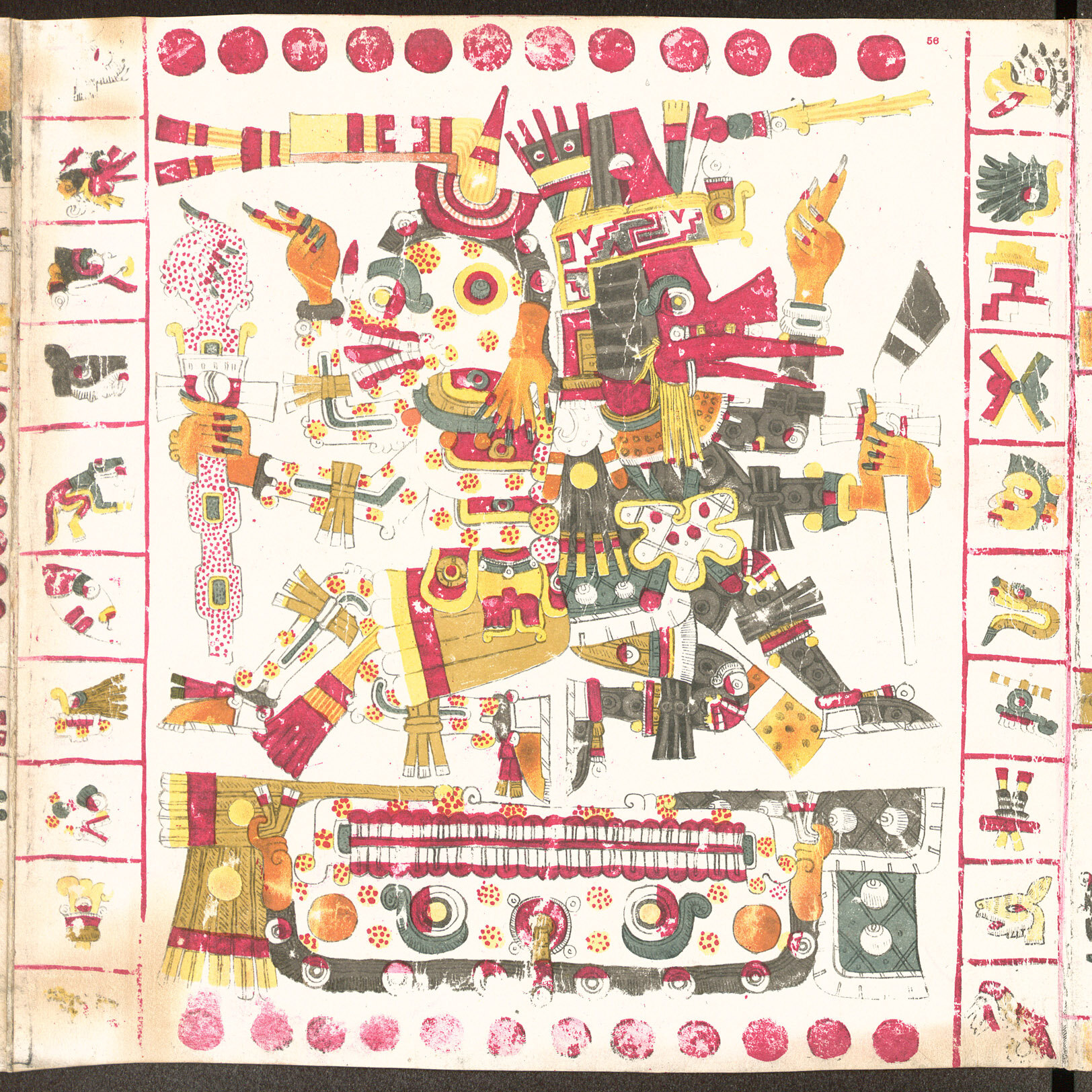
The Legend of the Suns tells how this world’s people were made. The gods ask who will live on the earth, and Quetzalcoatl goes down to Mictlan, the land of the dead, to its lord Mictlantecuhtli: “I have come for the precious bones that you keep.” The lord sets him a test. “Blow my conch and carry it four times around my seat of precious stones.” But the conch has no finger-holes. Quetzalcoatl calls the worms to bore them, and the bees go in and make it sound. Then, fleeing with the bones, he falls into a pit the lord has dug:
He fell dead, and scattered the precious bones on the ground, which the quail then bit and gnawed. A little later Quetzalcoatl came back to life. He wept, and said to his double: “What will come of this, my double?”
Legend of the Suns, from the Spanish of Velázquez, p. 120
He bled over the bones, and made mankind
He gathers the bones and carries them to Tamoanchan, the paradise of origins:
After he brought them there, the one called Quilachtli ground them; she is Cihuacoatl. Then she put them in a precious bowl. Over it Quetzalcoatl bled his member; and then all the gods did penance … Then they said: “The vassals of the gods are born.” Because they did penance over us.
Legend of the Suns, from the Spanish of Velázquez, pp. 120–121
Cihuacoatl is “Snake Woman.” A snake goddess grinds the bones of the dead, and the god who has just died and come back cuts his own member and bleeds into the bowl, and humankind is born from it. Set beside the twins of the Popol Vuh, whose bones were ground and thrown into the river and who rose from the water “chosen,” the shape is the same: death, the ground bones, the blood, the return. It is an initiation, told as the making of the species. Every human being, in this theology, is an initiate of the god’s ordeal. “Because they did penance over us”: the gods’ blood is why we live.
The same book tells how the present sun was made. At Teotihuacan the gods gathered around a fire that had burned four years, and the poorest of them, Nanahuatzin, the pustuled one, fasted, drew his own blood with thorns, was painted white and feathered, and threw himself into the flames. He rose as the sun. But the sun would not move, until “there was a dying of gods, ah! ah! at Teotihuacan” (p. 121). Girard read this myth closely in The Scapegoat (1982). He saw in the willing victim a disguised murder: “to force them to move, first every single god must be sacrificed, and then the anonymous crowds which are substituted for them. Everything depends on the sacrifice.” First the gods give themselves to make the world. Then people are given to keep it going. The god’s ordeal becomes a debt, and the debt is paid in hearts.
He burned, and rose as the morning star
Driven out of Tollan, Quetzalcoatl walks east to the shore of the “divine water,” the sea:
When he had dressed himself, he set fire to himself and burned. … When his ashes were spent, at once they saw the heart of Quetzalcoatl rise. As they knew, it went to the sky and entered the sky. The old men said it turned into the star that comes out at dawn; and so they say it appeared when Quetzalcoatl died, and for that reason they called him Lord of the Dawn. They said that when he died, for four days only he did not appear, because then he went to dwell among the dead; and in four more days he provided himself with darts; so that at eight days the great star appeared, the morning star, which they called Quetzalcoatl.
Annals of Cuauhtitlan §50, from the Spanish of Velázquez, pp. 10–11
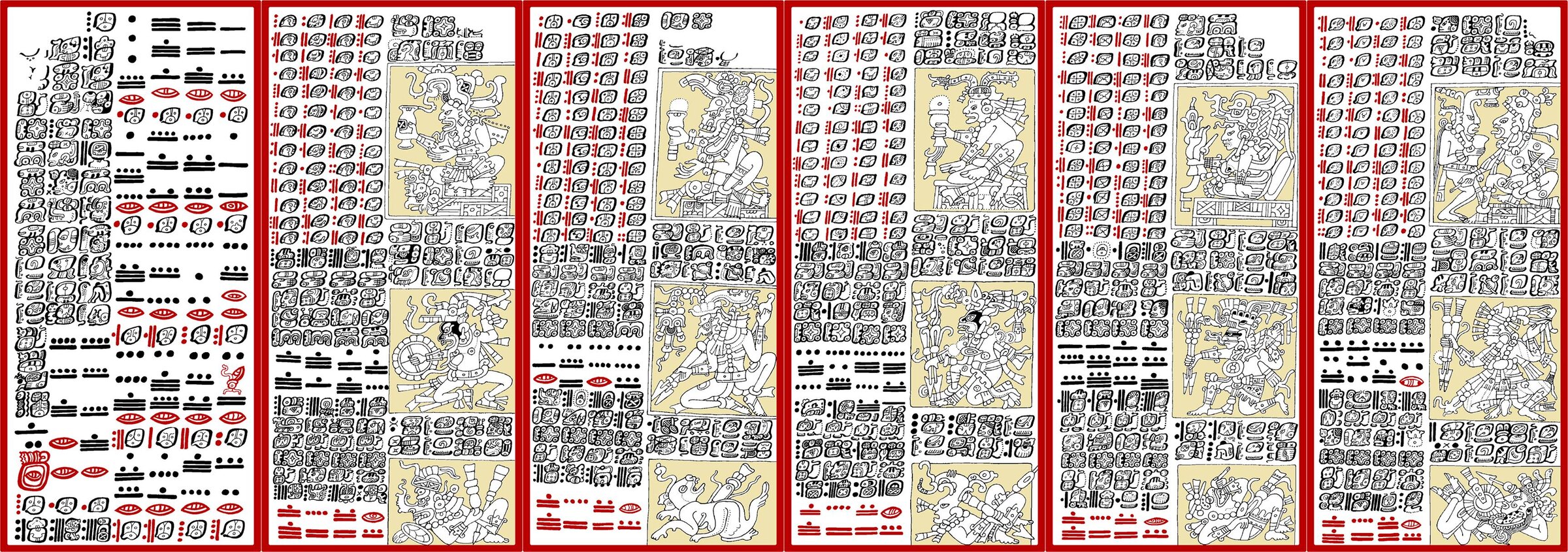
The eight days are astronomy. Venus, when it passes between the earth and the sun, vanishes from the sky for about eight days and then rises again before dawn as the morning star. It is the one light in heaven that can be seen to die and come back. The Feathered Serpent’s death and return are the planet’s own. And the risen star is dangerous. The Annals go on to say that when it first appears, according to the day it rises on, “it shoots the old men and women,” or the children, or the great lords, or the youths and maidens, or the rain. The Maya astronomers who made the Dresden Codex tracked the same star and drew the same thing: at each heliacal rising, the god of the morning star spearing a victim.
Two hundred killed for his temple
The oldest great monument of the Feathered Serpent is the pyramid that bears his heads at Teotihuacan, the great city north-east of modern Mexico City, built early in the third century AD. Its facade alternates the feathered serpent with a crocodilian headdress, rows of them, rising out of a ground of carved water and shells. Under and around it, excavators have found the bodies of some two hundred people killed and buried when it was built, many of them young men with their hands behind their backs, in military dress, some with necklaces of human jaws (Cowgill; Sugiyama). The god whom the Toltecs remembered refusing human sacrifice has, at his first great house, the largest dedication killing in the ancient Americas.
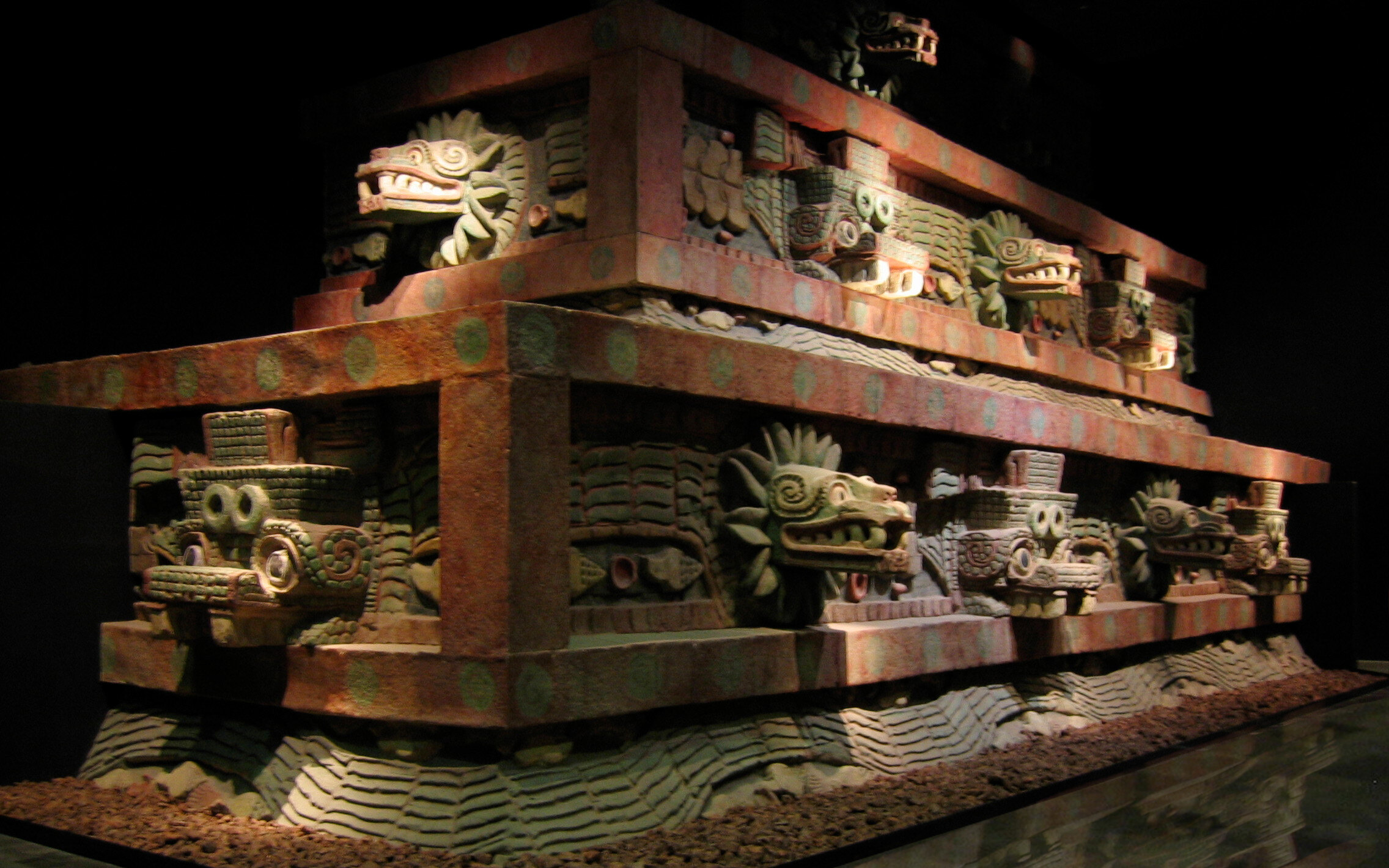
The Feathered Serpent is the god of the ordeal: the self-cut, the serpent, the death in the underworld, the return as the morning star. His memory kept that, and pinned the mass killing on his enemies. His monuments show what became of the ordeal in a city of a hundred thousand. Its return was given to the state, and the bodies went into the foundations.
The morning star in the Bible
The other serpent of the morning star is in the Bible. “How art thou fallen from heaven, O Lucifer, son of the morning!” Isaiah sings over the king of Babylon (14:12). The Hebrew is hêlêl ben-šāḥar, “shining one, son of Dawn,” the morning star, and Jerome’s Latin gave it the star’s Latin name, lucifer, “light-bringer.” He had climbed to heaven; he is “brought down to hell, to the sides of the pit” (14:15). Christian reading made the fallen morning star the Devil, and made the Devil the serpent of Eden, “that old serpent, called the Devil, and Satan” (Revelation 12:9). The light-bringer who fell was a snake. The same snake gave Eve the fruit that opened her eyes.
The morning star is older than Isaiah. In the Sumerian poem of Inanna’s descent, the goddess who is the planet Venus goes down into the underworld. She is stripped at each of its seven gates, and the judges of the dead look at her “with the look of death”:
The afflicted woman was turned into a corpse. And the corpse was hung on a hook. After three days and three nights had passed, her minister Ninshubur carried out the instructions of her mistress.
Inana’s Descent to the Nether World, Electronic Text Corpus of Sumerian Literature
Sprinkled with the plant of life and the water of life, the corpse on the hook rises. But the dead will not let her go without a substitute, and Inanna gives them her husband, the shepherd Dumuzi. He flees, and begs the sun to change him: “Turn my hands into snake’s hands and turn my feet into snake’s feet, so I can escape my demons.” In the oldest written myth of the morning star, the star dies, hangs three days, and rises, and the price of her return is another’s death, and the one who pays it becomes a snake.
Then the New Testament takes the morning star back from the Devil. “I am the root and the offspring of David, and the bright and morning star,” says Christ (Revelation 22:16). The morning star will “arise in your hearts” (2 Peter 1:19). And on the night of his death and resurrection, the Easter Vigil, the deacon sings the Exsultet over the new fire and the great candle, and names him:
Flammas eius lucifer matutinus inveniat: ille, inquam, lucifer, qui nescit occasum. Christus Filius tuus, qui, regressus ab inferis, humano generi serenus illuxit.
May the morning star find its flame still burning: that morning star, I say, which never sets, Christ your Son, who, coming back from the dead, has shed his peaceful light on humankind.
The Exsultet, the Easter proclamation of the Roman rite
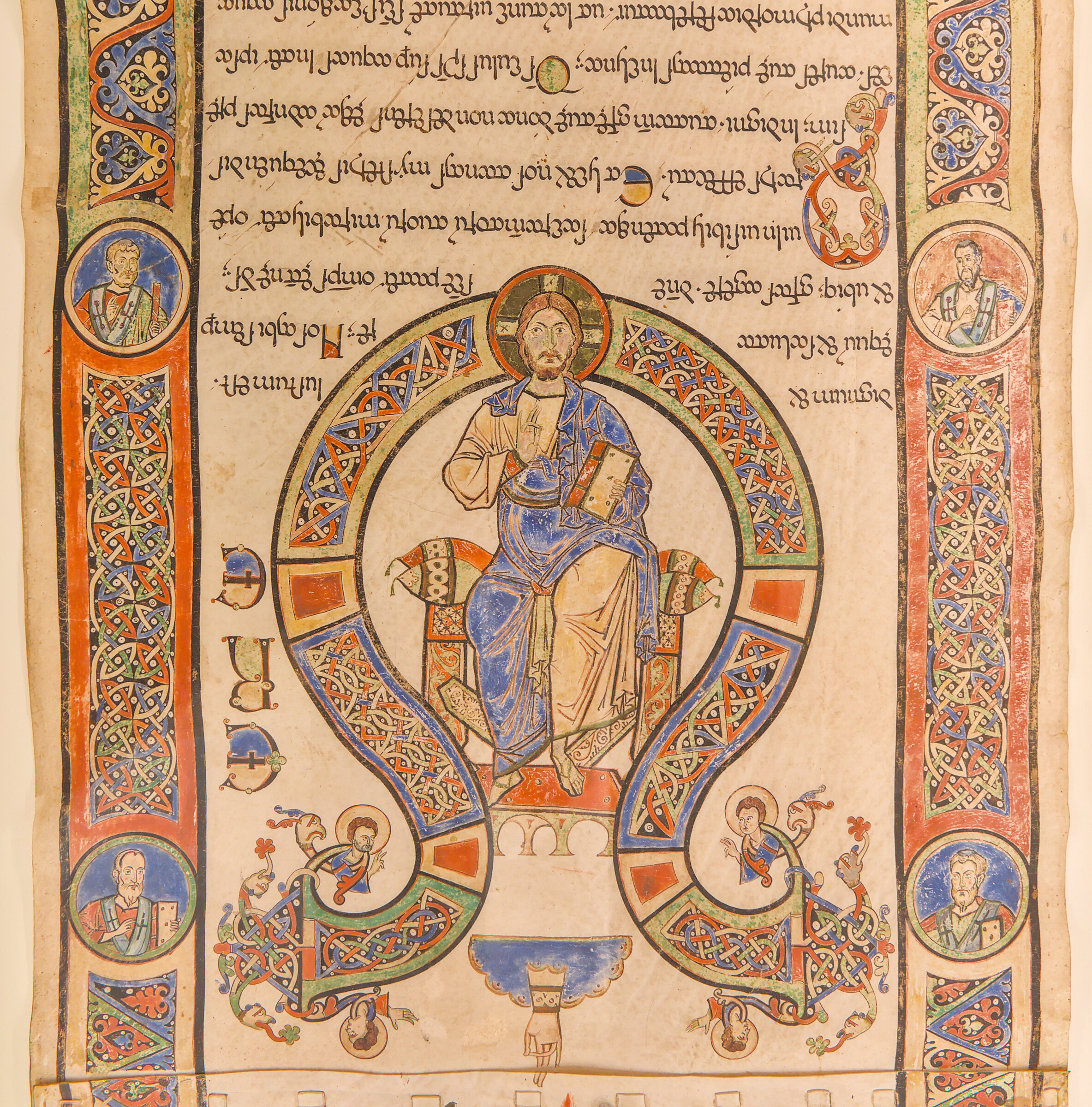
And the Gospel makes the crucified man the serpent. When the Israelites were dying of serpent bites in the wilderness, Moses made a serpent of bronze and set it on a pole, and “if a serpent had bitten any man, when he beheld the serpent of brass, he lived” (Numbers 21:9). “And as Moses lifted up the serpent in the wilderness,” says Jesus, “even so must the Son of man be lifted up: that whosoever believeth in him should not perish, but have eternal life” (John 3:14–15). The bite kills, the lifted serpent heals, and the lifted serpent is Christ. Jesus says it at night to Nicodemus, a leader of the Pharisees, in the same talk where he tells him, “Except a man be born again, he cannot see the kingdom of God” (John 3:3). Born again, and the serpent lifted up: one conversation.
So the god at the centre of the Christian rite is, by his own scriptures and liturgy, three things at once: a god who gives himself to death, the serpent lifted up, and the morning star come back from the dead. So is the Feathered Serpent, who bled himself to make mankind and returned from Mictlan as the morning star. Neither borrowed from the other. Both remember the old snake cult’s ordeal at the far ends of the world, and the star that dies and returns is that ordeal seen in the sky. The common source is the rite, and it spread with the people who carried it.
This is my body
Follow the two roads to their ends. Where the return was given away, to the sun, the crops, the rain or the king, the death was kept, and that is human sacrifice: the capacocha child, the meriah, the two hundred under the pyramid, the Katla king who died so the sorghum would grow. Where the death was given away, the return was kept, and the death became a sign of itself. That is the road the rest of the world’s religions took, and it can be walked step by step.
The first step is the substitute. Abraham raised the knife over Isaac, and a ram caught in a thicket took the boy’s place. The Law of Moses kept both halves of the old rule side by side: “the firstborn of thy sons shalt thou give unto me” (Exodus 22:29), and “all the firstborn of thy sons thou shalt redeem” (34:20). When the British suppressed the meriah, the Khonds gave the Earth Goddess a buffalo. Among the Kissi of Guinea, a woman who saw the sacred roarer was once never spared; in some villages in André Schaeffner’s day a dog was killed instead and its blood poured on the roarer, and he judged that the dog had taken the place of “a greater sacrifice.” Among the Kai, a pig is paid as the boy’s ransom.
The next step is the image. In the Aztec month of Panquetzaliztli the priests made the god Huitzilopochtli of amaranth dough. A priest called Quetzalcoatl pierced its heart with a dart, and the people broke up the god’s body and ate it, in the rite called teocualo, “the god is eaten” (Florentine Codex, book 3). The Spanish friars who saw it called it the devil’s mockery of the communion. In West Africa the Yoruba Oro society, once the executioner of the state, crossed in the slave ships to Cuba and lost its judicial office there; it lives on as devotion, its fish-shaped roarers muted. One cult went from killing to worship.
The last step is the sacrament, and Christianity took it at both ends of the old rite at once. For the initiation, Paul turned the cut into a death that does not kill: “In whom also ye are circumcised with the circumcision made without hands … Buried with him in baptism, wherein also ye are risen with him” (Colossians 2:11–12); “Know ye not, that so many of us as were baptized into Jesus Christ were baptized into his death?” (Romans 6:3). The Christian is killed and raised in water, and nobody bleeds. For the sacrifice, the god is killed once, for all, and eaten as bread. “Except ye eat the flesh of the Son of man, and drink his blood, ye have no life in you” (John 6:53). That is the Khond field and the Aztec dough, and it is the Feathered Serpent bleeding into the bowl so that people may live. Hubert and Mauss, the French sociologists who first took sacrifice apart in 1898, saw where it ended: the Paschal Lamb, “the customary victim of an agrarian or pastoral sacrifice, has persisted and still serves even today to designate Christ, that is to say God. Sacrifice has furnished the elements of divine symbolism” (p. 81).
Girard believed the Gospels ended sacrifice by telling the truth about it, that the victim was innocent and the crowd guilty. They did more than that. They gave the old ordeal back its first meaning. Jesus died, so you don’t have to. But in the beginning, you were the sacrifice, and in dying you learned what you were. The old snake cult took each initiate to the edge of death by the knife, the fire and the serpent’s bite, and brought him back born again, with a self. Where it kept the death and lost the return, it filled the world’s pits and altars and foundations with the dead, because the cosmos was owed a death and a killing was the oldest way anyone knew to make life. Where it kept the return and let the death become a sign, it became the sacrament, the morning star rising in the heart. Human sacrifice is common because it is the old ordeal’s death without its rebirth. The bread is its rebirth without the death.
Key sources
Christenson, A. J., trans. 2003. Popol Vuh: The Sacred Book of the Maya. Electronic edition, Mesoweb — the oven and the ground bones (pp. 168–169); “Sacrifice him, but not so that he really dies” and the defeat of the lords of Xibalba (pp. 170–172).
Velázquez, P. F., trans. 1945 (repr. 1992). Códice Chimalpopoca: Anales de Cuauhtitlan y Leyenda de los Soles. Mexico: UNAM — Annals §§35–38, Quetzalcoatl’s penance and offerings of snakes, birds and butterflies (pp. 8–9); §§49–51, his self-immolation, the morning star and its darts (pp. 10–11); Legend of the Suns, the precious bones, Quetzalcoatl’s death and revival, the bleeding of his member, and the sun at Teotihuacan (pp. 120–121). English renderings on this page are from Velázquez’s Spanish. See also Bierhorst, J. 1992. History and Mythology of the Aztecs: The Codex Chimalpopoca. Tucson: University of Arizona Press.
Girard, R. 1977. Violence and the Sacred. Trans. P. Gregory. Baltimore: Johns Hopkins — “the heart and secret soul of the sacred” (ch. 1, p. 31); rites of passage, “the ultimate act of initiation,” the roaring initiate and the decay to the symbolic (ch. 11). Girard, R. 1986. The Scapegoat. Trans. Y. Freccero. Baltimore: Johns Hopkins — ch. 5, “Teotihuacan” (pp. 57–65).
Reik, T. 1931. “The Puberty Rites of Savages.” In Ritual: Psycho-analytic Studies, trans. D. Bryan. London: Hogarth — pp. 108 n. 3, 120. German original 1915.
Burkert, W. 1983. Homo Necans: The Anthropology of Ancient Greek Sacrificial Ritual and Myth. Trans. P. Bing. Berkeley: University of California Press — pp. 3, 40, 56.
Eliade, M. 1958. Birth and Rebirth (reissued as Rites and Symbols of Initiation). New York: Harper — p. 23. Hubert, H. and Mauss, M. 1964 [1898]. Sacrifice: Its Nature and Function. Trans. W. D. Halls. Chicago — p. 81. Frazer, J. G. 1922. The Golden Bough, abridged ed., ch. 47 §3, “Human Sacrifices for the Crops.”
Watts, J., Sheehan, O., Atkinson, Q. D., Bulbulia, J. and Gray, R. D. 2016. “Ritual human sacrifice promoted and sustained the evolution of stratified societies.” Nature 532: 228–231. Wilson, A. S. et al. 2013. “Archaeological, radiological, and biological evidence offer insight into Inca child sacrifice.” PNAS 110: 13322–13327. Cowgill, G. L. 2002. Ritual Sacrifice and the Feathered Serpent Pyramid at Teotihuacán. FAMSI report 96036. Sugiyama, S. 2005. Human Sacrifice, Militarism, and Rulership: Materialization of State Ideology at the Feathered Serpent Pyramid, Teotihuacan. Cambridge: Cambridge University Press.
Sahagún, B. de. 1950–1982. Florentine Codex: General History of the Things of New Spain. Trans. A. J. O. Anderson and C. E. Dibble. Santa Fe: School of American Research — book 3, ch. 1, the dough image of Huitzilopochtli and teocualo. Adam of Bremen. 2002. History of the Archbishops of Hamburg-Bremen. Trans. F. J. Tschan. New York: Columbia University Press — book 4, chs. 26–27, the Uppsala grove. Hu Houxuan. 1974. “Zhongguo nuli shehui de renxun he renji.” Wenwu 1974 (7–8) — the count of victims in the Shang oracle inscriptions. Woolley, C. L. 1934. Ur Excavations II: The Royal Cemetery. London: British Museum — the Great Death Pit (PG 1237). Xella, P., Quinn, J., Melchiorri, V. and van Dommelen, P. 2013. “Phoenician bones of contention.” Antiquity 87: 1199–1207. Stead, I. M., Bourke, J. B. and Brothwell, D. 1986. Lindow Man: The Body in the Bog. London: British Museum.
Schele, L. and Miller, M. E. 1986. The Blood of Kings: Dynasty and Ritual in Maya Art. Fort Worth: Kimbell Art Museum — Yaxchilan Lintels 24 and 25. Borjigin, J. et al. 2013. “Surge of neurophysiological coherence and connectivity in the dying brain.” PNAS 110: 14432–14437.
Inana’s Descent to the Nether World (ETCSL 1.4.1). Scripture quoted from the King James Version.
Haddon, A. C. 1919, Man 19 no. 91, p. 178 (Purari, after H. C. Cardew); Frobenius, L. 1913, Unter den unsträflichen Äthiopen, p. 113 (Katla); Frobenius, L. 1925, Dichten und Denken im Sudan, p. 14 (Chamba); Journet-Diallo, O. 2021, L’Homme 239–240, p. 137 (Jóola); Schaeffner, A. 1951, Les Kissi, p. 75; Jeffreys, M. D. W. 1962, abstracted by J. S. Boston, African Abstracts 14 (1963), p. 22 (Wimbum); Keysser, C. 1911, “Aus dem Leben der Kaileute,” in Neuhauss, Deutsch Neu-Guinea III, pp. 35, 38 (Kai); Smith, P. 1984, “Le ‘Mystère’ et ses masques chez les Bedik,” L’Homme 24, p. 26 (Bedik); Maddock, K. 1976, “Communication and Change in Mythology,” in N. Peterson (ed.), Tribes and Boundaries in Australia, p. 166 (Dalabon); Marcuzzi, M. 2010, “The Bullroarer Cult in Cuba,” Latin American Music Review 31(2): 151–181.