Atlas Essay —
The Slain God’s Voice
Central Australia · the Top End · New Guinea · the Vaupés · the Bandiagara cliffs · South Kivu
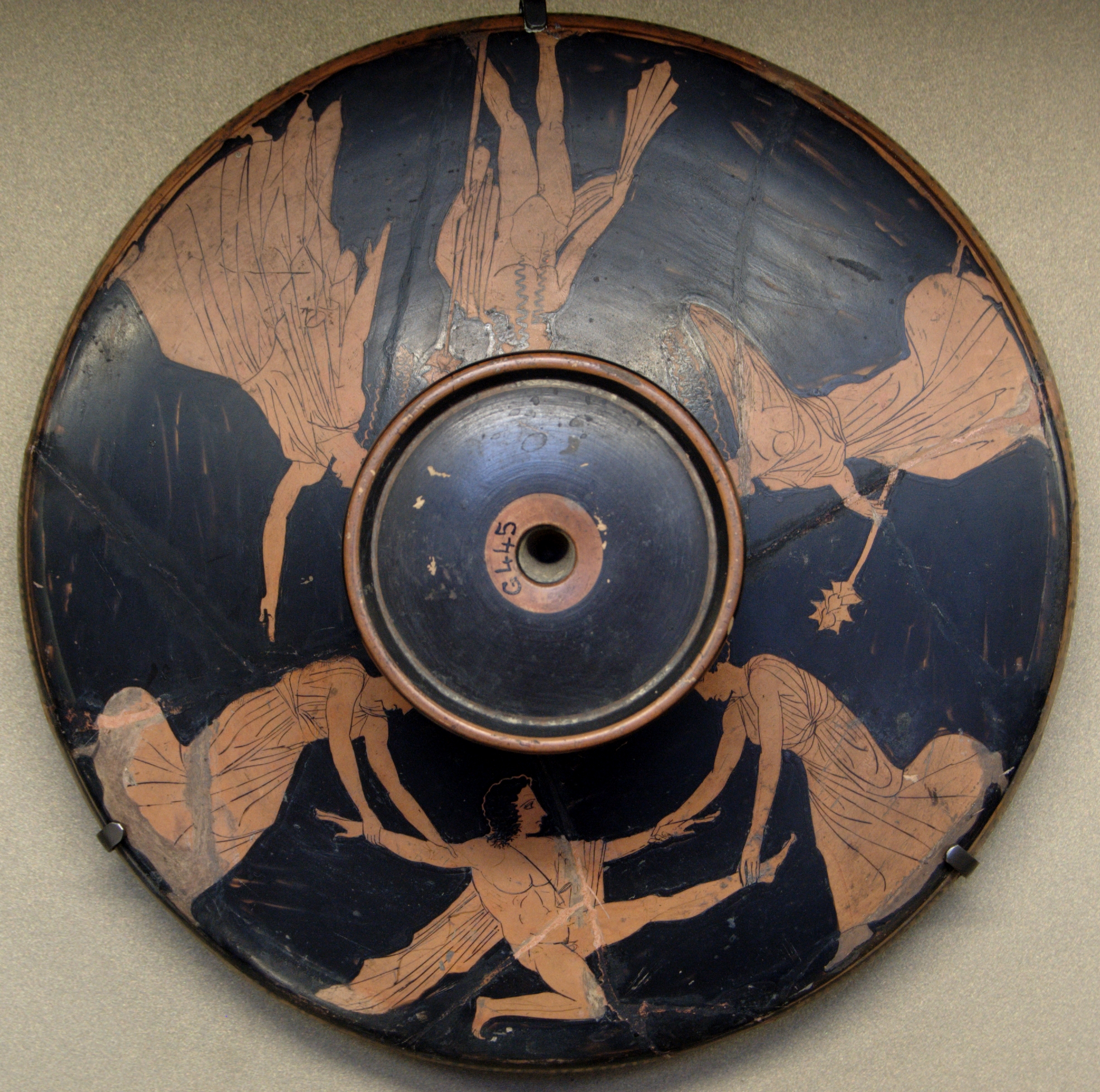
Two wild dogs crept up on a man and tore him to pieces, and as his flesh flew through the air it whirred like a bullroarer. That is not a simile a Warumungu elder would accept. Where the flesh fell, trees grew that held the dead man’s indestructible soul, and from the wood of those trees the men still cut their bullroarers. The instrument is the ancestor’s body; its roar is the ancestor, undestroyed, still crying out. Follow that logic across four more continents and the same structure keeps surfacing: the roarer is a relic of a founding being who was killed and taken apart, and to swing it is to make him speak.
A bullroarer, we are used to being told, is the voice of a spirit — it stands for the ancestor the way a bell stands for a church. But read the origin myths closely and a stronger, stranger claim keeps being made: the wood or stone in the swinger’s hand is a physical piece of a founding being who was killed and dismembered. It is not a portrait of the god. It is a fragment of his corpse, kept sounding. On this reading the roar is not a symbol of the ancestor’s presence; it is the ancestor, refusing to have died. The same idea — call it the dema-relic, after the Marind word for the ancestor-gods whose bodies became the world — turns up in Central Australia, the New Guinea south coast, the northwest Amazon, and the cliffs and mountains of Africa, each time told as a matter of fact, not metaphor.
In brief
- Among the Warumungu of Central Australia, wild dogs dismember the ancestor Murtu-murtu; his flying flesh roars like a bullroarer and becomes the trees the bullroarers are cut from (Spencer & Gillen 1904).
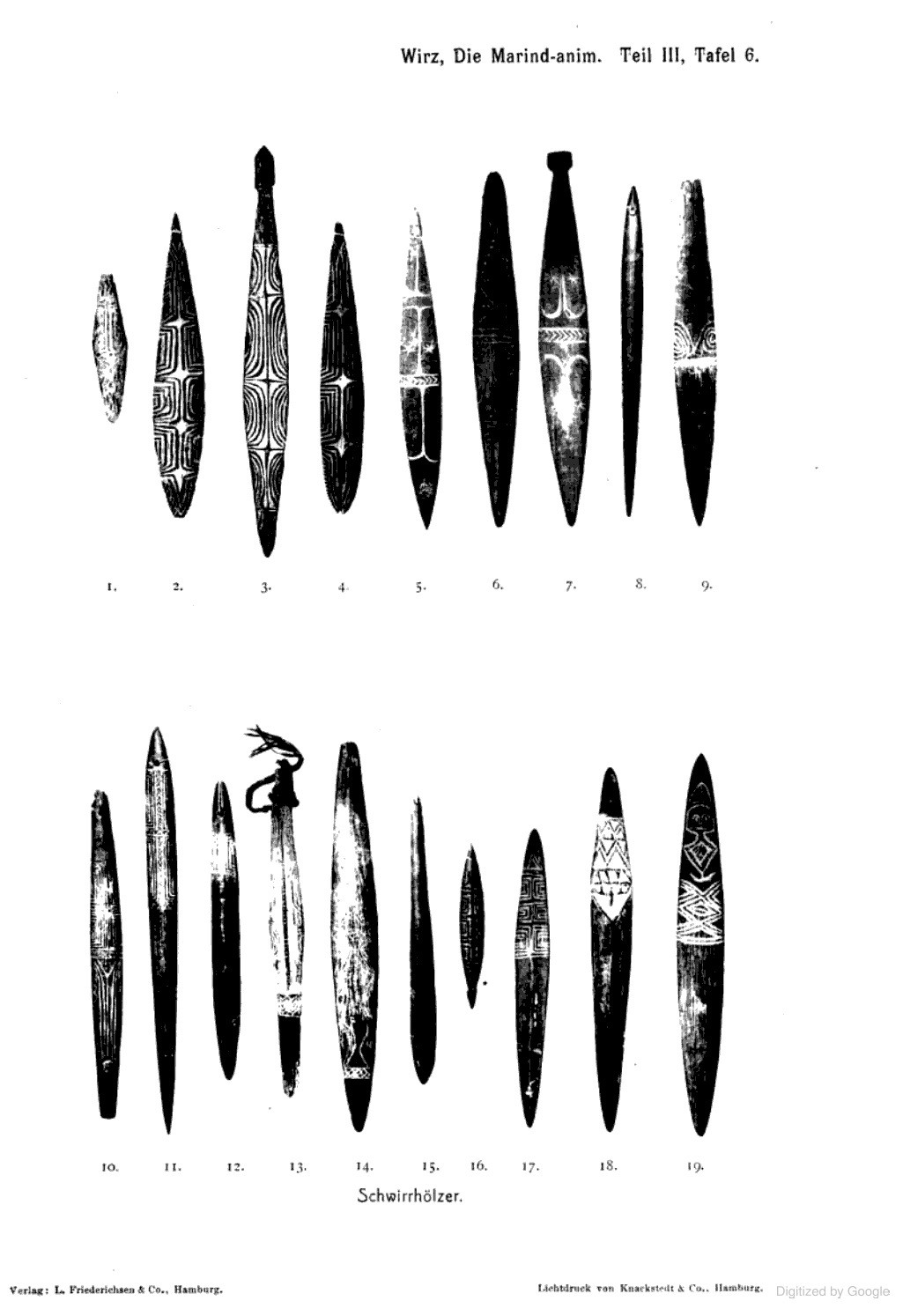
- The Marind-anim whirl the sasam, which is the severed penis of the giant Sosom become a watersnake — “the serpent’s own voice” (van Baal 1966).
- Each Dogon bullroarer is a tongue; one is the tongue of Dyongou Sérou, the first ancestor to die and be resurrected as the serpent Great Mask (Dieterlen).
- Across the Vaupés, the yuruparí instruments are cut from the palm grown out of a burned anaconda’s ashes — “the body of a slain creator-child” (Berezkin).
- The instrument carries the being’s own proper name — Sosom, aige, imina na, Tembwe, Karwadi — so the object is not a picture of the god but the god present.

The founder torn apart
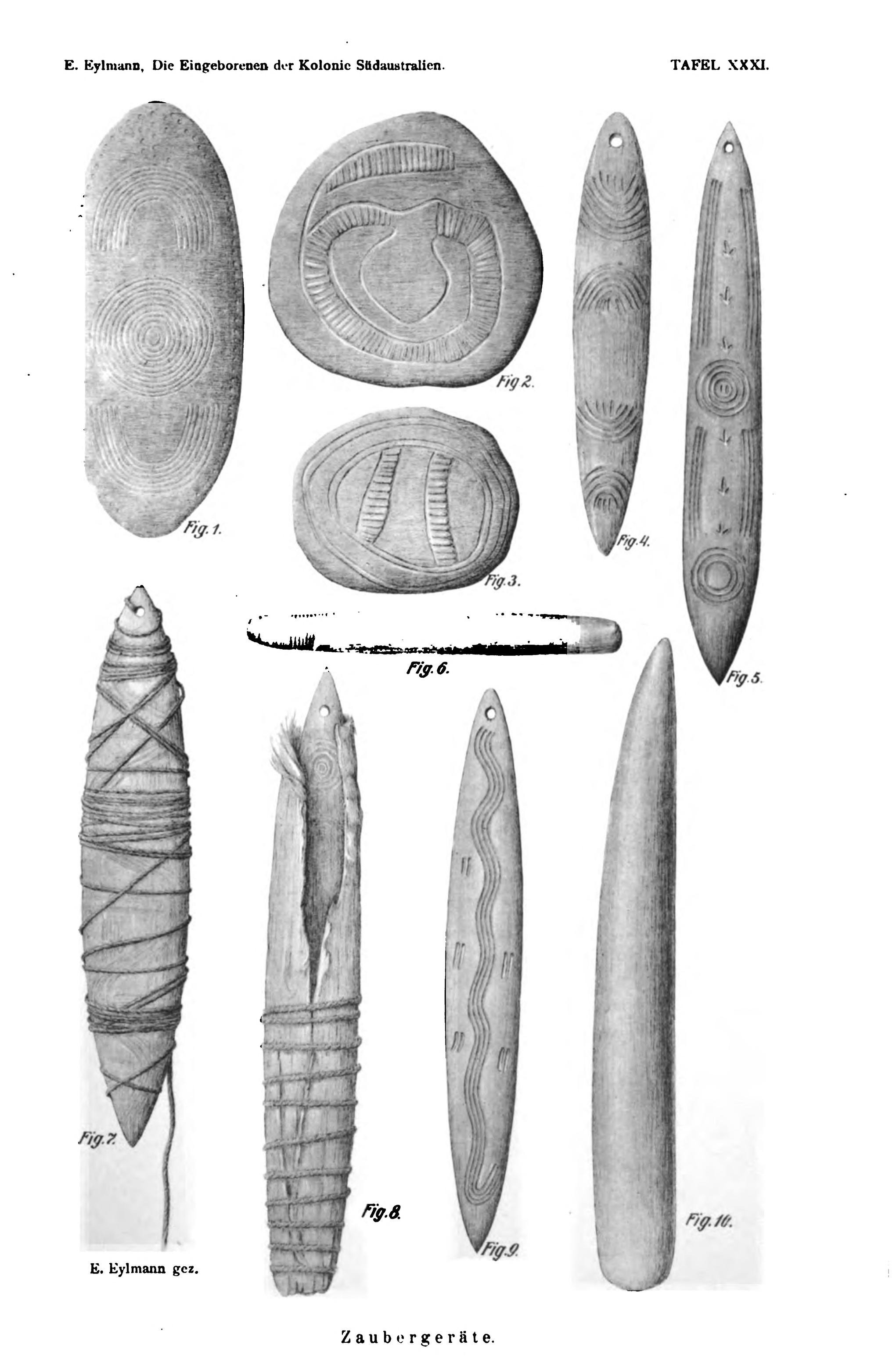
Begin with the clearest case, on the Barkly Tableland north of Alice Springs. Baldwin Spencer and Frank Gillen, working in 1901 among the people they called the Warramunga, set down the origin story of the instrument the Warumungu call murtu-murtu. Two wild dogs travelled south, came upon the man Murtu-murtu, and attacked him, biting out pieces of flesh and flinging them in every direction. Then the decisive detail, which reads like nothing so much as an equation:
“As the flesh flew through the air it made a noise like that of a bullroarer, and wherever it fell on the ground there immediately sprang up a tree called Naiantha (Grevillea sp.).”
Baldwin Spencer & F. J. Gillen, The Northern Tribes of Central Australia (1904), p. 279
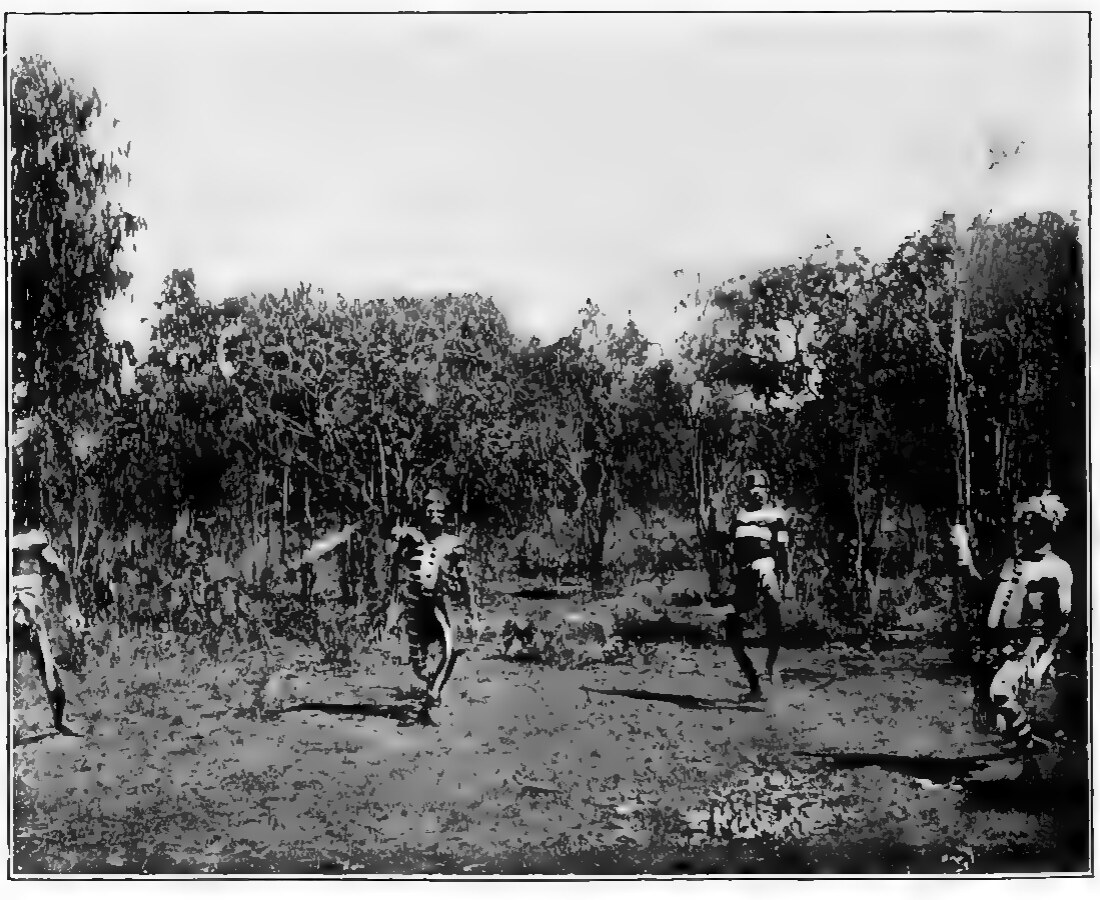
The flesh, in flight, already is a bullroarer-sound. And when the dogs had torn the whole body apart, they ran round and round biting the trees, “in the hope that they would be able to destroy the spirit or munalgi of the man Murtu-murtu, which was evidently in the trees, but they could not do so.” The ancestor’s soul had survived his dismemberment by lodging inside the very wood — and, Spencer and Gillen finish, “now the Warramunga make the tjurunga called murtu-murtu out of the wood of these trees.” Every link is present in one short myth: the founder is killed and scattered; his flesh sounds like the instrument; his indestructible soul passes into the trees; the instruments are cut from those trees. The roarer a Warumungu man swings at initiation is Murtu-murtu’s body, and the roar is his soul that the dogs could not kill.
That the myth is not incidental to the rite is plain from how the rite is staged. The novice, exhausted after a night of ancestral song, hears the murtu-murtu roar behind him and is “too frightened to do anything”; he is circumcised, and only afterward, by firelight, is the marked wooden instrument shown to him for the first time. He then carries it in seclusion through a full turn of the moon, on pain of death should any woman or child see it. The object he guards is the ancestor himself, come back to sound.
“… in the hope that they would be able to destroy the spirit or munalgi of the man Murtu-murtu, which was evidently in the trees, but they could not do so.” Spencer & Gillen, The Northern Tribes of Central Australia (1904), p. 279
More slain founders
Once the shape is in the eye, it appears again and again, each culture supplying its own dismemberment and its own relic.
Sosom’s severed member (Marind-anim)
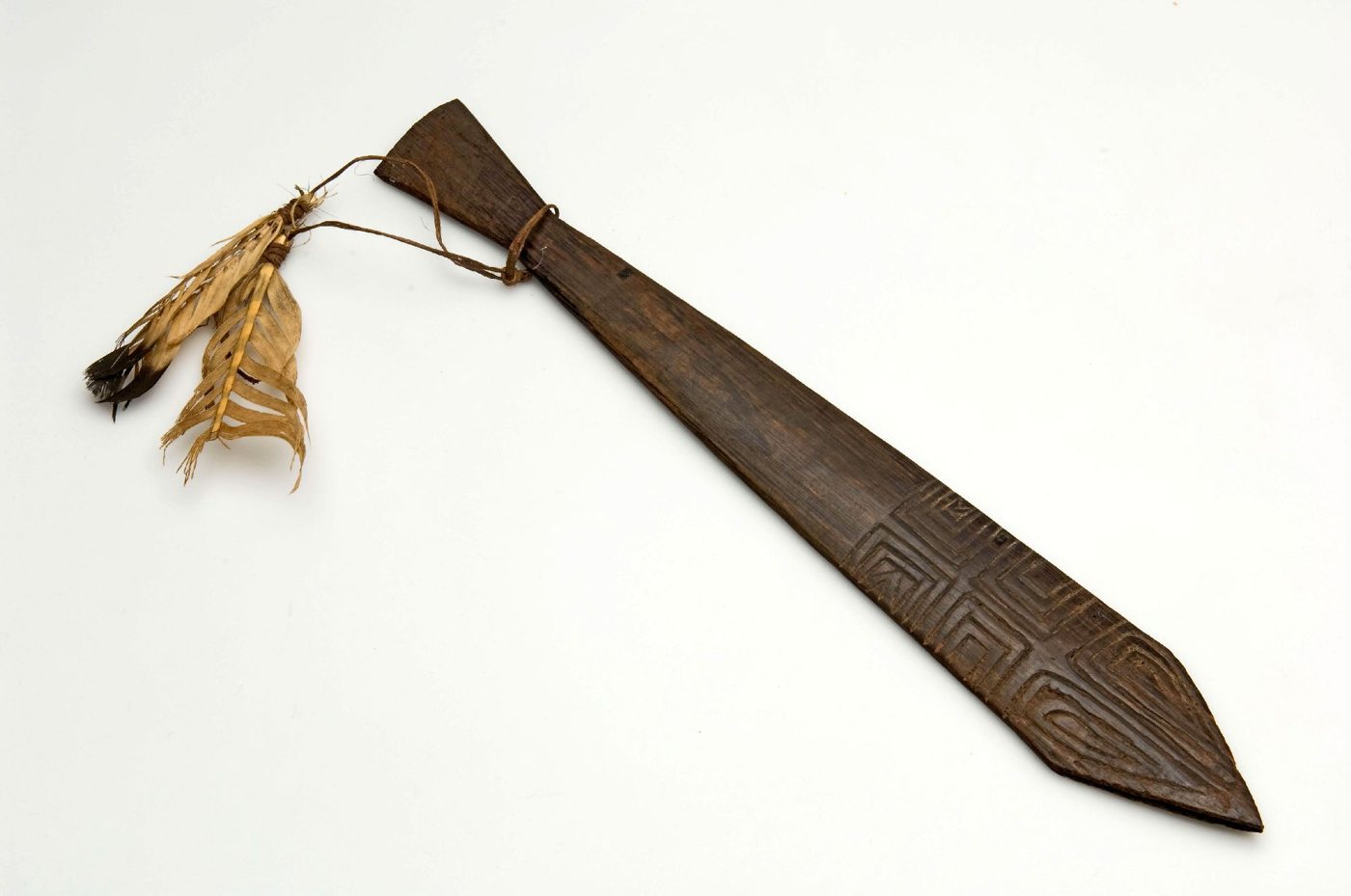
On the south coast of New Guinea the Tugeri or Kaya-Kaya and their neighbours the Marind-anim swing an instrument that shares one name with a giant: Sosom. He comes each year with the south-east monsoon, a being of stone so vast he stands with a foot on either bank of the Merauke River, and at his festival the roarers are sounded and the boys are “swallowed” and given back as men. The instrument’s origin is a mutilation. In the telling J. van Baal reconstructed from Marind tradition, the older men — worn out by the boy-giant’s endless roaring — cut off Sosom’s penis; “it fell into the river and became a watersnake — and the bullroarer the men whirl is that severed member, the serpent’s own voice.” Here the relic-logic runs to its limit and fuses three things into one: the severed organ, the snake it becomes, and the whirled blade are a single identity. Nowhere else among the slain gods does the full chain of phallus, serpent, and instrument crystallize so completely; the Marind case is the type-site for it.
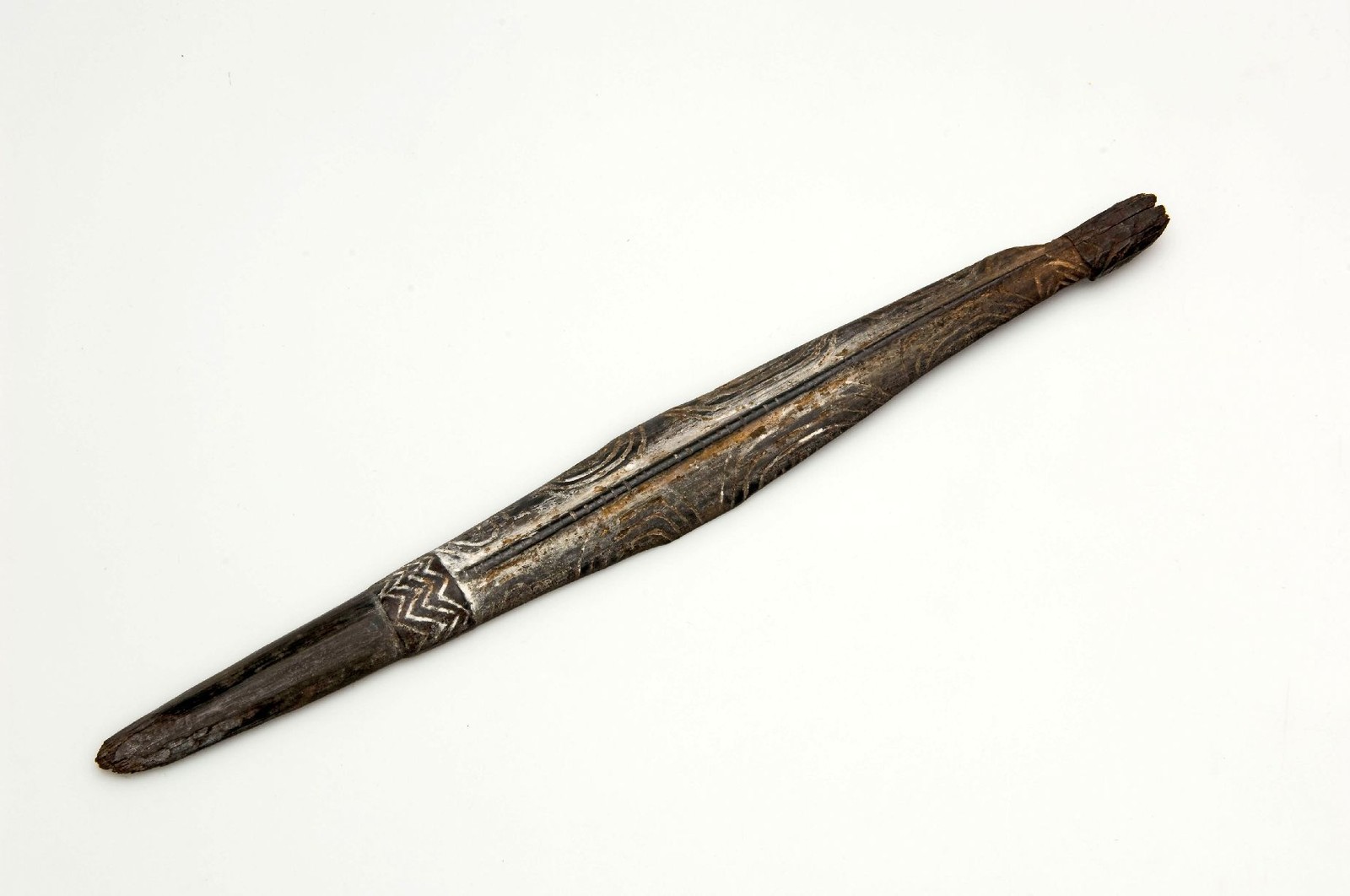
The penis-tjurunga of Witanygula (Nambutji)
Far to the south, in the northern Western Desert, Géza Róheim collected the same structure without the serpent. The Nambutji bullroarer is the windirpiri, and behind it stands Witanygula — the penis of an old man who sat forever at a place called Kuna-tari. The organ travelled under the earth of its own accord, seeking women, until a woman named Iniwara found it hidden beneath her tomahawk and chopped it to pieces. The chips turned to stone, becoming the tjurunga that are marked underneath with a penis. The stone Róheim carried back to Budapest is one of those chips: a flat oval tablet painted red, the ninti-windirpiri or penis-tjurunga, engraved with the ancestor’s penis, feet and body. It both is a severed-member relic and is engraved with the member it is. The dismemberment is inscribed on the surviving fragment.
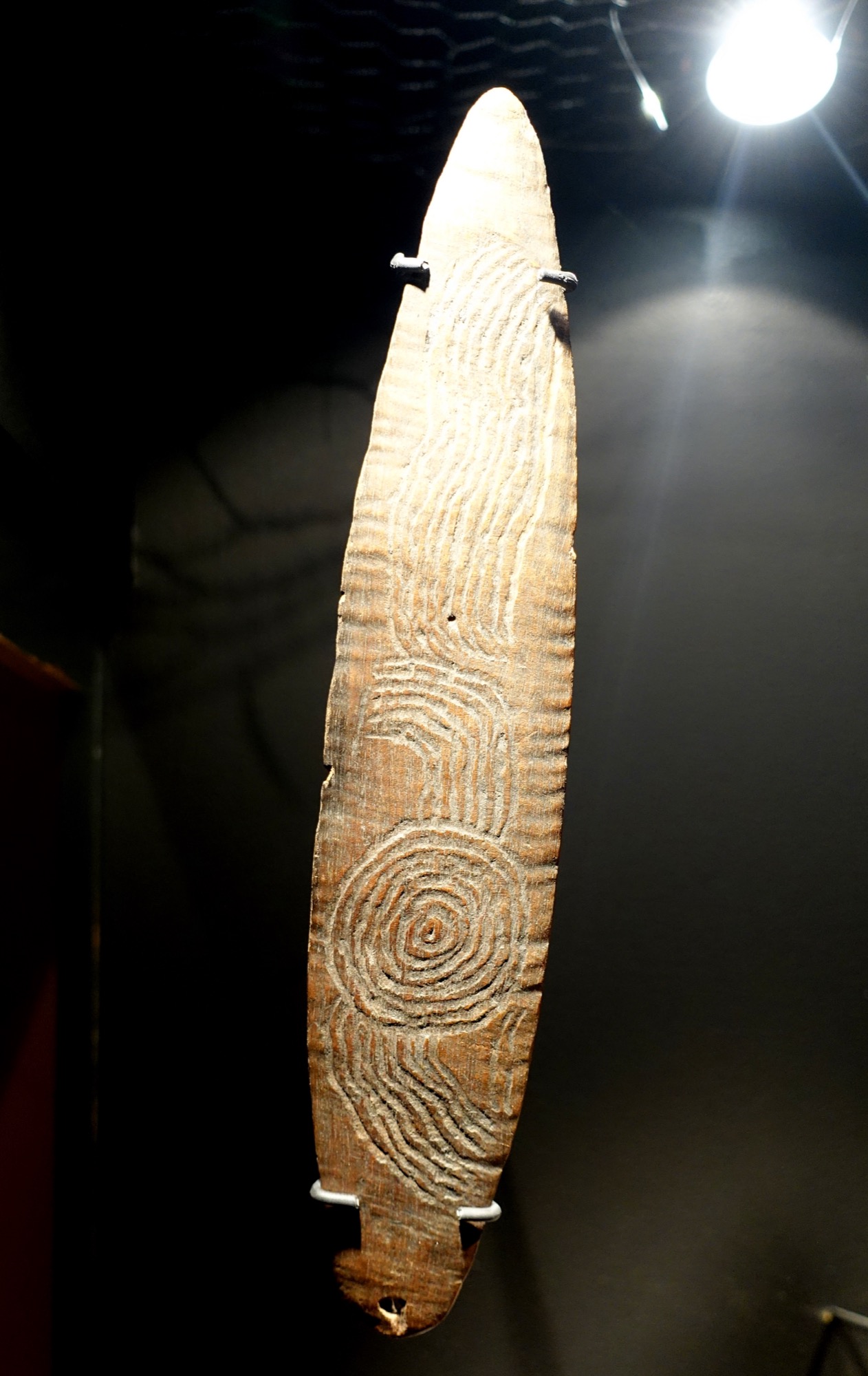
The body of the slain child (yuruparí, the Vaupés)
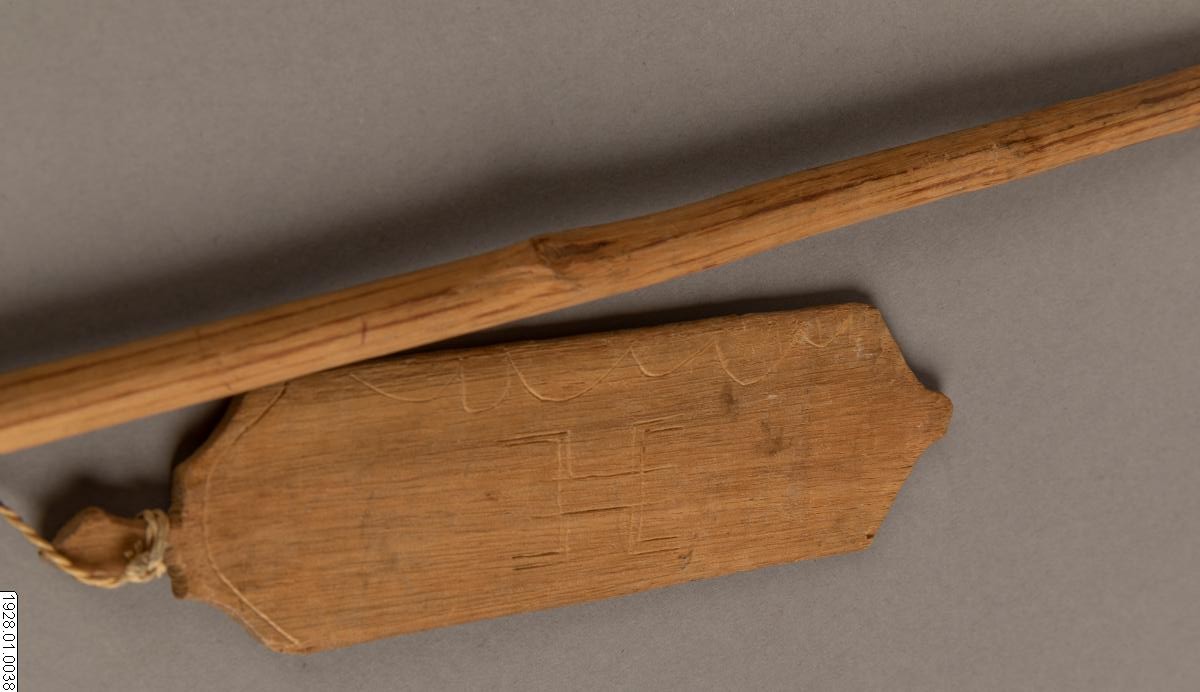
In the northwest Amazon the sacred sound belongs to the yuruparí or Kuwai cult, whose voices — the great paxiuba-palm flutes and trumpets, and, across the Vaupés, the whirled bullroarer beside them — are barred from women and shown only to initiated men. Those instruments are said to be a body. In the Tatuyo telling catalogued by Yuri Berezkin, initiate boys who broke a food taboo are devoured by the anaconda Pohé-piné; the snake is made to vomit up their bones and is then burned, and from his ashes grows the palm from which the sacred instruments are cut. The paxiuba that becomes the voices is the creature’s own regrown body — “the body of a slain creator-child.” The instrument is again a relic: not carved to resemble the being, but grown from what was left of him after the killing.
The tongue of the first to die (Dogon)
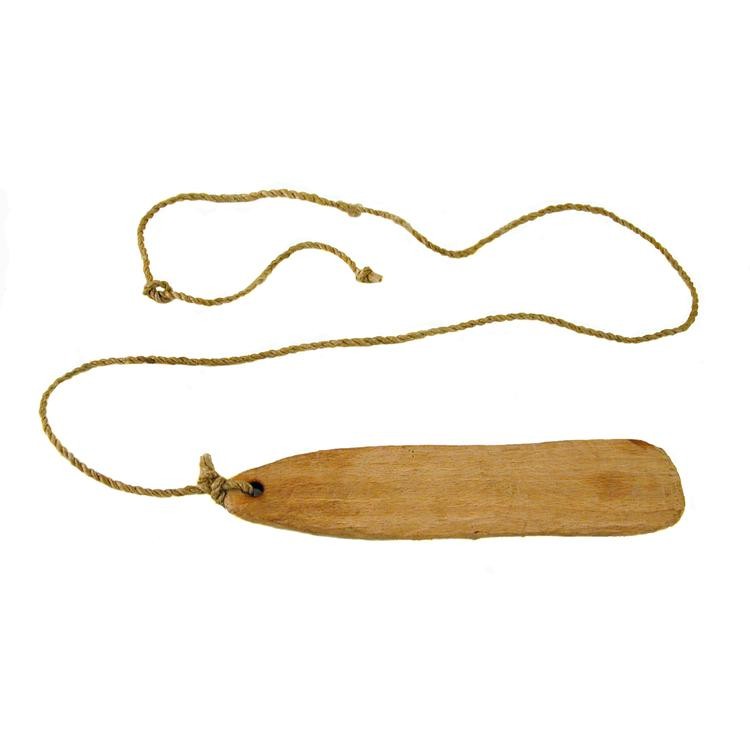
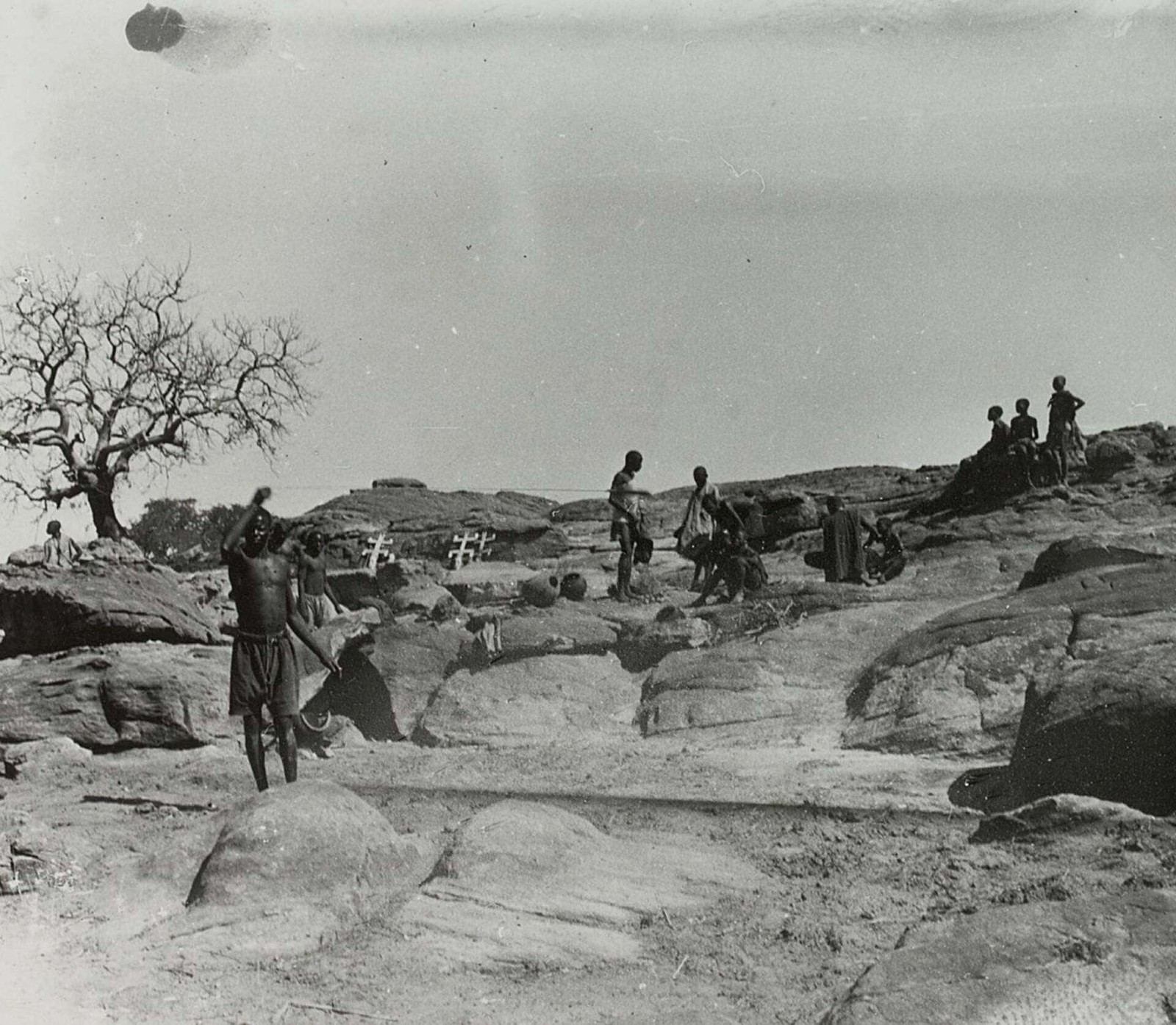
On the Bandiagara cliffs of Mali the Dogon carve three bullroarers before each Sigui, the great rite held once in sixty years, and give them the name of the carved wooden serpent that is the Great Mask of the Awa society: imina na. On the level of myth, Germaine Dieterlen recorded, each roarer is a tongue — one the Fox’s, cut at the same moment as his larynx; one the catfish’s, symbol of the human fetus; and the third the tongue of Dyongou Sérou, “the first ancestor to die, sacrificed to make human life on Earth possible and then resurrected as the serpent the Great Mask depicts.” The bullroarer is the organ of speech of the being who first met death and came back as a snake — and it is that organ that gives voice, at the climax of the dama funeral, when the Great Mask receives the dead man’s soul. The instrument is a relic of the resurrection it enacts.
The corpse-maker becomes the god (Bembe)
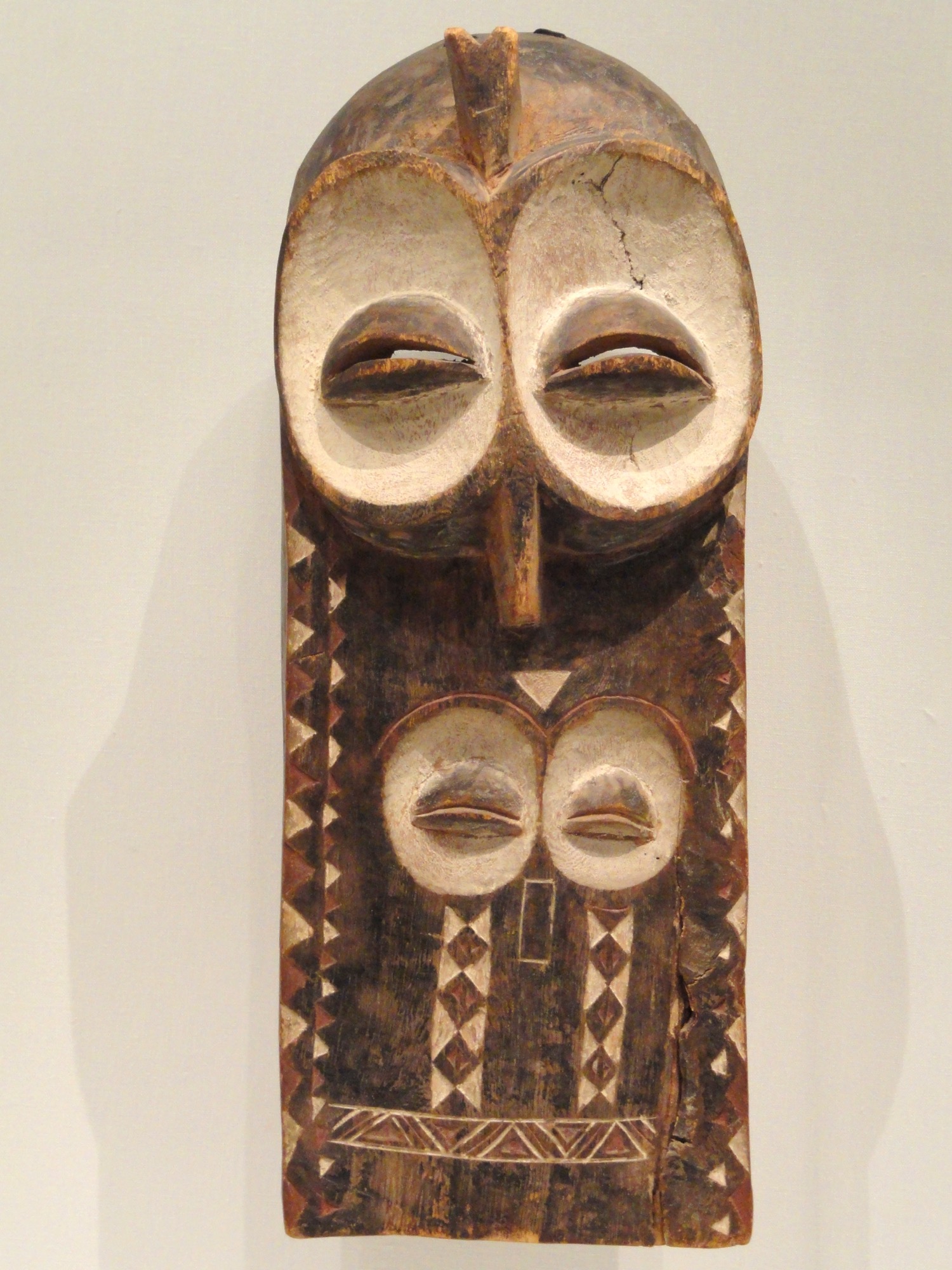
In the mountains above Lake Tanganyika the relic is not an object cut from a body but a man momentarily made into the god. The Bembe bullroarer is Tembwe, a deity who speaks with a leopard’s snarl; and Tembwe rules the circumcision, the rite called Etomba — “the corpse” — by which, in Gossiaux’s account, boys are killed and reforged into men. The circumciser who “kills” and “swallows” the initiate with his adze “becomes Tembwe himself, the leopard who literally creates man.” The slain-and-remade structure has folded in on itself: the operator of the death becomes the roarer-god, and the boy passes through the corpse to be born. “Whoever would surpass Tembwe,” the god-rhombe proclaims at his appearances, “will die crushed in the bush.”
Across all five, the killing is never merely the past of the instrument — it is the mechanism of the present rite. The being is dismembered in illo tempore; the boys are dismembered now. Among the Murinbata of Port Keats, in the Top End, the novices are told they will be swallowed alive by Karwadi and vomited up, as the children in myth were cut living from the belly of Mutjingga, the Old Woman who swallowed them. Among the Yolngu of Arnhem Land the men themselves become the great python Yurlunggur, “swallow” the boys, and weeks later hand them back, “regurgitated as grown men.” The roarer is the sound of that digestion — the god’s body eating the boy so the man can be produced.
The instrument bears the god’s name
There is a small linguistic fact underneath all of this that turns the relic from an interpretation into a claim the cultures make out loud. The instrument does not carry a generic label — “spirit-voice,” “the bush-being.” Over and over it carries the founding being’s own proper name, so that the object and the god are one word. You do not tell a boy “this stands for Sosom”; you tell him “this is Sosom.”
| Name | The being | People | Body / relic |
|---|---|---|---|
| murtu-murtu | Murtu-murtu, the torn ancestor | Warumungu (Central Australia) | wood of the trees his flying flesh became |
| Sosom / sasam | Sosom, the monsoon dema-giant | Marind-anim (New Guinea) | his severed penis, become a watersnake |
| imina na | Dyongou Sérou / the serpent Great Mask | Dogon (Mali) | the tongue of the first ancestor to die |
| aige | the aige, a water-monster | Bororo (Brazil) | the beast’s own voice, whirled at the funeral |
| Tembwe | Tembwe, the leopard-god | Bembe (South Kivu) | the being the circumciser-corpse-maker becomes |
| Karwadi | Karwadi / The Old Woman (Mutjingga) | Murinbata (Top End) | the swallowing Mother, present in the roar |
| Orei / kupör | Orei, who led the ancestors to their lands | Yei-nan (New Guinea) | chips of the orei tree the spirits lived in |
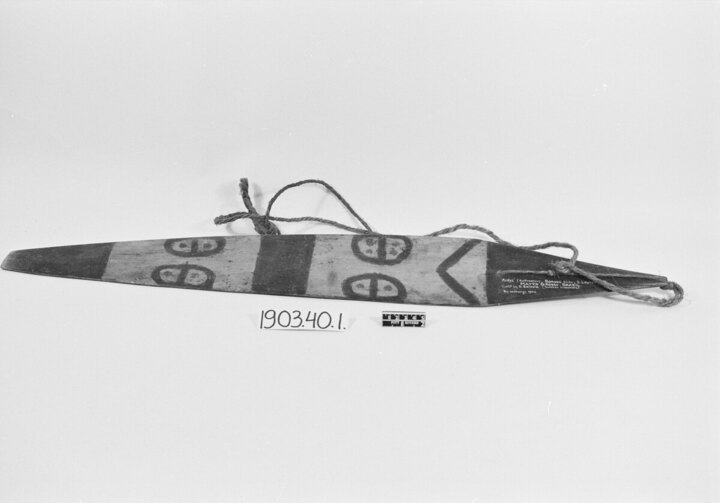
The Bororo case is a pure specimen of the naming device. The bullroarer is the aige, a fabulous water-monster on the bed of a lagoon; it sounds only at funerals, and when the buzzing begins the women flee into the forest, for to glimpse the aige would mean death. At the climax naked young men, smeared head to foot in clay, crawl on all fours as the beast, and the little board that “is” the aige is shown to the boys for the first time. Among the Yei-nan of the upper Maro River in south New Guinea the naming becomes an origin: all the ancestor-spirits once lived inside a giant orei tree, and when it was chopped open each took away a chip that became a kupör, a bullroarer — the token of his authority. The instrument is also simply orei, one word for the tree, for the canoe that carried the spirits to their lands, and for Orei himself, the leader who took them there. The wood is the being’s dwelling made portable. To hold the named object is to hold the presence, which is precisely why the revelation is guarded on pain of death: what is dangerous is not a secret sound but a god in the hand.
“Whoever would surpass Tembwe will die crushed in the bush.” the god-rhombe’s proclamation at his appearances; Gossiaux, Le Bwame du Léopard des Babembe
Greece: the bullroarer as the Titans’ lure
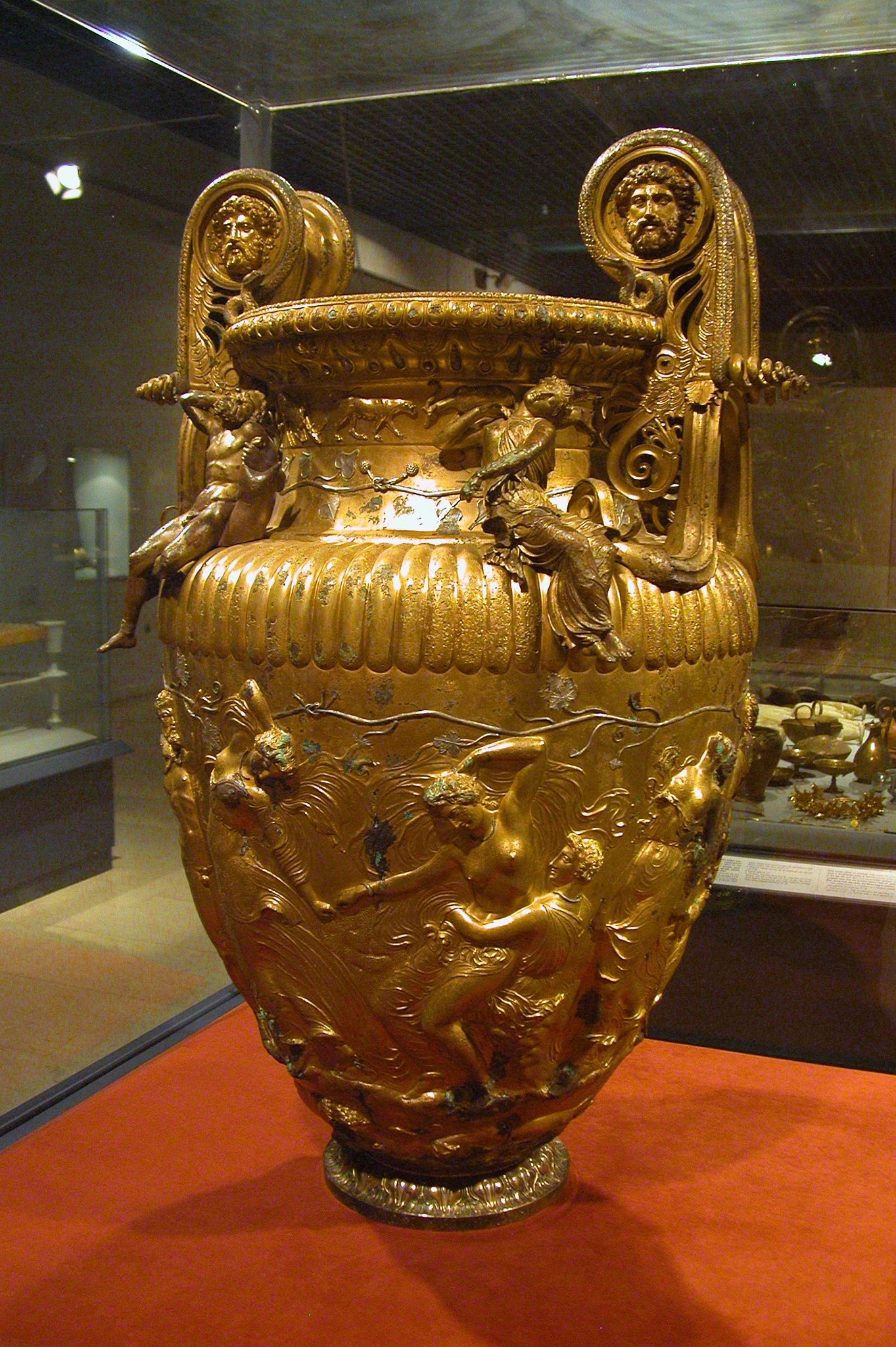
Greece knew the same story, and bound the same object into it. The Greek bullroarer, the rhombos, lives inside the greatest dismemberment myth the Mediterranean told. In the Orphic story of Zagreus, the infant Dionysus is lured by the Titans with a set of toys — a top, a mirror, knucklebones, and among them the whirled rhombos — and while he is distracted by them the Titans fall on him and tear him to pieces. Andrew Lang, who first drew the Greek object into comparison with the Australian one in 1884, and Jane Harrison after him, both placed the rhombos among these Orphic playthings; initiates into the mysteries of the torn god heard it roar in the dark, exactly as the boys of Merauke and the Barkly Tableland did.
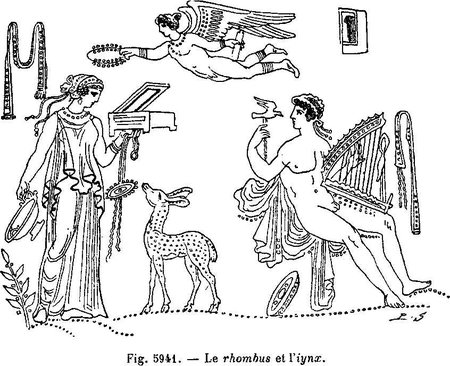
Notice where in the story the Greek instrument sits. The rhombos is the lure the Titans use before the dismemberment — the bait that draws the god to his death — where everywhere else the roarer stands at the story’s far end, the piece of the god that is left once the tearing is done. Greece holds the knife by the other end; the knife is the same. From Merauke to the Orphic mysteries, one rare object — a small board whirled on a cord to make a roar — is bound to the dismemberment of a divine being, whether as the hook that kills him or the relic that survives him. Fill both poles of an identical narrative with the same instrument and you are not looking at two inventions; you are looking at one story, old enough to have been told forward and backward by the time it reached the Aegean.
The roarer raises the dead founder
Set the cases side by side and the generalization is hard to resist. The Warumungu cut their roarers from the trees that hold Murtu-murtu’s soul; the Marind whirl Sosom’s severed member; the Nambutji keep the chopped penis of Witanygula; the Vaupés peoples cut theirs from the palm grown out of the burned anaconda; the Dogon sound the tongue of the first man to die; the Bembe turn the circumciser into the leopard-god. In each the founding being is killed and taken apart, and a piece of him is kept — and kept sounding. This is more than the familiar observation that the roarer is “the voice of a spirit.” A voice can belong to a living thing anywhere. These voices belong to the dead, and specifically to the dismembered dead, and they issue from a surviving fragment of the very body that was torn apart.
Which is what makes the instrument, in the end, a piece of resurrection technology. The god is dead; his body was scattered; and the cult keeps the fragment that will not stop speaking. When the men whirl it, they are not remembering the founder — they are producing him, making the slain being audible in the here and now, and then feeding the boys of each new generation through that sound to be unmade and remade in his image. The dogs bit the trees and could not kill the soul in the wood. That failure is the whole doctrine. The bullroarer is the proof that the founder’s voice outlived his dismemberment; sounding it is the act of raising him again.
Key sources
- Spencer, B. & Gillen, F. J. 1904. The Northern Tribes of Central Australia. London: Macmillan, pp. 275–279, 500–501 (Murtu-murtu; the flesh that roars; the Grevillea trees and the munalgi soul).
- van Baal, J. 1966. Dema: Description and Analysis of Marind-anim Culture (South New Guinea). The Hague: Nijhoff, pp. 271–273, 485ff. (Sosom, the severed penis, the watersnake, and the sasam). With P. Wirz’s earlier Marind ethnography, as drawn on by Joseph Campbell, The Masks of God: Primitive Mythology (1959), pp. 170–171.
- Frazer, J. G. 1913. Balder the Beautiful (The Golden Bough, 3rd ed.), vol. II (Tugeri/Kaya-Kaya sosom; the monsoon giant and the boys killed and restored).
- Róheim, G. 1945. The Eternal Ones of the Dream. New York: International Universities Press, pp. 33–35 (the Nambutji windirpiri and the penis-tjurunga of Witanygula).
- Berezkin, Y., on the Tatuyo anaconda Pohé-piné and the paxiuba palm grown from his ashes; with K. G. Izikowitz, Musical and Other Sound Instruments of the South American Indians (1935), and Otto Zerries, Das Schwirrholz (1942), on the Vaupés yuruparí.
- Dieterlen, G., on the three Dogon imina na as tongues, and Dyongou Sérou, the first ancestor to die and be resurrected as the serpent Great Mask; with J. Servier, L’homme et l’invisible (1970), on the Dogon rhombe as an ancestral voice.
- Gossiaux, P.-P., Le Bwame du Léopard des Babembe, pp. 10, 33 (Tembwe; the circumcision as “the corpse”; the circumciser who becomes the leopard-god).
- Stanner, W. E. H., On Aboriginal Religion (Murinbata Punj, Karwadi, and Mutjingga); W. Lloyd Warner, A Black Civilization (1937), on the Yolngu and Yurlunggur.
- von den Steinen, K. 1894, and the later Salesian ethnographers (Colbacchini, Albisetti), on the Bororo aige.
- van Baal, J. 1982. Jan Verschueren’s Description of Yéi-nan Culture. The Hague: Nijhoff, pp. 46–49 (the orei tree, Orei’s canoe, and the Yei-nan kupör).
- Lang, A. 1884. Custom and Myth (“The Bull-Roarer”), and J. E. Harrison, Prolegomena to the Study of Greek Religion (1903), on the Orphic rhombos among the toys of Zagreus.
- Jensen, Ad. E. 1963. Myth and Cult among Primitive Peoples. Chicago: University of Chicago Press (the dema-deity; Hainuwele’s murdered body and the tubers).
The individual myths are each documented in the sources above. Ad. E. Jensen’s dema-deity frame makes the same argument for the food-crops — Hainuwele’s murdered body becoming the tubers; this page extends it to the sounding instrument. That extension — the bullroarer as a corporeal relic of the dismembered founder, so that sounding it is a resurrection — is, as far as we know, original to this page.