No. MUS2026-151
Ooldea Soak initiation bullroarer
Ooldea Soak, South Australia · Western Desert
Restricted
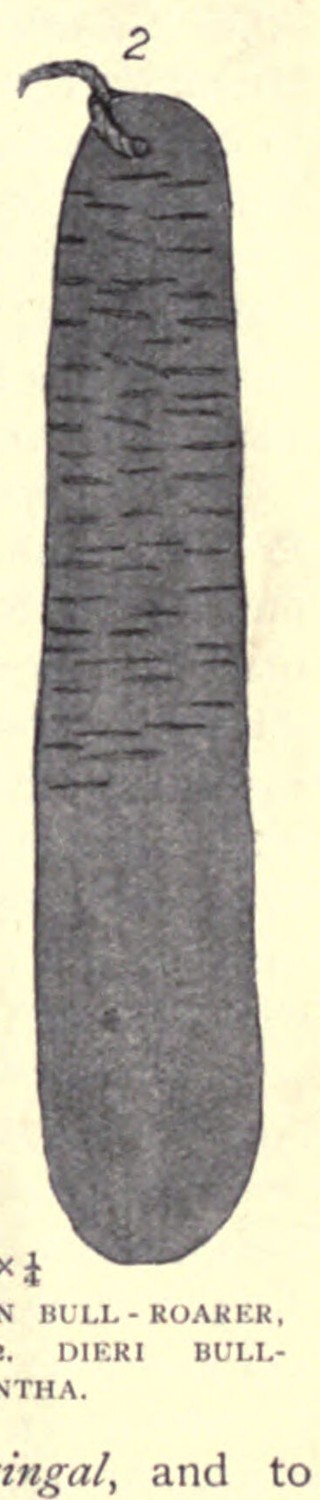
Source term: bullroarer
Initiation parties announced themselves at Ooldea Soak with heavy smokes on the horizon, and the emu men of Ooldea, who had thrived on the renown of their water, watched for them. By the time Daisy Bates pitched her tent at the siding in 1919, railway pumps had taken the soak, and the old rites bent around the line: elders came in by train calling themselves 'dokkatur', the initiation knife whittled from a bottle and carried in a battered suitcase. The bull-roarer kept its place. When the boy Juginji lay in his blood-drinking seclusion between her camp and the soak, and his keepers had gone off down the line, Bates swung the big bull-roarer over him while his brother Waueri bled into a wooden scoop for him to drink. Then she fed him damper and tea, against the law. 'There were none who dared to question Kabbarli.' This small corded roarer left her camp for the British Museum in 1933.
Bull-roarer of wood, string.
British Museum, Oc1933,1010.6.
Particulars
- Object
- 22 x 4 cm wooden bullroarer with its string; materials wood and fibre.
- Function
- Swung during boys' initiation at Ooldea, over the novice in his blood-drinking seclusion.
Source
British Museum Oc1933,1010.6: bullroarer of wood and string; Ooldea native camp, South Australia; collected by Daisy May Bates before 1933