HOWITT1904-003 - ethnographic attestation
Dja Dja Wurrung growing-song roarer
Australia - Loddon and Avoca rivers, central Victoria (Jajaurung country) - Southeast
Restricted
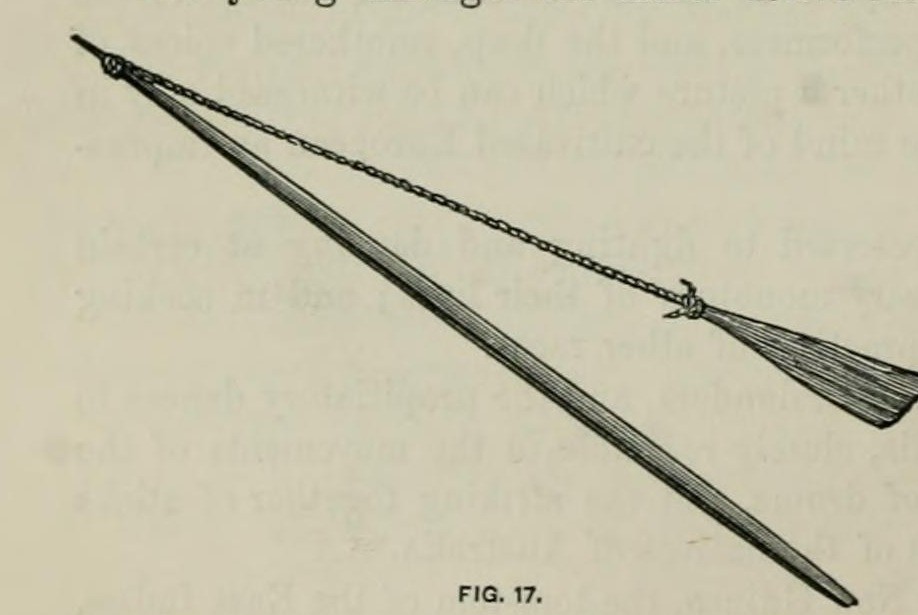
Source term: bull-roarer
Pata mamunya jira-runga: the growing song sung with the roarer, "Wait a while, don't touch it, growing up"; Guritch: the boy's sister's husband, his guardian.
Before a boy had whiskers he went to live in the camp of his Guritch, his sister's husband, who rubbed him over with red ochre and took him along whenever he went hunting or travelling, carrying him when he tired. All the while the Guritch sounded the bull-roarer, to make the boy strong, and sang over him: Pata mamunya jira-runga, "Wait a while, don't touch it, growing up." The song had a second task: it made the two front teeth come out easily. When the boy's beard had come, his Guritch and the old men took him away to be made a man. They plucked his face and pubes bare and sang the song again while the medicine-man forced a pointed stick between his teeth to loosen them. Any blood from his gums he had to swallow, or his legs would grow crooked.
He sounded the bull-roarer continually, to make the boy strong, and he sang this song
A. W. Howitt, The Native Tribes of South-East Australia (1904), p. 613
- Object
- A bull-roarer sounded over an uninitiated boy by his sister's husband.
- Function
- Sounded continually over a boy by his Guritch (sister's husband), with a growing song, to make him strong before initiation; the same song later loosens his front teeth for removal.
- Source
- A. W. Howitt, The Native Tribes of South-East Australia (London: Macmillan, 1904), p. 613
- Source location
- p. 613
- Source confidence
- high
- Location note
- Midpoint of Howitt's stated Jajaurung range ("From Daylesford to Boort and Castlemaine to Lake Buloke"), on the Loddon near Inglewood; a country centroid, not a ceremony site.
- Initiation rite