No. MAT1898-007
Culgoa wuddoolnurran and ghidjoolkumbal
Australia · Culgoa River · Southeast
Restricted
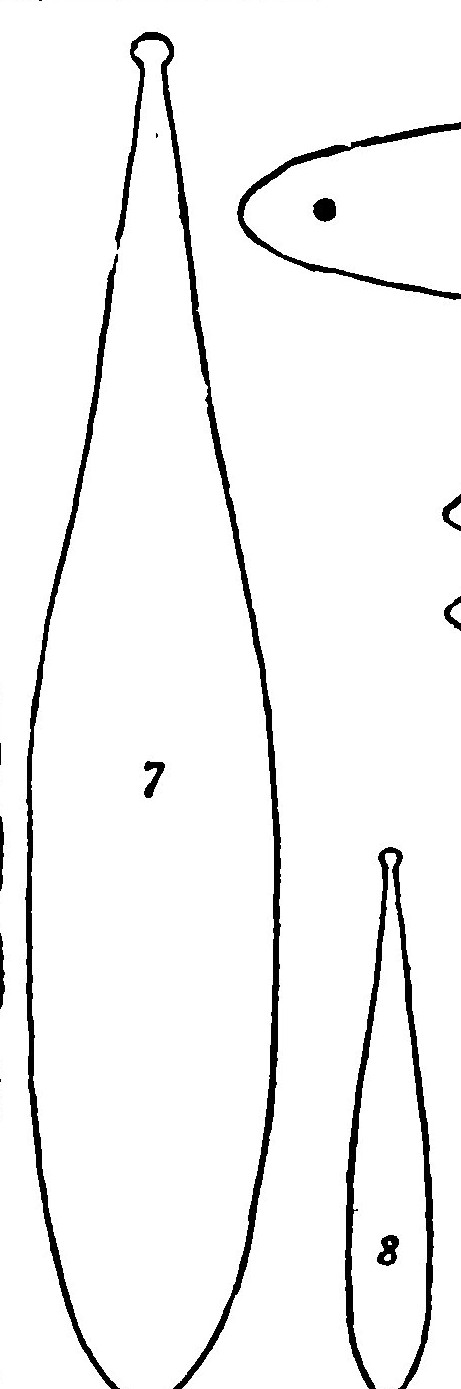
wuddoolnurran / ghidjoolkumbal
Source term: bull-roarer
Culgoa River names for the paired bull-roarers: wuddoolnurran the larger instrument, ghidjoolkumbal the smaller, said by Mathews to be used exactly as the Wiradthuri mudthega and moonibear.
Among the tribes on the Culgoa River the larger bull-roarer was called wuddoolnurran and the smaller ghidjoolkumbal. Both were used in exactly the same way as the paired Wiradthuri instruments of the Macquarie and Bogan, the mudthega and the smaller moonibear, the latter sounded at the Burbung ground while the ceremonies of initiation ran their course. The form of the two sizes, and the manner in which the string was attached, was in use over a large area extending from the Macquarie to the Culgoa, and probably further north.
A string is fastened over the small knob at the tapering end, in the same way that a whip is fastened to its handle.
R. H. Mathews, "Notes on the Aborigines of New South Wales" (1907), p. 31 (the Macquarie mudthega, whose form and stringing reached the Culgoa)
Particulars
- Function
- Mathews says Culgoa tribes use the same large/small bullroarer form and function as the Wiradthuri mudthega and moonibear.