No. AUSIN-015
Mungarai Roper-Mataranka Kunapippi
Australia · Roper River · Mataranka country · Top End
Restricted
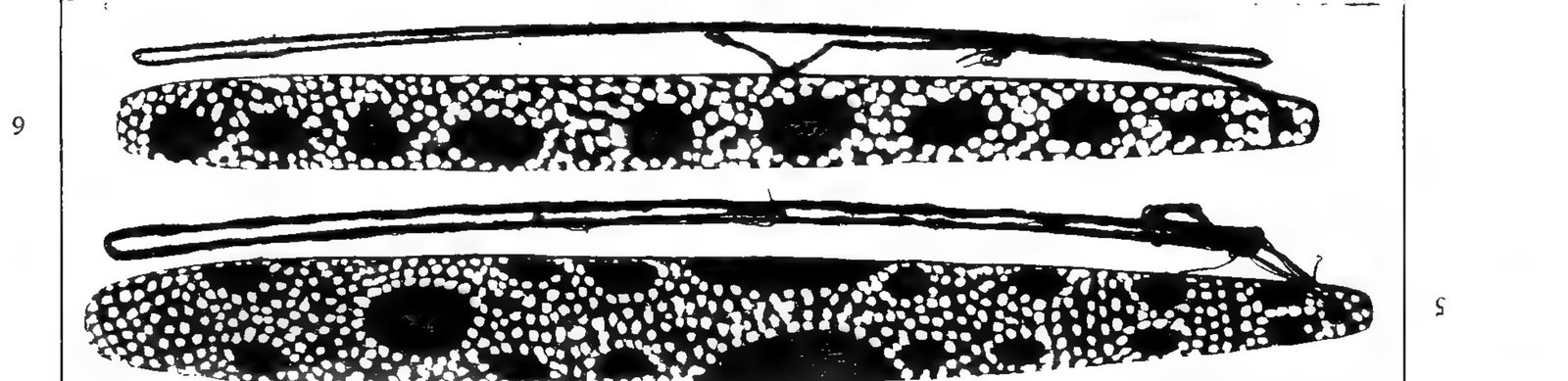
Kunapippi
Kunapippi: the Mungarai name both for the large bull-roarers and for the ancestral being who made and first owned the sacred sticks; recorded more widely as Kunapipi/Gunabibi, a mother-cult name across Arnhem Land.
Etymology. Spencer records Kunapippi as the Mungarai name for the large bullroarers carried by ceremonial messengers, and equally as the name of the ancestral being who made the first sticks — 'called, like himself, Kunapippi'; the word also served as a Mungarai totem name, and women and children took the roar for the voice of a spirit called ngagurnguruk. As Kunapipi or Gunabibi the same name later denoted the All-Mother of the ceremonial cult that spread across Arnhem Land, and Berndt glosses it as 'uterus' and 'emergence'.
Among the Mungarai of the middle and upper Roper River, in the country east of Mataranka, the bull-roarers were called Kunapippi, after the ancestral being who made and first owned them. Baldwin Spencer, who recorded the tradition during his 1911-12 fieldwork, found them considerably larger than those of the Larrakia, reaching a length of two and a half feet, and carried by messengers sent out to summon distant groups to sacred ceremonies. The Mungarai told Spencer that in the far-away times they call Kurnallan there lived a very big man named Kunapippi, who had many dilly bags and carried in them his spirit children, all boys and no girls, and who possessed several of the sacred sticks, called, like himself, Kunapippi. His boys mixed with the strangers, instructed them in the ceremonies, taught them circumcision and subincision, and finally secured the sticks that had belonged to Kunapippi and have kept and used them ever since. A second tradition made the sticks women's property first: they belonged to a woman of the Kunapippi totem, who carried them with her, until a man named Kumkum took them from the women — and since that day, the Mungarai said, no woman has ever possessed a kunapippi. As through all the mainland tribes, the women and children were given to believe that the sound of the bull-roarer was the voice of a great spirit come to take the youth away during the initiation ceremony.
Here she left more spirit children and, coming out above ground, walked along, swinging her bull-roarer as she did so.
Spencer, Native Tribes of the Northern Territory of Australia (1914), p. 218
Particulars
- Object
- Large sacred bullroarers, up to two and a half feet long, carried by messengers.
- Function
- Women and children understand the sound as spirit voice; ancestral tradition explains origin and use
Source
Baldwin Spencer, Native Tribes of the Northern Territory of Australia (1914), pp. 213-218; Ronald M. Berndt, Kunapipi: A Study of an Australian Aboriginal Religious Cult (Melbourne: Cheshire, 1951), pp. 40-41