No. AUSIN-021
Kimberley mero-mero, taken as a weapon
Kimberley · Western Australia
Restricted
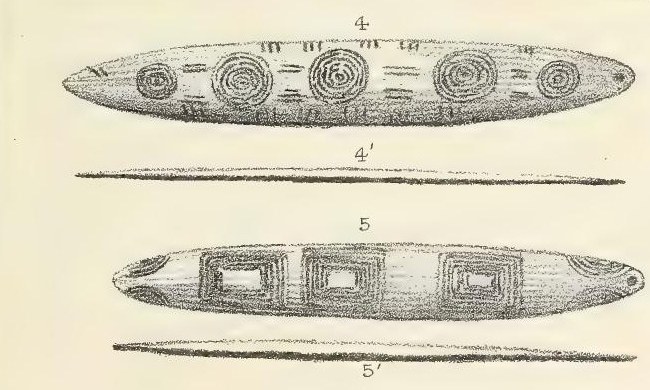
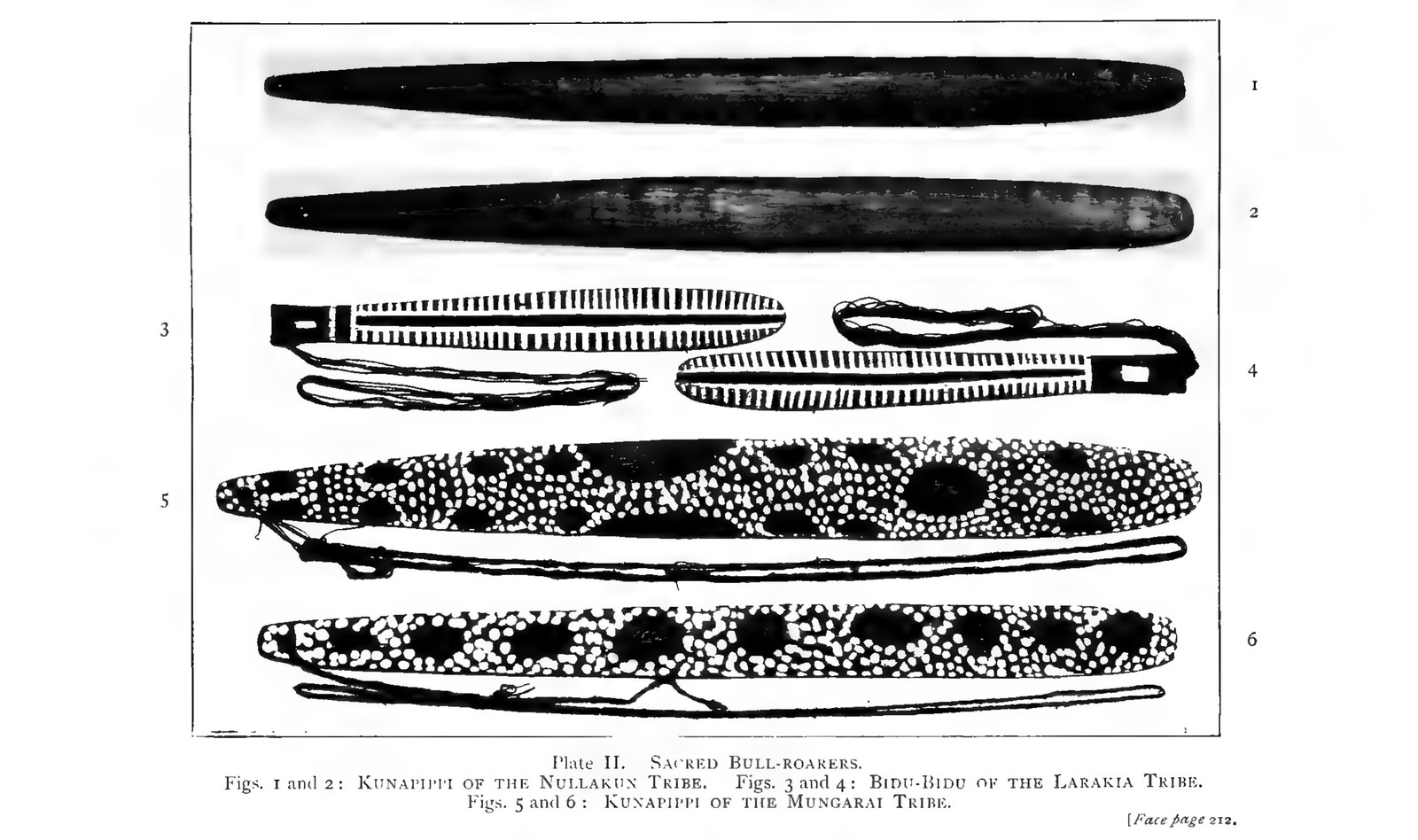
mero-mero
Source term: bull-roarer
mero-mero: the Kimberley District name recorded by Hardman for the sacred whirling-stick (bullroarer); West Kimberley peoples also called the bullroarer tjurunga, identifying it with the creator-being Djamar.
This wooden bullroarer reached the British Museum in 1899 from Craven Henry Ord, the police sub-inspector at Derby who had directed the operations against the Bunuba resistance leader Jandamarra, and who shipped it as one of a quantity of native weapons taken from camps. In the Kimberley it was no weapon. The district's first ethnographer, E. T. Hardman, recorded these whirling-sticks, the mero-mero, as sacred objects sounded at the circumcision ground and forbidden to women on pain of death. Two generations later Ernst Worms found the West Kimberley bullroarer woven into the myth of the creator Djamar, who whirled it until it scarred the hills and the bark of the trees, and who planted it in the bed of a creek where the old men still led the initiates to see where it had lain.
The whirling-sticks, mero-mero, used to drown the shrieks of the victim, as well as the flint or shell-knives used in the operation, are considered sacred, and are not to be looked upon by women under pain of death.
E. T. Hardman, "Notes on some Habits and Customs of the Natives of the Kimberley District" (1888), p. 73, quoted in A. C. Haddon, The Study of Man (1898), pp. 316-317
Particulars
- Object
- Wood bullroarer with an incised rectangular pattern on one face and a serpentine line on the other; collected by C. H. Ord in the Kimberley District.
- Function
- Whirled at the circumcision ground to drown the initiates' cries; women might not look on it, on pain of death.
Sources
- British Museum, object Oc1899,-.477 View
- E. T. Hardman, 'Notes on some Habits and Customs of the Natives of the Kimberley District, Western Australia,' Proceedings of the Royal Irish Academy, 3rd ser., vol. 1, p. 73, quoted in Haddon (1898), pp. 316-317
- A. C. Haddon, The Study of Man (1898), pp. 316-317
- E. A. Worms, 'Djamar, the Creator: A Myth of the Bād (West Kimberley, Australia),' Anthropos 45 (1950): 641-658