Atlas Essay —
The Bullroarer–Swallowing/Initiation Complex
Australia · New Guinea · Greece · the Northwest Coast · the Amazon
On the Huon Peninsula of New Guinea the men build a monster. It stands at the edge of the village: a long hut raised on posts, shaped like a swallowing beast, and from inside it comes what Frazer called a “sullen growl” that “is in fact no other than the humming note of bullroarers swung by men concealed in the monster’s belly.” The boys are led to its mouth. They are swallowed. Weeks or months later the monster gives them back — circumcised, sworn to silence, and men. This is not a local invention. The same scene, down to its cast — a devouring being, a roaring board that is its voice, boys who die as children and return as adults — plays in northern Australia, along the whole south coast of New Guinea, in the Orphic mysteries of Greece, in the cannibal-dance houses of the Northwest Coast, and on the rivers of the Northwest Amazon. It is one rite, and the bullroarer is its voice.
In brief
- Among the Murinbata of northern Australia, novices are told the Mother will “swallow them alive, then vomit them up,” and the hidden bullroarers are “the voice of the Mother” (Stanner, On Aboriginal Religion).
- Among the Marind-anim of south New Guinea, instrument and monster share one name, sosom: “Sosom devours all the neophytes… each time he swallows one, disgorging another” (van Baal, Dema, p. 480).
- On the Huon Peninsula, “all these tribes… apply the same word to the bull-roarer and to the monster who is supposed to swallow the novices” — balum, ngosa or kani, as the language changes (Frazer, Balder the Beautiful).
- The same pairing appears in Orphic Greece (the rhombos among the toys of the devoured and reborn Zagreus), in the Kwakwaka’wakw Hamatsa, and in the anaconda-swallowing charter of the Northwest Amazon yuruparí cult.
- Loeb saw it in 1929: “no psychological principle… would necessarily group these elements together” — the bundle recurs because it travelled, from a common point of origin.
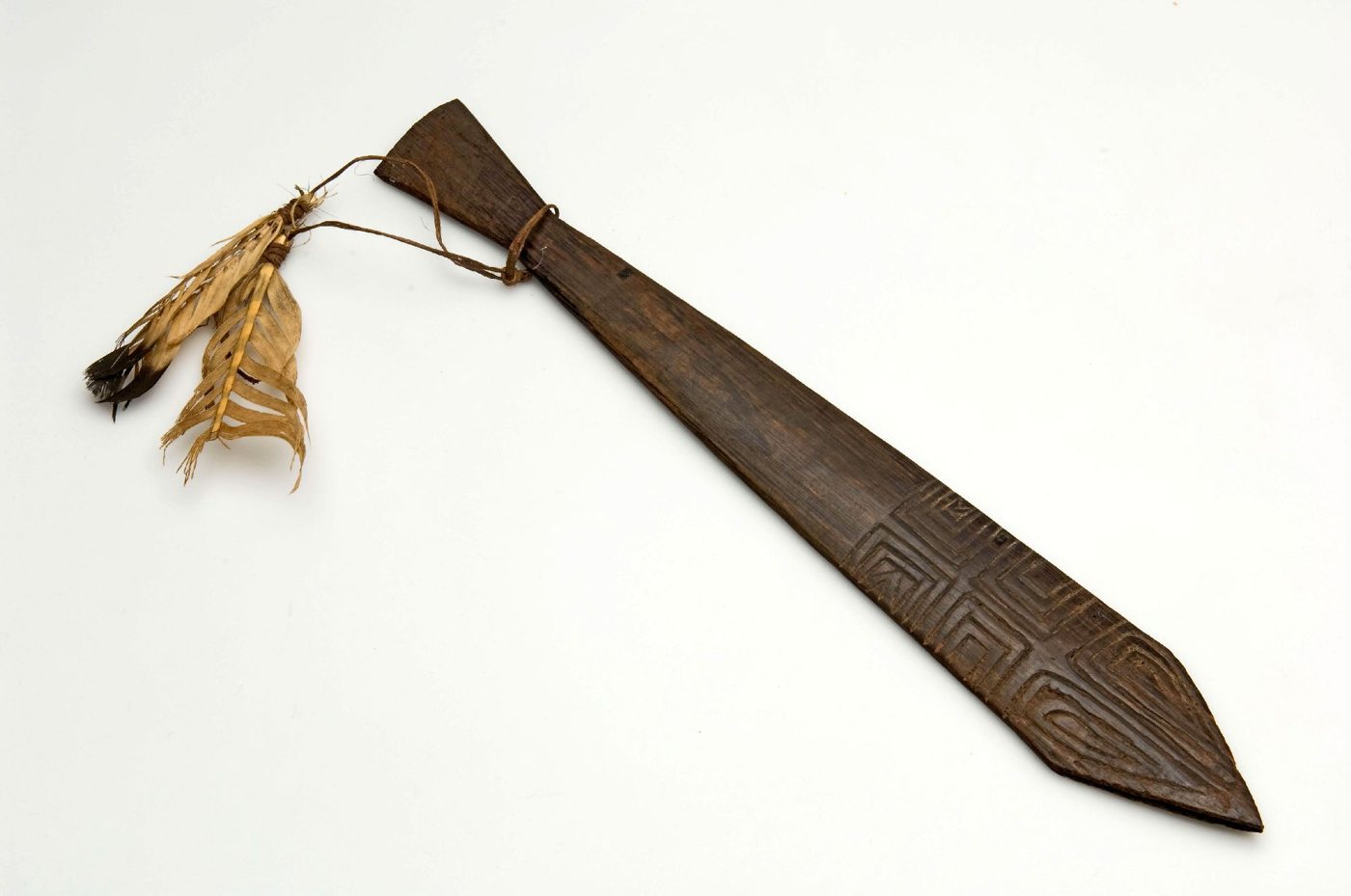
The pairing of the bullroarer with a swallowing-and-rebirth initiation is real, old, and worldwide. Across northern Australia and New Guinea the instrument’s roar is the voice of a being who swallows novices and gives them back as men — so literally, in New Guinea, that instrument and monster share a single name — and the same rite runs on through Orphic Greece, the Northwest Coast of North America, and the Northwest Amazon. This is the complex Edwin Loeb identified in 1929, and it is exactly what he said it was: not a coincidence of psychology repeated at random, but a single ancient ceremony — monster, voice, death, and rebirth travelling together as one thing — carried around the world.
What Loeb saw
Edwin Loeb, Tribal Initiations and Secret Societies (University of California Publications in American Archaeology and Ethnology 25(3), 1929, pp. 263, 285), argued that the initiation rites of Australia and New Guinea “have a common point of origin,” provable by the diffusion of four bundled traits: a bullroarer taboo to women, “almost invariably the voice of spirits”; tribal marking — circumcision, scarification, tooth evulsion; a death-and-resurrection or devouring-monster drama; and spirit impersonation by initiated men. His decisive observation was that the bundle has no internal glue: “no psychological principle… would necessarily group these elements together.” Nothing about whirling a board on a string entails a monster; nothing about circumcision entails being vomited up. When four arbitrary things move together across two continents, they move together because they are one thing — a complex “fortuitously grouped in one locality… then disseminated.” His companion volume, The Blood Sacrifice Complex, follows the same trail into Polynesia, Africa, and the Americas. What follows is that complex, people by people, in the ethnographers’ own words.
Australia: the swallowing Mother
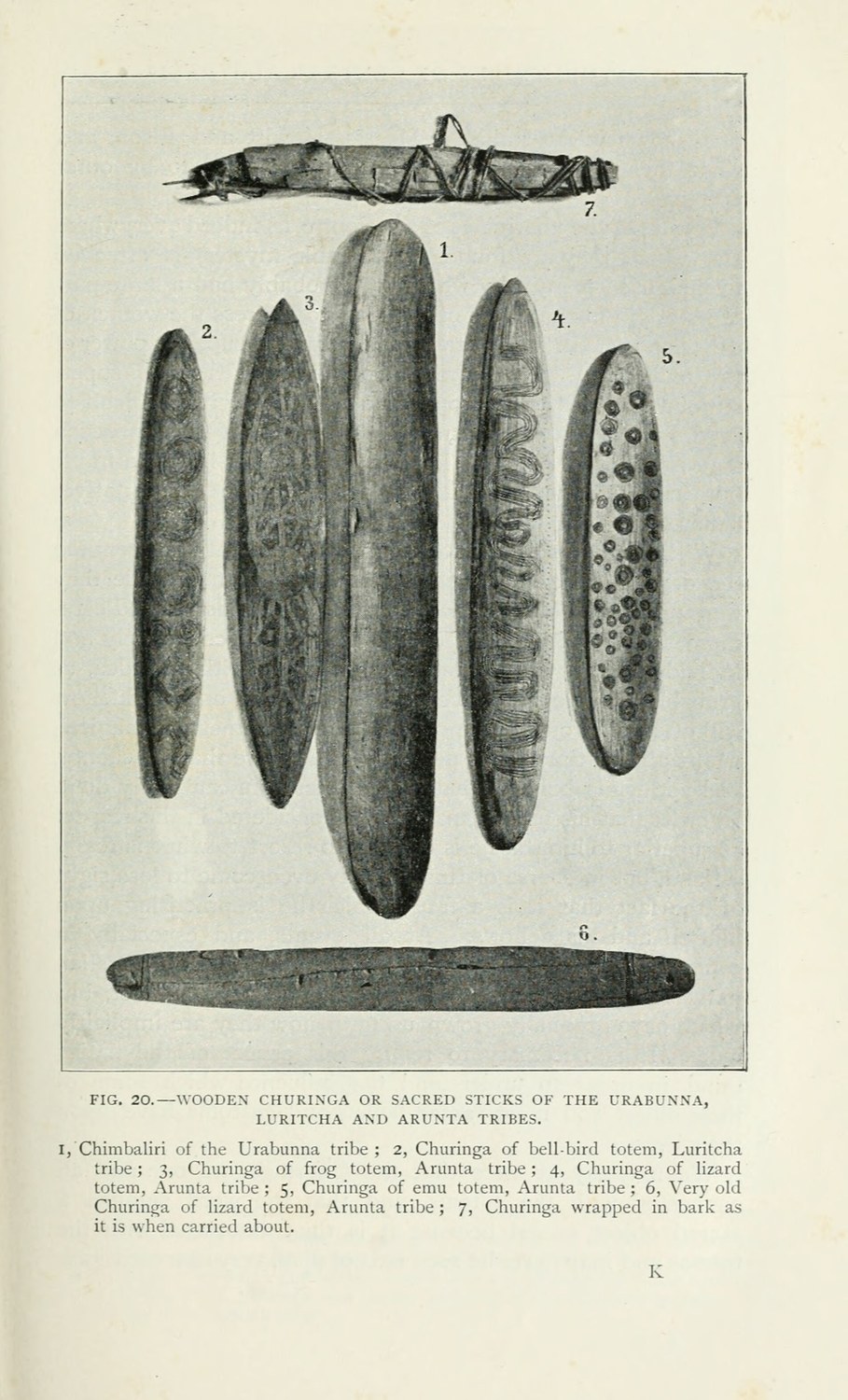
The fullest Australian account is W. E. H. Stanner’s, from the Murinbata of Port Keats (On Aboriginal Religion, 1959–63). At the Punj ceremony the novices are told that the Mother — Mutjingga, the Old Woman, called Karwadi in the secret register — will “swallow them alive, then vomit them up”; the bullroarers sounding from hiding through the ceremony are “the voice of the Mother.” Behind the rite stands its charter myth, and it is a dark one. The Old Woman was left to mind the children while the camp was away. One by one she swallowed them. The men pursued her down the river, speared her, and cut the children — still living — from her womb. The ceremony replays the myth on the bodies of the boys: taken from their mothers, swallowed by the Mother’s voice, and given back alive. Stanner, following Géza Róheim and A. P. Elkin, read the whole drama as men seizing the powers of birth — and the rite agrees with him in the least deniable way possible: at its climax, L. R. Hiatt reports from Stanner’s account, each youth sees “springing from his loins an erect bullroarer anointed with blood,” an identification of instrument and phallus that Hiatt calls “transparent.”
The Murinbata are not alone on their continent. Of the Anula of the Gulf Country, drawing on Spencer and Gillen, Eliade reports that “the Anula women think that the noise of the bull-roarers is the voice of the Great Spirit Gnabaia, who swallows the novices and later disgorges them as initiates.” In Arnhem Land the swallow belongs to the serpent: in the Wawalag cycle the python Julunggul swallows and regurgitates, and the Yolngu bullroarer is her voice, crying out in hunger for the novices. Among the Arrernte of the Centre, Spencer and Gillen record the bullroarer as the Voice of Twanyirika, who is believed by the women and children to kill the boy and revive him — the one case here that runs on killing-and-revival rather than the swallow itself. Even there the grammar is identical: the boy dies into the roar and comes back a man. Hiatt, surveying the continent, calls the devouring Cannibal Woman “a widespread motif in Australia,” and states the rite’s logic in a sentence: “men take boys from their mothers so that they may be symbolically killed; then they reproduce them as adult males.”
New Guinea: monster and instrument, one name
Cross the Arafura Sea and the rite sheds its symbols’ last cover: in New Guinea the bullroarer and the devouring monster are called by the same word.
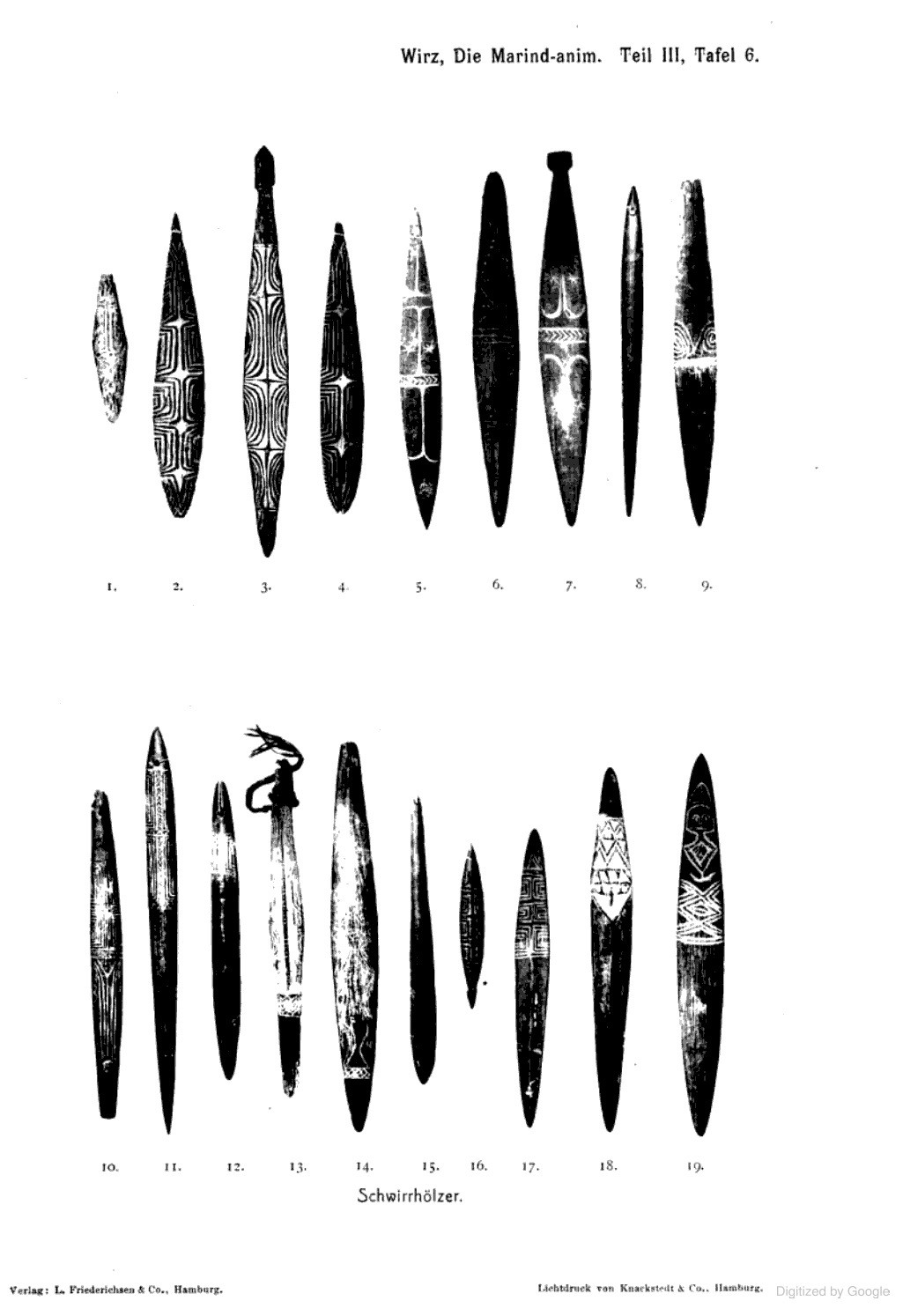
Jan van Baal’s Dema (1966), the great monograph on the Marind-anim, says it without blinking. “The bullroarer (sosom) is the voice of the déma Sosom” (p. 267) — and under the heading Sosom devours the neophytes: “Finally, Sosom devours all the neophytes and adolescents (in Okaba the older men, too), each time he swallows one, disgorging another through his posterior parts” (pp. 480–485). The giant is built as a towering figure on a platform; his voice “is said to come from the post, but in reality it comes from the thicket nearby,” where the swingers crouch. “Before they enter the sosom-miráv,” van Baal continues (p. 485), “the neophytes are told that Sosom is a giant who is going to devour them, after which they will either be thrown up again or excreted anally.” Van Baal’s own reading of the imagery converges precisely with Stanner’s Australia: “the bullroarer is identical with a penis,” and devouring and cutting-up are “symbols of one and the same thing.” The same book records who owns the voice as one moves inland, and the sequence reads like a diffusion map in miniature: “The bullroarer, among the eastern coastal Marind the voice of Sosom, the man, among the Boadzi that of the atu, the old woman, is the voice of both Ezam and Uzum among the upper Bian Marind” (p. 597). A devouring old woman whose voice is the bullroarer: the Boadzi have, to the syllable of the plot, the Murinbata’s Karwadi — a continent away.
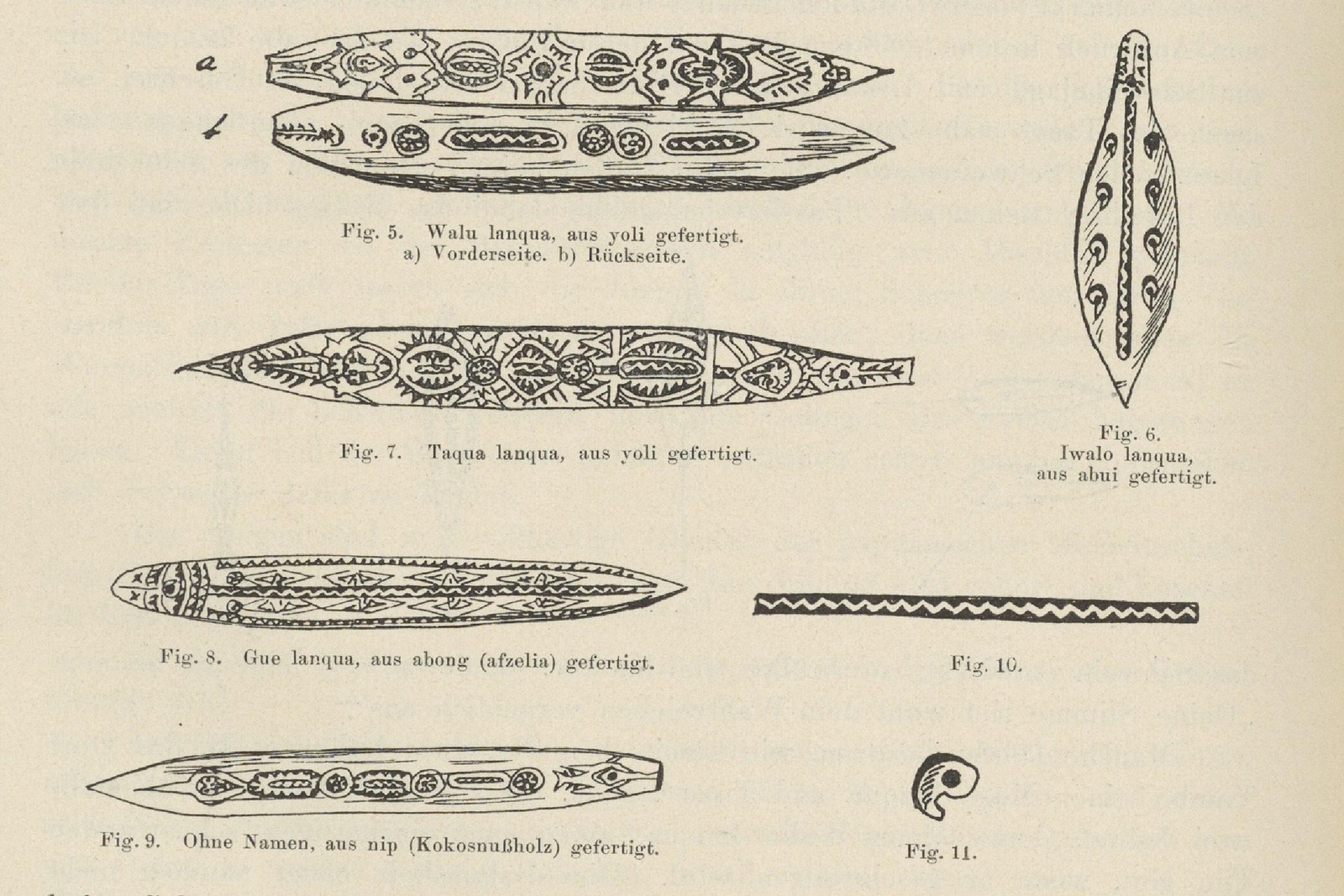
East along the coast the fusion repeats. James Frazer, gathering the mission ethnographies of Zahn, Keysser, and Bamler in Balder the Beautiful (1913, pp. 227–243), reports of the Yabim, Bukaua, Kai, and Tami of the Huon Peninsula that “all these tribes… apply the same word to the bull-roarer and to the monster who is supposed to swallow the novices at circumcision.” The word changes as the language changes — balum among the Yabim and Bukaua, where it also means a ghost of the dead; ngosa, “grandfather,” among the Kai; kani among the Tami — but the equation never does. The monster is built as a hut with a belly; its growl is the massed bullroarers within; the boys are swallowed at its mouth and ransomed back with pigs, one pig per boy.
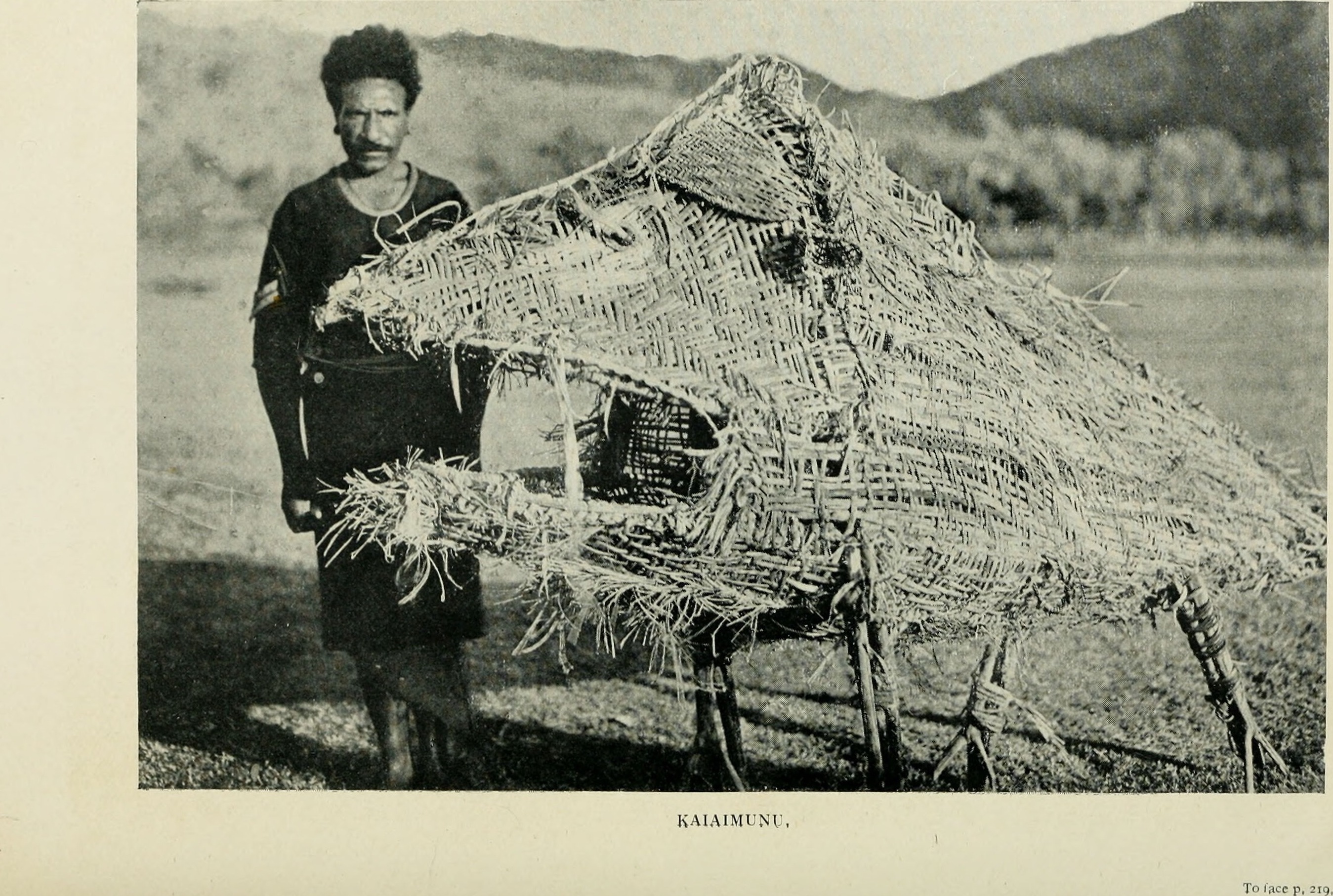
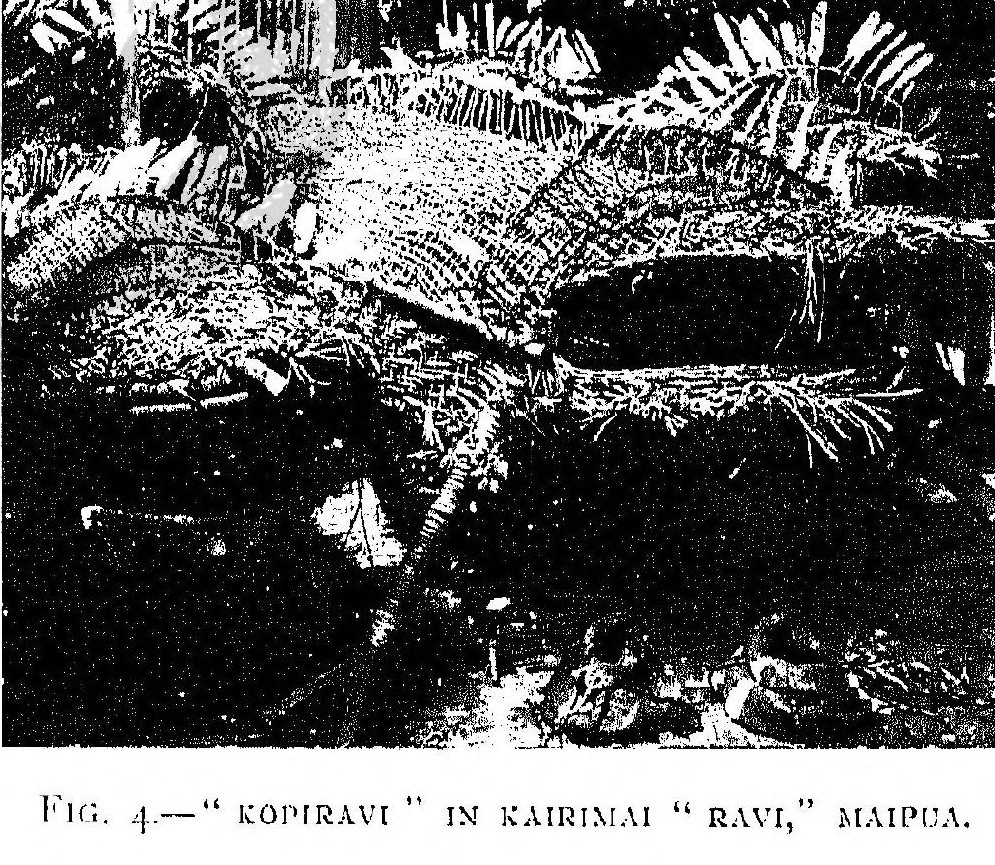
On the Purari Delta the monster takes wicker form. F. E. Williams (Natives of the Purari Delta, 1924) records the bullroarer as imunu viki, “weeping spirit,” and in the men’s house of the Namau crouches the kaiaimunu, a great basketry beast sharing the root imunu with the instrument, which swallows the novices and disgorges them as men. In 1914 Kathleen Haddon photographed the arrangement itself — the boards lying at the monster’s feet.
The rite thickens rather than thins as the record widens. On the Sepik, the Ilahita Arapesh bullroarer is “the voice of Lefin,” and in Donald Tuzin’s account of the Tambaran cult the spirit Nggwal devours the novices. Among the Elema the boards carry the “voices of the spirits” of the ma-hevehe sea-spirit cycle, and the neighbouring cultures that initiate by other means — the Sambia with flutes, the Iatmul giving their crocodile-swallows-novices drama to slit-gongs — only show the complex doing what a travelling package does at its edges: handing the swallow to another voice, or the voice to another rite, while along the whole south coast and the Huon the package arrives intact, name and all.
Greece: the toys of Zagreus
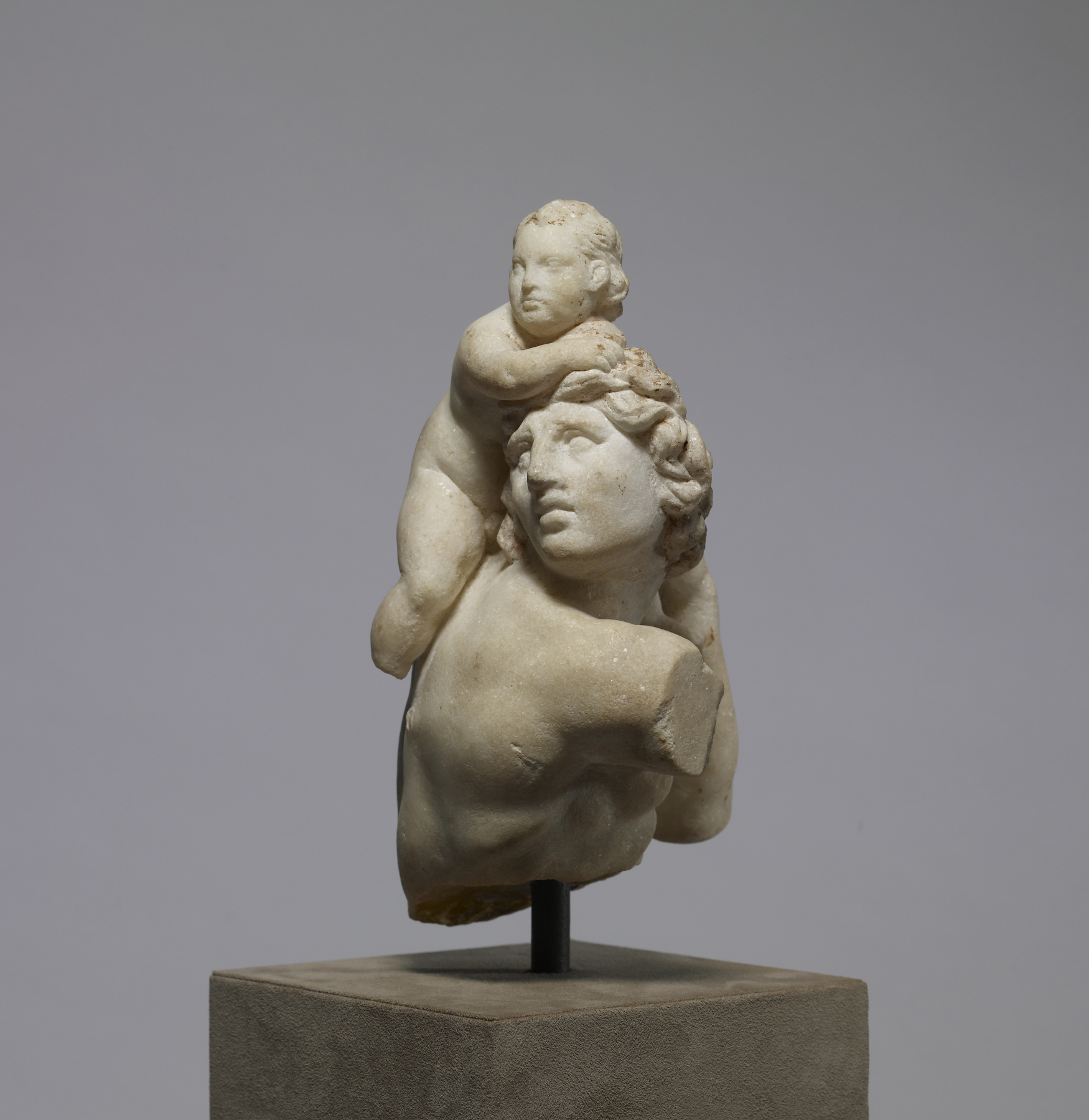
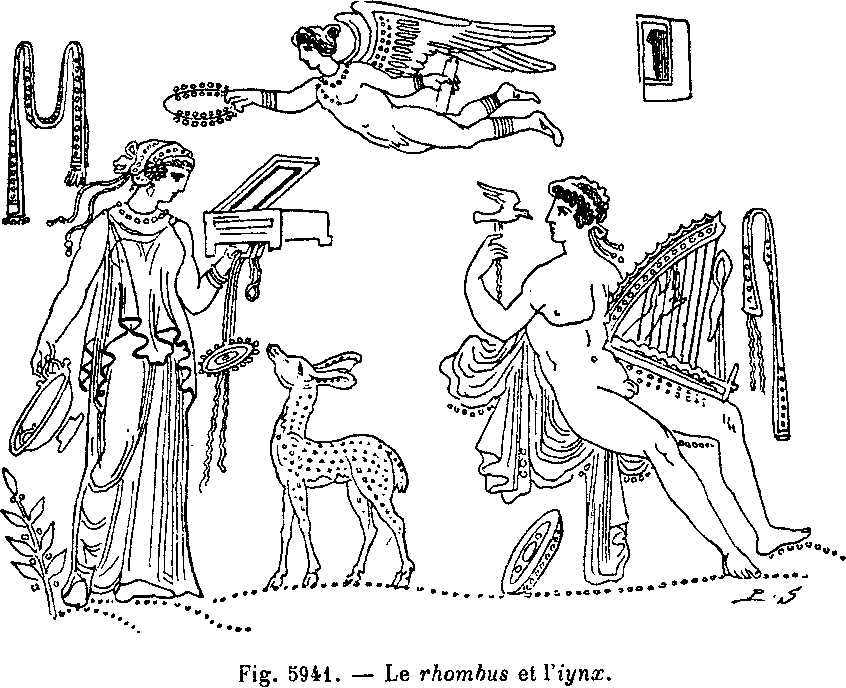
The rite is in the ancient Mediterranean too, preserved in the one Greek cult that kept initiation’s old machinery: the Orphic-Dionysian mysteries. The infant Zagreus — Dionysus in his first birth — sits on the throne of Zeus. The Titans creep in with toys to charm the divine child: knucklebones, a mirror, a ball, a tuft of wool — and the rhombos, the whirled bullroarer, named in the lost Orphic poem that Clement of Alexandria quotes in Protrepticus 2. While the child gazes into the mirror the Titans seize him, dismember him, boil him, and eat him; and he is reborn. Jane Ellen Harrison, A. B. Cook, and M. L. West all identify the rhombos of the fragment with the whirled instrument, and Eliade records the cult formula that closes the circle: “the rhombos was held to be the ‘thunder of Zagreus’” — the god devoured and reborn, speaking through the whirled board, exactly as Daramulun speaks in thunder over the Yuin initiation ground.
Harrison herself, in Themis (1912), set the Australian and Greek rites side by side and refused to look away from what she saw. She records the Wiradjuri initiation in which the boys are ritually “burnt to ashes and remodelled,” and writes that the parallel with the dismembered, reconstituted Zagreus is “more than an analogy; mutato nomine [with the name changed] the account might have been written of Zagreus.” For her the whirled wood was the vehicle of “unformulated uncanny force” — mana, the “Powerful Awful” — before it was the voice of any named god; change the name, and the Wiradjuri bush ceremony is the mystery of the Titans. She could hardly have handed the diffusionist a cleaner exhibit.
Everywhere, in Africa, in America, in Australia, in the South Pacific Islands, we come upon what is practically the same sequence of ceremonies.— Jane Ellen Harrison, Themis (1912), p. 18
The trail beyond
Follow the rite out of the Old World and it is waiting on the far side of both oceans.
On the Northwest Coast, Franz Boas (1897, p. 611) records that during the winter ceremonial the Kwakwaka’wakw men secretly whirl bullroarers on the rooftops, and “the noise of these sticks is supposed to be the voice of” the spirit “who comes to take away another novice.” Taken away to what? To Baxbakwalanuxsiwae, He-Who-First-Ate-Man, a being covered in mouths, who swallows and digests the initiates of the cannibal society until they re-emerge transformed as Hamatsa dancers. Every element is in place — the hidden whirled board, the devouring being it announces, the novice who returns remade.
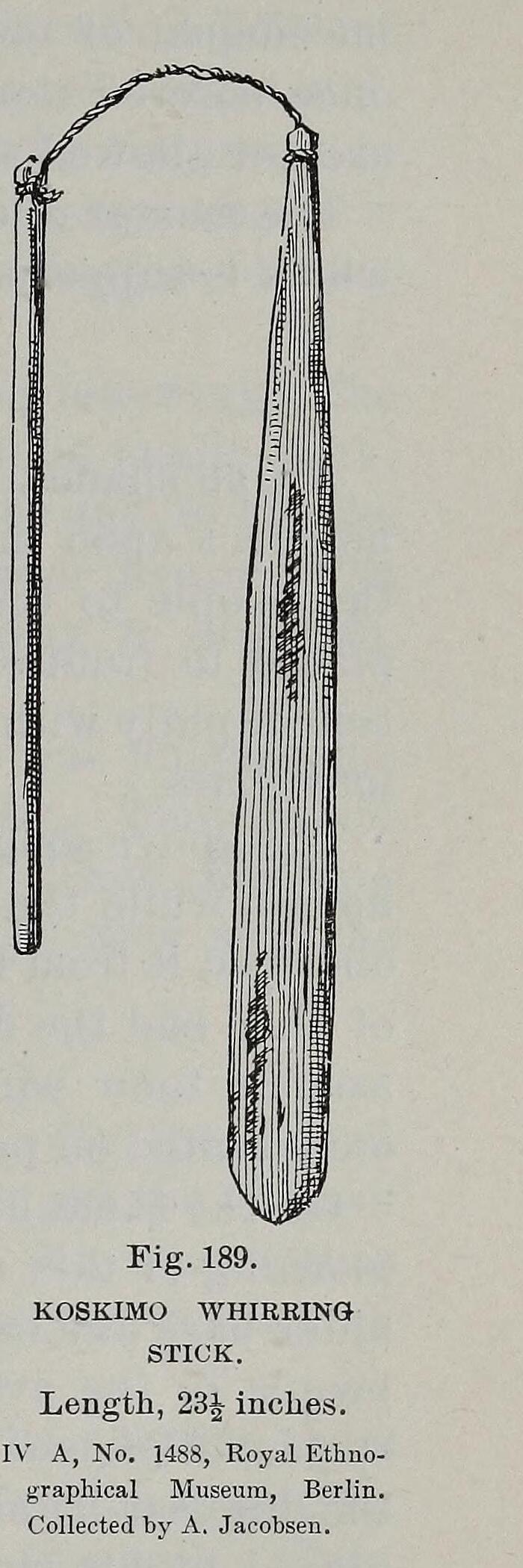
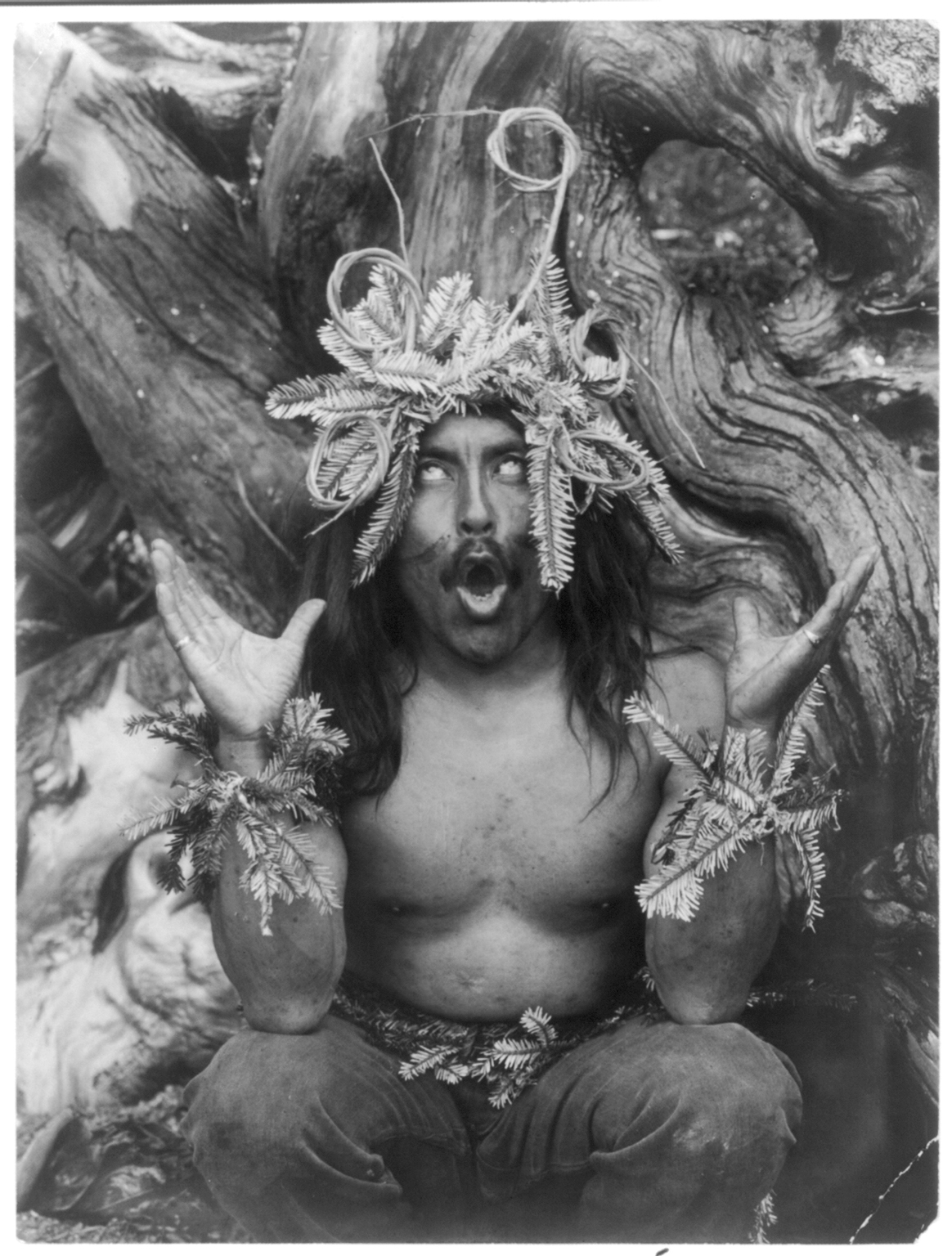
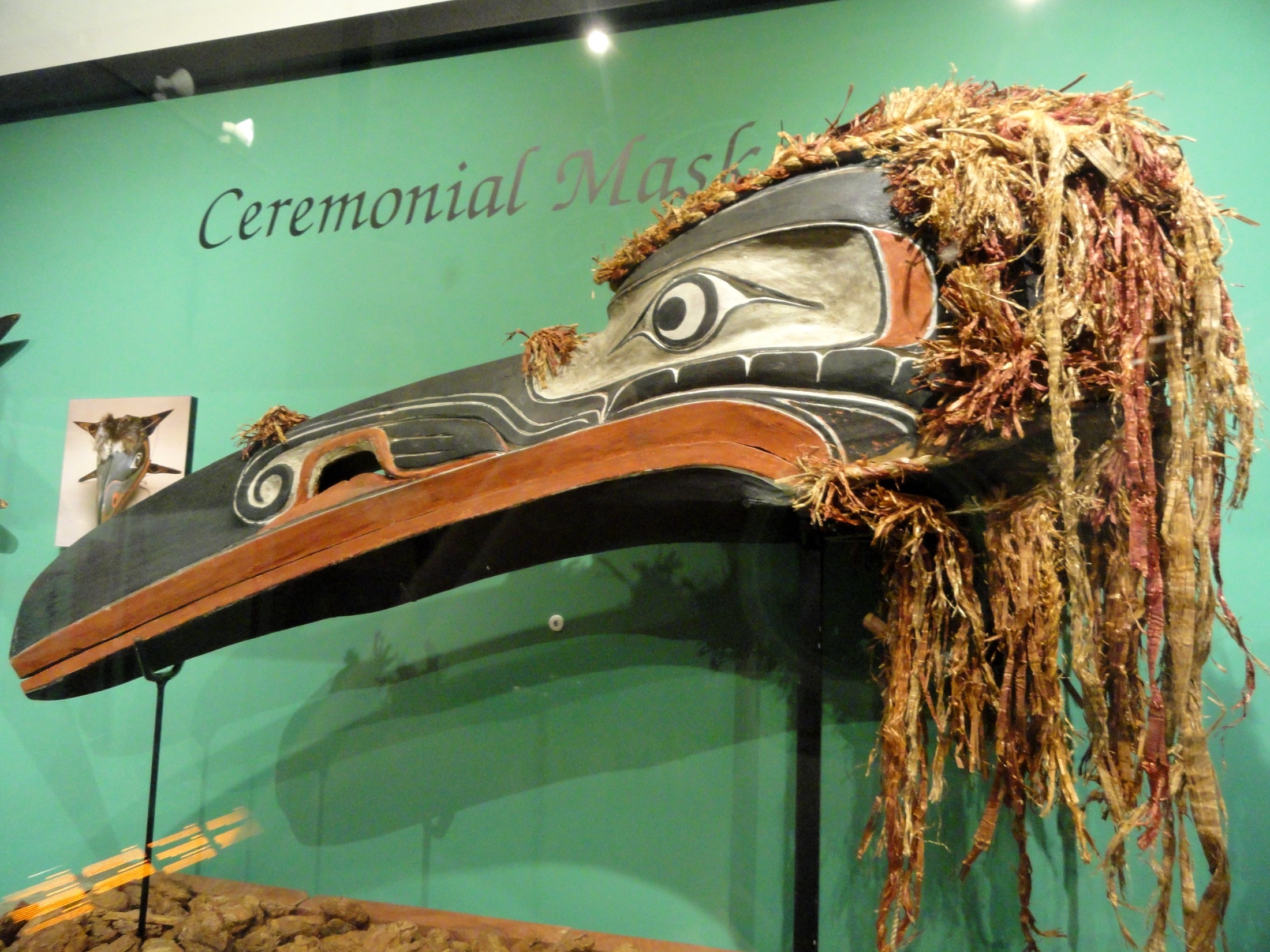
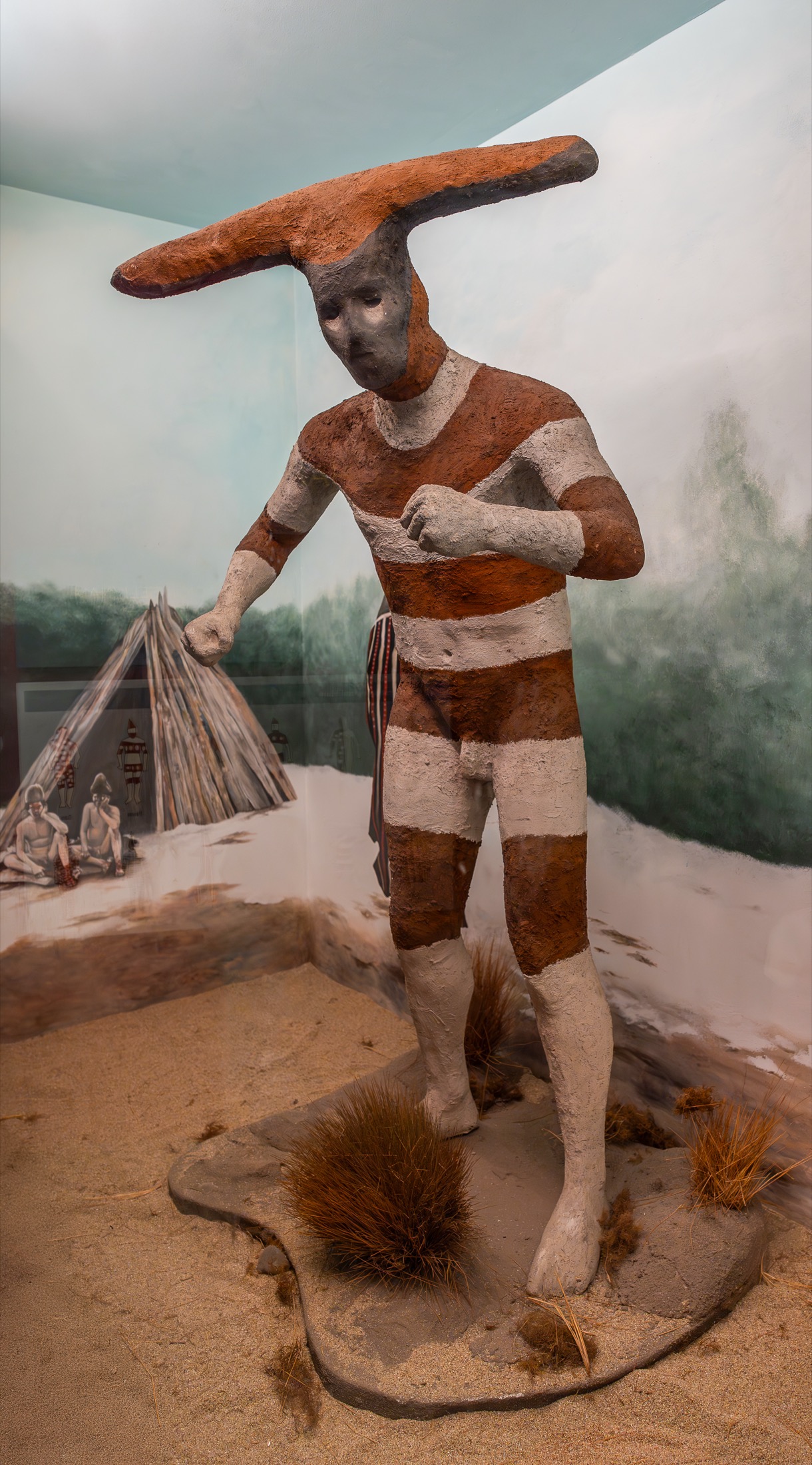
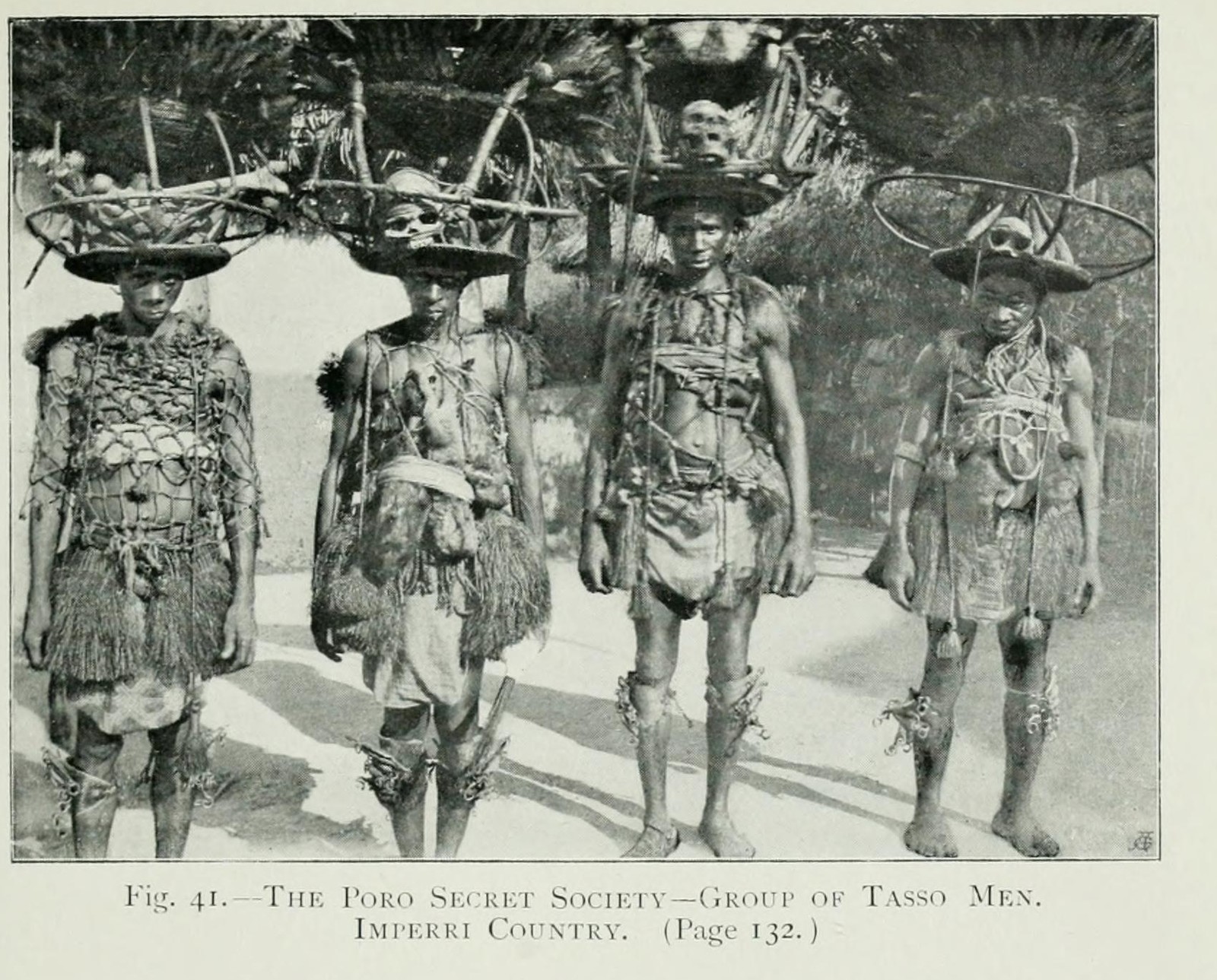
In the Northwest Amazon the swallowing is not a scene in the cult — it is the origin of the cult’s instruments. In the Tatuyo telling, initiates who broke the food rules sheltered in the mouth of the anaconda Pohé-piné, Father-Sun, and were swallowed. The anaconda was made to vomit up their bones and was burned; and from its ashes grew the paxiuba palm from which the sacred yuruparí instruments are cut. The voice of the cult is literally born from the swallowing. Stephen Hugh-Jones describes the wider yuruparí initiation in the same words — the initiates “killed and swallowed and reborn by being vomited up again,” the cult’s very name built on yuru, “mouth” — and Yuri Berezkin’s motif catalogue finds the swallowed-initiates story clustering tightly there, among the Baniwa, Tariana, Barasana, Desana, Tatuyo, and Yukuna: a coherent regional branch of the rite, holding together on a second continent exactly as it holds on the first. Further afield the echoes keep the pattern’s shape: in the Selk’nam Hain of Tierra del Fuego the spirit Xálpen kills the initiates and Olim raises them; in the West African Poro the boys are eaten by the spirit, live in its “womb,” and are reborn under new names, their scars shown as its teeth-marks. And a large statistical comparison of world mythology — Thuillard, Le Quellec, d’Huy, and Berezkin (2018), 2,264 motifs across 934 peoples — recovers a New Guinea–South America supercluster and finds that the most widely distributed motifs are also the oldest: on the numbers as on the ground, the wide rite is the deep rite.
One rite
| People | The swallower | The bullroarer is | The boys |
|---|---|---|---|
| Murinbata (N. Australia) | Mutjingga / Karwadi, the Mother | “the voice of the Mother” | swallowed alive, vomited up |
| Anula (N. Australia) | the Great Spirit Gnabaia | his voice | swallowed, disgorged as initiates |
| Yolngu (Arnhem Land) | the python Julunggul | her voice, crying in hunger | swallowed and regurgitated |
| Marind-anim (New Guinea) | the giant Sosom | sosom — the monster’s own name | devoured, disgorged |
| Yabim, Bukaua, Kai, Tami (Huon) | the monster-hut | balum / ngosa / kani — same word as the monster | swallowed, ransomed with pigs |
| Namau / Purari (New Guinea) | the wicker kaiaimunu | imunu viki — same root as the monster | swallowed, disgorged as men |
| Orphic Greece | the Titans | the rhombos, “thunder of Zagreus” | the god dismembered, eaten, reborn |
| Kwakwaka’wakw (NW Coast) | Baxbakwalanuxsiwae, covered in mouths | the voice of the spirit taking the novice | devoured, returned as Hamatsa |
| Tatuyo & neighbours (NW Amazon) | the anaconda Pohé-piné | cult instruments cut from the palm grown from the swallower’s ashes | swallowed, vomited up, reborn |
Mircea Eliade, who read more initiation ethnography than anyone of his century, compressed the whole dossier into a single formula: “mythical Beings, identified with or manifesting themselves through the bull-roarers, kill, eat, swallow, or burn the novice;… they resuscitate him… a new man” (Rites and Symbols of Initiation, 1958, citing Zerries, Baumann, and Spencer and Gillen); the sound of the boards, his note adds from Otto Zerries, “represents the voice of the Ancestors.” Zerries’s own survey of the instrument, Das Schwirrholz (1942), reached the conclusion the map forces: the complex descends from a single very old stratum, and Wilhelm Schmidt’s school placed the bullroarer-as-voice-of-the-sky-god among the marks of the oldest culture layer it could discern. The scholars arrive by different roads — Loeb counting traits, Zerries mapping specimens, Eliade reading rites, Harrison staring at Zagreus until the Wiradjuri looked back — and they converge on the same object.
Stand back and look at what the world agrees on. A monster with a whirling voice takes the boys; the women mourn them as dead; inside the monster’s belly — the men’s ground, the cult house, the mystery — the boys learn that the voice is a board on a string, and that the secret is now theirs to keep; and they come back reborn, marked, and renamed. Nothing in the human mind requires that a whirled slat, a devouring monster, and a second birth be one ceremony. Yet from Port Keats to the Purari, from the Huon Gulf to the throne of Zagreus, from Kwakwaka’wakw rooftops to the anaconda’s ashes on the Vaupés, they are one ceremony. Loeb named the reason a century ago: the rite is a single ancient thing, and it travelled. The monster has worn a thousand faces on its way around the world, but in every one of its bellies the same instrument is singing.
Key sources
Loeb, E. M. 1929. Tribal Initiations and Secret Societies. University of California Publications in American Archaeology and Ethnology 25(3) — the four-trait complex and the common point of origin (pp. 263, 285); with The Blood Sacrifice Complex (AAA Memoir 30).
Stanner, W. E. H. 1959–63/1989. On Aboriginal Religion. Oceania Monographs, ed. L. R. Hiatt — the Punj cycle: “swallow them alive, then vomit them up”; “the voice of the Mother”; the Mutjingga myth; Hiatt’s introduction for the bullroarer-phallus and “Swallowing and Regurgitation in Australian Myth and Rite” (1975).
van Baal, J. 1966. Dema: Description and Analysis of Marind-anim Culture. KITLV — sosom as instrument and giant (pp. 267–268); “Sosom devours the neophytes” (pp. 480–485); the Boadzi atu and upper-Bian Ezam/Uzum attributions (p. 597).
Frazer, J. G. 1913. Balder the Beautiful (The Golden Bough, 3rd ed.), pp. 227–243 — the Huon monster hut, the “sullen growl… of bullroarers swung by men concealed in the monster’s belly,” and “the same word… to the bull-roarer and to the monster” (after Zahn, Keysser, Bamler).
Williams, F. E. 1924. Natives of the Purari Delta — imunu viki and the kaiaimunu; Haddon, A. C. 1919. “The Kopiravi Cult of the Namau, Papua.” Man 19, Plate M.
Spencer, B. & Gillen, F. J. 1899, 1904 — Twanyirika (Arrernte) and the Anula material, the latter as reported in Eliade, M. 1958. Rites and Symbols of Initiation, which also gives the kill-eat-swallow-resuscitate formula and, from Zerries, “the voice of the Ancestors.”
Clement of Alexandria, Protrepticus 2 (the Orphic toy-list with the rhombos); Harrison, J. E. 1912. Themis — the Wiradjuri boys “burnt to ashes and remodelled”; “more than an analogy; mutato nomine the account might have been written of Zagreus.”
Boas, F. 1895/1897. The Social Organization and the Secret Societies of the Kwakiutl Indians — rooftop bullroarers as the novice-taking spirit’s voice (p. 611) within the Hamatsa cycle.
Hugh-Jones, S. 1979. The Palm and the Pleiades — the yuruparí initiation; Berezkin, Y., Analytical Catalogue of World Mythology and Folklore, motif L26 (the Tatuyo Pohé-piné charter and the Northwest Amazon cluster); Thuillard, M., Le Quellec, J.-L., d’Huy, J. & Berezkin, Y. 2018. Trames 22(4):407–424.
Zerries, O. 1942. Das Schwirrholz; Chapman, A. 1982 (Selk’nam Hain); Tuzin, D. 1980 (Ilahita Arapesh); Alldridge, T. J. 1901. The Sherbro and its Hinterland (Poro).