No. CJFN15-003
Antakirinya pulpiŋba, iguana ancestors
North-west South Australia · Coober Pedy and Charlotte Waters region
Restricted
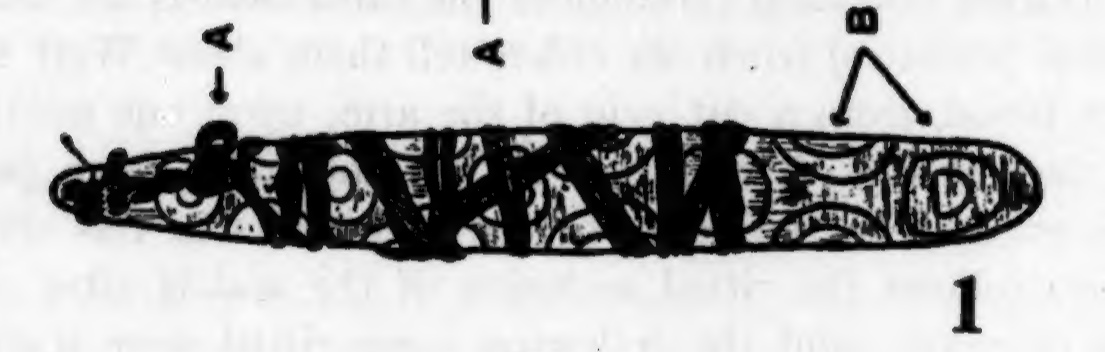
pulpiŋba
Source term: bullroarer
pulpiŋba: Berndt’s Antakirinya bullroarer term; no literal gloss supplied.
The first bullroarer was made for the first subincision. The two iguana ancestors Kuruka'di and Mumba marked it like an iguana's back and strung it with human-hair or wombat-fur twine. Kuruka'di swung it first, warning the Kunkarunkara women away; then the two men subincised each other, founding the rite. Among the Antakirinya the pulpiŋba sounded before circumcision and subincision. A newly subincised youth received one and hid it; only after both ceremonies could he make his own. In a story the Antakirinya also knew, the same heroes speared a great mother snake whose blood, urine and excreta became the red, yellow and white ochres of Mul'tan'tu.
Particulars
- Object
- Carved wooden blade with designs representing iguana markings, swung on human-hair or wombat-fur twine.
- Function
- Sounded before circumcision and subincision; given to the initiate after subincision and kept hidden.
Source
R. M. Berndt, “Tribal Migrations and Myths Centring on Ooldea, South Australia,” Oceania 12(1) (1941): 1–20, pp. 5, 7–10, 17, fig. 2 no. 1