No. PIDDINGTON1952-001
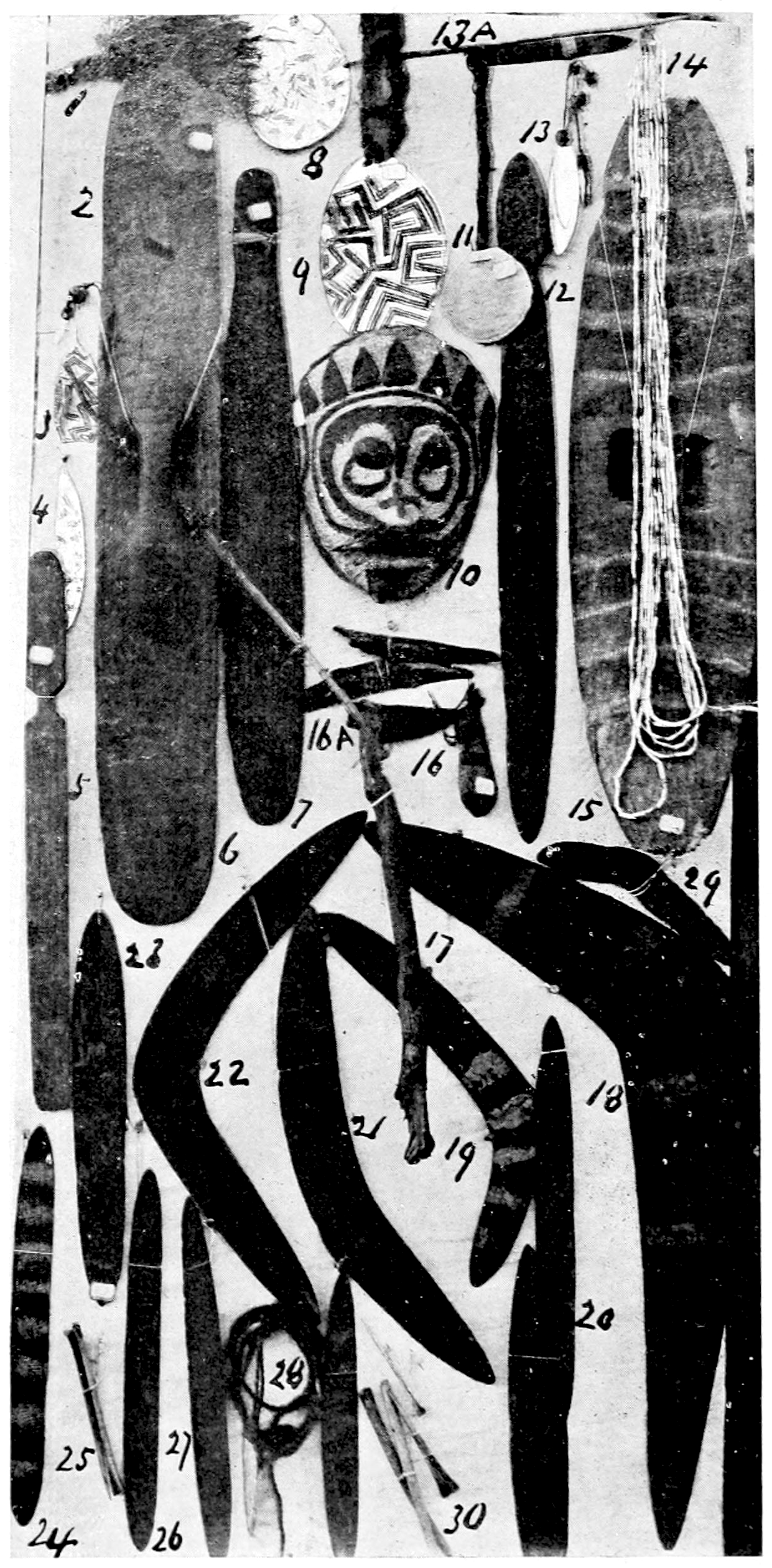
Karadjeri roarer shown after the cut
Australia · La Grange · Bidyadanga, West Kimberley
Restricted
Source term: bull-roarer
Among the Karadjeri (Karajarri) of the West Kimberley, the novice was circumcised sitting down, his eyes blindfolded and his ears stopped up. Immediately after the cut he was shown the bull-roarers; only once the blood of the wound had dried was he allowed to see the flint instruments that had done the work. He drank blood, too. The whole rite repeated the deeds of the Bagadjimbiri, the twin ancestors who instituted circumcision and first used the sacred instruments, the stone knife, the bull-roarer and the pirmal, so that each initiation re-enacted the founding of the world. Killed and revived, the twins ended as water-snakes. The roarer could kill, too. In a Karadjeri story the Moon came out of the east and was welcomed and given wives, then stole another man's woman; Badingbur struck him dead with a bull-roarer, and his spirit went up into the sky.
Among the Karadjeri, the novice is circumcised in a sitting position, his eyes blindfolded and his ears stopped up; immediately after the operation, he is shown the bull-roarers, and — after the blood of his wound has dried — the flint instruments with which the operation was performed.
Mircea Eliade, Rites and Symbols of Initiation (1958), p. 22
Particulars
- Object
- Bull-roarers of the Karadjeri initiation rites; their form is not described.
Source
Ralph Piddington, An Introduction to Social Anthropology (Oliver and Boyd, 1952), pp. 74-105; Ralph Piddington, "Karadjeri Initiation," Oceania 3(1) (1932): 46-87; Mircea Eliade, Rites and Symbols of Initiation (1958), p. 22; A. Capell, "Some Myths of the Garadjeri Tribe, Western Australia," Mankind 4(4) (1950): 148-162, at p. 154