No. SG1904-001
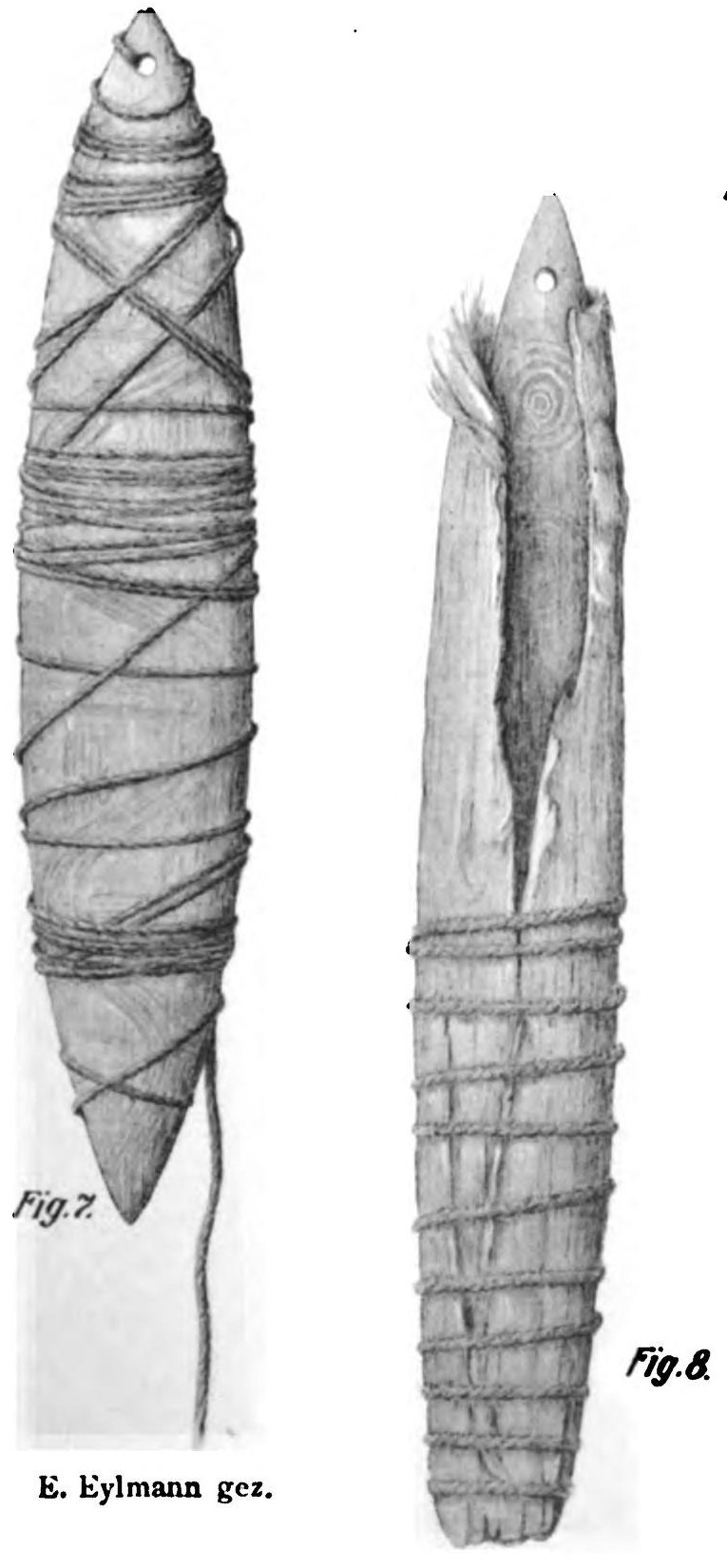
Warumungu Tennant Creek murtu-murtu initiation bullroarer
Tennant Creek district, Northern Territory · Central Australia
Restricted
murtu-murtu
Source term: murtu-murtu / churinga
murtu-murtu: Warumungu name for the wooden churinga/bullroarer and for the ancestral spirit in its origin account.
At dawn, after hours of ceremony and ancestral songs, the exhausted novice heard the murtu-murtu roar behind him and was “too frightened to do anything.” Men pinned him across two bodies, pressed a fur-string tassel into his mouth, and circumcised him with a stone knife; his blood was caught in a shield and taken to his mother to drink. The following night his father revealed the marked wooden instrument by firelight. The youth carried it through a full moon of secluded healing, under threat of death if any woman or child saw it, while men bit his scalp and chin to make his hair grow. Its origin story is equally savage: wild dogs tore the ancestor Murtu-Murtu apart; his flying flesh roared through the air and became the Grevillea trees from which the instruments were cut. The ceremonial world around it was ruled by snakes. In Warumungu tradition the ancestors themselves swung churinga as bull-roarers, and one snake ancestor, owning none, stole a small one from the Wollunqua: the giant mythic water-snake honoured in the most elaborate Warumungu ceremonies, so vast that however far he wandered, the end of his tail still lay in his home water-hole at Thapauerlu.
You must carry it all day long; do not lose it; do not allow any boy or woman to see it or you will be killed.
Spencer and Gillen, The Northern Tribes of Central Australia (1904), p. 352
Particulars
- Object
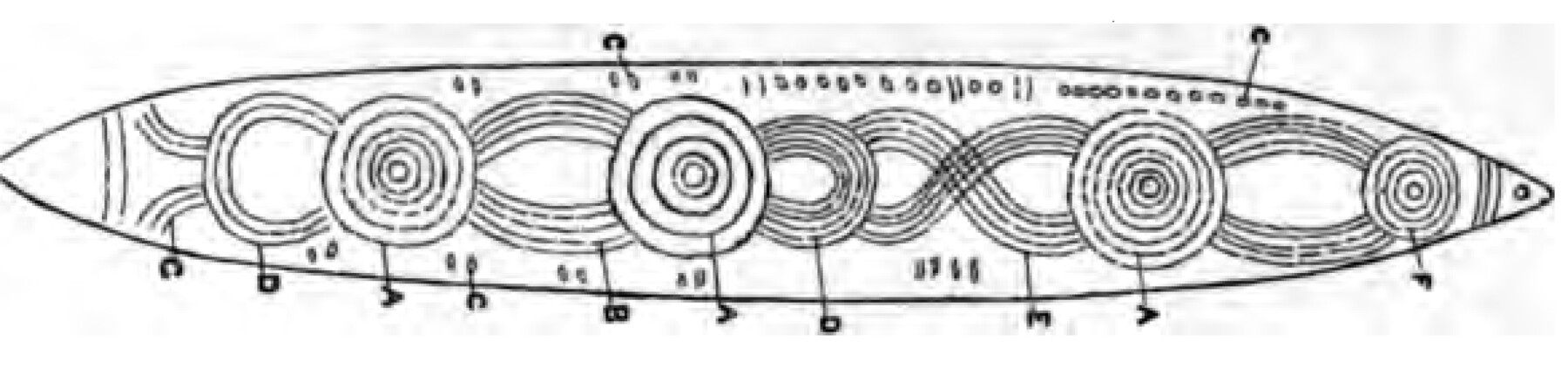
- Marked wooden murtu-murtu, cut from Grevillea and revealed to the novice after circumcision. A museum specimen from the Tennant Creek district survives in Stockholm (SMVK 1916.01.4084): a slender 21.6 cm blade carved with circles and stripes on both faces, its dark plant-fibre cord 184 cm long.
- Function
- Roared immediately before circumcision, revealed by firelight afterward, then carried throughout a month of secluded healing.
Source
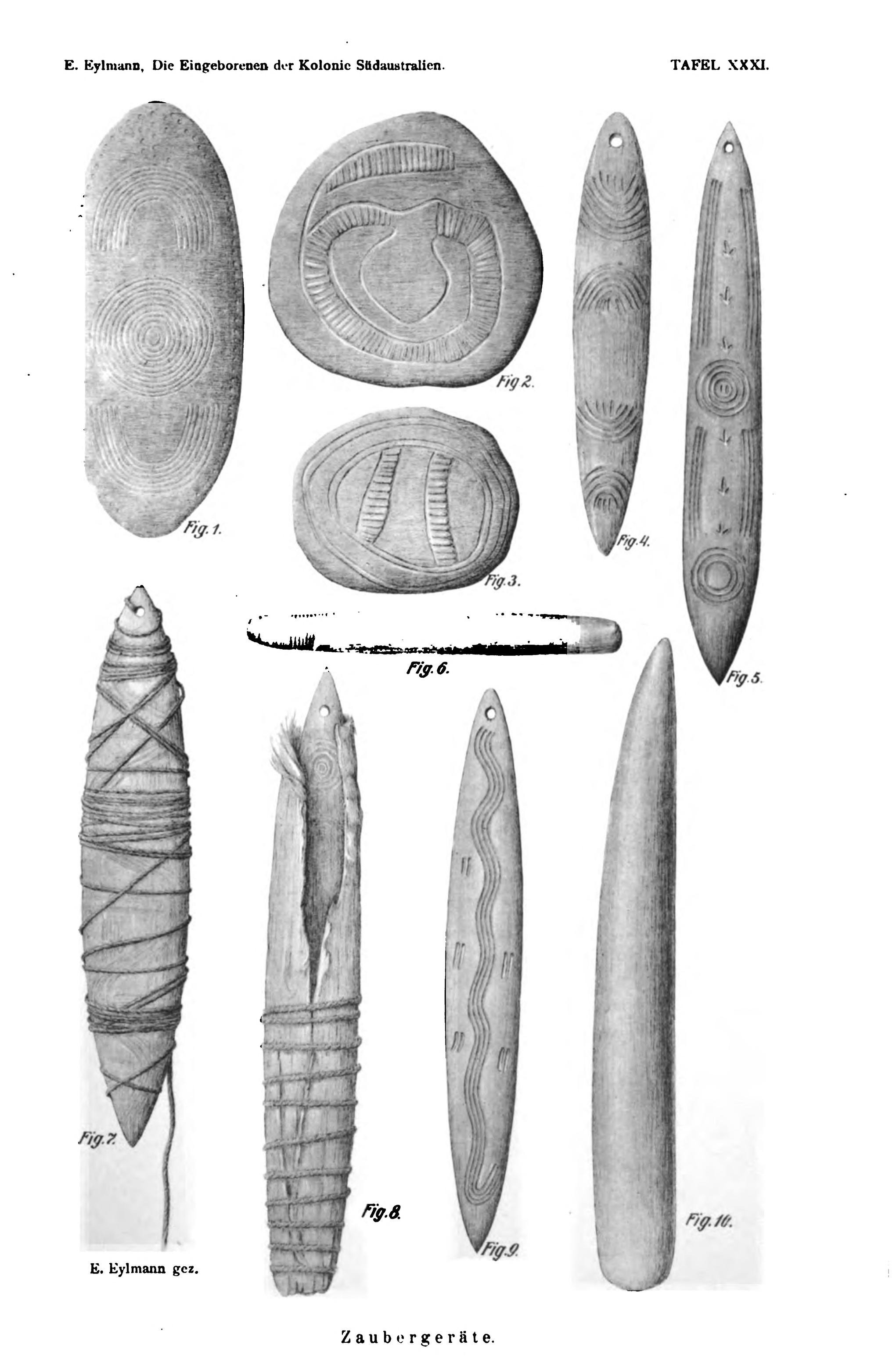
Baldwin Spencer and F. J. Gillen, The Northern Tribes of Central Australia (London: Macmillan, 1904), pp. 275-276, 351-353, 434-435 and 500-501, fig. 93; E. Eylmann, Die Eingeborenen der Kolonie Südaustralien (1908), pl. XXXI figs. 7-8; Etnografiska museet, Stockholm (SMVK), 1916.01.4084