Atlas Essay —
Initiates Used To Die
The ancients made men by nearly killing boys
On the Huon Peninsula, on the north-east coast of Papua New Guinea, the Kai remember the man who founded their initiation. His sister found the first bullroarer, a chip of firewood that flew off whirring through the air, and she told him to kill her so that the secret would stay with the men. He did. Then he wanted a reason to keep the great pig feast for the men, and he hit on the idea of cutting a boy. He slit the child’s testicles, and the child died. So with the second boy he took only the foreskin, and the boy lived. Then he called the villages together, told them his secret, gave each village its two named bullroarers, and staged the first feast. The rite the Kai practise is the second attempt. The first killed a woman and a boy.
The first initiation took boys to the edge of death. In many cultures the myth remembers a founding far more grotesque than the rite as practised. Over time it was cut down, first to an ordeal a boy could come through, then to a play of one: a mock execution for a beheading, a pig for the boy, the roar of a bullroarer for the monster.
In brief
- The founding killed. The first operation of the Kai founder, in the mountains of north-eastern New Guinea, killed the boy; with the second he cut only the foreskin (Keysser 1911, p. 35). Among the Nyikina of the Kimberley, in north-western Australia, the sky being Kumbaruga burned the boys and “many of them died,” until Golwilir brought the stone knife (Südkamp, after Petri, p. 260).
- The killing became a play. The spirit of the Bedik of Senegal demands the candidates’ heads, and the master of the rite orders a mock execution instead (Smith 1984, p. 26). The Coast Pomo of California kept the name “cut cut” after nobody was cut (Loeb 1926, p. 382).
- The price came down: a man taken in a raid for the monster of Papua’s Purari Delta (Wirz 1937, p. 410), a pig for every boy on the north-east coast of New Guinea, bananas in its highlands, sweet gruel among the Gusii of Kenya, two coconuts on New Guinea’s Fly River, and at the end only the roar of the bullroarer.
- Boys still went over the edge. On the New Guinea coast a boy bled to death at circumcision “not all that rarely” (Lehner 1911, p. 408); in Liberia a mother learned of her son’s death from a holed pot at her door (Schwab 1947, p. 285).
- Greece and Israel keep the same memory. Demeter held the infant Demophon in the fire every night to make him deathless (Hymn to Demeter, ll. 231–249); Abraham’s knife was stopped over Isaac, and a ram burned “in the stead of his son” (Genesis 22:13).

Ngosa took only the foreskin
The Kai live in the mountains behind Finschhafen, above the Huon Gulf of north-eastern New Guinea. Their initiation belongs to the Ngosa, a word that means “grandfather” and names three things at once: the monster that swallows the boys, the voice the women hear roaring in the forest, and the bullroarers that make it. The missionary Christian Keysser lived among them for years and wrote the story of the first Ngosa feast down as the Kai told it.
It begins with a woman. In the district of Läugube, barely an hour south of Sattelberg, she was chopping firewood when a flat chip sprang off and flew whirring through the air. She told her brother, and he saw a great pig feast in it, to be eaten by the men at the women’s expense. Only his sister stood in the way, because she knew. She advised him to kill her so that the secret would stay with the men, and though the idea troubled him, his selfishness took the clever sister’s advice, “and she lost her life as a result” (p. 34). Then he needed a reason to keep the feast for the men alone. This is how Keysser finishes the story:
He hit on the idea of slitting open a boy’s testicles. The little one died of this treatment. So with a second he removed only the foreskin. That succeeded. He invited the people round about, told them his secret, gave each village the two principal bullroarers, which bear names, and staged the first feast, which gradually spread among all the Kai.
Christian Keysser, “Aus dem Leben der Kaileute” (1911), pp. 34–35. German: “Der Kleine starb infolge dieser Behandlung. Daher entfernte er bei einem zweiten nur die Vorhaut. Dies gelang.”
Read it in order. The secret is bought with the life of the woman who found it. Then there is a first rite, and it kills. There is a second rite, which takes a part instead of the whole, and the boy lives. Only then does the founder reveal the secret, hand out the bullroarers and spread the feast. The instruments arrive after the deaths, as the seal on the reform. The Kai do not say the foreskin was the original demand. They say it was what was left once the first demand had killed a child.
As the Kai described it to Keysser, the rite still acted the story out. The boys were led into the forest to the Ngosa, who swallowed them. A man on a scaffold played the monster. If a pig was offered as ransom for the boy, “he mimics retching and spits the water down on the boy, who is thereby given his freedom” (p. 38). The boy who goes into the Ngosa’s belly comes out because something else has been paid in his place.
And under the ransom the old death had not gone away. Keysser describes the operation itself, done with bamboo knives “and with little care besides”:
Most of the boys scream at the top of their lungs and struggle with all their strength against the butchery …. The screaming carries as far as the women’s village, which confirms them in their belief in the Ngosa’s cruelty. It is said to have happened that one of the young lads died of the effects of this operation.
Keysser (1911), p. 38. German: “Es soll vorgekommen sein, daß einer der jungen Burschen an den Folgen dieses Eingriffs starb.”
So the Kai tell it twice, once as myth and once as fact. In the myth the first boy died and the rite was reformed. In the rite as practised, a boy sometimes died anyway, and the women heard the screaming and believed the Ngosa had eaten him. The story the women were told was the true one.
The first founding killed
Kai country is not the only place where initiation is founded twice. Nearly three thousand kilometres to the south-west, on the Fitzroy River in the Kimberley of Western Australia, the Nyikina told the ethnologist Helmut Petri how the rite came from the sky. Two sky beings, Kumbaruga and Golwilir, founded initiation together. The boy Yalgi went out as the candidate to call the clans in, and the boys were brought together for the ceremony:
He went and one by one brought all the boys for circumcision, and he brought Golwilir too. Ngalbo, the cloud corroboree, was performed. … Kumbaruga came and made all these Malolo into men. But he did not circumcise them: he burned them with a glowing stick. Many of them died. Golwilir saw this and thought it was not good. He took djimare, the white stone knife, and cried “Dju!” Then he performed the circular cut on Yalgi.
Horst Südkamp, Wondjina, “Yalgi und Windinbigi,” after Petri 1954, pp. 260–261. German: “Aber er beschnitt sie nicht, sondern brannte sie mit einem glühenden Holz. Viele von ihnen starben.”
The same telling goes on to correct the blood: Kumbaruga drew his from the nose, and Golwilir told him it must come from the arm, and all of them agreed: “Yes, that is right” (p. 261). A page earlier the same beings make the law that women may not see bullroarers (p. 259). The Nyikina rite, like the Kai rite, is the second version, put right by a founder who saw what the first version did to the boys.
The Bedik of south-eastern Senegal, in the hills near the Guinea border, tell the reform as something that still happens at every initiation. Their great masks belong to the Gindam, the master of the rite. The third mask is never seen, only heard:
The third mask is the Nyandemem, the giant and terrifying servant of the Gindam: the roar of iron and wooden bullroarers sounds his voice. … Nyandemem demands that the candidates for the first bush initiation really have their heads cut off, but the Gindam holds him back and decides on a pretence which reveals the initiatory secret.
Pierre Smith, “Le ‘Mystère’ et ses masques chez les Bedik” (1984), p. 26. French: “Nyandemem exige que l’on coupe réellement la tête des candidats à la première initiation en brousse, mais le Gindam le retient et décide un simulacre.”
The voice of the bullroarer is the voice that wants the real killing. The master of the rite is the one who commutes it. At the first initiation, Smith goes on, the boys “are symbolically beheaded,” and at the second they are “symbolically swallowed by the python, who gives birth to them again” (p. 27). Each stage of the Bedik rite is a death that used to be real, played out as a pretence.
And the Bedik remember that the pretence was not always a pretence. By the day of the ordeal the boys know that “their being put to death will only be a pretence.” What the elders fear is a boy who panics beyond control. Smith was told what used to happen to him:
“That would be the sign that he can never live among us as a man, and in former times he was killed for good.” Today he will rather be sent off to join the small groups of Bedik who have emigrated to Senegal’s towns.
Smith (1984), p. 21. French: “… et, autrefois, on le tuait pour de bon.”
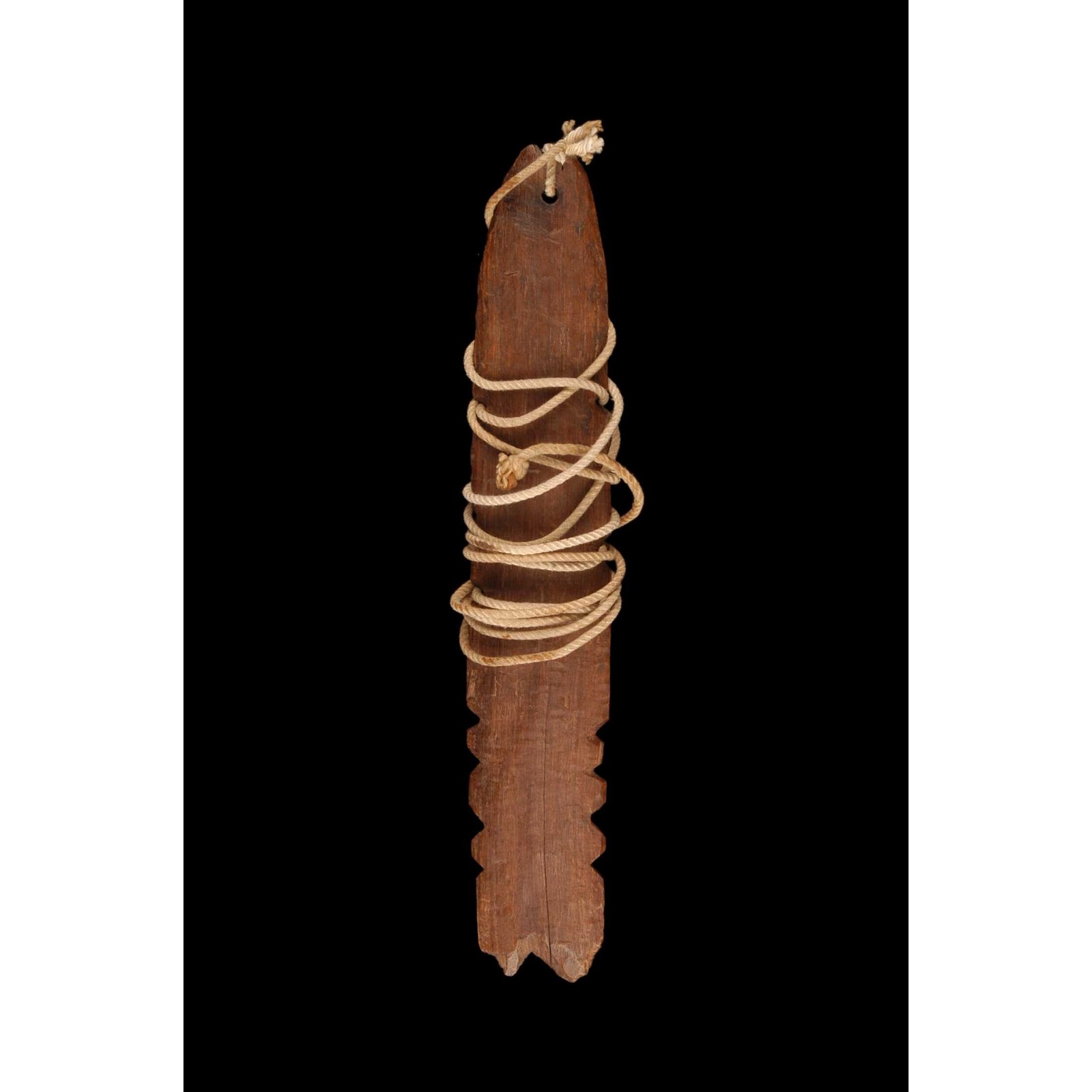
Three peoples in three far-apart regions (Plate II), none in contact with the others, tell the founding of initiation the same way: a slit through the testicles became circumcision, burning became the stone-knife cut, beheading became a mock execution. In each the operation the boys undergo is the killing reduced to a part. The rite is the memory of a death, cut down until a boy could survive it.
In North America the cutting-down ran on to its last stage, a play. On the Northwest Coast, at the north end of Vancouver Island in British Columbia, in the Koskimo winter dance, the first novice vanishes and leaves his clothes “covered with blood,” and the chiefs call for “the murderer of the youth” before he is brought back from among the ghosts (Boas 1897, pp. 606–608). In northern California the Pomo initiation of the young was called djaka djaka, “cut cut,” though by then no one was cut: the boys and girls were laid in a pit that “probably symbolized a grave, from which the neophytes were resurrected” (Loeb 1926, p. 359). Edwin Loeb judged that the cutting had once been real and done to the boys alone; “at a still later period the actual performance of the cutting was omitted among the Coast Pomo, although most of the initiations still bore the name of the cutting ceremony” (p. 382). The rite kept the name of the cutting after the cutting stopped.
The killer became the bullroarer
In south-eastern Australia the reform has a different shape. The killer is not a man who learns better but a being who is removed, and what is left of him is the bullroarer. R. H. Mathews attended a Burbung, the initiation of the Wiradjuri of central New South Wales, at the Bulgeraga Creek camp on the Macquarie River, and an old man of the tribe told him the story the women were never to hear:
A long time ago there was a gigantic and powerful being, something between a blackfellow and a spirit, called Dhuramoolan, who was one of Baiamai’s people. His voice was awe-inspiring and resembled the rumbling of distant thunder. … He pretended to Baiamai that he always killed the boys, cut them up, and burnt them to ashes, that then he formed the ashes into human shape, and restored them to life, new beings, but each with a tooth missing.
On each occasion when Dhuramoolan brought back the boys who had been handed over to him for the purpose of initiation, it was found that some of them were missing, and he always reported that they had died from some ordinary disease. After a time Baiamai became very uneasy at the loss of so many of his young men, and suspecting that something was wrong, he questioned those brought back, but they were too much afraid of Dhuramoolan to tell upon him. On Baiamai compelling them to speak the truth, they told him that Dhuramoolan had feasted on their fellows.
They also stated that it was not true about Dhuramoolan burning them and restoring them to life, and that the extraction of their teeth was performed by his inserting his own lower incisors under the tooth to be extracted, and wrenching it out. At this part of the performance he sometimes bit the entire face off the boy and devoured him.
Upon hearing this Baiamai became very angry and destroyed Dhuramoolan, but put his voice into all the trees of the forest and told it to remain in these trees for ever. He then split one of the trees, and made a bull-roarer (mudthega) which he fastened to a string and swung round, and it had Dhuramoolan’s voice. … Baiamai then told his chief men that for the future they must themselves initiate the youths of the tribes, using the mudthega … to represent the voice of Dhuramoolan.
R. H. Mathews, “The Būrbŭng of the Wiradthuri Tribes” (1896), pp. 297–298
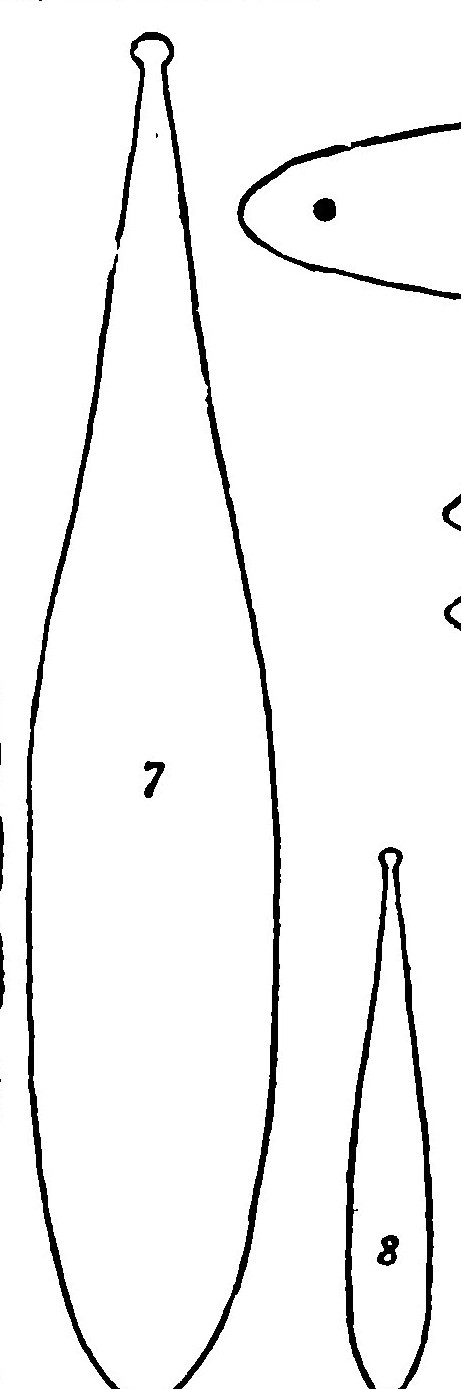
Everything in the Wiradjuri rite is here, and it is all the residue of a killing. The boys are still handed over. The voice of thunder still comes out of the trees. A tooth is still knocked out, and in some tribes, Mathews adds, Dhuramoolan swallowed the boy and vomited him up a young man “minus a tooth” (p. 297, n. 2). What has gone is the eater. In his place stand the old men, who now “must themselves initiate the youths,” and the slat of wood that carries his voice. Baiame even kept the women’s version going on purpose: he decided “to continue to make them believe that he came and took the boys away and burnt and resurrected them as heretofore” (p. 298). The cover story covers something real: the boys who never came back and were said to have died “from some ordinary disease.”
The neighbouring Euahlayi of the Narran River, in northern New South Wales, told Katie Langloh Parker the same founding, from Baiame’s side. He made a stone figure with a voice to preside over the initiation and knock out the novices’ front tooth, “but when he was to knock out the front tooth, he began to eat the boys’ faces. He was too strong; he would not do to preside over Boorahs.” Baiame turned him into an animal and tried again, and the instrument he settled on was the bullroarer (Parker 1905, p. 67). The first initiator ate the boys. The second was only a voice.
Far to the north, in southern Arnhem Land in northern Australia, the Dalabon tell it of a woman. Lumaluma was the great serpent-mother of the Gunabibi ceremony, and she swallowed the men given to her. Kenneth Maddock heard how it ended:
Lumaluma she would vomit the bones of men she had swallowed. She should have brought them up whole and alive. The father and son decided not to give her more men to swallow, but to put bullroarers in her place. When next she spoke a left-handed nocturnal bird caught her voice by swinging a bullroarer.
Kenneth Maddock, “Communication and Change in Mythology” (1976), p. 166
“She should have brought them up whole and alive.” That is what a swallowing is for: the novice goes in and comes out reborn. Lumaluma brought up bones. The men stopped giving her men, and from then on the novices are swallowed by a voice. “The bull-roarer is Lumaluma,” Maddock was told (1978, p. 104). To the west, near the Daly River, the Murinbata say the same of their own swallowing Old Woman, Mutjingga, speared and cut open by the first men: “Because she died, men now have only the bullroarer, which was made in order to take her place” (Stanner, On Aboriginal Religion, p. 43). Her children came out of her belly alive; she did not. The bullroarer exists because the being who swallowed boys had to be put away.
South of the Roper River in eastern Arnhem Land the Mara told Ronald Berndt of the old woman Mumuna, who drew men to her camp with a smoky fire, crushed them with boulders while they slept, cooked and ate them, and vomited them out on an ant-bed. They never came back to life; their bones lie there as stones today. Eaglehawk killed her, and the instrument was made from her death:
As Mumuna died, she called out brr! and that sound went into every tree; her blood splashed on to every tree, and it was that blood that contained the sound. Afterwards, in memory of Mumuna, the Eaglehawk cut down a big tree, and from its wood he made a bullroarer which is the Mumuna (or Mumunga). He tried to get the sound of the dying woman.
Ronald M. Berndt, Kunapipi (1951), pp. 151–152
Dhuramoolan’s voice went into the trees when Baiame destroyed him; Mumuna’s cry and blood went into them when Eaglehawk killed her. The Mara bullroarer is the swallower’s voice at the moment she was stopped.
In the north-west Amazon the instruments are trumpets and flutes, not bullroarers, but the founding is the same and goes further. The Tatuyo of the Vaupés, on the Colombian side of the border with Brazil, told Patrice Bidou how the Sun-Father, in the form of the anaconda Pohe-pinõ, initiated the first boys. They broke their fast: in the forest they cooked fruit on a fire when they were forbidden anything cooked. A storm came, they sheltered in a hollow trunk, the trunk closed on them, and the trunk was the anaconda. “So the disobedient boys perished, eaten by the anaconda-father” (Bidou 1983, pp. 36–37). Then, drunk on yagé, chicha, tobacco and coca, he vomited:
So he gave back the bones of the children he had swallowed and digested. These were the first musical instruments, the “bones of the sun.” But these first instruments could not suffice for all the people of the earth, so Pohe-pinõ said: “Make a fire and burn me.” … They burned him. … On the spot where he had burned, the paxiuba palm sprang up. … Its trunk was then felled … and cut into as many pieces as there were groups; so each received its own musical instruments.
Patrice Bidou, “Le travail du chamane” (1983), p. 38. French: “Il rendit ainsi les os des enfants qu’il avait avalés et digérés. Ce furent les premiers instruments de musique, les « os du soleil ».”
The first sacred instruments were made of dead initiates. The second set was made of the palm that grew where their killer was burned. The juruparí instruments of the Vaupés, kept hidden in the river and called “anacondas,” are the eaten boys and the eater at once, and every group got its share. The Yahuna of the Apaporis River, in the Colombian Amazon, tell the founding of the same flutes through Milomaki, a boy from the sun’s Water House whose singing killed: those who heard it went home, ate fish, and died. Their kin burned him, the first paxiuba palm grew from his ashes, and “the people made great flutes from its wood, and these gave back the beautiful melodies Milomaki had once sung” (Koch-Grünberg 1921, p. 386).
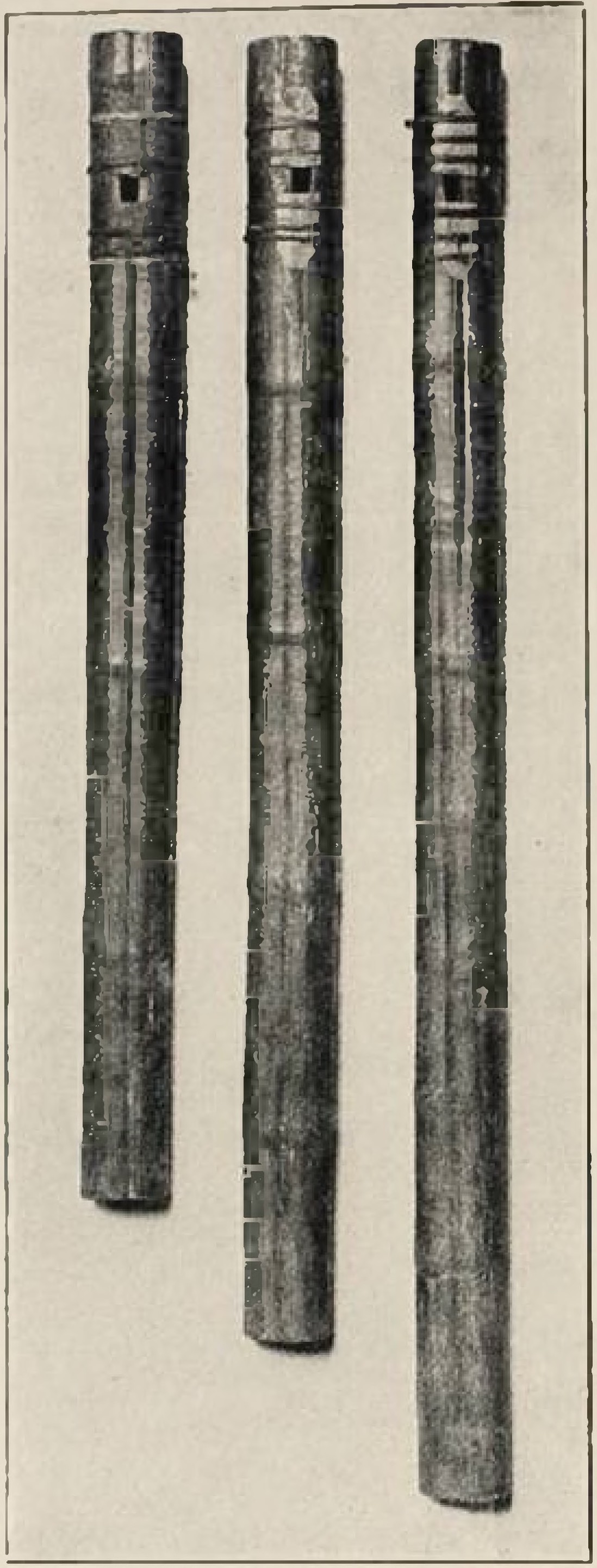
New Guinea has the same pattern without the reform. On the Papuan Gulf, on the south coast of Papua New Guinea, the Orokolo told J. H. Holmes of the cannibal god Oalea, who “seized the child and ate him” (p. 189). Dying, Oalea took out his own stomach and gave it to a woman, and inside it she found the child, a bag, an arm-shell “and a tiparu, bull-roarer, the first of its kind and supposed to have been the secret of Oalea’s supernatural power” (Holmes 1924, p. 190). Further west along the same coast, in Indonesian Papua, the Marind giant Sosom, who killed the novices and woke them to life again (Pöch 1906, p. 901), is gone from the world, but “Sosom is still in the bullroarer he presented to man, it being his voice” (Verschueren, in van Baal 1966, p. 486). Each time, the instrument outlives the eater, and carries his voice.
The cut is a monster’s bite
If the operation is the killing cut down to a part, the part should carry the killer’s mark. It does. On the Tami islands off the Huon coast, the swallower is the kani, and the missionary Georg Bamler wrote down what the boys were told about the cut:
The kani must swallow the boy. In swallowing, the kani bites into the penis. The cut is therefore called “kani-tooth.” … He swallows him into the pig-stomach. In return for a pig he gives him back out again.
Georg Bamler, “Tami” (1911), p. 496. German: “Beim Verschlucken beißt der kani in den penis. Der Schnitt wird daher ‘kanizahn’ genannt.”
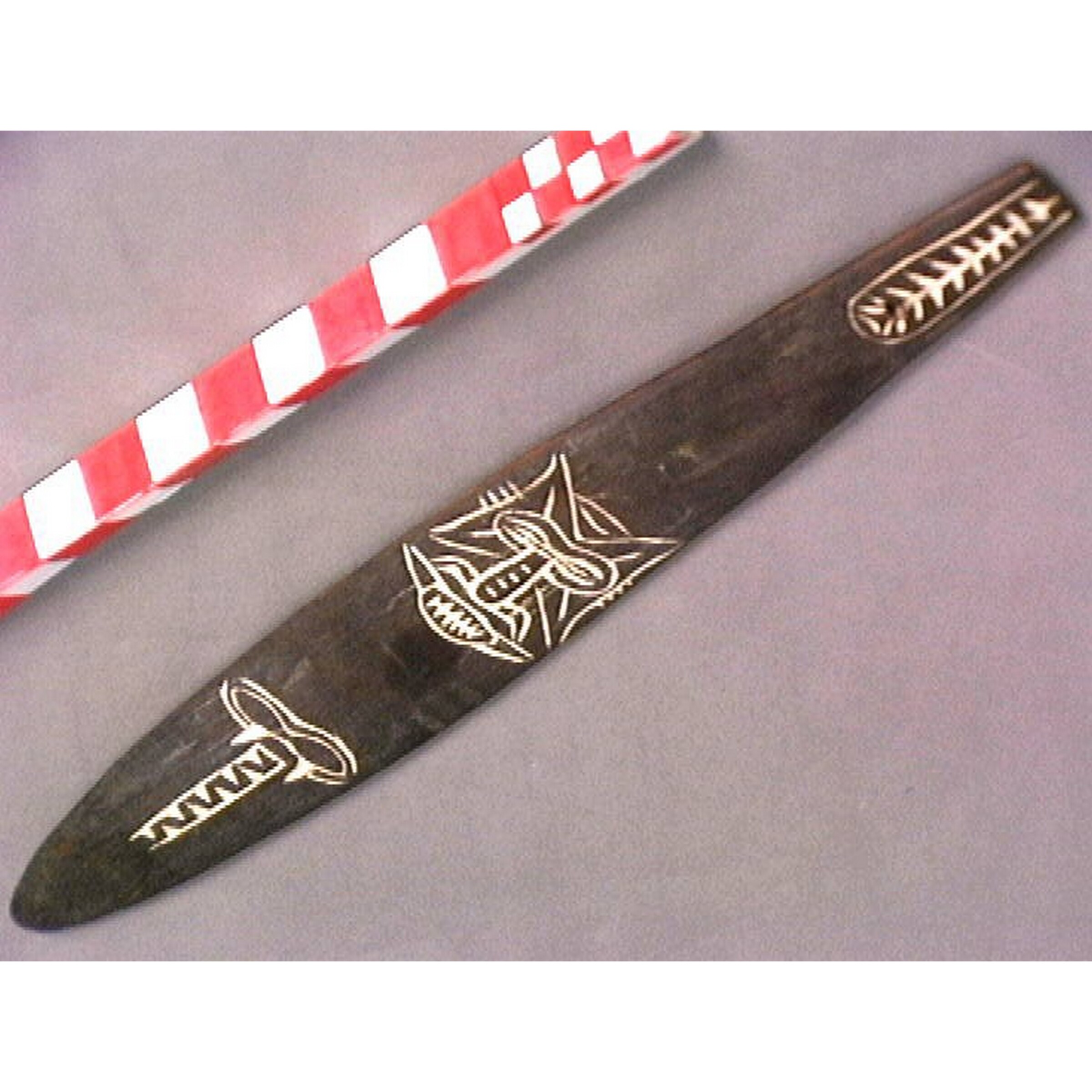
The cut is the bite. Every circumcised Tami man carries the tooth-mark of the being that swallowed him, and the bite takes the part where the Kai founder first took the whole. Along the coast among the Bukaua, the Balum was given pigs to spew the boys out again, and in spewing them out he bit or scratched them; that wound was the circumcision (Lehner 1911, p. 407).
The Wiradjuri tooth is the same kind of mark from the other side. Dhuramoolan knocked out the tooth with his own teeth, and that was where he bit the faces off. The missing tooth every initiated man shows is the place where the eating stopped. In the Liberian forest the Poro scars on a boy’s back and chest are bites too: “This scarification is said to be made by the teeth of the Big Devil in swallowing or ‘eating’ the novice” (Schwab 1947, p. 284). The great mask of the Gbande of northern Liberia is “the great red-mouthed crocodile supposed to swallow the boys and leave the marks of his teeth on their bodies” (Harley 1941, p. 27).
The mark turns up wherever the swallower does. Mundugumor boys on the Yuat, a tributary of the Sepik in northern Papua New Guinea, were cut with crocodile teeth and boar tusks, and relatives seeing the scars would say, “The crocodile has scratched and bitten him” (Aufenanger 1977, pp. 119, 122). At the Chambri Lakes, also on the Sepik, men dressed as ancestral crocodiles stand at the water, “the eaters of male backs,” and every Chambri initiate crawls between their legs (Gewertz 1982, p. 298). In western Kenya the two parallel cuts near each Bukusu initiate’s left elbow are the claw marks of the roaring leopard he wrestled, a leopard whose growl was a bullroarer (Merritt 1976, p. 87). The scar is not a symbol of the eater. It is the eater’s actual mark, reduced to a size a boy can live with.
A pig for every boy
The Kai founder paid in a part of the boy. His successors paid in pigs. Among the Bukaua, the Kai’s coastal neighbours, the swallower is the Balum, and the missionary Stefan Lehner explained what the women must believe:
They must picture the balum as an insatiably cruel monster that relentlessly swallows every boy and keeps him, too, unless great fat pigs are given it in quantity as a substitute for the boys. … For every boy handed over to the balum, that is, brought for circumcision, there must be a pig. … To bring a boy to circumcision without supplying a pig would, the old men say, be a risky business that could in some circumstances cost the boy his life; so all the relatives pool their valuables to help a wholly destitute one to a pig.
Stefan Lehner, “Bukaua” (1911), pp. 405–406. German: “… würden ihm nicht große fette Schweine in Menge als Ersatz für die Jungen gegeben.”
The pig is not a gift to the spirit. It is the boy’s substitute, his Ersatz, and the old men said plainly that a boy with no pig might not come back. The relatives pooled their wealth so that no child went into the Balum unpaid for.
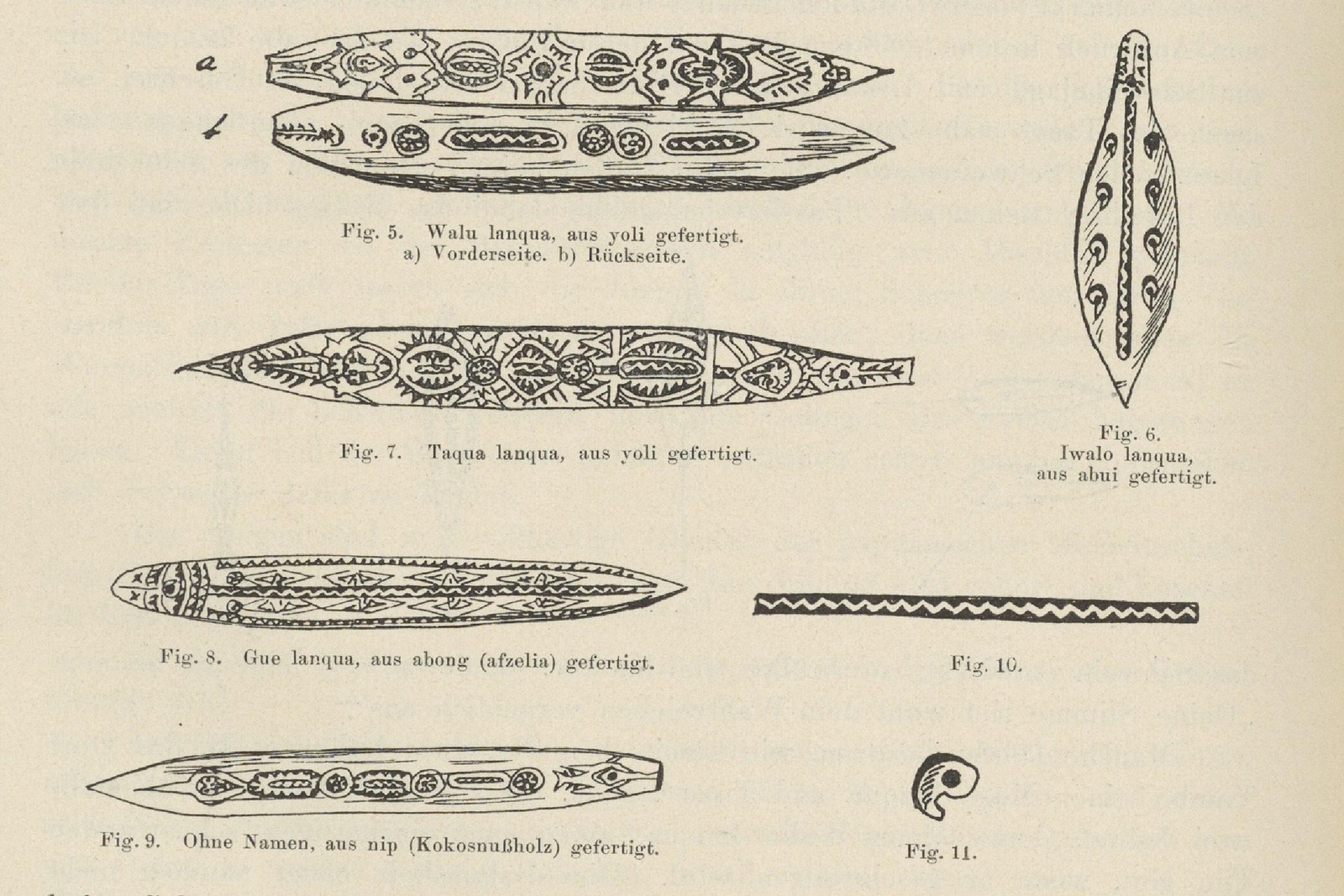
From there the price falls. At Kambrambo on the Sepik, Felix Speiser watched the men fetch the feast pork from the women on the pretext “that the boys had been swallowed by the crocodile, and it would give them up again only if it were sent plenty of pork instead of the boys” (Speiser 1937, in Schmitz 1964, p. 7). In the Eastern Highlands of Papua New Guinea the Kamano heard the bullroarer as the voice of a big-mouthed spirit that rose from the water to swallow small boys, and the fathers threw ripe bananas into the water so that it would vomit the boys and accept the bananas instead (Berndt 1962, p. 95, n. 5). Across the Highlands the bullroarer usually stood for monsters that had to be appeased with pigs if they were not to devour the young (Hays 1986, p. 439).
On the Gulf of Papua the highest price, a human victim, was still paid within living memory. Every men’s house of the Purari Delta kept a kaiamunu, a great wicker monster that swallowed the novices; at initiation each boy was placed inside it and lifted into the air, and “in this manner the chief act of the ceremony, namely, the devouring by the monster, is realistically staged” (Wirz 1937, p. 408). In the Era villages, Paul Wirz found, the bullroarers were kept inside the kaiamunu, “and the droning noise they make is thought to be the voice of the monster” (p. 409). And the monster had once eaten more than boys:
The great darimo-ebiha formerly demanded human sacrifices, but for these boromo (pig)-obina-ebiha pigs alone are slaughtered. Williams makes exactly the same observation when speaking of the Purari region. There also human sacrifices were occasionally made to the kaiamunu; raids were made from time to time to a foreign district, in order to kill a man, who was brought home and given to the kaiamunu to “devour.”
Paul Wirz, “The Kaiamunu-Ebiha-Gi-Cult in the Delta-Region and Western Division of Papua” (1937), p. 410
The swallower of the Purari novices was fed men, and then pigs. The pig stands in the same place on the Gulf as it does on the Huon coast.
Genesis tells the same exchange. God orders Abraham to offer his son Isaac as a burnt offering on a mountain in Moriah, and Abraham builds the altar, binds the boy and lays him on the wood:
And Abraham stretched forth his hand, and took the knife to slay his son. And the angel of the Lord called unto him out of heaven … and he said, Lay not thine hand upon the lad …. And Abraham lifted up his eyes, and looked, and behold behind him a ram caught in a thicket by his horns: and Abraham went and took the ram, and offered him up for a burnt offering in the stead of his son.
Genesis 22:10–13 (King James Version)
The boy is on the altar with the knife over him, and an animal is caught nearby to go in his place. It is the scale of payments told as one family’s story: the son was demanded, and a ram was paid.
Among the Gusii of western Kenya, Philip Mayer watched the older boys play the scene out at night for the small children lying awake in their mothers’ beds. After a great roar the Beast falls silent:
“Oh, oh, oh!” (cry the older boys) “Enyabububu has returned from the river (or forest)! Bring omoa [sweet gruel] so that it may vomit! Quickly, quickly!” The mothers play up, as well, telling the frightened children, “You come outside and I’ll give you to the Beast! You have been naughty. It will swallow you, too!” (“But when it gets omoa,” they may explain, “it will probably prefer that to eating children, who are not so sweet.”) After some more roaring comes the final triumphant shout, “Enyabububu has vomited up the novices!”
Philip Mayer, “Gusii Initiation Ceremonies” (1953), p. 20
The ransom is now a bowl of sweet gruel, and the beast is “tamed”: swinging the roarer is ogosicha, “taming the Beast” (p. 20). On Malekula in Vanuatu the bullroarers’ voice is the ogress Nevinbumbaau, who kindled the first sacred fire and ate the men who came to it; “it was only after some time that she admitted men who were not her husband to this privilege on payment of pigs to her” (Deacon 1934, p. 627). Among the Boazi of the Fly River, on the border between Papua New Guinea and Indonesian Papua, the substitution is spoken aloud: “Nothing happens to the man, but the old woman is killed in the guise of the two coconuts, and afterwards buried with due respect” (van Baal 1966, p. 597).
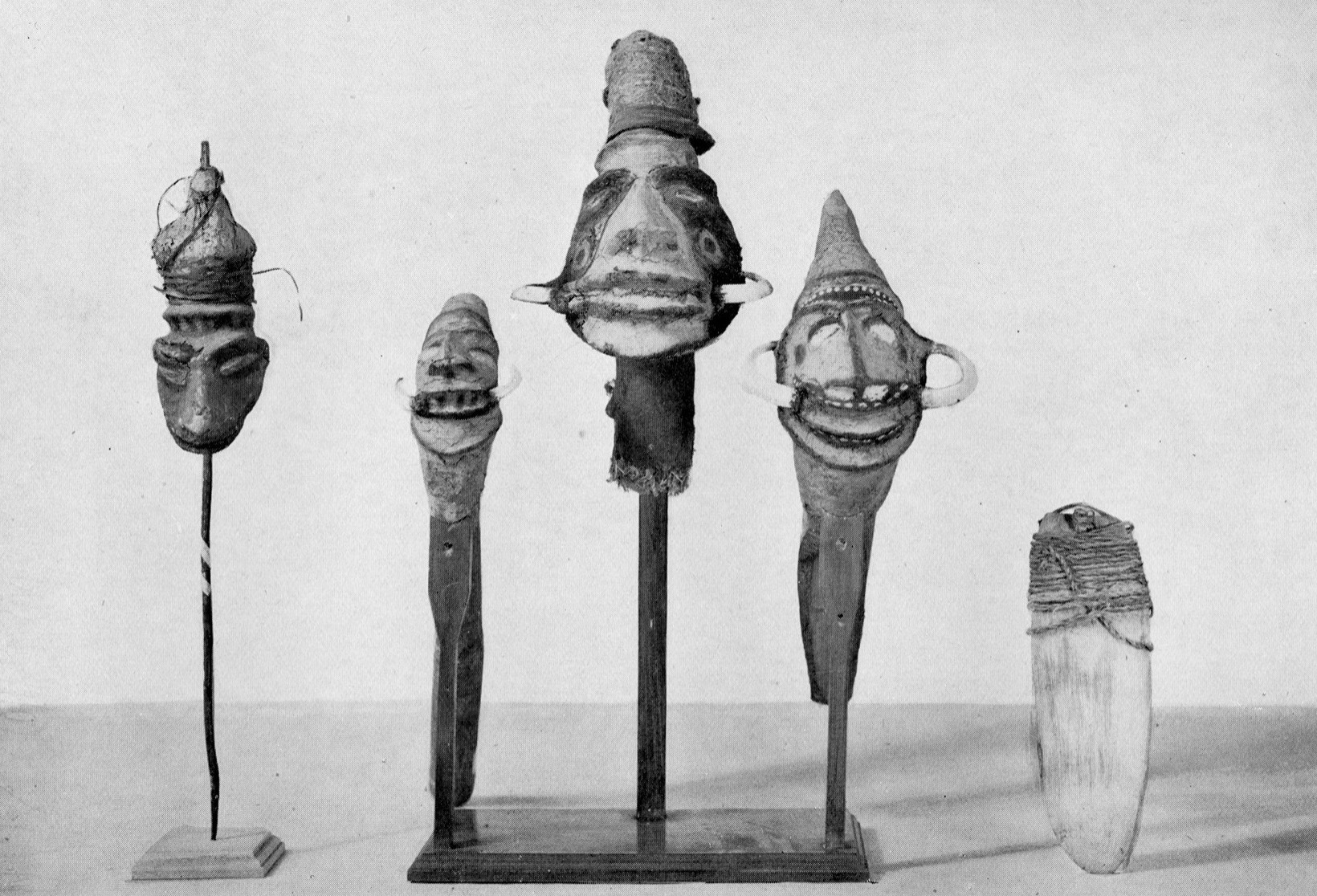
Laid out in order, the payments make a scale: a boy, then a part of the boy, then a pig, then bananas or gruel, then a coconut killed in the guise of a person. At the bottom of the scale nothing is killed at all, and the roar of the bullroarer is all that is left of the monster.
The scale runs the other way too, for the women. Among the Kissi of Forest Guinea, the wooded south of the Republic of Guinea, a woman who glimpses the bullroarer can be saved from death if a chicken is killed in the sacred grove, or in some villages a dog, whose blood is poured on the instrument. André Schaeffner drew the conclusion himself: “Perhaps the sacrifice of the dog has taken the place of a greater sacrifice; no doubt the woman never escaped death” (Schaeffner 1951, p. 75).
“If any boy dies during the rites his mother is told that the Dodo has swallowed him!”C. K. Meek, on central Nigeria, The Northern Tribes of Nigeria (1925), vol. II, p. 20
Some boys still died
Every one of these rites is told as a swallowing: the boy goes into the monster and comes out new. That story is usually read as a metaphor laid over a rite in which nobody comes to harm. The men who wrote the rites down saw how near to death the boys were still taken, and what happened when one went over. Lehner, at Bukaua, went on from the pigs to the operation:
During the circumcision the father and elder brothers above all stand round the boy on the ground; they make sure no vessel is cut in the operation, which can bring bleeding to death. It evidently happens not all that rarely that a boy bleeds to death and dies at the Balum place. Such a body is buried at once, but the grave is in no way marked, for example by ringing it with stones as is otherwise usual. The unfortunate mother is told: “The Balum has swallowed your boy and not given him back.” The Bukaua always have reasons to hand: perhaps the pigs were not fat enough, perhaps the boy did not follow all the rules exactly, and so on.
Lehner (1911), p. 408. German: “Es kommt offenbar nicht allzu selten vor, daß sich ein Knabe verblutet und am Balumsplatz stirbt.”
It happened often enough to have a procedure. The grave is left unmarked, because a boy who stayed inside the Balum has no grave. And the mother learns it without being told:
Each mother receives a bare sapling; the one passed over, who gets no sapling, then knows that her child stayed swallowed by the Balum, that is, he died of bleeding. Such a mother’s grief is at times indescribable.
Lehner (1911), p. 409
The swallowing story here is not a lie told over a harmless rite. It is the only way the rite has of saying that a boy died in it. In the Bukaua telling, the swallowed boy who does not come out is exactly the dead boy. The euphemism tells the truth.
Inland in Morobe Province of Papua New Guinea, the Guhu-Samane made the death a rule. One of their last priests described how the boys ran a gauntlet of stone axes and clubs and then had the nose and ears pierced: “None but the very weakest emitted even a groan, and any who cried out were dealt a swift, lethal blow as being unfit for male society. The victim would be buried later, and his mother and friends told that the poro had ‘eaten’ him” (Richert 1965, p. 82). On the island of New Britain, off the north-east coast of New Guinea, when a Mali Baining boy died in the bush seclusion, “they say then: the bullroarer killed him, and say no more about it” (Laufer, p. 538). At Finschhafen, among the Yabim, the monster had two stomachs. “Sometimes, though perhaps rarely, one of the lads dies under the operation; in that case the men explain his disappearance to the women by saying that the monster has a pig’s stomach as well as a human stomach, and that unfortunately the deceased young man slipped by mistake into the wrong stomach and so perished miserably” (Frazer, after Zahn, Belief in Immortality I, p. 252). The pig’s stomach is for the ransom. A boy who dies has gone where the pig should have gone.
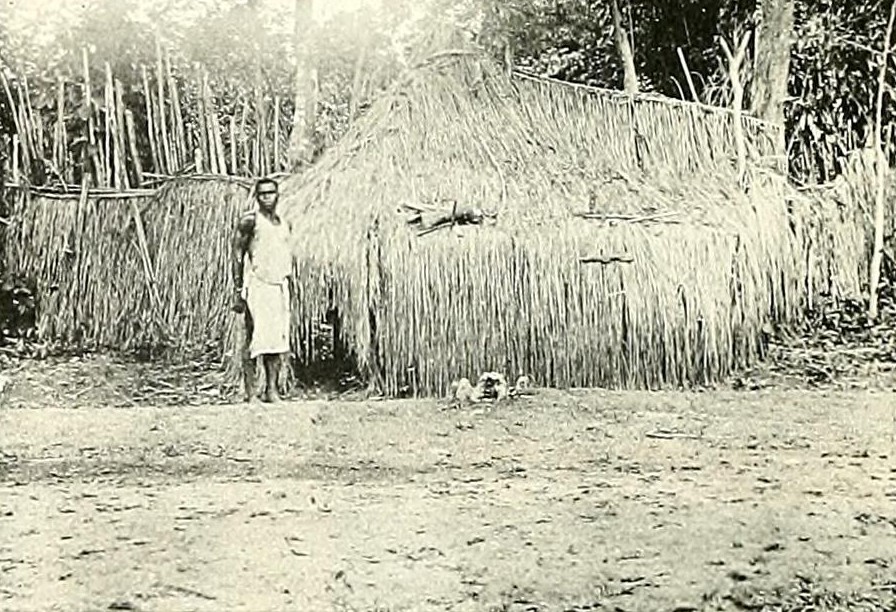
The Poro school of the Liberian forest worked the same way, and George Schwab wrote it down. The Big Devil swallows the novice at scarification and carries him in his belly until the end of the session, “when those who are still alive are ‘borne’ by him”:
Those who die, of which there may be several during the long session of a school, are said to “stay in his belly because he cannot bring them out again.” Some of the deaths are directly due to infections resulting from the scarifications; others to exposure, weakness, disciplinary ordeals, and other causes.
Schwab (1947), p. 284
A Gbunde guide told Schwab of a schoolmate who grew so hungry in the bush that he slipped off to his parents’ farm for food, and his mother saw him:
When they learned of what the boy had done he was taken to a spot in the deep forest, where he was given a drink that quickly killed him. Later, when the session ended … the mother asked the leaders where they had left her son, whom she had seen alive. As no woman is supposed to see, or even be able to see a boy while he is in the Bush, the cult leaders told her that she must have been mistaken; it was some spirit she had seen, because the devil had swallowed the boy and had not reborne him.
If a boy runs away to town, especially if his scars have not yet healed, he is recaptured and killed at once in the Bush, by strangling with a heavy stick across his throat. When the other boys are brought back to town his mother will find a pot close to her door, a white cross on its upturned bottom, and a hole where the lines cross. This is the usual method of announcing the death of any boy in the Bush. In some regions the pot is broken. It is then that the mother first learns that her son is dead …. No crying or mourning is allowed.
Schwab (1947), pp. 285–286
On the morning the boys came out, Schwab adds, “each mother wondered anxiously whether the pot with the hole would be found before her door” (p. 286). Among the Gio, “if a boy dies during the Bush period, the ge zo is said to have taken him because he was born a witch-person” (p. 281). And in all the Bush schools, intercourse during the session “was formerly punished with death. In fact, a boy paid with his life for even looking at a woman during this period” (p. 350). Across the border in Forest Guinea the Toma used the same sign. Messengers told the women their children “have been devoured by the great spirit, and that they will get them back safe and sound once they have been digested and cast out.” But “life in the initiation camp is sometimes so hard that some children do not come out alive,” and at dawn on the day of the coming-out “a messenger crosses the village and breaks a pot in front of the house of the family of any child who died during the initiation, saying: ‘Your son is like this pot’” (Gaisseau 1953, ch. 8). The father already knew. He could enter the camp, but the secret bound him not to tell his wife.
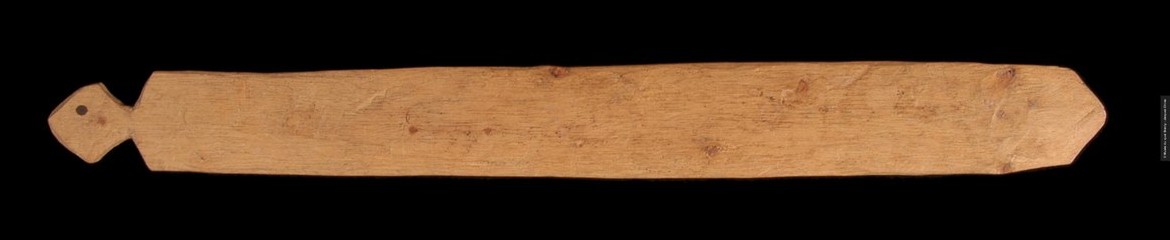
In south-western Angola the Humbi sent a basket. While the boys were away in the circumcision camp each mother wove a new little basket as a welcome present for her son:
If one of the boys has died in the camp, one of the guards will see to cutting out the bottom of the basket offered and returning it to the mother. She needs no further explanation. Instead of joining the noisy festivities for the newly circumcised, she will weep for her dead son at home, in silence.
Carlos Estermann, Etnografia do Sudoeste de Angola II (1957), p. 74. Portuguese: “… cortar o fundo do cestinho ofertado e de o devolver à mãe. Esta não precisa de mais explicações.”
Other tribes, Estermann adds, let the death be known “by the return of the provisions” the food-carriers had brought (p. 74). Next door, the Kwanyama mother heard that her son had stayed in the stomach of the giant bird edila, whose voice was the bullroarer, and knew he was dead “upon receiving her son’s food basket back unemptied” (Loeb 1948, p. 27). From the Dodo of central Nigeria to Langa of the Chamba on the Nigeria–Cameroon border, who “had no meat, so he ate your son,” mothers across Africa were told that the mouth had taken the boy. Frobenius noticed something about them: “the women know perfectly well what goes on in the bush camp” (Frobenius 1925, p. 14). The swallowing is not a deception the women fall for. It is the form in which everyone agrees to say that a boy is dead.
Boys died in North America too. In southern California an old Cahuilla man of Palm Springs Valley, Juan Lugo, who had been initiated with jimsonweed some sixty years before, prefaced his account by stating that “several men had died as a result of drinking too much toloache or of eating the wrong thing afterwards” (Hooper 1920, p. 347).
The harmless wooden instruments
James Frazer gathered the Huon Gulf missionaries’ reports in 1913 and noticed that the Yabim, the Bukaua, the Kai and the Tami all “apply the same word to the bull-roarer and to the monster, who is supposed to swallow the novices at circumcision, and whose fearful roar is represented by the hum of the harmless wooden instruments” (Balder the Beautiful II, p. 242). Frazer meant that the monster was a fiction and the slats of wood were the reality behind it. The peoples he was reading meant something nearer the reverse. The instruments are harmless because they were made to be. They are what the killer became when he was stopped.
Put the cases side by side and the order is the same everywhere. First there is a being, or a founder, whose initiation goes all the way to death: Ngosa’s knife, Kumbaruga’s fire, Nyandemém’s demand for heads, Dhuramoolan’s teeth, Lumaluma’s belly, the anaconda who digested the boys. Then the killing is stopped, by a second founder or a high god or a father and son who will give her no more men. What the reform leaves behind is the rite as it is practised: a foreskin instead of the testicles, a stone knife instead of a burning, a mock beheading, a knocked-out tooth, a pig, a bowl of gruel. And it leaves the bullroarer, which is the killer’s voice with the killer taken out. “Bullroarers in her place.” Baiame’s voice in the trees. The first instruments made of the eaten boys’ bones. Among the Bukaua, each bullroarer bore the name of a particular dead man (Lehner 1911, pp. 411–412).
Greece kept the same memory, told outside the rite. The Homeric Hymn to Demeter is the founding story of the Mysteries at Eleusis. Grieving for her daughter, Demeter comes to Eleusis disguised as an old woman and is taken on as nurse to Demophon, the infant son of King Celeus and Metaneira. By day she anoints him with ambrosia:
But at night she would hide him like a brand in the heart of the fire, unknown to his dear parents. … And she would have made him deathless and unageing, had not well-girded Metaneira in her heedlessness kept watch by night from her sweet-smelling chamber and spied. But she wailed and smote her two hips, because she feared for her son …: “Demophoon, my son, the strange woman buries you deep in fire and works grief and bitter sorrow for me.”
Homeric Hymn to Demeter, ll. 231–249, trans. H. G. Evelyn-White (1914)
Demeter snatches the child out of the fire, throws him to the ground, and tells Metaneira that now he “can in no way escape death.” In the same speech she orders her temple built and promises, “I myself will teach my rites” (ll. 256–274). The Mysteries are founded at the moment the fire ordeal is broken off. That is the outside telling of what the first mystery did: a goddess held the initiate in the fire, at the edge of death, to make him deathless, and his mother could not bear to watch. The Eleusinian rite that classical writers describe took no one into the fire. By their time it had been cut down, like the rite of the Kai and the Bedik, and the hymn remembered what it had been.
The cutting-down did not run the same way everywhere. In some places the ordeal grew instead, and the killing moved from the boy in the bush to a victim on the altar: a man taken in a raid for the kaiamunu, a son bound on the wood at Moriah. Where it softened furthest it became a sign, a death remembered and a body eaten as bread. Sacrifice and sacrament are two branches of the same first rite, and initiation is the trunk they grew from.
None of these peoples invented the swallowing story to frighten women over a harmless rite. They tell it as the history of their rite, and the history is consistent from the Kimberley to the Vaupés: the first initiation was a grotesque ordeal at the edge of death, and the rite as practised is what it was cut down to. The ethnographers who stayed long enough saw that it still went near the edge. A Bukaua boy bled to death “not all that rarely”; a Kai lad was said to have died of the cut; a Guhu-Samane boy who cried out was clubbed; a hungry Gbunde boy was poisoned for being seen; a Humbi mother got her basket back with the bottom cut out. Those deaths are not the point of the rite. They show how close to the edge it still went, and the euphemism said so: the boy who does not come back is the boy the monster ate.
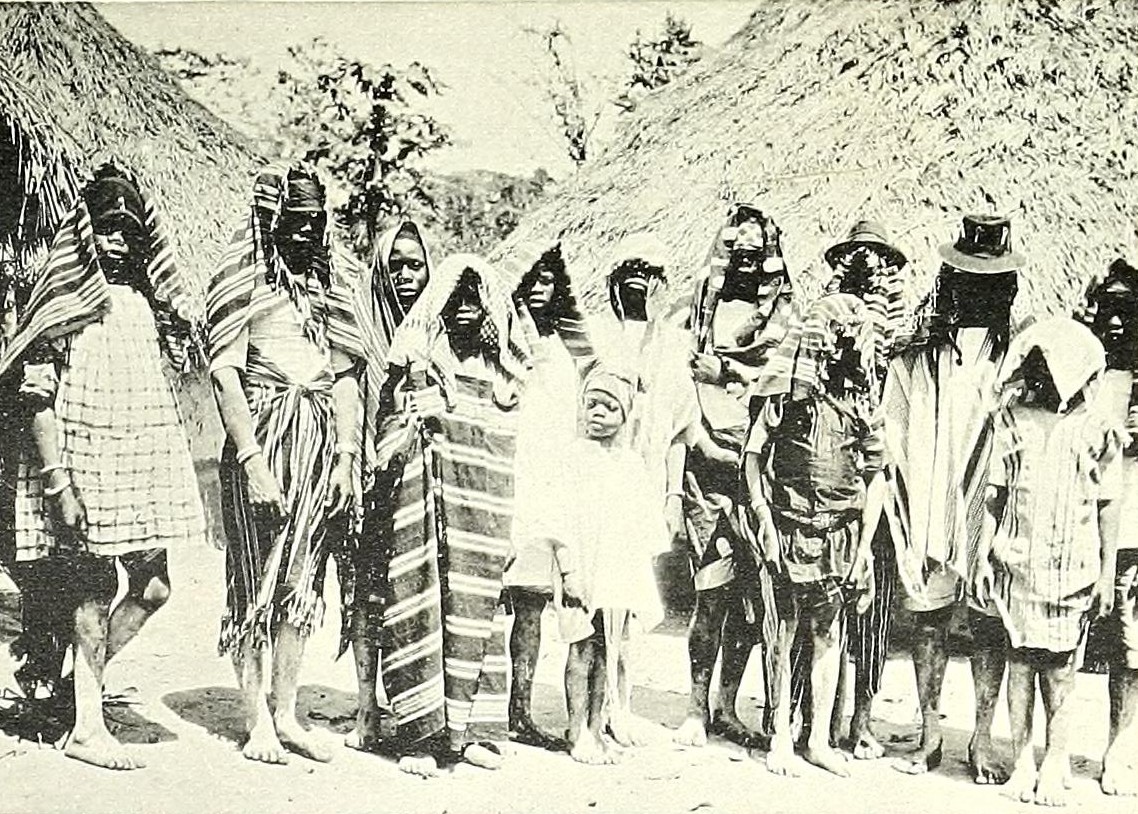
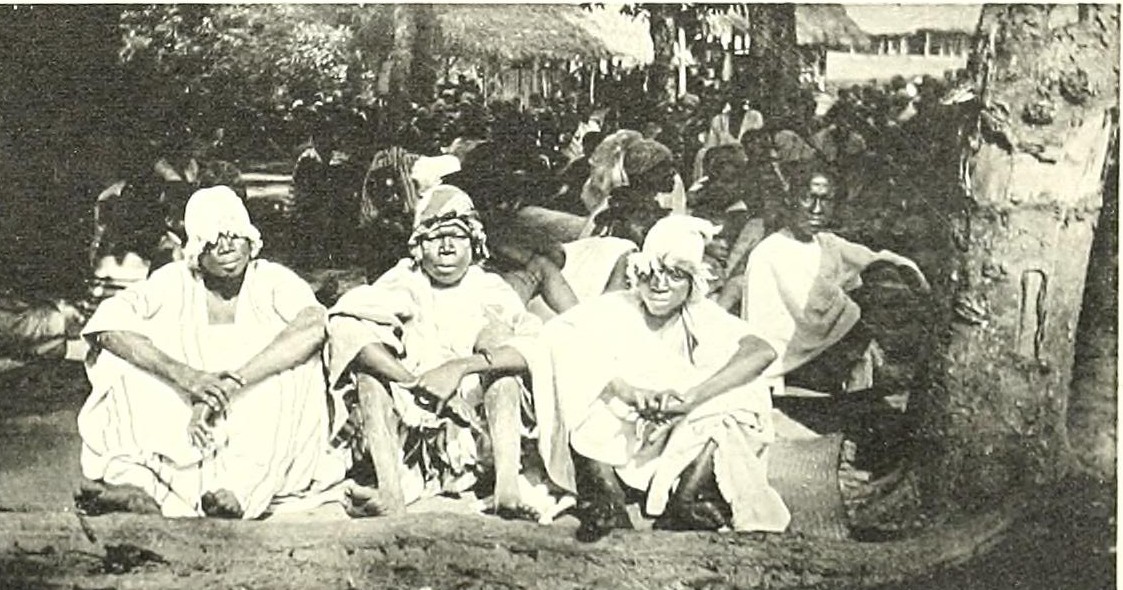
That is the ordeal the bullroarer remembers. The swallowing is a death because the boys were once taken all the way to it. The new birth is real because the ordeal was. The boys in Schwab’s photograph, wrapped like infants on the day they came out, had passed through a rite whose first form held boys at the edge of death, and whose last form still sometimes let one go over. The roar the women heard from the forest was the voice of that first killer, kept in wood, kept in a slat of wood.
Key sources
Keysser, C. 1911. “Aus dem Leben der Kaileute.” In R. Neuhauss, Deutsch Neu-Guinea, vol. III, pp. 3–242. Berlin: Reimer — the first Ngosa feast (pp. 34–35); the ransom pig and the reported death from the operation (p. 38).
Lehner, S. 1911. “Bukaua.” In Neuhauss, Deutsch Neu-Guinea III, pp. 397–485 — a pig for every boy “als Ersatz für die Jungen” (pp. 405–406); the Balum’s bite as the circumcision wound (p. 407); boys bleeding to death “nicht allzu selten” (p. 408); the bare sapling (p. 409); each roarer named for a dead man (pp. 411–412); balum plate (p. 412).
Bamler, G. 1911. “Tami.” In Neuhauss, Deutsch Neu-Guinea III — the kani’s bite and kanizahn; the pig in return for the boy (p. 496).
Südkamp, H. Wondjina: Der göttliche Tiermensch (online edition), appendix III,3, “Yalgi und Windinbigi,” after H. Petri 1954 — the law of the bullroarers (p. 259); Kumbaruga’s burning and Golwilir’s stone knife (pp. 260–261).
Smith, P. 1984. “Le ‘Mystère’ et ses masques chez les Bedik.” L’Homme 24 (3–4): 5–33 — “autrefois, on le tuait pour de bon” (p. 21); Nyandemém and the simulacre (p. 26); the symbolic beheading and swallowing (p. 27).
Mathews, R. H. 1896. “The Būrbŭng of the Wiradthuri Tribes.” Journal of the Anthropological Institute 25: 295–318 — Dhuramoolan, the missing boys and the voice in the trees (pp. 297–298, n. 2). Mathews, R. H. 1907. Notes on the Aborigines of New South Wales, Plate 9.
Parker, K. L. 1905. The Euahlayi Tribe. London: Constable — the stone figure that ate the boys’ faces (p. 67).
Maddock, K. 1976. “Communication and Change in Mythology.” In N. Peterson (ed.), Tribes and Boundaries in Australia, p. 166. Maddock, K. 1978. In I. Buchler and K. Maddock (eds), The Rainbow Serpent, pp. 11–12, 104.
Stanner, W. E. H. On Aboriginal Religion (Sydney University Press edition, 2014) — the Mutjingga myth and its exegesis (pp. 41–43).
Bidou, P. 1983. “Le travail du chamane: essai sur la personne du chamane dans une société amazonienne, les Tatuyo du Pirá-paraná.” L’Homme 23 (1): 5–43 — Pohe-pinõ and the “os du soleil” (pp. 36–38).
Holmes, J. H. 1924. In Primitive New Guinea. London: Seeley, Service — Oalea and the first tiparu (pp. 189–190). Pöch, R. 1906. “Vierter Bericht über meine Reise nach Neu-Guinea,” p. 901. Van Baal, J. 1966. Dema. The Hague: Nijhoff — Sosom (p. 486); the Boazi coconut (pp. 597, 600).
Deacon, A. B. 1934. Malekula: A Vanishing People in the New Hebrides. London: Routledge — Nevinbumbaau and the payment of pigs (p. 627); Plate XVI.
Berndt, R. M. 1962. Excess and Restraint. Chicago — the Kamano banana ransom (pp. 94–95, n. 5). Speiser, F. 1937. “Eine Initiationszeremonie in Kambrambo am Sepik, Neuguinea.” Ethnologischer Anzeiger 4 (4): 153–157, reprinted in C. A. Schmitz, Kambrambo – Neuguinea (Unterer Sepik): Riten bei der Knabeninitiation, Encyclopaedia Cinematographica E 502 (Göttingen, 1964) — the pork sent instead of the boys (p. 7). Aufenanger, H. 1977. “Beliefs, Customs and Rituals in the Lower Yuat River Area, North-West New Guinea.” Asian Folklore Studies 36 (1): 117–132 — the crocodile’s scratches and bites (pp. 119, 122). Gewertz, D. 1982, in G. Herdt (ed.), Rituals of Manhood, p. 298. Hays, T. E. 1986. “Sacred Flutes, Fertility, and Growth in the Papua New Guinea Highlands.” Anthropos 81, p. 439.
Berndt, R. M. 1951. Kunapipi. Melbourne: Cheshire — Mumuna and the first bullroarer (pp. 151–152). Koch-Grünberg, T. 1921. Zwei Jahre bei den Indianern Nordwest-Brasiliens. Stuttgart: Strecker und Schröder — Milomaki (p. 386).
Wirz, P. 1937. “The Kaiamunu-Ebiha-Gi-Cult in the Delta-Region and Western Division of Papua.” Journal of the Royal Anthropological Institute 67: 407–413 — the devouring staged (p. 408); the bullroarer as the monster’s voice (p. 409); human sacrifice to the kaiamunu (p. 410).
Mayer, P. 1953. “Gusii Initiation Ceremonies.” Journal of the Royal Anthropological Institute 83: 9–36 — Enyabububu and the gruel (p. 20).
Schaeffner, A. 1951. Les Kissi: une société noire et ses instruments de musique. Paris: Hermann — the dog in place of the woman (p. 75).
Richert, E. L. 1965. “How the Guhu-Samane Cult of Poro Affects Translation.” The Bible Translator 16 (2): 81–87 (p. 82). Laufer, C. 1946–49. “Rigenmucha, das Höchste Wesen der Baining.” Anthropos 41–44 (p. 538).
Schwab, G. 1947. Tribes of the Liberian Hinterland, ed. G. W. Harley. Papers of the Peabody Museum 31 — the bullroarer as a voice of the Big Devil (p. 270); the teeth of the Big Devil and the dead who stay in his belly (p. 284); the poisoned boy, the strangled runaway and the holed pot (pp. 285–286); the Gio ge zo (p. 281); death for looking at a woman (p. 350); Figs. 87, 92. Harley, G. W. 1941. Notes on the Poro in Liberia, p. 27.
Gaisseau, P.-D. 1953. Forêt sacrée: magie et rites secrets des Tomas. Paris: Albin Michel, ch. 8 — the broken pot.
Estermann, C. 1957. Etnografia do Sudoeste de Angola, vol. II. Lisbon — the basket with its bottom cut out (p. 74). Loeb, E. M. 1948. “Transition Rites of the Kuanyama Ambo.” African Studies 7 (1) — the unemptied food basket (p. 27). Frobenius, L. 1925. Dichten und Denken im Sudan — Langa (p. 14). Meek, C. K. 1925. The Northern Tribes of Nigeria, vol. II. London: Oxford University Press — the Dodo who swallowed the dead boy (p. 20).
Merritt, J. H. 1976. A Study of Change in Circumcision Rituals among the Abaluyia of Bungoma and Kakamega Districts of Western Kenya since 1910 A.D. PhD thesis, University of Nairobi — the Bukusu leopard, its bullroarer growl and its claw marks (p. 87).
Hooper, L. 1920. The Cahuilla Indians. UC-PAAE 16 (6) — deaths from toloache (p. 347). Boas, F. 1897. The Social Organization and the Secret Societies of the Kwakiutl Indians — the Koskimo novice (pp. 606–608). Loeb, E. M. 1926. Pomo Folkways. UC-PAAE 19 (2) — djaka djaka and the pit (p. 359); the cutting omitted (p. 382).
Frazer, J. G. 1913. The Golden Bough, Part VII, Balder the Beautiful, vol. II — “the harmless wooden instruments” (p. 242). Frazer, J. G. 1913. The Belief in Immortality and the Worship of the Dead, vol. I — the Yabim “wrong stomach,” after Zahn (p. 252).
Homeric Hymn to Demeter, trans. H. G. Evelyn-White, in Hesiod, the Homeric Hymns and Homerica (Loeb, 1914) — Demophon in the fire (ll. 231–249); the rites founded (ll. 256–274). Genesis 22:1–13, King James Version — the binding of Isaac and the ram.