Atlas Essay —
Mother Right
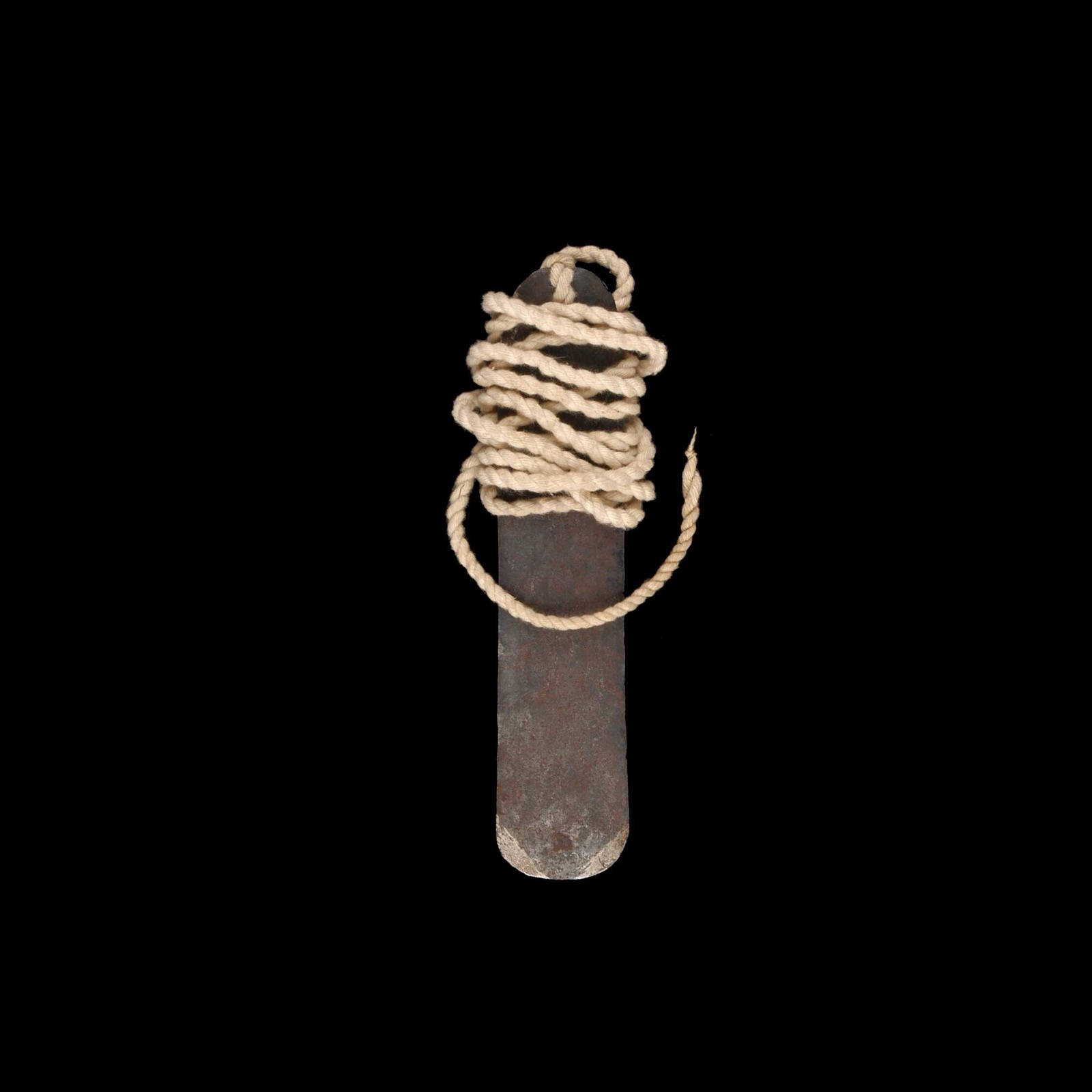
An old woman named Méte, of Boigu island in the Torres Strait between Australia and New Guinea, was splitting a log for firewood when a splinter flew up whirring “Bigu-bigu-bigu” and stuck in the ground beside her. That night it came to her in a dream and called her Mother. In the morning she strung it as it had taught her and swung it, and her husband nearly ran away in terror. Then he swung it, and the ground moved. The men gathered, and the women, Méte among them, were sent away. Men in New Guinea, Australia, the Amazon, West Africa and Tierra del Fuego tell stories like it about their own secret instruments.
The myth of matriarchy keeps strange company. In New Guinea, Australia, the Amazon, West Africa and Tierra del Fuego, the story that women once held power is told about the same few things: the bullroarer, the sacred flutes and the masks that men keep hidden and reveal to boys at initiation. Bachofen’s Mother Right, the European theory of a first age of women, was tied from the start to the Greek mysteries, and the mysteries of Dionysus kept a bullroarer too.
In brief
- The map below plots 116 peoples whose men keep a secret instrument or mask and say women had it first, with each regional version of the story in its own colour.
- On the Melanesian arc, from New Guinea east to Bougainville, a woman chopping firewood finds the first bullroarer, and from the Huon Gulf on she is killed for it. On New Britain and Bougainville the killing becomes a massacre of all the women.
- In the Trans-Fly and the Gulf of Papua, in southern New Guinea, the roarer comes out of a woman's body or a monster's belly. On the Vaupés in the northwest Amazon the women hide the flutes inside their bodies, and menstruation is the price.
- In Arnhem Land, in northern Australia, the men say it outright: “we took these things from the women.” In Tierra del Fuego the men's lodge was the women's lodge until the men killed them.
- Johann Jakob Bachofen built a history of the world on the idea that women once ruled. He paired that rule with the mysteries and set Dionysus at the head of its overthrow. Dionysus was lured to his death with toys that included a bullroarer.
- Myth, instrument and men’s lodge turn up together so often, and share such particular details, that they look like one complex carried from people to people.
Méte's splinter
Gunnar Landtman, a Finnish ethnographer, took down Méte's story at Mawata on the coast of the Fly River delta, in what is now Papua New Guinea, around 1910. The teller, Namai, told it in the Pidgin English of the Torres Strait, and Landtman kept his words:
An old Bóigu woman named Méte was once cutting up an ofóro tree into firewood. Suddenly a large splinter whirled up into the air with a whizzing sound, “Bigu-bigu-bigu,” and fell down close to the woman, one end sticking into the ground. The woman picked it up and on her return home said to her husband, “That thing here, I been hit him along firewood. That piece he been fly, he make noise all same drum, ‘Buuu-bigu-bigu-bigu’. He come down, close up hit me.” “You keep him,” the man said … At sunset the woman was made “lazy”, and soon she fell into a heavy sleep. The splinter of wood came to her and said, “Mother, that me, that my name bóigu (or bígu, for it called out its own name when whirling round). … That time you plant him umamu (yam), you spit him out medicine along garden. … That me make altogether garden move, make him grow. … You learn (teach) him people, you stow away along (from) woman, by-and-by no more kaikai.”
In the morning … The woman told her husband her dream, and they prepared the bull-roarer as she had been taught, and attached a string to it. The woman swung it round first, and it produced such a sound that the man nearly ran away in terror. Next he swung the bull-roarer, and the ground moved, and the noise resounded like thunder from one end of the island to the other.
Landtman, The Folk-Tales of the Kiwai Papuans (1917), tale 261, p. 316
The husband called the men together and sent the women and children away. He passed on the splinter's law: “What thing I show you fellow, no good you show woman, no good you show boy … that belong me altogether man.” When the women heard the roar in the bush they asked each other what it was, and said they were frightened. Méte knew what it was. “Oh, man belong me he make him people savy now,” she thought, but she too “pretended to be frightened” (p. 317).
In a second version, from Budji up the coast, the woman finds the splinter in the same way, and the one who comes to her in the dream and teaches her to swing it, to “wake him up ground” before the yams are planted, is Mäigidübu, the snake-man.
Méte's story has three beats. The women had the roarer first. The men took it. The women are kept from it now, and play along. Versions of these beats are told about the bullroarer, the sacred flutes and trumpets and the men's masks in New Guinea, Australia, South America and West Africa.
One story, many costumes
Yuri Berezkin's world catalogue of folklore motifs files these tales under F38, “women and secret knowledge.” Those tales, with the stories told of the atlas's own bullroarers, are plotted below for 116 peoples. Each colour is a version of the story, defined by how the instrument first came into the women's hands and how it left them. The plain theft is told wherever the story is. The more particular versions keep to their own regions: the firewood chip to the Melanesian arc, the roarer torn from a woman's body to the Trans-Fly, the flutes hidden inside the women to the Vaupés. The same catalogue holds tales that women once ruled with no instrument at all. They are the faint grey dots, scattered over every continent, and they never gather into regional versions; the instrument tales do. Symbols with a heavy rim are the atlas’s own bullroarers. The two boxes are enlarged beneath the main map: New Guinea with northern Australia, and northern South America.
The map
- bullroarer
- flutes or trumpets
- masks
- other object
- serpent’s voice
- little girls spared
- nudged: hairline to true place
Regional versions of the story (fill)
- Found in the firewood: a woman finds it chopping wood, and is killed 13
Fly delta to the Solomons; the killing grows into massacre on New Britain and Bougainville - Born from a body: a bird tears it out of a woman 4
Trans-Fly - Hidden in their bodies: menstruation the price 8
Vaupés and Rio Negro, with a Highlands echo - The bullroarer drives the women off 7
Xingu, Sepik, Eastern Highlands, south coast and Kimberley - Masked women unmasked and killed 5
Tierra del Fuego and the Papuan Gulf - Other seizure or theft 45
by force, trick or slaughter, everywhere - Given or taught by women 10
chiefly North America - The bare story: women had it first, men hold it now 24
details not recorded or not regional
Where the symbols come from
- Heavy rim: an atlas bullroarer record 70
the people’s own bullroarer in this atlas; click to open it - Fine rim: a telling from the folklore literature 46
Berezkin’s motif catalogue (39) and other ethnographies (7) - Faint grey: women once ruled, with no instrument 66
also from Berezkin’s catalogue; told on every continent, with no regional versions
The 116 tellings on this map
| People | Region | Version | The telling | Source |
|---|---|---|---|---|
| Kurtachi / northern Bougainville (Buka Passage) | Bougainville | Found in the firewood | A woman chopping firewood found the roarer. Men overheard, killed every woman but the very tiny girls, and kept it. | Blackwood 1935:216-218 via Gourlay 1975 p.84 |
| Buka (Rororan) | Buka | Found in the firewood | A woman’s splinter hummed. Her husband made it the voice of Luahan; she was killed and eaten by the elders. | Berezkin F38: Thomas 1931:231 |
| Ilahita Arapesh | East Sepik | Found in the firewood | A woman chopping firewood made the first bullroarer. | Tuzin 1973:358 (field only) |
| Kiwai (Mawata, Iasa, Budji) | Fly delta | Found in the firewood | Méte, chopping firewood, found a whirring splinter that named itself in a dream. She told her husband; now women are sent away. | Landtman 1917 tales 261, 261A pp.316-317; Gourlay 1975 p.82; Haddon 1904 |
| Uramot Baining | Gazelle Peninsula, New Britain | Found in the firewood | A woman splitting firewood made a roarer from a whirring splinter and frightened the men. A man saw through it and killed her. | Laufer, Anthropos 41-44 (1946-49) pp.521-524 |
| Bukaua / Yabim (Huon Gulf cluster) | Huon Gulf | Found in the firewood | A woman chopping firewood made the first roarer. Her husband let the men kill her in exchange for a new wife. | Lehner 1911 pp.407-414; Keysser 1911 p.34; Bamler 1911 p.495; Gourlay 1975 pp.69,82 |
| Busama | Huon Gulf south coast | Found in the firewood | She chopped firewood, then bored and strung the whirring chip. The club-house men speared her and told the women an ogre ate her. | Hogbin 1951 pp.214-215 via Gourlay 1975 Table 1 row 59 |
| Tami (Boang Island) | Huon Gulf, Tami Islands | Found in the firewood | On Boang a woman chopping firewood sent up a whirring splinter. Men spelled her to death and gave her husband a new wife. | Bamler 1911 p.495 via Gourlay 1975; Frazer 1913 I pp.301-302 |
| Kai (Laugube) | Huon Peninsula | Found in the firewood | A woman chopping firewood sent up a whirring stick. Her brother took it and, at her own advice, killed her to keep the secret. | Keysser 1911 p.34 via Gourlay 1975 pp.81-82; Frazer 1913 I pp.290-291 |
| Upper Bian Marind (Ezam-Uzum cult) | New Guinea / upper Bian | Found in the firewood | Ndiwa’s firewood chips buzzed: the first Ezam. Women held the rite until men forced their way in and stole it. | van Baal 1966 (Dema) p.587 (Jufuway's variant) |
| Kilenge myth of Siassi women | Vitiaz Strait / Cape Gloucester | Found in the firewood | Women gathering firewood heard a splinter whirr and invented the bullroarer. Later the men killed them and took it. | Laufer, 'Rigenmucha', Anthropos 41-44 (1946/49) p.521 fn.39 |
| Bariai | West New Britain | Found in the firewood | A mangrove firewood chip whirred and the women made it sing. The men killed every female except infants at the breast. | McPherson 2012 p.52 |
| Bush Kaliai (Varku cult) | West New Britain | Found in the firewood | Kewak, a first mother, made the roarer from a firewood chip. Kowdock chased the women, took it and broke his sister’s neck. | Lattas 1998 Cultures of Secrecy ch.4 |
| Komnzo (Farem), Rouku | New Guinea / Trans-Fly | Born from a body | A roaring was heard inside a woman’s belly. Her husband sent bird after bird until the last one stole it from her body. | Döhler 2018 Grammar pp.348-349 (after Ayres 1983; Williams 1936:307) |
| Keraki (Nmbo, Morehead River) | Trans-Fly | Born from a body | Engu conceived the roarer. A bird snatched it from her vagina and she bled for the first time; it is men’s only now. | Williams 1936 pp.184,205,308; Gourlay 1975 pp.70-71,84 |
| Gambadi (Kwavaru / Kau) | Trans-Fly coast | Born from a body | The roarer was born from Engu’s body. Her husband sent birds; one tore it out and left her in her first menstrual blood. | Williams 1936 pp.307-308 |
| Ende (Pahoturi River) | Western Province | Born from a body | The bullroarer swung from a woman’s body. A jealous man ripped it out and took her power; her monthly bleeding began. | Lindsey 2019 pp.287-288 fn.66-67 |
| Gimi | Eastern Highlands | Hidden in their bodies | The first woman lured her brother with flute music. He stole it, but her pubic-hair plug foiled him: the first menstruation. | Leavitt 1994 review of Gillison 1993, TCP 6(2):479-81; Arno 1994 review |
| Makuna | Piraparaná | Hidden in their bodies | Romi-Kumu’s women held Yurupari. Men burned him and his ashes grew the flute palm. A woman hid a flute in her vagina: menstruation. | Berezkin F38: Århem 1980:21-22; Århem et al. 2004:449 |
| Tatuyo | Piraparaná | Hidden in their bodies | A sister hid the instruments in her body. Her father opened her: menstruation went to women, the instruments to men. | Berezkin F38: Bidou 1972:67; 1983:36-40 |
| Tariana | Uaupés | Hidden in their bodies | Three daughters found the flutes in the water. Their father took them back; one hid a flute in her vagina. | Berezkin F38: Moreira & Moreira 1994:21-25; Barbosa Rodrigues 1890:105-118 |
| Bara | Vaupés | Hidden in their bodies | Women took the instruments from the river and hid them in their bodies; a shaman tricked them out. | Berezkin F38: Jackson 1983:188 |
| Desana (Galvão) | Vaupés | Hidden in their bodies | The Sun’s daughters took the flutes. The men surrounded the house, and the women fled south. | Galvão & Galvão 2004 p.58 (via Lolli & Del Picchia 2021) |
| Letuama | Vaupés | Hidden in their bodies | Brothers attacked and took the women’s flutes. One woman hid a flute in her vagina; menstruation is her punishment. | Berezkin F38: Palma 1984:56,77-80 |
| Tukano Oyé | Vaupés | Hidden in their bodies | Women held the instruments until men took them by a trick. In one telling Yepa Uake pushes flutes into the women’s vaginas. | Maia & Maia 2004 (via Lolli & Del Picchia 2021) |
| Kamano/Kafe, Usurufa, Jate, Fore (Jugumishanta) | Eastern Highlands | The bullroarer drives the women off | Jugumishanta cut and played the first flute. Morufonu stole it and made a bullroarer to frighten her into her house. | Berndt 1962 pp.51,54,62,94-95; Berndt 1965 p.82 |
| Karadjeri | Kimberley coast | The bullroarer drives the women off | Women-Wallabies were dancing. Two men-Wallabies spun bullroarers and drove them off; the women became the Pleiades. | Berezkin F38: Waterman 1987 Nos.273:34, 2770(2):83 |
| Iatmul (Palimbei, Tambunum) | Middle Sepik | The bullroarer drives the women off | Women owned the flutes; men had only the bullroarer. Men twirled it, and the frightened women gave up the flutes. | Silverman 2016 JAF 129 pp.172-182 |
| Marind-anim (coastal, Sosom) | New Guinea / south coast | The bullroarer drives the women off | Men discovered the women’s secret dances and invented Sosom’s roar to frighten them away for good. | van Baal 1966 (Dema) p.272 (Wirz variant) |
| Kamaiura (Kamayura), Upper Xingu | Upper Xingu | The bullroarer drives the women off | Women played the sacred flutes. Sun and Moon swung the first bullroarers, drove them off, and the men seized the flutes. | Bastos 1978 pp.172-173; Villas Boas 1973 p.119; Oberg 1953 |
| Iamurikuma (Xinguano, Villas Boas) | Xingu | The bullroarer drives the women off | Women played the flutes nightly in the men’s house. Sun and Moon made bullroarers to scare them back to their huts. | Berezkin F38: Villas Boas 1973:119-121 |
| Mehinaku (Gregor) | Xingu | The bullroarer drives the women off | Women made the flutes and the men’s house. Men attacked and stole them; a chief invented the bullroarers. | Gregor 1985 Anxious Pleasures (libcom summary) |
| Yaghan (Kina) | Cape Horn | Masked women unmasked and killed | Women with painted faces feigned spirit powers. Men found them out and killed them, sparing only the youngest. | Windh 2016 Hakai Magazine |
| Orokolo and Ipi (Elema) | Papuan Gulf | Masked women unmasked and killed | An old woman made the first roarer. Masked women whirled it until Jeai recognised them, and the men seized it. | Williams 1940 Drama of Orokolo pp.158-159,204; Holmes 1924 pp.188-191 |
| Alacaluf (Kawésqar) | Patagonia | Masked women unmasked and killed | The Yinchiaua was the women’s rite. Under the Sun the men overthrew them; the Moon fled to the sky. | Berezkin F38: Gusinde 1923-24:287-288 |
| Purari Delta (Namau / Ipi) | Purari Delta | Masked women unmasked and killed | Women found the roarer in the slain god Oalea, masked themselves and whirled it at a feast. Men saw through them and seized it. | Holmes 1924 pp.188-191 |
| Selk'nam (Hain) | Tierra del Fuego | Masked women unmasked and killed | Women in masks and paint posed as spirits. Men overheard two girls, killed the women, and spared only the little girls. | Museo Chileno de Arte Precolombino gallery text; Chapman 1982 |
| Karajá | Araguaia | Other seizure or theft | Women took the sacred masks from their caiman lover. Men mimicked their voices, called the caiman and killed it. | Berezkin F40A: Baldus 1937a:265-267; Peret 1979 in Prinz 1997:112-116 |
| Dalabon (Gunabibi) | Arnhem Land | Other seizure or theft | Men stopped feeding the swallowing All-Mother Lumaluma and put a bird-made bullroarer in her place. | Maddock 1978 pp.11-12; Maddock 1976:166 |
| Maung | Arnhem margin | Other seizure or theft | The Women-Kangaroos first performed the Uvar. Man-Kangaroo sent them away to camp. | Berezkin F38: Waterman 1987 No.2770(1):83 |
| Mitirinji (Quoin Island) | Australia / Cape York east coast | Other seizure or theft | Two girls made the first board and swung it. The crocodile hero I’wai rebuked them and made it men’s alone; the girls became stone. | Laade 1975 Folkways FE4211 notes p.3; Thomson 1933 pp.466,492 |
| Mungarai (Roper River) | Australia / Top End, Roper River | Other seizure or theft | A Kunapipi woman owned and carried the sticks. The man Kumkum took them, and no woman has held one since. | Spencer 1914 pp.213-218; Berndt 1951 pp.40-41 |
| Dogon (Sanga, Yougo Dogorou; Awa society) | Bandiagara, Mali | Other seizure or theft | Women found the bush spirits’ masks and iron roarer. Men seized them; a husband beat his wife and took the mask. | Leiris 1934 p.10 n.14; Griaule 1938 pp.59-61; Dieterlen 1989 |
| Oku (Samba, Manjong) | Cameroon Grassfields | Other seizure or theft | A woman of Bangolan founded the Samba society; men later took it over and shut women out. | Koloss 1996 pp.392,394 |
| Pitjantjara | Central Australia | Other seizure or theft | Seven girls created a men’s ceremony. An old man drowned them, and they became the Pleiades. | Berezkin F38: Waterman 1987 No.270:34 |
| Chamacoco (Ishir) | Chaco | Other seizure or theft | Women learned the Anápösö secret. Men drove them from the rite and killed them; one escaped as a deer. | Berezkin F38/F41: Wilbert & Simoneau 1987a Nos.79-87; Escobar 2007 |
| Chambri | Chambri Lakes | Other seizure or theft | The flutes were the women’s until the men took them. | Gourlay 1975 Table 1 row 21 (story source unnamed) |
| Araucanians (Mapuche) | Chile | Other seizure or theft | Men killed all the women except the little girls; one woman fled and became the Moon. | Berezkin F38: Dowling 1971:125-126; Keller 1962:528; Kössler-Ilg 1982:136 |
| Ibibio | Cross River | Other seizure or theft | Women held the cult of the Spirits of Destruction. Men found the masks and beheaded women who kept joining. | Berezkin F38: Talbot 1915:196-200 |
| Dan (Western, Eastern) | Côte d'Ivoire | Other seizure or theft | The masks were the women’s. Men took them while the women were away gathering mushrooms. | Berezkin F38: Himmelheber 1960:11f; Zemp 1965:458f |
| Kimam (Kolepom) | Frederik-Hendrik Island | Other seizure or theft | Wèwi played the bullroarer game with the women. A man watching from the bushes told the men, and women were barred. | Boelaars 1953 pp.122-124; Serpenti 1965 pp.169-171 |
| Puinave | Guainía | Other seizure or theft | Women sang for Yopinai. Men burned him, and the flutes came from his bones. | Berezkin F38: Waldegg 1942:195-197 |
| Mbuti | Ituri | Other seizure or theft | The molimo horn was the women’s. Men stole it; women and children are sent to sleep when it sounds. | Berezkin F38: Turnbull 1960:318 |
| Baniwa / Wakuénai (Kuwai) | Içana / Guainía | Other seizure or theft | The women stole the festival’s flutes and masks. Kuwai struck them down and the men took the instruments back. | Berezkin F38: Galvão 1959:46-49; Hill 1993:63-72; Hill 2009:117-134 |
| Kuba | Kasai | Other seizure or theft | A woman, Kashashi, made the first masks from a calabash. King Shene Malula forbade them to women. | Berezkin F38: Torday & Joyce 1910:249-250 |
| Yurok | Klamath River | Other seizure or theft | Women once held the sweat-house; a hot fire drove them out. | Berezkin F38: Kroeber 1976:212,273 |
| Mano | Liberia | Other seizure or theft | The Devil was left in the women’s care. While they gathered mushrooms, God gave it to the man beside it. | Berezkin F38: Schwab 1947:449 |
| Loma | Liberia/Guinea | Other seizure or theft | A woman fished the Great Devil out of the water. In the tug-of-war that followed, the women’s rope broke. | Berezkin F38: Schwab 1947:449; Pinney 1973:176-177 |
| Yagua | Loreto | Other seizure or theft | Two women pretended to command the spirits. Men spied on them and made real horns. | Berezkin F38: Chaumeil 1983:190-191 |
| Monumbo | Madang/Sepik | Other seizure or theft | Women found the bamboo flutes and a flute spirit taught them. Men killed the women and children and took the flutes. | Berezkin F38: Höltker 1965 No.8:85-86 |
| Ngaimbom | Madang/Sepik | Other seizure or theft | Two girls found the boy Sandam and held women’s dances. Men came in and took the flutes. | Berezkin F38: Höltker 1965 No.7:106-107 |
| Abelam | Maprik | Other seizure or theft | A female spirit made the first instruments and the women owned the men’s house, until the men overthrew them. | Berezkin F38: Huber-Greub 1988:283; Kaberry 1941:360 |
| Bororo | Mato Grosso | Other seizure or theft | A woman called her snake lover with her bell. Men wore her belt, gave her signal and killed the snake. | Berezkin F42/F44: Wilbert & Simoneau 1983 No.103:47-50,132-134,196-197 |
| Kaningara area (Middle Sepik, unidentified) | Middle Sepik | Other seizure or theft | Men took the flutes while the women slept. | Fridriksson blog via travel post |
| Yukuna | Miriti-Paraná | Other seizure or theft | Women held the sacred horns. Kanuma enlisted a lizard to steal them, and the women left downriver. | Berezkin F38: Herrera Ángel 1975a:390-394 |
| Murik / Kaup / Kerau | Murik Lakes | Other seizure or theft | The flutes were the women’s until a brother stole them and carried them to the men. | Schmidt 1933:352 |
| Mandobo (Wakeriop, Kaeti) | New Guinea / Digoel, Papua | Other seizure or theft | Women swung the first blades. Kawumbirop saw them and took it for the men; the struck woman’s groin became the first vagina. | Boelaars 1970 pp.77-79 |
| Baruya | New Guinea / Eastern Highlands | Other seizure or theft | Women invented the flutes and hid them under their skirts. Men took them; a boy who told a woman the secret faced death. | Hays 1986 Anthropos 81 pp.436-440 citing Godelier |
| Northern New Ireland | New Ireland | Other seizure or theft | A woman dreamed of spirits weaving the malanggan carvings. The men hanged her. | Berezkin F38: Krämer 1925:67-68 |
| Elema (eastern coast, Keuru) | Papuan Gulf | Other seizure or theft | Two women found the roarer in a slain crocodile-monster and sounded it to frighten the men. The men captured it. | Williams 1936b pp.98-103 myth 7; Gourlay 1972 pp.80-81 |
| Pamari (Curán) | Purus | Other seizure or theft | Curán feigned illness to follow the men to the instruments. She was taken by the Great Serpent. | Berezkin F38: Stradelli 1890:807-819 |
| Kono (v1 Holas; v2 Parrinder) | Sierra Leone | Other seizure or theft | Women found the spirits under leaves. Men made the being growl with pepper smoke; the women fled, and men carried it off. | Berezkin F38: Holas 1975:172-173; Parrinder 1967:99 |
| Mundurucu | Tapajós | Other seizure or theft | Three women netted fish that became trumpets. Men drove them from the men’s house and kept the trumpets. | Berezkin F38/F40A: Murphy 1958:89-91; Kruse 1952:994-999 |
| Yurupari complex (Coudreau) | Uaupés/Içana | Other seizure or theft | Women blew the horns and wore the monkey-hair mask. Men made the instruments in secret; women who see them are poisoned. | Berezkin F38: Coudreau 1887:184-187 |
| Malekula | Vanuatu | Other seizure or theft | A cuttlefish taught a woman the rites of two secret societies. Her sons made her hang herself. | Berezkin F38: Colette 1935:60 |
| Barasana | Vaupés | Other seizure or theft | Romi-Kumu played the instruments first. Yeba took them from her, and women may not play them now. | Berezkin F38: Torres Laborde 1969:57 |
| Cubeo | Vaupés | Other seizure or theft | Women played the horns and flutes until Kuwai took them to the men; an old woman went mad on seeing them. | Berezkin F38: Goldman 1963:193 |
| Kabiyarí | Vaupés | Other seizure or theft | Sisters played the Yurupari flutes until their younger brother decided they belonged to men. | Berezkin F38: Correa 1989:101-105 |
| West Papua (unnamed) | West Papua | Other seizure or theft | Women heard wind humming in bamboo on a grave and made flutes. Men took them and killed the women. | Berezkin F38: Gourlay 1972:88 |
| Walmajarri and Kukatja (Ganabuda women) | Western Desert margin | Other seizure or theft | The Ganabuda women swung the bullroarers. Djalaburu stole their power from under their armpits at night. | Berndt 1984 pp.186,202; Berndt 1970 pp.224-225; Berndt & Berndt 1964:224; Waterman 1987 No.2750:83 (both via Berezkin F38) |
| Wogeo | Wogeo Island | Other seizure or theft | The heroines Malaun and Sinamo dreamed up the flutes. NatKaramwang stole them, and they cursed the theft. | Hogbin 1970:100-101 via Gourlay 1975 p.86 |
| Yolngu (Djanggawul, web) | Yirrkala area | Other seizure or theft | The Djanggawul sisters carried the sacred rangga. Their brother and his men stole them while the sisters gathered shellfish, and the sisters heard the bullroarer and knew what had been taken. | Berndt & Berndt 1964 via austhrutime; Wells 1965:67-74; Chaseling 1957:133-134 (both via Berezkin F38) |
| Wiknatara (Wik-Iiyanh) | Australia / Cape York | Given or taught by women | Girls found and whirled the first bullroarers, then left them to the men: “We leave it for the men!” | McConnel 1935 pp.66-93; Roheim 1945 pp.79-82 |
| Halkomelem | Fraser Valley | Given or taught by women | A sister hauled up the water-man; her daughters carry copies of his mask. | Berezkin F38: Duff 1952:123-125 |
| Nimboran and Kemtuk (Ndjo) | Lake Sentani area | Given or taught by women | The primal mother Ndjo taught the rite; men now hold it. | Galis 1954 BKI 110 pp.29,35-36 |
| Blackfoot (Piegan, Blood) | Montana/Alberta | Given or taught by women | A woman taught by the beaver, an elk-wife, a woman with the Thunder Pipe: each passes the sacred bundle to the people. | Berezkin F38: Wissler & Duvall 1908:77-90 |
| Seneca | New York | Given or taught by women | A girl abandoned on an island was ferried home by the horned serpent, who taught her the rites she taught the people. | Berezkin F38: Cornplanter 1938:77-80; Curtin & Hewitt 1918:642-646 |
| Huron (Wendat) | Ontario | Given or taught by women | A woman’s trance vision of White Otter gave the dance, and she taught it. | Berezkin F38: Barbeau 1960:12-13 |
| Buna | Oro coast | Given or taught by women | Mamo learned the dances and masks from underwater spirits and passed them to the men. | Berezkin F38: Aufenanger 1970:170-171 |
| Cheyenne | Plains | Given or taught by women | A girl founded the rule of the Backward warriors. | Berezkin F38: Marriott & Rachlin 1975:43-48 |
| Kogi | Santa Marta | Given or taught by women | The Mother passed ritual primacy to her sons; women are barred from the temple. | Berezkin F38: Chaves 1947:491-493; Reichel-Dolmatoff 1985:19,27-31 |
| Lkungen | Vancouver I. | Given or taught by women | A sister fished two masks from the lake, and her brother shows them. | Berezkin F38: Stern in Codere 1948:12 |
| Ngongo | Angola | The bare story | A mother painted a fearsome face on a gourd to wean her little son from her. So the Shene Malula mask came to be. | Berezkin F38: Kotlyar 1973:173-174 |
| Wik-Mungkan | Australia / Cape York | The bare story | Girls found the first moiya on the riverbed and swung it, then sank into the water. Now it sounds only at men’s initiation. | McConnel, Oceania 6(1) 1935 pp.80-83 (via Roheim 1945) |
| Nambutji | Australia / Western Desert (Luritja bloc) | The bare story | A woman chopped a wandering penis with her tomahawk; the chips became sacred stones, which men now keep. | Roheim 1945 pp.33-35 |
| Yumu (Luritja) | Australia / western MacDonnell Ranges | The bare story | The namatuna first belonged to the alknarintja women; afterwards it passed into the men’s hands. | Roheim 1945 p.175 |
| Hopi | Hopi mesas | The bare story | Women once danced in the shrines and held the kivas below; they neglected their children and lost them. | Berezkin F38/F42: Cushing 1923:163-166; Malotki & Gary 2001:1-7 |
| Bargam | Madang | The bare story | A mother turned herself into the slit gong and told her sons to beat it, to call the hidden people home. Enemies carried the gong-mother off, but their gongs would always sound poor. | Berezkin F38: Hepner 2006:142-165 |
| Valman | Madang | The bare story | Two women saw the men playing the sacred flutes in the forest and told the others. The men killed all the women, then came to the Valman and married there. | Berezkin F38: Becker 1971 No.15:36 |
| Irantxe | Mato Grosso | The bare story | Hummingbird’s wife and her kin came near the village where the sacred flutes were playing. The flutes’ keeper killed them with an axe so that they would not see. | Berezkin F38: Pereira 1985 No.2:36-43 |
| Pareci | Mato Grosso | The bare story | Women carried the flutes off from Kaimare and left them at the edge of the sky. | Berezkin F38: Pereira 1986:228-231 |
| Anga (Kukukuku) | Morobe Highlands | The bare story | The sacred flutes were once the women’s; men keep them from women now. | Berezkin F38: Herdt 1987:186 |
| Piaroa | Orinoco | The bare story | Women once performed the rites that men perform now, and had a shaman of their own. | Berezkin F38: Boglar 1971:333; 1977:272-273 |
| Ngaing | Rai Coast | The bare story | The deity put the roarer in a woman’s net bag, but she could not whirl it; he taught her grandson in a dream. | Lawrence 1965:205 via Gourlay 1975 p.81 |
| Macushi | Roraima | The bare story | Women first owned the sacred objects; men took them, and women may not see them now. | Berezkin F38: Soares Diniz 1971 No.20:96-97 |
| Walbiri (Warlpiri) | Tanami | The bare story | The sacred boards were the women-beings’ droppings; men collected them and dance in them now. | Berezkin F38: Munn 1970:155 |
| Ticuna | Tri-border | The bare story | Dyoi made the sacred trumpets, forbidden to women and children. A girl who spied on them saw only caimans, and she was killed and eaten. | Berezkin F38: Nimuendaju 1952:77-78,134 |
| Yuhup (Hupd'äh) | Upper Rio Negro | The bare story | Sisters found the instruments while bathing; one sister’s soul became the uirapuru bird. | Lolli & Del Picchia 2021 (Justino) |
| Kuikuro | Upper Xingu | The bare story | Women may not see the kagutu flutes; they sing their own tolo songs instead. | Franchetto & Montagnani 2012 JAR 68(3):339-355 |
| Yahuna | Vaupés / Rio Negro | The bare story | Women first owned the sacred flutes; men took them, and women may not see them now. | Berezkin F38: Koch-Grünberg 1910(2):292-293 |
| Atarois | Venezuela | The bare story | The Atarois brought the sacred flutes up from a pool beneath a mountain. A mother and her two daughters looked as the flutes were carried out, and were turned to stone. | Berezkin F38: Farabee 1918:133-134 |
| Gunwinggu (Kunwinjku) | W Arnhem | The bare story | Women owned the ubar ritual; the roles were swapped and the sacred ground passed to men. | Berezkin F38: Berndt & Berndt 1970:120,123 |
| Aravaki composite (Mehinaku, Waura) | Xingu | The bare story | Women once took over the boys’ initiation and its masks. | Berezkin F43: Prinz 2002:400 |
| Kalapalo | Xingu | The bare story | In the beginning a band of women owned the sacred flutes. | Berezkin F38: Basso 1987:222-223 |
| Waura | Xingu | The bare story | The flutes were first the women’s; the women moved out, and a woman who sees them now is punished. | Berezkin F40A: Schultz 1966:95-99 |
| Yoruba (Gelede / Iyami) | Yorubaland | The bare story | The Gelede masks honour the Mothers, the Iyami, whose power came first. | Lawal 1996 via Wikipedia Iyami Aje |
Found in the firewood
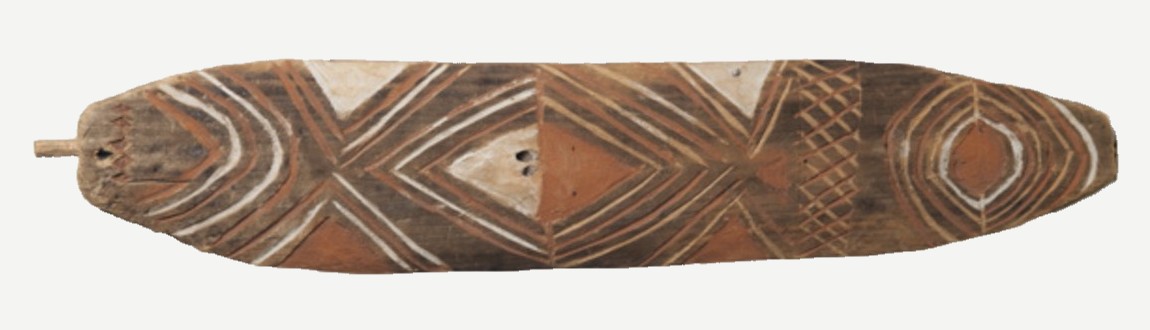
Méte's splinter is the first of a long run. From the Fly delta east along the coast of New Guinea and out through the islands to Bougainville, the bullroarer is found by a woman cutting wood. What changes as the story moves east is what she pays for it. On the map it is the red run along the coast and out through the islands in box A.
On the Huon Gulf, on the northeast coast of New Guinea, the roarer is the voice of balum, the monster that swallows the boys at initiation. Here the woman who found it is killed. Among the Kai, in the mountains behind the Huon Gulf, a woman chopping firewood sent a stick whirring through the air; her brother took it, and on her own advice killed her so that she could never tell. Among the Bukaua and Yabim on the coast below them, her husband let the men kill her in return for a new wife. At Busama she bored the chip and strung it herself and frightened the men with it, until the men of the club-house speared her and told the other women an ogre had eaten her. In another Busama telling, one woman refused to believe the roar was a spirit, because she knew it was a chip of wood; she was killed and burned.

Across the strait, at the western end of New Britain, the single death becomes a massacre. Naomi McPherson recorded the Bariai story of Tibuda, the Bullroarer:
One day, women were chopping firewood from a mangrove tree called Taltalnga when a piece of wood flew off making a whirring noise. The surprised women exclaimed, ‘Oh, how wonderful!’ and made it sing again. Later, they took it back to the village and hid it from the men. One day the women prepared a huge feast of taro pudding. They designated one person, called Ola, to send the men from the village so they wouldn't see the Bullroarer. When the women were ready to ‘pull’ the Bullroarer, Ola put on ceremonial finery and sent the men away. While they were gone, Bullroarer entered the village plaza to sing and eat pork and roasted taro with the women. … The old man conspired against the women. He sent lengths of shell-money attached to pieces of women's grass skirts to every men's house. On the prescribed day, all the men's house groups joined against the women. From the oldest grandmother to the littlest girls, they were all killed. The only females spared were infant girls who still suckled. The men captured the Bullroarer and now no woman knows how to make it sing because the memory was killed. Since that time, the Bullroarer has belonged to men and women flee its fearsome presence.
McPherson, “Black and Blue,” in Engendering Violence in Papua New Guinea (2012), p. 52
The infants were spared, McPherson writes, “only because they have no capacity for speech, and hence, no way of knowing. These infants grew up to become wives with no memory of the origin of Bullroarer or the gender war” (p. 53).
At the other end of New Britain the Baining tell that a woman splitting firewood made a bullroarer from a whirring splinter and frightened the men, until a man saw through the trick and killed her. On Buka, at the north end of the Solomons chain, the woman's splinter hummed and her husband made it the voice of the spirit Luahan; the elders killed her and ate her.
On Bougainville, across the narrow passage from Buka, the Kurtachi told Beatrice Blackwood that a woman chopping firewood found the roarer, and the men killed every woman but the very small girls, and kept it.
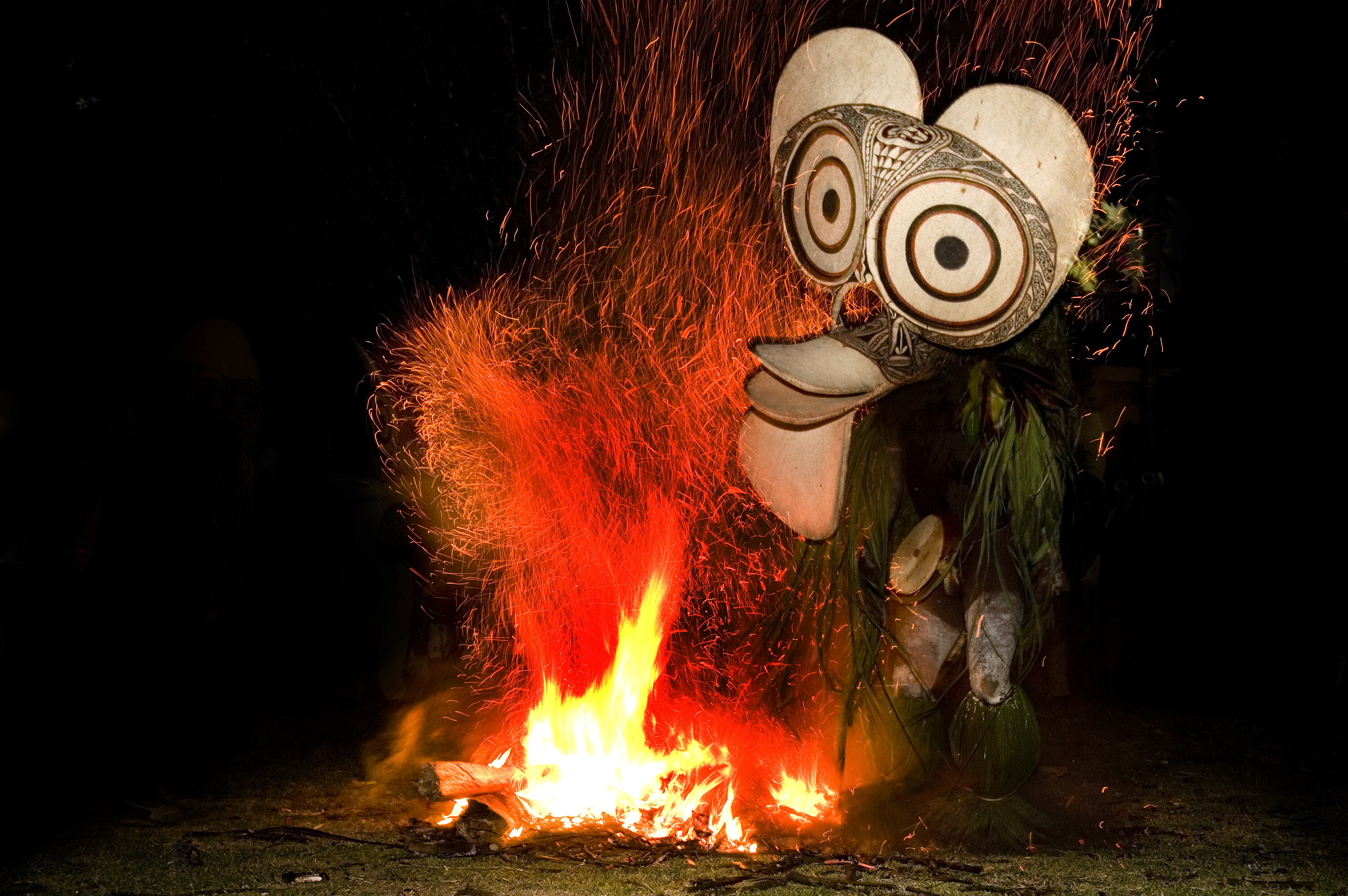
In the firewood version the woman's discovery is an accident. The instrument chose her. It flew out of the wood, it spoke to her in a dream, it called her Mother, and it taught her the rite. The men's part is to take it, and then to keep the women from knowing that it was ever taken.
Born from a body
West of the Fly, among the Keraki and their Gambadi neighbours of the Trans-Fly in southern New Guinea, the bullroarer does not fly out of a tree. It grows in a woman. Engu carries it inside her, and her husband Tiv'r, mad with curiosity, sends the birds to get it. The little bird Serekute succeeds. F. E. Williams, the government anthropologist of Papua, gives the end of the tale: the “point of the bull-roarer is protruding when Serekute swoops down and snatches it from her vagina,” and her blood flows, “her first menstrual blood,” while Serekute carries the bullroarer to his master (Williams 1936, p. 308). The first bullroarer and the first menstruation come out of the woman together.
East along the Gulf of Papua, among the Elema, Williams heard of a sea monster named Oa Birukapu, killed and cut up on the beach. The women of the west carried his entrails home up the Purari River:
For the western women took the entrails home with them to the Upper Purari, washed them, cut them up, and found inside them the bull-roarer. It was in this way (according to the present myth) that the women first became acquainted with this secret object which they used thenceforward to hoax the men until the latter seized it from them and reversed the position.
Williams, Drama of Orokolo (1940), p. 179
Other Elema tellers gave the women more. Some said the women found the great hevehe masks and the kovave masks in the same entrails. At Orokolo the first bullroarer was made by an old woman, Uravu, who heard two branches of a tree rubbing together in the wind and took the sound for a spirit's voice. “She herself, he says, made the first bull-roarer under the inspiration of the noise; but she also is the bull-roarer, and the bull-roarer is Oro Uravu” (p. 203 n. 2). The masks went the same way. “According to an Iari story the first ataimunu was fished out of the Purari River in one of its upper reaches by a woman named Oie. The women wore the masks until they were stolen from them by a man named Kaiva” (p. 393 n. 1). On the map the Elema stand with the masked women of Tierra del Fuego.
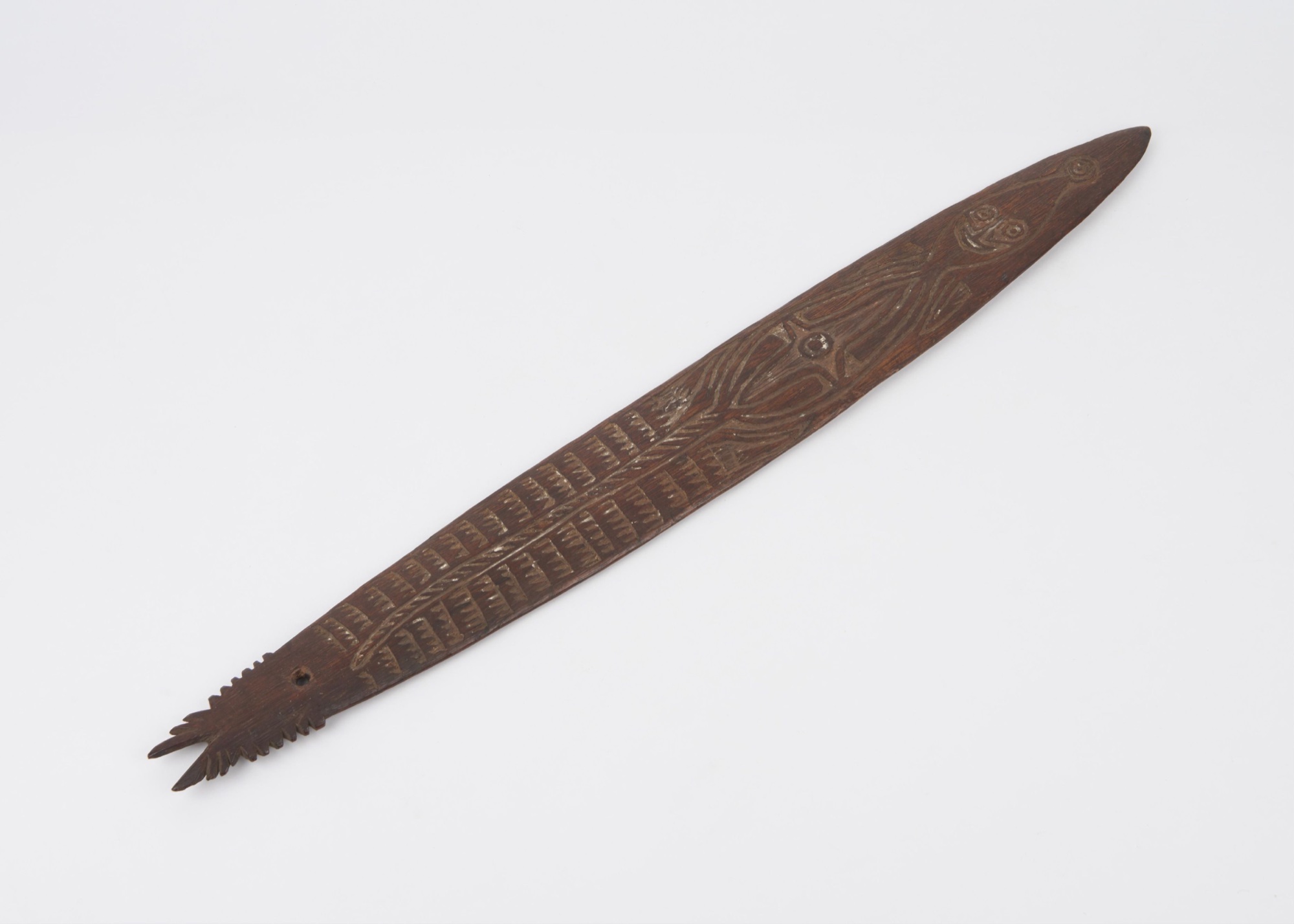
West of the Trans-Fly, across the border in what is now Indonesian Papua, the Marind-anim keep the roarer as the voice of their great cult beings. On the upper Bian River the first ezam was a set of buzzing chips struck from a tree by Ndiwa, and the women held the rite until the men forced their way in and stole it. On the coast, Paul Wirz was told that the men discovered the women's secret dances, and made the roar of Sosom to drive them off for good (van Baal, Dema, 1966, pp. 272, 587).
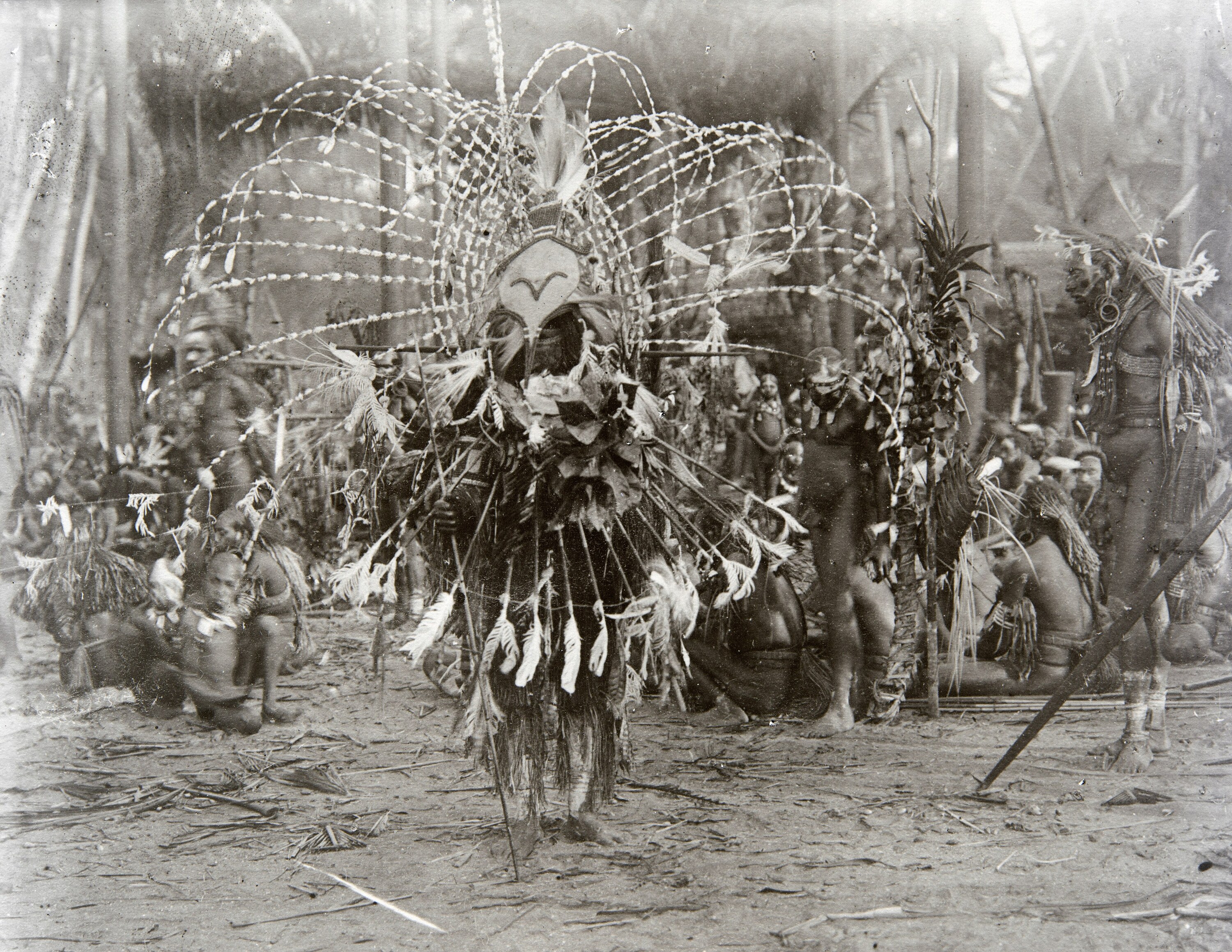
“We took these things from the women”
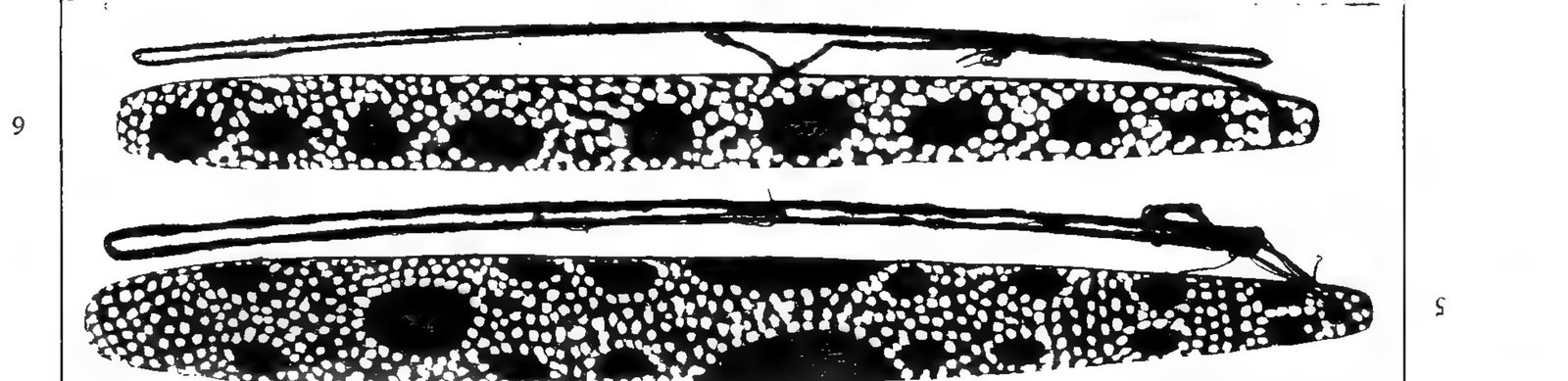
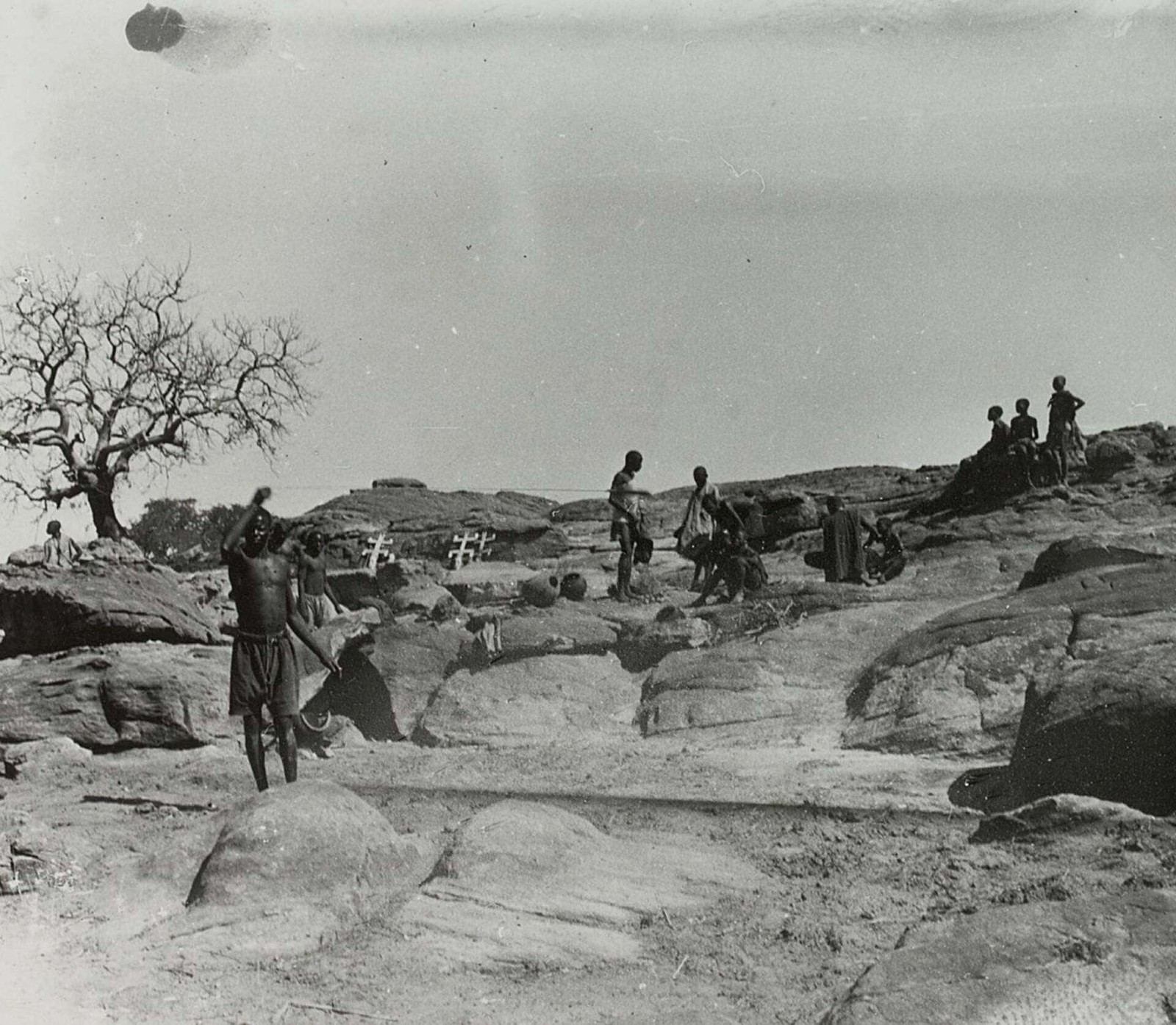
South across the Arafura Sea, in northern Australia, the men say it in their own voices. Baldwin Spencer heard the Mungarai story on the Roper River in 1911–12. In the Mungarai country the bullroarers are called kunapippi, and the women and children think their sound is the voice of a spirit:
Not far from a water pool, called Crescent Lagoon, there is a range of hills rising somewhat abruptly from the Roper Plains over which, at one place, the water pours in torrents during the rain season. Here, in the far past times, there arose a woman of the Ngapalieri sub-class and kunapippi totem. She carried a netted string bag and, in this, her kunapippi wrapped up in paper bark. From Miram-mi-idji, where she left many spirit children, she walked underground and came out at a place called Winjerri, where there is a big hill and water hole, close by a cattle station now called Hodgson Downs. Here she left more spirit children and, coming out above ground, walked along, swinging her bull-roarer as she did so.
At Kunjerri she met a number of other kunapippi women who were making corrobborees and joined in with them. A man, named Kumkum, a Ngapalieri man of the fish-hawk totem, who, like all of these old ancestors, was supposed to have arisen “by himself,” came up to them, wearing a forehead band. The women had finished their corrobboree before they discovered that he had been watching them. They at once hid their kunapippi in the ground, wrapped in paper bark. Kumkum, of course, had seen what they were doing, but he asked them what they had hidden. They replied that they had hidden some things belonging to them. Then he came right up into their camp and unearthed the kunapippi, saying, “What have you got here? They are good ones; I will take them.” He did so and went away leaving the women at Kunjerri where, finally, they went into the ground. Since that day no lubra has ever possessed a kunapippi.
Spencer, Native Tribes of the Northern Territory of Australia (1914), pp. 217–18
In northeast Arnhem Land the Yolngu tell two great cycles, and the women own the sacred things in both. The two Djanggawul sisters came over the sea carrying the sun and the rangga, the sacred emblems, in their dilly bags. W. Lloyd Warner, who lived among the Yolngu he called the Murngin in the late 1920s, took down the theft:
Those two Djunkgao sisters hid their dilly bags with ranga string in them inside some bushes. They went out to look for shellfish in the mangrove jungles. Some of these old Wongar yolnos stole their dilly bags with the ranga string. … The men who had stolen the ranga talked to each other. They said, “It is a good thing we took this ranga from those women, because now they can get food for us.” In the old times men used to get food for women and the women sat down on the inside and looked after the rangas.
Warner, A Black Civilization (1937), pp. 339–40
In the second cycle the two Wawilak sisters are swallowed by the great python Yurlunggur, and come back to the men as spirits in a dream to teach them the songs, the dances and the rites. The Yurlunggur trumpet is cut from the ridgepole of the sisters' own house. The sisters charge the men: “You must never forget these things we have told you tonight” (pp. 258–59). Warner saw that the two cycles were one:
In the third and final element of both myths the ritual and mysteries are obtained by the men from the women and the latter admit their subordination: the Wawilak women tell the men how to conduct their rituals and give them up to the men; the Djunkgao lose their totems and therefore their rituals are stolen by the men. These two myths with their essential identity of plot have superficially elaborated their rituals into quite different patterns; fundamentally they are the same.
Warner, A Black Civilization (1937), p. 399
The bullroarer of these rites is the python's voice. “Throughout the Gunabibi ceremony, the sound of the bull roarer is the voice of the snake coming from the men's ground to the women's,” Warner wrote, and when the women in the camp call back, they are the Wawilak sisters crying out to the snake (p. 293). Ronald Berndt, writing on the same Kunapipi cult in 1951, heard the men put the whole matter plainly:
But really we have been stealing what belongs to them (the women), for it is mostly all woman's business; and since it concerns them it belongs to them. Men have nothing to do really, except copulate, it belongs to the women. All that belonging to those Wauwalak, the baby, the blood, the yelling, their dancing, all that concerns the women; but every time we have to trick them. Women can't see what men are doing, although it really is their own business, but we can see their side. This is because all the Dreaming business came out of women—everything; only men take ‘picture’ for that Julunggul. In the beginning we had nothing, because men had been doing nothing; we took these things from the women.
Berndt, Kunapipi (1951), p. 55
Of the Djanggawul the men told Berndt the same: “Then we had nothing: no sacred objects, no sacred ceremonies, the women had everything” (p. 8). The roar the women hear from the bush is Julunggul's: “the deep-throated sound of Julunggul is heard by all in the camp,” and the women cry out “just like those two Wauwalak, for Julunggul is sneaking towards the camp” (p. 40).
Hidden in their bodies
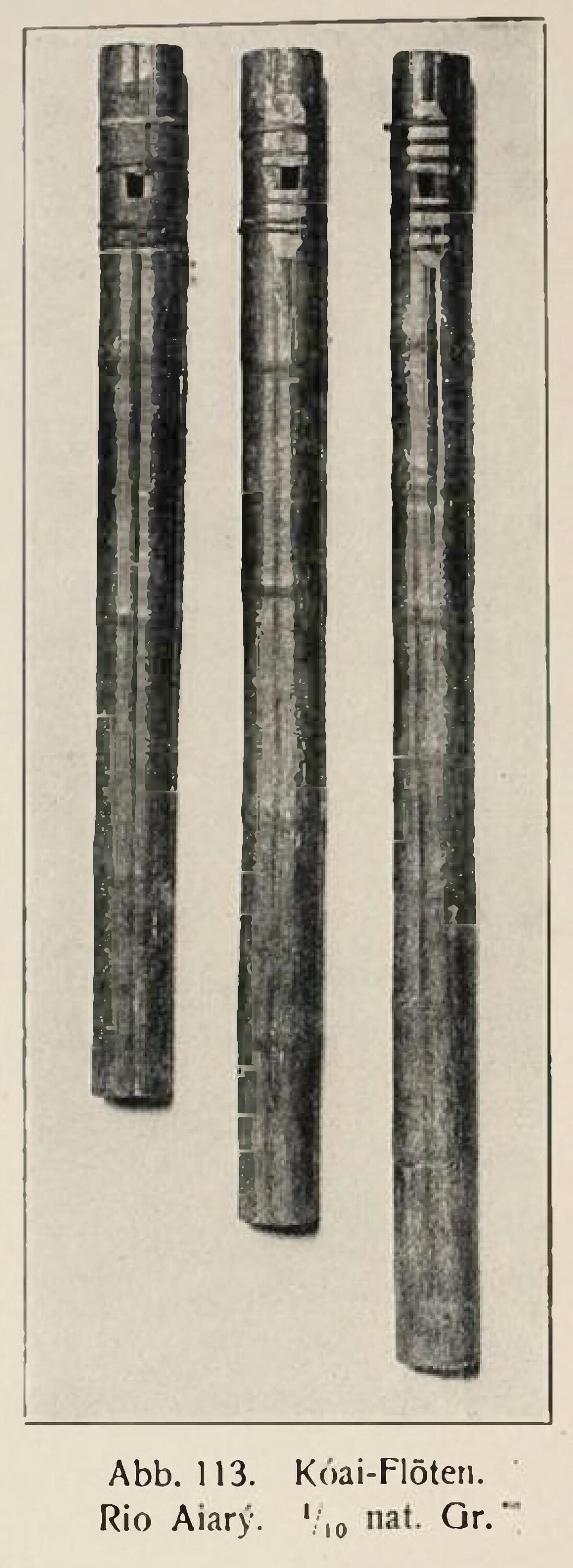
On the other side of the Pacific, along the Vaupés River on the border of Colombia and Brazil, the men's secret is a set of long flutes and trumpets, the Yurupari, which women must never see. They are kept under water in the rivers and brought out at night for the rites. The peoples of the river say that the women had them first.
The Makuna told Kaj Århem that at first the Yurupari belonged to the women, and the men had only small whistles. The men stole the instruments from Romi Kumu, Woman Shaman, and since then they are forbidden to women; when the men play, Romi Kumu is angry and dangerous. One of the women hid a Yurupari in her vagina as the men took them, and since then women menstruate. The Letuama tell that the brothers could not play the flutes and the women could, until the brothers attacked them and took the flutes. One woman hid a flute inside her body, the only flute left to women, and since then women menstruate. The holes of the Letuama flutes are measured from the body of the brothers' aunt.
The Tatuyo tell of a daughter who hid the instruments in her own body and went upriver, held the rites with the women, and made the men do women's work. Her father caught her and, as her punishment, opened her vagina; since then women menstruate and men own the sacred instruments. She is Romi Kumu, and she is now the Pleiades. The Barasana told Torres Laborde that the father of the He instruments was He-Hino, the He Anaconda, their mother was Romi Kumu, and she was the first to play them. In Stephen Hugh-Jones's Barasana telling, when Romi Kumu held the He “the men became like women: they became the cultivators of manioc and they began to menstruate,” until the men took the instruments back (The Palm and the Pleiades, 1979, pp. 126–27). The bleeding goes wherever the instruments go. See also The Palm and the Pleiades.
South of the Amazon, on the upper Xingu in central Brazil, the Kamaiurá tell that the women were the first flute players. The twins Sun and Moon drove them off by whirling the first bullroarers, the parapara, and in the women's flight the men took the flutes. The Mundurucu of the Tapajós, a southern tributary of the Amazon, say that three women netted fish that turned into trumpets, and played them, until the men drove them from the men's house and kept the trumpets for themselves. On the map the Xingu peoples take the teal of the bullroarer that drives the women off, the colour they share with the Sepik, the Eastern Highlands and the Kimberley.

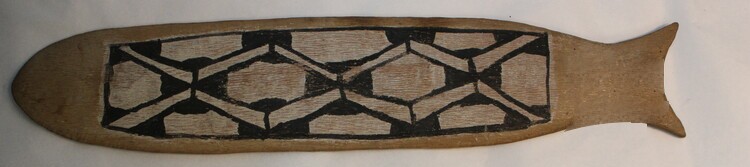
The Dogon woman in the fibres
On the cliffs of Bandiagara in Mali, in West Africa, the men's society of the masks speaks through an iron bullroarer, and women must never see it. At the village of Yougo Dogorou, Michel Leiris was told how the masks and the roarer came to people:
Long ago, he says, the population of Yougo Dogolou numbered thirty men; a woman who was in the bush met a male and a female andumbulu and threw earth at them: they fled into their cave, leaving behind their costume of red fibre, and the bullroarer as well; the woman gave these objects to her husband …
Leiris, “Rhombes dogon et dogon pignari” (1934), p. 10 n. 14 (translated from the French)
The andumbulu are the little people of the first age, who once lived in the caves of the cliff. Marcel Griaule, collecting the same story four years later, tells that two women heard drums and dancing and “the roar of a bullroarer,” drove the andumbulu off, and found what they left behind: skirts, hoods, bracelets, anklets, “an iron bullroarer and the wooden mask.” One of the women put on the fibres: “Having dressed in the fibres, the woman went back to the village; all the men, all the women, all the children fled. Her frightened husband fled” (Griaule, Masques dogons, 1938, pp. 59–60, translated). The masks passed to the men. “Formerly the women came to the square to watch the masks dance,” a Dogon text in Griaule records (p. 67 n. 2). Now the bullroarer's task is “to spread terror among the women and children, to keep them away from the masks' appearances” (p. 254).
The women's lodge in Tierra del Fuego
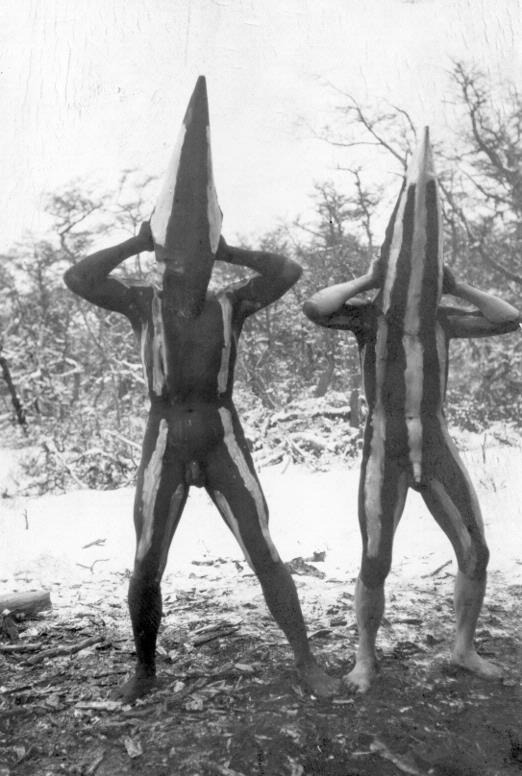
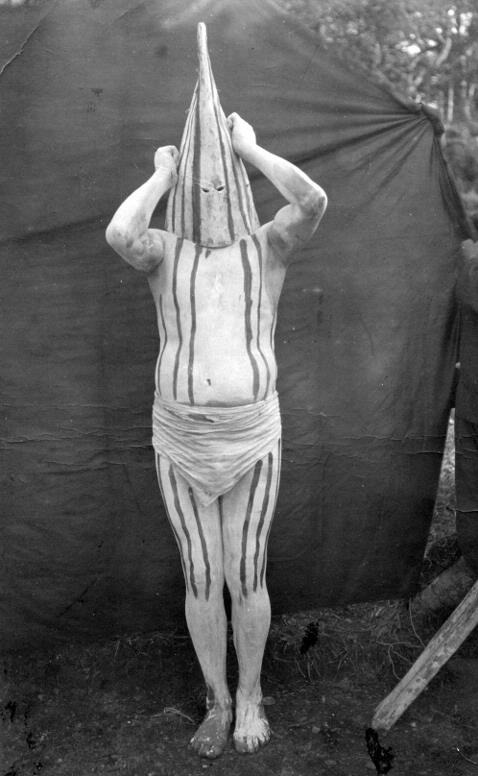
At the far southern tip of South America, the Selk'nam men of Tierra del Fuego held the Hain, a men's lodge where they painted and masked themselves as spirits and came out to terrify the women. Lucas Bridges, who grew up among them in the 1880s and 1890s, set down what the men said of its beginning:
In the days when all the forest was evergreen, before Kerrhprrh the parakeet painted the autumn leaves red with the colour from his breast, before the giants Kwonyipe and Chashkilchesh wandered through the woods with their heads above the tree-tops; in the days when Krren (the sun) and Kreeh (the moon) walked the earth as man and wife, and many of the great sleeping mountains were human beings: in those far-off days witchcraft was known only by the women of Ona-land. They kept their own particular Lodge, which no man dared approach. The girls, as they neared womanhood, were instructed in the magic arts, learning how to bring sickness and even death to all those who displeased them.
The men lived in abject fear and subjection. Certainly they had bows and arrows with which to supply the camp with meat, yet, they asked, what use were such weapons against witchcraft and sickness? This tyranny of the women grew from bad to worse until it occurred to the men that a dead witch was less dangerous than a live one. They conspired together to kill off all the women; and there ensued a great massacre, from which not one woman escaped in human form.
Even the young girls only just beginning their studies in witchcraft were killed with the rest, so the men now found themselves without wives. For these they must wait until the little girls grew into women. Meanwhile the great question arose: How could men keep the upper hand now they had got it? One day, when these girl children reached maturity, they might band together and regain their old ascendancy. To forestall this, the men inaugurated a secret society of their own and banished for ever the women's Lodge in which so many wicked plots had been hatched against them. No woman was allowed to come near the Hain, under penalty of death.
Bridges, Uttermost Part of the Earth (1948), pp. 412–13
Anne Chapman, who worked with the last Selk'nam who had known the Hain, heard it told with the spirits themselves at the centre. The women had played the spirits first, “the very same spirits with which the women had deceived and terrorized the men when they controlled the Hain.” When the men found out, Sun roared, “Strike down the women!” Of the female sex, “only the innocent little girls and babies remained, ignorant of the perfidy of their mothers and sisters” (p. 70). Moon, Sun's wife, who had led the women, fled, and Sun pursues her still; “every month Moon relives her terrible defeat” (Chapman, Drama and Power in a Hunting Society, 1982).
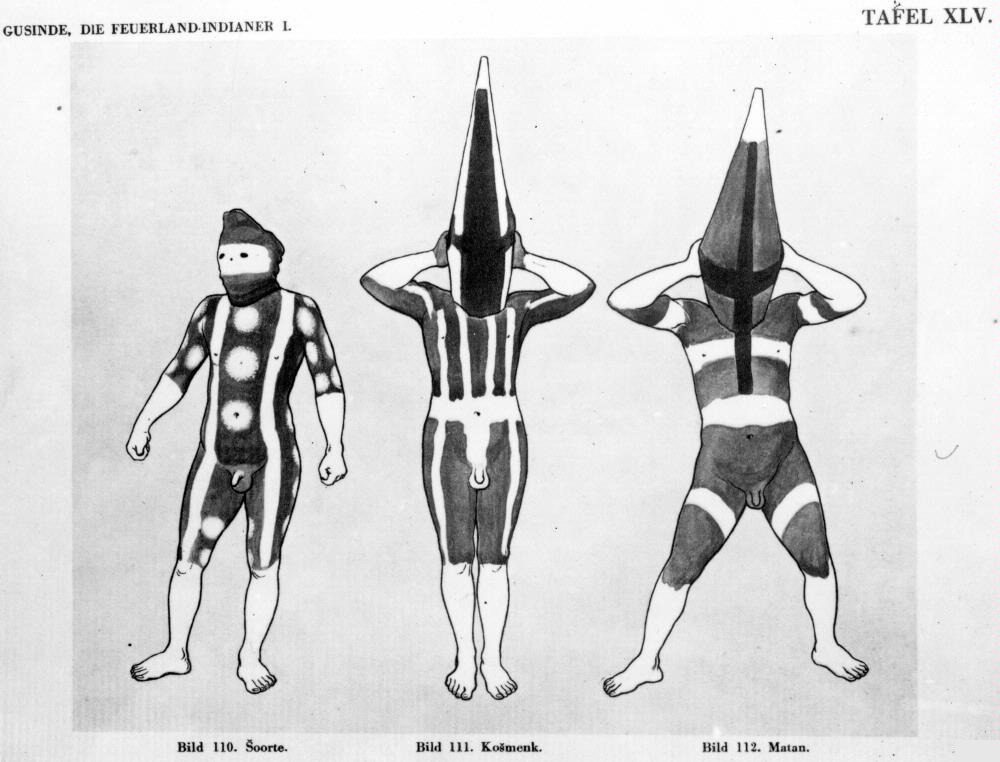
Across the Beagle Channel, on the islands south of Tierra del Fuego, the Yamana kept the Kina, their own men's lodge of masked spirits. Their elder Masemikens told Martin Gusinde: “We men long ago took the kina away from the women.” The women had acted the spirits to fool the men, until Lém, the sun-man, caught on:
But the men looked out from under their covers and distinctly recognized their women who were painted and masked. … In the general fray all the women who had performed the Kina were turned into animals, into land animals, birds, and marine animals. … Since then the men rule in the Kina hut and no woman may approach unauthorized, much less enter the meeting.
Gusinde, Die Yamana (1937), pp. 1343–45, HRAF English translation
Gusinde noted “the surprisingly complete agreement between the basic ideas of the origin myth and those underlying the secret men's ceremonies of the Selk'nam …, Yamana, and Halakwulup,” the three peoples of the Fuegian archipelago. Wilhelm Koppers heard the Yamana version end as the Selk'nam and Bariai ones do: the men “killed all the women but spared the little girls in order to provide for the survival of the tribe. When the little girls grew to be women, they knew nothing of all these events” (Koppers, p. 45). On the map a small white dot marks the spared girls, and it falls at both ends of the Pacific.
Bachofen's ages of the world
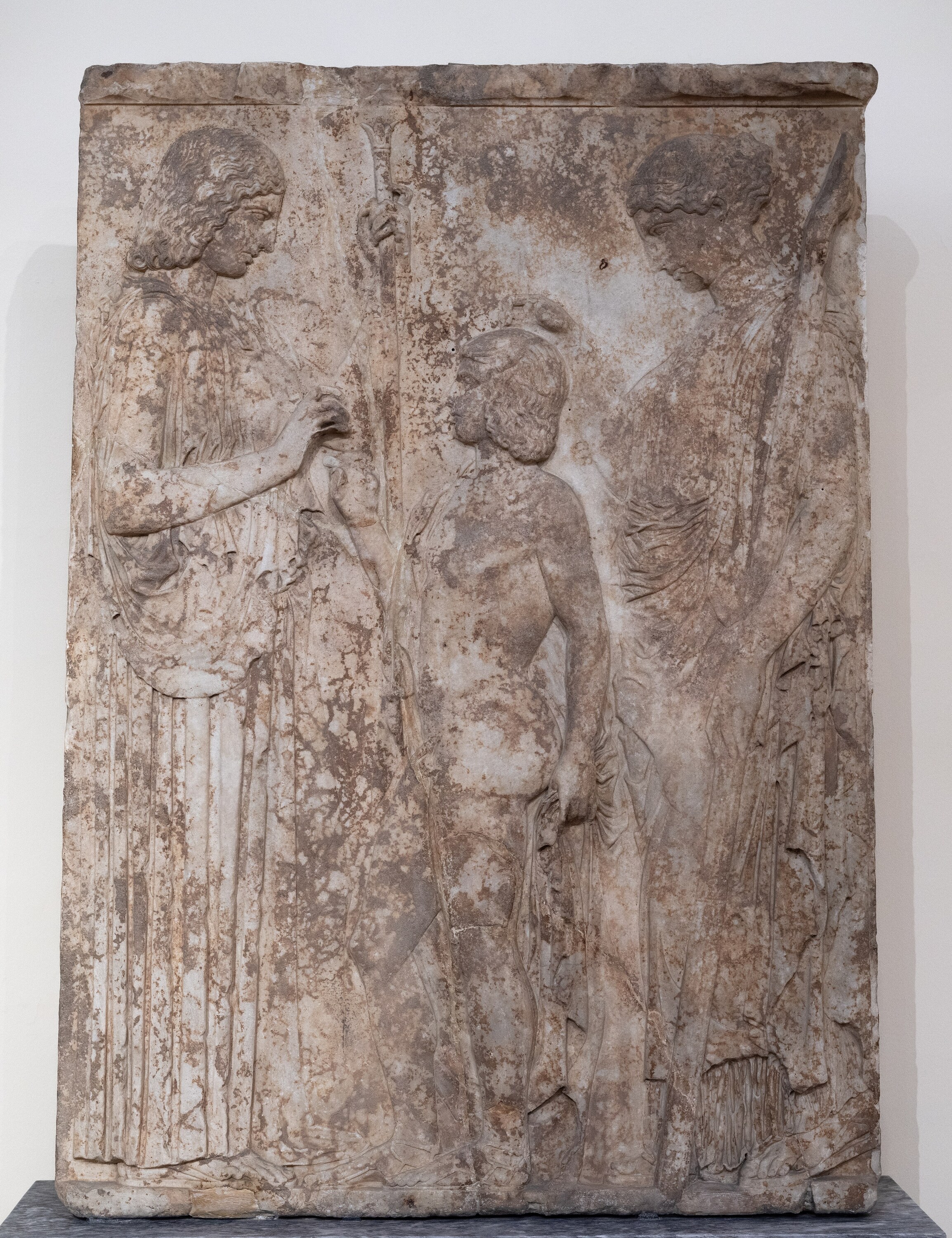
The idea that women once ruled entered European thought from Basel. In 1861 Johann Jakob Bachofen, a jurist and student of Roman law, published Das Mutterrecht, “Mother Right.” Bachofen built his history the way Hegel built his: as a dialectic of world-ages, each born from the conflict of the one before, each keeping something of what it overcomes and carrying humanity a stage higher. His ages were ages of the sexes. First came a time of unregulated promiscuity. Then came mother right, which he named for Demeter, the grain goddess of the mysteries at Eleusis, and which he made the synthesis of what came before it and what would come after:
As the rule of paternity follows the period of mother-right, so a time of unregulated hetaerism precedes it. Demetrian, ordered gynaecocracy thereby takes the middle position, as humanity's point of passage from the lowest stage of existence to the highest. With the first it shares the material-maternal standpoint, with the second the exclusiveness of marriage.
Bachofen, Das Mutterrecht (1861), p. XVIII (translated from the German)
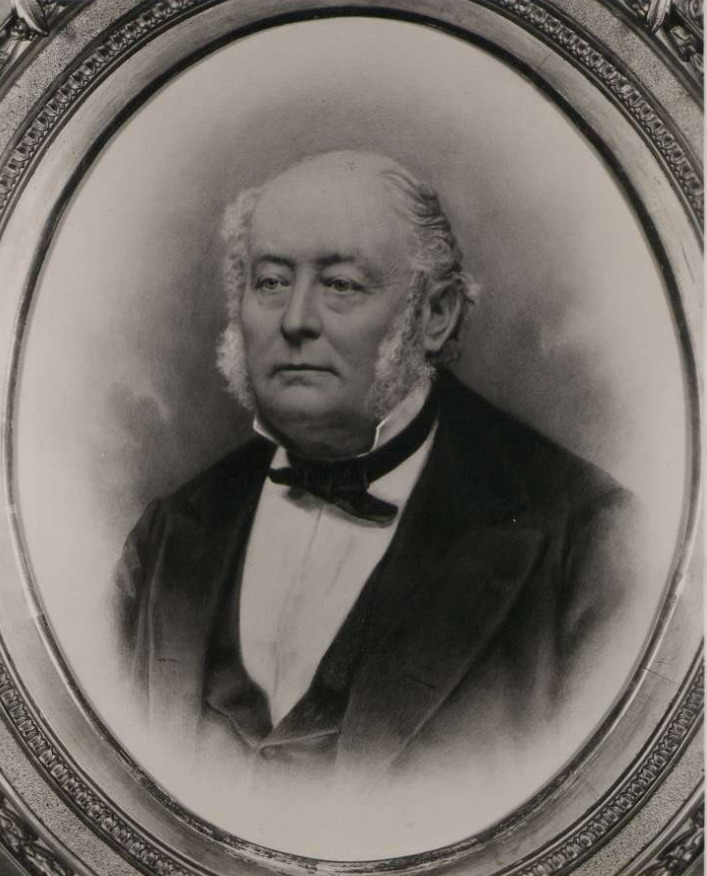
For Bachofen the rule of mothers and the mystery religions were one thing seen from two sides. “Wherever we meet gynaecocracy, the mystery of chthonic religion is joined to it,” he wrote. Mother right and the mystery “are twin siblings, always joined,” and the scholars who thought the mysteries a late decadence of Greek religion had it backwards: “the maternal mystery is the old thing, Hellenism a later stage of religious development” (p. XV). Under Demeter the earthly mother became the goddess's priestess and, “as hierophant, the keeper of her mystery” (p. XIV).
The first great assault on mother right he gave to Dionysus. “Dionysus appears at the head of the great combatants of mother-right,” and his religion brought “a new turn” to the struggle between the old promiscuity and Demeter's ordered rule (pp. XXII–XXIII). Bachofen's Dionysus faces both ways. He is “in the fullest sense of the word the women's god”: women first recognised him, spread his cult and carried it to victory. Yet he is also “the founder of paternity,” the god under whom fatherhood was first raised above the mother. Only with Apollo did the father break free of the woman altogether: “Motherless, his paternity is a spiritual one” (pp. XXIX–XXX). Bachofen marked the turn in the language of the philosophers of history: “A world-age goes down, and a new one rises on its ruins, the Apollonian” (p. XXVII). The Orphic secret doctrine, Bachofen wrote, built on the old female primacy in the mysteries even as it exalted the male principle.
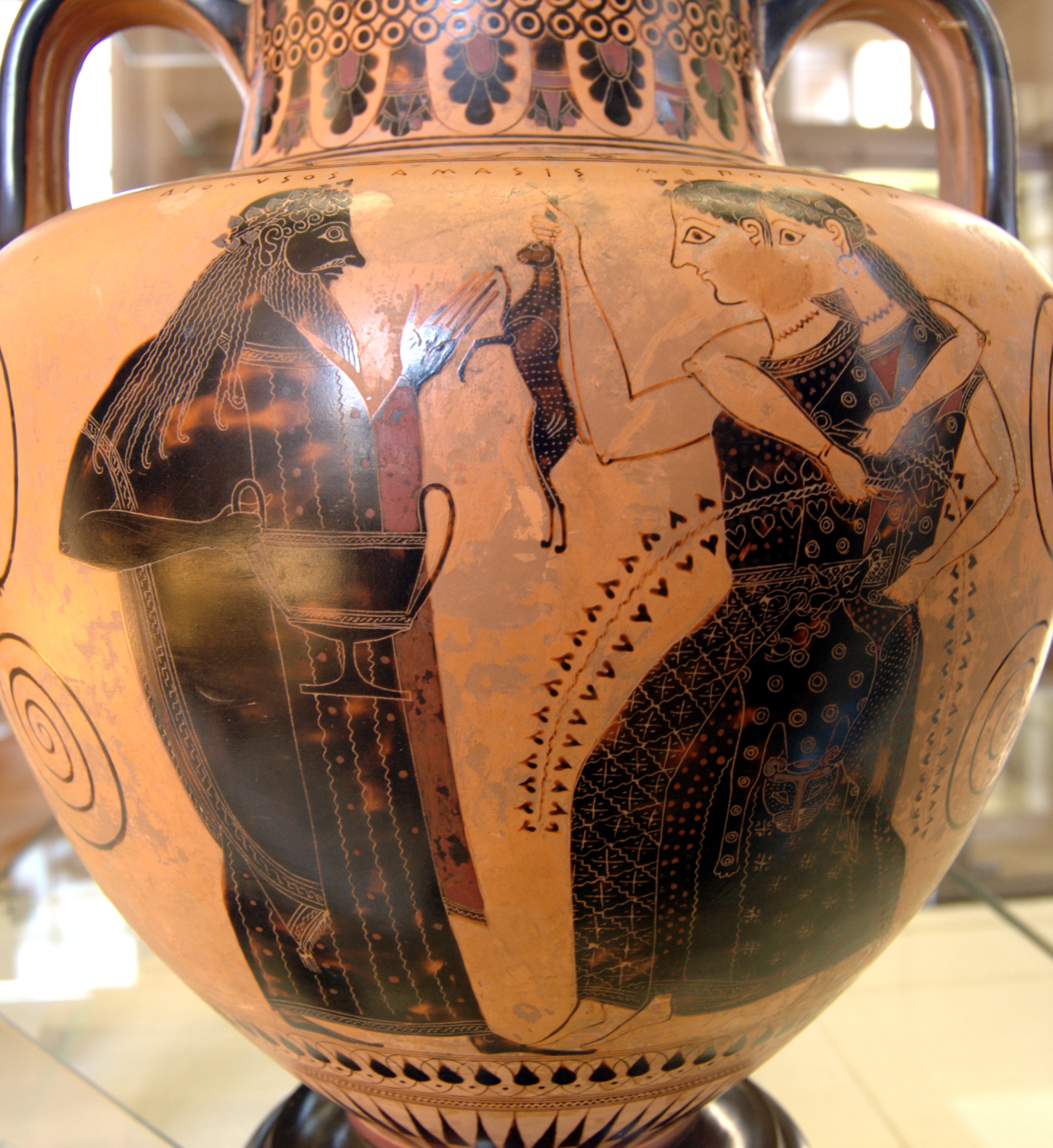
The Greek mysteries of Dionysus kept a bullroarer. Clement of Alexandria, a Christian writing against them about AD 200, tells that the Titans lured the infant Dionysus away with toys and tore him to pieces, and he quotes the Orphic verse that lists the toys: “Top, wheel and jointed dolls, with beauteous fruit / Of gold from the clear-voiced Hesperides.” Then he lists the “worthless symbols” of the rite itself: “the knuckle-bone, the ball, the spinning-top, apples, wheel, mirror, fleece!” (Protrepticus 2.17–18, trans. Butterworth). The word the translator rendered “wheel” is rhombos, the Greek name for the bullroarer. Andrew Lang matched it with the Australian instrument in 1884. The god Bachofen set at the head of the combatants of mother right was lured to his death with a bullroarer, and the bullroarer was among the symbols of his mystery.
A century after Bachofen, anthropologists who had given up his age of mothers kept meeting its stories in the men's houses. Joan Bamberger's essay “The Myth of Matriarchy” (1974) took its evidence from the Fuegian lodges and the sacred trumpets of the Amazon. Deborah Gewertz's collection Myths of Matriarchy Reconsidered (1988) returned to the sacred flutes of New Guinea, which, the myths say, the men took from the women. Looking for the lost rule of women outside Europe, they found it in the men's houses, attached to the men's secret instruments.
What travels together
The myth of matriarchy keeps strange company. In New Guinea, Australia, the Amazon, West Africa and Tierra del Fuego, the story that women once held power is told about the same few things: the bullroarer, the sacred flutes and the masks that men keep hidden and reveal to boys at initiation. Bachofen’s Mother Right, the European theory of a first age of women, was tied from the start to the Greek mysteries, and the mysteries of Dionysus kept a bullroarer too.
The myth is not loose folklore. It belongs to a particular institution: an instrument or a mask that the men hide in a lodge, sound in the bush so that the women take it for a spirit, and reveal to boys at initiation, with death for any woman who sees it. Where that institution is found, the story of the women’s first possession is often told beside it, and the men say it in the plainest words they have. “We stole this from the women,” Warner’s Yolngu tellers said. “We took these things from the women,” Berndt’s said. “We men long ago took the kina away from the women,” Masemikens told Gusinde. Bridges, who knew both the Selk’nam and the Yamana, wrote that “this legend of leadership being wrested from the women, either by force or coercion, is too widely spread throughout the world to be lightly ignored” (p. 166).
Men who keep a secret might reach for the same excuse anywhere. The details say more than that. The chip that flies whirring out of a woman’s firewood is told along one run of coast and islands, from the Fly to Bougainville. The instrument that leaves a woman’s body with her first menstrual blood is told in the Trans-Fly, and the flute hidden inside a woman, with menstruation as the price, on the Vaupés. The massacre that spares only the girls too young to know is told on New Britain and Bougainville, and again in Tierra del Fuego. Stories passed from neighbour to neighbour cluster this way. The atlas follows the instruments themselves in Always From the North and Identical Forms, and the whole bundle of roarer, flute, mask and women-first myth in What Travels When the Bullroarer Doesn’t? Vectors of Mind asks why male initiation rites diffused, and snakecult.net traces the idea of a primordial matriarchy and Bachofen’s mother right through its later readers.
Bachofen came to the same pairing from the other side of the world. He found his age of mothers in Greek myth and law, set it beside the mysteries, and gave its overthrow to Dionysus, whose mystery kept the bullroarer among its symbols. The atlas follows Dionysus, the women who nursed and taught him, and the whirled rhombos in The Women Who Taught the God, one of five essays in The Stolen Voice, which follows the women’s instrument from Arnhem Land and the Sepik to the Amazon and Greece.
Spencer ended the Mungarai story with the line the men of the Roper had given him. The woman of the kunapippi totem had walked the country swinging her bullroarer. Kumkum dug the women’s bullroarers out of the ground where they had hidden them, and took them. “Since that day no lubra has ever possessed a kunapippi.”
Key sources
Landtman, G. 1917. The Folk-Tales of the Kiwai Papuans. Acta Societatis Scientiarum Fennicae 47. Helsingfors, pp. 316–17 (tales 261 and 261A, Méte and Mäigidübu).
Gourlay, K. A. 1975. Sound-Producing Instruments in Traditional Society: A Study of Esoteric Instruments and Their Role in Male-Female Relations. New Guinea Research Bulletin 60 — the Huon Gulf, Busama, Kai and Kurtachi tellings, after Lehner 1911, Keysser 1911, Hogbin 1951 and Blackwood 1935.
McPherson, N. 2012. “Black and Blue: Shades of Violence in West New Britain, PNG.” In M. Jolly, C. Stewart and C. Brewer (eds), Engendering Violence in Papua New Guinea. Canberra: ANU E Press, pp. 52–53 (Bariai, Tibuda).
Laufer, C. 1946–49. “Rigenmucha, das Höchste Wesen der Baining.” Anthropos 41–44, pp. 521–24 (Baining).
Williams, F. E. 1936. Papuans of the Trans-Fly. Oxford, pp. 307–08 (Engu and Serekute); Williams, F. E. 1940. Drama of Orokolo. Oxford, pp. 179, 203 n. 2, 393 n. 1 (Oa Birukapu, Uravu, Oie).
Baal, J. van. 1966. Dema: Description and Analysis of Marind-anim Culture. The Hague, pp. 272, 587.
Spencer, B. 1914. Native Tribes of the Northern Territory of Australia. London, pp. 214, 217–18 and Plate II (Mungarai kunapippi).
Warner, W. L. 1937. A Black Civilization: A Social Study of an Australian Tribe. New York, pp. 258–59, 293, 339–40, 399.
Berndt, R. M. 1951. Kunapipi: A Study of an Australian Aboriginal Religious Cult. Melbourne, pp. 8, 40, 55.
Berezkin, Yu. E. and Duvakin, E. N. Thematic Classification and Distribution of Folklore and Mythological Motifs by Areas, motifs F38 (women and secret knowledge) and F39 — for the Buka telling (Thomas 1931, p. 231), the Makuna (Århem 1980, pp. 21–22; Århem et al. 2004, p. 449), Letuama (Palma 1984, pp. 56, 77–80), Tatuyo (Bidou 1972, p. 67) and Barasana (Torres Laborde 1969, p. 57) tellings, and much of the map.
Hugh-Jones, S. 1979. The Palm and the Pleiades: Initiation and Cosmology in Northwest Amazonia. Cambridge, pp. 126–27.
Koch-Grünberg, T. 1909. Zwei Jahre unter den Indianern, vol. 1. Berlin (Kóai flutes).
Bastos, R. J. de M. 1978. A musicológica Kamayurá: para uma antropologia da comunicação no Alto-Xingu. Brasília: FUNAI, pp. 172–73; Murphy, R. F. 1958. Mundurucú Religion. Berkeley, pp. 89–91.
Leiris, M. 1934. “Rhombes dogon et dogon pignari.” Bulletin du Musée d’Ethnographie du Trocadéro 7, p. 10 n. 14; Griaule, M. 1938. Masques dogons. Paris, pp. 59–60, 67 n. 2, 254.
Bridges, E. L. 1948. Uttermost Part of the Earth. London, pp. 166, 412–13.
Chapman, A. 1982. Drama and Power in a Hunting Society: The Selk’nam of Tierra del Fuego. Cambridge, p. 70.
Gusinde, M. 1937. Die Feuerland-Indianer, vol. 2, Die Yamana. Mödling, pp. 1343–45 (HRAF English translation, 1961, pp. 1247–49); Koppers, W. 1968 [1945]. In The Mystic Vision: Papers from the Eranos Yearbooks 6. Princeton, p. 45.
Bachofen, J. J. 1861. Das Mutterrecht. Stuttgart, pp. XIV–XXX (Vorrede).
Clement of Alexandria, Protrepticus 2.17–18, trans. G. W. Butterworth (Loeb, 1919), pp. 37, 39; Lang, A. 1884. Custom and Myth, “The Bull-Roarer.”
Bamberger, J. 1974. “The Myth of Matriarchy: Why Men Rule in Primitive Society.” In M. Z. Rosaldo and L. Lamphere (eds), Woman, Culture, and Society. Stanford, pp. 263–80; Gewertz, D. (ed.) 1988. Myths of Matriarchy Reconsidered. Oceania Monograph 33. Sydney.