The Stolen Voice · Essay IV
The Women Who Taught the God
Greece · Anatolia · the Orphic and Dionysian mysteries
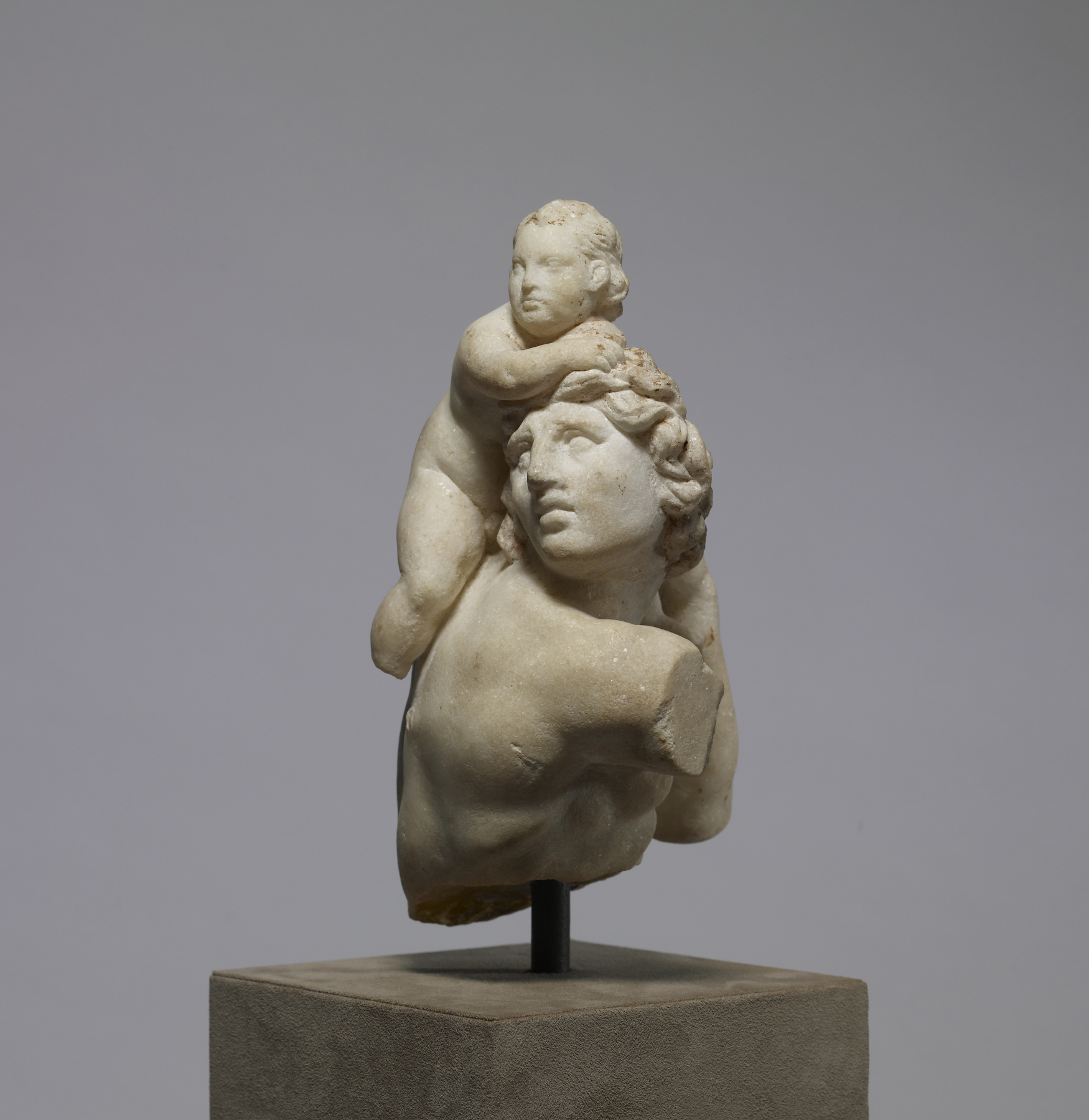
An endangered child sits inside a ring of women. Atlas’s star-daughters nurse him. Rhea teaches him initiation. Mystis teaches him the night rites. Glaukothea conducts his mysteries in an Athenian house. And among the toys the Titans used to lure him to his death, Clement lists the rhombos, the whirled board that roared in the mysteries. The stolen voice has a Greek chapter.
Greek tradition preserves the western branch of the stolen-voice complex: Atlas’s star-daughters nurse Dionysus, women teach and administer his mysteries, and the whirled rhombos remains among the torn child’s sacred apparatus.
In brief
- One Greek genealogy makes Pleiades and Hyades divisions of Atlas’s daughters: Orion pursues one sister-band; the other nurses Dionysus.
- Greek tradition repeatedly places Dionysus under female custody: nurses, Nysiads, Mystis, Rhea, Cybele, maenads, and other women who initiate, rear, hide, or teach him.
- Clement names both kōnos and rhombos; the scholion explains the kōnos as wood on a string whirled to roar in the mysteries.
- A third-century BCE Orphic papyrus from Gurob has the serpent pass through the initiate’s clothes and, five lines later, lists the rhombos in the sacred basket.
- Pleiades carry pursuit; Hyades carry nurture; Rhea, Mystis, and Glaukothea carry instruction; kōnos and rhombos carry whirled sound; Dionysus carries dismemberment and restored life.
The Sky
The sister-clusters meet in Atlas’s house
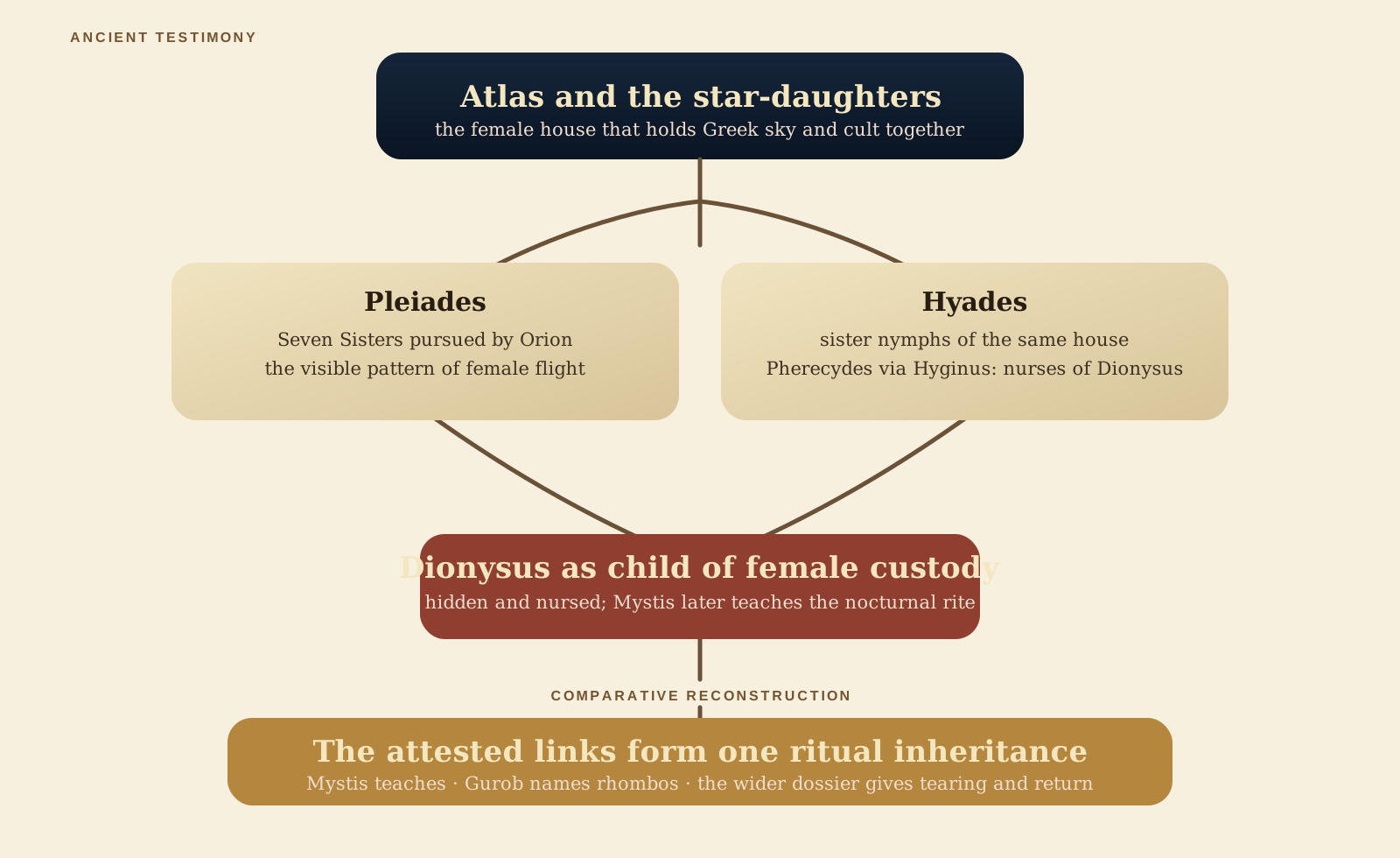
The Pleiades are the seven daughters of Atlas, with Orion behind them in pursuit. Their sisters the Hyades, Pherecydes says, were the nurses of Dionysus. One household, two offices: pursued sisters in one cluster, nurses of the mystery child in the other. Hunter, pursued women, bull, nurses, and mystery child occupy one compact patch of sky, and The Daughters of Atlas and the Roaring God reads that ceiling in full. Here the question is what the women did with the child once they had him.
The Teachers
The god is taught by women before men recite him
The nursing women do not merely keep Dionysus alive. They hand him into initiation. Pseudo-Apollodorus says Rhea purified the maddened young god, and from her he learned the rites of initiation. In Nonnus the nurse Mystis teaches Dionysus the night ceremonies herself: she is the first to shake the rattle and clash the cymbals, and she hands him the mystic casket. The god whose male mysteries will spread through Greece first receives those mysteries from women already able to perform them.
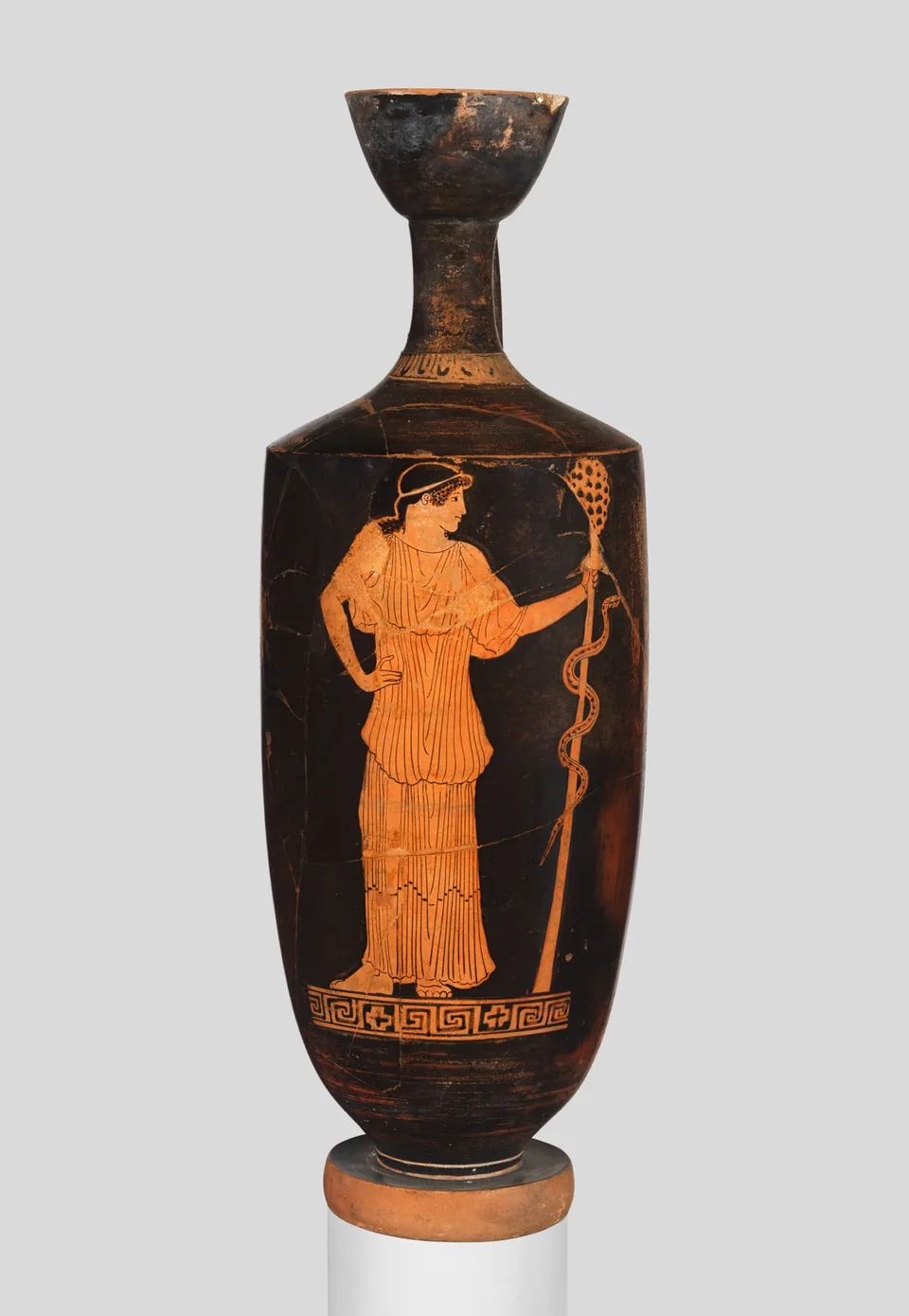
The chain runs on into history. In 330 BCE Demosthenes sneered at his rival Aeschines for the years he had spent helping his mother Glaukothea run initiations in an Athenian house. At night the young man read the service-book, mixed the libations, dressed the initiates in fawnskins, scoured them with clay and bran, and raised them up from the purification. By day he led the procession through the streets, squeezing snakes over his head and crying Euoi Saboi, the Bacchic shout to Sabazios. Demosthenes meant it as an insult. He recorded a fact: a woman ran the mystery, and her son served it.
Rhea and Cybele supply the noise. Strabo puts the Dionysiac, Phrygian, and Cretan rites in one family of mysteries filled with flutes, cymbals, drums, ecstatic cries, and the helmeted din of Curetes and Corybants. The child is hidden under sound before the rhombos is ever named. Greek religion knew the technique: a wall of noise makes a hidden divine action present to everyone outside it.
The female chain is therefore continuous. Atlas’s daughters and the Nysiads rear the child; Rhea teaches him initiation; Mystis teaches him the night-work; Glaukothea still conducts mysteries in an Athenian house. Men later codify, publicize, and police a power the tradition repeatedly places in women’s hands first.
The Instrument
The hidden voice survives as the rhombos
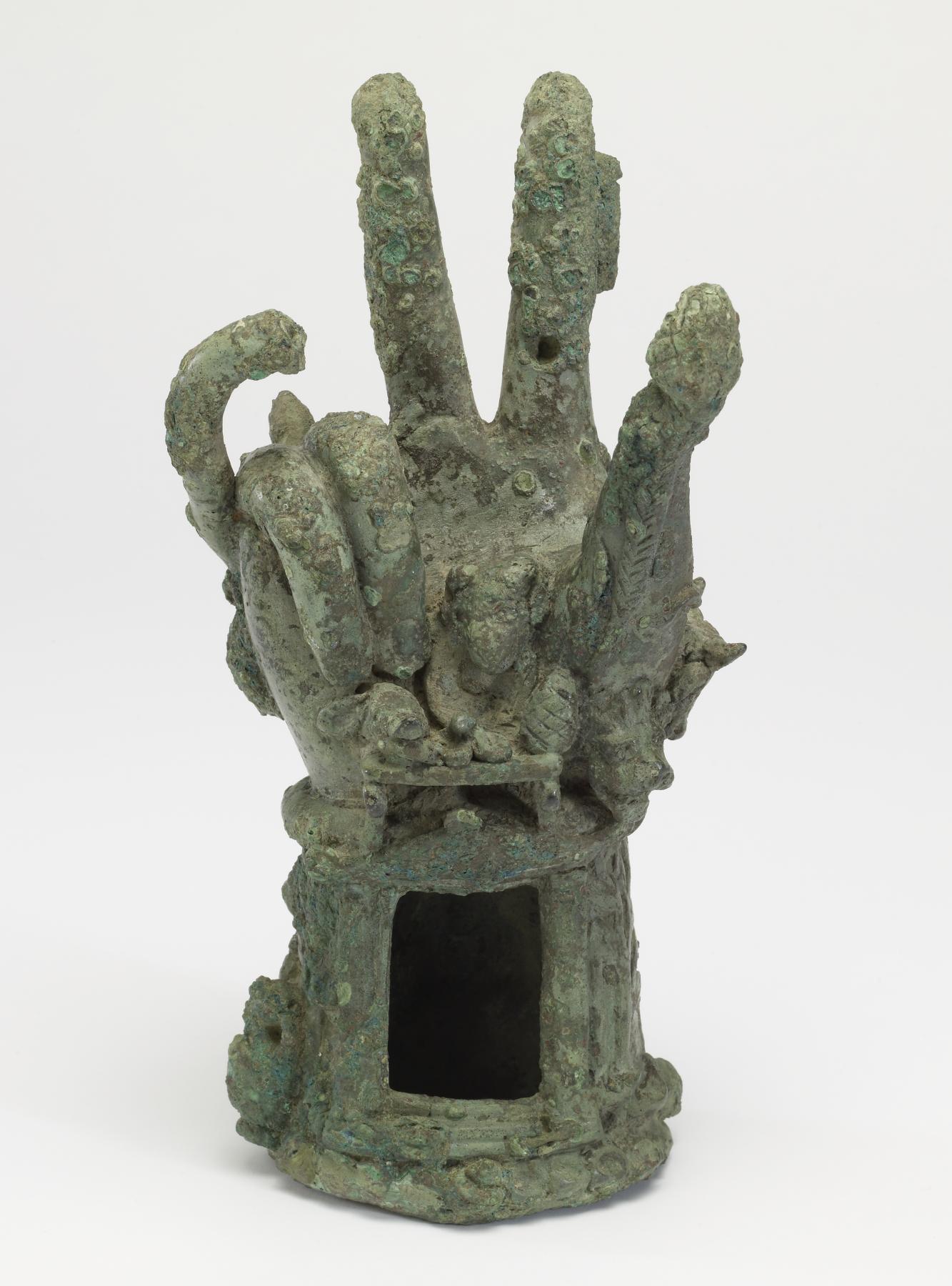
The instrument the women’s cult handed on is the one this series has followed from Arnhem Land. Clement of Alexandria, listing the toys the Titans used to lure the child Dionysus before they tore him apart, names the kōnos and the rhombos; a scholiast explains the kōnos as a little piece of wood on a string, whirled in the mysteries to make a roar. A third-century papyrus from Gurob puts the rhombos in the mystery basket five lines after a serpent is passed through the initiate’s clothes. Euripides sends it circling through the rites of the Mountain Mother beside Bromios. The full dossier is laid out in The Daughters of Atlas. What matters here is the order of custody: women bring the child to the threshold, the whirled voice belongs to his rite, and the torn god supplies its grammar of death and remaking.
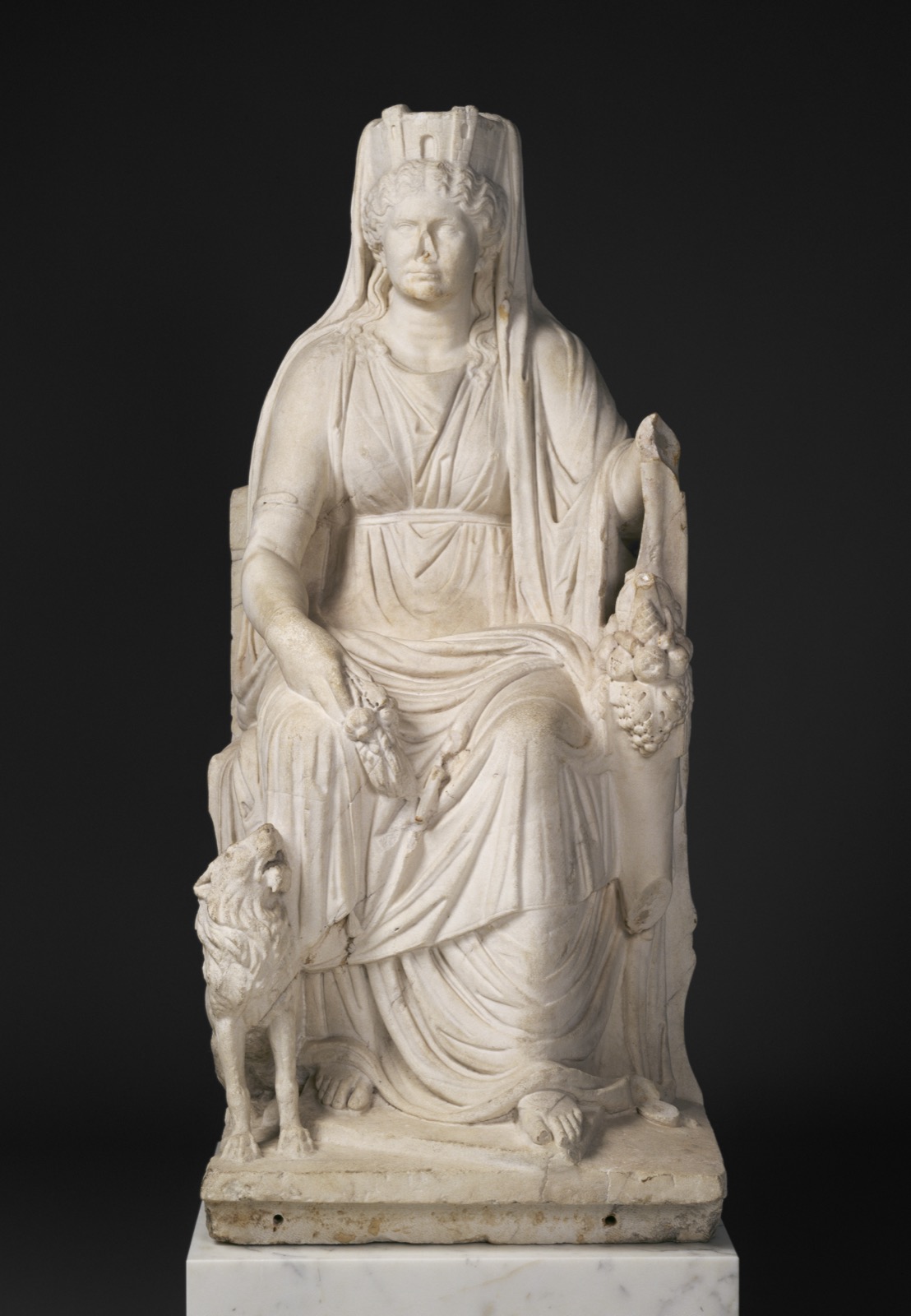
The western branch still roars
Greek tradition preserves the western branch of the stolen-voice complex: Atlas’s star-daughters nurse Dionysus, women teach and administer his mysteries, and the whirled rhombos remains among the torn child’s sacred apparatus.
Greece proves what can survive after the men’s house itself disappears from view. Female custodians remain in the nursery and initiation room. The whirled token remains in the child’s apparatus and in working liturgy. Dismemberment and restored life remain in the god. Poem, prosecution, papyrus, and scholion have broken the old complex into fragments; laid together, those fragments still sound.
The Stolen Voice continues with The House That Swallows Boys →
Key sources
- Pseudo-Apollodorus, Library 3.10.1, 3.4.3, 3.5.1, for the Pleiades, the Nysian nurses becoming Hyades, and Rhea teaching Dionysus initiation.
- Hyginus, Astronomica 2.21.1, 2.21.4–5, for the seven Hyades, once the Dodonidae, as Dionysus’s nurses, for Musaeus’s genealogy of fifteen daughters of Atlas, and for the seven Pleiades.
- Nonnus, Dionysiaca 9.111–131, for Mystis teaching Dionysus the nocturnal mysteries.
- Demosthenes, On the Crown 18.130, 259–260, for the name Glaukothea, his mother’s initiations, and Aeschines serving her.
- Clement of Alexandria, Protrepticus 2.17.2–18.1 (Greek text), for the child’s dismemberment and the object-lists naming kōnos and rhombos. The scholion on the kōnos is quoted on the Dionysiac rhombos record.
- James Hordern, “Notes on the Orphic Papyrus from Gurôb,” ZPE 129 (2000), 131–140, especially pp. 135 and 139, for P. Gurob I col. i.24 and i.29–30.
- Euripides, Helen 1353–1368, especially 1362–1363, for the circling rhombos in the rites of the Mountain Mother.
- Strabo, Geography 10.3.13, for the shared acoustic field of Dionysiac, Phrygian, and Cretan mysteries.