No. AUSIN-005
Wik-Mungkan moiya and paka paka bullroarer myths
Australia · Western Cape York · Queensland
Restricted
moiya / paka paka / moipaka
Source term: moiya
moiya: the smaller of the two Wik-Mungkan bullroarers, a plain leaf-shaped board that stands for a young girl just entering puberty, and a clan totem; paka paka, the longer red-and-white board, stands for a girl fully grown. The Wiknatara next door swing a pair of their own, the moipaka, husband and wife.
Etymology. moiya: the smaller of the two Wik-Mungkan bullroarers, a plain leaf-shaped board that stands for a young girl just entering puberty; also a clan totem.
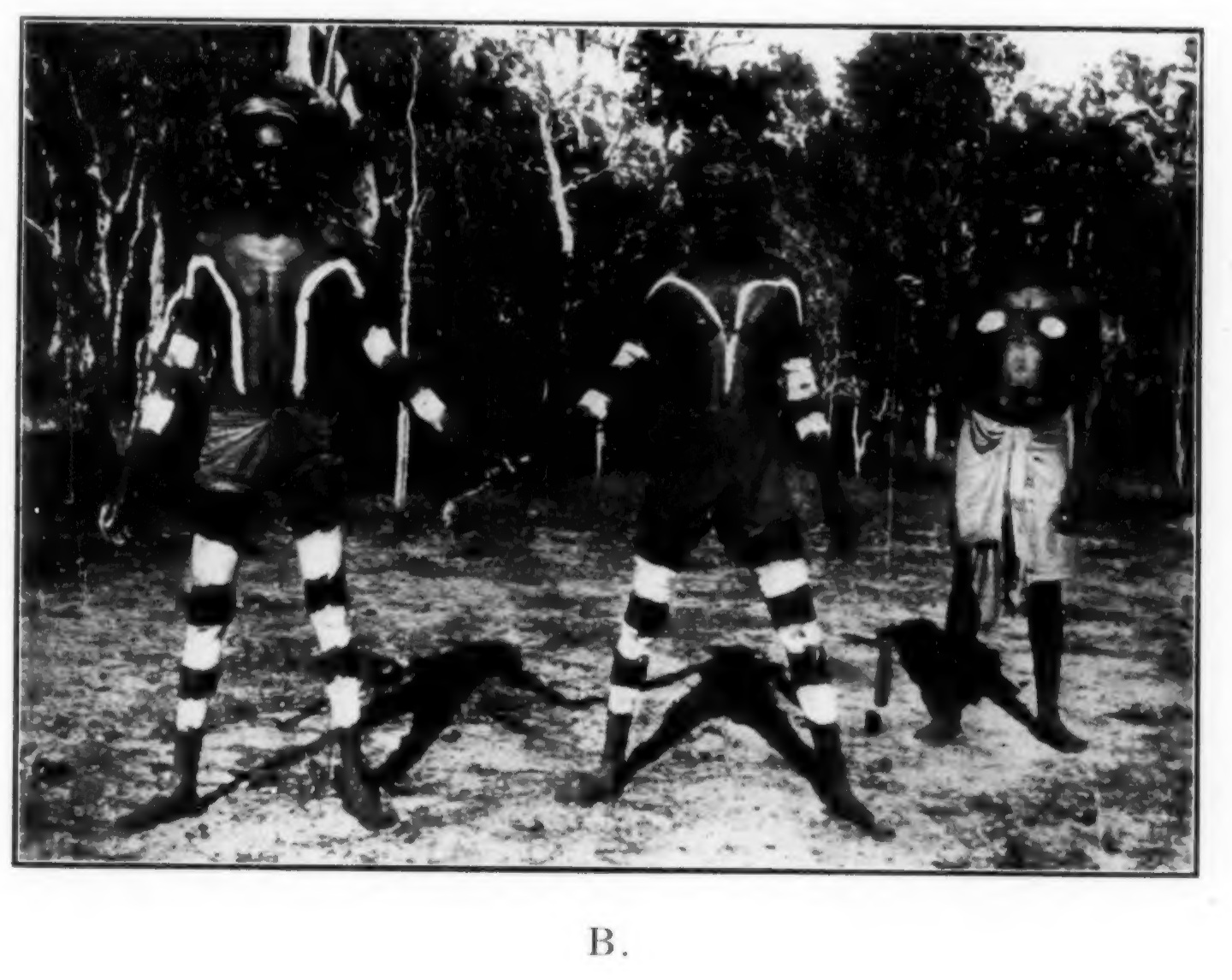
During the Wik-Mungkan first initiation a newly made man may eat no flying-fox and speak to no woman — and the moiya bullroarer's own myth warns what happens if he breaks that law. Two youths did, spearing flying-fox on the Watson River with girls who helped cook the catch; back in camp the roasting animals came alive, rose in a cloud, and hooked the young men off the ground with the claws of their wings, never seen again. The fleeing girls sank into the water at Kalabin, where one found the first moiya lying on the riverbed and swung it before she too went down. Ever after the roarer sounds only at the close of first initiation, and is forbidden to women.
The flying-fox are alive! Their wings are moving!
McConnel, Oceania 6 (1935), p. 82, quoted in Róheim, The Eternal Ones of the Dream (1945), p. 175
Particulars
- Object
- Wik-Mungkan bullroarer myth cycle (moiya, paka paka) in Ursula McConnel's records at the South Australian Museum.
- Function
- Clan-totem bullroarer of the Wik-Mungkan, swung by young initiates at the close of the first initiation and forbidden to women.
Sources
- South Australian Museum, Ursula McConnel archive, AA191-29, “Myth of the Bull-Roarer,” Moiya/Paka Paka folders and phonograph record View · archived
- Ursula McConnel, “The Bullroarers (Moiya and Moipaka),” Oceania 6(1) (1935), pp. 80-83; p. 82 quoted in Róheim 1945, p. 175
- Ursula McConnel, Oceania 1(2) (1930), pp. 200-201 (short version)
- Géza Róheim, The Eternal Ones of the Dream (1945), p. 175