
The Stolen Voice · Essay III
The Palm and the Pleiades
Northwest Amazonia · Upper Xingu · Rio Negro · Vaupés
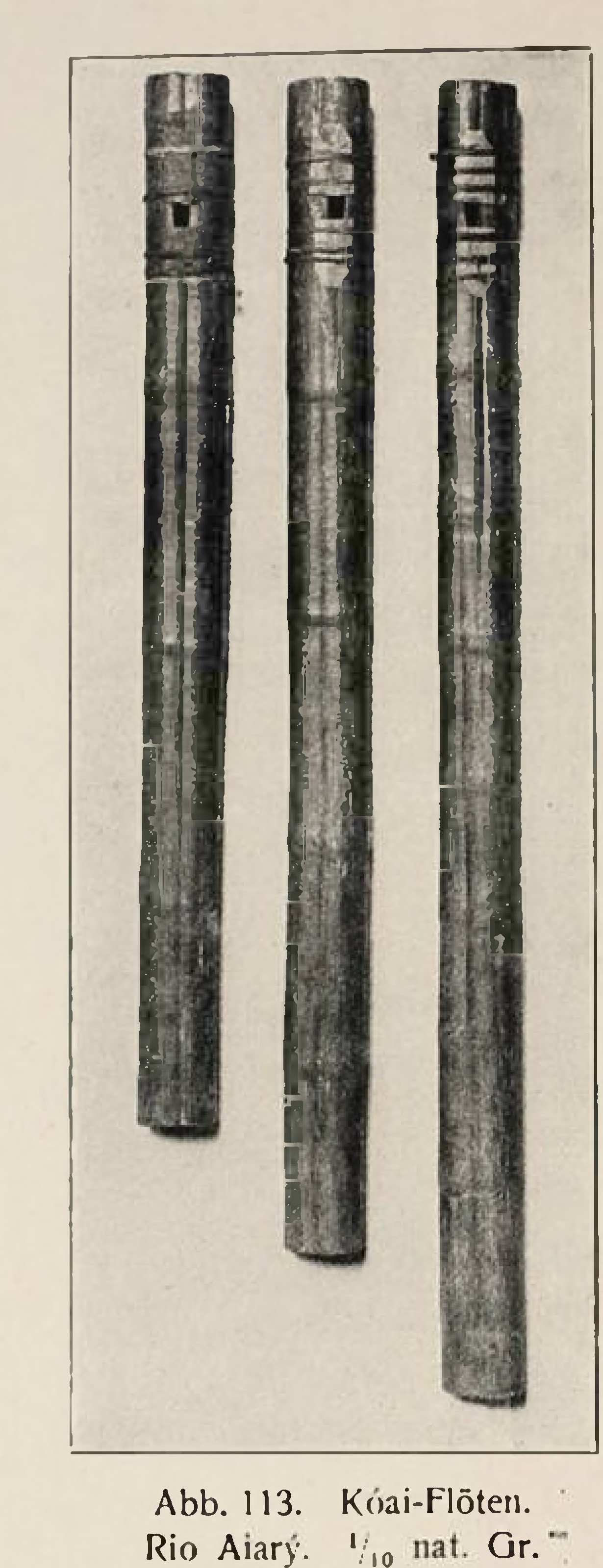
The Amazonian mystery does not hide a flat slat in the dark. It stands up whole in the men’s house as a bank of palm-wood flutes and trumpets, each one a bone, a breath, a swallowed ancestor. The stars overhead say when they must sound. The house below swallows boys, closes them off from women, bleeds them, feeds them, teaches them, and gives them back as men. The instrument has changed. The machine has not.
In northwest Amazonia the Pleiades set the year while ancestral palms speak: Yurupari preserves the stolen-voice initiation complex in a flute-and-trumpet form.
In brief
- Barasana ritual time runs on the stars. The Pleiades mark the season when restrictions tighten and the He House does its work.
- In the He House palm wood becomes ancestor. The flutes and trumpets are voices, bones, and persons, and the boys shut in with them are reborn.
- The Baniwa say Kuwai’s mother and the women stole the flutes and trumpets and held the first initiation, a female one, before the men took them back by war.
- The Upper Xingu keeps the hinge visible: women once owned the flutes, and in Kamayurá telling the twins Sun and Moon used the hori hori, the bullroarer, to drive the women away.
Star Time
The little cluster that starts the year
Amazonian initiation runs on a calendar. Among the Barasana of the Vaupés, seasonal work, food, sexual prohibition, and initiation move together through the year, and the Pleiades are one of the switches that turn the ritual year on.
Stephen Hugh-Jones called his Barasana monograph The Palm and the Pleiades, and the title names the two poles of one machine. The sky gives the timing: the great initiation, He wi, is held at the end of the dry season, when the Pleiades stand “low on the western horizon at dusk” (Hugh-Jones 1982, p. 200). The palm gives the body of the instruments. Between them stands the longhouse, the social womb in which boys disappear from women and come back men.
In Barasana thought the annual round is a moral and bodily order. The right stars, the right foods, the right abstinences, and the right rites belong together, and the return of the Pleiades is one of the moments when the sky’s time and the house’s time lock.
At Hipana, the Baniwa centre of the world on the Aiary, one field of boulders holds Amaru’s birthing place, a Pleiades petroglyph that shows when initiation should be held, a serpent sign for the pain of the whips, spirals for the sounds of the flutes, the shape of Kuwai’s placenta, and stones that are the sacred instruments themselves. Sky-clock, mother’s body, serpent, ordeal, and hidden voice are carved into one field of stone.
The Interior
A house built to manufacture men
In the Barasana He House the sacred instruments are hidden from women. The men’s interior is dangerous to the uninitiated. Boys are taken out of domestic life into a second, ritual order, where they meet pain, instruction, fasting, bodily discipline, and ancestral power face to face. This is not schooling. It is second birth.
The flutes and trumpets are not props. They are the ancestors’ bones and breath, and when they sound the ancestors are in the house. A blade on a string is one way to make a presence without a body. A bank of long palm trumpets behind a screen is another, and a grander one. The novice hears a voice he is told is not human. The women outside hear it too, and may not know what makes it.
The men go the whole way. In the He House the elders give birth to the initiates, and the rite stages a fertilisation that men accomplish without women. The house is a reproductive body in which men hold both parental offices and manufacture sons.
The anaconda ties it together. Across the Vaupés and Rio Negro the sacred instruments come from a devoured and transformed being. In the Tatuyo telling, boys who break a food taboo are swallowed by the anaconda Pohé-piné and vomited up as bones; the serpent is burned, and from its body grows the palm from which the instruments are cut. The Barasana He Anaconda does the same work. Swallowing, reduction to bone, remaking, and the voice reappearing in worked wood: the whole initiation in one image.
The Amazonian secret is not weaker for being blown instead of swung. The whole house becomes the bullroarer.
The Charter
The women held the instruments first
The Baniwa of the Içana tell it in order. First Amaru, the mother, and the first girl’s initiation. Then Kuwai, her son, becomes the jaguar who devours children, and his death and regeneration turn that terror into the knowledge initiation gives. Then Amaru and the women seize the flutes, wield their voices as weapons, and hold the first female initiation, until the men attack and take them back. Female initiation, swallowing monster, disclosed secret, and male repossession are not parallels assembled from separate continents. Here they are successive movements of one story.
Robin Wright gives the charter in Baniwa terms: “Kuwai’s mother and the women steal these flutes and trumpets... where they hold the first female initiation ritual.” The hero summons his allies, makes war on the women, and regains the instruments. Women possess the sacred instruments. Women perform initiation. Men take the instruments by violence and found the monopoly.
The Barasana put Romi Kumu, Woman Shaman, at the beginning of the world. The Baniwa have the women hold the first initiation. The Upper Xingu remembers men driving women from the flutes. Across the Yurupari region the male monopoly stands surrounded by its own memories of female precedence.
The Hinge
Where the bullroarer stays in the room
Far to the south, on the Upper Xingu, the Mehinaku, Wauja, Kamayurá, and their neighbours keep sacred flutes that women may not see and a men’s house that holds them. Their myths remember that the women had the flutes first. The bullroarer is here too, in a different job.
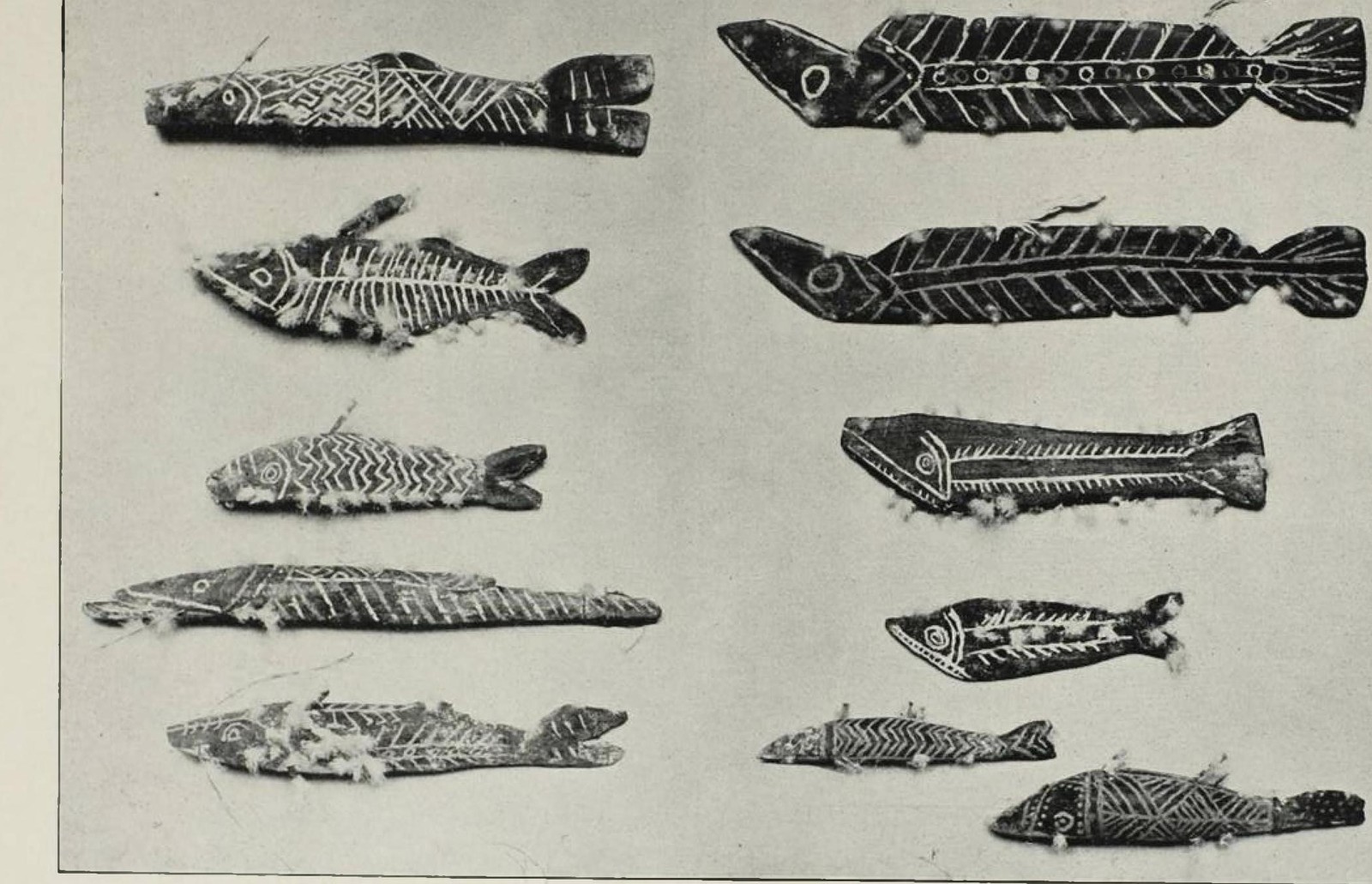
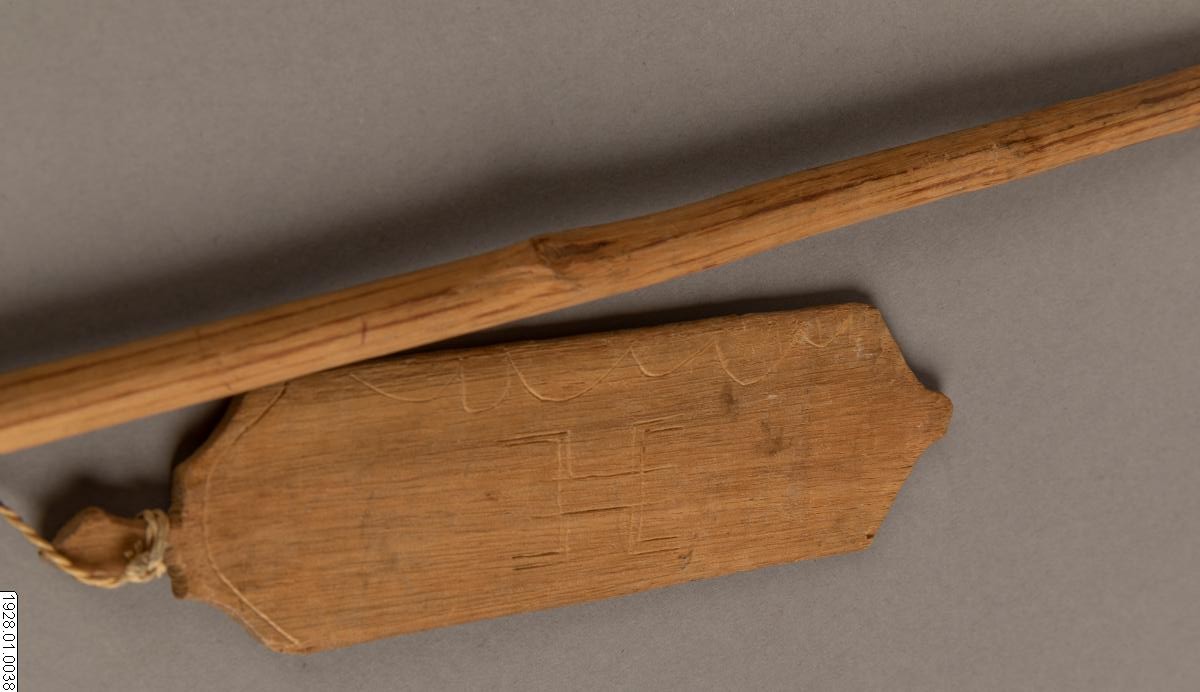
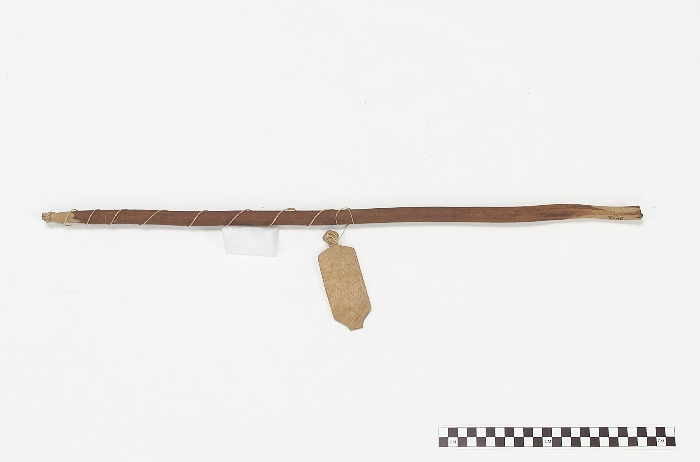
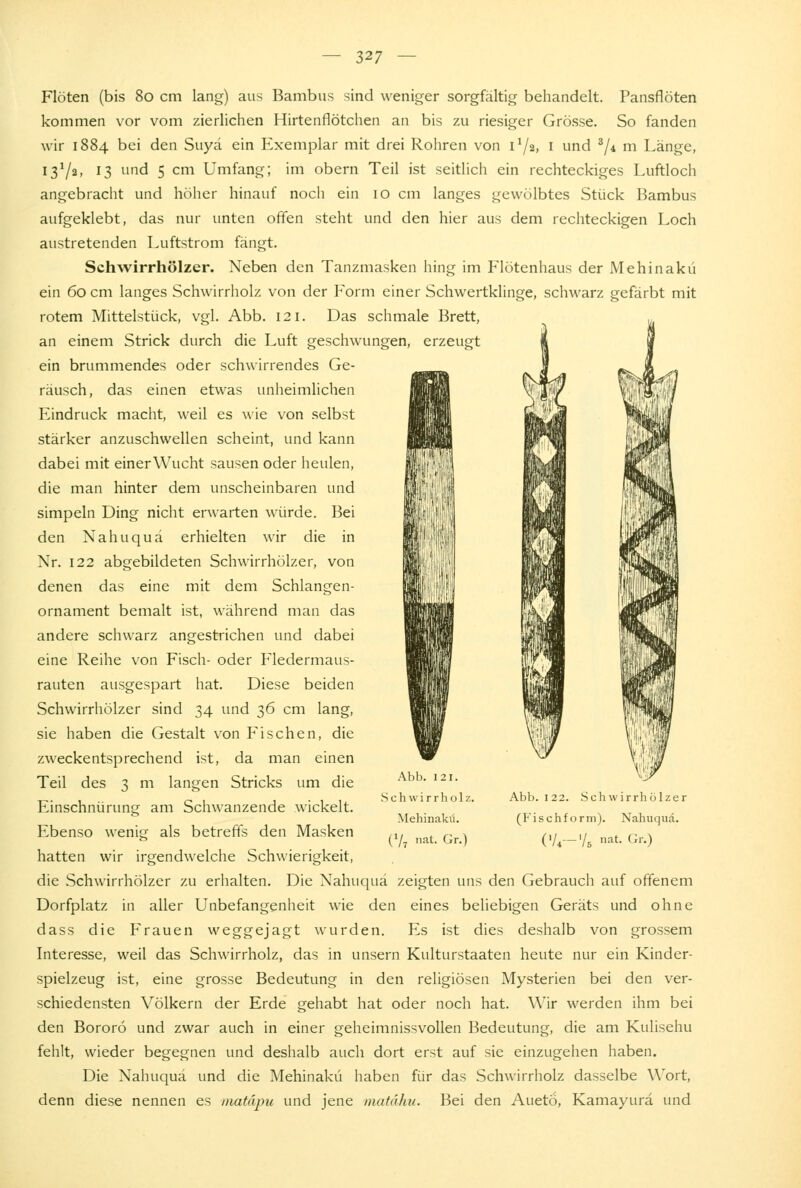
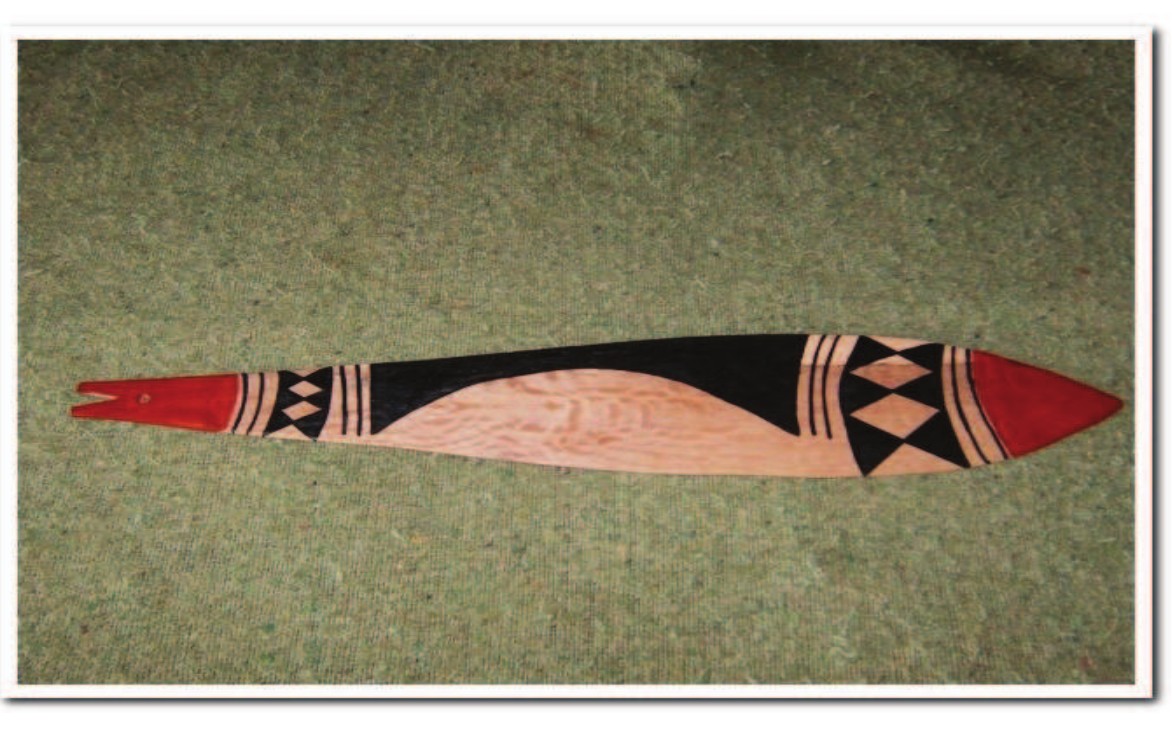
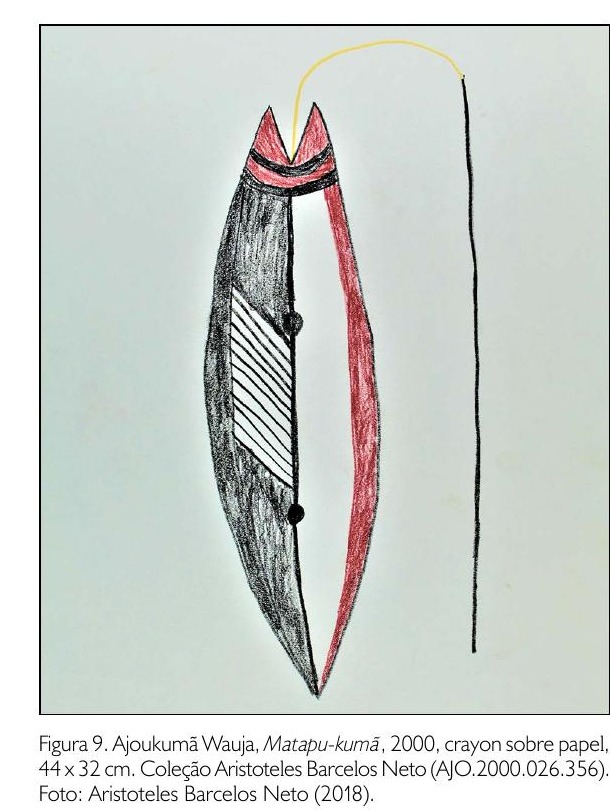
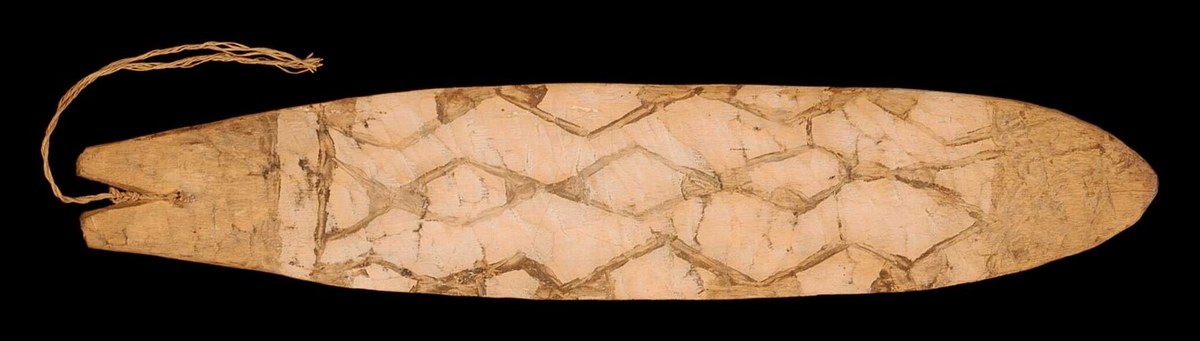
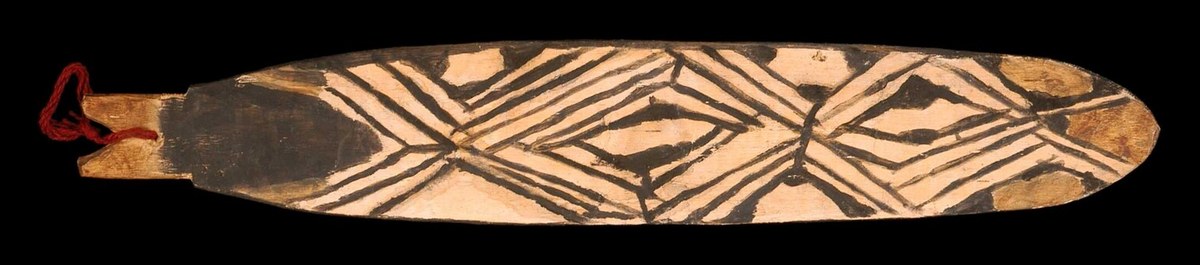
Among the Mehinaku, Thomas Gregor heard it plainly: women once owned the flutes, men attacked, seized them, and founded the monopoly. Among the Kamayurá the twins Sun and Moon bellowed through the hori hori, the bullroarer, to drive the women from the flutes. The flutes are the prize. The bullroarer is the weapon that finishes the theft. Among the Wauja next door the matapu boards are fish-spirit bodies that move through the pequi festival while the women stay indoors.
Von den Steinen saw Xingu bullroarers handled in the open in 1887, and the flutes carry the heavier taboo. But the matapu still hangs in the men’s house, still embodies a fish spirit, still moves while women are shut indoors. One instrument bears the full secret and another assists it. The complex is one.

The Amazonian Machine
Sky, palm, and house
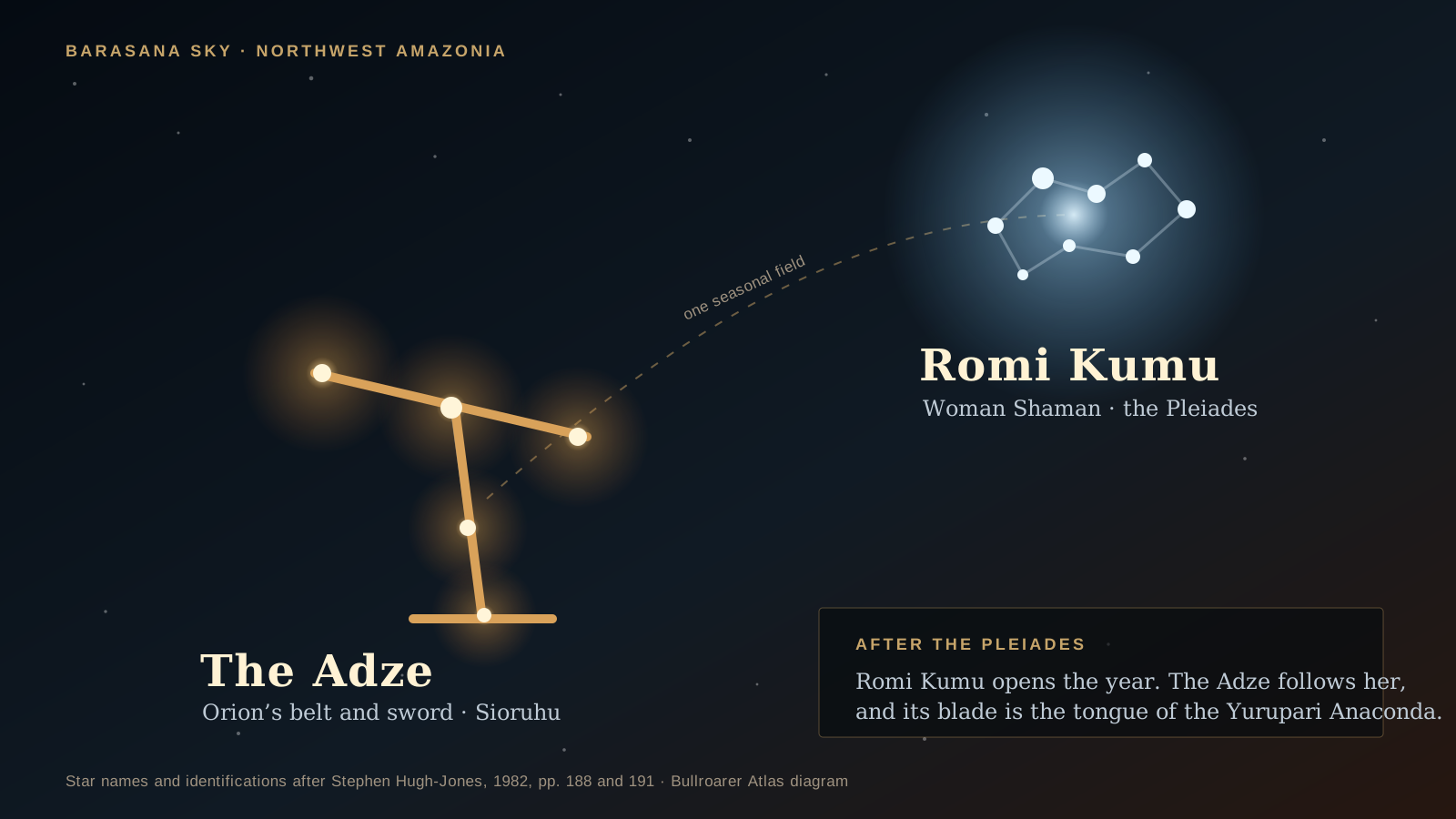
Hugh-Jones writes the Barasana sky almost as an equation: the Pleiades are to Orion as viscera and head are to long bone. The Pleiades belong with Romi Kumu and her wax gourd, Orion with the He instruments, his belt and sword forming the Adze, Sioruhu, the elbow-shaped stone tool that men once wore over the left shoulder when they danced. Its blade is the tongue of the Yurupari Anaconda, the great snake the Barasana see in Scorpius. The sky divides a body between the female interior and the long male bone that has become an ancestral instrument.
So Amazonia gives the initiation complex three interlocking bodies. It hangs a clock in the sky, grows a voice in the forest, and builds a social womb at the centre of the settlement. No single instrument has to carry the institution alone because the whole landscape has been made to perform it.
Flute, trumpet, and bullroarer can trade the work or share it. On the Xingu the flutes hold the taboo and the roarer is the weapon beside them. On the Vaupés the secret grows until it fills a cosmology. What is inherited is the concealed ancestral voice and the men who turn possession of it into possession of birth. The stars set the schedule. The palm gives the body. The house enforces the monopoly.
What Amazonia preserves
At the appointed season, a few blue-white stars rise over the forest and the palms begin to speak inside a forbidden house. That conjunction is the Amazonian achievement: astronomy tells the secret when to wake, botany gives it lungs, and architecture converts its hidden source into male jurisdiction over human birth. The charter still remembers the scandal beneath the institution—women held the voices and conducted initiation before men took both. In northwest Amazonia the Pleiades set the year while ancestral palms speak: Yurupari preserves the stolen-voice initiation complex in a flute-and-trumpet form.
The Stolen Voice continues with The Women Who Taught the God →
The Seven Sisters continues with The Daughters of Atlas and the Roaring God →
Key sources
- Hugh-Jones, Stephen. The Palm and the Pleiades: Initiation and Cosmology in Northwest Amazonia. Cambridge University Press, 1979, especially pp. 37–39, 144–145, 167–169, 188–197, 222–225, 236–237, 265–266, for the Pleiades–Orion body equation, He instruments, male symbolic birth, and women’s seizure of the sacred voices.
- Hugh-Jones, Stephen. “The Pleiades and Scorpius in Barasana Cosmology.” Annals of the New York Academy of Sciences 385 (1982): 183–201. DOI: 10.1111/j.1749-6632.1982.tb34265.x; open text. P. 188 for the Adze as Orion’s belt and sword; p. 200 for the Pleiades timing of He wi; p. 191 for its blade as the anaconda’s tongue; p. 201 n. 5, where Hugh-Jones withdraws the 1979 identification of the Adze with the belt and shoulders.
- Hugh-Jones, Christine. From the Milk River: Spatial and Temporal Processes in Northwest Amazonia. Cambridge University Press, 1979, for the seasonal and ceremonial timing that frames the Barasana ritual year.
- Wright, Robin M. “The Kuwai Religions of Northern Arawak-Speaking Peoples.” Boletín de Antropología 33, no. 55 (2018): 123–150, pp. 134–136. Open text.
- Wright, Robin M. Mysteries of the Jaguar Shamans of the Northwest Amazon. University of Nebraska Press, 2013, chapters 6–8, pp. 233–294, especially pp. 239, 257, 263, 267, 276–285, for Amaru and first initiation, Kuwai’s devouring and regeneration, revelation, the women’s flute seizure, and male recovery.
- Berezkin, Yuri, and Evgeny Duvakin. Analytical Catalogue of World Mythology and Folklore, motif L26, for the Tatuyo Pohé-piné swallowing, bones, burning, and paxiuba-palm sequence.
- Koch-Grünberg, Theodor. Zwei Jahre unter den Indianern, vol. 1, 1909, Abb. 113.
- Hill, Jonathan D. “Kamayurá Flute Music: A Study of Music as Meta-Communication.” Ethnomusicology 23, no. 3 (1979): 417–432, for the Kamayurá flute complex. DOI: 10.2307/850913.
- Barron, Laura. “The Forbidden Flutes: Melanesian and Amazonian Gender Ideologies as Reflected in Various Flute Rituals.” MA thesis, SUNY Stony Brook, 1991, for the twins Sun and Moon and their hori hori. Open text.
- Bastos, Rafael José de Menezes. A Musicológica Kamayurá. Brasília: FUNAI, 1978, p. 122, for the Kamayurá bullroarers.
- Reichel-Dolmatoff, Gerardo. Amazonian Cosmos: The Sexual and Religious Symbolism of the Tukano Indians. 1971.
- von den Steinen, Karl. Unter den Naturvölkern Zentral-Brasiliens. 1894.
- Gregor, Thomas. Mehinaku: The Drama of Daily Life in a Brazilian Indian Village. University of Chicago Press, 1977; and Anxious Pleasures: The Sexual Lives of an Amazonian People. University of Chicago Press, 1985, for the Mehinaku women-first flute charter and its seizure by men.
- Braida, Roberta Garcia Anffe. Objetos Mehinako. PUC-SP doctoral thesis, 2012.
- Barcelos Neto, Aristoteles. “Apapaatai, flautas e zunidores no Alto Xingu.” 2021.