No. MUS2026-256
Yuendumu Warlpiri ornamented blade
West of Yuendumu mission station, Northern Territory · Central Australia
Function not recorded
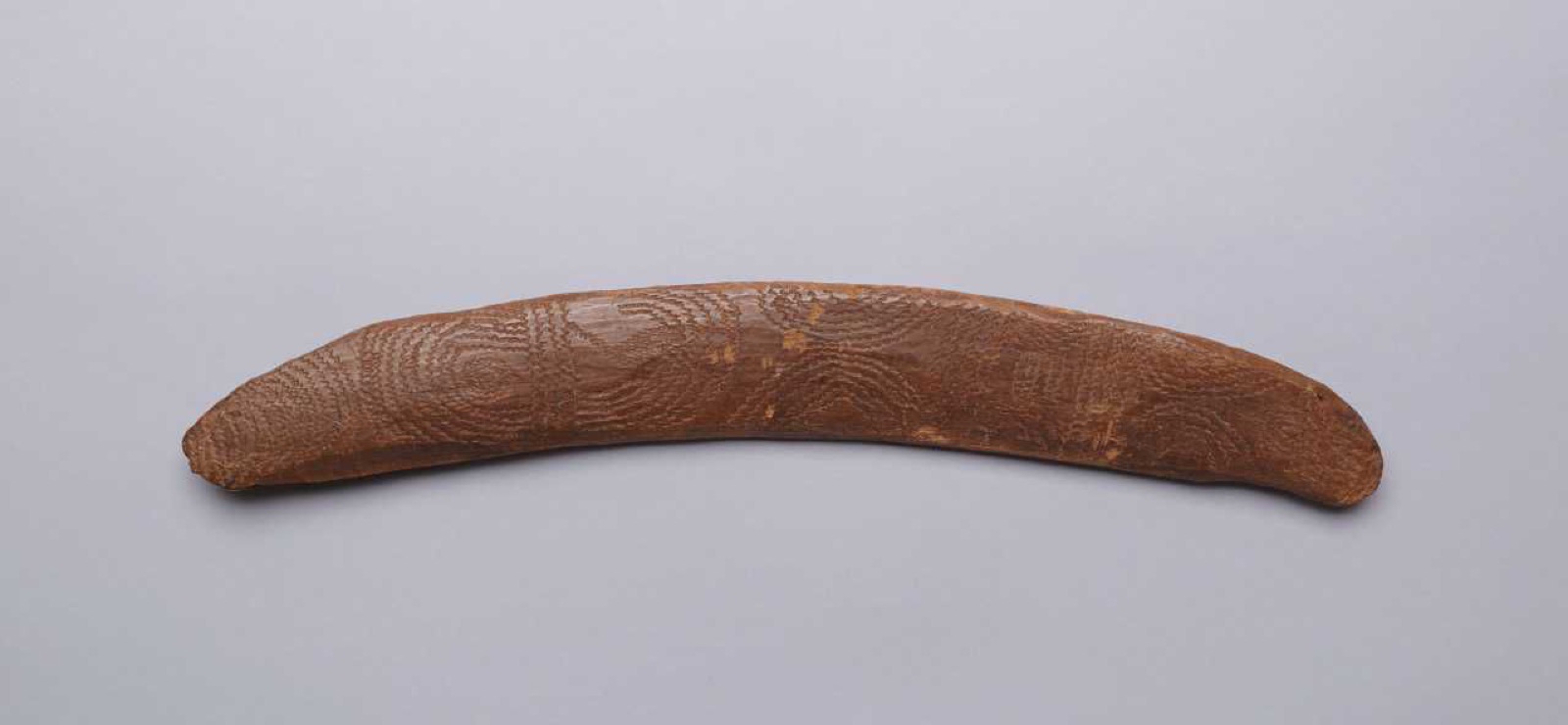
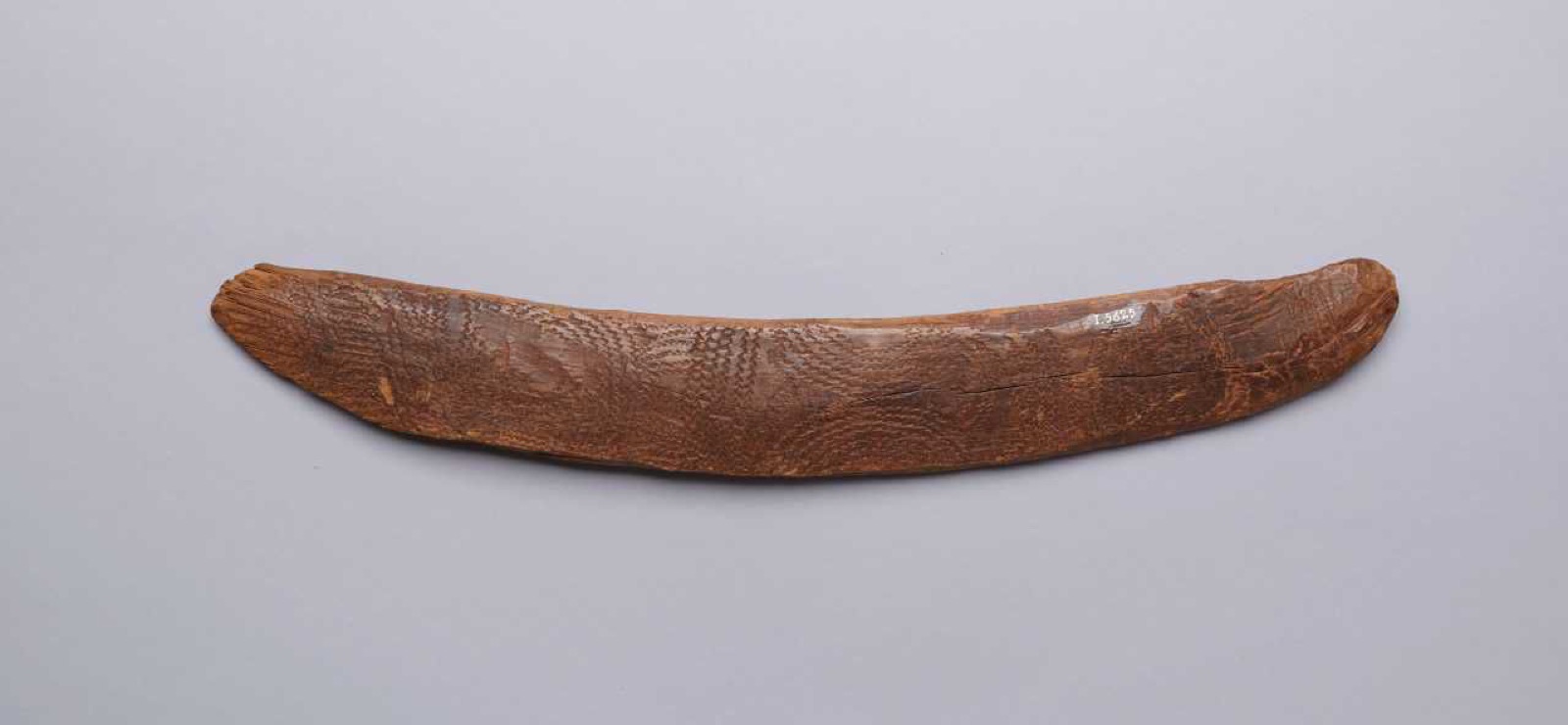
Source term: svingtræ
Gently curved along its length and worked with ornament, this forty-six-centimetre blade left Warlpiri country west of Yuendumu in 1955. Warlpiri men also whirled the sacred board for love. Spencer and Gillen counted the Warlpiri — their ‘Walparri’ — among the peoples who swung a small churinga to win a wife: its hum was believed to carry to a far-off woman and compel her, sooner or later, to come. The charm kept the marriage law; it could call only a woman a man was entitled to marry. Warlpiri practice sorts ceremony by who may be present: the tarruku events tied to male initiation cannot be witnessed by women, though senior women know their content and their purposes.
Particulars
- Object
- Gently curved wooden blade worked with ornament, 46 × 6 cm.
- Function
- Not recorded.