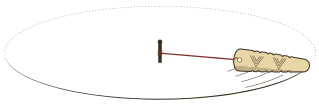
Atlas Essay —
Identical Forms
Dordogne · Central Australia · the Upper Tigris · Arizona · the Sepik
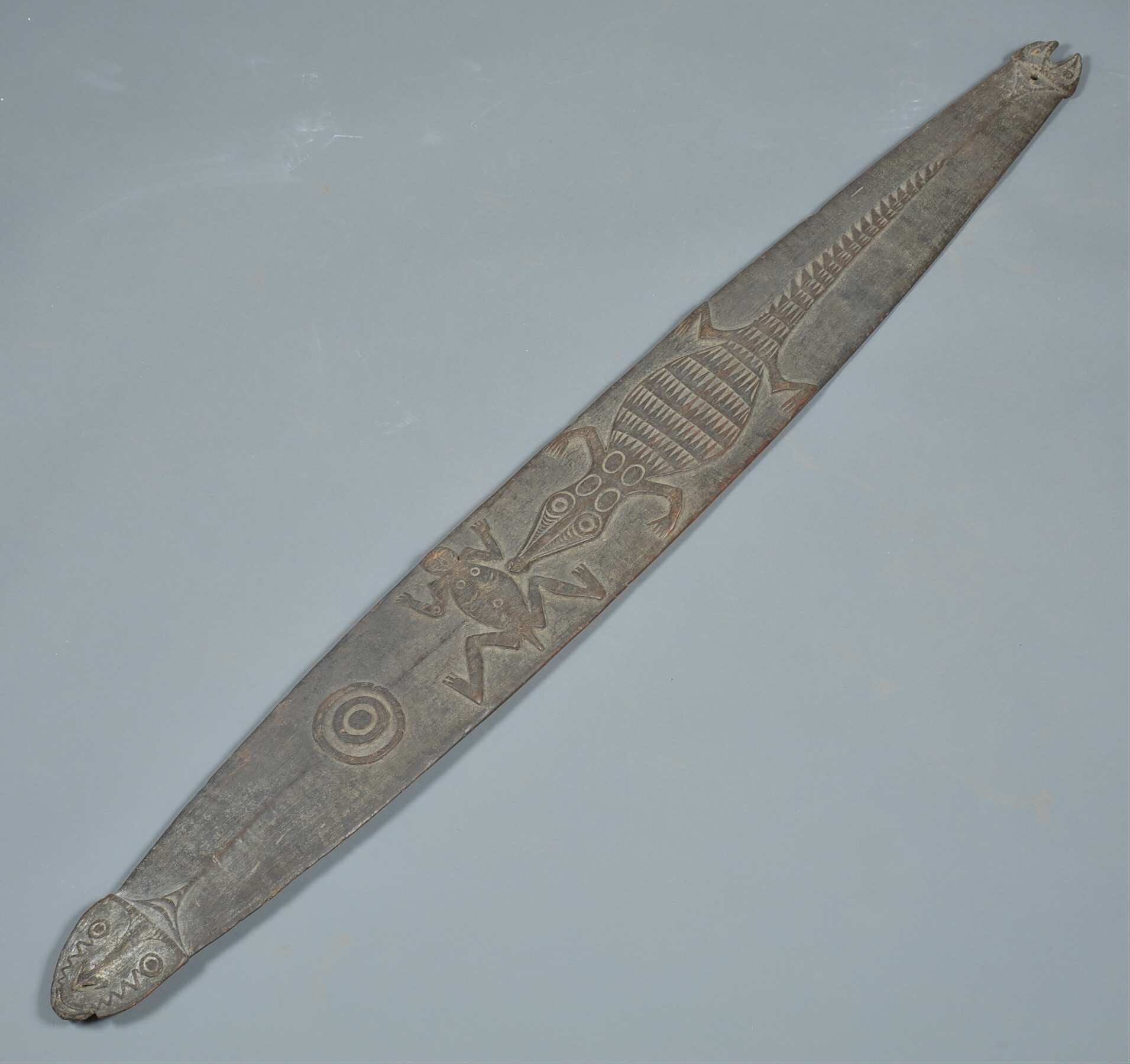
“The piece from La Roche, showing the same characters as the Australian churingas, must certainly have had the same purpose.” Denis Peyrony wrote that in 1930, of a twelve-thousand-year-old ochred antler blade from the Dordogne. Nearly a century on, the music archaeologists put it plainer still: “The forms are identical with bullroarers all over the world.” Lay the pieces side by side — the Ice Age blade and the Central Australian churinga, the Tigris grave plaque and the Hopi lightning-slat — and you see what every scholar who has ever made the comparison saw: the same slender pierced blade, the same engraved geometry, and, again and again, the same serpent. One instrument, wherever and whenever it is found.
In brief
- The field states it outright: the European Palaeolithic pieces are identical in form with bullroarers the world over, “and the decorations of the objects on one of their faces … are comparable” (Both & Praxmarer 2025, p. 138).
- The verdict is a century and a half old. Lang, 1884: the bull-roarer “has, of all toys, the widest diffusion, and the most extraordinary history.” Haddon, 1898: “perhaps the most ancient, widely-spread, and sacred religious symbol in the world.” Kunst, 1960: no ethnomusicologist “would stand for plurigenesis as regards the bull-roarers.”
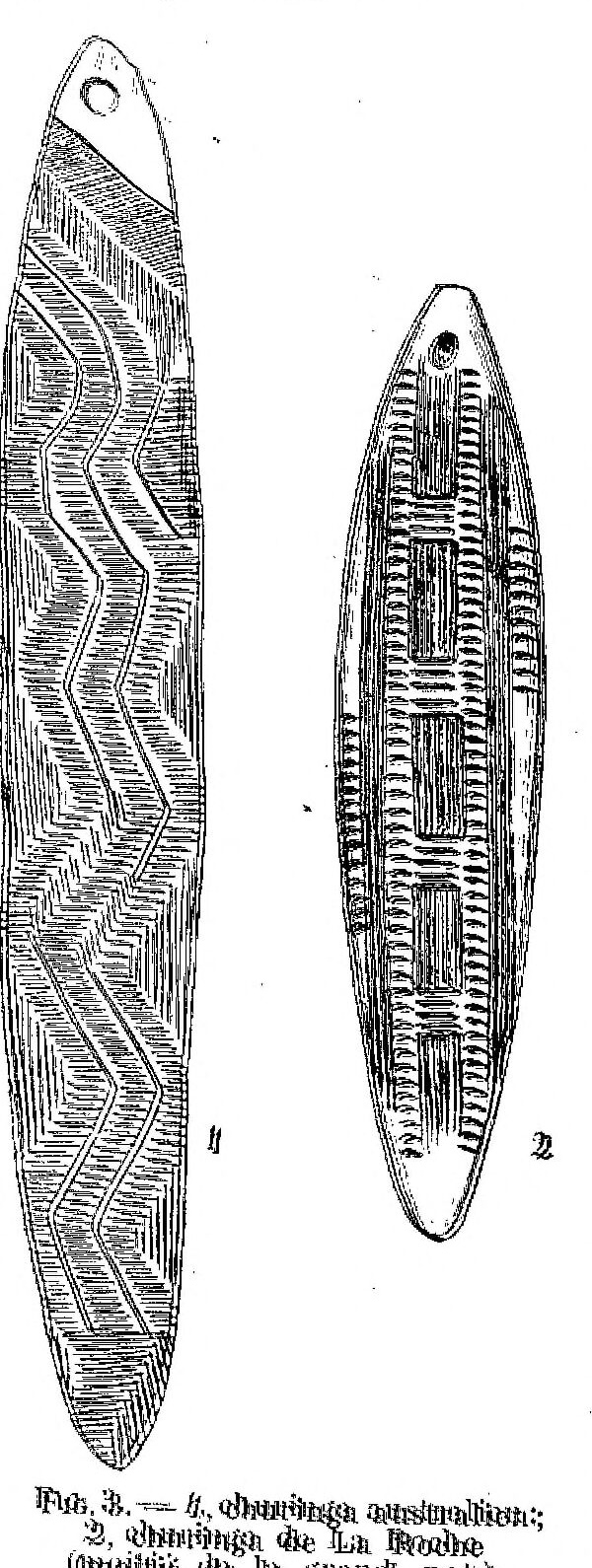
- The Ice Age joined the series in 1930, when Peyrony printed the Lalinde blade beside an Australian churinga and Breuil pronounced it “the first complete Magdalenian churinga ever found.”
- What repeats is concrete: the elongated blade pierced at one tip; the ranked incisions, chevrons, and lozenges on its face; and the serpent — carved at Körtik Tepe, painted at Hopi, totemic on the Wambaya purtuli.
- The instrument's customs travel with its shape: hidden from women, heard as a spirit's voice, on both sides of every ocean — the pattern that made Lowie (1920) and Loeb (1929) accept “diffusion from a common center.”

The bullroarer is one instrument. Everywhere it has ever been found — the Magdalenian caves, the Neolithic Tigris, Central Australia, the Sepik, the American Southwest — it is the same slender blade pierced at one tip, engraved with the same ranked lines and lozenges, carrying, again and again, the same serpent, and doing the same secret work. A century and a half of scholars who laid the pieces side by side reached the same verdict in almost the same words, and the objects say it louder than the scholars. Form this stable, across distances this great, is not an idea rediscovered a hundred times over. It is an inheritance — one instrument, carried.
Every object pictured on this page is in the atlas — browse the dated archaeological records, or follow the serpent thread with the Snake-linked lens.
A century of one verdict
Andrew Lang opened the subject in 1884 by whirling one in a London garden, until the toy “warmed to its work” and produced “a mighty rushing noise, as if some supernatural being fluttered and buzzed his wings with fearful roar.” Then he set down what a decade of reports from the colonies had shown him: “The bull-roarer has, of all toys, the widest diffusion, and the most extraordinary history… The instrument is found among the most widely severed peoples, savage and civilised, and is used in the celebration of savage and civilised mysteries.” And again, item by item: “The bull-roarer has been, and is, a sacred and magical instrument in many and widely separated lands. It is found, always as a sacred instrument, employed in religious mysteries, in New Mexico, in Australia, in New Zealand, in ancient Greece, and in Africa.” When he reached the ancient scholiast's description of the whirled toy in the basket of Dionysos — “a little piece of wood, to which a string is fastened, and in the mysteries it is whirled round to make a roaring noise” — he recognized the Australian turndun outright: “No single point is omitted.”
Lang, a man of his generation, reached for coincidence to explain his own evidence — “similar minds, working with simple means towards similar ends.” It was Robert Lowie, in 1920, who answered him, and the answer has never been improved on: “Why do Brazilians and Central Australians deem it death for a woman to see the bull-roarer? Why this punctilious insistence on keeping her in the dark on this subject in West and East Africa and Oceania? I know of no psychological principle that would urge the Ekoi and the Bororo mind to bar women from knowledge about bull-roarers and until such a principle is brought to light I do not hesitate to accept diffusion from a common center as the more probable assumption.” A simple slat might be invented twice; a slat that must never be seen by a woman, that speaks with a dead ancestor's voice, that presides over the seclusion and rebirth of boys — that is not a physics experiment, it is a liturgy. Edwin Loeb ran the full survey nine years later and went further: “The case for diffusion is even stronger than stated by Lowie” — the roarer travels in a fixed convoy with tribal marking, a death-and-resurrection ordeal, and the impersonation of spirits, traits “of archaic, possibly paleolithic origin.” R. R. Marett had already told the discipline that no student of the history of religion could afford “to remain a stranger to it.”
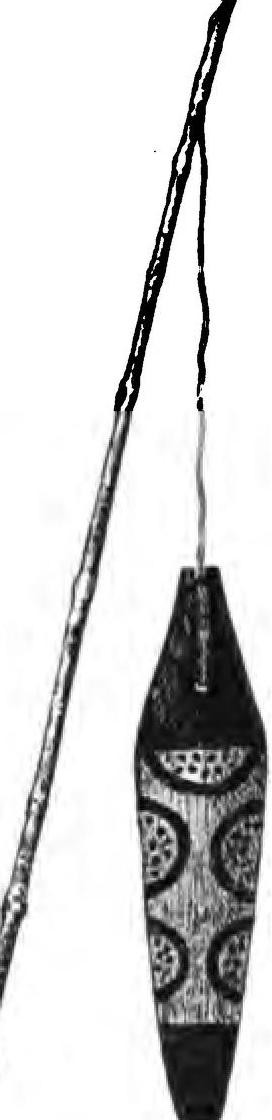
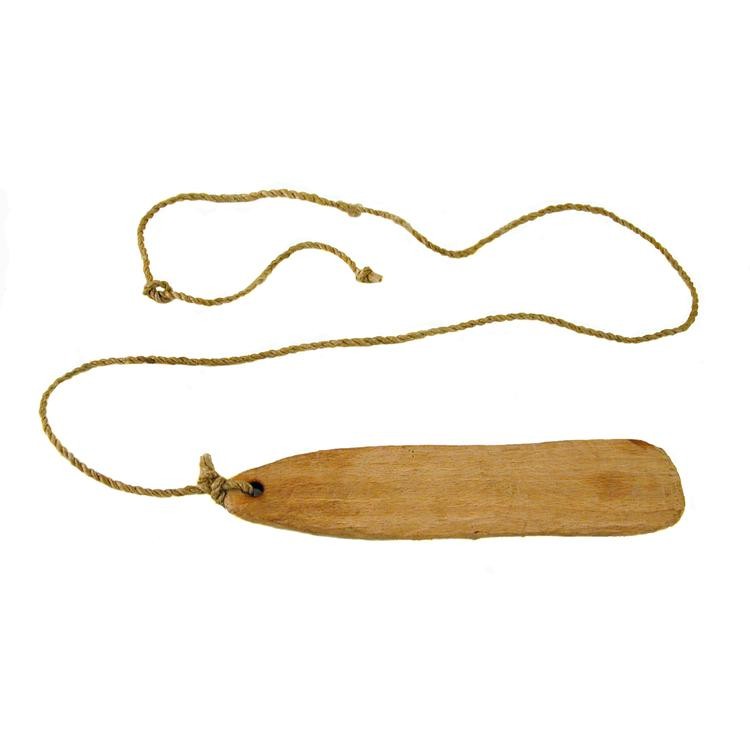
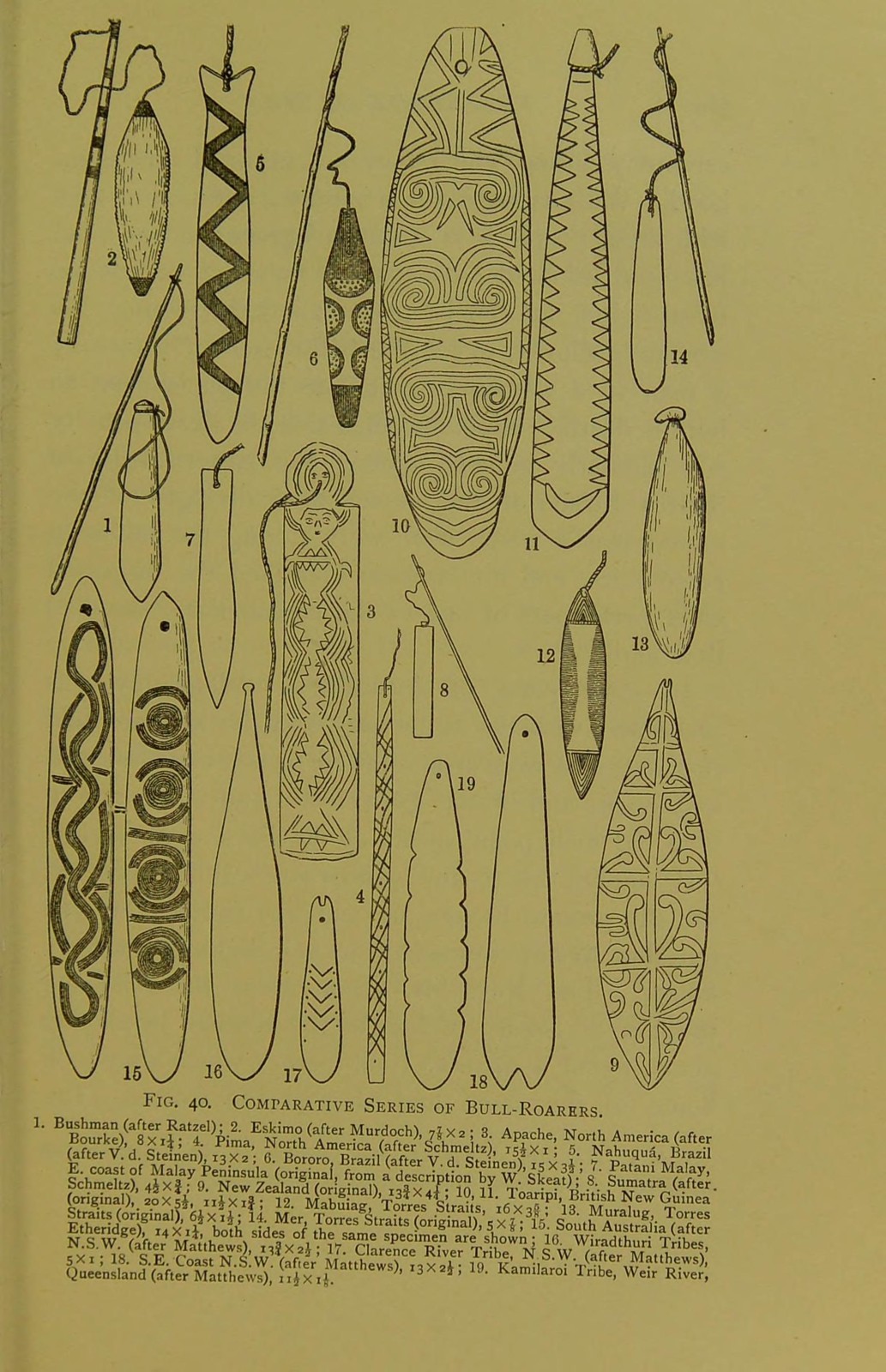
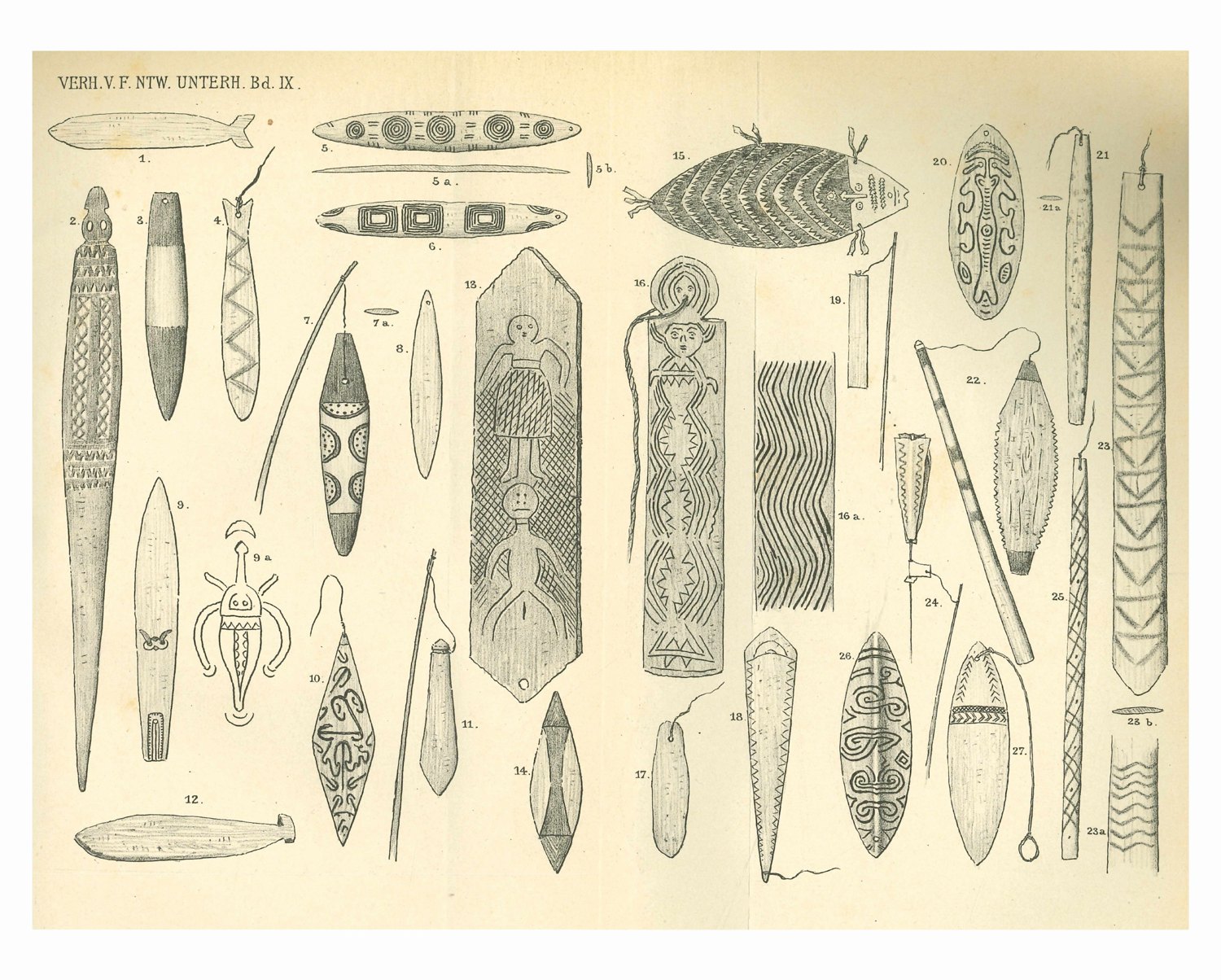
Alfred Haddon made the argument visual. In The Study of Man he drew the world's bullroarers into a single comparative plate — South Africa beside New Zealand beside Arizona beside Australia — and closed his chapter with the sentence the whole field has quoted ever since. Just before it, of the Greek mysteries, whose clay-daubed initiates whirled the rhombos, he wrote: “The parallelism with the initiation ceremonies of the Australians is complete.”
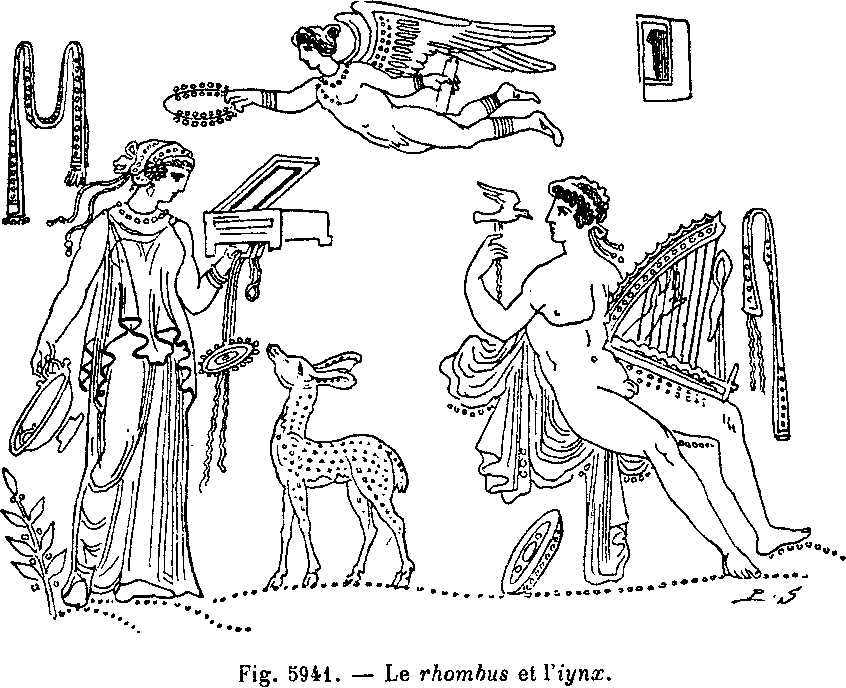
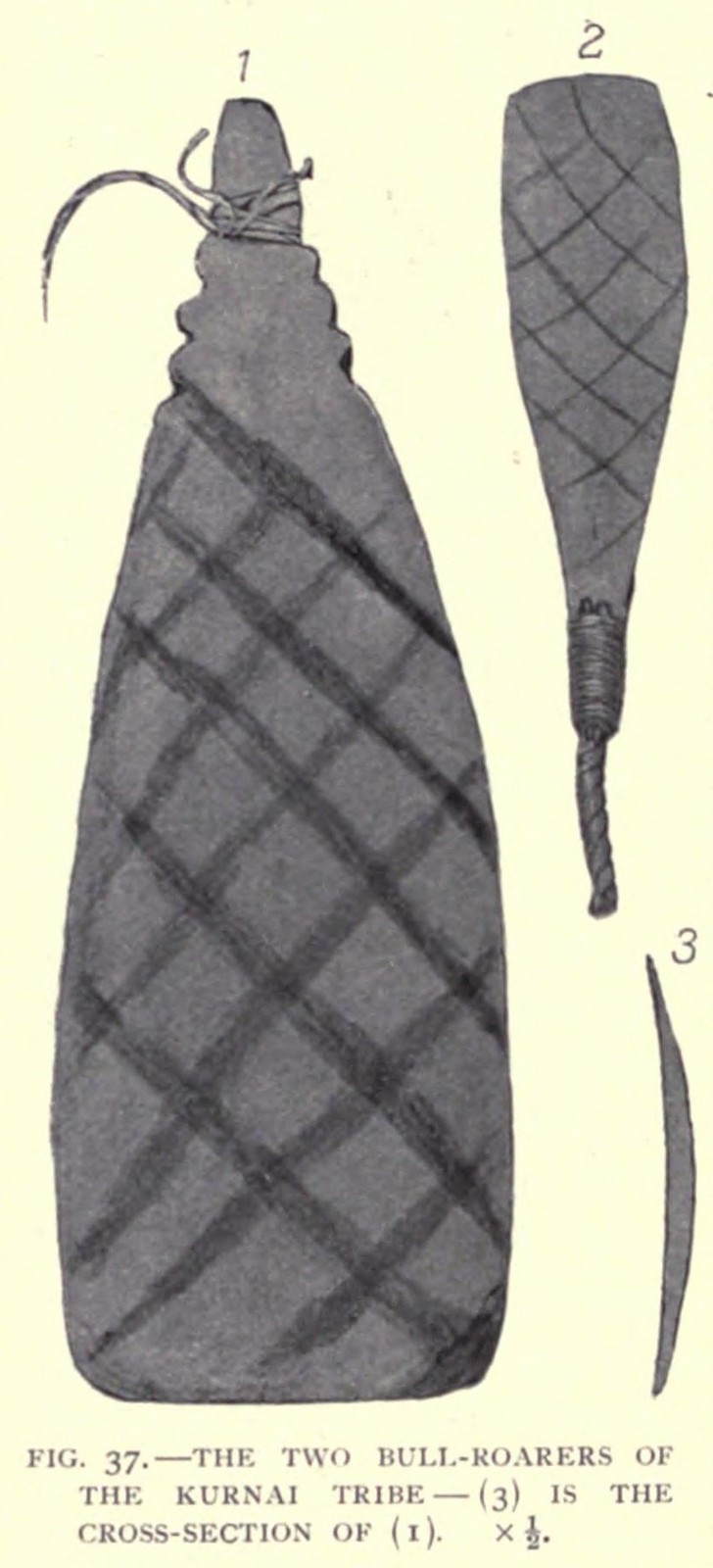
This insignificant toy is perhaps the most ancient, widely-spread, and sacred religious symbol in the world.A. C. Haddon, The Study of Man (1898), p. 327
The Ice Age joins the series
In 1930 the comparison acquired a time depth no one had dared claim for it. Denis Peyrony published a slender ochred reindeer-antler blade from the cave of La Roche de Birol near Lalinde — sixteen centimetres of engraved antler shaped, in his words, like “a fish without a tail,” pierced for a cord near the narrow end — and printed it beside an Australian churinga as the two halves of his figure 3. His verdict, tentative in form and firm in conclusion: “Nous pensons qu'il faut plutôt y voir un instrument identique à celui que certains indigènes australiens appellent « churinga »” — we think one must rather see in it an instrument identical to the one certain Australian natives call a churinga; and then, “la pièce de La Roche … devait certainement avoir la même destination” — it must certainly have had the same purpose. The Abbé Breuil went further, hailing it as the first complete Magdalenian churinga ever found — and, at a stroke, two long-puzzling decorated fragments at Saint-Germain-en-Laye resolved into the middles of broken ones. Michel Dauvois later cut a replica and swung it; the Lalinde blade sounds, its voice sweeping between 35 and 205 hertz with every circuit of the cord. What the Magdalenian swinger heard in that voice, no one recorded; the identity of the object in the hand is what the record preserves.
The man who put the piece in the museum made the comparison too. Henry Field — who bought the Lalinde blade for a thousand francs and gave it to France — presented a cast of it in Chicago, and wrote in Man in 1954:
The simple geometric pattern resembles that on Australian churinga and wooden shields. Since the Australian aborigines consider sacred the whirring noise of a churinga, no woman, child or uninitiated person is allowed to see a bullroarer. Thus, in Magdalenian times a similar veneration may have been observed.
Henry Field, “A Magdalenian 'Churinga',” Man 54 (1954), p. 162
Nor was Lalinde a one-off. J. R. Harding, surveying the instrument in 1973, reached back through the Magdalenian pendant series — “exactly imitating the blade of the instrument” — and picked out the piece from Saint-Marcel on the Indre: it “has serrated edges and an engraved design of lines and concentric circles, recalling some of the designs shown by Australian churinga.” In the Neolithic Near East the same form surfaces again: the Körtik Tepe grave plaques on the Upper Tigris and their cousins at Göbekli Tepe and Çatalhöyük, elongated decorated bone blades pierced at one end, whose hardwood replica “produces a deep vibrato sound.” And in 2025 Arnd Adje Both and Michael Praxmarer, surveying at least fourteen European findspots, wrote the sentence this page takes for its title: “Die Formen sind identisch mit Schwirrhölzern auf der ganzen Welt” — the forms are identical with bullroarers all over the world — “and the decorations of the objects on one of their faces … are comparable.” The series is disciplined, not credulous: the ochred Mousterian plaque from Tata, churinga-like in every other way, has no perforation, and stays out. No hole, no cord, no roarer. What remains after that discipline is a family that runs, on present evidence, from the Ice Age to the ethnographic present without changing its face.
The same blade
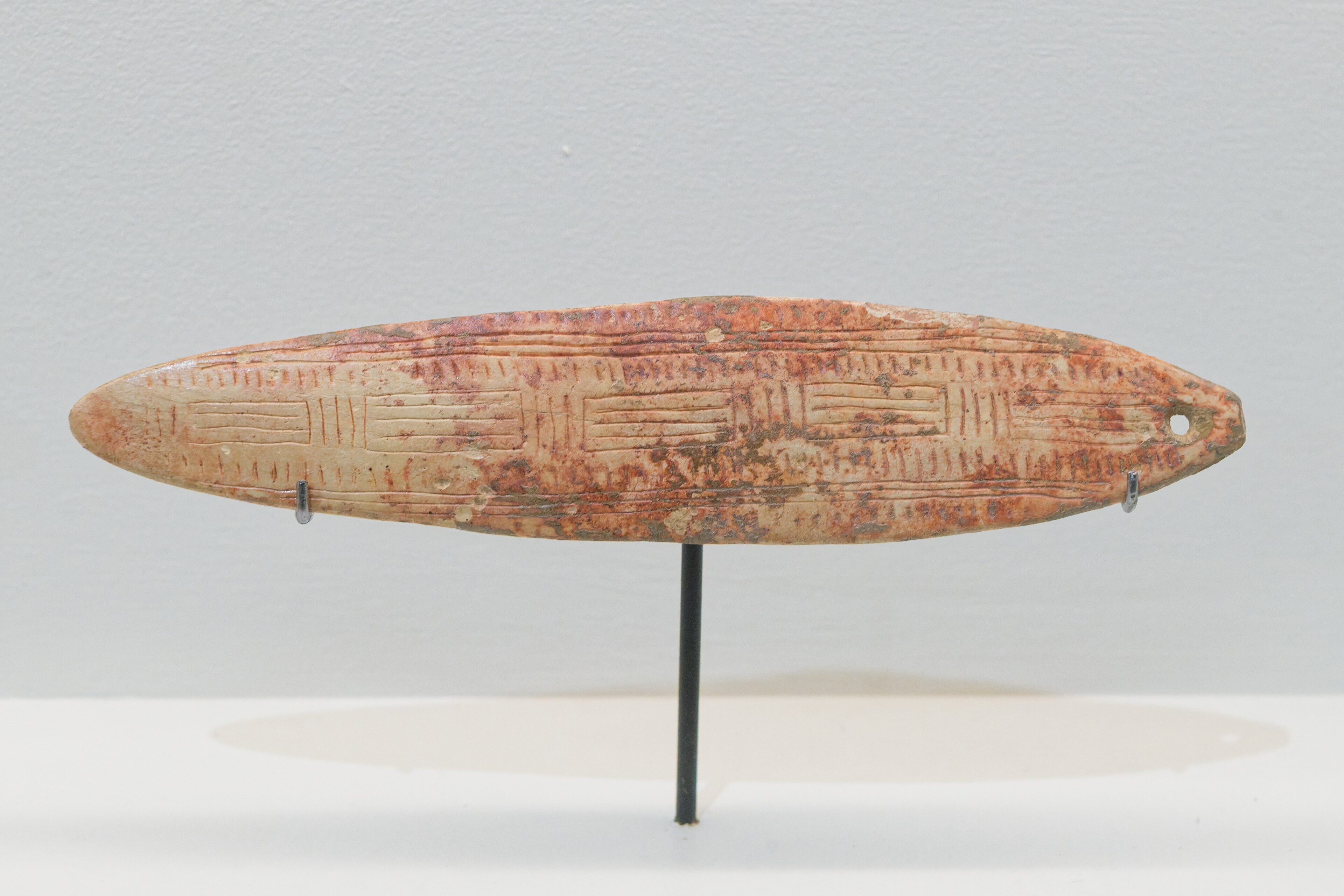
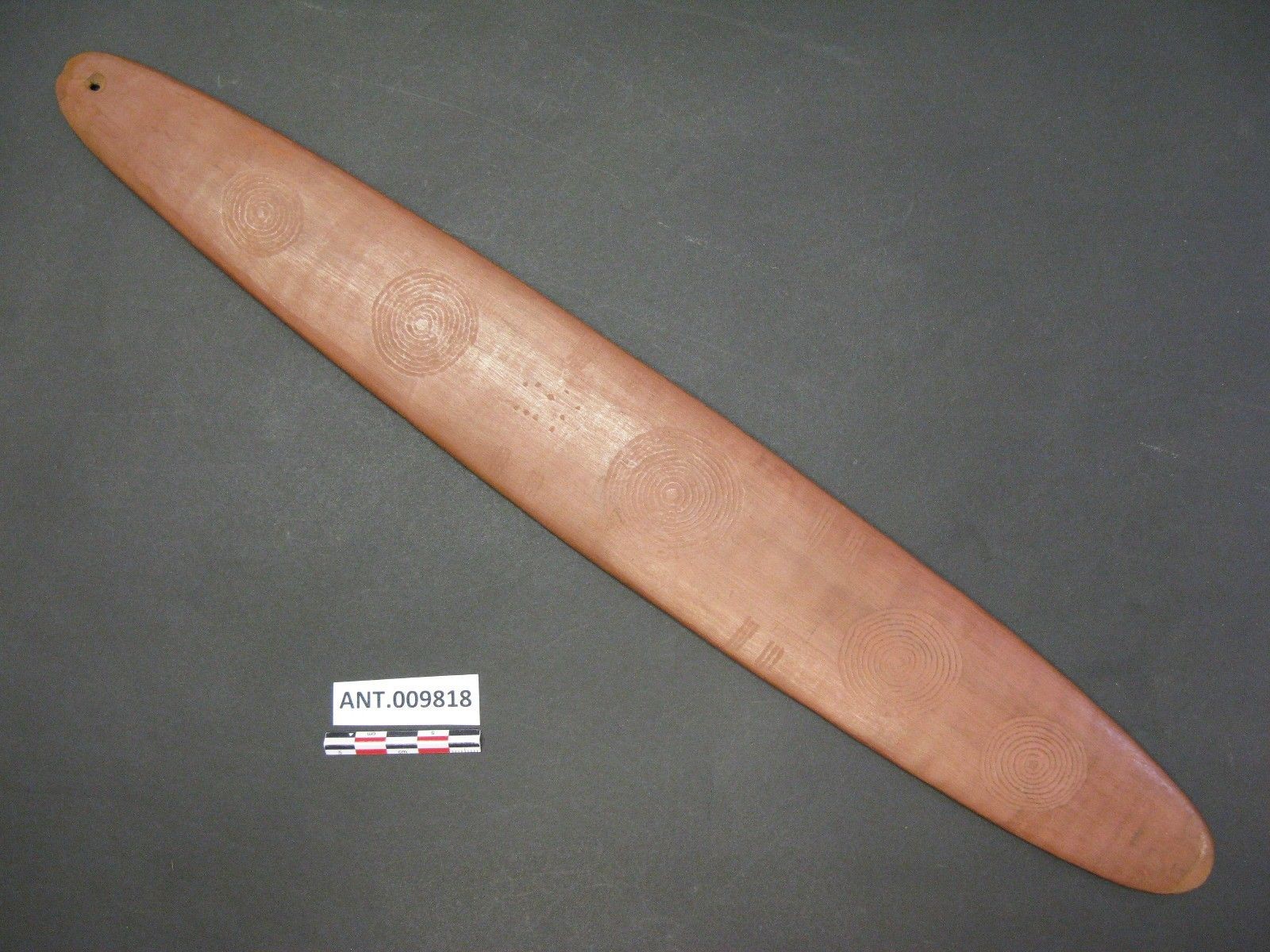
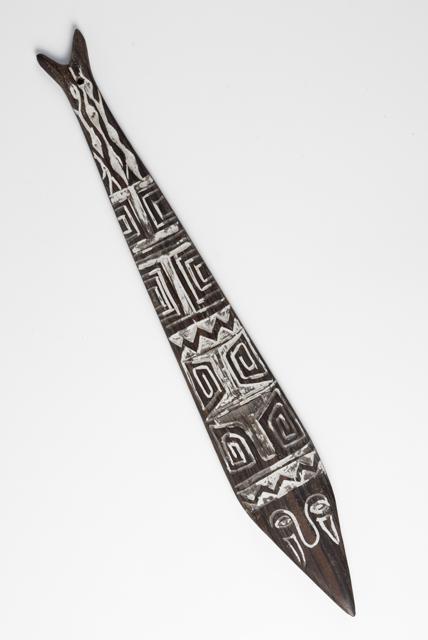
Start with the silhouette, because the silhouette is where every identification has started. An elongated blade, pointed or rounded at the ends, widest near the middle, thin in section, with a single small perforation set just inside one tip: that description covers the Lalinde antler, the Musgrave Ranges board, the Körtik Tepe plaques, the Torres Strait bigu, the Hopi slat, and the boards of the Dogon without adjusting a word. It is not the only shape a noisemaker could take; it is the shape this one takes everywhere.
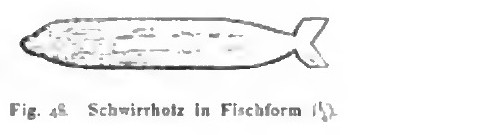
Even the eccentricities repeat. Peyrony saw in the Lalinde blade “the shape of a fish without a tail,” and the pisciform blade is a recurring signature of the Magdalenian series — at Fontalès a whole salmonid is engraved down the blank. Half a world away the Wauja of the Upper Xingu carve the matapu as the body of a fish-spirit; Marcuse's dictionary records the Ipurina yumeru of Brazil flatly as a “fish-shaped bull-roarer”; and among the Idoma of Nigeria the ancestral society's òhúmhúm is “a fish-shaped wooden plaque.” A blade that whirls has no acoustic need to be a fish. It keeps being a fish anyway — in the Dordogne, on the Xingu, on the Benue.
The same engraved face
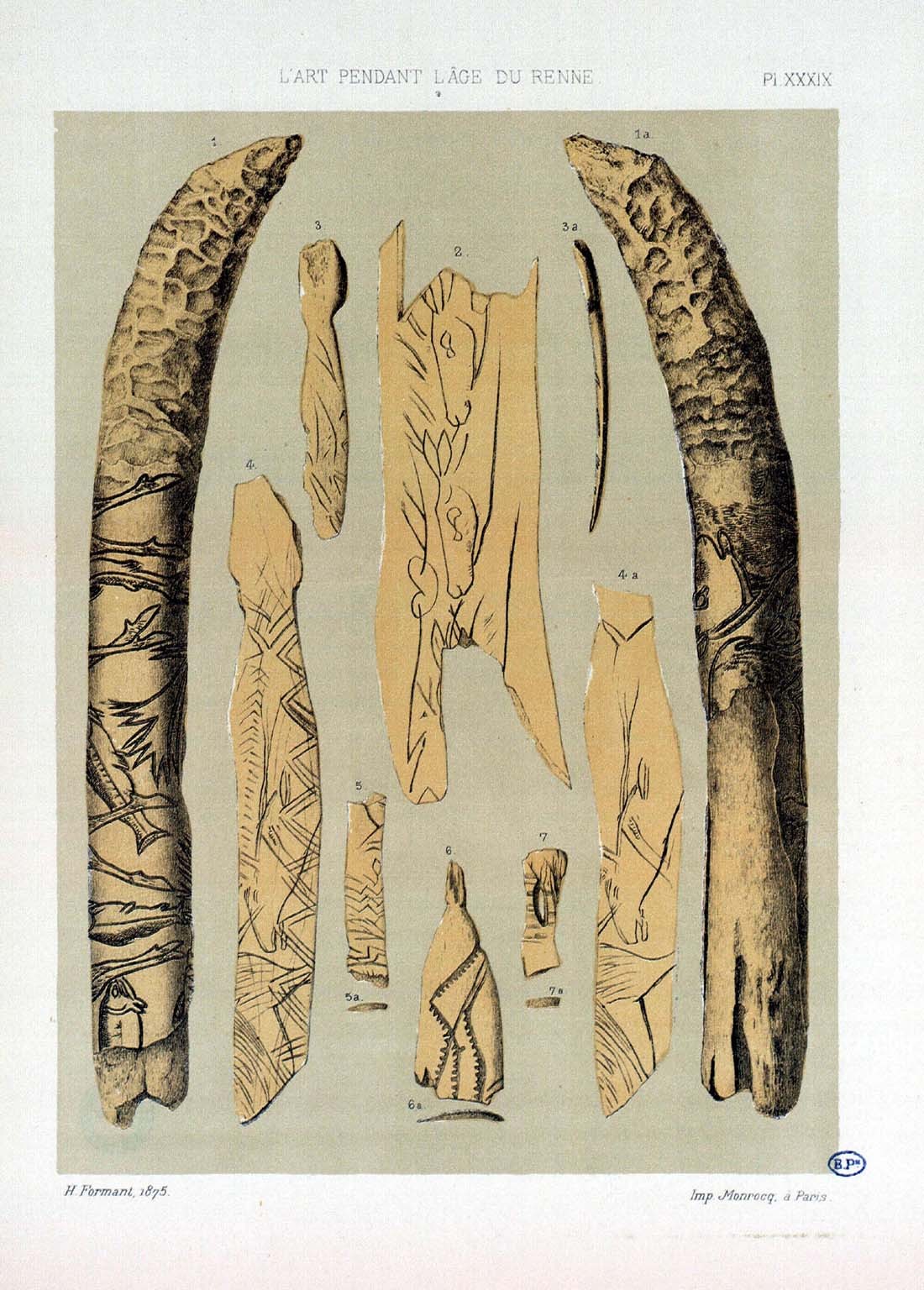
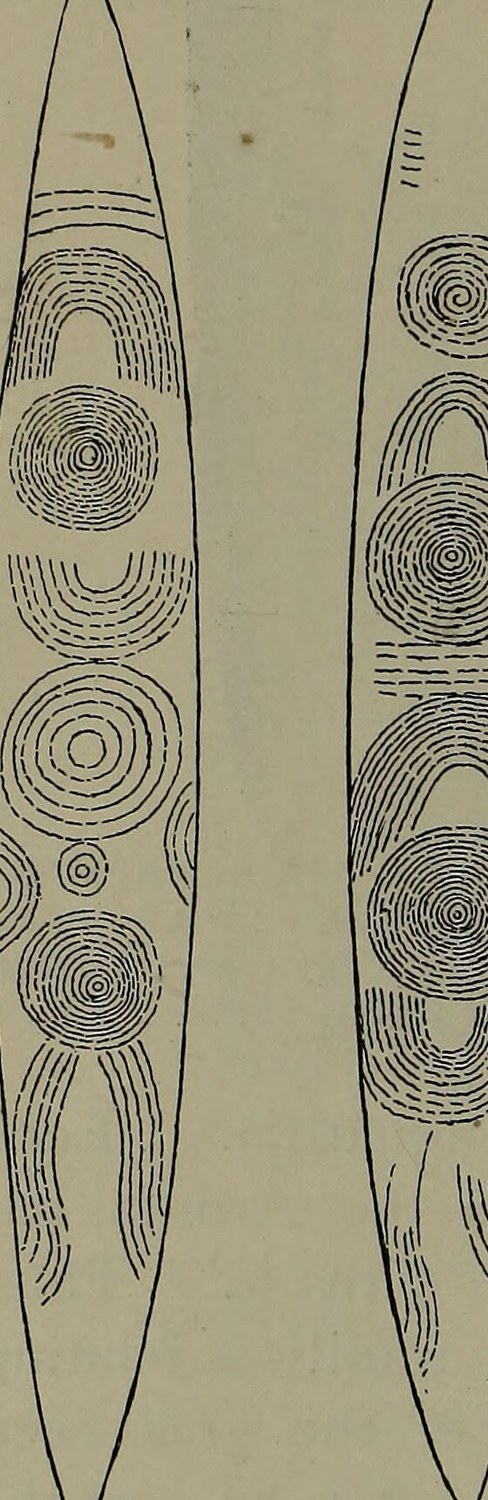
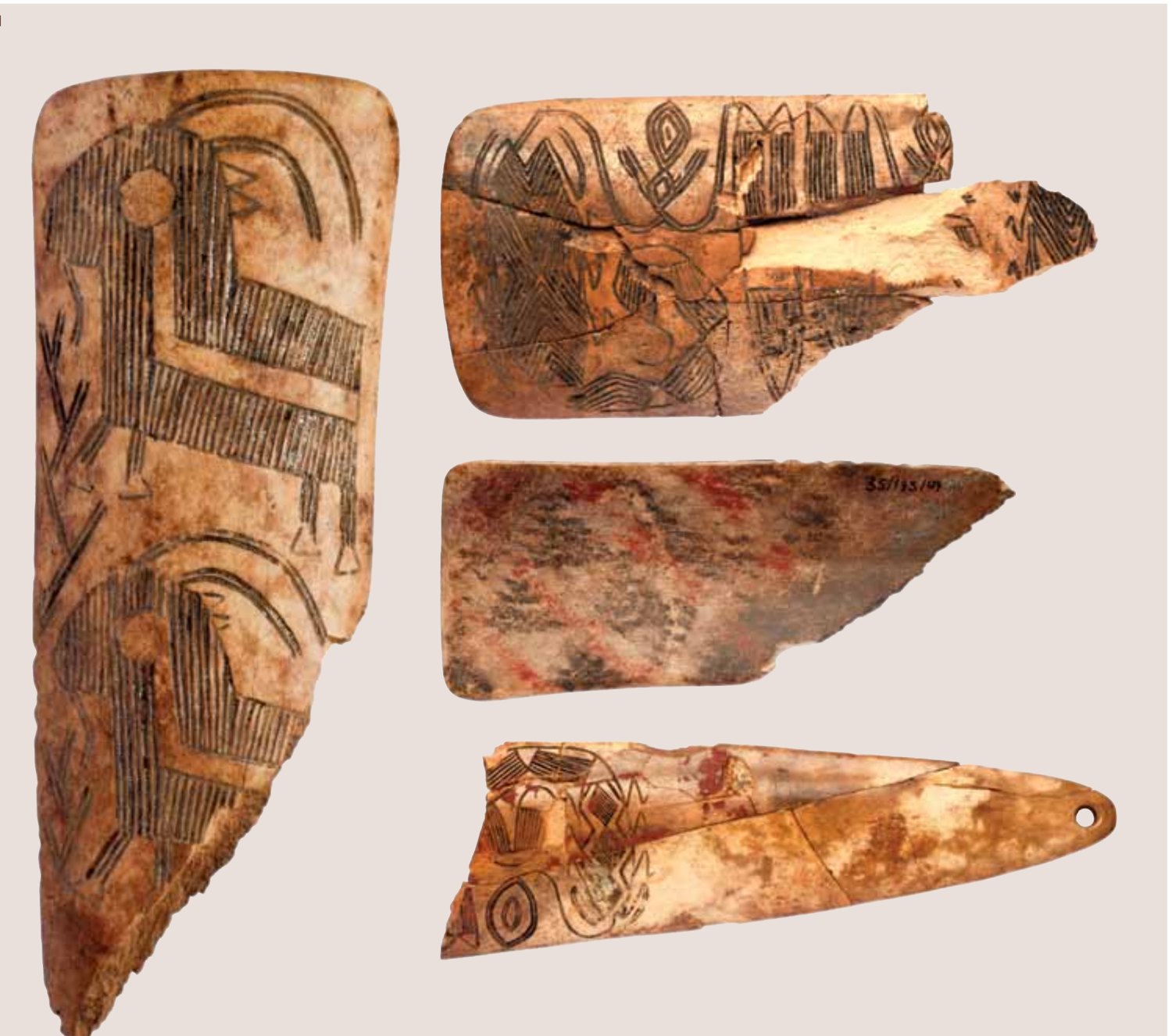
Then turn the blade over, because the identification has never rested on outline alone. “The decorations of the objects on one of their faces are comparable,” Both and Praxmarer write of the Palaeolithic pieces, characterizing the ornament as “mostly abstract-geometric or figurative” — which is, precisely, the ornament grammar of the living instrument. The Lalinde blade carries ranked parallel lines and files of dots; the Lortet roarers, incised bands and chevrons; Saint-Marcel, lines and concentric circles — the very devices, as Harding saw, “shown by Australian churinga,” whose surfaces are governed by exactly this vocabulary of ranked bands, concentric circles, and hatched fields. Field needed one sentence for it: the pattern “resembles that on Australian churinga.” The Yam Island bigu wears its chevron bands; the Wauja matapu its interlocked lozenges; the Musgrave Ranges board its close-set incised courses. Abstract geometry, ranked and repeated, cut into one face of a slender blade: a decorator free to do anything keeps doing this.


The same serpent

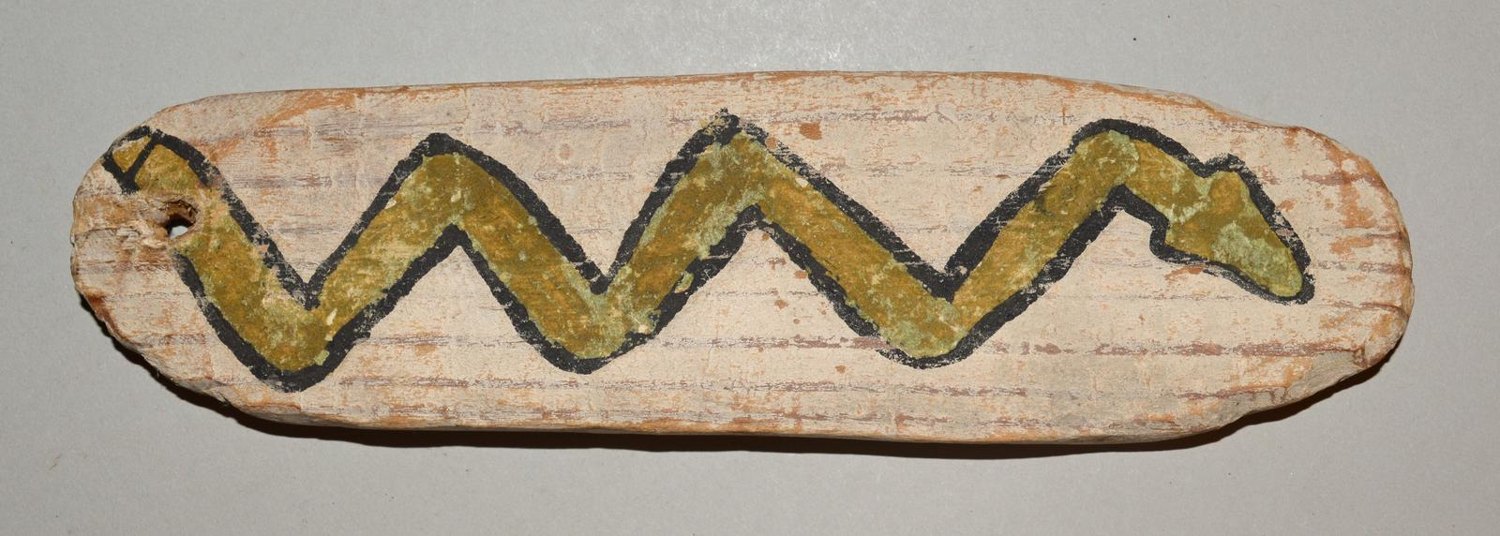
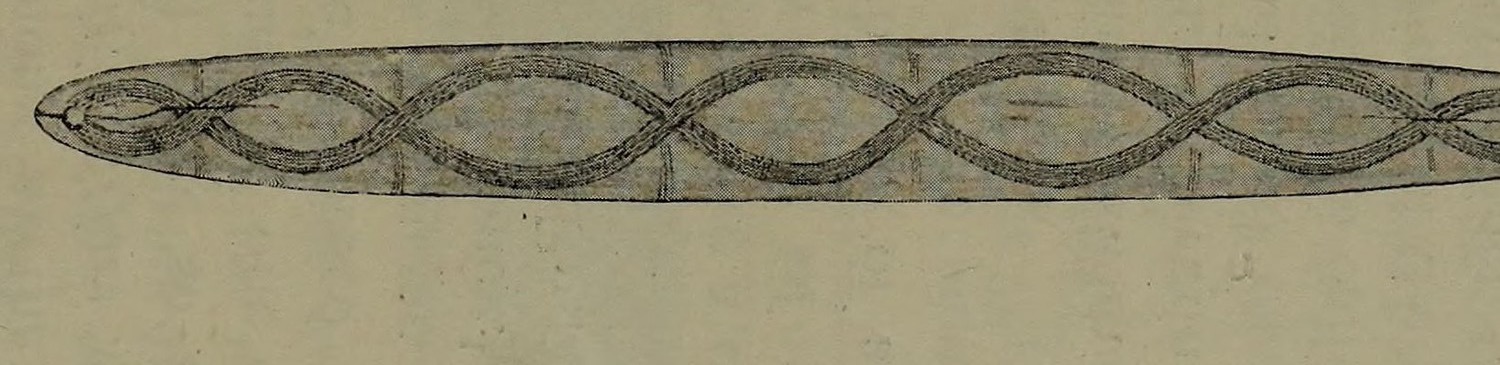
And one figure keeps surfacing wherever the blade is decorated at all. The earliest plausible bullroarers of the Near East, the grave plaques of Körtik Tepe, are carved with a snake ending in a triangular head and a band of three serpents rendered as hatched rhomboids. At Lortet, the Magdalenian workshop that engraved the roarers was cutting serpents in series on their closest companions — the finest a complete viper, its head sculpted, with eye and mouth. In Central Australia the neighboring Wambaya purtuli belongs to a snake-totem waterhole, and the Gudanji churinga above carries its owner's snake outright, coiled down the whole blade; in Arizona the Hopi paint the lightning-serpent — the rain itself — down the blade they whirl in the Snake dance; on the Sepik and the Vaupés the carved and painted serpent coils along the boards of the men's cults. The serpent is not a decoration the instrument sometimes receives; it is the instrument's oldest companion, present at its first graves and still on its living blades — the thread the Serpent's Voice essay follows to its end.
One instrument
Set the testimony beside the objects and the two halves of the case lock together. The shape is the same, from the Dordogne to the Musgrave Ranges. The ornament is the same, ranked geometry on one face. The serpent is the same, from a Tigris grave to a Hopi plaza. And the customs are the same: hidden from women on pain of death among the Bororo as among the Arunta, heard as the voice of a spirit on the Sepik as in the Dionysiac dark. Size alone runs free — a boy's toy in one hand, a metre of Sepik hardwood in the other — which is exactly how a single inherited instrument behaves, fitted by each people to its own rooms, distances, and gods.
No ethnomusicologist, I think, would stand for plurigenesis as regards the bull-roarers, which even in decorative detail are often alike and are used for the same purpose wherever and whenever found.Jaap Kunst, “The Origin of the Kemanak,” Bijdragen tot de Taal-, Land- en Volkenkunde 116 (1960)
That is the founder of ethnomusicology, speaking for his discipline, and it is where the evidence has pointed since Lang first laid the Greek scholiast beside the Australian turndun and found no single point omitted. The bullroarer's forms are identical all over the world because they are not a hundred inventions; they are one. An instrument that entered the record on a Magdalenian camp floor, engraved and ochred and already wearing its fish-form and its ranked lines, has come down to the ethnographic present with its blade, its ornament, its serpent, and its secrets intact. The atlas maps its records as a single family, because that is what the objects, laid side by side, insist on being.
Read on: Recognised, on how every Ice Age blade in Europe entered science by being held beside a living one.
Key sources
- Both, Arnd Adje & Michael Praxmarer. 2025. “Musik in der Steinzeit,” in Fontaine et al. (eds), Interdisziplinarität in der Disziplin, pp. 119–153, doi:10.25366/2024.12 — at p. 138: “Die Formen sind identisch mit Schwirrhölzern auf der ganzen Welt und auch die Verzierungen der Objekte auf einer der Seiten … sind vergleichbar” (“The forms are identical with bullroarers all over the world, and the decorations of the objects on one of their faces are comparable”); the fourteen-findspot inventory at p. 137. Open access.
- Lang, Andrew. 1884. Custom and Myth, ch. “The Bull-Roarer: A Study of the Mysteries,” pp. 29–44 — the “widest diffusion” and “widely separated lands” passages at pp. 31–32; the scholiast on the kōnos and “No single point is omitted” at p. 39.
- Haddon, Alfred C. 1898. The Study of Man, ch. X “The Bull-Roarer,” pp. 277–327 — the comparative plate (fig. 40, p. 309); “The parallelism with the initiation ceremonies of the Australians is complete” and “This insignificant toy is perhaps the most ancient, widely-spread, and sacred religious symbol in the world,” both p. 327.
- Lowie, Robert H. 1920. Primitive Society, p. 313 — “I do not hesitate to accept diffusion from a common center as the more probable assumption.”
- Loeb, Edwin M. 1929. Tribal Initiations and Secret Societies (UC-PAAE 25:3), p. 285 — “The case for diffusion is even stronger than stated by Lowie”; the traits “of archaic, possibly paleolithic origin.”
- Peyrony, Denis. 1930. “Sur quelques pièces intéressantes de la grotte de La Roche, près de Lalinde (Dordogne),” L'Anthropologie 40: 19–29 — the churinga identification at pp. 24–25; the side-by-side plate at p. 22, fig. 3.
- Field, Henry. 1954. “A Magdalenian 'Churinga',” Man 54, note 162, p. 162 — Breuil's “first complete Magdalenian churinga” and the pattern comparison, quoted in full above.
- Kunst, Jaap. 1960. “The Origin of the Kemanak,” Bijdragen tot de Taal-, Land- en Volkenkunde 116: 263–269 — the plurigenesis sentence.
- Harding, J. R. 1973. “The Bull-Roarer in History and in Antiquity,” African Music Society Journal 5(3): 40–42 — the Saint-Marcel piece and its churinga designs, p. 40; Marett's “stranger to it” via the same page.
- Dietrich, Oliver & Jens Notroff. 2016. “Bull-roarers of the Pre-Pottery Neolithic?” — the Körtik Tepe, Göbekli Tepe, and Çatalhöyük blades and the deep-vibrato replica. With Spencer & Gillen 1904 (the Kaitish and Wambaya boards); Marcuse 1964, s.v. Yumeru; Blench 1987, “Idoma Musical Instruments,” African Music 6(4): 49.
- As far as we know, the full pairing presented here — the testimony line from Lang to Both & Praxmarer set against the objects themselves, with the fish-form and serpent recurrences drawn out — is original to this page.
Browse every dated archaeological record in the atlas, see them on the map, or read on: The Serpent's Voice and Thunder Before the Plow.