Atlas Guide —
What Is a Bullroarer? Sound, Meaning and History
A bullroarer is a flat blade of wood, bone or stone tied to a cord and whirled round the head, so that it spins on its own axis as it flies and gives out a deep, pulsing roar. It is one of the oldest and most widespread sacred instruments on earth: from Australia and New Guinea to Amazonia, West Africa, California and ancient Greece, its sound has been the voice of an ancestor, a spirit or a god, and the thing that makes it has been kept from women and the uninitiated, often on pain of death. Alfred Cort Haddon, who gave the instrument its first full study in 1898, called it “perhaps the most ancient, widely-spread, and sacred religious symbol in the world.”
Listen: an 18-second recording of a bullroarer in flight, its roar rising and falling as the blade circles.
How a bullroarer works
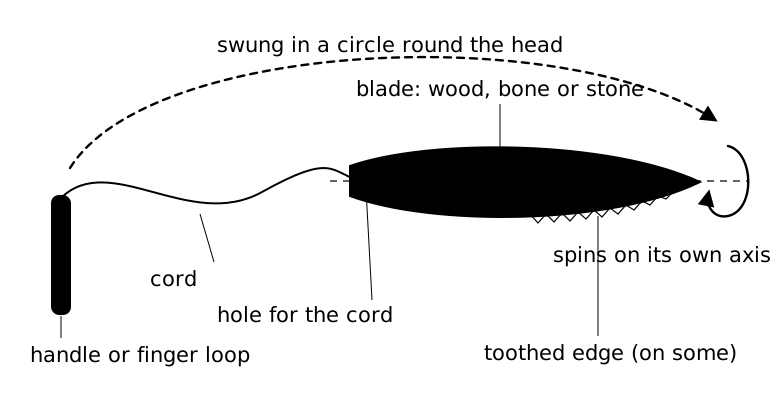
There are only three parts: a blade, a cord and something to hold. The blade is usually long, thin and flat, shaped like a leaf, a lens, a fish or a paddle, and pierced or notched at one end for the cord. Some are plain; many are carved, painted or toothed along the edges. The cord may end in a short stick for a handle, or in a loop round the player’s finger or wrist.
Swing it and two motions start at once. The whole blade travels in a wide circle round the player’s head, and the rush of air sets it spinning fast about its own long axis. Each turn of the spinning blade pushes the air one way and then the other, dozens of times a second, and those pulses are the roar. As it turns, it twists the cord tighter until the twist brakes it, stops it and sends it spinning the other way; at each reversal the voice drops away for a moment and comes back. That is why a bullroarer does not roar steadily but throbs, rising and falling as it flies. Swing faster and the note climbs; a wider blade sounds lower.
The blade has to be thin for its width, or it will not spin. Michel Dauvois, the French acoustician who cut copies of Ice Age blades and set them roaring, described them as thin bodies with tapered edges, about a seventh as thick as they are wide. A piece of the same outline that is too thick for its width swings round on its cord without turning, and stays silent.
What does the bullroarer mean?
Wherever it is sacred, the bullroarer is a voice. Who is speaking depends on who swings it, and each people has its own name and its own answer.
Australia: the voice of the ancestors
Among the Yuin of the south coast of New South Wales, the bullroarer was the mudthi. Its roar was thunder, and thunder was the voice of Daramulun, the being who first made the Kuringal initiation and the bullroarer with it. A messenger summoning men to the ceremonies carried a mudthi wrapped in skin, hidden from women and children, and when he swung it near the meeting place the men leapt up and ran.
Among the Kurnai of Gippsland, in Victoria, the boys at the Jeraeil initiation were told that in the afternoon they would be shown their grandfather. What they were shown was the Tundun, a large bullroarer, “the man,” and beside it the smaller Rukut-Tundun, “the woman,” his wife. The deep voice and the shrill one closed round the kneeling boys; then two old men went from boy to boy and told each one never to tell his mother, his sister or anyone who had not been through the rite. Last of all the boys were handed the Tundun and made to swing it themselves.
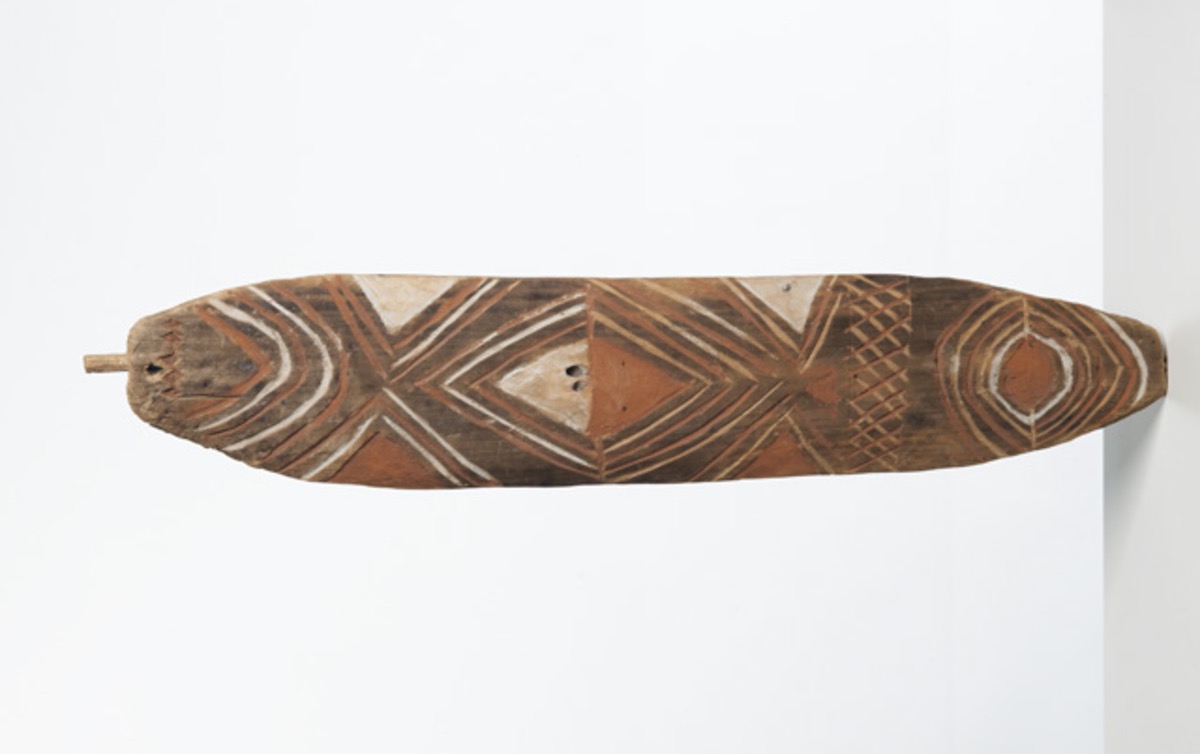
Among the Arrernte of Central Australia, the smaller wooden sacred boards called churinga, bored at one end and strung with hair string, were the bullroarers proper: churinga irula, “dressed wood.” An ancestral churinga held the spirit of an ancestor of the Alcheringa, the creation time, and women were forbidden to see these sacred objects on pain of death. On the Roper River in the Northern Territory, the Ngalakan showed a young man the bullroarer, the kunapippi, only at the last stage of his making, while the women in the main camp were told its noise was the voice of Mumanna, the spirit who carries the boy away. How the Dreaming, initiation and the roar fit together is the subject of Everywhen.
Ancient Greece: the rhombos of Dionysus
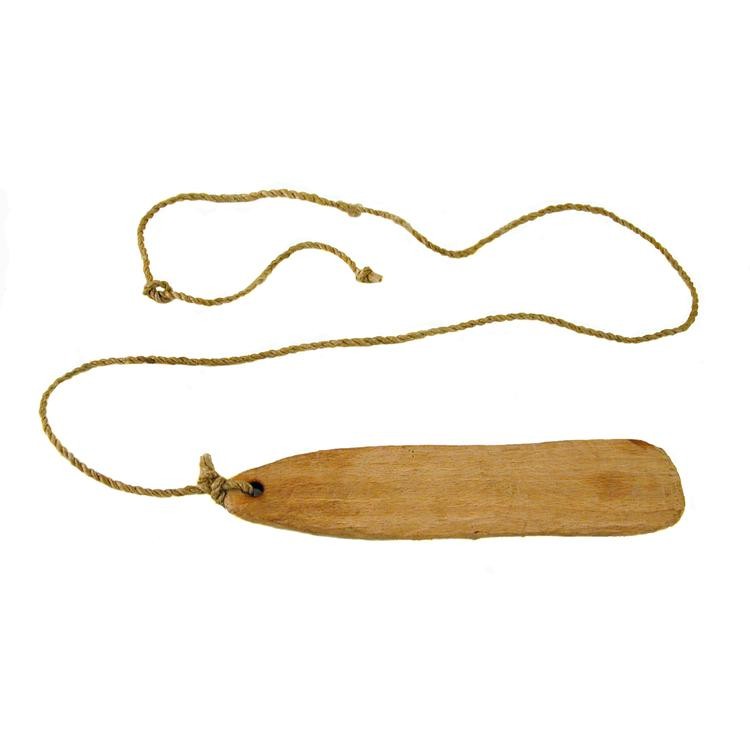
The Greeks called it the rhombos, and it belonged to the mysteries of Dionysus. Clement of Alexandria, writing about AD 200, tells how the Titans lured the child Dionysus to his death with a handful of toys before they tore him apart. An ancient commentator on Clement explains one of those toys as “a little piece of wood, to which a string is fastened,” which was “whirled round to make a roaring noise” in the mysteries. The record of the Dionysiac rhombos follows the story into the rite.
Aotearoa: the moth that calls the rain
The Māori pūrerehua takes its name from the moth whose whirring wings it recalls. Its great work was calling the rain: the Ngāti Porou leader Tuta Nihoniho described whirling it while flinging ashes to the south and reciting an insulting karakia to provoke the sky. It was sounded too at funerals, and heard as a voice of the wind-children of Tāwhirimātea. Its full story is in Pūrerehua, the Māori bullroarer.
New Guinea: the mother of the yams
Among the Kiwai of the Fly River mouth, bullroarers hung in the men’s long houses, forbidden to women and the uninitiated. A boy first met one behind a tabooed fence in the bush, where he learned to make its voice, and its whirling was expected to fill the gardens with yams, sweet potatoes and bananas. One that reached England was labelled “the mother of the yams.” On the Papuan Gulf at Orokolo, the missionary J. H. Holmes recorded in 1902 that to tell the women the whining of the bullroarers was “not the cry of a god but the work of a man” brought down a curse “equivalent to death.”
Amazonia: the voice of the dead
The Bororo of Mato Grosso, in Brazil, call the bullroarer aige, after a water-monster that lives at the bottom of a lagoon. It sounds only at funerals. As the dead person’s belongings are burned and the basket of bones is carried out, men whirl the long boards, and at the first buzz the women run to the forest or shut themselves in the huts: to glimpse the aige was death. When the Bororo of Kejara gave one to Claude Lévi-Strauss in 1936, they told him to keep this aige at the bottom of his locked trunk, out of the women’s sight.
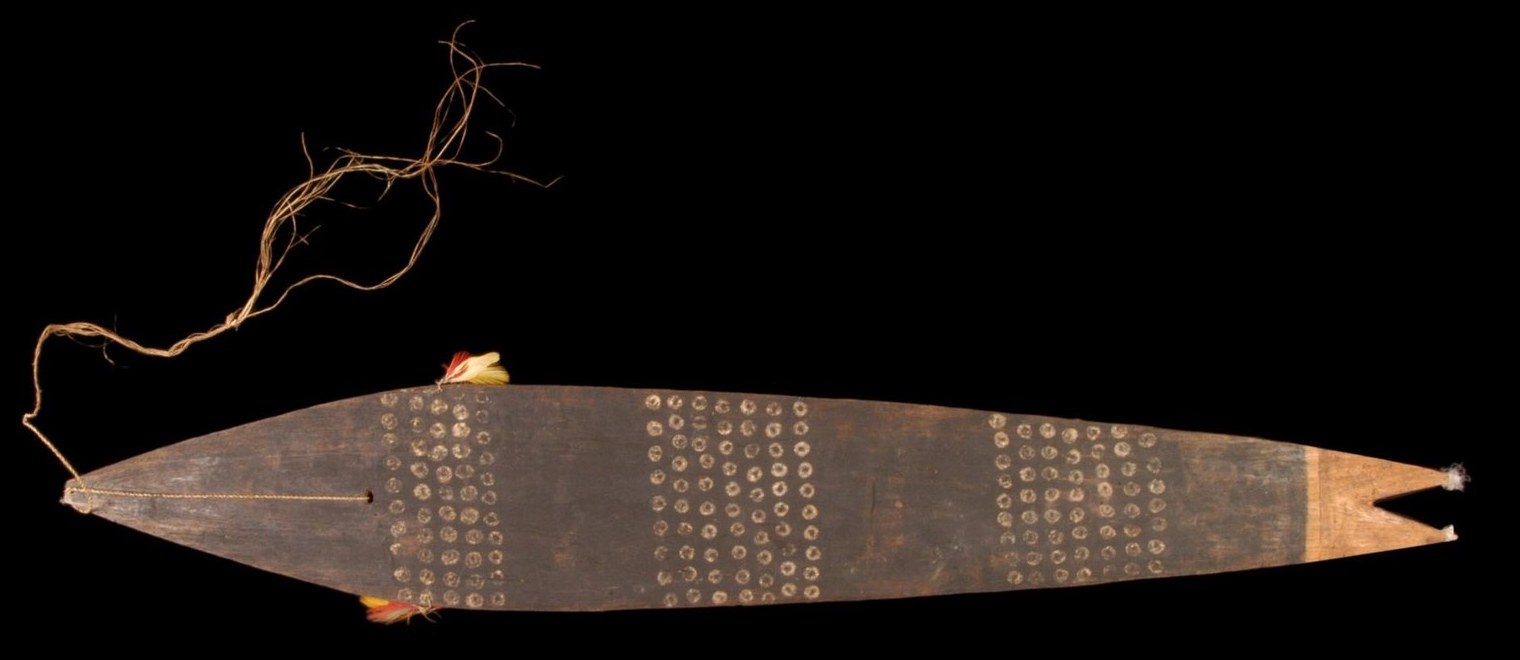
North America: Thunder man’s voice
Among the Pomo of California the bullroarer was the voice of Thunder man, and the Eastern Pomo called it kalimatoto padok, “the doll of Thunder man.” Between ceremonies the boards were hidden in moss, and women and children were told their roar at the ghost dance was the voice of the dead. An Eastern Pomo initiate remembered being told, as he watched them whirl, that it was “the voice of Thunder God,” and that he would die if he spoke of it. A Northern Pomo board made by Sam Tony, the pa-doch, carries both its Pomo names.
West Africa: Oro, the god of vengeance
Among the Egba of Abeokuta, in what is now southwestern Nigeria, the whirring slat was the voice of Oro, a god of vengeance, and the instrument itself was worshipped as the god. Condemned criminals handed over to Oro were seldom seen again, and no woman could see the thing that made his voice and live. Among the Dogon of Mali the bullroarers of the Awa mask society are tongues: Germaine Dieterlen recorded that one of them is the tongue of Dyongou Sérou, the first ancestor to die.
The patterns
Set side by side, the meanings fall into a few great families, each held by named peoples. The roar is the voice of an ancestor, spirit or god: Daramulun for the Yuin, Mumanna for the Ngalakan, Thunder man for the Pomo, Oro for the Egba. It is a secret kept from women and the uninitiated, revealed to boys at initiation: the Kurnai grandfather, the Arrernte churinga, the Bororo aige; 315 records bar women from seeing or hearing it. It is the weather: Daramulun’s thunder calling the rain, the Māori rain-caller, and in northeast Scotland the “thunner-spell” that boys whirled in a storm so the thunderbolt would pass them by. It brings the crops, as for the Kiwai, and it sounds at death, as for the Bororo. And it is a toy, above all in Europe, where village children swing it for the noise. The scholars who handled those toys saw them as the last stage of the sacred instrument, not its first; that fall is told in How a God Becomes a Toy.
The same rules travel with the instrument from continent to continent: the women barred on pain of death, the roar as a spirit’s voice, the boy who dies and is reborn. Robert Lowie, looking at them in 1920, could find no reason in human nature why the Bororo of Brazil and the Ekoi of Nigeria should both forbid women the bullroarer, and took the rule for something carried from a common centre. The Original Spin follows it back to its root.
How old is the bullroarer?
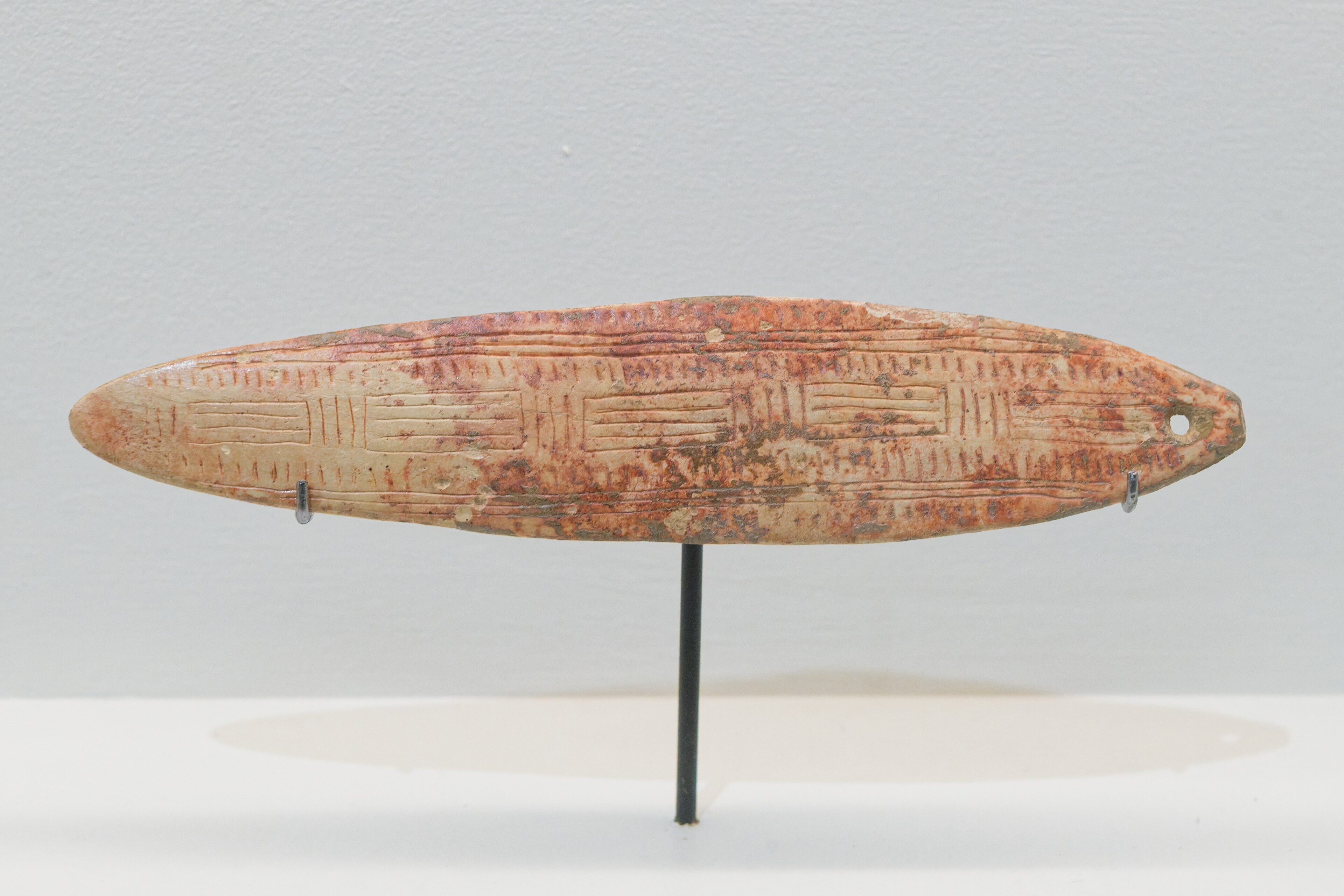
At least fifteen thousand years. The blade in Plate I came out of the rock shelter of La Roche de Birol, near Lalinde in the Dordogne, in 1927. It is reindeer antler, about sixteen centimetres long, rubbed with ochre, engraved with ranks of fine lines and drilled for a cord, and it dates to the Magdalenian, the last great culture of Ice Age France. Denis Peyrony, publishing it in 1930, set it beside an Australian churinga and called it “un instrument identique,” an identical instrument. Dauvois later cut a copy in antler and swung it in the painted cave of Niaux in the Pyrenees, where its rising and falling roar filled the whole chamber.
Lalinde does not stand alone. Ignacio Barandiarán catalogued thirty-four bone and antler blades, bramaderas, nearly all Magdalenian, from the caves of southwestern France and northern Spain, among them Isturitz and Bourrouilla. Behind them stand older blades: the Solutrean fish-shaped blade of Lespugue in the Pyrenean foothills and the bone piece from Badegoule, some twenty thousand years old. Dauvois placed the first roarers among the mammoth hunters of Moravia, about twenty-four thousand years ago, and pierced pieces reach back further still, to the bone point from the cave of Potočka zijalka, high in the Slovenian Alps.
Every one of these is European. The first dated bullroarers anywhere else come as the ice ends or after it: the engraved bone plaques of Körtik Tepe in southeastern Turkey, about 10,400 BC; the bone blade of Matjes River in South Africa; the wooden roarer of Hogup Cave in Utah. Most bullroarers were always wooden, and wood rots, so the dug-up blades are a floor under the instrument’s age, not a ceiling. Australia, where the bullroarer is most sacred today, has no dated bullroarer from any excavation. All the ancient finds are gathered in the archaeology records.
Where is the bullroarer found?
On every inhabited continent. The atlas map shows 1,283 bullroarers, each one a people or a site where the instrument is documented by a museum object, an ethnographer’s report or an excavation; a layer of archaeological candidates adds 107 more. It is thickest in Africa, North America, New Guinea and Australia, and it runs through the folk toys of Europe.
| Region | Records |
|---|---|
| Africa | 253 |
| North America, with Mexico | 241 |
| New Guinea and island Melanesia | 228 |
| Australia, with the Torres Strait | 193 |
| Europe | 152 |
| Asia: South, Southeast and East Asia, Siberia, the Near East | 99 |
| South America, with Amazonia | 95 |
| Central America and the Caribbean | 12 |
| Polynesia and Micronesia | 10 |
Open the interactive map to see them all, coloured by what each was for, or browse the cultural regions, where neighbouring peoples who share a bullroarer cult are read together. Of the 1,283, 453 are restricted (bound to initiation, secrecy or a ban), 188 more are sacred or spirit voices, 87 bring rain, wind or crops, and 357 are toys, signals or scarers. For the other 198, the use was never recorded.
Why is it called a bullroarer?
Because English children already had one. When anthropologists met the sacred instrument in Australia, they gave it the name of a toy they had swung as boys. Lorimer Fison, in Kamilaroi and Kurnai (1880), compared it to “the wooden toy which I remember to have made as a boy, called a ‘bull-roarer’.” A year later E. B. Tylor, reviewing Fison’s book, wrote that the instrument was “called in England a ‘whizzer’ or ‘bull-roarer,’ in Germany a ‘brummer.’” Andrew Lang made it famous in 1884 with an essay called simply “The Bull-Roarer,” and the toy’s name became the scholar’s word for every such instrument in the world.
The toy had a different name in nearly every county. When Haddon gathered British specimens for his 1898 chapter, he found these:
| Name | Where | Record |
|---|---|---|
| whizzer | England (Tylor 1881) | — |
| hummer | West Suffolk | — |
| buzzer, humming buzzer | Norfolk; buzzer also Bedfordshire | — |
| swish | Lincolnshire | — |
| bummer, buzzer | East Derbyshire | East Derbyshire bummer |
| roarer | Montgomeryshire, Wales | Montgomeryshire roarer |
| boomer | County Down, Ireland | North-east Ireland boomer |
| thunner-spell, thunder-spale | North-east Scotland; Galloway | Scottish thunder-spell, thunner-spehl |
The Scottish names are among the oldest on record, and the most telling. In 1822 a Galloway writer remembered a “thunder spale” whirled under the schoolyard wall to imitate a distant thunderclap, and in 1881 the folklorist Walter Gregor described boys in the northeast whirling a slat in thunderstorms so that the thunder would cease. The toy kept its old work: like Daramulun’s mudthi, it was still speaking to the thunder. Elsewhere in Europe the same blade is the German Schwirrholz or Brummer, the French planche ronflante or rhombe, the Spanish bramadera and the Basque burruna.
Bullroarer questions
Is the bullroarer Aboriginal?
Aboriginal Australian bullroarers are among the best known in the world, and the English word was first applied to the instrument in Australia, but the bullroarer is not only Aboriginal. It is sacred in New Guinea, Amazonia, West Africa and North America, and it was sacred in ancient Greece. The oldest bullroarers yet found are from Ice Age Europe. The Australian traditions are gathered in Bullroarers in Aboriginal Australia.
What is the bullroarer scene in Crocodile Dundee?
It is in Crocodile Dundee II (1988). Pursued by gunmen through the Kakadu bush, Mick Dundee stands on a rocky escarpment at sunset and swings a bullroarer to call for help from whoever is near.
Why is Bandobras Took called Bullroarer?
In The Hobbit, Bandobras “Bullroarer” Took is the Old Took’s great-grand-uncle, a hobbit so big he could ride a horse, who knocked the goblin king Golfimbul’s head off with a wooden club. Tolkien later explained the nickname himself: bullroarer was “a word used by anthropologists for instruments that made a roaring sound.”
Is a bullroarer the same as a churinga?
Not quite. Churinga, or tjurunga, is the Arrernte name for a wider class of sacred stone and wooden objects in Central Australia, associated with the ancestors and their totemic ceremonies. Some of the wooden ones are bored for a cord and whirled, and those are bullroarers. Spencer and Gillen were careful to say that the stone ones, even when bored, “are never used as bull-roarers.”
Can I make a bullroarer?
Yes. A thin, flat slat of stiff wood (plywood works well) with a hole at one end and a strong cord will roar if it is thin enough for its width to spin. Swing it in an open space, well away from people, windows and anything else it could hit. The step-by-step guide is How to make a bullroarer.
Explore the atlas
- The interactive mapAll 1,283 bullroarers, by use, region and age.
- Bullroarers in Aboriginal AustraliaThe bullroarer as the Dreaming’s voice, from Gippsland to the Kimberley.
- Bullroarer sound: listen and see how it worksThe spin, the twist in the cord, and the pulse in the roar.
- How to make a bullroarerWood, cord, shape and a safe swing.
- Pūrerehua, the Māori bullroarerThe Māori bullroarer that calls the rain.
- The Original SpinWhere the bullroarer began: Ice Age Europe and the roads out.
- EverywhenThe Dreaming, initiation and the ancestor’s voice.
- Women and the BullroarerWhy the men’s myths say a woman made it first.
- How a God Becomes a ToyThe European bullroarer’s fall from god to plaything.
Key sources
Haddon, A. C. 1898. The Study of Man. London: Bliss, Sands — ch. “The Bull-Roarer,” pp. 277–327: British folk names, pp. 278–283; “perhaps the most ancient, widely-spread, and sacred religious symbol in the world,” p. 327.
Fison, L. and Howitt, A. W. 1880. Kamilaroi and Kurnai. Melbourne: George Robertson — Appendix E, p. 267 (“called a ‘bull-roarer’”).
Tylor, E. B. 1881. Review of Kamilaroi and Kurnai. The Academy 19, no. 466 (9 April 1881), pp. 264–266, at p. 265 (“whizzer,” “bull-roarer,” “brummer”).
Lang, A. 1884. “The Bull-Roarer.” In Custom and Myth. London: Longmans, pp. 29–44 — the scholiast on Clement on the konos, p. 39 and n. Clement of Alexandria, Protrepticus 2.17–18 (the toys of Dionysus).
Howitt, A. W. 1885. “The Jeraeil, or Initiation Ceremonies of the Kurnai Tribe.” Journal of the Anthropological Institute 14: 301–325 — Tundun and Rukut Tundun, p. 312. Howitt, A. W. 1904. The Native Tribes of South-East Australia. London: Macmillan — Daramulun and the Kuringal, pp. 494–496; the Yuin mudthi, p. 517 and fig. 29; “the voice of Daramulun,” p. 538; the Kurnai Jeraeil, pp. 628–632 and fig. 37.
Spencer, B. and Gillen, F. J. 1899. The Native Tribes of Central Australia. London: Macmillan — churinga, the penalty for women, p. 128; wooden churinga whirled as bullroarers and the stone ones “never used as bull-roarers,” and ceremonial churinga without an ancestral spirit, pp. 142–143. Spencer, B. 1914. Native Tribes of the Northern Territory of Australia. London: Macmillan — the Ngalakan (Nullakun) kunapippi and Mumanna, p. 176.
Best, E. 1925. Games and Pastimes of the Maori. Dominion Museum Bulletin 8, p. 294 (Tuta Nihoniho’s rain rite). Hamilton, A. 1901. Maori Art, pp. 374, 430 (funeral use). Te Awa, I. 2022. “Stars of the Matariki cluster: Ururangi,” Te Papa, 27 June (the winds of Tāwhirimātea). Te Aka Māori Dictionary, s.v. pūrerehua.
Haddon, A. C. 1904. Reports of the Cambridge Anthropological Expedition to Torres Straits, vol. V, pp. 218–219 and fig. 30 (Kiwai). Holmes, J. H. 1902. “Initiation Ceremonies of Natives of the Papuan Gulf.” Journal of the Anthropological Institute 32: 418–425 — “not the cry of a god but the work of a man” and “equivalent to death,” p. 425.
Steinen, K. von den. 1894. Unter den Naturvölkern Zentral-Brasiliens. Berlin, pp. 496–508; Colbacchini, A. and Albisetti, C. 1942. Os Boróros Orientais, pp. 52, 162–163, 255 (the Bororo aige).
Loeb, E. M. 1926. Pomo Folkways. University of California Publications in American Archaeology and Ethnology 19(2) — kalimatoto padok, p. 222 n. 50; concealment and the ghost voice, p. 341; “the voice of Thunder God,” p. 352. Ellis, A. B. 1894. The Yoruba-Speaking Peoples of the Slave Coast of West Africa. London: Chapman and Hall, ch. VI (Oro); Encyclopædia Britannica, 11th ed. (1911), s.v. “Bullroarer” (the Egba bullroarer “actually worshipped as the god himself”). Dieterlen, G. 1989. “Mythologie, histoire et masques.” Journal des africanistes 59(1–2): 7–38, pp. 33–34 (the Sigui bullroarers as tongues). Leiris, M. 1934. “Rhombes dogon et dogon pignari.” Bulletin du Musée d’Ethnographie du Trocadéro 7: 3–10 (the Dogon imina na).
Lowie, R. H. 1920. Primitive Society. New York: Boni and Liveright, pp. 311–313.
Peyrony, D. 1930. “Sur quelques pièces intéressantes de la grotte de La Roche, près de Lalinde (Dordogne).” L’Anthropologie 40: 19–29, pp. 22–25. Schwab, C. 2019. Musée d’Archéologie nationale, object-of-the-month panel: “Rhombe, bois de renne,” La Roche, Lalinde, about 15,000 years, 16 × 3.4 × 0.6 cm, MAN 74482.
Dauvois, M. 1994. “Les témoins sonores paléolithiques extérieur & souterrain.” In M. Otte (ed.), Sons originels. Préhistoire de la musique, ERAUL 61: 11–31 — the Lalinde copy swung at Niaux, p. 17. Dauvois, M. 2018. “Néandertal et Cro-Magnon, le renne et le son.” Revue de Paléobiologie 37(2): 457–468, §7 “Rhombes,” p. 460 (thin bodies, tapered edges, thickness about a seventh of the width). Barandiarán Maestu, I. 2015. “La bramadera de hueso: análisis y discusión cronocultural.” Kobie BAI 6: 149–158, pp. 152–154.
Gregor, W. 1881. Notes on the Folk-Lore of the North-East of Scotland. London: Folk-Lore Society, p. 153 (“thunner-spell”); Scottish National Dictionary, s.v. thunner (“thunder spale,” Scots Magazine, June 1822, p. 799).
Tolkien, J. R. R. 1937. The Hobbit, ch. 1. Tolkien, J. R. R. c. 1967. “Nomenclature of The Lord of the Rings,” s.v. “Took,” in W. G. Hammond and C. Scull, The Lord of the Rings: A Reader’s Companion (2005), p. 764. Crocodile Dundee II, dir. John Cornell, 1988; Byrnes, P., National Film and Sound Archive, “Crocodile Dundee II”; Milner, J. 2016. Sounding Country, PhD thesis, ANU, p. 103.