Fields, village boundaries, dormitories and sacred groves
South Asian bullroarers move between children's hands and places with collective obligations. Naga fields welcome a crop guard while a village may forbid its entry; Tripura's enclosed Ker observance gives a bamboo voice its moment; Oraon dormitories keep strings of blades, and Santal boys carry them toward a flowering grove. These practices connect a broad family through the management of consequential sound.
The Rengma used a borrowed bullroarer in the fields, yet would not bring it into the village. At an Oraon dancing-ground, blades normally kept in the bachelors' dormitory hung above the gathering. During Santal Baha Parab, boys carried bullroarers behind people rushing toward the sacred grove in possession by its deities. Across South Asia, the whirling voice has a proper place and occasion. The same regional repertoire includes a rain-caller, a sound feared during sickness and a child's freely made amusement. Its connections emerge through the rules and movements that let the voice enter collective life. 4, 8, 9, 5, 6, 11
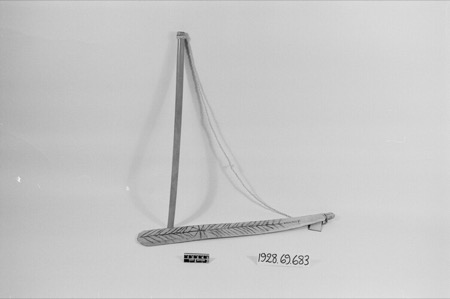
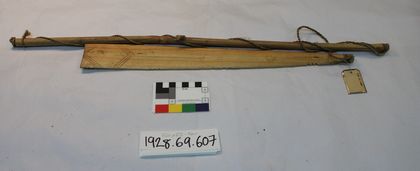
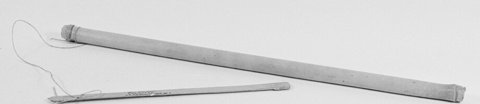
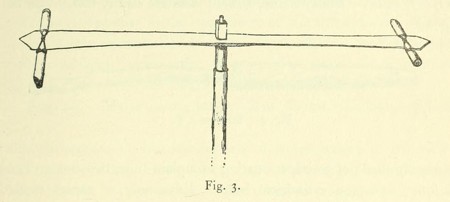
Ker-puja encloses a piece of Tripura. The observance marks a boundary that nobody may cross while the rite is underway. A 1929 account describes a broad bamboo strip, corded at one end, rapidly whirled to make a deep, far-carrying bho bho. The bhemra gives this enclosed observance a voice. The philologist Suniti Kumar Chatterji placed the bamboo-slip instrument specifically in Ker, performed by its Cantai and Deodhai officiants. A territorial rule and a ritual sound together establish an occasion for the community's welfare. 1, 2, 3
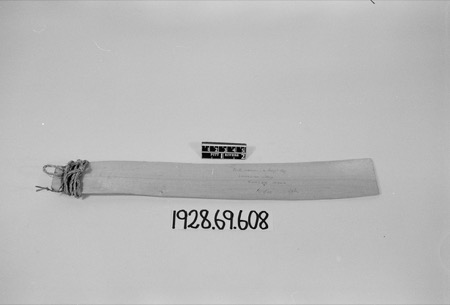
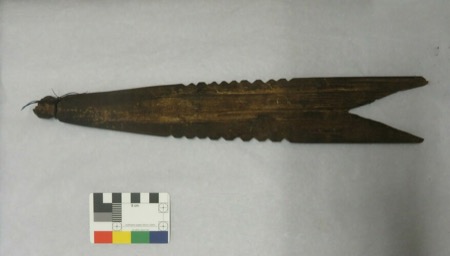
The field boundary worked differently among the Rengma. Watchers guarded crops through the night and day, shouting from platforms, pulling strings to work bamboo clappers and hanging matting to flap in the wind. Sometimes they used bullroarers too, acknowledging that they had borrowed them from the Sema. Those instruments could not be brought into the village. The borrowed voice fitted an existing array of crop guards, but its welcome stopped at the settlement. A borrowed instrument could be fitted into local rules about place. 4
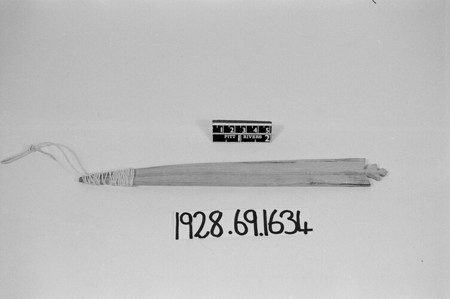
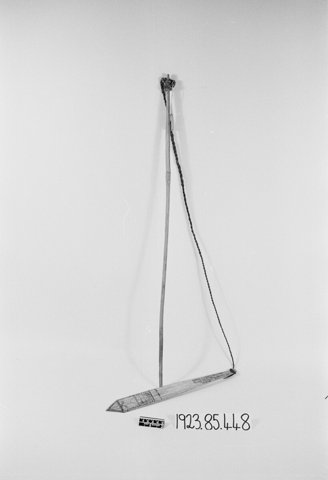
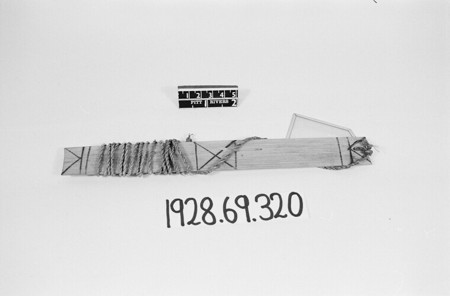
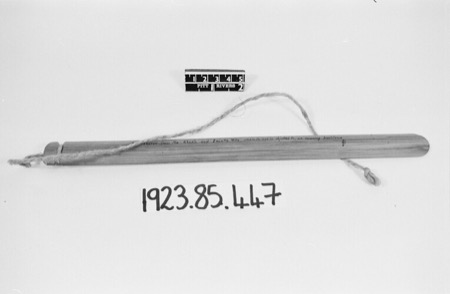
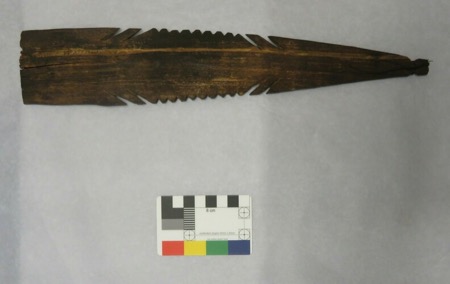
At Tamlu the Konyak kampi called rain. The surviving blade was used, rather than made merely as a decorative sign; a fibre cord fastened to its notch let the player whirl it. Wakching has its own rain-making record. Elsewhere in the hills a boys' toy could protect ripening crops from birds: Angami accounts name both uses, and a Lhota blade from Okotso was chiefly used while crops grew. Rain-calling and bird-scaring put the same kind of sound alongside different parts of tending a field. 5
Permissions were as particular as the work. Eastern Rengma boys whirled aowu-prurr for amusement even while the crops ripened. In the same account, tops were forbidden at harvest because they were thought to cause wind that could damage the ripe ears. The bullroarer and the top did not share a blanket rule simply because both spun. Children learned which act belonged to which season. The regional family lives in those distinctions: an admired noise can be allowed beside one crop and judged dangerous beside another community's houses. 4
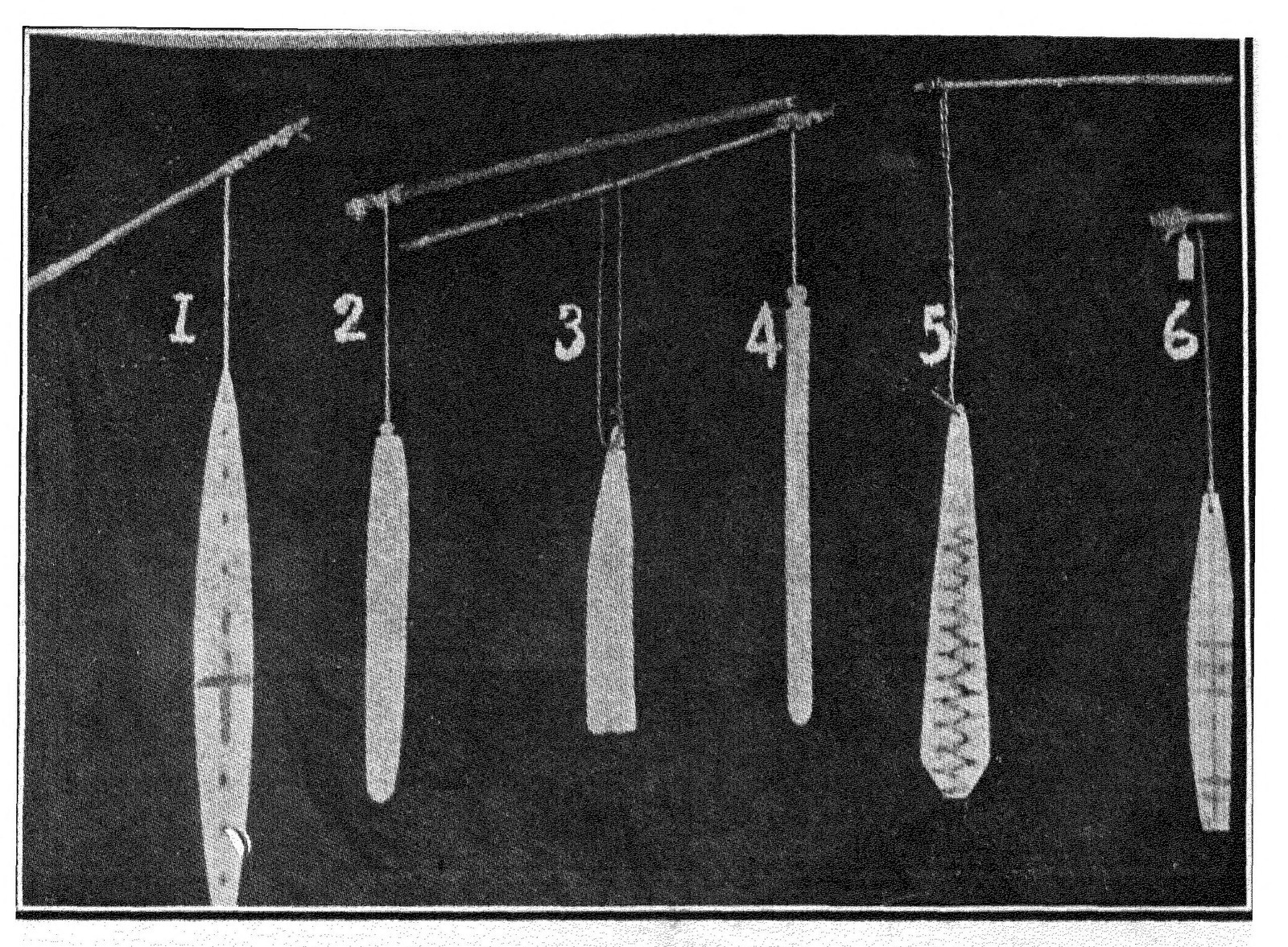
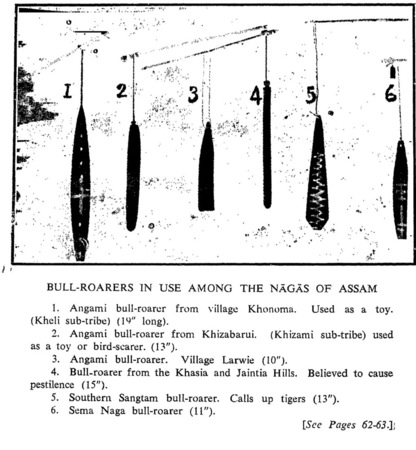
Ao parents scolded boys caught swinging the ungungtsü. The sound was said to bring illness into the village; during sickness, Ao and Chang people forbade it outright. In Mongsen speech its other name, ahpü chayip, meant bat's-wing. In the Khasi Hills, a specimen likewise carried the belief that it caused pestilence. A child's moving slat could reach an audience or provoke a consequence beyond the child's pleasure. 6, 8
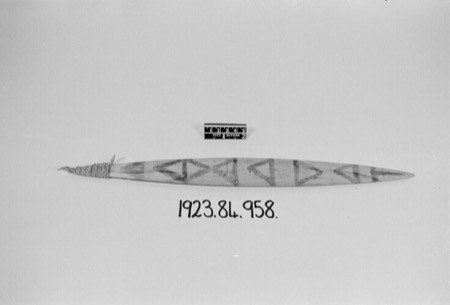
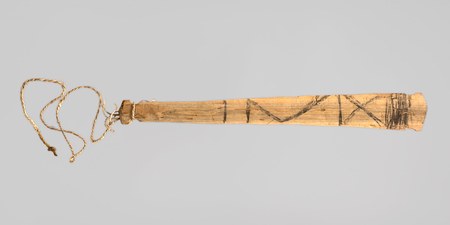
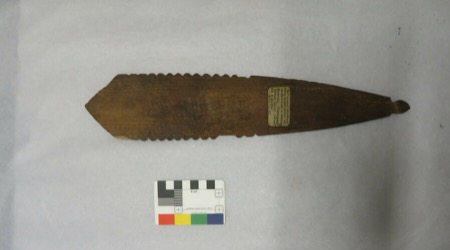
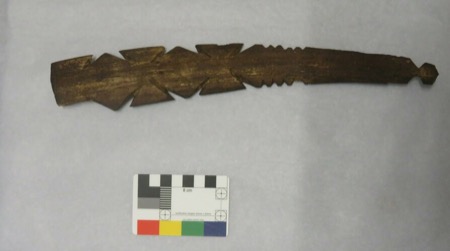
Southern Sangtam children at Phorr met a more tangible objection: old men stopped the athapuka because its noise attracted tigers. Among the Thadou, William Shaw found occasional bird-scaring use, but Shingshuan elders said the instrument called up spirits and objected to sounding it. Sema people gave the resemblance a protective task instead, hanging painted bullroarer derivatives in doorways to avert spirits. Those doorway pieces were suspended signs. The sounded blade, the dangerous invitation and the protective imitation occupied different positions in a related world of household and forest concerns. 5, 7
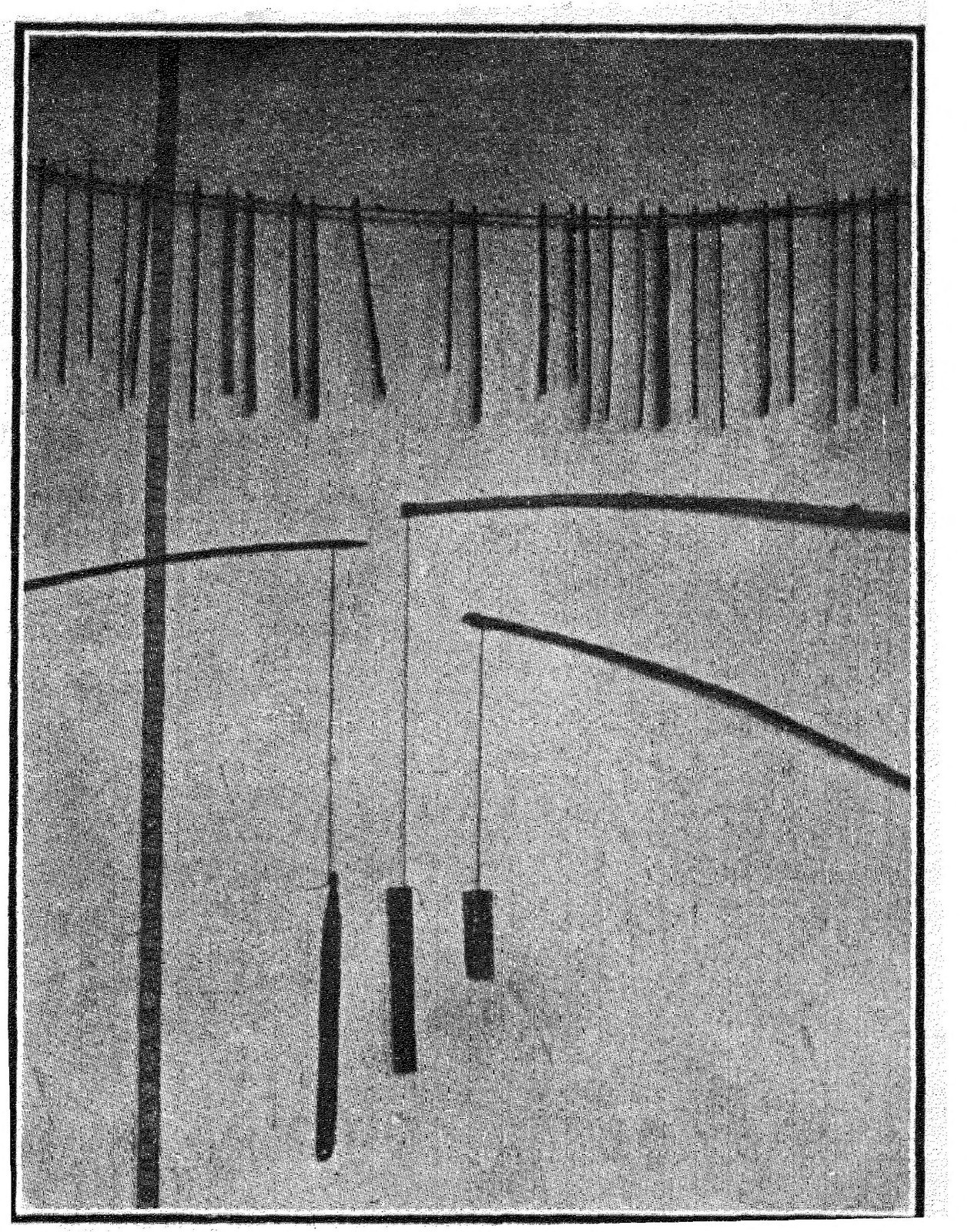
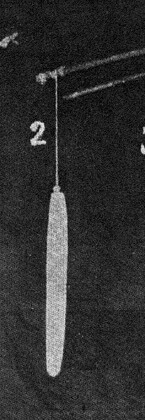
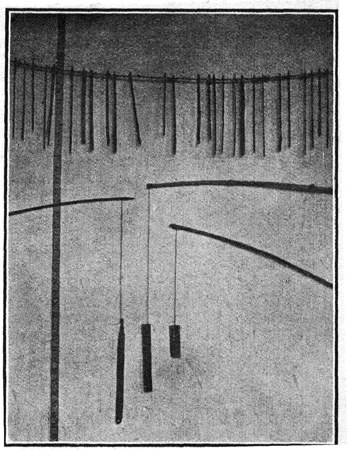
Oraon dhumkurias kept rows of thin wooden or bamboo blades suspended from their beams. Some used the valves of silk-cotton seed pods instead. At dancing festivals the strings came out and hung over the akhra. People explained the display to Sarat Chandra Roy as decoration and the rattling sound made by wind. Roy read a further purpose into it: keeping away the disembodied souls that sought to join dances by entering dancers' bodies. 8
The dormitory display endured long enough for Verrier Elwin to see it at Borhambey in March 1940. Santal Baha Parab put a whirling instrument into motion along another route. As the sal trees began to flower, people prepared the sacred grove. Three participants became possessed by its deities: one took ornaments, basket and broom, another bow and arrows, and another a battle-axe. They ran toward the grove, followed by boys carrying drums, cymbals, a bugle and bullroarers. The voice travelled with the gathering toward the place of the flower festival. 10, 9
In the Abujhmarh hills, Maria boys made ait from split bamboo, sharpened one end and cut a notch for a bark string. They looped the string around a finger and swung counter-clockwise. When Grigson asked for instruments at his camps, the boys made them for him. He understood the sound as amusement, alongside other youth recreations. Muria boys in neighbouring Bastar also whirled notched bamboo slats; Elwin found play rather than a religious or magical purpose. 11, 10
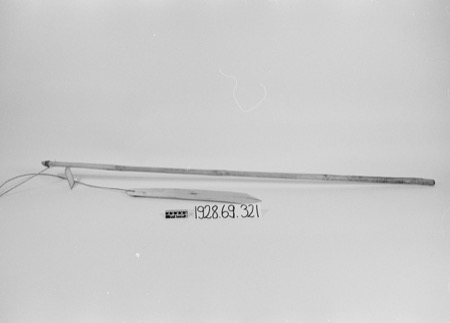
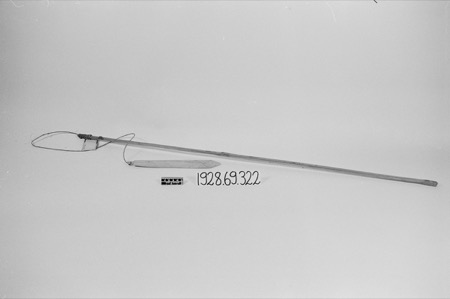
A later photograph from Bastar puts the blade to work: a man holds a pole taller than himself, with a small blade turning from a long cord to drive birds from crops. Other South Asian specimens carry different histories of ordinary making: a Karbi wooden toy set spinning fast for its whirr, a Malabar bamboo toy, and a Calcutta example. The ease of fashioning a sounding blade helped keep it available for an afternoon's invention and a field's immediate need. 12, 13, 14
Sinhalese boys swung a helibambara to keep cattle out of paddy. The humming sound resembled a cheetah's growl. A kitul-fibre string and stick drove the turning bamboo blade, kotipetta: koti meant cheetah and petta a thin piece of wood. The desired listener was an animal trespassing on cultivated ground. Seligmann was told that boys also whirled their toys while following the Colombo Perahera procession. The whirling toys let the boys add their own voice to the festival crowd. 15, 16
In the central Nicobars, a transformed roarer gave wind the task of turning it. A twisted plank revolved about a pin, carrying bamboo sounders; poles raised the apparatus forty to sixty feet above the seafront. People at Katchall and Nancowry put them up in early November as the northeast monsoon arrived, greeting the incoming season and warning navigators. Here the sounding air marked a coastal transition. Across the broader family, children, field watchers and collective observances give the voice its moment: a chosen season, a guarded place and someone who needs to hear. 17, 18
Once the boundary of Ker-puja was proclaimed, the rite became a religious lockdown: nobody could enter or leave, and inside the sealed ground no one — not even the king — might wear shoes, light a fire, dance or sing. A household overtaken by a birth or a death paid a fine to cross the line. Into…
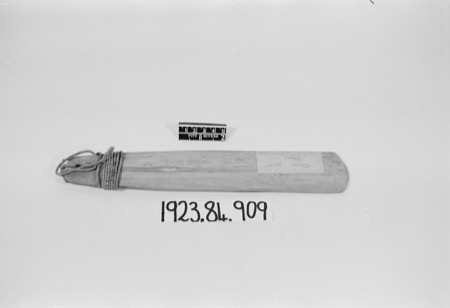
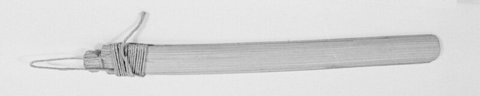
Representative — not this record’s object · Sümi hewu with its string attached, Pitt Rivers Museum 1923.84.909
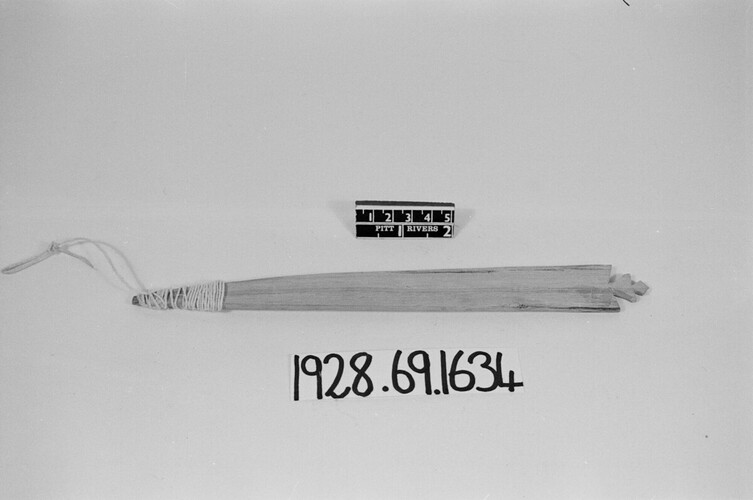
Among the Konyak of Tamlu village, in what is now Nagaland, a bull-roarer called kampi was whirled to bring rain. Henry Balfour, first curator of the Pitt Rivers Museum, collected this one in November 1922 on his tour of the Naga Hills; it is a length of wood 45 centimetres long, with the cord…
The Rengma of Meluri made no claim on this bull-roarer: they freely admitted they had borrowed it from their Sema neighbours, and it might not be carried into the village. Whirled on a cord tied through a hole near its point, the aowu-prurr buzzed out in the fields, and among the Eastern Rengma had…
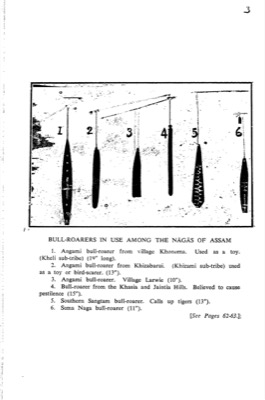
S. C. Roy, Oraon Religion and Customs (Ranchi, 1928), plate; specimens supplied by J. H. Hutton; scan archive.org dli.ernet.107911 · Public domain
Among the Ao Naga of the Mokokchung hills, the bull-roarer — ungungtsü in the Chongli speech, ahpü chayip, "bat's-wing," in Mongsen — was a flat slat of wood or bamboo about nine inches long, and it belonged to boys alone. By the 1920s J. P. Mills saw them only rarely, and he learned why: parents…
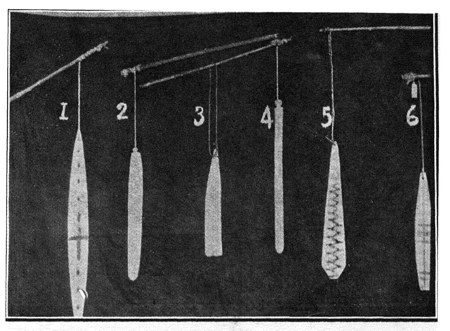
Representative — not this record’s object · Roy’s plate of six Assam-hills bull-roarers.
S. C. Roy, Oraon Religion and Customs (1928), Illustration 17; specimens supplied by J. H. Hutton · Public domain
When Sangtam children at Phorr village swung this toy, the old men made them stop, certain the whirring sound drew tigers. It is a bull-roarer of light wood, its cord attached to a stick, with rough charcoal designs that include a human figure. J.H. Hutton collected it in the Naga Hills, and it is…
A bull-roarer of the Thadou (Kuki) of the Manipur hills, now in the Pitt Rivers Museum at Oxford. Their own ethnographer, William Shaw, found it a rare object, hung on its cord by a notch rather than a bored hole, and swung now and then to scare birds — but not merely a toy: in the Shingshuan clan…
Editorial note, printed pp.145–146, IA image leaf311: Ker-puja broad bamboo strip, one cord, rapid whirling and deep far-carrying bho bho. Not a Kharchi fourteen-gods origin tale.
Festival section, Ker Puja: marked boundary announced beforehand; entry and exit prohibited. Contemporary context does not independently attest present-day bhemra use.
p.84: crop-watchers, Sema borrowing and prohibition on village entry. p.123: Eastern Rengma boys' play allowed during ripening; separate top prohibition. Not a claim that every Rengma subgroup had identical rules.
pp.156–157, bullroarer entry: occasional bird-scaring, Shingshuan spirit-summoning objection and Sema doorway imitations. The Sema derivatives are not sounded blades.
p.141: flowering sal season; sacred-grove preparation; Jaher-era, Moreko and Marang Buru possession and carried objects; boys follow with bullroarer and ensemble. The participants, not the instrument, are possessed.
p.293: March1940 Borhambey strings seen with Hivale and Archer; p.529: Muria/Jhoria bamboo toys, no magical purpose found; p.544 fig.142 Markabera example. p.272 Kiwai comparison is not an Indian attestation.
p.183: Hill Maria ait, notched bamboo, bark cord looped around finger, counter-clockwise swing and boys making examples at camps; recreation passage p.187. No former cult inferred from play.
Quai Branly PF0147257, slide MPD9: long-handled rig in action, caption explicitly says bird-scaring in crops. Folded support of the accepted Bastar attestation, not a new region member.
Folklore11(4), printed p.456; scanned leaf478. Original note: observed children’s toy use, report of Colombo boys following Perahera, Kandy whip substitute and Anuradhapura bamboo toys. Publisher DOI10.1080/0015587X.1900.9719598 independently confirms folio.