Crop guards, dangerous calls and children's inventions
Across mainland and island Southeast Asia, the whirling blade works where cultivated ground meets animals, weather and spirits. Rice-field duets guard the harvest; a tiger's apparent voice frightens elephants or draws a tiger nearer; children turn bamboo into sound. Particular customs connect a wide repertoire of work, play and powerful voices.
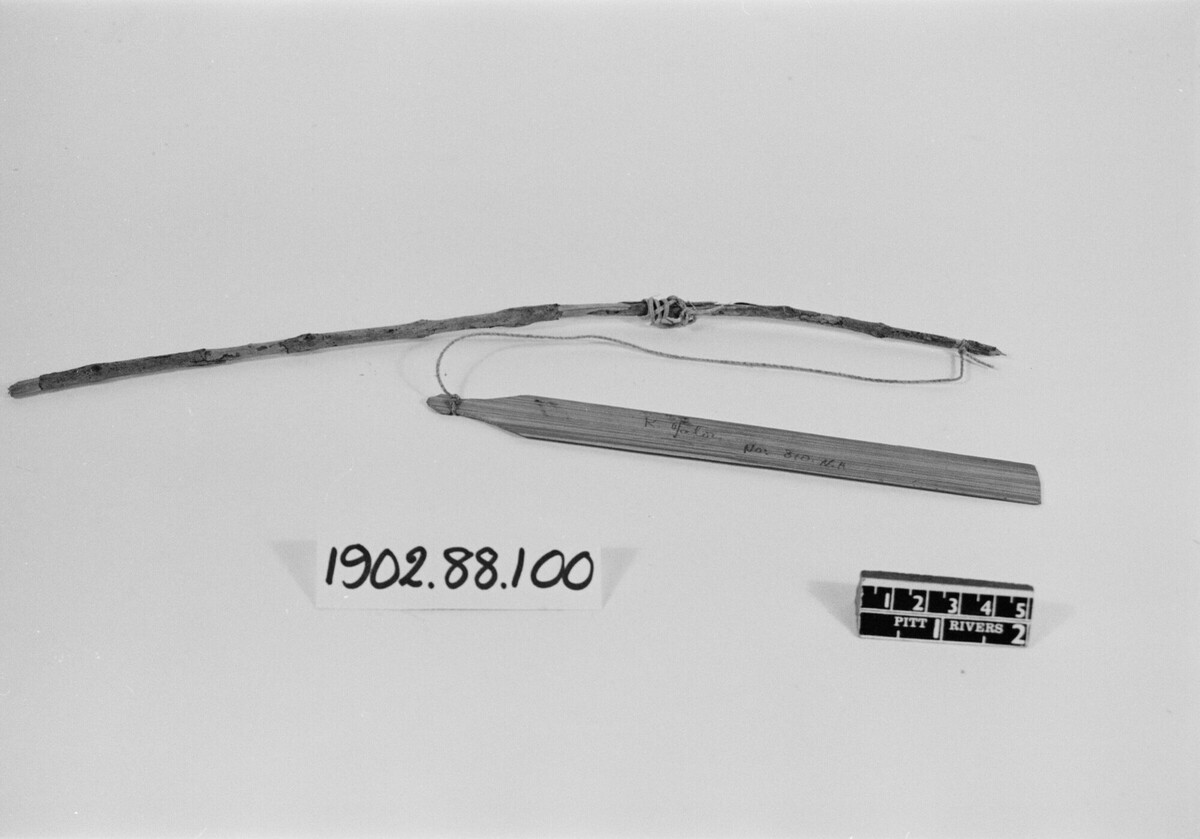
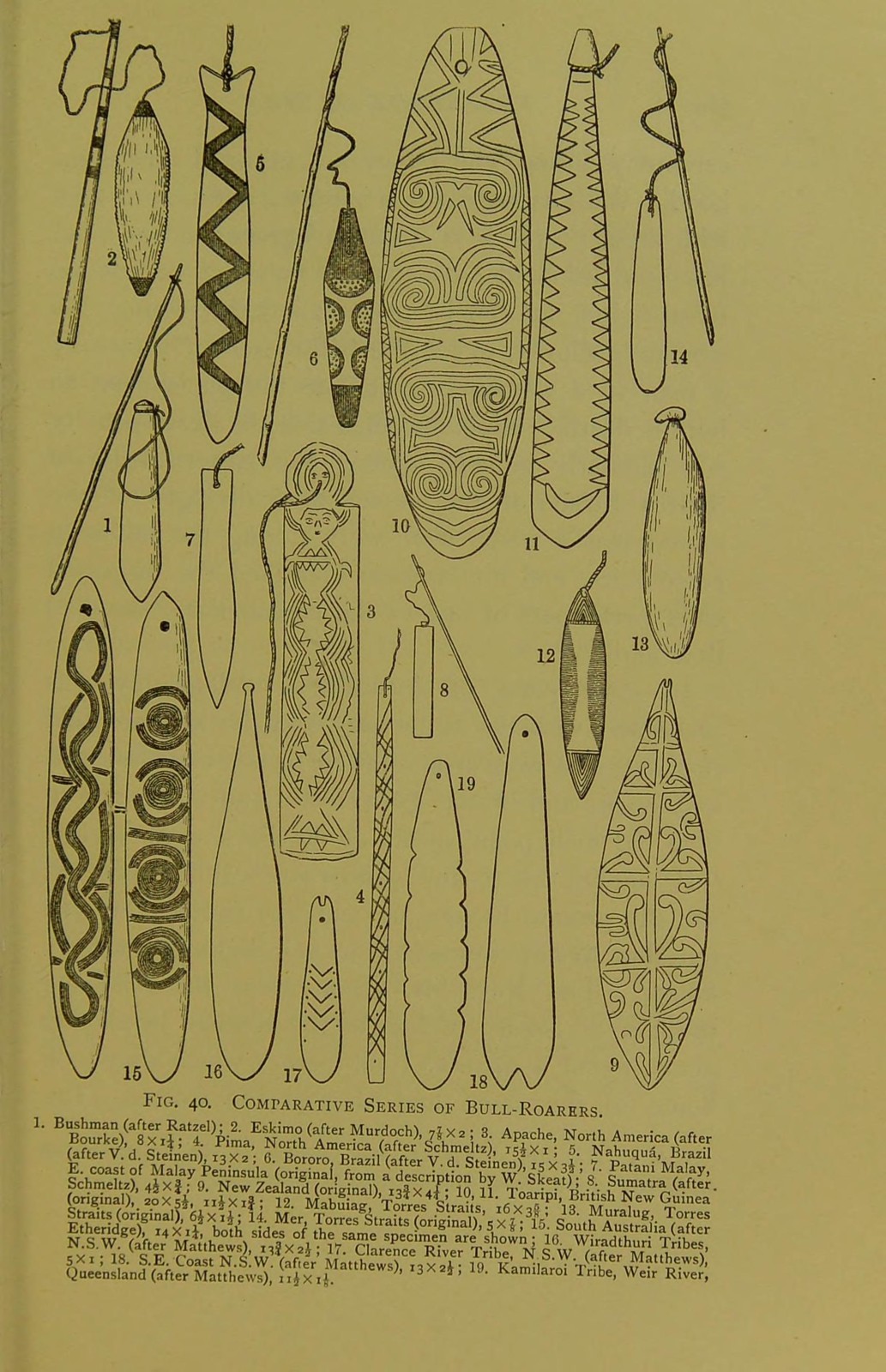
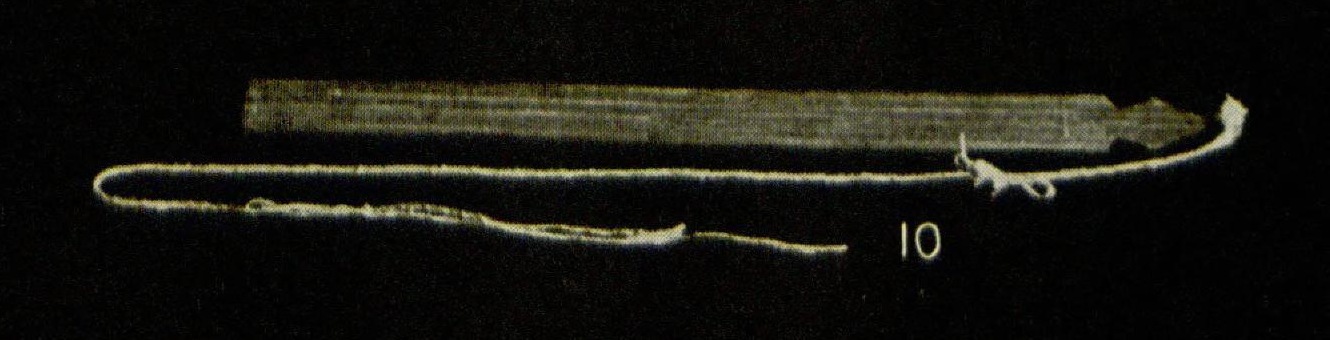
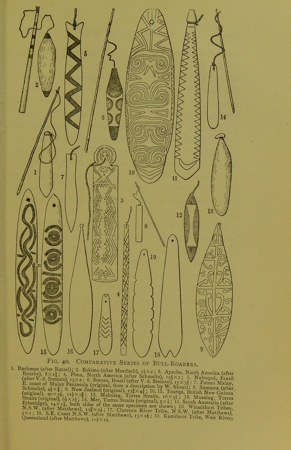
Jalor (Yala) MalaysJalor baling or berbaling: complete cane blade, cord, and whirling stick, Pitt Rivers Museum 1902.88.100.Pitt Rivers Museum, University of Oxford (1902.88.100)Patani Malay boatman, Kuala Langat / SelangorHaddon’s fig. 40, no. 7: the Patani Malay lembing buluh.A. C. Haddon, The Study of Man (1898), fig. 40 · Public domainKintak Bong / Semang NegritoEvans's 1922 drawing of a Kintak Bong toy bullroarer (Pl. XVI, fig. 10).I. H. N. Evans, 'Negrito Beliefs and Customs', Journal of the Federated Malay States Museums 9 (1922), Pl. XVI, fig. 10 — via archive.org · Public domain
A plantation guard makes a tiger-like sound to drive elephants from the crop. A child makes a similar noise in the forest, and the elders fear that a real tiger will answer. Between those two possibilities lies a distinctive Southeast Asian world of whirling sound. A blade can guard rice, call rain, trouble an enemy's soul or give a child pleasure. Its force depends on the listener and the place. Across the peninsula, Borneo, the Philippines and the eastern islands, people put that force to work at the boundaries of cultivated life. 4, 6, 1, 12, 9
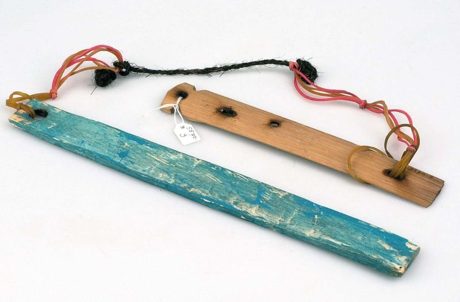
Two Kenyah-Badang players swing their kidiu over the hill-rice fields at harvest. Each wooden oval hangs from a string and handle; rapid swinging gives it a pitch. Together the players interlock pitches and rhythms, turning crop protection into a duet. The pests to be driven away are insects. A sound made by two people, responsive to their speed and timing, becomes part of the work of bringing the padi safely home. 1
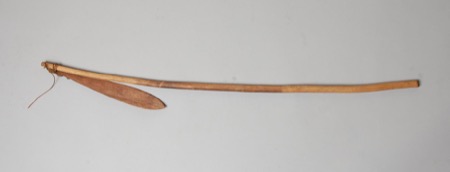
Farther down the Bornean rivers, the task was to keep birds from rice. Charles Hose first encountered a bullroarer in a Kenyah house on the Tinjar. When he showed it to Narom people near Claudetown on the lower Baram, they recognized it, said they used it frequently and made examples for him. Their spearhead-shaped wooden blades had two projecting ears at the corded end and a long stick to drive the swing. The sound had familiar work to do before it became an object in a collection. 2
Taiwan offers a related repertoire among its Indigenous communities. Amis children used bnbn in play and to protect crops from birds. The Tsou euvuvu carried farther: its drone echoed across valleys as a warning of enemies, called rain and frightened birds, and later greeted the opening of the fona life-bean festival. These are particular Taiwanese practices within the wider Austronesian world. They extend the comparison from a cultivated field to the valley through which a community hears approaching danger. 18
A Kayan rice clearing did not leave the local spirits homeless. Trees remained standing on high ground for the Toh, who were thought to rest in them. One could be stripped of its branches and fitted with a cross-pole hung with palm leaves. Sometimes a bullroarer hung there too, dangling and flickering in the breeze. A boys' plaything had become part of arranging a new field around its older inhabitants. The instrument was suspended on the tree, rather than actively swung by a performer. 3
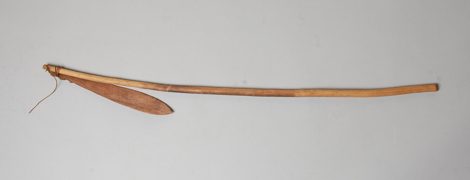
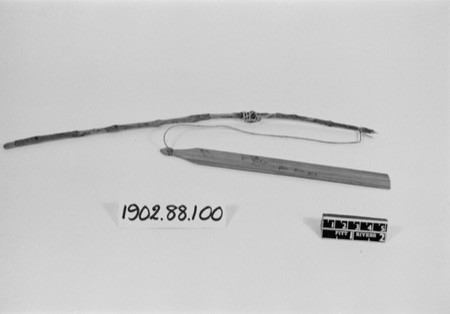
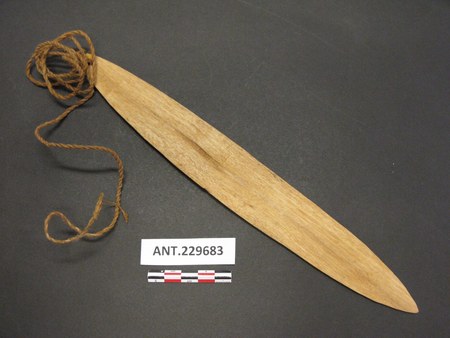
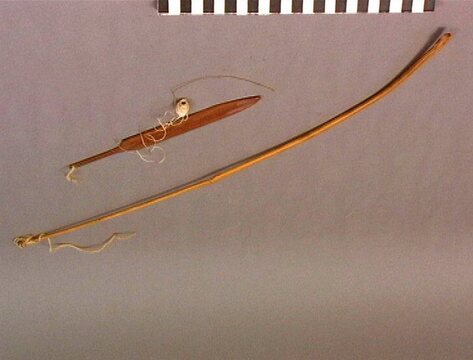
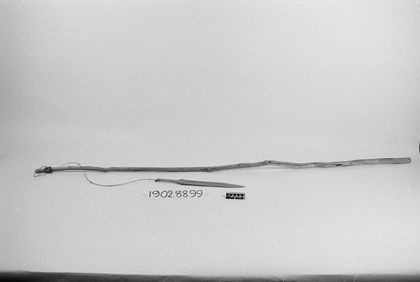
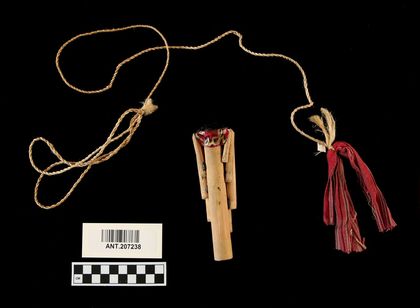
The Malay plantation guard addressed a more bodily danger. A Patani boatman called his instruments lembing buluh, bamboo spear; their noise was used against elephants, and one account likened it to a tiger. At Jalor, farther up the peninsula, a cane blade hung from a cord and long fishing-rod-like handle. The baling could travel from plantation work into a child's hands. An animal driven away, a spirit given somewhere to remain and a child enjoying the swing are different ways of living with the same sounding object. 4, 5
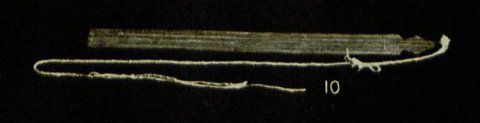
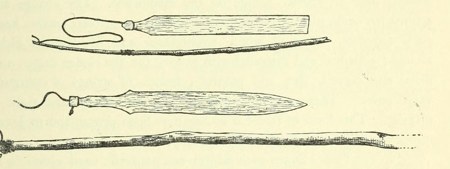
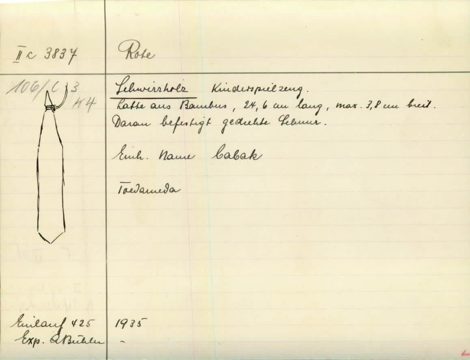
Among the Kintak Bong, a child's bĕtaling had another identity: the ghosts' Jew's-harp. Sounding it in the forest was forbidden because a tiger might think it had heard a companion and come looking. The warning gave a familiar toy an unsettling audience. In the same Kenta account, offences against Kaei could set his dragon or snake guardian Tanogn roaring, and that roar made thunder. The bullroarer's tiger warning belonged to this world of consequential offences. 6, 7
On Flores, the bamboo jata also entered the fields, this time to call rain among the Ende, according to the missionary Pé Rozing’s report. Among the Lio farther east, a warning ran in the other direction: its noise resembled a poisonous snake moving and might bring the animal near. The rain practice and the snake warning belong to their respective communities. Set beside the Kintak tiger, they show how an imitated sound can be understood as an invitation. The player's intention does not determine everything that might hear it. 8, 9
The Semaq Beri people whom Ivor Evans met on the Tekai River gave the storm a vigorous body. Nenek, whose name means ancestor in Malay, made thunder by beating his arms against his sides and sounding his armpits. For lightning he flashed a thin board tied to a string. In that telling the bullroarer belonged to the storm-being himself. An anteater held up the sun in the same account, curling around it to make night and unrolling to bring the day. Weather and daylight came from bodily acts. 10
The Southern Lisu dictionary preserves the name of another forest encounter. The spirit fũ lù is deaf, yet a bullroarer is required at its ceremonies; fũ lù yũ du names the instrument. The preserved words do not explain the paradox. They give the voice a demanded place in a particular spirit's observance. Beside Nenek's corded lightning and the Kintak ghosts' Jew's-harp, the Lisu pairing shows several ways a whirling sound can enter relations with beings beyond the visible company of players. 11, 10, 6
After a violent death among the Bontoc, the wedwed sounded with a notched mouth flute and reed aerophones to disturb the killer's soul. Mourning also addressed the person who had been killed. Old women keeping vigil beside the seated dead sang annako, challenging the spirit to take revenge and restore its honour. The instruments and the women's song had distinct addressees in a wake where the living expected the dead to act. The roar joined a response to injury that reached beyond the body of the victim. 12
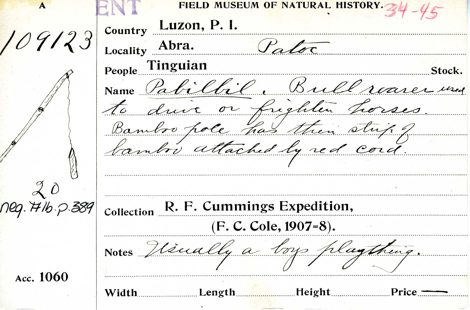
Nearby accounts preserve other lives for the instrument. The Sagada bawengweng was a children's wooden toy. At Patoc in Abra, Tinguian boys swung a thin bamboo blade overhead for its pleasing noise and to frighten stray horses. The shared resource was a voice easily put into motion; communities gave that voice its occasion and its listeners. 13, 14
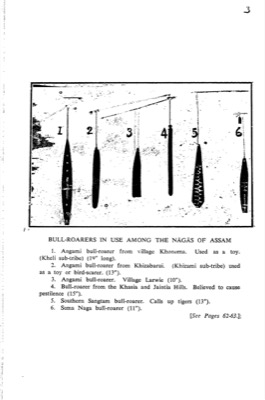
On Sumatra, Toba Batak children had small oblong wooden roarers; Karo children swung a bamboo spearhead from a long flexible switch. The latter made a little lance circle in the air, tethered to the wand that propelled it. A Rote example likewise belonged to children's play. These instruments ask for skill: a blade must be made, a cord secured and a rhythm found that keeps the sound going. Their different shapes preserve choices by makers rather than a single standard pattern carried unchanged across the islands. 15, 16, 17
Play runs through the larger repertoire because children can make and command the sound for themselves. Tinguian games placed the roarer among miniature farming tools, toy animals and other bamboo inventions. Elsewhere the same portable voice worked for a harvest or carried a warning about the forest. Southeast Asia's broad family is held together by these recurring movements between amusement and consequential action: air set turning, an intended listener, and a cultivated world whose edges need care. 14, 1, 6
At harvest in the hill-rice fields of the Upper Rejang, the Kenyah-Badang set the air itself to guard the crop: two players, two kidiu — oval wooden blades on strings and handles — swung fast and pitched against each other in the interlocking weave that runs through Bornean music, gongs and bamboo…
On Borneo the bullroarer earned its keep in the rice fields. Charles Hose first came upon one in a Kenyah house up the Tinjar River and was told it was swung to scare birds off the padi; when he showed his find to the Narom, a small people of the lower Baram near Claudetown (today's Marudi), they…
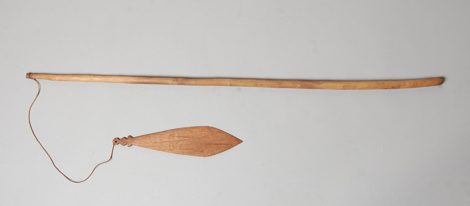
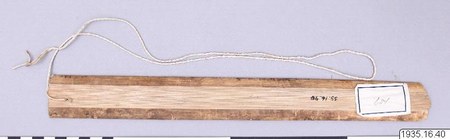
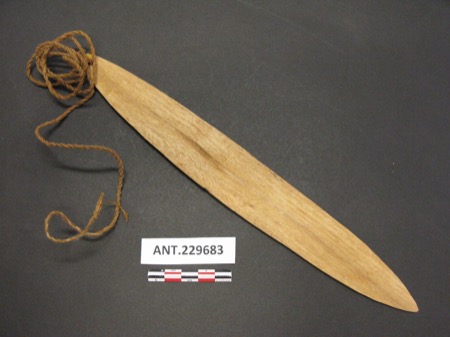
Representative — not this record’s object · A wooden bull-roarer with a separate carved stick handle.
When the Kayan cleared jungle for padi, a few trees were left standing on high ground as resting-places for the Toh, the spirits of the locality. A tree might be stripped of its branches, with a pole lashed across the stem and bunches of palm leaves hung from it. A bullroarer was sometimes hung on…
Representative — not this record’s object · Kenyah bullroarer rig from the Baram River.
A. C. Haddon, The Study of Man (1898), fig. 40 · Public domain
In the Kuala Langat district of Selangor, W. Skeat of the Federated Malay States Service collected a pair of bull-roarers from a Patani boatman, who called them lembing buluh, "bamboo spear." Swung on their cords, they were used to scare elephants away from the plantations, and one informant told…
Pitt Rivers Museum, University of Oxford (1902.88.100)
In the Malay villages of Jalor, now Yala in southern Thailand, the baling or berbaling drove elephants out of the plantations: a very thin bamboo blade, eight inches by three-quarters, strung to a slender stick and whirled to a hum. When Annandale and Robinson collected one at Kampong Jalor in…
I. H. N. Evans, 'Negrito Beliefs and Customs', Journal of the Federated Malay States Museums 9 (1922), Pl. XVI, fig. 10 — via archive.org · Public domain
The bĕtaling was a children’s toy with a dangerous place to play. Sound it in the forest, the Kintak Bong said, and a tiger might come looking for the companion it thought it heard. At Lubok Tapah, headman Mempelam gave Ivor Evans another identity for the sound: the ghosts’ Jew’s-harp. The living…
I. H. N. Evans, 'Negrito Beliefs and Customs', Journal of the Federated Malay States Museums 9 (1922), Pl. XVI, fig. 10 — via archive.org · Public domain
I. H. N. Evans, 'Negrito Beliefs and Customs', Journal of the Federated Malay States Museums 9 (1922), Pl. XVI, fig. 10 — via archive.org · Public domain
PRPM music terminology entry: two players interlock pitches and rhythms; Kenyah-Badang hill-rice harvest; insect deterrence. Matusky and Tan's 2017 index corroborates the musical example but is not used for additional unseen-page claims.
Journal of the Straits Branch of the Royal Asiatic Society 40, pp.58–59, catalogue no.1121: Tinjar Kenyah discovery and Narom recognition, frequent use and ordered specimens. Cambridge's separate object attribution remains ?Narom.
p.11, item31, fig.5: Jalor baling cane blade and fishing-rod handle; former elephant-scaring and contemporary play. Wind-and-rain claims in the adjacent entry concern a propeller windmill.
Archiv für Religionswissenschaft24:209–233, pp.225,227,232–233: Kenta attribution, Tanogn dragon/snake guardian and forest bullroarer offence. No bullroarer weather rite or blood-sacrifice atonement is asserted.
pp.158–159, sections LIII–LIV: Ende jata form and boys’ instrument; the following whizzing-bow section has a different mechanism. Rain report is carried separately by Bos/Rozing and Grove2014.
Bulletin347, KIT Press/Tropenmuseum, p.44 and p.64 n.99: Pé Rozing rain-use report and Lio informant Fransiscus Hiwa snake-sound prohibition; retained in the existing EXH2026-052 source chain. Restricted preview; ISBN90-6832-833-6. Grove Dictionary of Musical Instruments, 2nd ed. (2014), vol.III p.780, s.v. Ower-ower, directly checked in the prior record source audit, relays the Ende rain report; Bos’s full rain sentence was not recovered verbatim.
Journal of the Royal Anthropological Institute48, p.191: Tekai Sakai-Jakun account of Nenek's armpit thunder and corded-board lightning; anteater and sun. Separate Ulu Sungkai lunar tales below are not merged into it.
STEDT Monograph4, printed p.289 (PDF page323), fũ lù and fũ lù yũ du. Ceremony demand is lexical testimony; construction and the reason for the spirit's deafness pairing are not supplied.
National Library PDF page16 (zero-based index15): wedwed with notched flute/reed aerophones after violent death, and annako vigil; translation continues on page17. Earlier packet calls these digital pp.15–16; printed folios are absent.
Childhood account, printed pp.272–274: bamboo bullroarer, pleasing sound and stray-horse scaring; toy farming equipment and animals provide the same-community context. The snake-shaped toy is separate.
Ensayos19(28), sections on Amis and Tsou; Tsou section12.6, printed p.120 and fig.54; thesis fig.6.15.6.1 and pp.740–742 independently preserve mechanism and context. Taiwan is an explicit cultural comparison here.