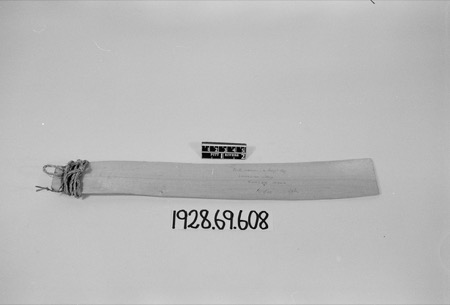
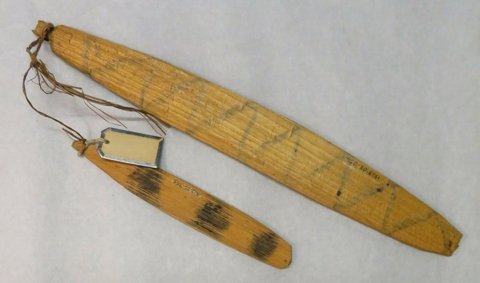
In the Naga Hills of northeastern India, a whirled blade could bring rain, drive birds from the ripening rice or call illness and tigers into a village. Tamlu boys could swing their rain-caller only when rain was wanted. Rengma field-watchers used a roarer borrowed from the Sümi that could never enter the village. At Kongan the bullroarer was forbidden outright, while wooden pendants rattled under the gables of the men’s houses.
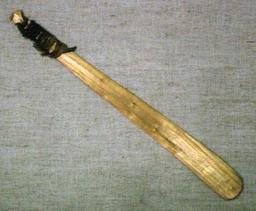
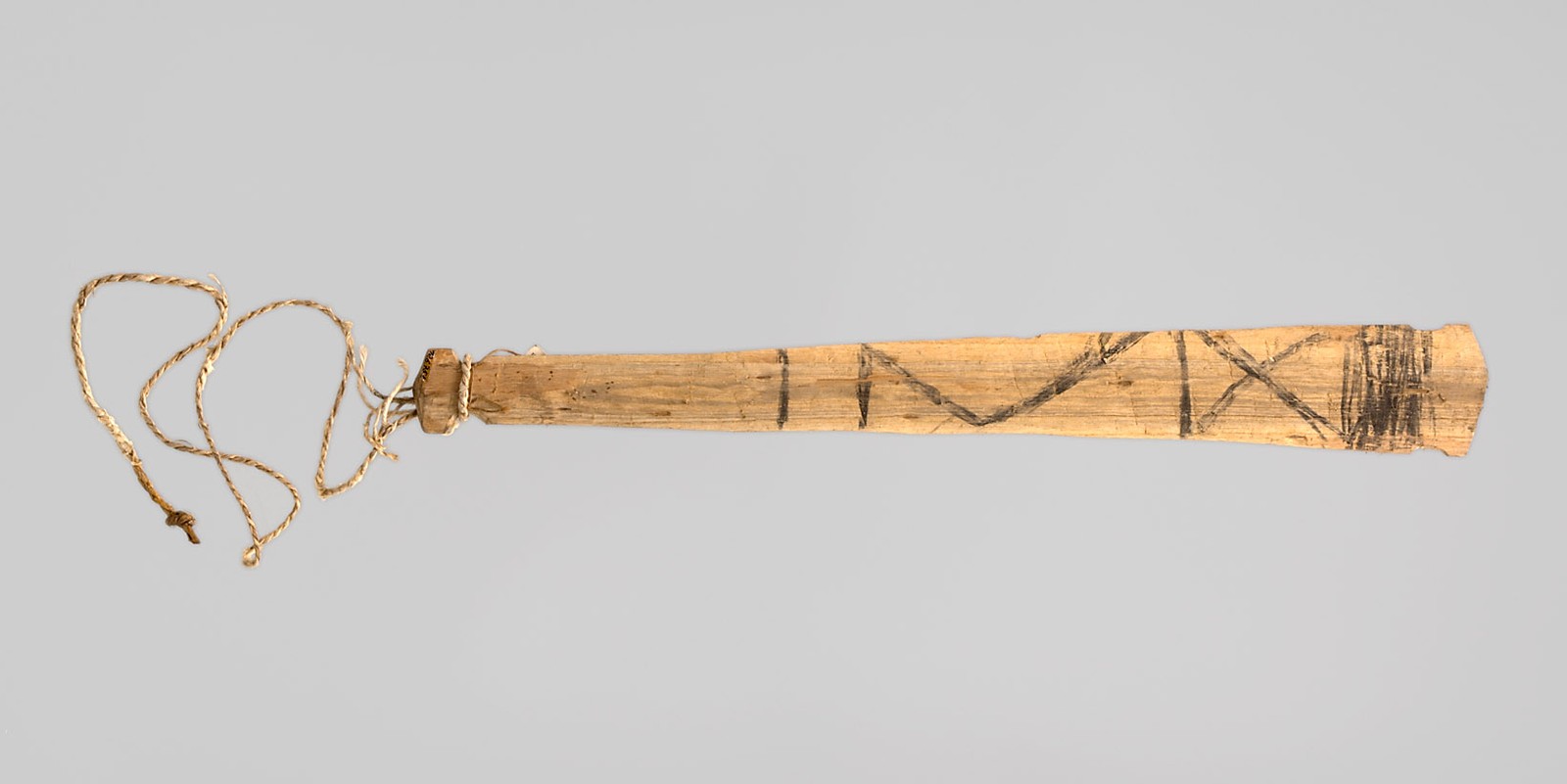
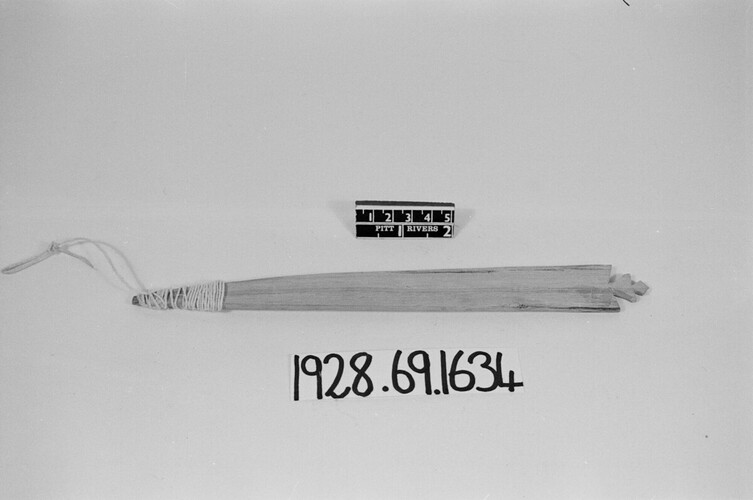
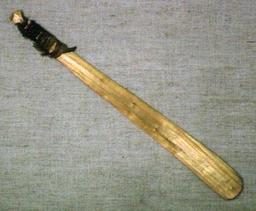
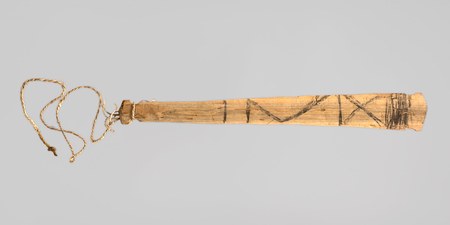
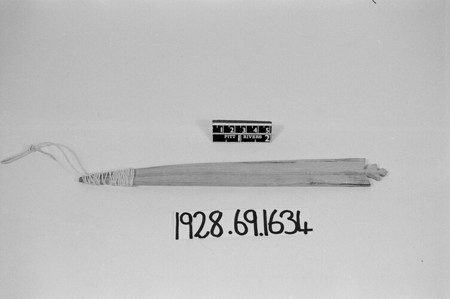
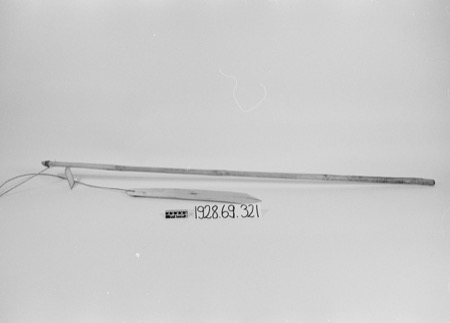
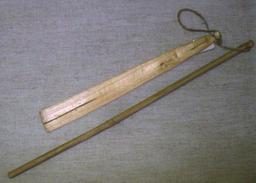
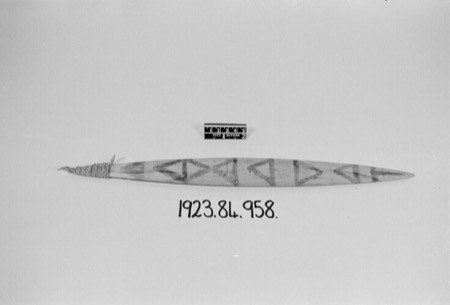
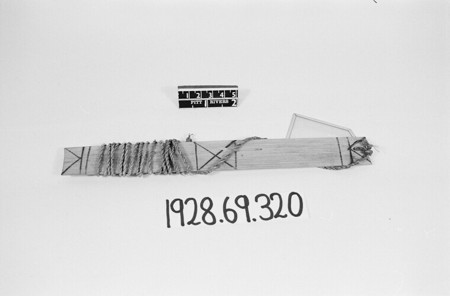
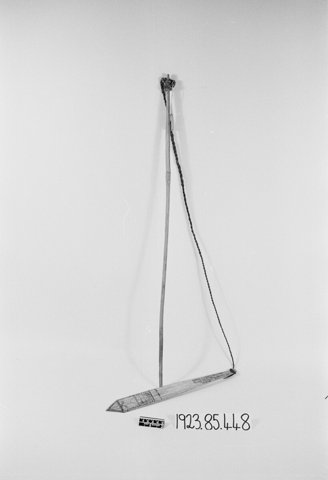
Konyak / Tamlu villageKonyak Naga kampi bull-roarer, Tamlu village. PRM 1953.10.109.Konyak Naga / WakchingThe second Wakching rain-caller: a bamboo blade marked with black lines, now in Vienna.Rengma / Meluri villageThe same aowu-prurr in colour, cord wound round its narrow end.
A boy at Tamlu, a Konyak village in the Naga Hills of northeastern India, had to consider the sky before he began his game. His kampi could bring rain; girls could not use it, and even boys could play only when rain was welcome or would do no harm. Henry Balfour heard this rule on 11 November 1922. Six days later, at Kongan, a village within sight of Tamlu, people who knew the bullroarer told him it was genna, forbidden, to use it. 1, 2
When Christoph von Fürer-Haimendorf asked about rainmaking at Tamlu in 1936, people told him there was no real rain ceremony: the boys of the morung, the men’s house, made bamboo bullroarers and swung them. A similar noise would follow in the sky, thunder, and then the rain. The pillars and beams of Tamlu’s morungs were carved with elephants, buffaloes, hoolock gibbons, hornbills and pythons. 3, 1
Wakching’s boys whirled flat wooden bullroarers to bring rain. They had a second method too: catching a crab and hanging it just above the surface of the water. 3
Rengma fields needed shared labour long before they needed a guard. People of roughly the same age, often from one village quarter, formed a field-company and stayed in it for life. A company worked uphill in a long line, a man and a woman on each flank leading the chant, and members worked each other’s fields in turn. When the ears appeared, the work changed: someone had to watch day and night against animals and birds. 4
Among the Western Rengma, watchers hung matting to flap in the wind. Boys sat on high platforms, shouting or pulling long strings that worked bamboo clappers, and by distant fields sleeping shelters were built in the trees so the strings could be pulled at night. Sometimes bullroarers joined this apparatus. The Rengma said openly that they had borrowed them from the Sümi, their neighbours. The roarers could sound in the fields, but they could not be brought into the village. 4, 6
Eastern Rengma boys whirled the aowu-prurr for fun, and no one stopped them even while the crop was ripening. Spinning tops were another matter: at harvest they were forbidden, because tops raised wind that could damage the ripe ears. At Khonoma an Angami bullroarer served for boys’ play and for scaring birds; at Okotso the Lhota threm-threm was a boys’ toy, never used by girls, and whirled chiefly while the crops were growing. 4, 7, 8
An Ao boy risked a scolding for sounding the ungungtsü: only very naughty boys used it, because its roar might bring illness into the village. In Mongsen speech its other name, ahpü chayip, meant bat’s-wing. The slats were about nine inches long, of wood or bamboo, and only boys could swing them. When sickness was about, both Ao and Chang people strictly forbade the sound. 5
At Phorr, Southern Sangtam children played with the athapuka, a light wooden toy on a cord tied to a stick, its surface roughly drawn in charcoal with a human figure. The old men usually stopped them: the noise, they said, drew tigers. 9
Sümi boys sent their roarers over the fields to scare birds from the crops. At Mishilimi, painted imitations of the same blade hung in house doorways in time of illness, to keep spirits away. At Kongan, where the bullroarer itself was forbidden, clusters of wooden pendants called ma hung under the morung gables, rattling in the wind against evil spirits. 6, 10, 2
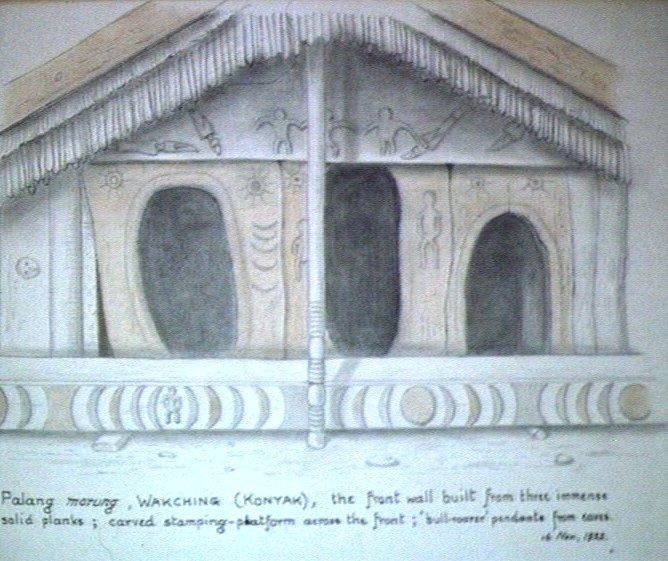
Wakching’s Palang morung had a front wall of three immense planks, a carved stamping platform across the front, and bullroarer pendants hanging in rows from its eaves above the young men’s gathering place. Balfour drew it on 16 November 1922, the day before he reached Kongan. 11, 3
Among the Konyak of Tamlu village, in what is now Nagaland, the kampi was whirled to bring rain — so a boy could play with it only when rain would do no harm, or when the village wanted it, and girls might not play with it at all. Henry Balfour collected this one in November 1922 on his tour of the…
Among the Konyak Naga of Wakching, in the Mon District hills of Nagaland, rain was called down with a flat piece of wood: it widens toward one end, trails a fibrous cord, and hums when it is spun. Christoph von Fürer-Haimendorf collected it during his 1936-1937 fieldwork among the Konyak, and…
The Rengma of Meluri made no claim on this bull-roarer: they freely admitted they had borrowed it from their Sema neighbours, and it might not be carried into the village. Whirled on a cord tied through a hole near its point, the aowu-prurr buzzed out in the fields, and among these Eastern, or…
Among the Ao Naga of the Mokokchung hills, the bull-roarer — ungungtsü in the Chongli speech, ahpü chayip, "bat's-wing," in Mongsen — was a flat slat of wood or bamboo about nine inches long, and it belonged to boys alone. By the 1920s J. P. Mills saw them only rarely, and he learned why: parents…
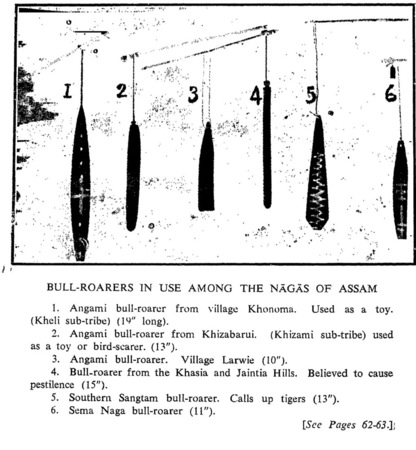
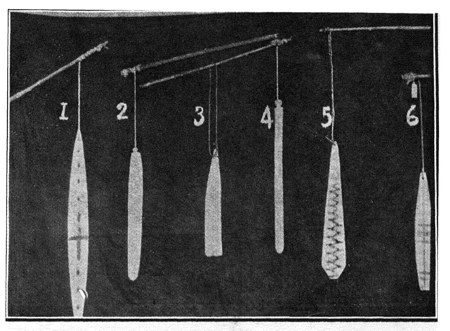
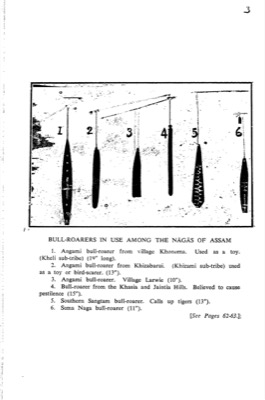
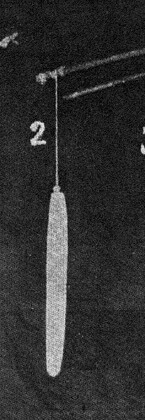
Representative — not this record’s object · Roy’s plate of six bull-roarers in use among the Nagas of Assam.
When Sangtam children at Phorr village swung this toy, the old men made them stop, certain the whirring sound drew tigers. It is a bull-roarer of light wood, its cord attached to a stick, with rough charcoal designs that include a human figure. J.H. Hutton collected it in the Naga Hills, and it is…
Sümi boys sent the hewu or herumu roaring over cultivated ground to scare birds from the crops — a working instrument of the fields rather than the men's house. Painted derivatives of the same form hung in house doorways — at Mishilimi, Shaw recorded, "to act as disinfectants in case of illness",…
Cambridge R73594: Kongan’s ma pendants, wind-rattling and spirit-averting purpose; bullroarer forbidden there, made and used at visible Tamlu. Balfour’s proposed derivation remains his hypothesis.
pp.75–76, field-companies; p.80, tree shelters and clappers; pp.83–85, watching crops and Sema-borrowed roarers forbidden in village; p.123, Eastern boys’ aowu-prurr and separate seasonal top rule.