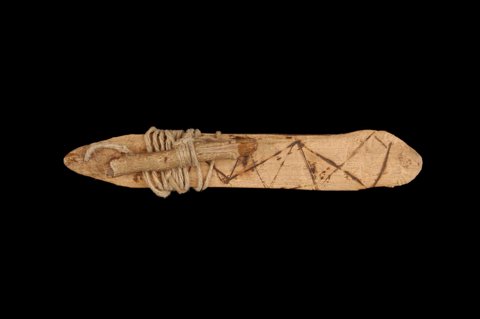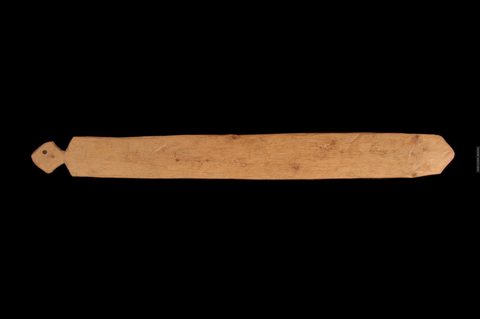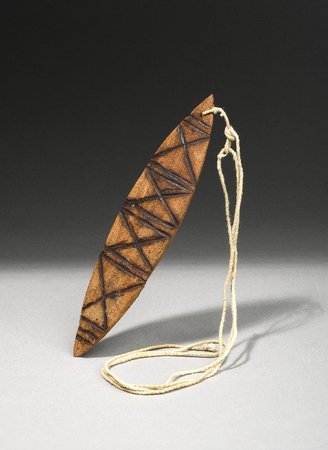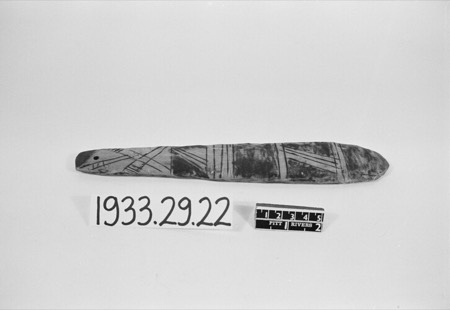
At a Dakka harvest festival, the priest’s company gathers sorghum from every family’s farm, and the grain becomes the first beer of the year. After sacrifice and a meal, the sacred instruments leave their house and their voices travel to the king’s compound; women and children run indoors. At a Koma funeral, iron makes a different journey: under the arms of a dead ritual leader into the grave, and back to the cult when his skull is lifted. In the Benue valley of Nigeria and the Adamawa uplands that run into Cameroon, the ancestors’ voices are stored, fed, revealed and dug up again. 1, 3
A lifetime to learn the things
Among the Koma of the Adamawa uplands, the cult objects called vome or kéné held the community together. A ritual head and a college of senior officiants kept the objects, the medicines and the means of answering misfortune. Knowledge came in stages, through further instruction and through objects inherited or bought at great cost. A man could be circumcised long before he knew enough to become an officiant. 2
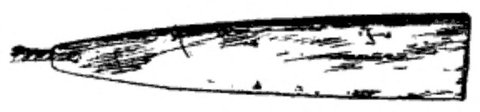
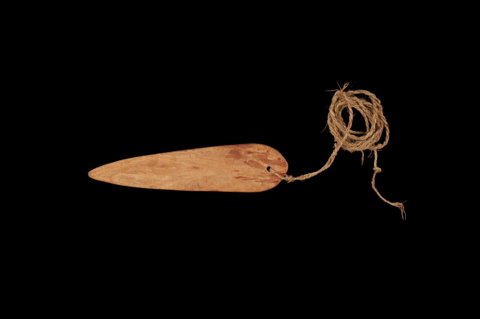
That ladder could be heard across the settlement. Newly circumcised boys sounded the rhombes at the village entrance; the next grade played their instruments near the sacred grove; the great men danced with their kéné inside it. For the Gumbé, Goonu and Ritibé, the iron roarers were revealed a year after circumcision, when fathers brought beer to a holder of kéné. Gɛmé youths, like Samba youths, learned to carve wooden blades and sound them with flutes while travelling in the bush. 2
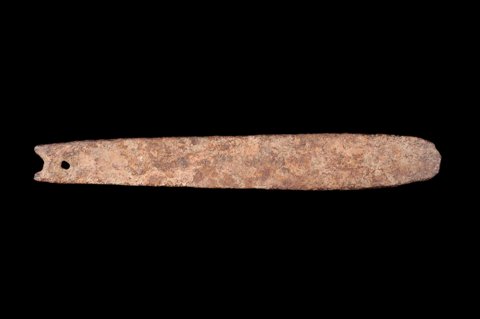
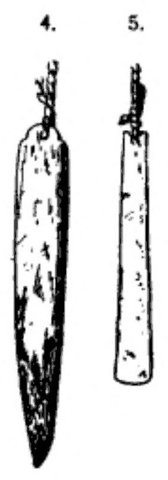
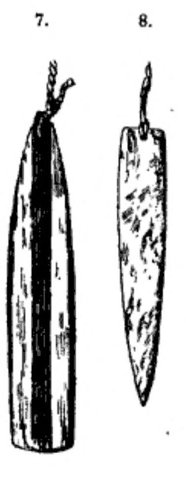
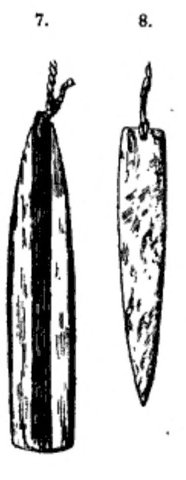
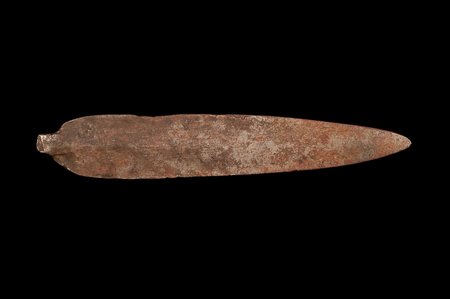
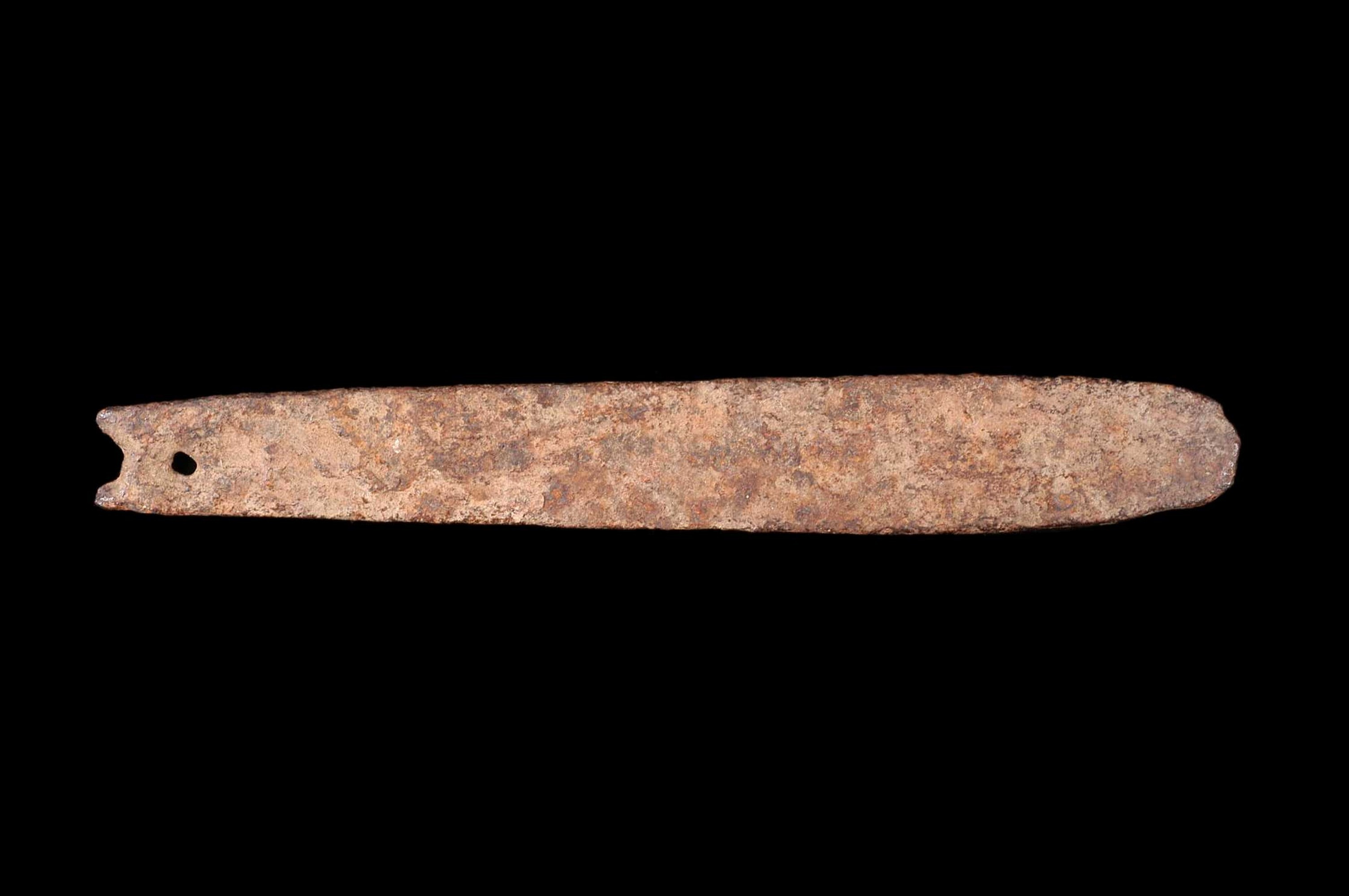
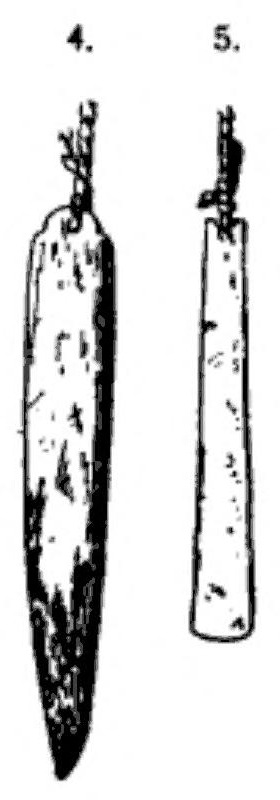
The iron instruments came in families: father, mother and child. Their whirring was the ancestors’ voice; it drove off harmful birds and, at the start of a ceremony, sent the women back to their houses. In the rains other instruments spoke for the ancestors. Nested calabash-neck horns sounded at night and accompanied the pumpkin first fruits, while the roarers stayed in their house. 2
Colour gives an object life
Before a Koma initiation, the elders prepared the tools. The twenty-eight circumcision knives were laid on the ground and marked with a white line along their length and two ochre lines across; rhombes, horns and the other cult instruments received the same. Millet paste mixed with Cissus sap made the white, and ochre the red. Millet or beer stood for male seed and ochre or sacrificial blood for female generative blood, and together they gave life and power to things people had made. 2
At the Koma gɨ́mbē cattle sacrifice, the roarer stands at the threshold of a generous feast. The animal’s owner thanked named ancestors with meat and beer, and the guests’ drink was called rhombe-beer. The iron voice held malevolent spirits at bay so the ceremony could go on, and warned the uninitiated to stay indoors because the spirits were about to speak. 4, 2
What goes into the grave
Death did not make a person an ancestor at once. Koma funeral work went on through beer ceremonies until, generally two or three years later, the skull was lifted free of flesh. Daughters or sisters could join the small party at this exhumation, though at the burial they had been sent away at the assistant’s whistle before the roarers sounded. The skull was cleaned, examined, anointed and brought home, where a successor could ask its owner for children, good fortune and a harvest. 3
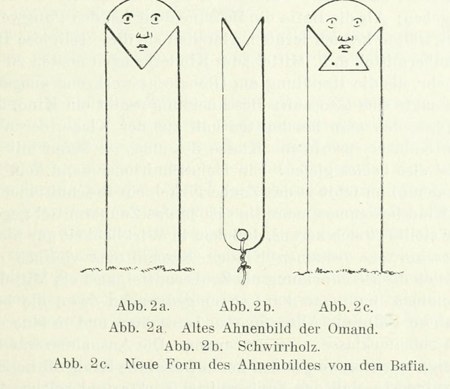
Koma smiths and ritual heads were buried with rhombes under their armpits, and the instruments went back to the cult when the skull was exhumed. Neighbours chose other things for the grave: a Yambu Chamba man could be buried with a fragment of calabash trumpet and a woman with a stone in her mouth, and a Dakka priest received a new iron bell. The Dakka never buried their iron roarers, which stayed in the shrine urn. The priest’s bell, cleaned after its time with the decaying body, joined the other bells called Grandfathers. 3, 1
Langa comes to eat
Every four years or so, after the harvest, the Chamba gathered their boys for circumcision. Fathers, brothers and uncles set up a bush camp. Once the operation was over, the wooden Langa sounded in the evening and the older men went home, leaving the previous class of initiates to care for the new one. Women brought food to an agreed point for these attendants to collect. Through the months of healing the boys fished and trapped, and the best hunters brought back hundreds of smoked field rats for the senior priest. 1
The returning boys put on adult cotton clothes and danced before the chief’s compound with a buffalo-head mask and wind players. Families brought beer and food, women greeted them, and the king announced that they were children no longer. At night the roarers sounded again and the uninitiated withdrew. Langa was an ancient forefather who came to eat and drink. When a boy had died in the camp, his mother was told that Langa had lacked meat and eaten her son. 1
The Dakka year opens its doors
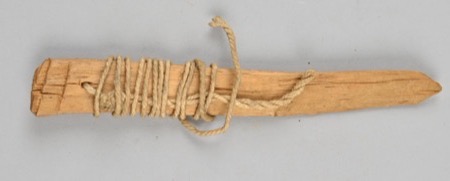
Dakka Langa lay in the Djubuu shrine with the iron rings, bells and plaques called Dosi. Iron blades protected and blessed simply by being there; wooden ones were swung on sacred days. At the first harvest ceremony, Kela, the leaf-clad Kameni and his company went from farm to farm, setting yam, leaves and a stone in the ground for the earth and the dead, while the instruments stayed silent in their house through the rains. A later feast, Dja, gathered the ripe sorghum and made beer for the first taste of the new grain. 1
On Dja evening the Dosi and Langa came out to thank the king, who had given a black goat and a yellow cock for sacrifice. Women and children covered their heads, shut their doors and bent low until the noise went back into the shrine. Children who asked next morning were told that the very old Grandfather had roared. From that day people could eat the new harvest, and the ban on sex was lifted. 1
The house and the father
Among the Bokko, now usually called Longto or Voko, a wooden Uonatonajo hung in the little Nahurga shrine just inside a homestead’s gateway. Its noise meant that the old fathers wanted food and tobacco. The women cooked, and a messenger carried the dishes to the men’s sacred house outside the village. Later a grandfather’s skull joined the household shrine. At a daughter’s marriage, flour mixed in that skull was touched to her body with a plea for a child, and the child would be the ancestor returning, bearing his name. 1
Throw hunger into the bush
Among the Verre smiths of Cholli, in the Adamawa highlands of Nigeria, the cult house of Do’os held a stone in a skin bag, a deep-throated wooden horn, animal-horn pipes, iron instruments and baranga roarers of metal and wood. At the night harvest rite of Nenga Kabusum, the Do’os takes hunger and throws it into the bush: women stay indoors while men beat stones, gourds and pots and whirl the wooden roarers in the dark. The baranga were the rainmakers’ instruments too, and their iron voices matched those of the Chamba Leko voma cult next door. 5
Another Verre harvest rite needed medicine from the headless zam spirits, source of the Do’os medicines and of brass. They tested its naked midnight collector with their children, snakes, monkeys and hyenas, while he carried protective leaves and came home by another path. 5
The roarer travelled along family ties. In the Bachama chiefdom of Dong, in Nigeria, a son of the founder who had grown up at Mbulo, in Samba country, brought it into Dong ritual, and the people of Mbulo say they had it from Sama. 8
Bachama (Bwatiye), Dong · Sama (Dakka / Samba Daka; Sama Mum)
The animal stays in the bush
Among the Dii of northern Cameroon, men whirled the voice of the panther during the boys’ circumcision in the bush while the women stayed in the village. The rhombes and the circumcision knives were seats of the ancestral spirits; hidden together in the mountain, they received sacrifices between ceremonies. 6
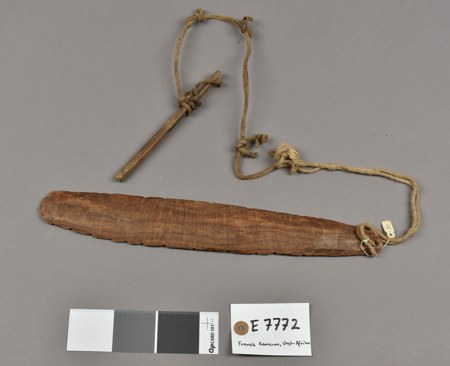
At Mboum Ngan-Ha, the niadok turned the rhombe while women and the uncircumcised stayed indoors: fe-mbaka, the devourer, was abroad. At Garoua, a man named Maunde made a roarer for circumcision. 7, 12
Mboum (Ngan-Ha) · Garoua site; catalog culture Kirdi and Peul, unresolved
The ancestors’ plaque and the boys’ school ruler
Among the Idoma of the lower Benue, alekwu are returning lineage ancestors, present among the living in masquerade. Their society keeps a fish-shaped wooden plaque forbidden to women. Boys make ofukufuku from a school ruler or a scrap of wood and whirl it for fun. 9
Names that carry the tradition
| People | Name | Meaning or use |
|---|---|---|
| Koma | vome / kéné | Cult objects and institutions progressively known through initiation 2, 3 |
| Dakka | Langa | Roarers: silent iron in the shrine and sounded wood on sacred days 1 |
| Bokko / Longto | Uonatonajo | Wooden voice of the dead fathers, kept in the Nahurga 1 |