No. DIET2016-001
Göbekli Tepe decorated bone spatulae
Turkey · Pre-Pottery Neolithic southeastern Anatolia · Near East
Function not recorded
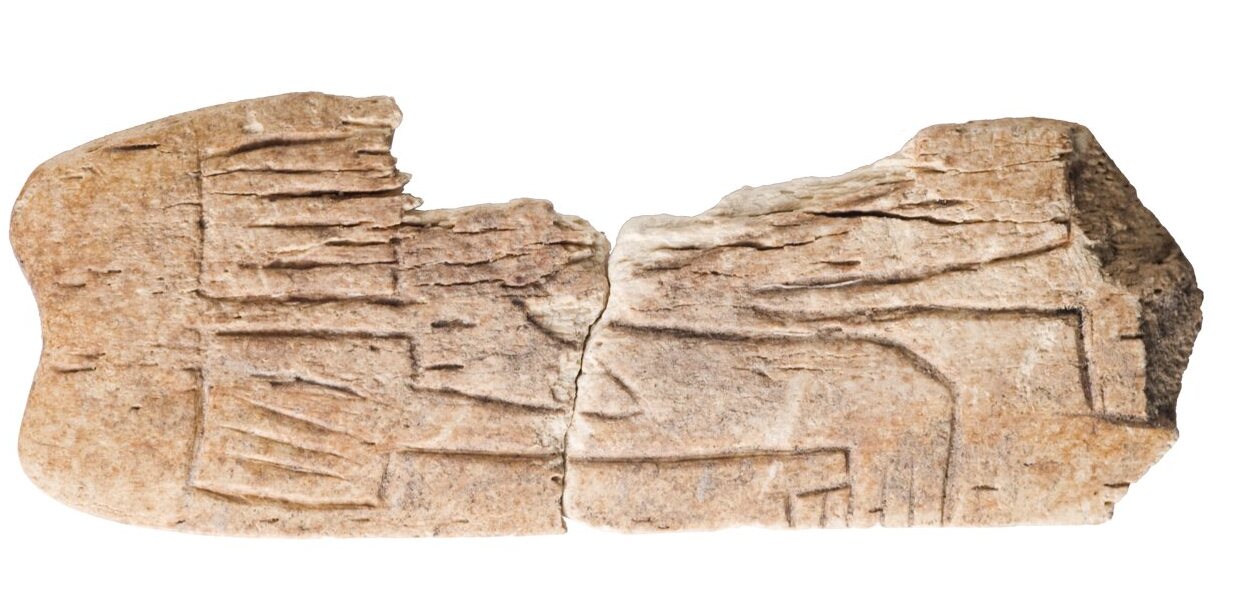
Source term: decorated bone spatula / bullroarer
A fragment of decorated bone from Göbekli Tepe — a rib worked into a slender "spatula" 5.3 cm long, carved with two hatched T-shaped figures, one complete, one broken off — was read by some of the excavators as a depiction of the site's monumental T-pillars, the enclosures rendered by their own builders. Oliver Dietrich and Jens Notroff use the object as a caution against exactly that kind of reading, and note that these decorated bone blades, pierced at the narrow end for a cord, share their general form with bullroarers known from archaeology and ethnography. Two more such fragments come from Göbekli Tepe itself, and comparable pieces appear as grave goods at the nearby Pre-Pottery Neolithic site of Körtik Tepe; at Çatalhöyük, Nerissa Russell tentatively read small pierced bone pendants as bullroarers too, though she found them rather small for it. To test the idea, the team had a hardwood replica made to the spatulae's dimensions; swung on its cord, it gave a deep, pulsing vibrato. The authors do not commit: the southeastern Turkish pieces differ a little from the usual shape of bullroarers, and as they write, "some doubt remains regarding the functional interpretation of these objects."
An experimental reproduction of the presumed PPN bullroarers of hard wood serves its function very well and produces a deep vibrato sound.
Dietrich and Notroff 2016, Neo-Lithics 1/16:29
Particulars
- Object
- Three elongated, decorated bone 'spatula' fragments, the largest cut from a rib.
- Function
- Not recorded.
Source
Oliver Dietrich and Jens Notroff, Neo-Lithics 1/16 (2016): 22-31, at pp. 27-29, Appendix objects 1-3 and fig. 10