Atlas Essay —
Two Voices
Gippsland · Cape York · the Torres Strait · the upper Bian · the Gazelle Peninsula · the forest of Lola · the Upper Xingu
The companion to this page, Grandfather and Mother, showed that a single bull-roarer is named for a person — the man, the grandfather, the mother of yams — and that the relative it names tracks what the cult does. This is its sequel, and a different object. Where a people owns not one roarer but two, the two are almost never two of the same thing. They are cast as kin to each other: a husband and his wife, an elder and a younger, a pair of brothers, a deep voice and a high one. The paired roarer is the pantheon rendered not as a solo but as a dialogue — a relation between beings made audible.
In brief
- The Kurnai of Gippsland owned two roarers married to each other: the large Tundun, “the man,” and the small Rukut-Tundun, “the woman,” his wife.
- The commonest form of the pair is a couple — Cape York moipaka “husband and wife”; Marind ezam the spirit-husband and uzum the wife; Taulil uka and tandaravakwe, male and female of one pair.
- Where the split is by voice, the large blade is the deep one: the Torres Strait bigu “with a low and deep note” against the shrill wanes; Turrbal Bugerum louder and deeper than Wobblekum. The physics decides the two voices; the culture decides which kin gets the deep one.
- The Australian rule — large = deep = senior / male — inverts among the Kamaiurá of the Upper Xingu, where in each pair the larger blade is the female that “conducts” and the smaller is the male it leads.
- The pairing turns up in the archaeology too: two jade blades at one waist at Xibenbaoleng, a standing two-form jade set at Beifudi, a large-and-small serpentinite pair at Sannai-Maruyama.

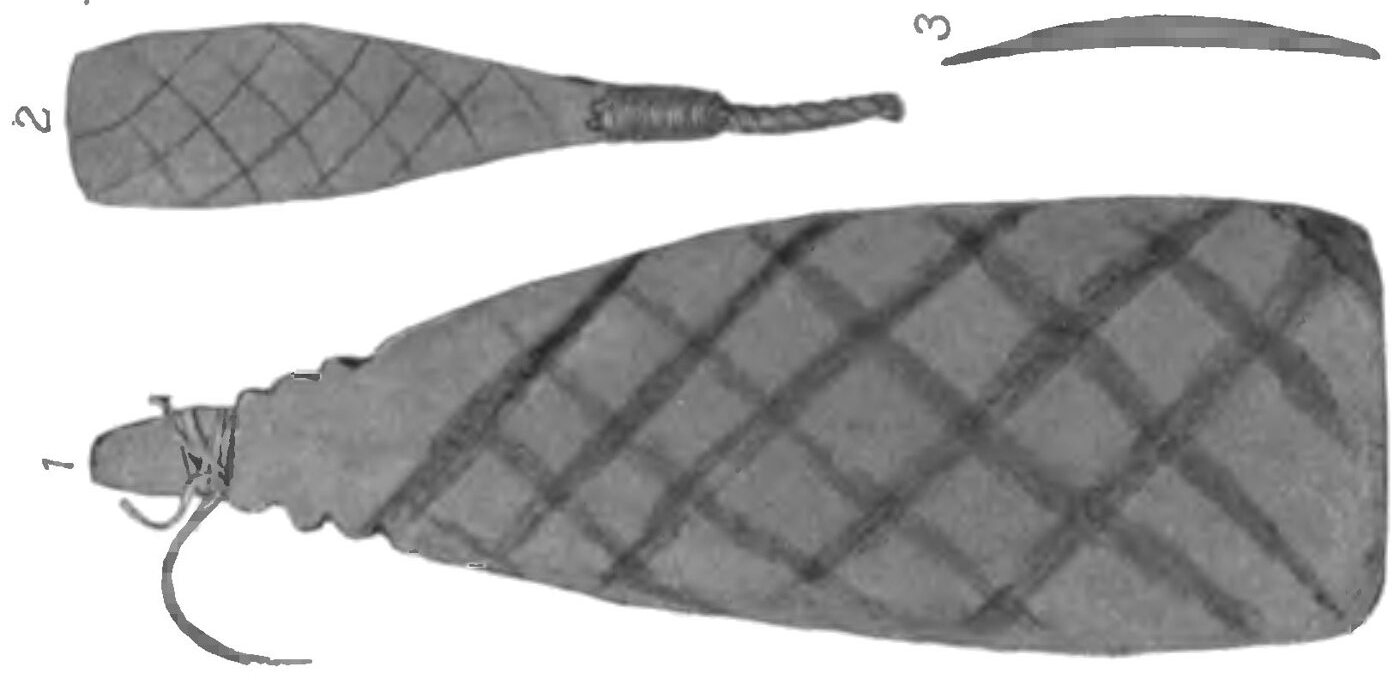
Where a people owns two bullroarers, the two are cast as kin to each other — a husband and his wife, an elder and a younger, a pair of brothers, Sun and Moon. The physics supplies the two characters: a large blade sounds deep and a small one shrill, so a pair of roarers is a deep voice and a high one before any myth touches them. The culture then says whose voices they are. The paired roarer is a two-voice technology for staging a relation between beings — the pantheon made audible as dialogue.
A married pair of blades
Begin with the couple, because it is the commonest form of the pair and the plainest. Alfred Howitt’s Kurnai had two bull-roarers, a big one and a little one, and they were husband and wife: the larger Tundun, “the man,” the smaller Rukut-Tundun, “the woman.” They carry the name of the ancestral being who cut the first two and named them after himself and his own wife. When the elders swing them at the Jeraeil, the boys are not shown a spirit’s emblem. They are introduced to a married couple whose two voices they have feared since childhood.
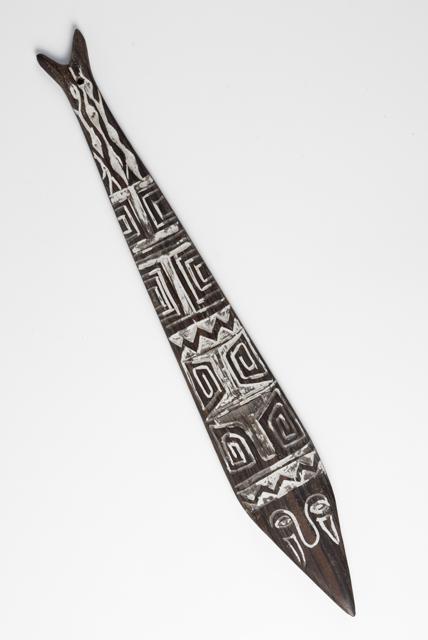
Go north to Cape York and the couple is spelled out in a single word. The Wik-Mungkan and their Wiknatara neighbours join moiya and pakapaka into moipaka, “the two bull-roarers,” and Ursula McConnel recorded them as exactly that: a bull-roarer male and a bull-roarer female, married to each other. On the upper Bian River, in the far south of New Guinea, the Marind name the broad blade ezam — at once the chief spirit, the “husband,” and the roarer that is his voice — and its narrow companion uzum, the “wife.” On the Gazelle Peninsula the Taulil cut their pair from the one kawa tree: a male uka and a female tandaravakwe, whose voice the women outside are told belongs to the Tambuan spirit.
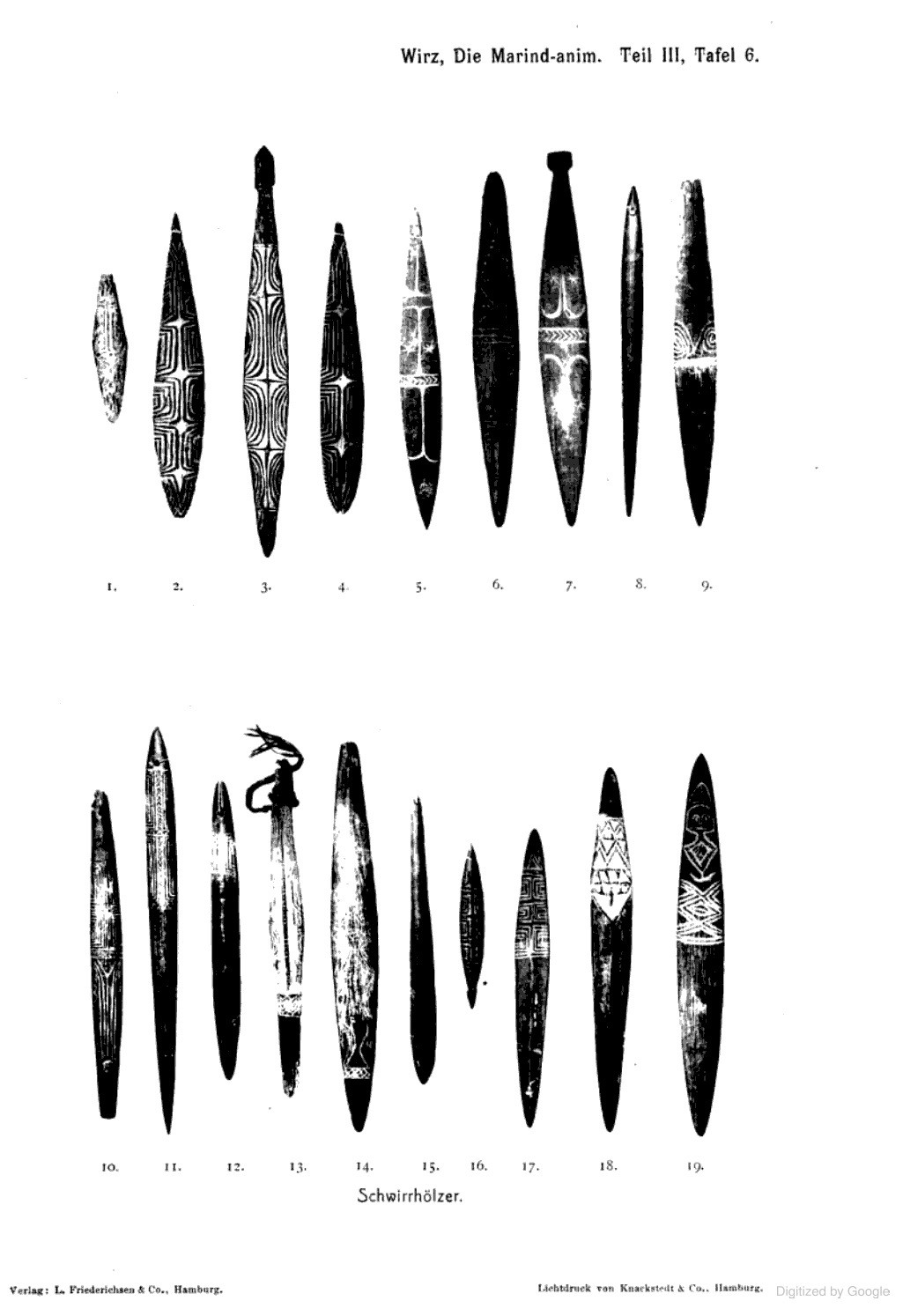
Four peoples on two continents, and the same design: not two identical slats but a matched pair understood as a marriage. Where Grandfather and Mother asked which relative the one roarer is, the question here is the next one over — what is the relation between the two? And the answer, over and over, is the first relation there is: a man and his wife.
The deep voice and the high
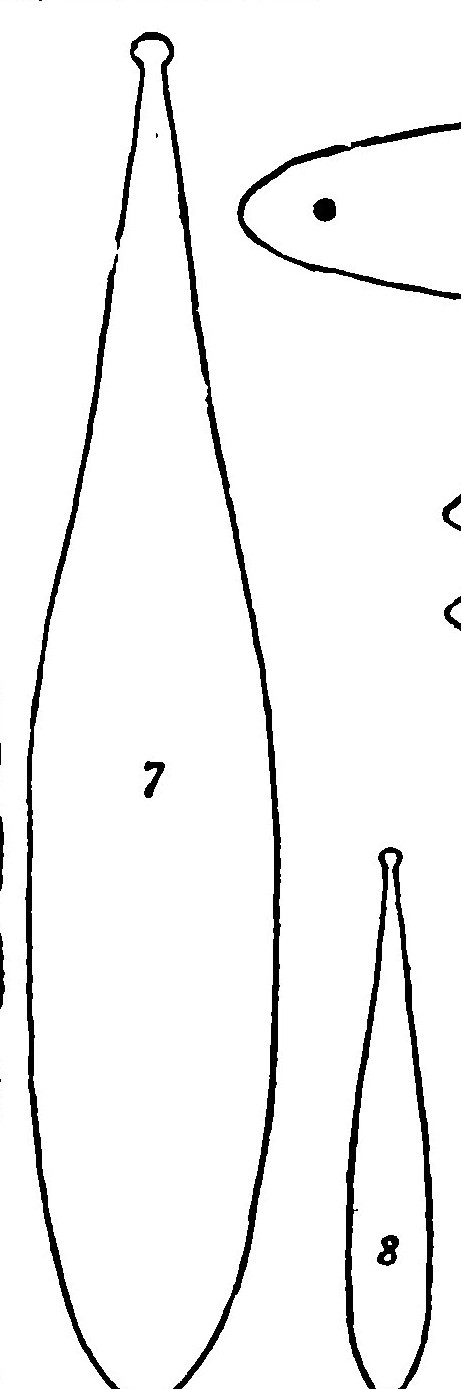
Why two, and why a couple? Part of the answer is in the wood. A bull-roarer’s pitch is set by its size: a wider, longer blade shoves more air and turns more slowly, and it sounds a lower note; a small blade sings high. (The acoustics are worked out elsewhere in the atlas — the roar is an aerodynamic scream, and its pitch falls as the blade grows.) So before anyone names them, a large roarer and a small one are already two voices: a deep one and a shrill one. The pair does not have to be invented. It has only to be heard, and then assigned.
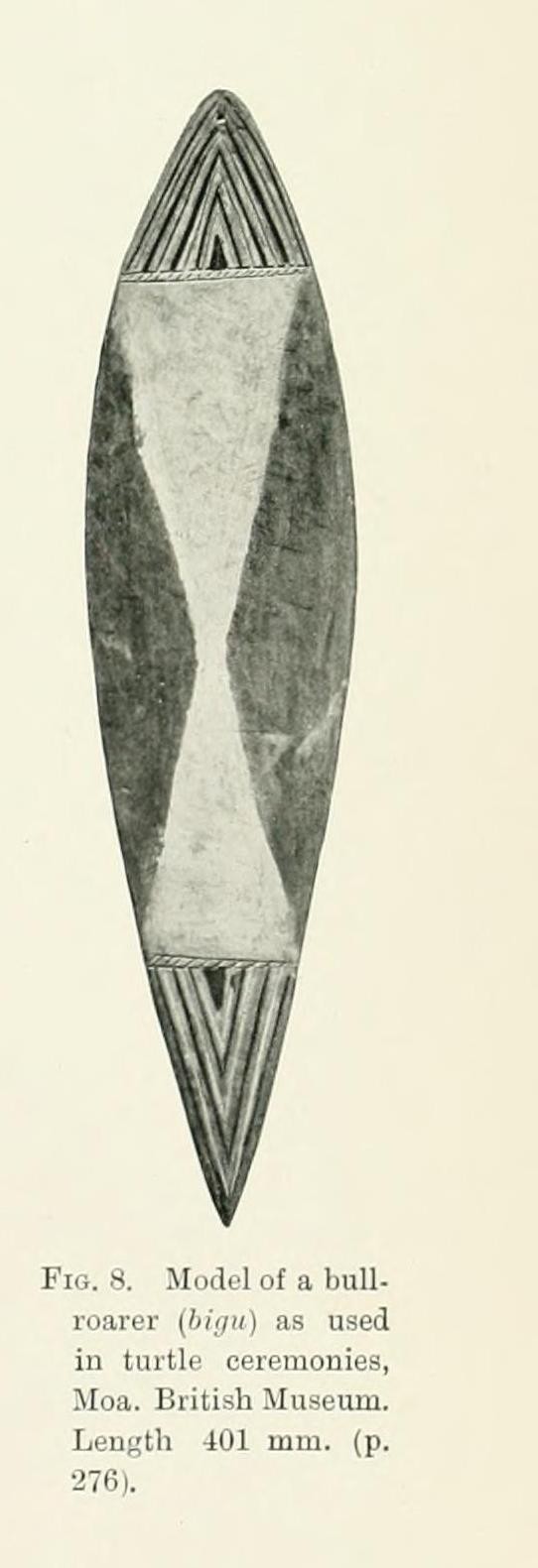
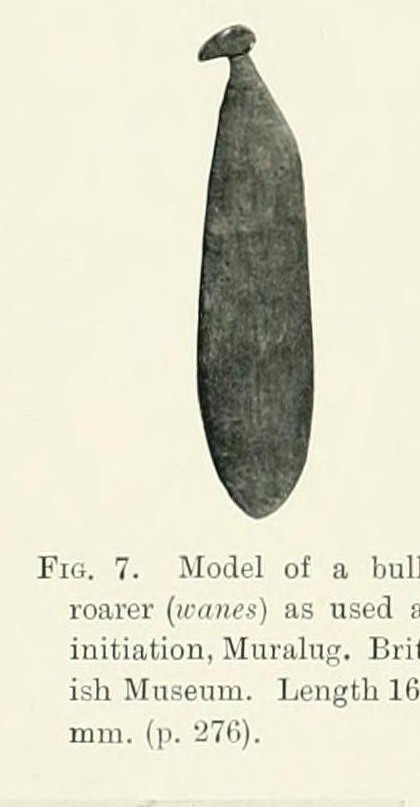
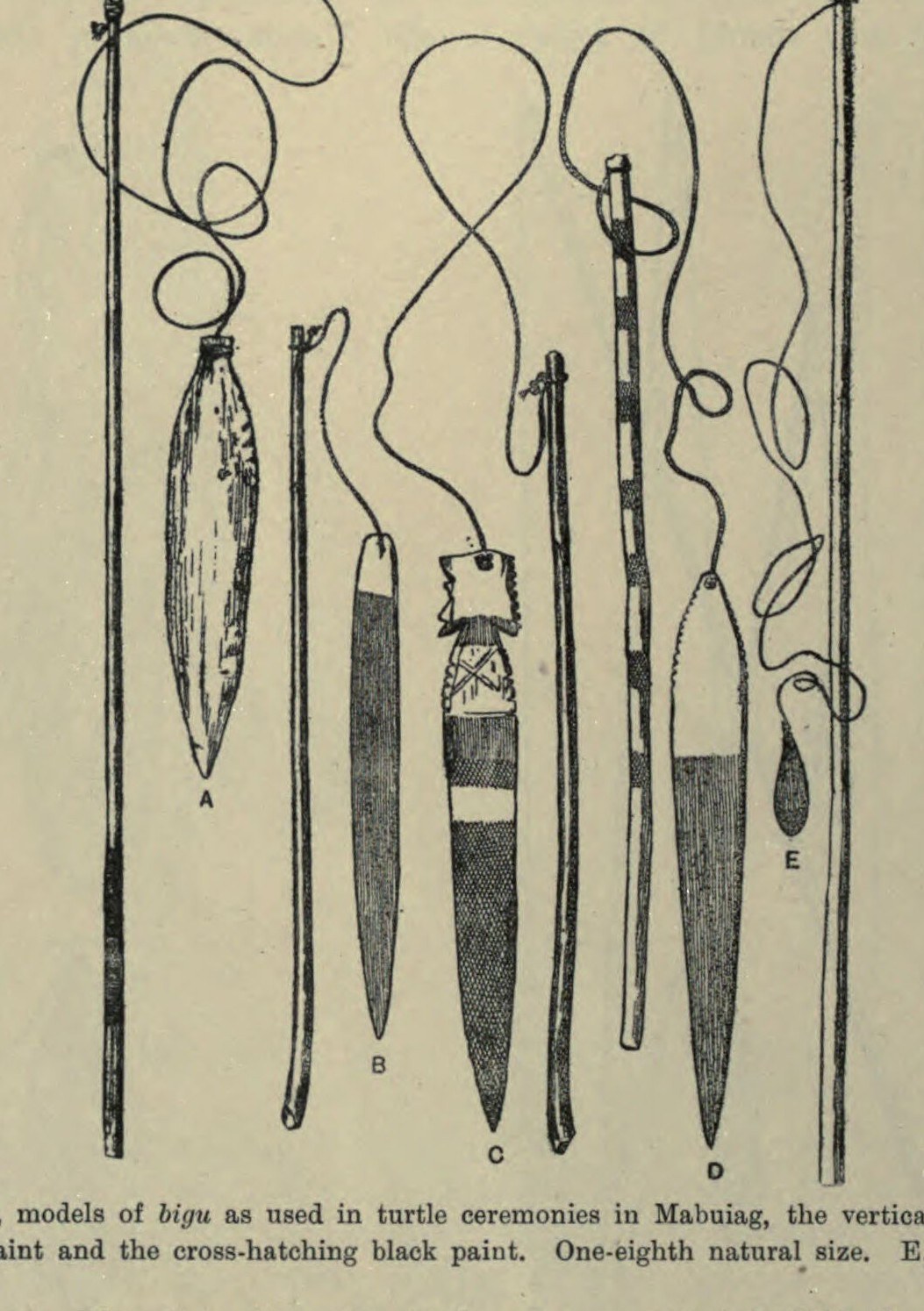
Nowhere is the hearing plainer than in the western Torres Strait. Sidney Ray’s Mabuiag vocabulary defines the two roarers of the turtle fishery by their sound alone: bigu, “a bull-roarer with a low and deep note,” against wanes, “a small bull-roarer with a shrill sound” — the large senior voice and the small junior one, and the same word carried east across the strait as bigo. The Brisbane-River Turrbal split their pair the same way: Bugerum, the larger, roared louder and deeper; Wobblekum, the smaller, sang higher — a division the Yagara dictionary still preserves as bagaram, the big bull-roarer, and wabalgan, the little one. And in the forest of Lola in Guinea the Kono named the instrument for its timbre outright: gueyoumo means “the deep, muffled sound,” and the word extends to name the paired male and female personages of the rite.
The Wiradjuri of the New South Wales rivers make the marriage and the pitch one and the same thing. At their Burbung initiation the large bull-roarer, the mudthega, is Dhurramoolan — the dreaded being of the rite, whose deep sound, “the rumbling of distant thunder,” is his voice. The small moonibear, R. H. Mathews wrote, “has a shrill sound which is easily distinguishable from the loud humming of the larger instrument,” and “the noise made by the moonibear is said to represent the voice of Dhurramoolan’s wife.” The god answers in the deep blade, his wife in the high one. The same paired instruments carry north to the Culgoa, where the larger is the wuddoolnurran and the smaller the ghidjookumbul, “used in exactly the same way.”
Set the facts side by side and the design of the pair comes clear. The physics gives you the two voices; the culture decides whose they are. Make the deep one the man and the high one his wife, and you have the Kurnai and the Wiradjuri. Make the deep one the senior instrument and the high one the novice’s, and you have the Torres Strait. The slat of wood is the same everywhere. What is added is a relationship — and a relationship needs exactly two.
Brothers, and a pair of spirits
A couple is not the only relation two voices can stage. Where the myth’s central beings are brothers, the roarer voices a brother; where the being is itself double, the roarer voices a pair. On the Sepik the Murik hear in the swung ironwood the voice of urubaia, the lame, eldest spirit-brother — one of a set of brothers, the senior and the crippled one, and the men’s secret society itself takes his name. Among the Marind-anim the roarer is Sosom, a dema or ancestor-spirit expressly named as the brother of Waba — the voiced being is one of a fraternal pair. And in the Gulf of Carpentaria the Anula put the doubling inside the being itself: the roarer’s voice is Gnabaia, whom Spencer and Gillen record as “a pair of spirits” — two that arose together in the Alcheringa — sounded in a ceremony-cycle the tribe calls kunapipi, the country of the Rainbow-Serpent Mother.
The family can widen further. The Baining of inland New Britain keep the roarer salecha in two forms, a longer and a shorter, and call the initiation masks it summons the “children of the salecha” — the pair has grown a household. Whether the two are spouses, brothers, or a parent and its young, the grammar holds: the roarer is not an it but a who, and where there are two of them, they are a who and its relation — a second who, in answer.

The rule that breaks
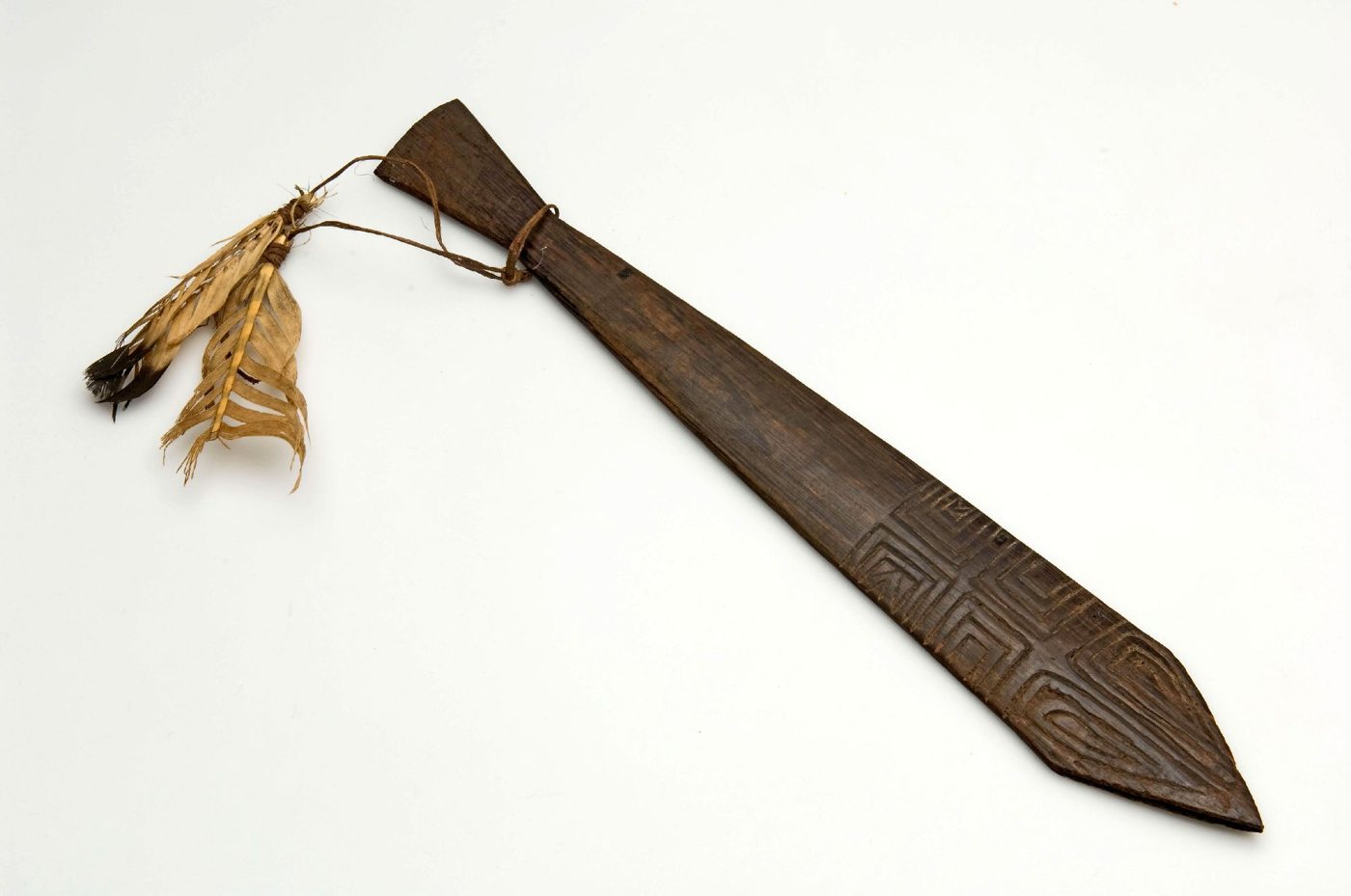
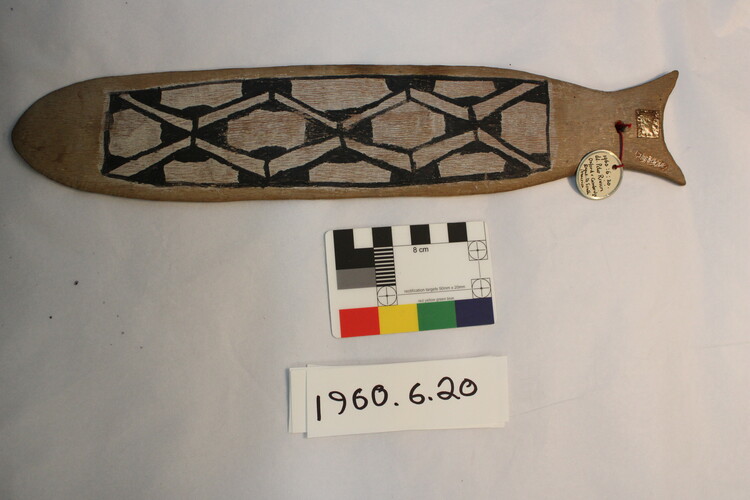
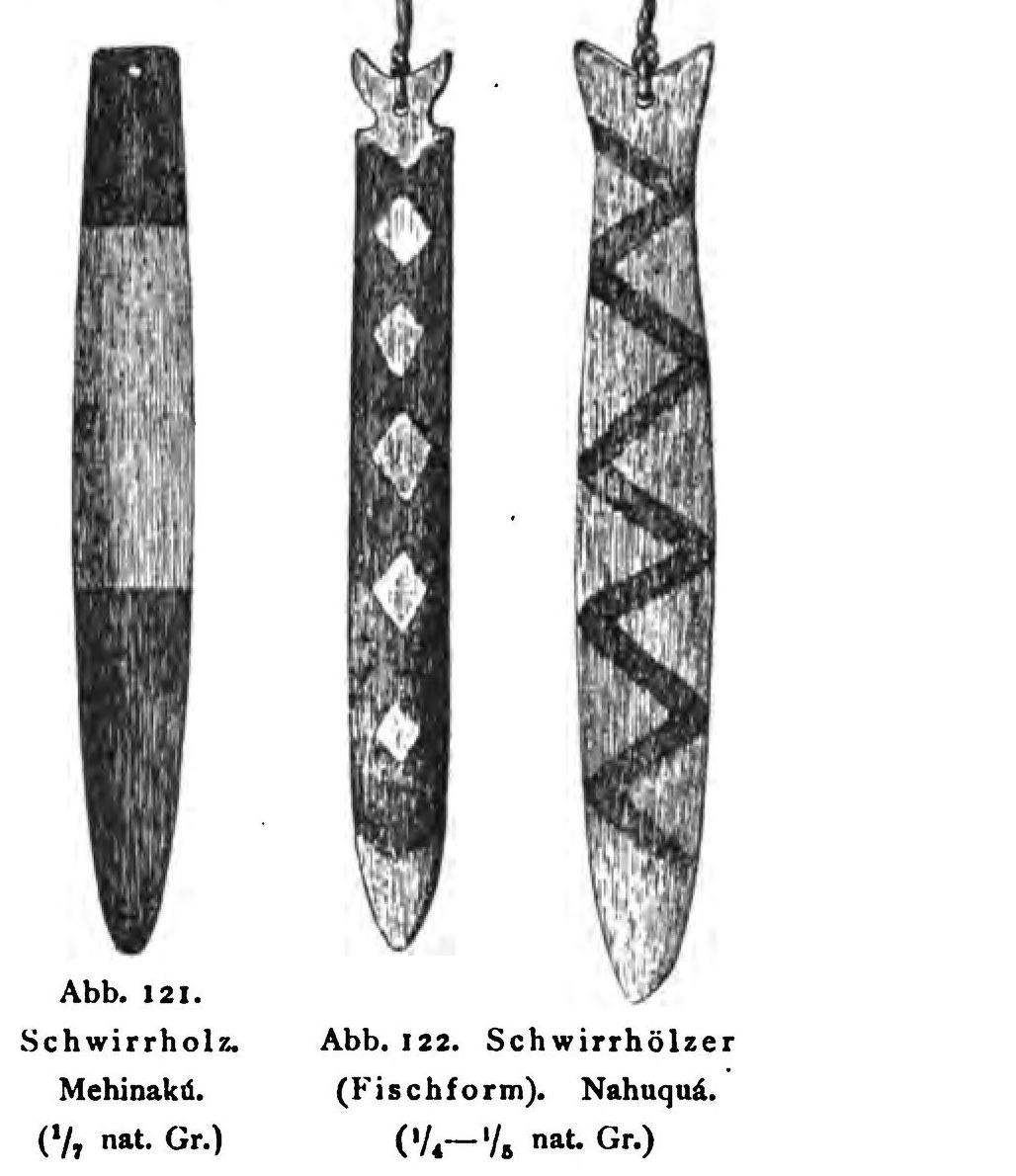
From Australia and the Torres Strait one rule looks universal: the large blade is the deep, senior, male voice, and the small blade the high, junior, female one. Cross to lowland South America and it turns over. Among the Kamaiurá of the Upper Xingu, Rafael Bastos recorded two paired roarers of ywyra wood, cords tied to whirling rods and played together: parapara (the larger, 83 and 75 cm) and uriwuri (the smaller, 43 and 35 cm). In each pair the larger blade — the deeper voice — is not the man. It is the female, and she is the “conductor”; the smaller male blade is the “conducted,” the one she leads. The deep voice belongs to the woman, and the woman is in charge.
This is not a stray exception to be tucked away. It is the same template — two gendered blades, split by size and pitch, played as a relation — run with the sexes reversed and the lead handed the other way. In the Kamaiurá origin story it is the twins Sun and Moon who seize the roarers and drive the women off with them; the swingers are a sibling pair, the instruments a sex pair, and the two beings of the deeper and higher voice are wife and husband with the wife conducting. The pair is the constant. Which kin owns the deep voice, and who leads, is what a culture is free to set — and the Kamaiurá set it the opposite way to Gippsland.
The pairs, counted
Laid out together, the paired roarers make a short, consistent census. The relation shifts — spouse, senior and junior, brother, a doubled spirit — but the object is always the same: one blade or two, voicing beings who come in pairs. And where a pitch contrast is stated, the deeper voice sits with the larger blade — the man, the elder, the conductor — in every case.
| Culture | The pair | Their relation | The deep voice belongs to | Source |
|---|---|---|---|---|
| Kurnai, SE Australia | Tundun / Rukut-Tundun | husband + wife | the man (large) | Howitt 1904:493, 628–9 |
| Wiradjuri, SE Australia | mudthega / moonibear | the god + his wife | mudthega = Dhurramoolan himself (large) | Mathews 1898, JAI 27:53–4 |
| Wik-Mungkan / Wiknatara, Cape York | moiya + pakapaka = moipaka | husband + wife | not stated | McConnel, Oceania 6(1) 1935:80–3 |
| Marind, upper Bian, New Guinea | ezam / uzum | spirit-husband + wife | ezam, the “husband” (broad) | Wirz 1925, Teil III; van Baal 1966:584–6 |
| Taulil, Gazelle Peninsula | uka / tandaravakwe | male + female | not stated | MAA Cambridge 1930.464 (coll. Bateson) |
| Mabuiag, Torres Strait | bigu / wanes | senior + junior | bigu, “low and deep note” (large) | Ray, Reports III (1907); Haddon 1904:331–2 |
| Turrbal, Brisbane River | Bugerum / Wobblekum | greater + lesser | Bugerum, “louder and deeper” (large) | Howitt 1904:596 |
| Kono, Guinea | gueyoumo sinè / gueyoumo néa | male + female personages | gueyoumo = “the deep, muffled sound” | Holas 1952, ch. XVIII |
| Murik, Sepik | urubaia, of the spirit-brothers | eldest of a fraternal set | the lame elder | Schmidt 1933:352 |
| Marind-anim, New Guinea | Sosom / Waba | brother + brother | — | van Baal 1966:267, 289 |
| Anula, Gulf of Carpentaria | Gnabaia | “a pair of spirits” | — | Spencer & Gillen 1904:501 |
| Kamaiurá, Upper Xingu | parapara / uriwuri | female + male (inverted) | the female “conductor” (large) | Bastos 1978:122, 236 |
The pairing in the ground
If the paired roarer is as old and as widespread as its ethnography suggests, it ought to leave a trace where the wood cannot survive — in the durable end-pierced blades of stone and jade. And the trace is there: the earliest of them come out of the ground in twos.
At Xibenbaoleng, in a grave of the Xinglongwa culture on the Mongolian steppe — among the oldest worked jade anywhere — a slit ring lay at the dead man’s head and two end-pierced blades lay together at his waist: a matched pair, deposited on one body. The whole jade repertoire of nearby Beifudi is just two forms, the slit ring and the bi-shaped blade — a standing two-part set, and there the blade comes not from a grave but from a dedicated sacrificial ground. Across the sea in northern Japan, the great Jōmon settlement of Sannai-Maruyama yielded two serpentinite blades of one strip-shaped class together — a larger of about seven centimetres and a smaller of four and a half — a large-and-small pair in stone. And at Chahai the same bi-shaped blade is found graded large, medium, and small, a set stepped by size exactly as a set of roarers would be.
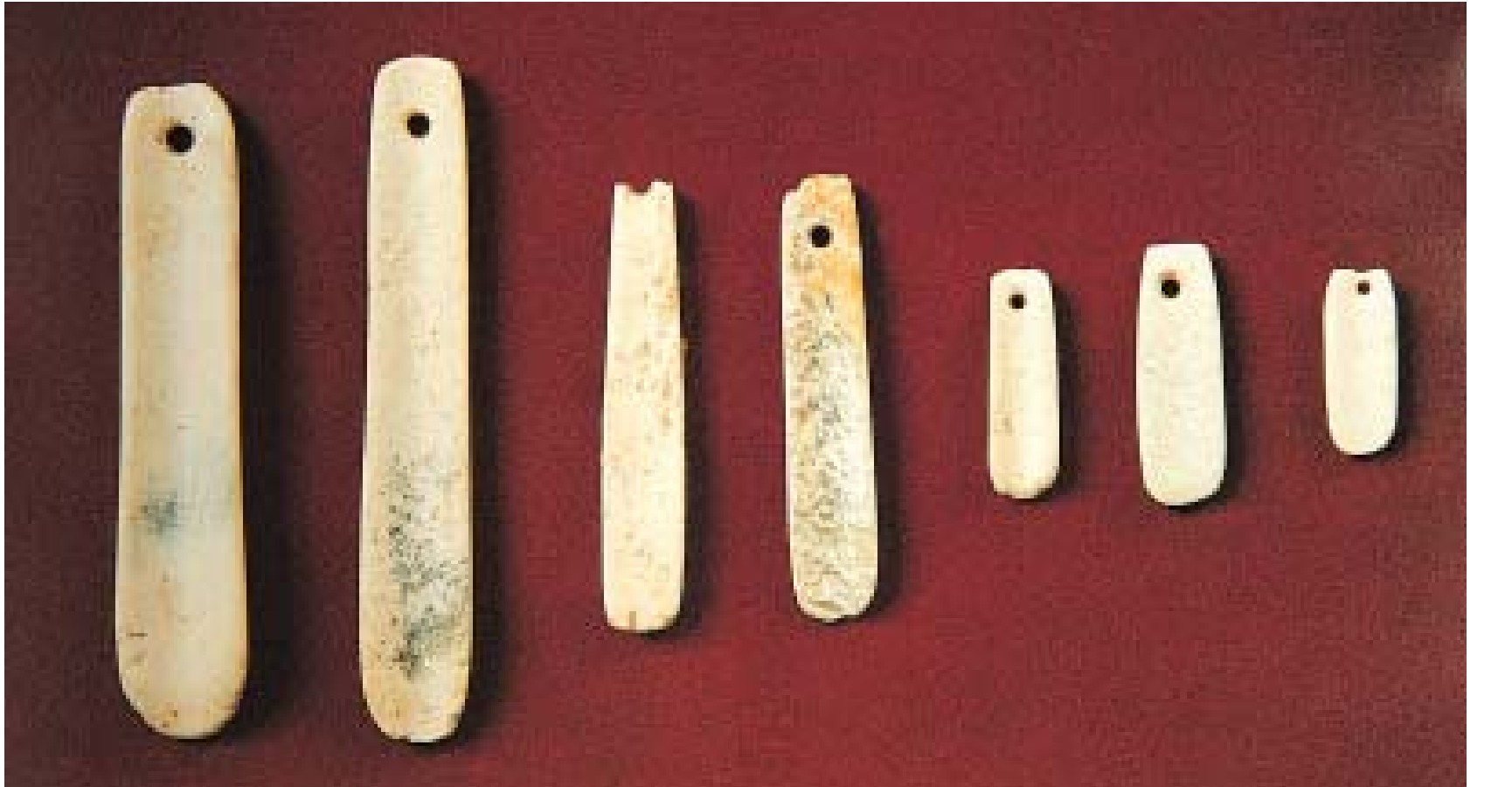
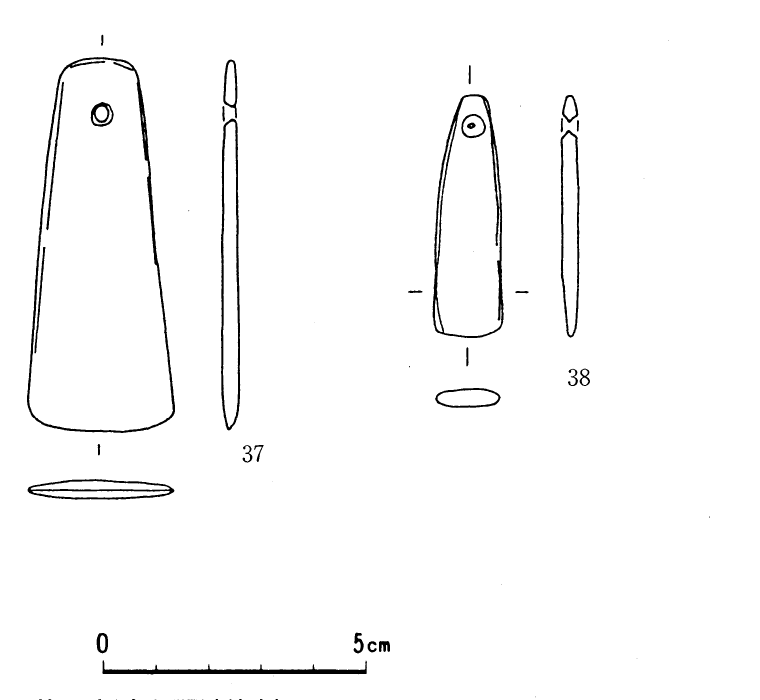
The site reports file these as ornaments, but the form is the roarer’s, and the deposition pattern stands on its own: the earliest end-pierced blades recur in twos and in graded sets, on one body and in one ritual precinct. These objects were made and buried as pairs. The pairing, in other words, is already in the ground — the two voices waiting, in stone, for a cord.
The pantheon made audible
Gather the pairs and the shape of the idea stands out. A single bull-roarer can be a person; two bull-roarers are a relationship. The instrument’s genius is that its pitch is a plain function of its size, so a large blade and a small one are, before any myth touches them, a deep voice and a high one — two ready-made characters. A culture has only to say who they are. Say they are a man and his wife and you have the Kurnai and the Marind; say a senior and a novice and you have the Torres Strait; say two brothers, or a doubled spirit, and you have the Sepik and the Anula; hand the deep voice to the woman and let her lead, and you have the Kamaiurá. Whatever the myth needs two of — a couple, a pair of brothers, Sun and Moon — the pair of roarers can voice.
That is why the paired roarer belongs with the atlas’s other soundings of what the instrument is rather than what it does — the kinship of its names, the physics of its scream, and the long arc by which a sacred voice slides down into a child’s toy, a rite over weather and the harvest, a voice in the whirlwind. The roarer was never only a noisemaker. In its paired form it is a small theatre of two, a way of making a relation between beings audible — the pantheon not pictured, not carved, but heard, speaking to itself in two voices over the heads of the frightened boys.
Key sources
- Howitt, A. W. 1904. The Native Tribes of South-East Australia, pp. 493, 628–9 (Tundun and Rukut-Tundun, “the man” and “the woman,” who became porpoises); p. 596 (Turrbal Bugerum, “louder and deeper,” and Wobblekum).
- McConnel, U. H. 1935. “Myths of the Wik-Mungkan,” Oceania 6(1), pp. 80–83 (moipaka, the two bull-roarers, husband and wife).
- Ray, S. H. 1907. Reports of the Cambridge Anthropological Expedition to Torres Straits, vol. III (Mabuiag vocabulary: bigu, “a bull-roarer with a low and deep note”; wanes, “a small bull-roarer with a shrill sound”); Haddon, Reports, vol. V (1904), pp. 331–2, and vol. IV (1912), Fig. 237.
- Mathews, R. H. 1898. “Bullroarers used by the Australian Aborigines,” Journal of the Anthropological Institute 27, pp. 53–4 (the large mudthega called Dhurramoolan; the small moonibear, “the voice of Dhurramoolan’s wife”; the Culgoa wuddoolnurran and ghidjookumbul).
- Wirz, P. 1925. Die Marind-anim von Holländisch-Süd-Neu-Guinea, Teil III, Tafel 6 (the Bian–Torassi cult roarers).
- van Baal, J. 1966. Dema: Description and Analysis of Marind-anim Culture, pp. 584–6 (ezam and uzum, “husband and wife”); pp. 267, 289 (the bullroarer, “the voice of the déma Sosom”; “Sosom, Uaba’s brother”).
- Schmidt, J. 1933. “Neue Beiträge zur Ethnographie der Nor-Papua (Neuguinea),” Anthropos 28, p. 352 (the Murik urubaia, the eldest of two spirit-brothers, who limps on a wounded leg).
- Spencer, B., and F. J. Gillen. 1904. The Northern Tribes of Central Australia, p. 501 (the Anula Gnabaia, “a pair of spirits”).
- Holas, B. 1952. Les masques kono, ch. XVIII (gueyoumo, “the deep, muffled sound,” and its paired male and female personages).
- Bastos, R. J. de M. 1978. A Musicológica Kamayurá, pp. 122, 236 (parapara and uriwuri, played in pairs; in each pair the larger blade is female, “the conductor,” the smaller male, “the conducted”).
- Chaogebatu 1996, Kaogu (2) (Xibenbaoleng: a slit ring at the head, two bi-shaped blades at the waist); Duan Hongzhen on Beifudi Phase 1 (the jue + bi two-form set from the sacrificial ground); Aomori buried-cultural-property bulletin no. 4 (Sannai-Maruyama, the large + small serpentinite pair).
The paired bull-roarer assembled here as a single class — two blades cast as kin to each other, a deep voice answering a high one across four continents — is, as far as we know, original to this page. Each pairing is attested in the sources above; the reading of the pair as a two-voice technology for staging a relation between beings, and the observation that the Australian “large = deep = male/senior” rule inverts among the Kamaiurá, are ours.