Atlas Essay —
Grandfather and Mother
Gippsland · the Huon Gulf · the Ituri · the Fly River · Arnhem Land · the Bandiagara escarpment · the Banks Islands · Istria
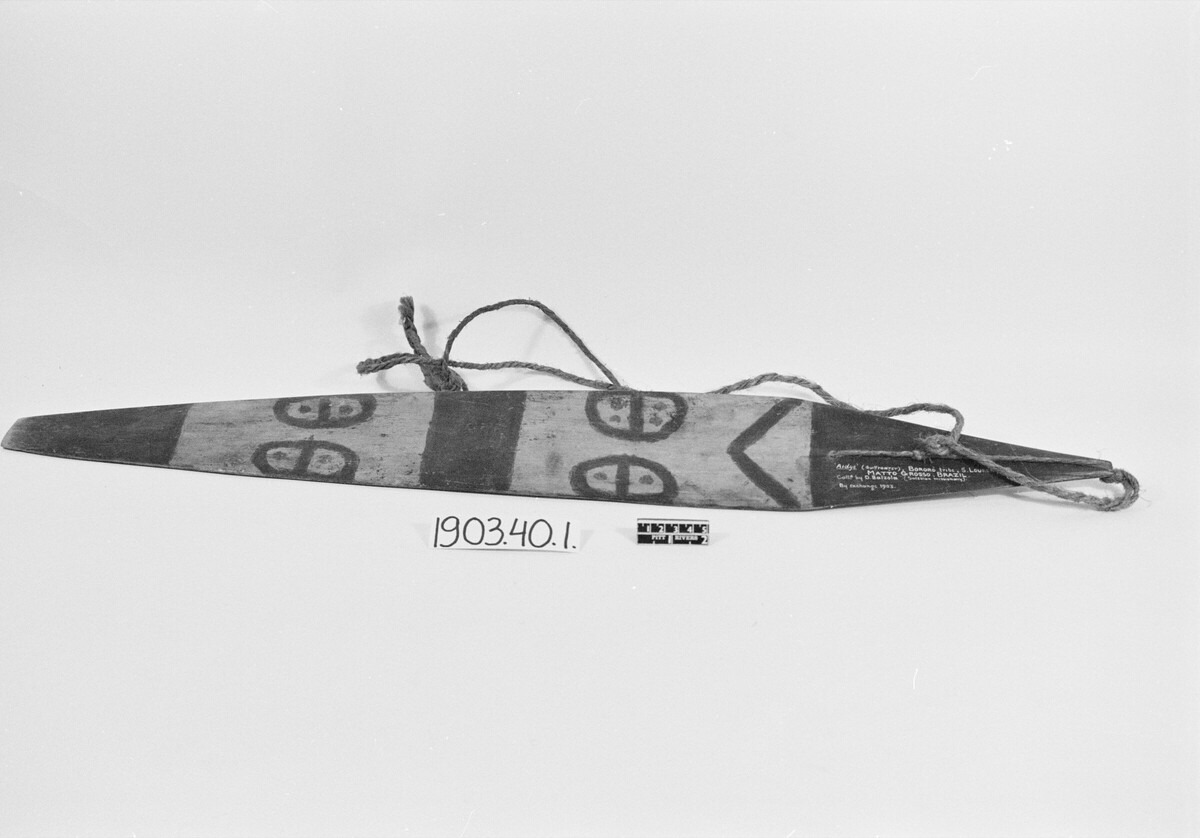
People do not, on the whole, name the bullroarer for what it is — a slat of wood on a string. They name it for who it is. Gather the world’s words for the instrument in one place and a family assembles itself out of the glosses: a man and his wife, a grandfather, a primordial Father, a mother of yams, an Old Woman, the mother of masks. And the relative each people chooses is not random. It tracks what the cult does with the roarer — the man where the rite makes men, the mother where it grows food.
The relative the bullroarer is named for tracks what the cult does. Where the rite makes men, the roarer is a male ascendant — the man, the grandfather, the primordial Father. Where the cult grows food or renews life, it is a mother — the mother of yams, the Old Woman, the Mother of All. Beneath both runs a stratum of soul-words, one word for the ghost, the monster, and the instrument; and where the cult has died and the roarer has become a toy, the name decays into plain noise. The name is a record of what the instrument is for.
In brief
- The Kurnai of Gippsland named their two roarers Tundun, “the man,” and Rukut-Tundun, “the woman” — a married pair of instruments, named for the All-Father’s son and his wife.
- Where the cult makes men, the roarer is a male ascendant: Kai ngosa “grandfather,” Ituri maduali the primordial Father, the Wiradjuri mundjeegong, voice of Dhurramoolan at the All-Father’s Burbung.
- Where the cult grows food or renews life, the roarer is a mother: Kiwai burumamaramu “the mother of yams,” the Arnhem Land Karwadi “the Mother of All,” the Dogon imina na “the mother of masks.”
- Beneath the kin-names lies a stratum of soul-words: Huon Gulf balum and kani, single words that mean the roarer, the ghost of the dead, and the monster that swallows the boys, all at once; Apinayé me-galo, the roarer and the soul of the dead; Mota nanamatea, the “death-maker” swung against a ghost.
- Where the instrument has retired into the toy box, the name decays into pure noise — brommer, burriburri, woozer. The gradient from kin-name to sound-name is the gradient from cult to plaything.

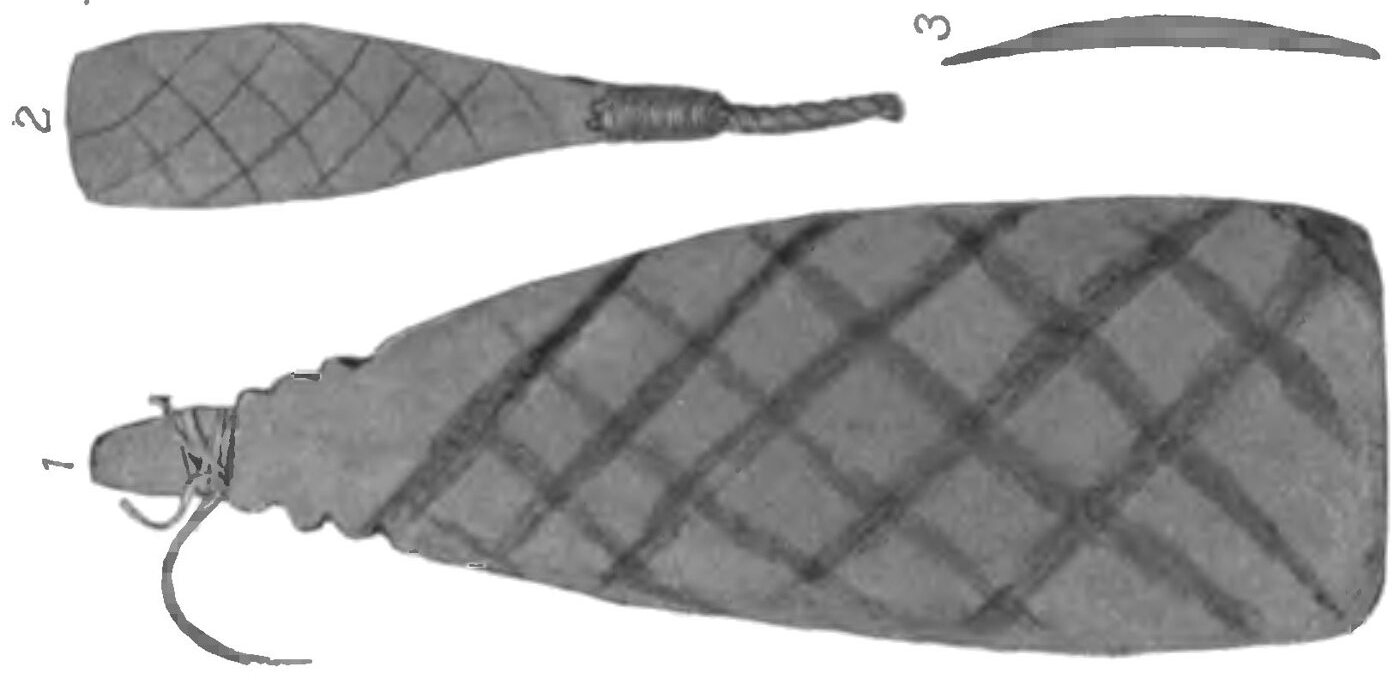
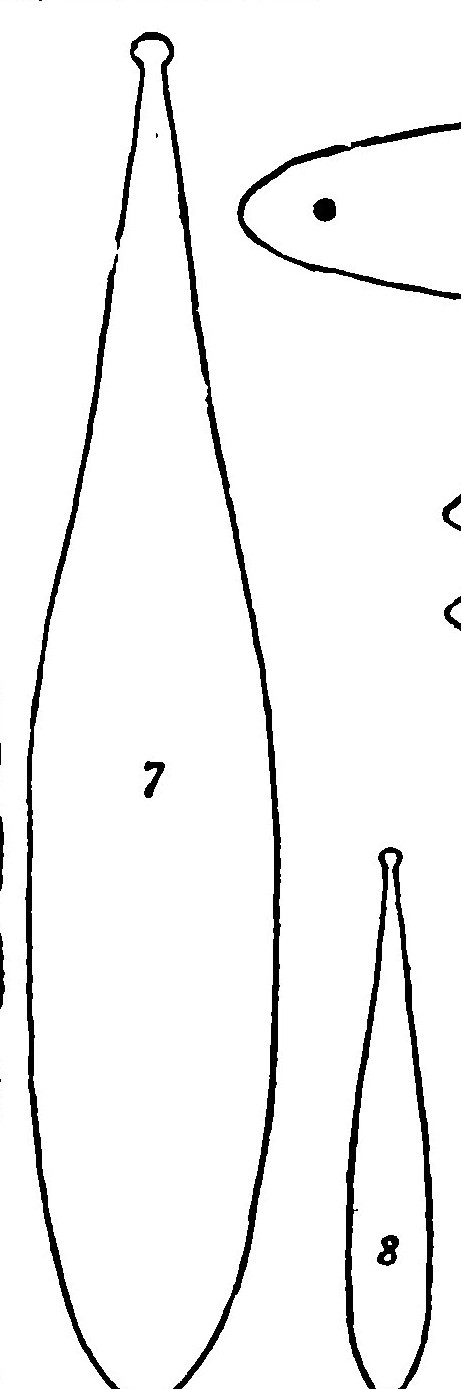
Start in Gippsland, with Alfred Howitt’s Kurnai, because they say the thing most plainly. The Kurnai had two bull-roarers, a big one and a little one, and they were husband and wife. The larger, Tundun, means simply “the man”; the smaller, Rukut-Tundun, “the woman.” They are named for Tundun the ancestral being, son of the All-Father Mungan-ngaua, who cut the first two roarers and named them after himself and his wife. When the elders swing them at the Jeraeil, the boys are not shown an emblem of a spirit. They are introduced to a person — a forefather, and his mate — whose voice they have feared since childhood, and whom, initiated, they will help to become.
The detail that matters is that there are two of them, gendered, and married. It tells you the roarer is not being treated as an it but as a who, complete with a family. And once you go looking, the pattern is everywhere. Across Cape York the Wik-Mungkan and their Wiknatara neighbours pair moiya and pakapaka as moipaka, “the two bull-roarers,” cast in myth as husband and wife. On the upper Bian River the Marind name the broad roarer ezam, the “husband,” and its narrow companion uzum, the “wife.” In the Gazelle Peninsula the Taulil cut a male uka and a female tandaravakwe. Two instruments, a couple — and where there is only one, it is still a named relative. The question is a simple one: which relative, and why that one?
The male line
The answer starts to sharpen when you sort the kin-names by the cult that carries them. In the classic male-making initiation — the rite in which boys are taken from their mothers, frightened, cut, and returned as men — the roarer is almost always a male ascendant. It is the man, the grandfather, the Father.
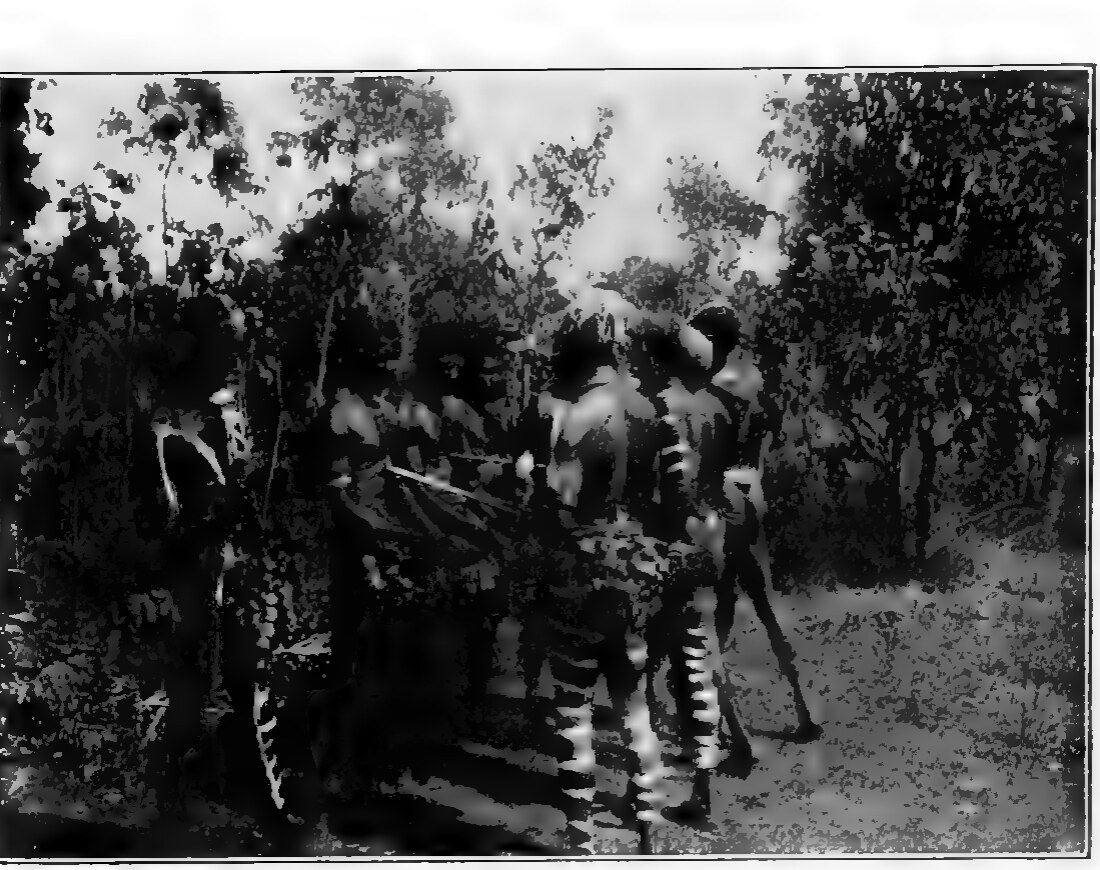
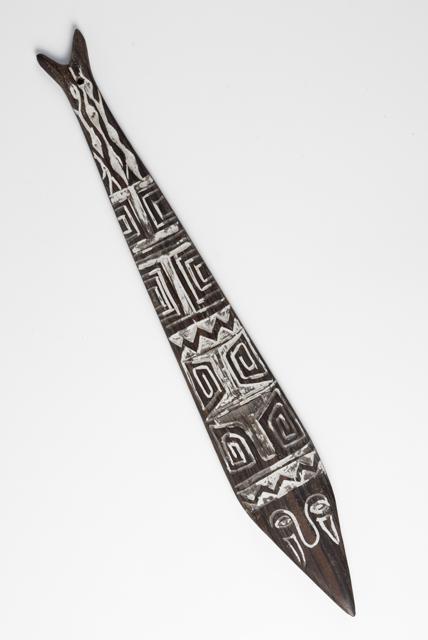
On the Huon Gulf, where the whole cult turns on circumcision, the Kai call the bull-roarer ngosa, and ngosa means “grandfather.” Deep in the Ituri forest the Babali and Bakango use a single word, maduali, for the roarer and for the primordial father, the Urvater; among the neighbouring Balese, Paul Schebesta read the initiation roarer’s name pahudjuhudju as “father hudju,” hudju being grandfather — the role the man who swings it steps into. In New South Wales the Wiradjuri mundjeegong carries the voice of Dhurramoolan at the Burbung, a rite the All-Father Baiame himself is said to have instituted. And on a Brazilian tributary of the Amazon, the Xipaya name for the roarer, warī warī sámį, ends — on Curt Nimuendajú’s reading — in the word for a male kinsman of the father’s ascending line. The same instrument, the same grammar of kinship, on three continents: an older man, upstream in the male line.
| Name | People | Gloss | What the cult does |
|---|---|---|---|
| Tundun | Kurnai, SE Australia | “the man” — son of the All-Father Mungan-ngaua | Jeraeil: makes men of boys |
| ngosa | Kai, Huon Gulf | “grandfather” | Circumcision initiation, women barred |
| maduali | Babali / Bakango, Ituri | the primordial father (Urvater) | Forest boys’ initiation |
| pahudjuhudju | Balese / Efe, Ituri | Schebesta: “father hudju” (hudju = grandfather) | Initiation; the swinger plays the grandfather |
| mundjeegong | Wiradjuri, SE Australia | voice of Dhurramoolan, under the All-Father Baiame | Burbung male initiation |
| warī warī sámį | Xipaya, Brazil | “continually turning” + a father’s-line male kinsman | Men’s ceremony, kept from women |
The female line
Now change the cult, and the sex of the relative changes with it. Where the roarer serves fertility — the growth of crops, the renewal of life, the mother-cults of the northern coasts — it is a woman, and an old one: the mother, the grandmother, the Old Woman of the myth.
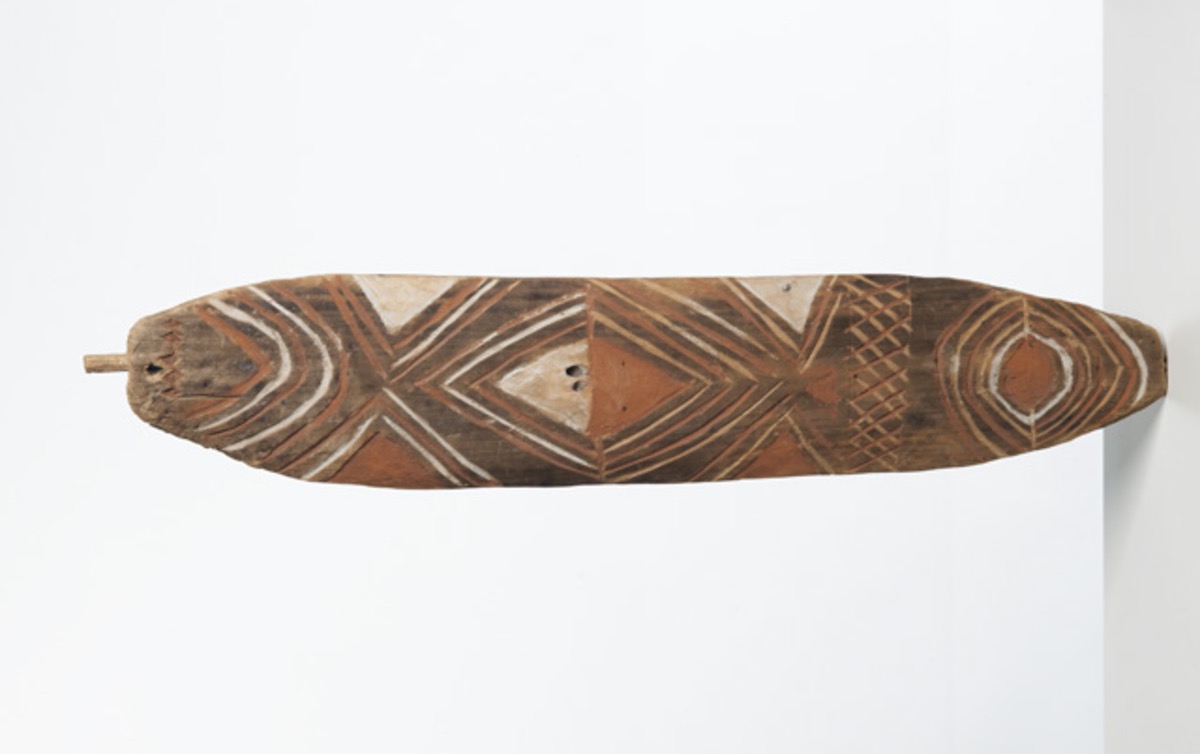
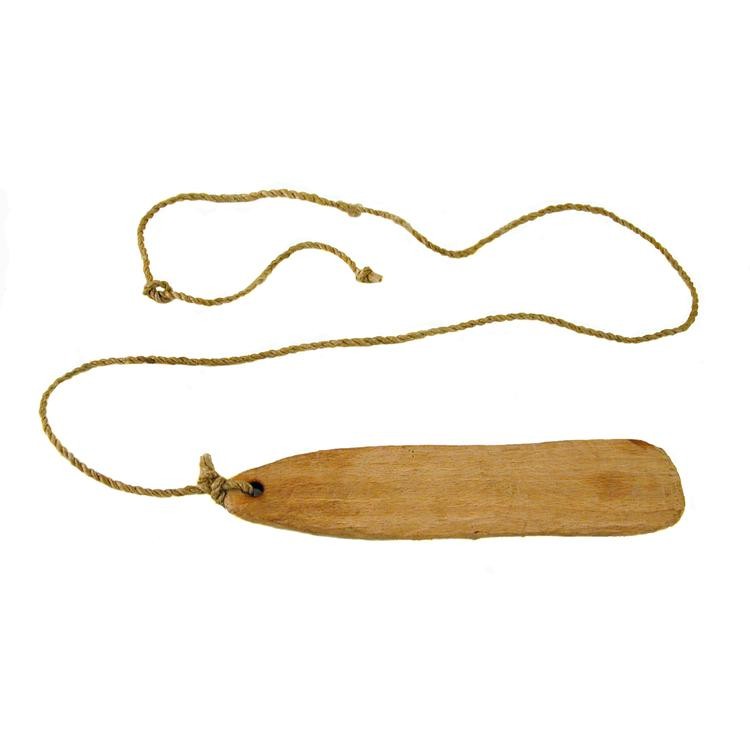
At the mouth of the Fly River, Alfred Haddon recorded a crop bull-roarer called burumamaramu — buruma, a variety of yam, plus maramu, mother: “the mother of the yams.” It was brought out and swung when the yams were ready, an instrument named for the being who ripens the garden. Right across Arnhem Land the great fertility cult belongs to a female ancestor: the Mungarai call the large roarers Kunapippi, after the mother-being who first owned the sacred sticks, and among the Murinbata the roarer ngawuru is the emblem of Karwadi, “the Mother of All,” also called the Old Woman — the same All-Mother whose name, on the Daly River, the Nangiomeri gave to the instrument itself. In West Africa the Dogon sound their roarers for the carved serpent Great Mask, and both instrument and mask bear the name imina na — literally, the “mother of masks.” A New Guinea cult voice is glossed outright as atu gisagaru, “the voice of the old woman”; in the eastern Congo the Nyanga roarer nyabungubungu is a female spirit, the wife of Kabiri.
When used all women and children leave the village and go into the bush. The old men swing it and show it to the young men when the yams are ready for digging (May and June).James Chalmers on the burumamaramu of the Fly River mouth, in A. C. Haddon, The Study of Man (1898)
| Name | People | Gloss | What the cult does |
|---|---|---|---|
| burumamaramu | Kiwai, Fly River mouth | “the mother of yams” | Sounded when the yams ripen |
| Kunapippi | Mungarai, Arnhem Land | the ancestral Mother who owned the sticks | The Kunapipi mother / fertility cult |
| ngawuru (Karwadi) | Murinbata, Top End | “the Mother of All” / “the Old Woman” | The Punj; swallowed and reborn |
| Karwadi | Nangiomeri, Daly River | the All-Mother | Mother-cult brought from the Victoria River |
| imina na | Dogon, Bandiagara | “the mother of masks” (the serpent Great Mask) | Sounded for the Sigui renewal and the dead |
| atu gisagaru | Boazi, New Guinea | “the voice of the old woman” | Initiation |
| nyabungubungu | Nyanga, DR Congo | a female spirit, the wife of Kabiri | Initiation |
The roarer’s sex tracks the cult’s business. It is not that men’s societies name it male and women name it female — women, in these places, are the ones excluded. It is that the work chooses the relative. Make men, and the ancestor at the centre is a man. Grow food, and it is a mother. The instrument is the same slat of wood; what changes is the forebear it is asked to be.
The names that mean soul
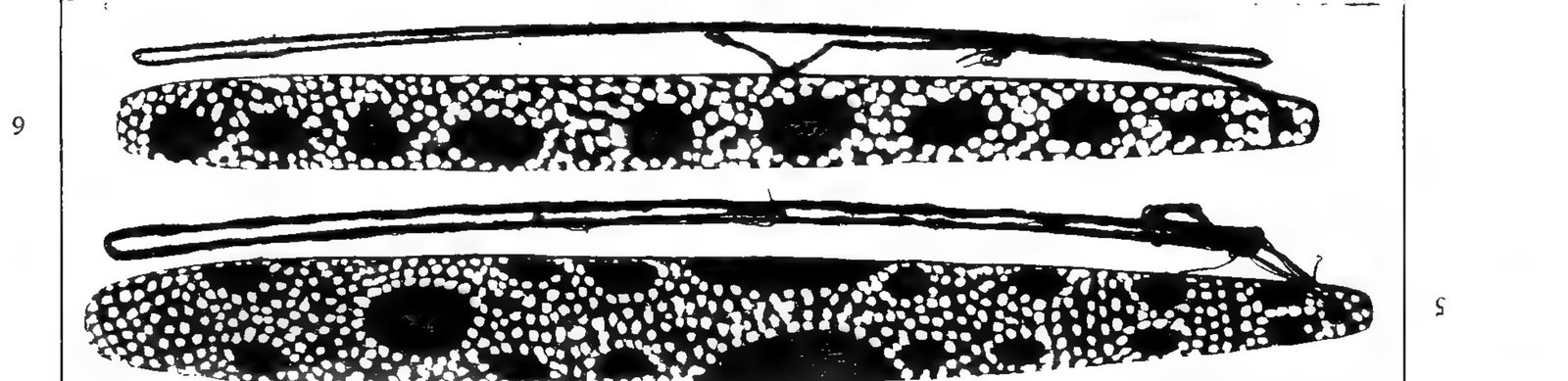
Under the kin-names runs an older, stranger stratum. In a scattering of languages the word for the bull-roarer is not “grandfather” or “mother” but the plain word for the soul of the dead — and, at its most concentrated, the word for the monster that swallows the boys at initiation as well. One word for three things: the ghost, the devourer, the instrument.
The clearest case is the Huon Gulf balum. Among the Bukawa and Yabim and across the whole gulf, balum is the ghost or spirit of the dead — and the same word names the swallowing initiation-monster and the roarer that is its voice. Their neighbours the Tami use kani in exactly the same triple sense. James Frazer, reading these accounts, put his finger on the thing:
“It is highly significant that all these tribes of New Guinea apply the same word to the bull-roarer and to the monster, who is supposed to swallow the novices at circumcision.”
Sir James Frazer, Balder the Beautiful, vol. II (1913), on the Yabim, Bukaua, Kai, and Tami
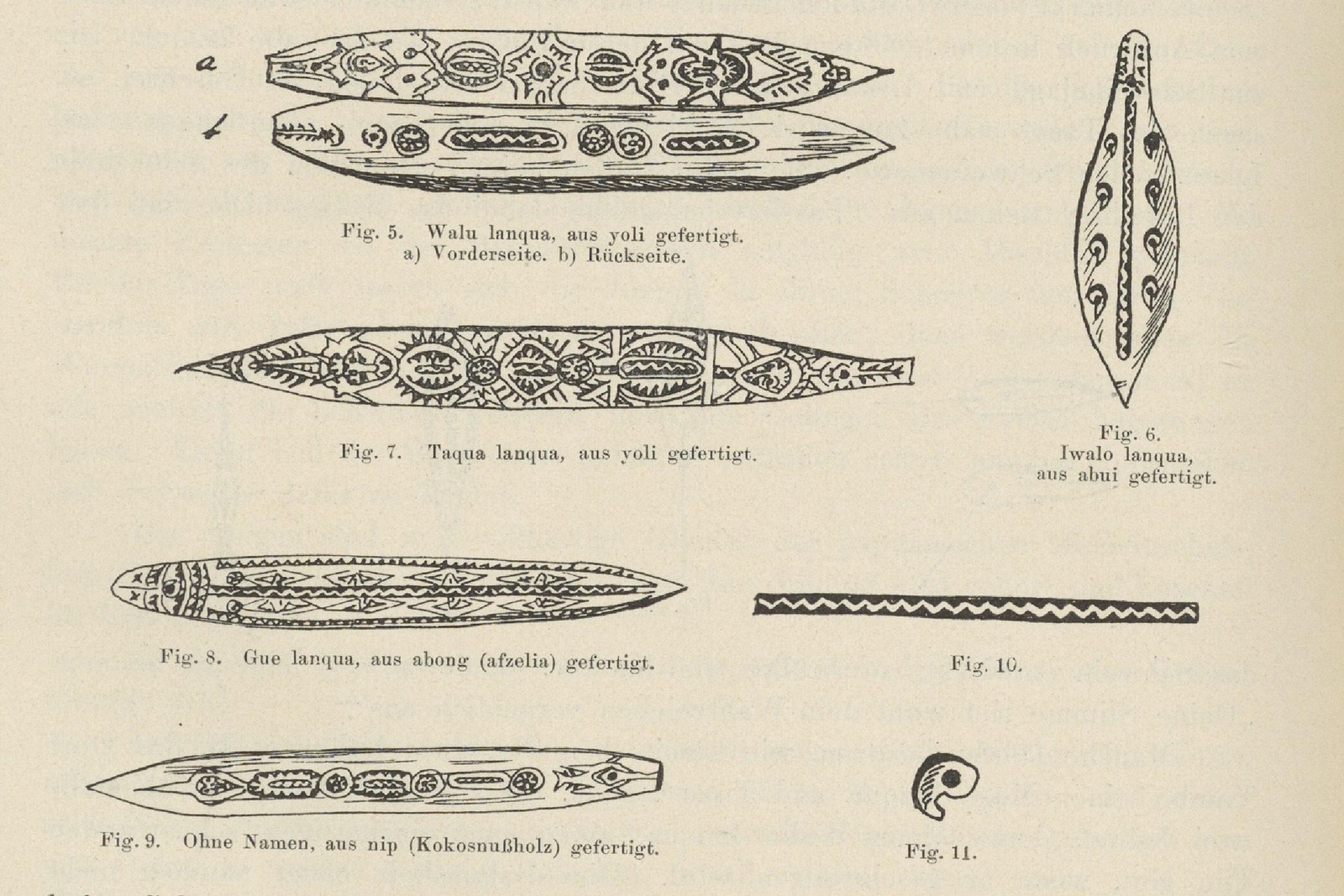
What Frazer did not press is how far the same equation travels. On the other side of the Pacific the Apinayé of Brazil call the roarer me-galo — “the word for the soul, ghost, shadow, and image of a dead person,” in Nimuendajú’s gloss, “also applied to the bull-roarer.” The Bororo swing the aige at funerals, sharing its name with the water-monster whose voice it is; the Kamoro hang the payu, “the voices of the dead,” in the ceremonial house; the Purari call theirs imunu viki, “the weeping spirit”; the Wayana of the Guianas whistle the yolok eu, the “spirit-whistle.” In the Banks Islands the sense splits neatly in two: on Mota the roarer is nanamatea, the “death-maker,” swung to drive a ghost away; on Merlav it is worung-tamb, “a wailer,” sounded to mourn the night after a death.
The word for the roarer is the word for the ghost, the shadow, and the image of a dead person.the Apinayé term me-galo, in Nimuendajú’s gloss
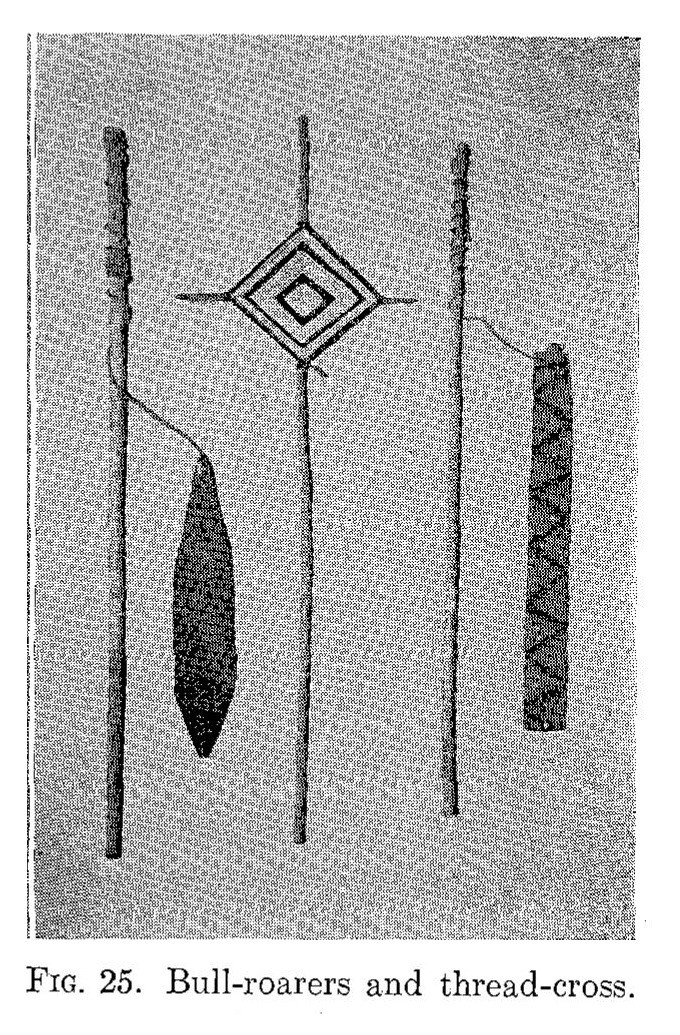
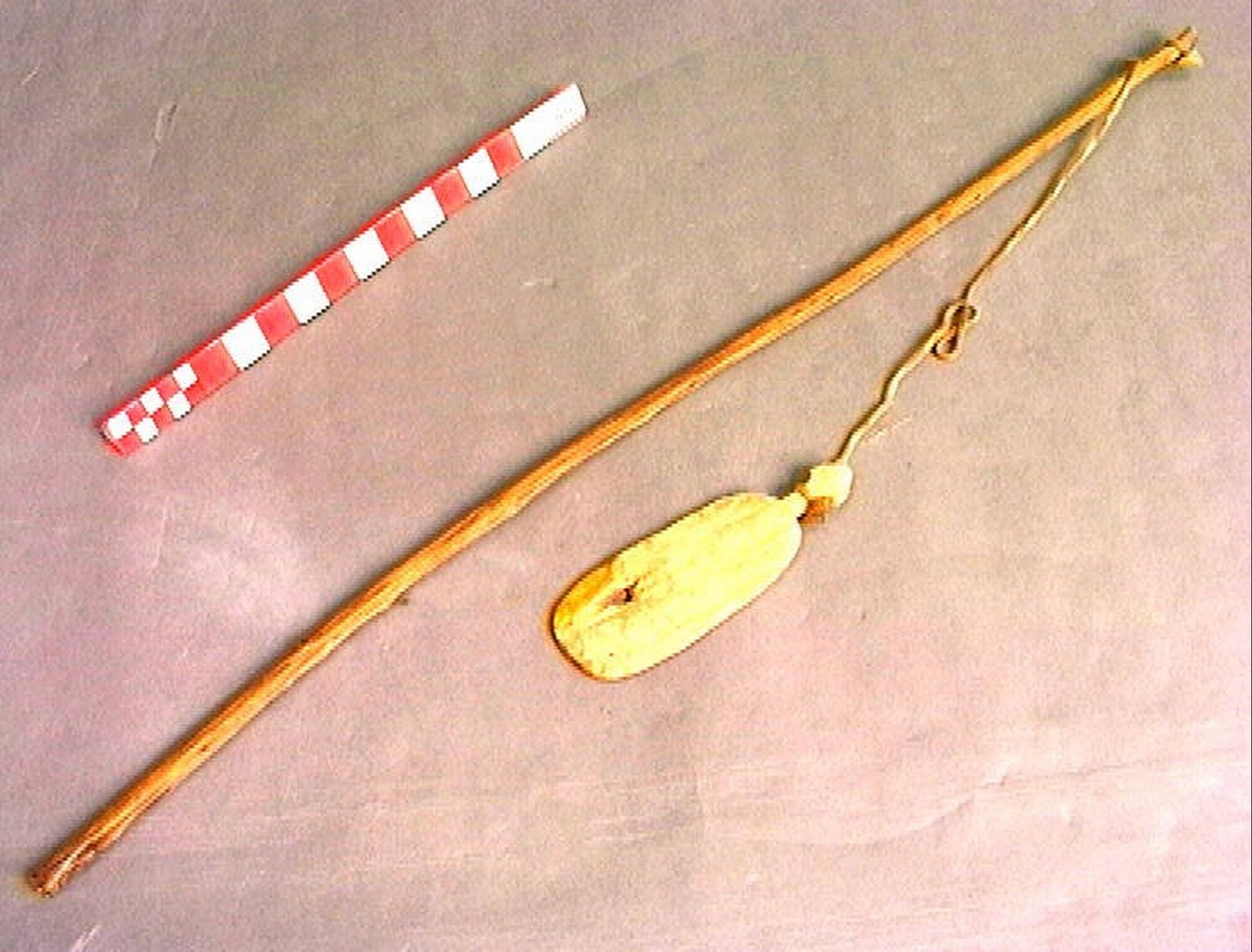
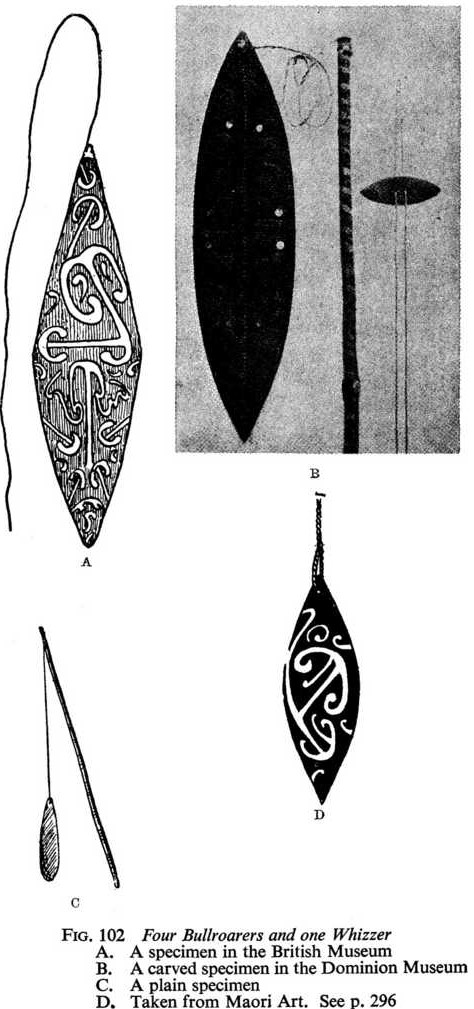
And a few peoples heard a breath or a soul in the sound itself. The inland Yuki of California named the roarer aelamo’otom, “thunder breath.” The Māori called it pūrerehua, for the moth whose whirring wing it imitates, and in Taranaki mamae, where it sings a farewell to the dead — and Elsdon Best recorded the belief that the booming of a pūrerehua was caused by wairua, the free-soul itself. These are not metaphors reaching for a spirit’s voice. Where the word is balum, the object is the departed soul, and the initiation is the act of being eaten by it and given back remade.
| Name | People | Gloss | What the cult does |
|---|---|---|---|
| balum | Yabim / Bukawa, Huon Gulf | ghost of the dead + swallowing monster + roarer | Circumcision: death and rebirth |
| kani | Tami / Siassi | souls of the dead + monster + roarer | Circumcision initiation |
| me-galo | Apinayé, Brazil | “soul, ghost, shadow, image of a dead person” | Once a sacred voice; a toy by Nimuendajú’s day |
| aige | Bororo, Brazil | the water-monster the roarer voices | Sounded at funerals for the dead |
| payu | Kamoro, New Guinea | “the voices of the dead” | Hung in the ceremonial house at feasts |
| imunu viki | Purari, New Guinea | “the weeping spirit” | Voice of the monster of the men’s house |
| yolok eu | Wayana, Guianas | “spirit-whistle” (yolok = soul of the dead) | Spirit-music of the rite |
| nanamatea | Mota, Banks Islands | “death-maker” | Swung to drive off a ghost |
| worung-tamb | Merlav, Banks Islands | “a wailer” | Mourning sound the night after a death |
| aelamo’otom | Inland Yuki, California | “thunder breath” | Weather and ceremony |
| pūrerehua / mamae | Māori, Aotearoa | “moth” / a farewell to the dead; its roar is wairua | Rain, ritual, mourning |
From kin-name to noise-name
Set against all this, the European names are almost shocking in their emptiness. Where the instrument long ago slipped out of the men’s house and into the hands of children, the name has drained of every relative and every ghost and kept only the sound. The Dutch of Alkmaar whirl a brommer — a “hummer,” from brommen, to drone. In Sardinia it is the burriburri; in Suffolk the woozer; in the Scottish Highlands the srannair, “the droner,” from srann, to snore. Ukrainian children of Volyn spin the furkalo, “the whirrer”; Portuguese boys the zunas, from zunir, to drone and hiss; the shepherds of Béarn the burrumbo, from a word for a dull roar. In León it is simply the zumbador, the buzzer, and the bramadera, the bellower. Nobody’s grandfather; nobody’s ghost. Just the noise the wood makes.
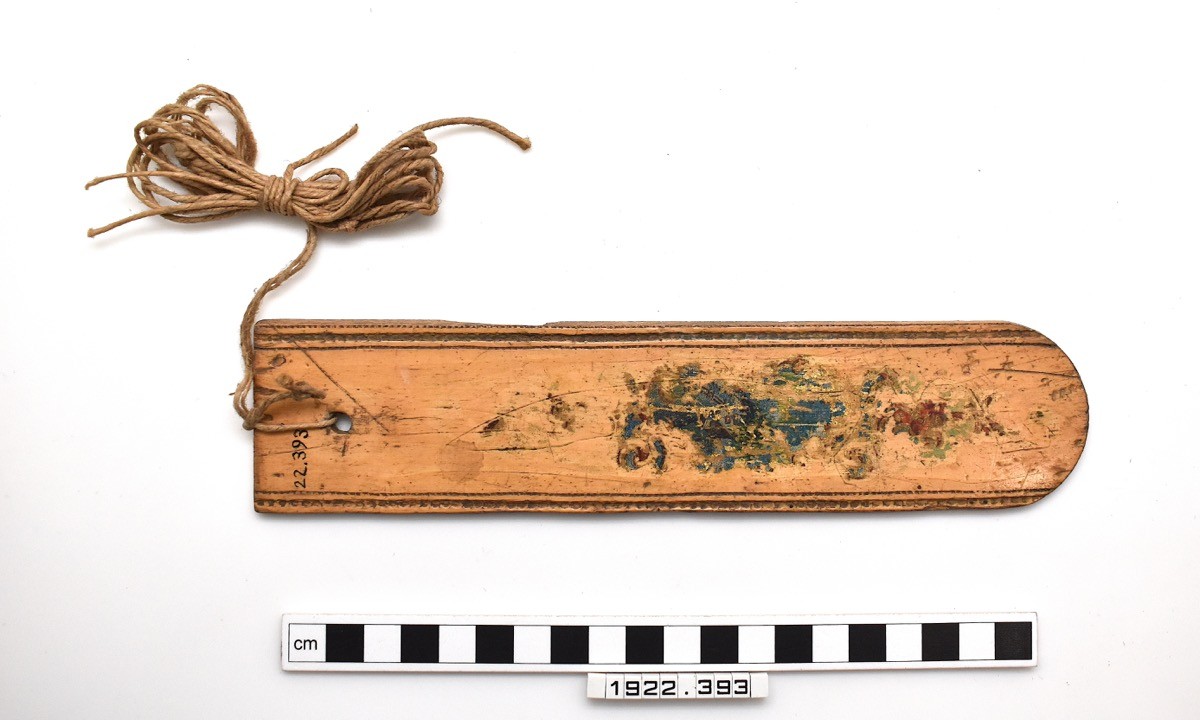
The onomatopoeia is not a European peculiarity — the Carib of the Guianas call theirs wun-wun, for the roaring buzz, and the coastal Kiwai gave their secret madubu a second, public name, bigu, “for it called out its own name when whirling round.” But the two kinds of name are not evenly spread. They stand at the ends of a single gradient. At one end a serious cult is doing serious work — making a man, feeding a village, burying the dead — and the instrument at its centre is a named forebear or a soul. At the other end the work is finished, the secret is out, the roarer is a toy in a child’s fist, and its name has decayed to the sound it happens to make. You can read a people’s whole relationship to the object off the word it kept: kin-name where it still works, noise-name where it has retired.
| Name | People | Gloss | Standing |
|---|---|---|---|
| brommer | Alkmaar, Holland | “hummer / buzzer” | Children’s toy |
| burriburri | Gavoi, Sardinia | onomatopoeic; general term frúsciu, “rustle” | Folk survival |
| woozer | Suffolk, England | onomatopoeic | Toy, from recycled wood |
| srannair | Argyllshire, Scotland | “the droner” (from srann, to snore) | Toy survival |
| furkalo | Volyn, Ukraine | “the whirrer” | Children’s toy |
| zumbador | León, Spain | “buzzer” (from zumbar, to hum) | Folk noisemaker |
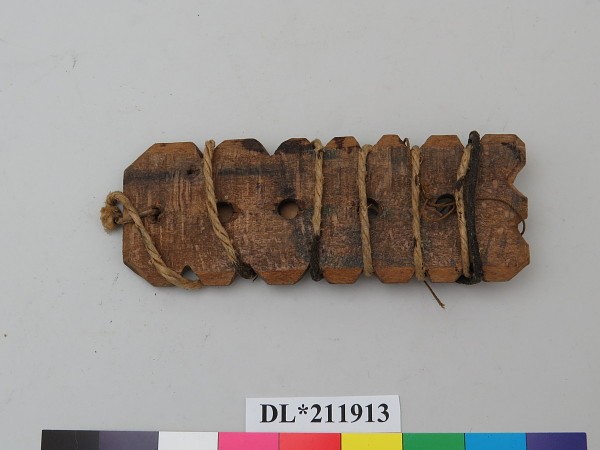
A genealogy of names
The atlas records the bull-roarer under more than eight hundred and fifty local names. Laid out one after another they look like a word-list, the kind of thing that goes in an appendix. Read together, sorted by the work each people asks of the instrument, they are something closer to a genealogy. The roarer is a man where boys are made into men, a mother where the yams must ripen, a grandfather in the forest, the Mother of All in the Top End, a death-maker where a ghost must be sent off, and a plain hum where none of that is asked of it any more. And a European folk relic keeps the last honest word on the matter: the children of Rovinj, on the Istrian coast, still call the thing they whirl la bus de la viecia — “the voice of the old woman” — the Mother’s name surviving in a plaything, long after the cult that gave it meaning has gone.
That is the pattern in one word. Wherever the instrument still does its work, it is remembered as a relative. Wherever it has retired into the toy box, it is remembered as a noise. The name is a record of how alive the thing still is — and the family it belongs to, when it is alive, is the same family from Gippsland to the Bandiagara escarpment: the grandfather and the mother, the man and the Old Woman, the ancestor whose voice you become.
Key sources
- Howitt, A. W. 1904. The Native Tribes of South-East Australia, pp. 493, 628–9 (Tundun and Rukut-Tundun, “the man” and “the woman”); Fig. 37. Behind Andrew Lang, Custom and Myth (1884), “The Bull-Roarer.”
- Haddon, A. C. 1898. “The bull-roarer,” in The Study of Man, pp. 305–306 and fn. (Chalmers on the burumamaramu; buruma yam + maramu mother); after S. H. Ray and A. C. Haddon, “A Study of the Languages of Torres Straits,” part II, Proceedings of the Royal Irish Academy, 3rd ser., vol. 4 (1897), p. 309.
- Frazer, J. G. 1913. Balder the Beautiful (The Golden Bough, 3rd ed.), vol. II, pp. 250–251, 290–291 (the New Guinea word-identity of roarer, monster, and ghost).
- Nimuendajú, C. 1939. The Apinayé, p. 140 (me-galo = soul, ghost, shadow, image of the dead, “also applied to the bull-roarer”).
- Codrington, R. H. 1891. The Melanesians, p. 342 (Mota nanamatea, “death-maker”; Merlav worung-tamb, “a wailer”).
- Schebesta, P. 1933. Among Congo Pygmies / Bambuti field reports (maduali = the primordial father; pahudjuhudju, “father hudju”).
- Mathews, R. H. 1907. Notes on the Aborigines of New South Wales, Plate 9 (the Wiradjuri instruments); with Mathews 1896–8 on the Burbung and the voice of Dhurramoolan.
- Spencer, W. B. 1914. Native Tribes of the Northern Territory of Australia, Plate II (the Mungarai Kunapippi, sacred sticks named for their first owner).
- Stanner, W. E. H. 1959–63. On Aboriginal Religion (Karwadi / Mutjingga, “the Mother of All,” the Old Woman); R. M. Berndt, Kunapipi (1951), for the mother-cult name across Arnhem Land.
- Dieterlen, G., and M. Griaule, on the Dogon imina na, the serpent Great Mask (“great” / “mother” mask) of the Awa society and its bullroarers.
- Best, E. 1922. Spiritual and Mental Concepts of the Maori, p. 33 (the boom of the pūrerehua caused by wairua); and Games and Pastimes of the Maori (1925), Fig. 102.
- Battaglia, R. 1925, on the Istrian folk survivals (Rovinj la bus de la viecia, “the voice of the old woman”).
- Loeb, E. M. 1932, on the inland Yuki aelamo’otom, “thunder breath”; von den Steinen and Zerries on the Bororo aige.
The kin-term census assembled here — and the observation that the roarer’s personified sex tracks its cult’s function (male in the man-making initiations, female in the fertility and crop cults) — is, as far as we know, original to this page. The component glosses are each attested in the sources above; the typology drawn across them is ours.