Atlas Essay —
Killing the Voice
the upper Fly · the Mary River · the Yodda Valley · Kissidougou · the Macquarie and Bogan · the Huon Gulf · the upper Yupna
At the end of the Hunjara ceremony, the bullroarers were taken apart. Their handles and ornaments went into the fire. Their small blades and strings did not. Those were packed away and hidden. It was a precise ritual dissection: kill the performed body, keep the apparatus from which a voice can be built again.
In brief
- Yonggom made a fresh object for each initiation and discarded it; Wulwulam threw used sticks away; Wiradjuri split, buried, or burned the instruments after revelation.
- Hunjara burned handles and ornaments but cached blades and strings. Kissi villages chose among burning, keeping, and remaking, exposing lifecycle as a deliberate ritual variable.
- Djauan elders stored the bullroarer instead of destroying it. Arrernte churinga were inherited; Bukaua blades carried dead men's personal names; the Yopno law-object survived political regimes because its lineage and office had to survive them.
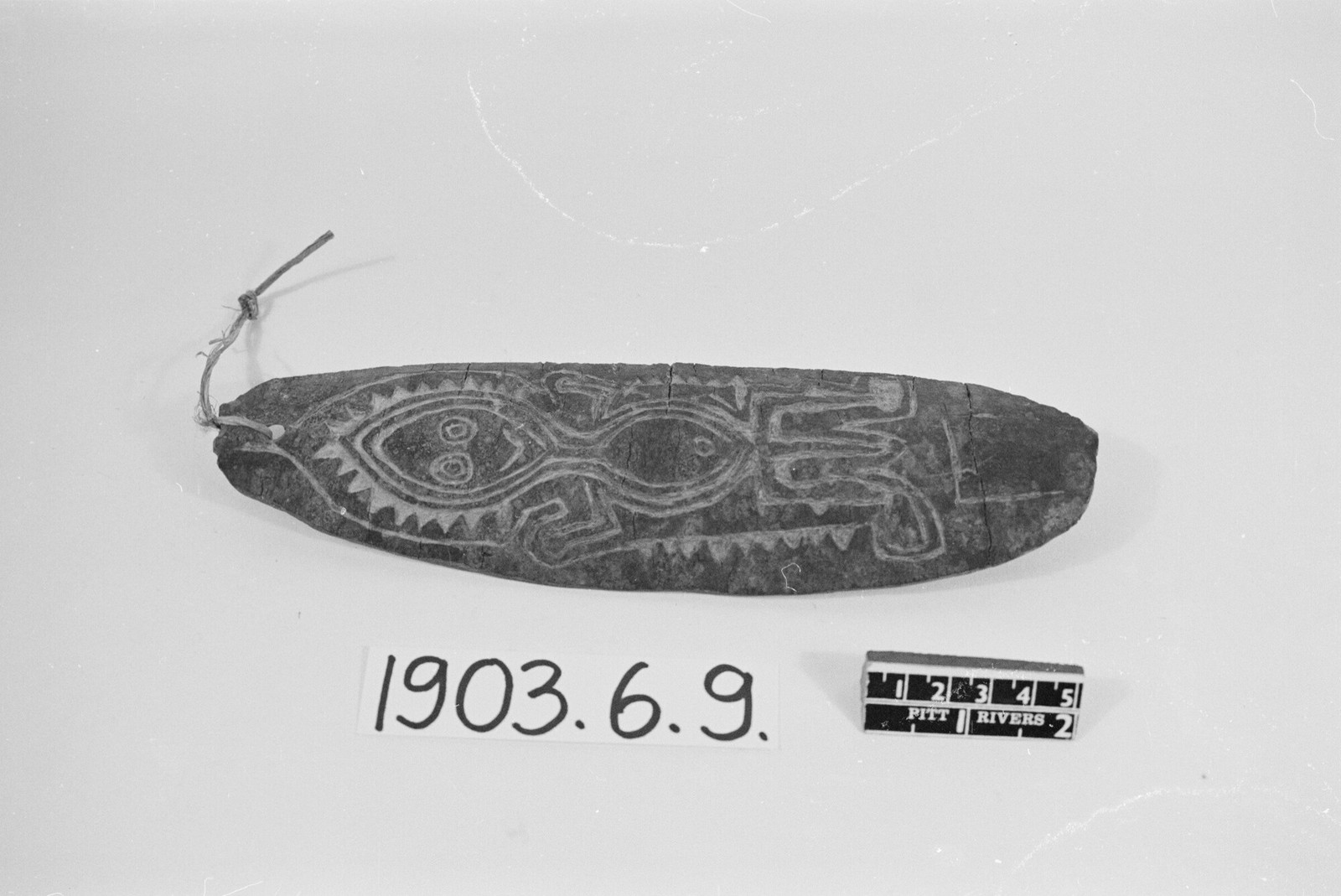
Across the corpus, a sacred bullroarer's fate tracks the identity lodged in it: event-bound voices are remade or destroyed, while named, lineage, and office-bearing carriers are stored, handed on, or ritually renewed.
Sacred does not mean permanent
Museums train us to ask whether a sacred object survived. The question assumes survival is success. An old, named, polished instrument behind glass feels more sacred than a fresh slat abandoned in the forest. Yet ritual systems can value the opposite. An object made for one initiation may become dangerous, exhausted, or ordinary once the transition is complete. Destroying it can protect the rite from casual repetition. Remaking it can ensure that every cohort receives an untarnished voice.
Make, reveal, split, burn, throw away, bury, cache, remake, name, purchase, store, inherit, transfer: these are the verbs catalogue photography cannot show. Once those verbs are placed beside one another, object fate stops looking like an afterthought. It forms another dimension of the institution, as structured as who may see the blade or whose voice the sound carries.
The strongest pattern is not “secret objects are destroyed.” Some of the most restricted are carefully handed down. Nor is it “cheap objects are disposable.” A plain wooden slat can embody a lineage and outlive governments. The better predictor is the identity lodged in the particular thing. If the instrument's job belongs to a single cohort or performance, the material carrier can die when that job ends. If the particular blade bears an ancestor, name, lineage, title, or jurisdiction, destroying it would break a continuing social relation.
One cohort, one voice
The Yonggom case states the renewable model plainly. A fresh bullroarer is made in the forest for each yawat male initiation and discarded when the ceremony ends. The Penn Museum records preserve three forms made by named artisans: a wooden kanim, a wild-pandanus diap yawat likened to a cassowary call, and a twig-and-leaf watmung yawat that buzzes like flies. Their materials and voices differ, but the lifecycle instruction is the same. This sacred object belongs to this passage.
Discarding is not desacralization. The prohibition that Yonggom women must not see the instruments remained strong enough to travel into museum documentation. The paradox disappears when rite and object are separated. The yawat continues; the particular kanim does not. Continuity resides in the rule for making the next one, the knowledge of its “nostril” and “mouth,” its two speeds, the forest setting, and the authorized makers.
This is cultural memory stored as a recipe rather than a relic. A relic conserves identity by keeping matter stable. A recipe conserves identity by making controlled replacement possible. Both can transmit for generations. The first accumulates age; the second repeatedly returns to zero.
Thrown away because the rite is complete
Eylmann gives the Wulwulam rule in one sentence: bullroarers and clapsticks were extensively used in ceremonies before circumcision, and the used sticks were thrown away after consecration was completed. The timing excludes ordinary neglect. The object is discarded at the point the boy's new status has been made valid.
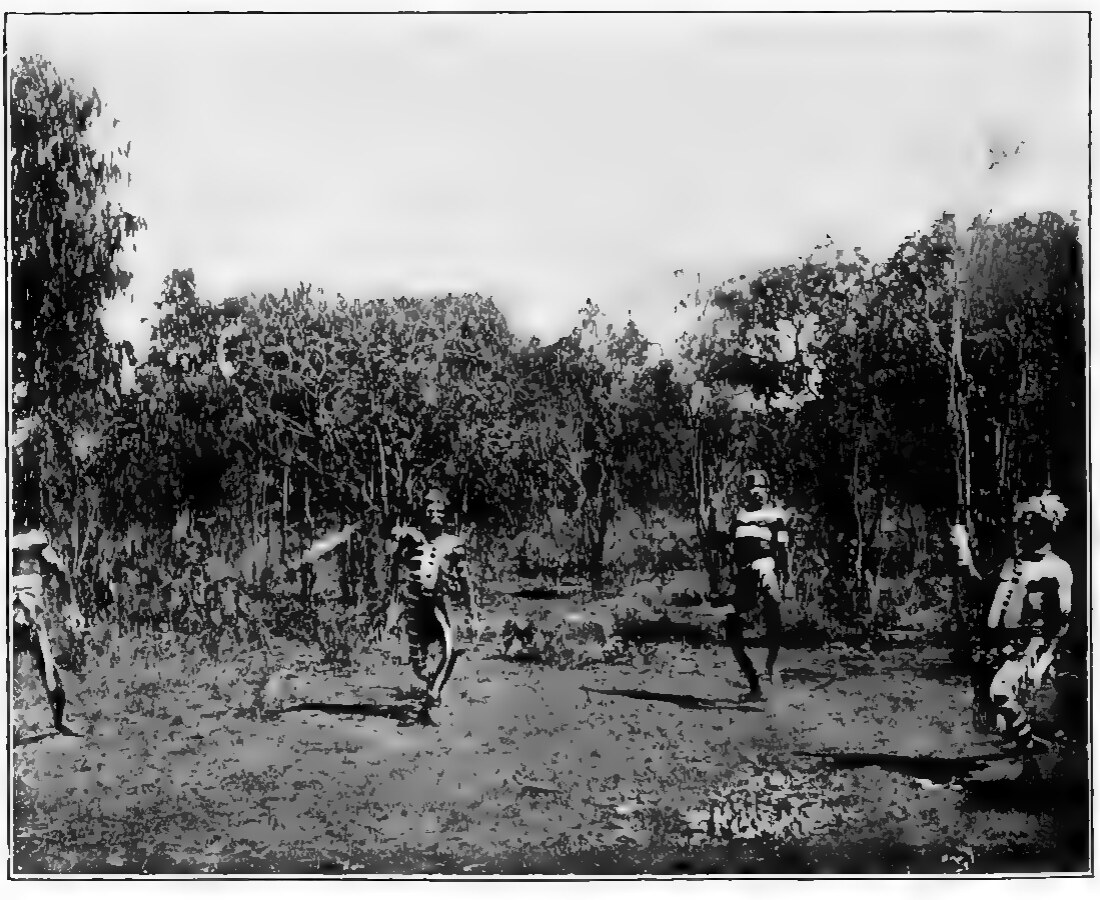
The Wiradjuri Burbung supplies a more aggressive termination. R. H. Mathews documented a large mudthega and a smaller moonibear, sounded through the initiation and finally shown and explained to novices. Comparative summaries of his account state that the roarers were then split, driven into the ground out of sight, or burned. Revelation and destruction occupy the same end of the rite.
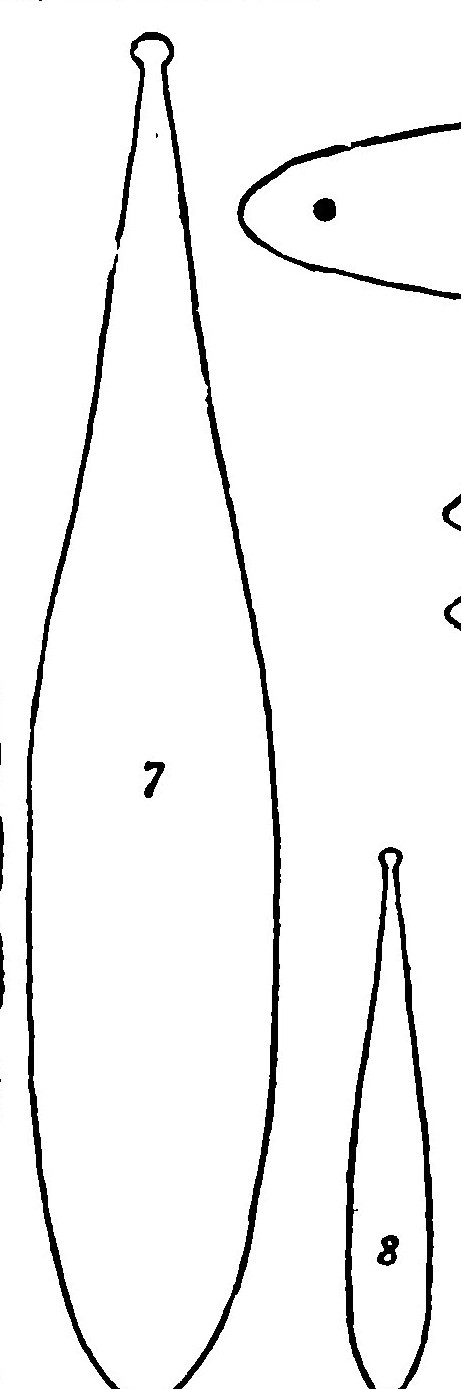
Destroying the proof after revealing the mechanism does two things. It prevents the initiated object from drifting into casual use, and it forces transmission back into people and procedure. The novice cannot possess the very blade that ended his ignorance. He possesses the rule of what it was and the obligation to participate in making or recognizing another.
Hunjara: burn the body, cache the voice
Chinnery and Beaver observed the Hunjara ceremony near Kokoda in 1911. About thirty wowow came into play. The instruments consisted of small goroba-palm blades tied by strong fibre string to hard wooden handles. During the revelation, candidates were shown the things behind the frightening sound. The ceremony then sorted their components by fate.
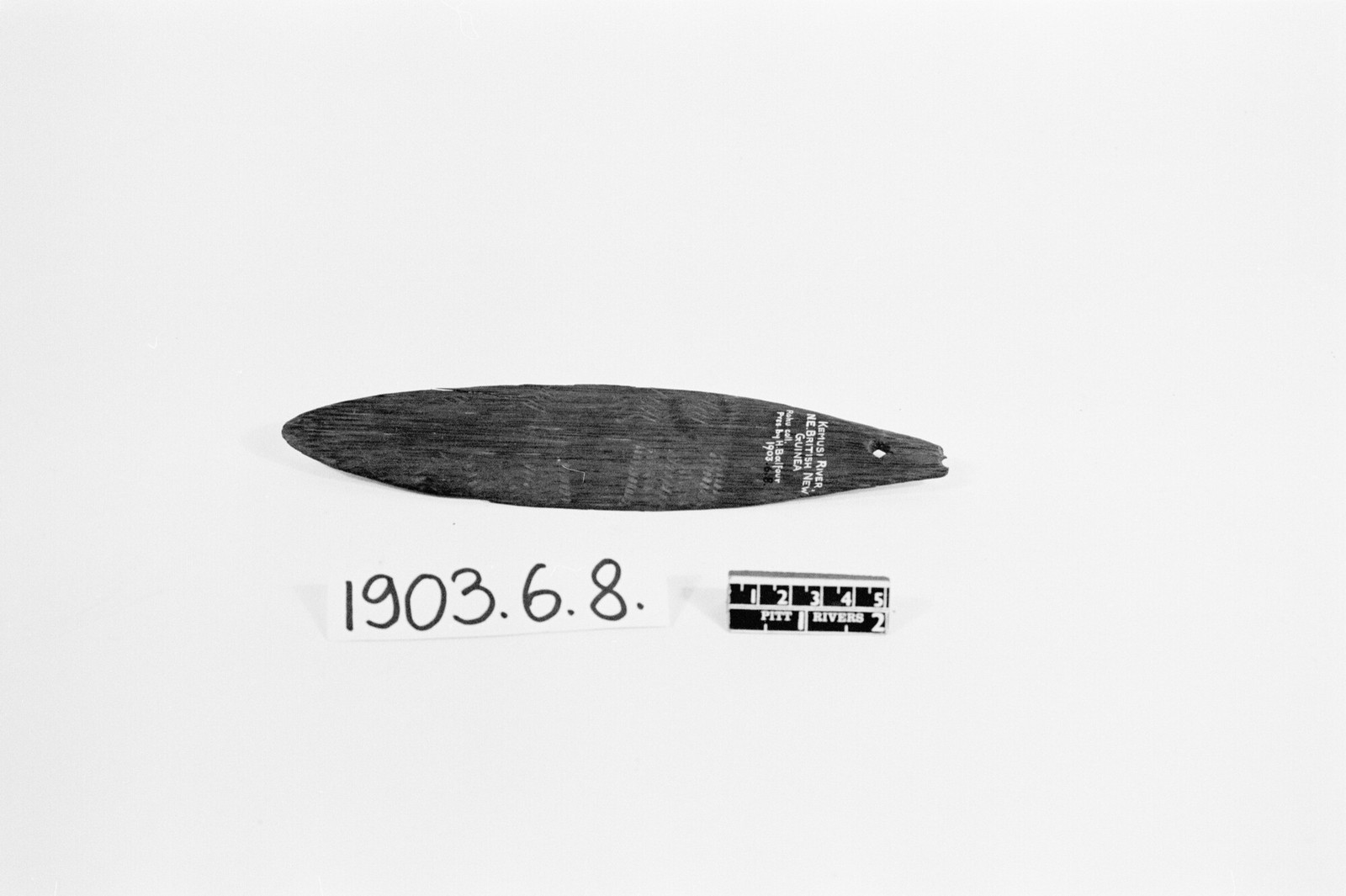
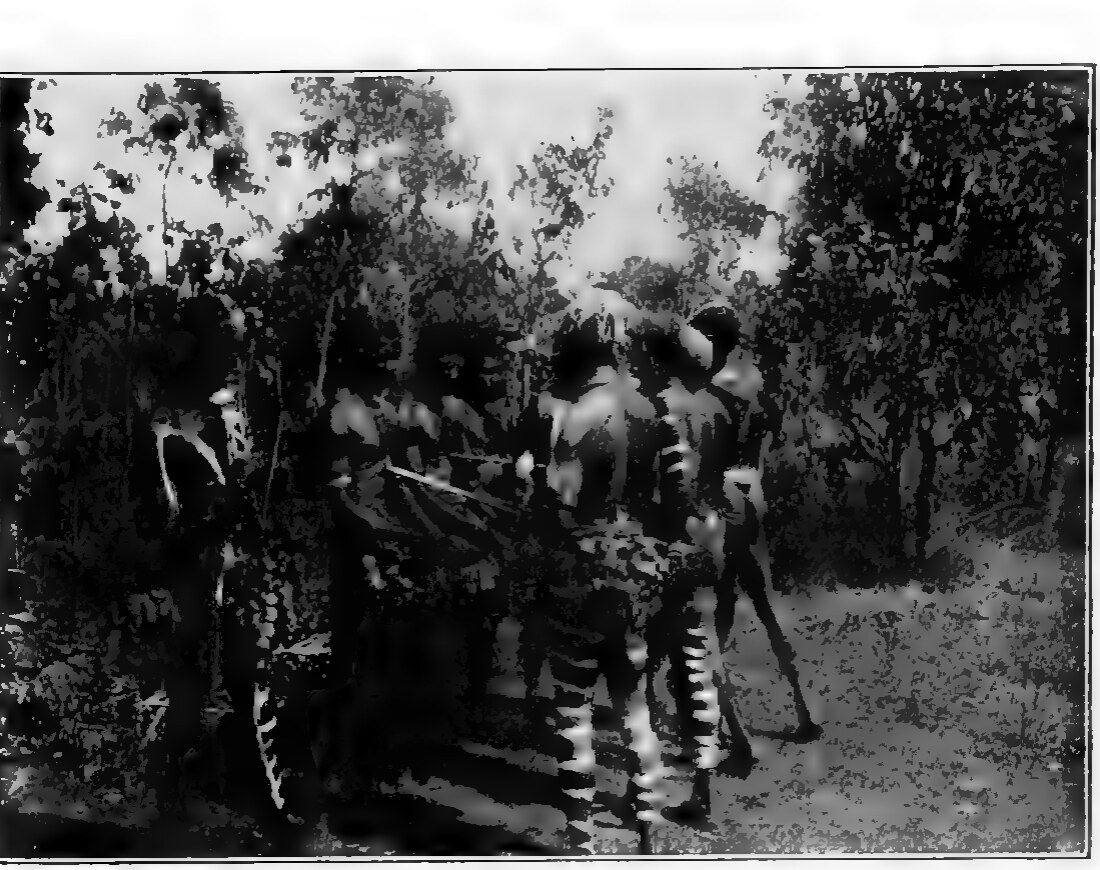
Handles and ornaments burned. Blades and strings were packed away and secretly stored. The sounding apparatus had no single lifecycle. The parts most exposed in performance were destroyed; the compact aerodynamic core and its cord survived in a dormant bundle. At the next activation, saved core and replacement handle could be assembled into a new public body.
This hybrid clarifies the whole corpus. “Was it destroyed?” is too coarse. A bullroarer may be wood, string, handle, paint, wrapper, name, owner, storage place, and authorized gesture. A rite can terminate some of those relations and preserve others. The Hunjara killed the configuration rather than erasing every component.
The practice resembles seed storage. The standing plant is cut down; a small reproductive kernel is hidden; the visible organism will be rebuilt when the season returns. The comparison is structural, not an ethnographic gloss. It identifies what the handling rule conserves: not a museum-ready whole but the capacity for controlled recurrence.
Kissi: neighbouring villages choose different endings
André Schaeffner's Kissi material is decisive because it records variation inside a regional institution. The bullroarer turned morning and evening through the young men's seclusion as the voice of the ancestors. At Densesu, three instruments were burned after the retreat. At Owet, one burned when the initiates departed. At Tekulo, an instrument was kept and remade in the forest. At Temessadou, many remained in the bush.
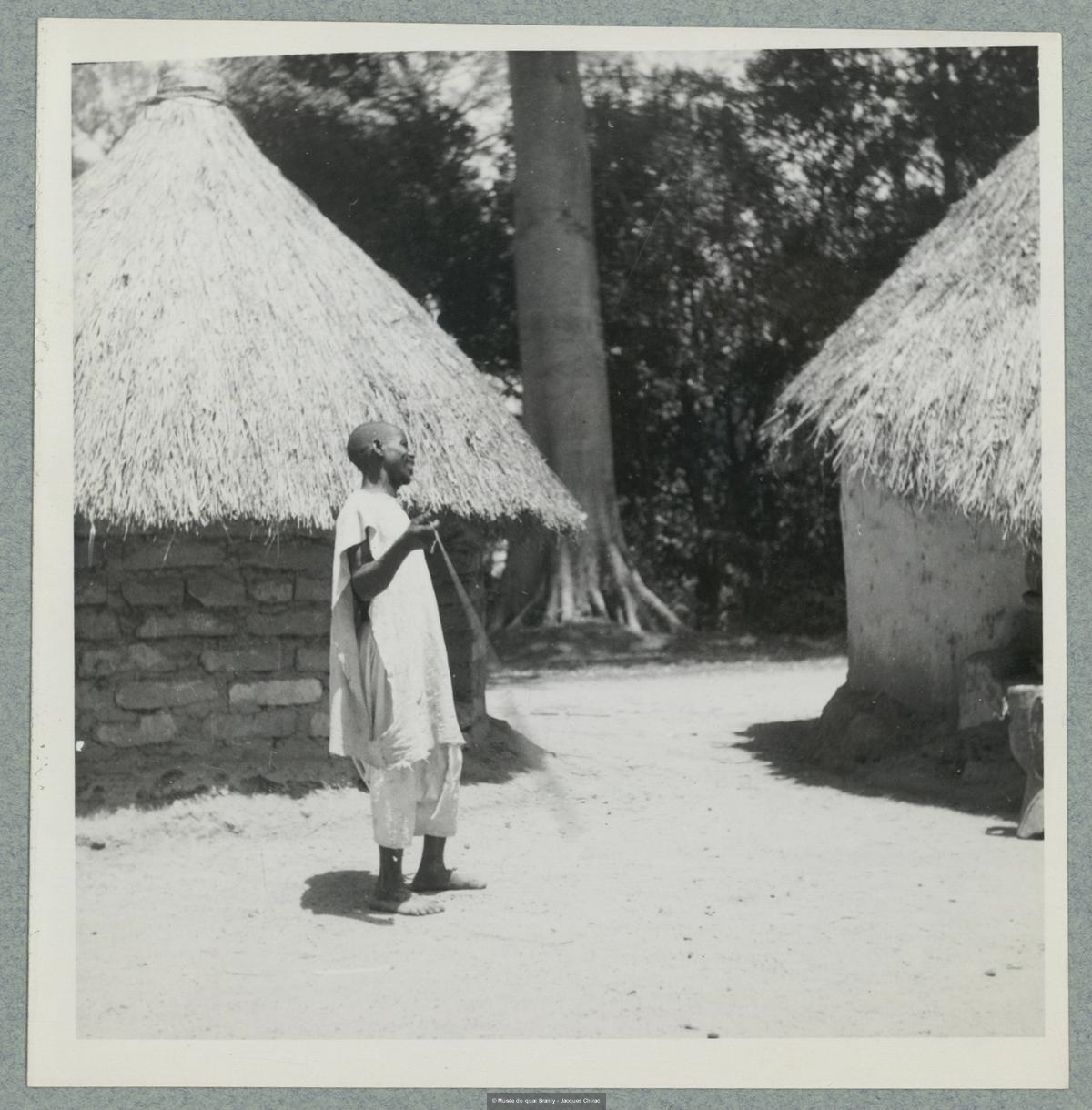
Local variation removes a convenient alternative explanation. Weather, poverty, or collector absence cannot explain why neighbouring communities enumerate different treatments. The instrument's afterlife is an adjustable component of the rite. Communities agree on the ancestral voice and seclusion but disagree, or deliberately differ, on whether its carrier should terminate.
An ancestral voice can be burned in one village and kept in another. What predicts preservation is not the cosmological label by itself but how strongly the identity is attached to the particular piece. “Voice of the ancestors” can describe a replaceable office; “this named ancestor's blade” makes a more durable claim.
Djauan and Arrernte: the blade enters history
Baldwin Spencer explicitly noticed a lifecycle border in northern Australia. Larrakia and Worgait bullroarers were destroyed after ceremony. The Djauan, by contrast, carefully stored theirs in places known only to old men. Their country touched the Central tribes, whose churinga were handed down from generation to generation. The comparison is Spencer's, not one imposed on a map a century later.
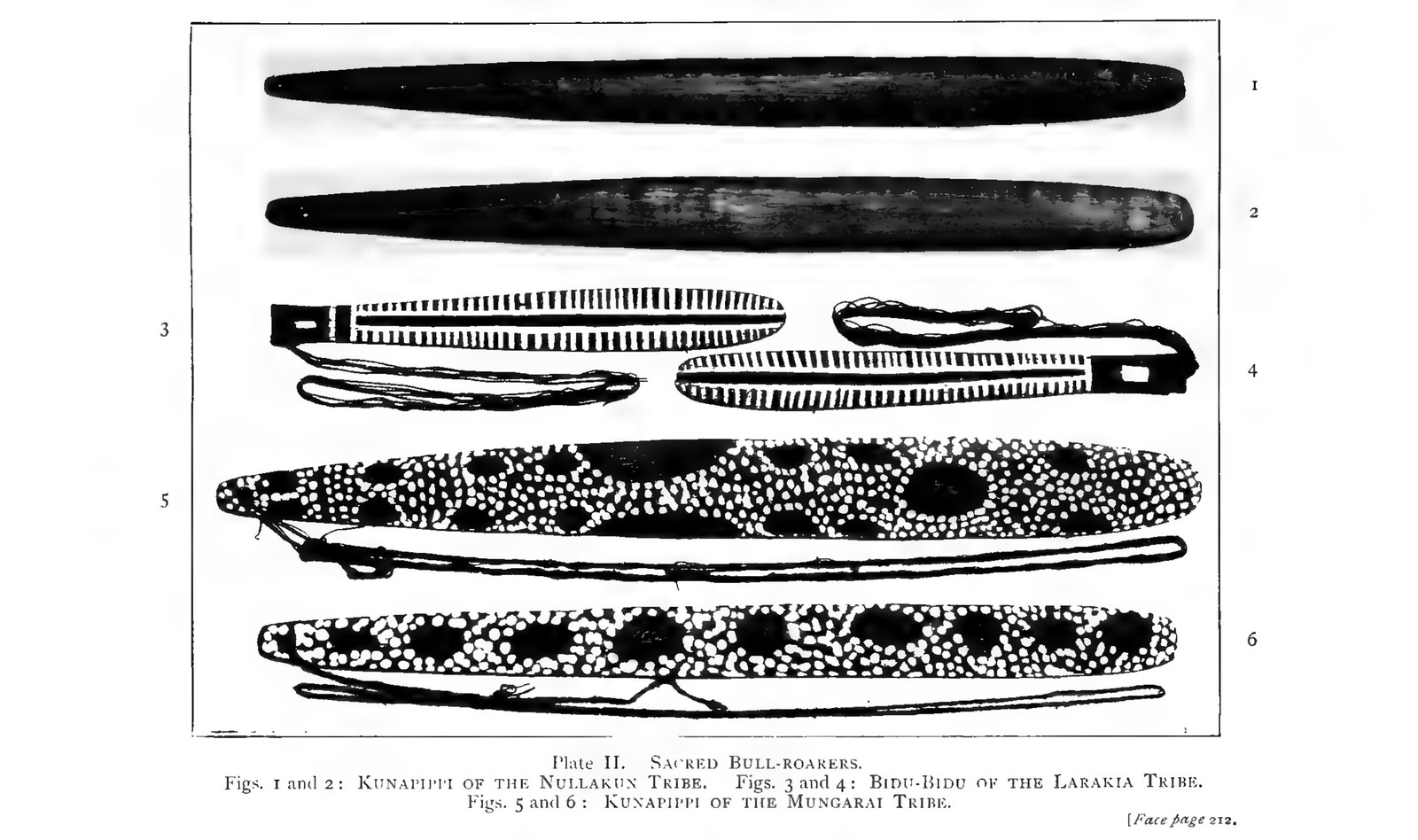
Central Australian churinga cross a categorical threshold. Many were not bullroarers; the class included stone and wooden sacred objects. But the smaller bored wooden churinga irula were whirled as roarers, and the larger system tied individual objects to ancestral spirit-persons and places. Storehouses held a material archive of the Dreaming landscape. A particular object could be retrieved for ceremony, inspected by authorized men, and returned.
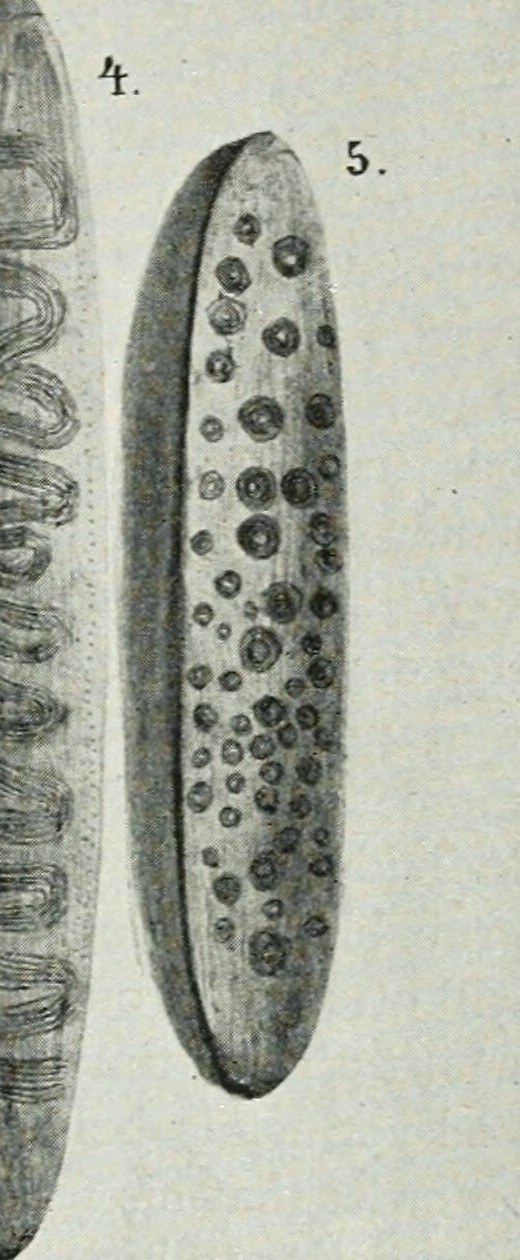
Here age can increase rather than exhaust efficacy. A handed-down object accumulates custody, remembered owners, and proof of connection. Destroying it would not merely require carving another rotor. It would cut a chain between living custodians, ancestral presence, and land. The matter becomes historical because a unique relation has been installed in it.
Bukaua: when the roarer has a dead man's name
Among the Bukaua of the Huon Gulf, each clan's ruling bullroarer could bear a dead man's personal name followed by lanqua, “the Old One.” The museum blade Banko lanqua is therefore not simply one example of a class. It is Banko the Old. Other blades preserved bodily or vocal peculiarities: one had humps corresponding to a man's protruding hip bones; another hung askew and rasped because its namesake's injured nose altered his speech.
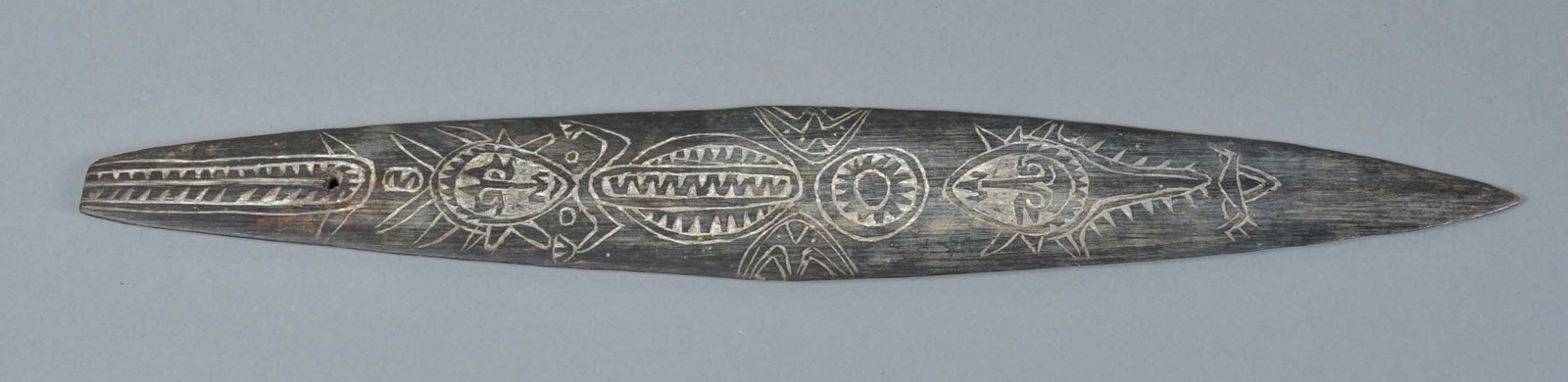
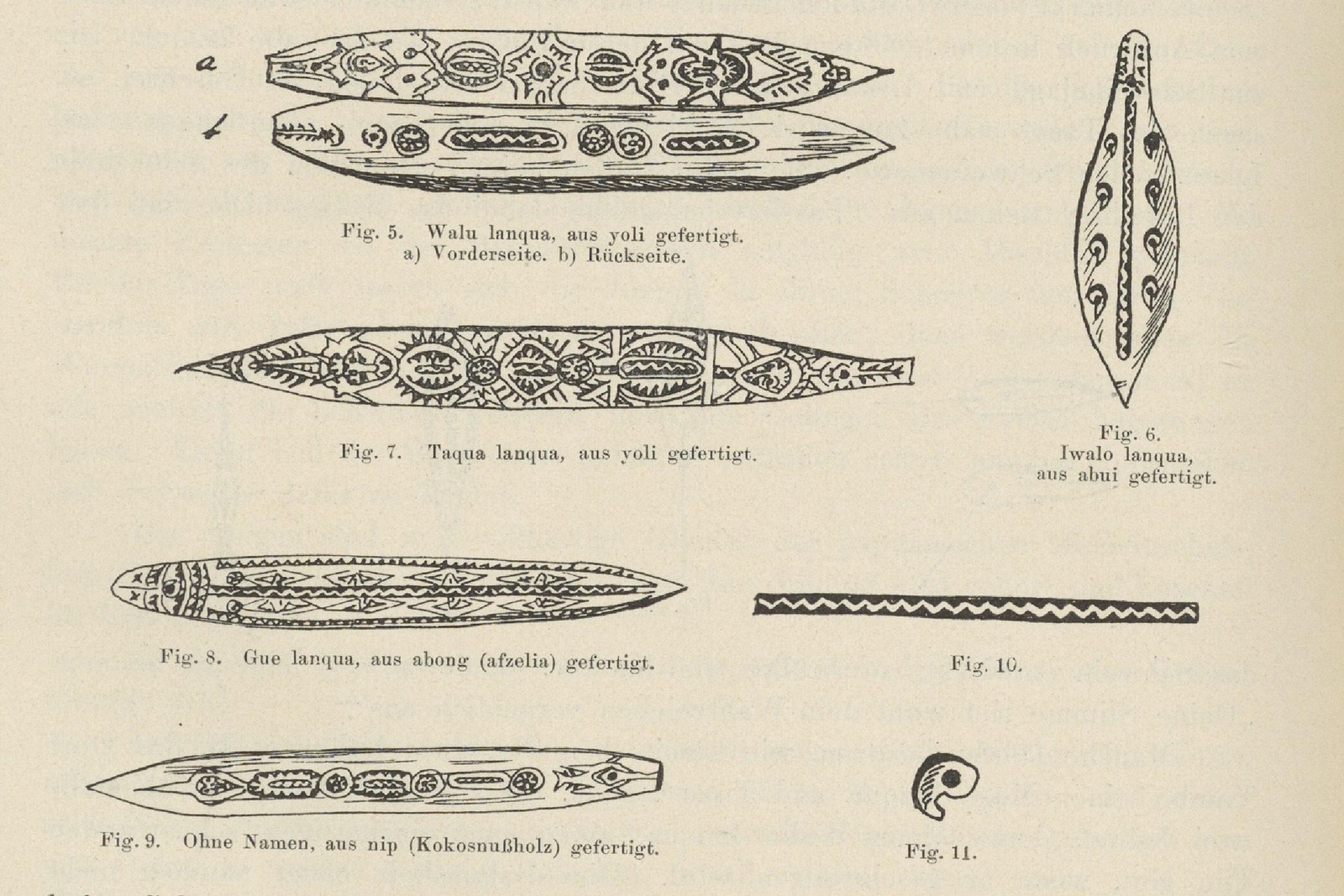
This is the opposite of the Yonggom recipe. There, identity lies in making the correct class of instrument for the next initiation. Here the particular object's deviations matter because they remember a particular dead person. A replacement might reproduce the function, but it would need to reproduce Banko, Gumba, or Wabo to preserve the same social being.
Naming also creates political continuity. The name served as a clan's cry in war, pig-netting, markets, and girls' consecration. The bullroarer did not simply voice a dead man during one closed rite. It coordinated a living group across occasions. The more domains an object's identity connects, the less disposable the carrier becomes.
Buka: expensive voices and disposable bodies
Beatrice Blackwood's Buka material offers a telling internal contrast. In the wapi ceremony, bullroarers called gueir voiced named urar figures of the dead. The instruments were male, carried personal names such as Buwo, Upitomet, and Tororon, and had to be acquired with tooth currency and pigs. The carved urar figures made for the ceremony were burned when it ended.
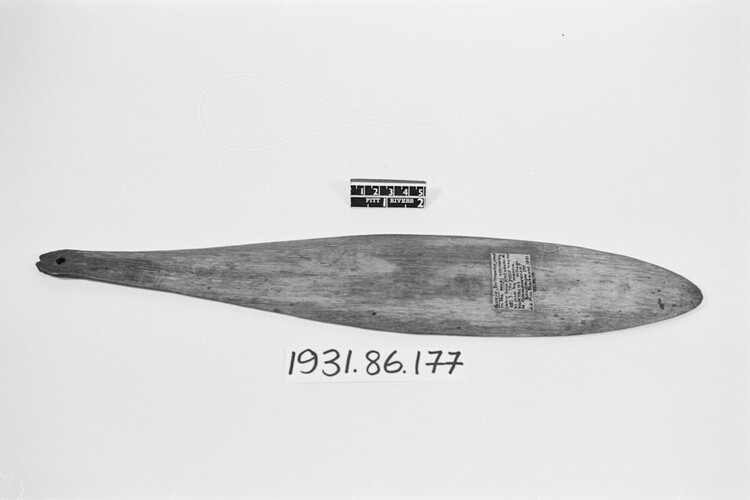
The evidence does not state that every gueir was handed down, so the comparison must stop short of that claim. What it securely shows is differential ontology within one rite. A temporary effigy can be burned while a named voice-object can be purchased, retained, or transferred. “The spirit” is not one indivisible ritual package. Body, voice, name, and title can be given separate material careers.
Dogon: permanence can be periodic remaking
Dogon evidence complicates any simple rule that an ancestral voice must remain in the same wood. Three bullroarers were made before the Sigui, the great rite recurring roughly every sixty years. They shared the name imina na with the Great Mask and spoke as tongues connected to the Fox, the silure fish, and Dyongou Sérou, the first dead ancestor. The referents were primordial; the acoustic mouths were renewed.
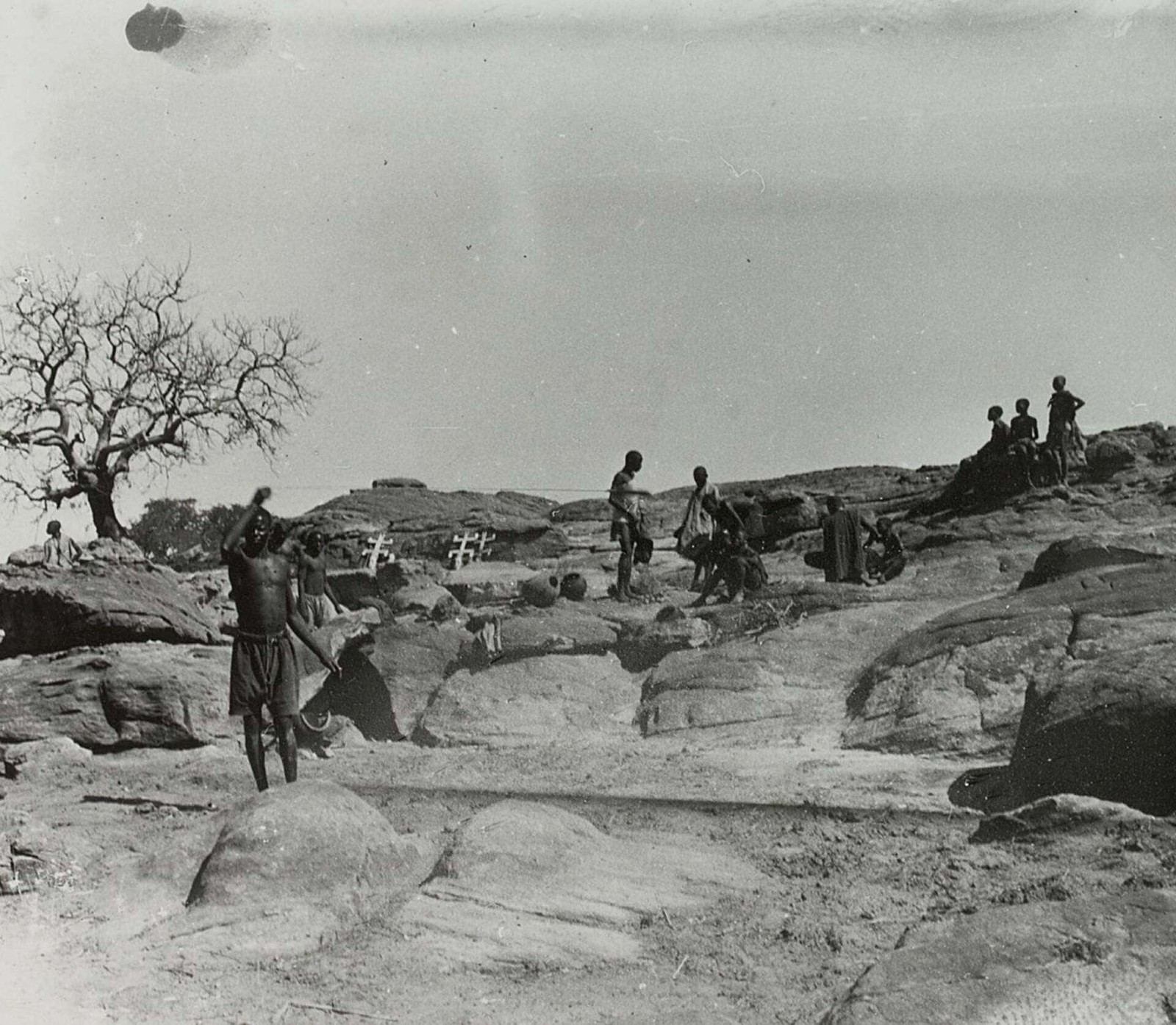
The Dogon case changes the meaning of persistence. A voice can endure because an old object is preserved, because a small core is cached, because a recipe is repeated for each cohort, or because an entire society remakes the ancestral tongue on a long calendrical beat. Material replacement is compatible with institutional continuity when the remaking itself is the inheritance.
Yopno: an office-bearing voice survives regimes
The Yopno law-enforcing bullroarer is the terminal case because its career crosses political systems. It represented the ancestor of the oldest lineage of the Yopno eserong and served as a symbol of traditional law. It was placed in the colonial subdistrict office, lending traditional legal authority to the officer. When elders judged that modern structures could no longer maintain law and order, they removed the object and redirected its force to the Babek Bema Yoma cultural centre. A later account says it also invested a modern member of parliament with law-enforcing power.
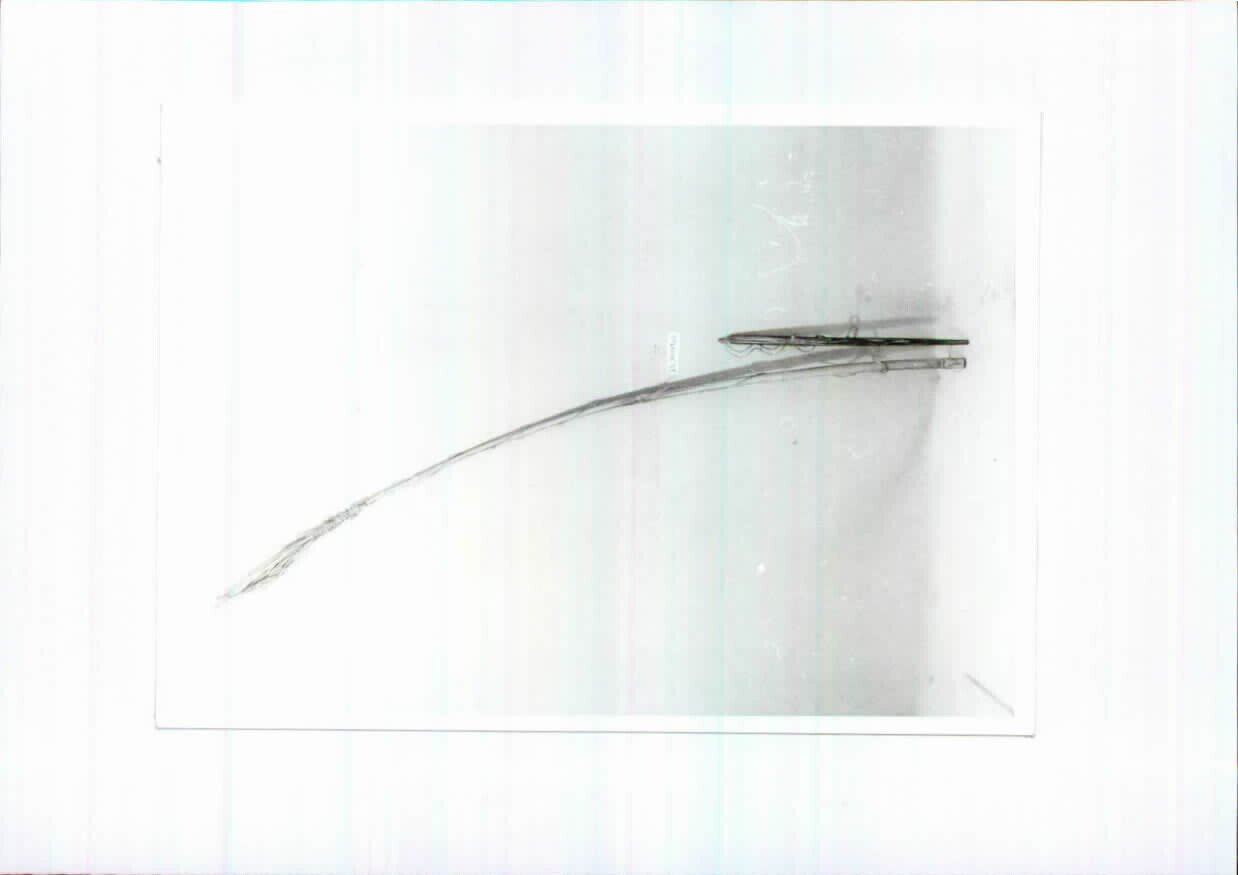
This object could not be replaced as casually as a cohort-specific rotor because it held the continuity that replacement would be meant to claim. Its biography was its authority. Every move added another episode without erasing the ancestor at the beginning of the chain. Storage and transfer were political acts because the same particular object had to remain available for the next institution to inherit.
The lifecycle grammar
The corpus now yields four recurrent operations. First is terminal manufacture: make for one cohort, sound, discard. Second is terminal revelation: expose the mechanism, then split, bury, or burn it. Third is selective dormancy: destroy the performed configuration but cache the acoustic core. Fourth is biographical persistence: store or hand on the object because name, ancestor, land, lineage, or office has accumulated in that particular carrier.
A fifth operation—periodic regeneration—cuts across all four. Dogon tongues return on a long calendrical cycle; Yonggom instruments return with each initiation; Kissi villages can choose remaking over preservation. In these cases the manufacturing rule is itself a sacred heirloom. Continuity lives in know-how, timing, and authorization rather than unbroken wood.
This grammar generates testable expectations. Event-bound specimens should show cheap or locally renewable material, deliberate disposal notes, and few personal biographies. Identity-bound specimens should show names, distinctive damage or decoration, owners and custodians, storage places, payments, transfers, and political disputes over custody. Hunjara-type hybrids should sort components, preserving the hard-to-replace or identity-bearing core while renewing the conspicuous rig.
Kissi variation and Dogon remaking are warnings against determinism. But they direct future research toward questions catalogues rarely ask. Was the collected object new or inherited? What happened immediately after the rite? Did the name belong to the object class or to this blade? Could a broken rotor be replaced? Who owned the fragments? The answers may reveal social structure more clearly than another measurement of length and width.
Destruction is a memory technology
The underlying discovery is that memory does not require matter to remain unchanged. A cult can conserve itself by eliminating the thing that might be mistaken for the institution. The Yonggom rule makes men remember how and when to create the next voice. Wiradjuri destruction leaves revelation in people rather than circulating as an exposed prop. Hunjara caching separates latent capacity from its public body. Djauan and Arrernte storage preserve a historical relation that would be damaged by substitution.
Each solution locates continuity somewhere different. It can sit in a recipe, a cohort of initiated bodies, a hidden component bundle, a named blade, a lineage storehouse, or a chain of political custody. These are all external memory systems, but only some resemble an archive. The others conserve by recurrent performance or controlled oblivion.
This distinction matters for archaeological inference. A tradition that destroys or makes perishable bullroarers can leave almost no object record despite centuries of continuity. A cache of old blades indicates identity-bearing inheritance rather than simply better preservation conditions. Absence, abundance, fragmentation, and repair are products of ritual policy, not neutral facts about survival.
It matters for diffusion too. A transmitted cult need not carry old objects with it. It may carry a manufacturing sequence and a programmed death. Conversely, an inherited named blade can map a chain of historical custody more precisely than a generic form. The archaeological signature of transmission depends on where the tradition has chosen to store itself.
Where the voice lives next
Across the corpus, a sacred bullroarer's fate tracks the identity lodged in it: event-bound voices are remade or destroyed, while named, lineage, and office-bearing carriers are stored, handed on, or ritually renewed. The Yonggom and Wulwulam let the cohort's object end. Wiradjuri revelation killed the evidence. Hunjara disassembled the performed body and saved its seed. Kissi villages exposed the choice itself. Djauan and Arrernte made storage into inheritance; Bukaua installed dead men's names; Buka separated burnable figures from costly named voices; Dogon made periodic renewal carry ancestral continuity; Yopno let one lineage object outlive administrations. The rite's deepest question was never simply whether the wood survived. It was where the society needed the voice to live next.
Key sources
- Chinnery and Beaver, “Notes on the Initiation Ceremonies of the Koko, Papua” (1915), pp. 69–77, especially pp. 71, 75, 77.
- Penn Museum objects 89-17-102–104 and associated Stuart Kirsch/Yonggom collection notes; Erhard Eylmann, Die Eingeborenen der Kolonie Südaustralien (1908), p. 258.
- R. H. Mathews, Wiradjuri Burbung accounts in the Journal of the Anthropological Institute 27–28 (1898), with A. C. Haddon's destruction summary.
- André Schaeffner, Les Kissi (1951), pp. 74–76.
- Baldwin Spencer, Native Tribes of the Northern Territory of Australia (1914), pp. 162, 213; Baldwin Spencer and F. J. Gillen, The Native Tribes of Central Australia (1899), pp. 128, 143, 246.
- Stefan Lehner, “Die Bukaua,” in Richard Neuhauss, ed., Deutsch Neu-Guinea, vol. III (1911), pp. 404–414; Beatrice Blackwood, Both Sides of Buka Passage (1935), especially pp. 215–218.
- Marcel Griaule and Germaine Dieterlen on the Dogon imina na and Sigui cycle; Musée du quai Branly Sanga documentation.
- Christin Kocher Schmid, “Cultural Identity as a Coping Strategy towards Modern Political Structures” (1993), pp. 791–792; “Indigenous Responses to Political and Economic Challenges” (2007), pp. 183–185.