Atlas Essay —
Snake Venom Is an Entheogen
Athens · Knossos · Varanasi · Bombay · Namaqualand · Walpi
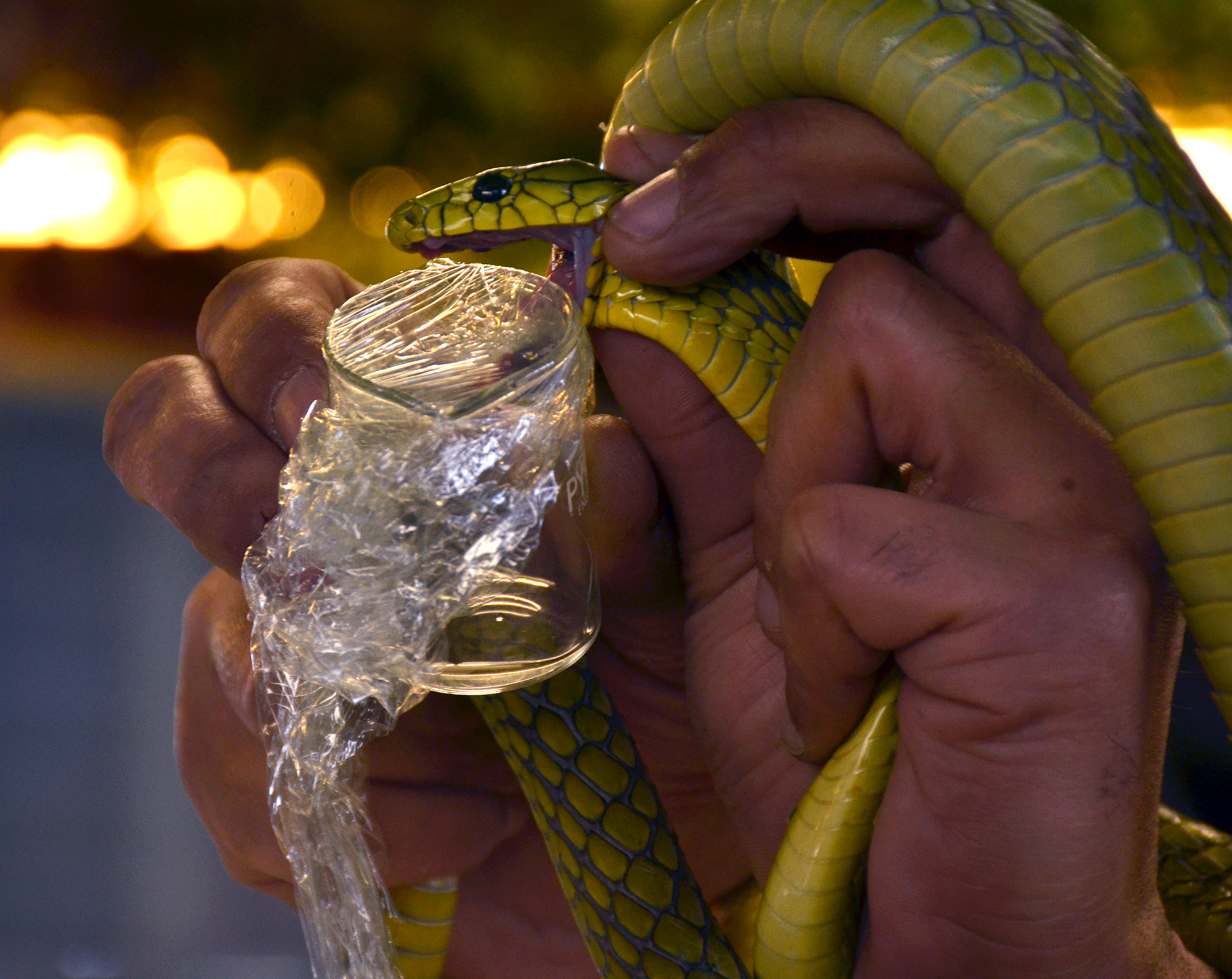
Carl Ruck helped coin the word entheogen. Thirty-seven years later he wrote that in the ancient world serpents were milked to access their venom as psychoactive toxins, used “as unguents in sub-lethal dosages to access sacred states of ecstasy.” The scholar who helped name the category put snake venom inside it, and has said so in seven publications and on camera.
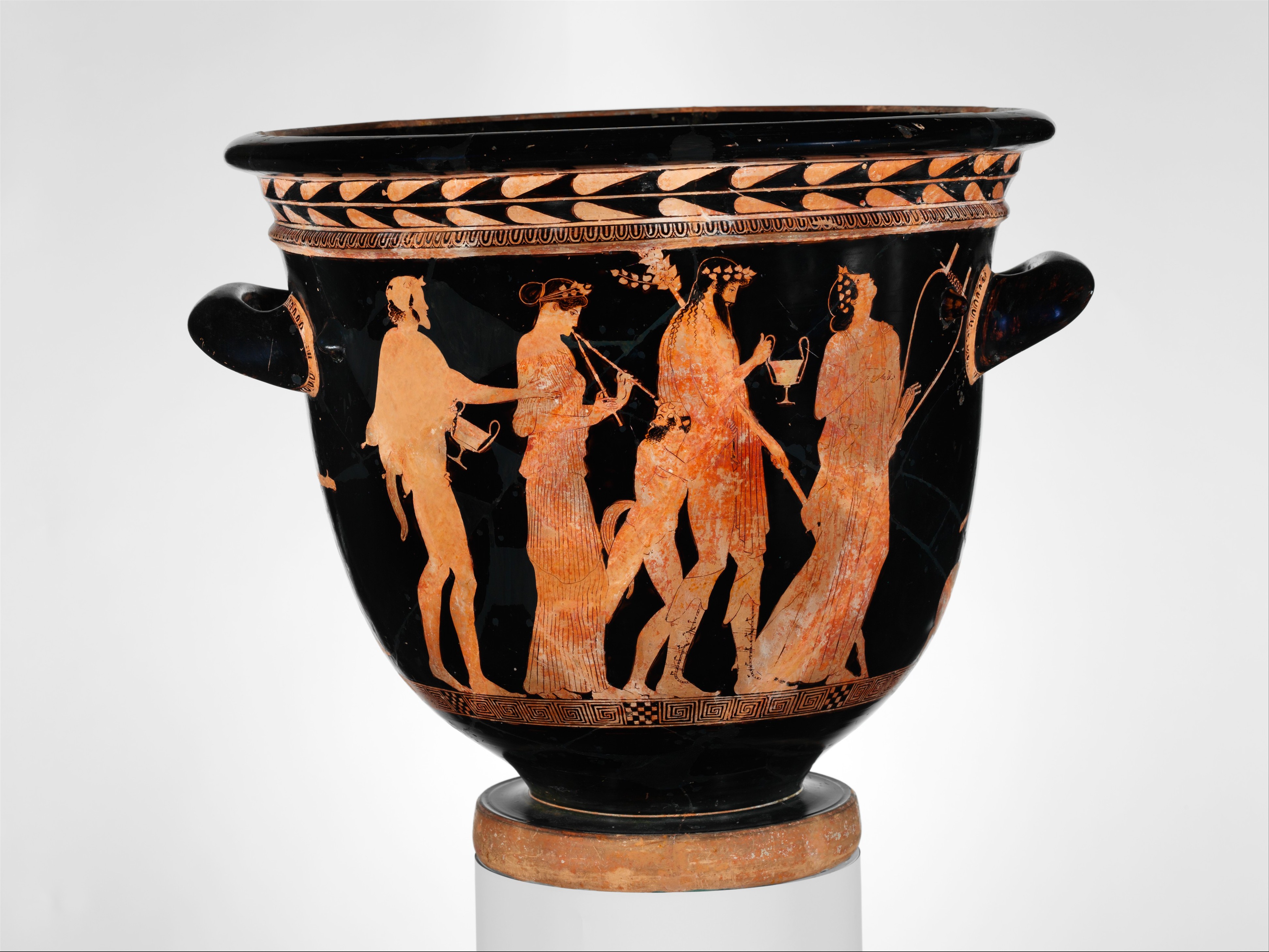
Snake venom is an entheogen. It acts on the brain, and the evidence for that runs from a 1936 paper in the Proceedings of the National Academy of Sciences to the men in Bombay who take a cobra to the tongue and say they prefer it to heroin. There are dens for it, and parties, and a connoisseurship of species. Ascetics at Varanasi take it to enter the divine consciousness of their master; India’s most widely heard living guru drank it mixed with milk to consecrate a temple, and says it gave him something more precious than life. And the Greeks kept a gentle serpent in the sanctuaries of Dionysus, bred to be handled, which a boy in the mysteries was remembered for squeezing.
In brief
- The man who helped coin the word says yes. Ruck asserts sub-lethal venom psychoactivity from March 2016 onward, across seven publications, and on camera calls viper venom a substance he is working on now.
- It reaches the brain, and this has been published since before the war. In 1936 PNAS reported morphine addicts maintained on cobra-venom injections, locating the action in “the higher nerve centers in the cerebrum.” Venom fractions block hippocampal potassium currents, target nicotinic receptors, and carry nerve growth factor thousands of times more potent than the tumour extracts it replaced.
- There is a living recreational culture, and its users prefer venom to heroin. The 1990 founding case report says so in those words, of two men fifteen years on heroin, charas and mandrax. There are dens on the opium-den model, Rs 50 a bite, snakes graded mild to severe, a preferred species, and a standard route — fang to tongue. In November 2023 police took nine snakes, five of them cobras, out of a banquet hall outside Delhi.
- And a living religious one. The Aghori take cobra venom to share their master’s divine consciousness, and smoke it crystallised in a chillum. Sadhguru, on his own account, drank venom mixed with milk to consecrate a temple, and describes his venom experiences as a death and a rebirth.
- Where the record is thick, it is a training. A Nama boy in Namaqualand held dried cobra venom on his tongue until he felt ‘funny and shivery’, and became a snake-bite man. The Psylli of Libya and the snake priests of Walpi kept the same supervised exposure.
- The Greeks kept the animal on the premises. Six ancient witnesses put a gentle, deliberately handled serpent in the sanctuaries of Dionysus and Sabazios, and Demosthenes has Aeschines going through those rites squeezing the snakes. Entheogen is ἐν + θεóς — the god within — and Hillman found that phrase already sitting in the Greek, attached to venom, in those same cults.
The men who named the category
In 1979 five scholars — Carl Ruck, Jeremy Bigwood, Danny Staples, Jonathan Ott and R. Gordon Wasson — published a short paper in the Journal of Psychedelic Drugs proposing a new word. They were tired of hallucinogen, which carried a century of pathology in it, and of psychedelic, which by then meant the counterculture. They built the replacement out of ἐν + θεóς + -γενής: generating the god within. Ruck’s own author biography still says he adopted the term “to free the topic from the pejorative connotations for words like drug or hallucinogen.”
That etymology settles what kind of category this is. An entheogen is defined by the god it is used to reach, not by a receptor or a symptom list. And the definition the five of them wrote has two doors in it, not one:
In a strict sense, only those vision-producing drugs that can be shown to have figured in shamanic or religious rites would be designated entheogens, but in a looser sense, the term could also be applied to other drugs, both natural and artificial, that induce alterations of consciousness similar to those documented for ritual ingestion of traditional entheogens.
Ruck, Bigwood, Staples, Ott & Wasson, Journal of Psychedelic Drugs 11 (1979), 145–146
The looser sense drops the vision requirement and replaces it with a family resemblance. It was written wide on purpose, because the authors knew the field would keep finding things that belonged in the category without matching a chemical template.
Venom walks through both doors, and Ruck has walked it through repeatedly over five years. It first appears in March 2016, in NeuroQuantology, where he describes the fortified wine of the early European cults as taking additives that “included even deadly poisons like hemlock in sub-lethal dosages and venom milked from serpents.” Six months later, in the same journal, the list widens: the wine was fortified “with a variety of toxins derived from plant and animal sources… such as serpent venoms, salamander secretions, henbane, opium, Datura… and deadly hemlock.”
The same year, in a Springer volume, he writes the central sentence:
Serpents were milked to access their venom as psychoactive toxins, both to serve as arrow poisons, but also as unguents in sub-lethal dosages to access sacred states of ecstasy.
Carl A. P. Ruck, “The Myth of the Lernaean Hydra,” in The Cnidaria, Past, Present and Future (Springer, 2016), p. 798
And immediately after it, he says where the evidence is:
The latter is what is implicated in the numerous depictions of women or priestesses handling serpents, dating from the pre-Greek Minoan period of the second millennium BCE through to late Roman times.
Ruck, “The Myth of the Lernaean Hydra,” p. 798
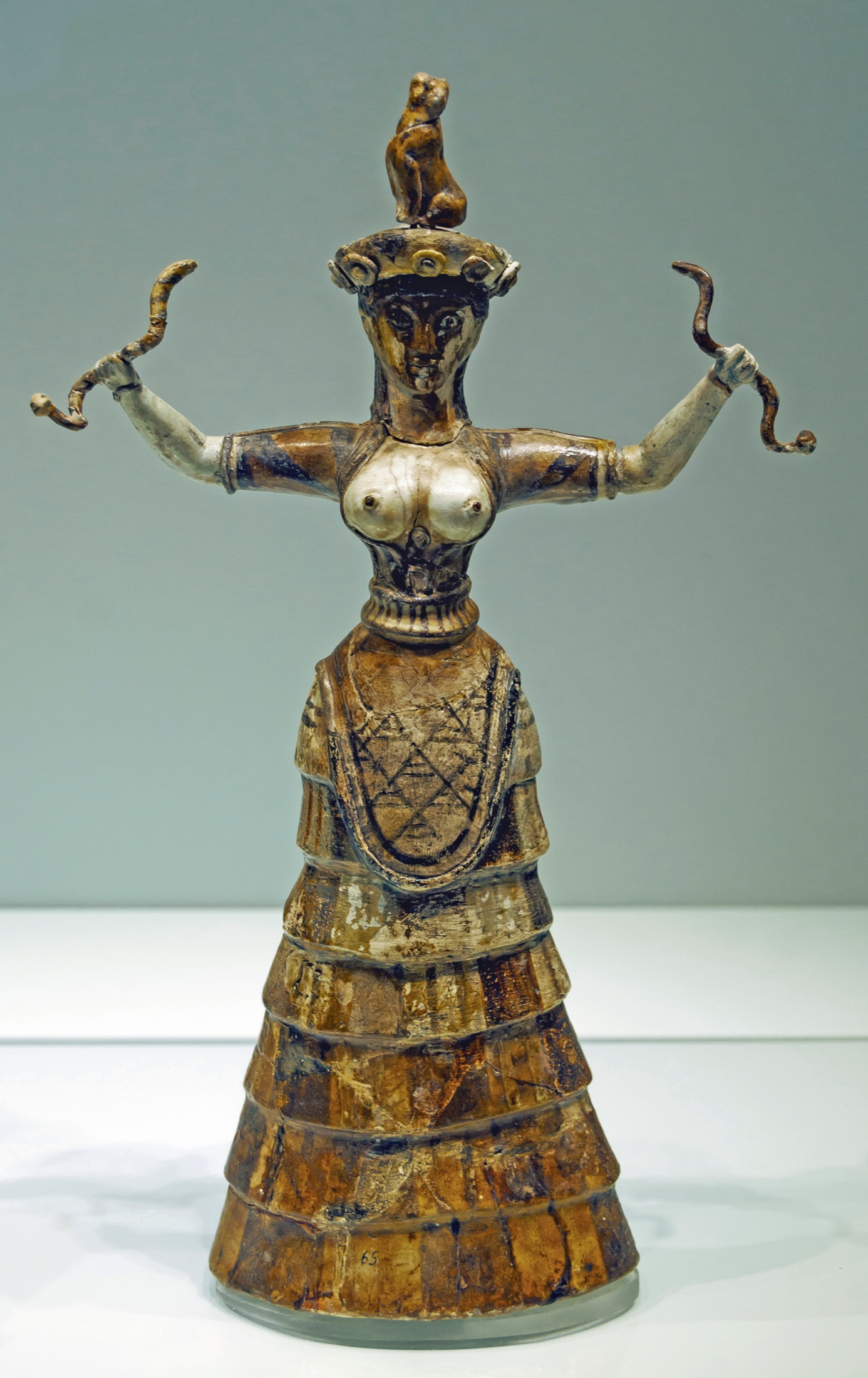
That is a claim about an enormous body of art, and it is the part of the argument easiest to check. From Knossos to the late Roman empire, over two thousand years, the Mediterranean produced image after image of women holding, wearing and handling live snakes. Sometimes she is a goddess, sometimes a priestess. The snakes are up her arms, around her head, running through her hands. Those pictures are a record of women putting bare skin against the fangs of a snake, deliberately, as ritual, for two millennia.
In 2017, writing on the bacchants, Ruck adds the mechanism outright: they “handled serpents, which they milked for their toxins… The analogue with the several Minoan snake goddess figurines is the obvious precedent.” In 2018, on the Athenian mysteries run by Aeschines’ mother Glaukothea, he describes a working procedure: “He extracted the toxins from serpents by massaging their venom ducts, and mixed the intoxicating potion.”
And in 2021, in Sunshine and Matricide, he sets out the pharmacology — route, dose, danger, effect:
The serpent handling suggests that snakes also were a source of venomous milk. Serpent venom, if ingested, is generally destroyed by the gastric activity… To be effective, it must bypass the activity of digestion, entering the circulatory system via lacerations or dermal application. The procedure would be hazardous, marginal mistakes in dosage proving fatal. The primary effect of viper’s venom is paralysis of its prey… but sub-lethal dosages would induce psychoactive responses.
Carl A. P. Ruck, Sunshine and Matricide: Dionysus and the Electra Plays (Entheomedia, 2021), p. 68
As practical pharmacology that is correct on every point. Swallowed venom is destroyed — which is why drinking it is survivable and also why drinking it alone does nothing. It does have to cross a membrane or a break in the skin. The margin between a dose that alters you and a dose that kills you is narrow, which is exactly what makes it an ordeal worth building a mystery around.
He is not waving at snakes as a symbol. He is describing a technique, and in 2021 he said on camera that it is his own current subject:
…what he is discovering, that by ingesting drugs or applying in one way or the other you modify the effluent of the body, and what comes out of the body is the transformed sacrament. He particularly is working, as I am, with a viper venom — but we don’t know exactly how the chemistry works, because viper venom if it’s ingested is destroyed, if it’s injected it isn’t, has to bypass the gastric transformation…
Carl Ruck, The Sacred Speaks ep. 65, April 2021, at 1:31:50
What venom does in the brain
Start with the ceiling. Elapid venom is one of the most powerful agents that has ever been put into a human nervous system. A person with full neurotoxic envenoming from a krait or a cobra goes into complete flaccid paralysis: pupils blown wide and unreactive, brainstem reflexes gone, breathing stopped. Patients in this state have been repeatedly mistaken for brain-dead by experienced physicians. And then they recover, and they tell you what was said over them — because the electroencephalogram through all of it shows normal waking rhythms and normal sleep architecture.
Venom can take your body away entirely and leave you completely, unbearably awake.
That is a technology for producing, in a fully conscious person, the experience of having died. There is not a mystery cult in the ancient world that would not have wanted it.
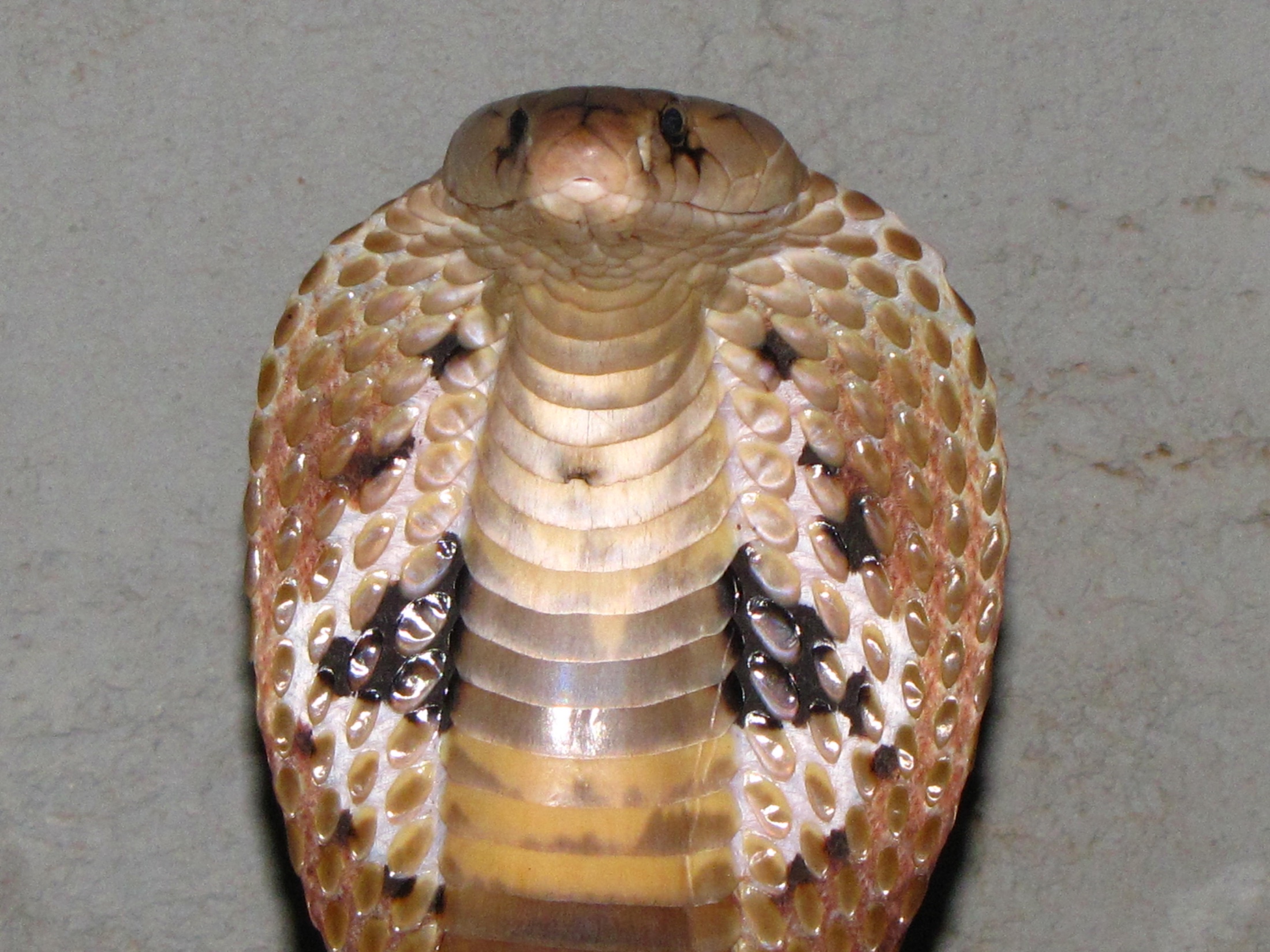
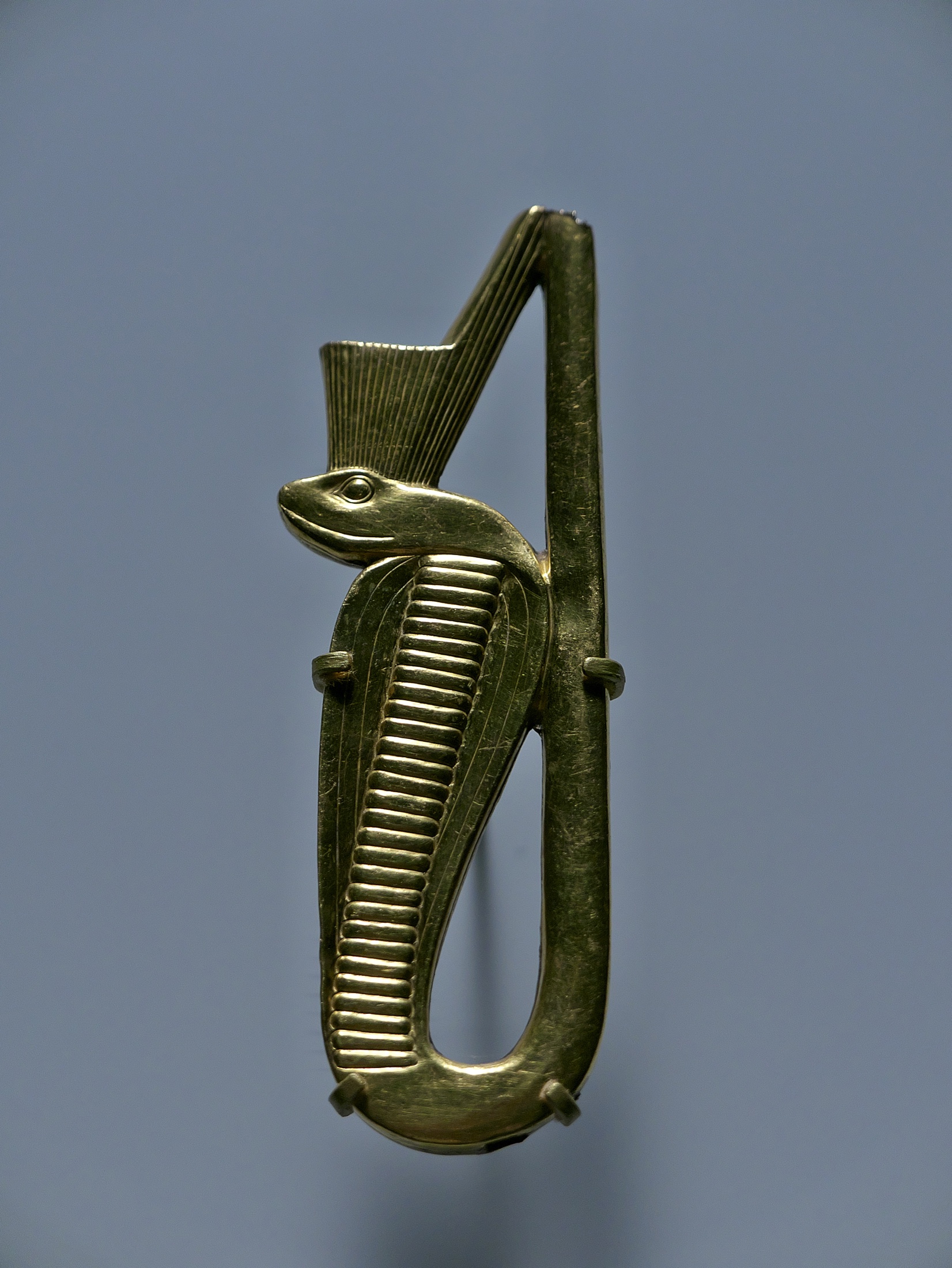
Below that ceiling is the sub-lethal range Ruck is describing, and the physiology there is well characterised. Peripheral cholinergic blockade drops the eyelids, doubles vision and makes swallowing heavy, so the world goes soft and slow while the mind stays lucid inside it. The bite launches a catecholamine and cortisol storm, and pain of that kind recruits the body’s own opioid system. Science demonstrated in 1981 that this stress analgesia is naloxone-reversible in humans, and that it has a dose curve: too little stress does nothing, a moderate dose releases the endogenous opioids, and a severe one switches to a different mechanism entirely. An initiation calibrated into that middle window produces euphoria. A ritual specialist counting repetitions is dosing.
The Bombay physicians who wrote the founding case report reached the same place from the pharmacology of the venom itself. Venom, they note, “liberates pharmacologically active substances in the body such as 5-hydroxytryptamine, bradykinin, slow-reacting substances, prostaglandins and lysophosphatides,” and “drowsiness is one of the cardinal symptoms of elapid snake bite, particularly cobra snake bite.” Their closing recommendation is the one nobody took up:
Analysis of its pharmacologically active substances, especially those responsible for sedative euphoriant and intoxicating substances could therefore be a challenging investigation for the Pharmacology Departments. We feel that snake venom may contain substances which reduce mental anguish without addiction.
Pradhan, Shah, Ghodke & Nayak, Journal of Postgraduate Medicine 36 (1990), 234
Since then the components have been named one by one. A phospholipase from pit-viper venom inhibits 54% of the potassium current in freshly isolated hippocampal pyramidal neurons while potentiating the sodium current by 159% — a measured effect on the cells of the hippocampus, from a venom fraction, published as the mechanism of its analgesia. Other venom toxins shut down the nicotinic acetylcholine receptors that carry attention and arousal, and others again close the voltage-gated potassium channels that set the firing rate of neurons in the central nervous system. α-cobratoxin blocks GABA-A, the receptor every sedative in the pharmacopoeia works on. And scorpion venom has been engineered into a shuttle for carrying other molecules across the blood–brain barrier, because that is a thing venom peptides do.
And venom is one of the richest natural sources of nerve growth factor. When mid-century laboratories switched from mouse tumours to snake venom as their NGF source, the yield proved three to six thousand times more potent than the previous best material. A component of Naja naja venom with no structural similarity to NGF at all has since been shown to induce sustained neuritogenesis — the growth of new connections between neurons. As a 2019 review in Toxins puts it, snake venoms are “mini-drug libraries in which each drug is pharmacologically active… less than 0.01% of these toxins have been identified and characterized.” Venom fractions are currently in research pipelines for Alzheimer’s and for depression.
The one route question — how a protein gets from the mouth to the brain — also has a modern answer, and it is the sublingual membrane. A 2021 paper in Translational Psychiatry finds the underside of the tongue an excellent site for delivering agents past the blood–brain barrier without injection. Which is the site the Bombay charmers use.
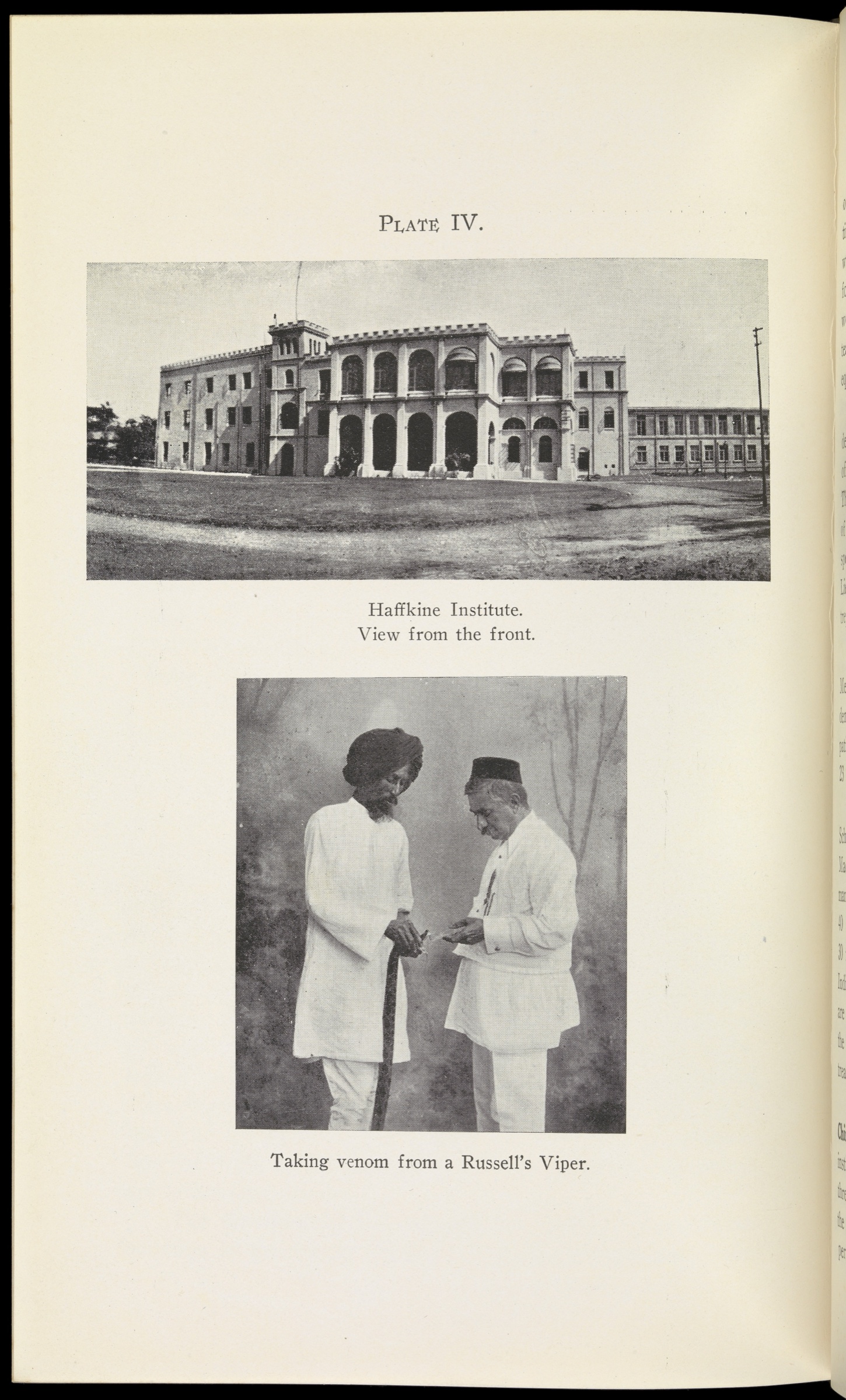
None of this is recent. In 1936 the Proceedings of the National Academy of Sciences published “Experimental and Clinical Study of Cobra Venom as an Analgesic,” reporting that
A number of the patients treated were morphine addicts. In such cases the writer and his colleagues were able to reduce the amount of narcotic to a minimum by substituting cobra venom injections and in a few instances opiates were dispensed with temporarily… All the pharmacodynamic evidence which the writer has gathered from extensive and intensive experimentation point to the higher nerve centers in the cerebrum as the seat of the analgesic action affected by cobra venom.
Proceedings of the National Academy of Sciences 22:1 (1936), p. 61
The paper cites five predecessors going back to 1910. Six years later Anesthesiology published cobra venom as synergistic with opioids after surgery. Ninety years on, the same result was rediscovered as an opioid-substitution finding, apparently without anyone noticing it had been sitting in a National Academy journal since before Wasson went to Mexico.
So the question “does venom act on the brain” was answered in the affirmative, in the strongest journal in American science, four decades before the word entheogen was coined.
Better than heroin
The best first-person testimony comes from India, from men who had a great deal to compare it against.
In 1990 four physicians in the psychiatry department at Seth G. S. Medical College, Parel, Bombay, published the founding report in the Journal of Postgraduate Medicine. Their two subjects had been using heroin, charas and mandrax since the mid-1970s. Both had moved on to snakes. The paper opens by noting that nothing like it existed in the literature: “To best of our knowledge no snake venom addiction has been reported in world literature.”
The first case, a thirty-five-year-old man who had been taking bites since 1976:
Initially he used to take snake bite on great toe once in a week, the frequency was then increased to two-three times a week. Everyday intake was not possible because of the cost — Rs 50 per bite. According to him he used to get sleep for 18–20 hours after the bite… The bite on tongue produced quick effect. … This is being practised in certain areas of South Bombay… The people who come here for snake bites are mainly from higher socio-economic class… Snakes used are cobra or green coloured snakes found on trees. The bites are generally taken on the sole or on tongue if it is a small snake.
Pradhan, Shah, Ghodke & Nayak, Journal of Postgraduate Medicine 36 (1990), 233
The second case adds the venue, the menu and the feeling:
The patient was taking these bites to get an “extra kick”. At each place called snake-den, various types of snakes in different sizes and colours were kept. According to the type of snake bite they were graded into three categories like mild, moderate and severe form of intoxication… This was felt as a pricking sensation locally, resembling prick of intra-muscular injection lasting for 10–40 seconds… The patient experienced grandiosity, a sense of well-being and happiness after each bite.
ibid., Case 2 — dens in South Bombay, Goa and Calcutta
And then the sentence that carries the whole section:
It is noteworthy that both the patients preferred it to heroin.Journal of Postgraduate Medicine 36 (1990), Discussion
Read what is in those paragraphs. A venue. A price. Snakes graded by strength, which means somebody is titrating. Three bite sites — the great toe, the sole, the tongue — chosen, with the men running the dens knowing which is fastest. Rising frequency in one patient. And two long-term opiate users who, offered the choice, took the snake.
The physicians also recorded what the state was not. Of one subject: “He did not experience any hallucinations, remained well oriented.” A man who had just paid for a cobra bite was lucid, oriented, and altered. That is the clinical signature of an entheogen rather than a hallucinogen — the god within, not the pictures.
Since 1990, roughly a dozen further Indian case reports have accumulated independently — Ranchi, Chandigarh, Bangalore, Mangalore, Wardha, Jodhpur, Mumbai. They were not coordinated. Different hospitals in different states kept meeting the same practice and writing it up as new. That is what a widespread folk practice looks like from inside a medical system: it surfaces only at the point of harm, in fragments. A NIMHANS group published on it in the Asian Journal of Psychiatry in 2017. One review describes venom delivered fang-to-tongue by the neighbourhood snake charmer, after which the patient, following a decade of dependence on alcohol and opiates, gave both up after a single dose. Users report the effect persisting for weeks, long after any neurotoxin should have cleared.
The one Western subject who has spoken at length is Steve Ludwin, who has injected diluted venom for three decades. He is emphatic that it is not psychedelia — “it’s not like a Jim Morrison trip. You don’t trip — it’s extreme pain” — which is the register an ordeal-sacrament lives in. And his account of how he came to it is not pharmacological at all. At seventeen, he says, it was as though “a lightbulb or an atom had exploded in my brain. Something told me I had to inject snake venom.”
A vocation, arriving unbidden, in the voice of something outside himself. He was not raised in a tradition that would supply that. The compulsion attached itself to venom on its own.
Dens, parties, connoisseurs
The clinical reports are a narrow medical window onto something much larger. In 2022 the Journal of Forensic and Legal Medicine published the first attempt to describe the practice as a practice, under a title that concedes the point in advance: “Snake venom — an unconventional recreational substance for psychonauts in India.”
In all the reported cases of snake venom abuse, the most common motive was to get high, and the most common abused snake species was found to be Cobra. The most common symptoms reported are feeling of well-being and deep sleep.
Jadav et al., Journal of Forensic and Legal Medicine 91 (2022), 102398

What has grown up around the dens has every feature of a mature drug culture, and each one is a thing that does not happen around a substance that does nothing.
There is a standard route with a name. Fang-to-tongue — a deliberate bite to the tongue or the inside of the lip. That is the mucosal route, and it is the shortest route the pharmacology permits, since swallowing is inert and a bite to the foot has to travel. The men in the dens arrived at it without reading any of the literature, by trial and error, on the fastest way to get high.
There is a species preference. Overwhelmingly Naja naja, with the common krait as the other option, and users who can rank varieties by the quality of the high. That is connoisseurship, and connoisseurship is the most reliable marker of a real drug culture there is.
There is preparation: practitioners inject the snake itself with chemicals beforehand to strengthen the effect. That is deliberate compounding — someone thinking about potency and acting on it. There is dependence, with its own literature in Substance Use & Misuse. And there is treatment: Pakistan runs rehabilitation for snake- and scorpion-venom addiction as a recognised category, and traces the scorpion side of it to the drug scarcity of the Soviet–Afghan war.
And there are parties. On 3 November 2023 police in Noida, outside Delhi, filed charges under the Wildlife Protection Act after raiding a banquet hall. They recovered nine snakes, five of them cobras, and around twenty millilitres of suspected venom, and arrested five people. A Kerala teenager had been arrested for venom addiction nine years earlier. Video of the tongue route circulates freely.
This is the part of the case that cannot be argued with. If venom were purely an ordeal technology, or purely a medical accident, it would not be at parties. Nobody hires a banquet hall for a placebo.
Taken for the god
Recreation is one thing. What makes this an entheogen question rather than a toxicology question is that the same substance, in the same country, is taken to reach God.
The best-documented case is the Aghori, the Shaivite ascetics of the cremation grounds at Varanasi. Christian Rätsch’s Encyclopedia of Psychoactive Plants — the most exhaustive compilation of psychoactive substances anyone has assembled — carries the practice, citing Robert Svoboda’s work with an Aghori master. The Aghori Tantrists ingest poisons, cobra venom among them, “so that they may experience the divine consciousness of their master.”
That is the whole claim in eleven words, written by the field’s leading cataloguer, in a reference work, about a living tradition. The substance is taken in order to enter a state understood as divine. That is what the word was coined to name.

Rätsch records the delivery methods too, and they are the methods of a drug culture rather than a symbolic one. Crystallised cobra venom is mixed with chopped hemp flowers or hashish and smoked in a chillum. And in an endnote he adds that cobra venom “can also be sniffed and is said to induce extreme psychedelic effects” — the nasal mucosa, the same membrane the dens found and the same one Ruck says the ancient rite required.
Crystallised venom in a chillum is worth dwelling on. The Aghori did not need a chemist to tell them that venom is a protein that must reach a membrane, or that lungs and sinuses are membranes. They needed a form that could be carried, kept and dosed. Drying venom to a crystal is precisely how you make a field-stable preparation of it.
It is not confined to the cremation grounds. Sadhguru Jaggi Vasudev — the most widely heard living Indian spiritual teacher, with an audience in the tens of millions — has talked about venom repeatedly and in public, in entirely explicit terms. His account of what it did to him:
Venom worked out for me very well a long time ago. It took my life away, but it gave me something more precious than life.
Sadhguru, “Why I Drank Snake Venom,” at 2:36
And his account of the mechanism, which is the language of an entheogen without a word out of place:
Venom has a significant impact on one’s perception if you know how to make use of it… It brings a separation between you and your body… It is dangerous because it may separate you for good.
Sadhguru, “The Unknown Secret of How Venom Works on Your Body”
Note the conditional in the first clause: if you know how to make use of it. That is a claim to technique — that there is a right way to take venom and a wrong one, and that the tradition holds the difference. He describes his own venom experiences as a death and a rebirth. And he puts snakes at the top of the hierarchy of perception:
Mysticism and snakes cannot be separated, because it’s a certain dimension of perception and this creature has come endowed with that capability. That is why the highest form of perception, which is the opening of the third eye on Shiva’s forehead, is punctuated by the presence of a snake.
Sadhguru, on the significance of snakes in mysticism, at 11:18
Then there is the act itself, which is on video. To consecrate a temple, Sadhguru mixed snake venom with milk and drank it. At the consecration of a Naga shrine he had the serpent figures washed in turmeric — which is an antivenom, and has been shown in the laboratory to inhibit venom activity. A living guru, in the twenty-first century, performing a venom-and-milk sacrament at the dedication of a temple, with the antidote applied in the same rite.
Venom and milk together is not an idle pairing. It is what Aeschylus puts in the Choephoroe, where Clytemnestra dreams she has given birth to a serpent, offers it her breast, and it draws clotted blood in with the milk. It is what the Greek Anthology turns over twice in successive epigrams, the viper milking its venom into a doe’s udder. Venom and milk is a sacred pairing at both ends of the Indo-European range, and in India it never stopped: milk is fed to the snake in the village rite, and the yogi drinks the poison and calls it soma.
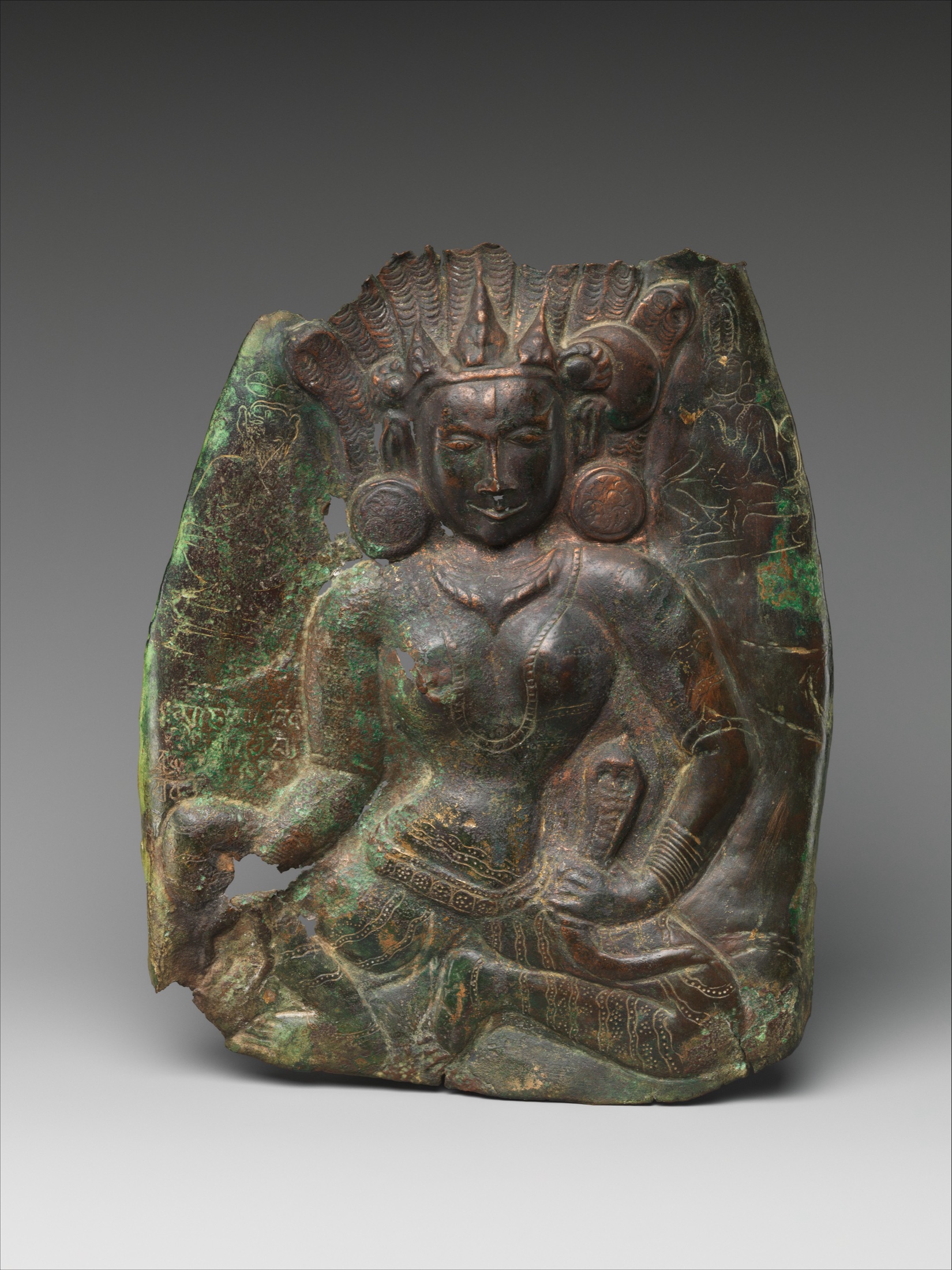
Set the three side by side: an ascetic order that takes venom to share its master’s divine consciousness; a mainstream teacher who drinks it as a sacrament and describes its action on perception; and a commercial recreational market in the same substance in the same country. That is precisely the structure every accepted entheogen has — a sacramental use and a profane one, running in parallel, on the same chemistry.
How things get into the canon
Every substance in the entheogen handbooks got there the same way, and it is worth watching one of them arrive.
Take the Colorado River toad. Bufo alvarius is now a fixture of the entheogen literature, the subject of retreats and a small industry. The evidence on which it was first admitted was a suggestive iconographic record, some ethnohistorical inference about Mesoamerican toad imagery, and a handful of contemporary reports from people who had smoked it. The rigorous chemistry — Erspamer identifying 5-MeO-DMT in the parotoid secretion at serious concentrations — came after the argument, not before it. The category admitted the toad on an argument about art plus a few first-person accounts, and the assay caught up later.
Snake venom stands on a strictly better version of the same footing. An iconographic record two thousand years long and vastly larger than the toad’s. A living tradition with a stated theology. A commercial recreational market with a preferred species and a preferred route. A clinical literature going back to 1936 and case reports going back to 1990. And a measured effect on hippocampal neurons.
Rätsch is the one canonical cataloguer who put cobra venom in, and he was right to. And the intuition was alive in the psychedelic underground before it was academic. In 1994 a correspondent wrote to The Entheogen Review — the small, serious newsletter where a great deal of this material was worked out first — with the following:
Elapid snakes contain some very exciting enzymatic neurotoxins which may or may not be orally active, but may be smokable in nanogram or low microgram dosages. Cobra venom is even more powerful than TTX… Some of us suspect that cobras were worshipped by ancient Egyptians and Indians for that reason.
The Entheogen Review III:2, Summer Solstice 1994, p. 13
He had no ethnography. He was reasoning from pharmacology alone, and he guessed India and he guessed smoking. Rätsch would go on to document Indian ascetics smoking crystallised cobra venom in a chillum. Neither man knew of the other. The magazine’s own cumulative index carries the entry — “cobras / venom as psychoactive substance? III.2: 13” — and seven years later the editors returned to it in print: “the bites of cobras are also said to produce powerful mental changes and/or enhancement of perceptual abilities and energy levels.”
When a prediction made from first principles turns out to describe a practice already under way, that is the ordinary way a real finding announces itself.
Hillman, and the source Ruck is reading
Ruck’s citation for the ecstatic half of his claim is D. C. A. Hillman, a classicist out of the University of Wisconsin–Madison and the author of The Chemical Muse. Hillman’s subject is the ancient pharmacy: a working body of drug knowledge, more extensive and more technical than the histories allow, running through the medical writers, the toxicological poets and the cults.
He arrived by way of a different animal. In 2001, in Pharmacy in History, he published on the salamander as a drug in Nicander — a toxic animal secretion functioning as a real pharmaceutical in the ancient pharmacopoeia, argued out of the ancient toxicological poets themselves. The entire apparatus of the later thesis is already there. Only the animal changed.
By 2013 the animal is the snake:
One of the drugs used in antiquity that has entirely escaped the radar of modern scholars is snake venom. Venoms of various snake species were used as medicines, regulators of menstruation and weaponized poisons… The Greeks and Romans recognized that snake venoms were potent biologically active substances. These venoms, when applied to the human body, caused physiological changes that were readily observable by natural scientists and laymen alike, and were frequently quite dramatic.
D. C. A. Hillman, Hermaphrodites, Gynomorphs and Jesus (Ronin, 2013), pp. 87–88
And then the passage Ruck builds on:
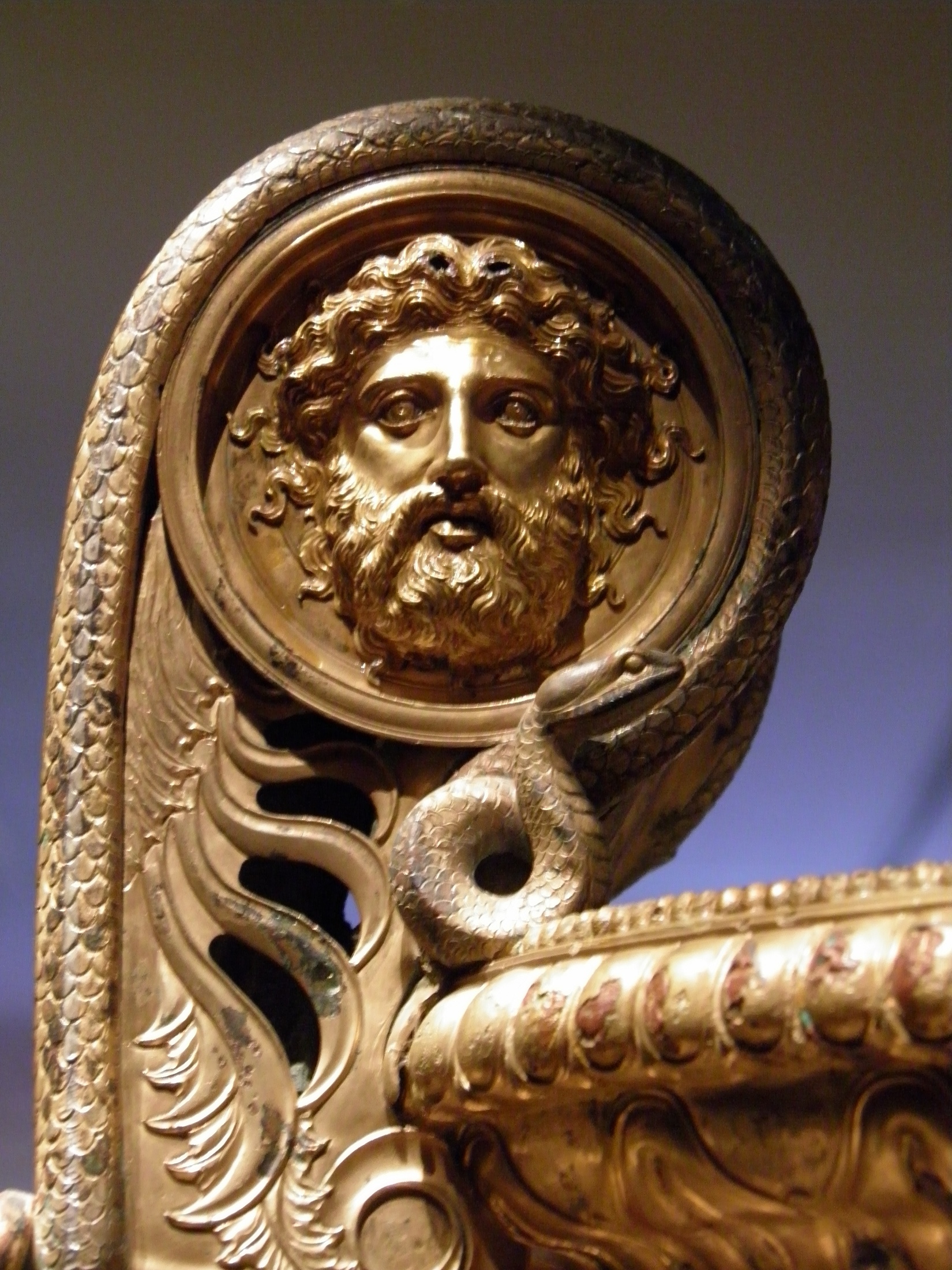
Several popular mystery religions of Greece and Rome relied heavily on the use of vipers during their celebrations, and the iconography of this particular reptile regularly intrudes into the literature and artistic representations of these same cults. Within the practices of these cults vipers typically appear in the context of oracular transformation. That is, the vipers are represented as agents of maniacal metamorphosis; they enable mystery initiates to assume the madness characteristic of gynomorphic gods like Dionysus.
Hillman, Hermaphrodites, Gynomorphs and Jesus, p. 89
He develops it in the Elsevier volume Toxicology in Antiquity, whose abstract states the finding plainly — the ancient world ran “a sophisticated polyvalent pharmacy in which human health was maintained and modified by the administration of viperid venoms and ‘antidotes’ developed in the bodies of priestesses and initiates.” In the companion chapter he names the cult:
Before ancient seers summoned spirits like Allecto from the underworld — an arcane practice known as necromancy — they invoked Bacchus, the god of ecstatic dance. The worship of this mystery cult divinity, known variously as Dionysus, Bromius, and Zagreus, was connected in classical literature and art with the handling of the European horned viper (Vipera ammodytes)… It appears that the priestesses of Hecate, Priapus, and Demeter/Persephone were involved in the consumption of viper venom. [Aeschylus was nearly executed for revealing the secrets of the Eleusinian mysteries in his plays on Orestes. One of these plays contains a dream of a “dragoness” in which her breast milk is injected with the venom of a snake.]
Hillman, “Drugs, Suppositories, and Cult Worship in Antiquity,” in Wexler (ed.), Toxicology in Antiquity
And on the drakaina, the dragon-priestess, he sets out what the initiates thought was happening — in the word itself:
Dragon priestesses entered an ecstatic or Bacchic state of mania, during which they claimed to experience and influence transdimensional forces… The Greeks used the word ἔνθεος [entheos, literally “god within”] to describe this strange… ecstasy, and mystics claimed it was part of a process of manifesting the “god within the breast” of the initiate.
Hillman, “Ancient Mystery Initiation: Toxic Priestesses and Vaginal Communion,” in Toxicology in Antiquity (2nd edn, 2019), ch. 26
That is the root of Ruck’s coinage, found by a classicist in the Greek, attached to venom, in the mystery cults. And when he is asked outright what the venom did, he answers without qualification:
All these priests like Nicander, that’s what they’re talking about. They’re talking about the use of these venoms and toxins in order to induce that open-eyed spiritual experience, vision. It is a process that is biochemical.
D. C. A. Hillman, Danny Jones Podcast #363, at 1:44:42
Hillman also supplies the delivery mechanism, and it is the most startling part of the whole literature. In his epilogue he describes oracular priestesses using snake venoms and poisonous botanicals with applicators, introduced vaginally — and identifies the applicators as the origin of a symbol still worn by physicians. Ruck picks this up directly and argues the same route in the Hydra chapter, where the cult object at Lerna serves for “the sacred application of ecstasy inducing toxins, both vaginally and rectally.”
It is a traceable line of descent and it is pharmacologically literate. The vaginal and rectal mucosa are among the most absorptive surfaces on the body, they bypass the stomach entirely, and they are exactly where you would put a protein toxin that digestion would otherwise destroy.
So the ancient rite, as Ruck and Hillman reconstruct it, has a solved delivery problem. Not drinking. A membrane.
Earlier proposals
The idea did not begin with Ruck, and it did not begin in the academy.
The earliest published statement is Merlin Stone’s When God Was a Woman, in 1976 — three years before the word entheogen existed. Stone was making an argument about goddess religion and the serpent, and she reached for a mechanism: that the priestess-oracles of the ancient Near East and the Aegean handled venomous snakes because venom, in a body prepared for it, does something to the mind. Her Egypt chapter is built on the cobra goddess Ua Zit, “the primeval serpent who first created the world,” whose uraeus later Egyptian goddesses wear on the forehead.
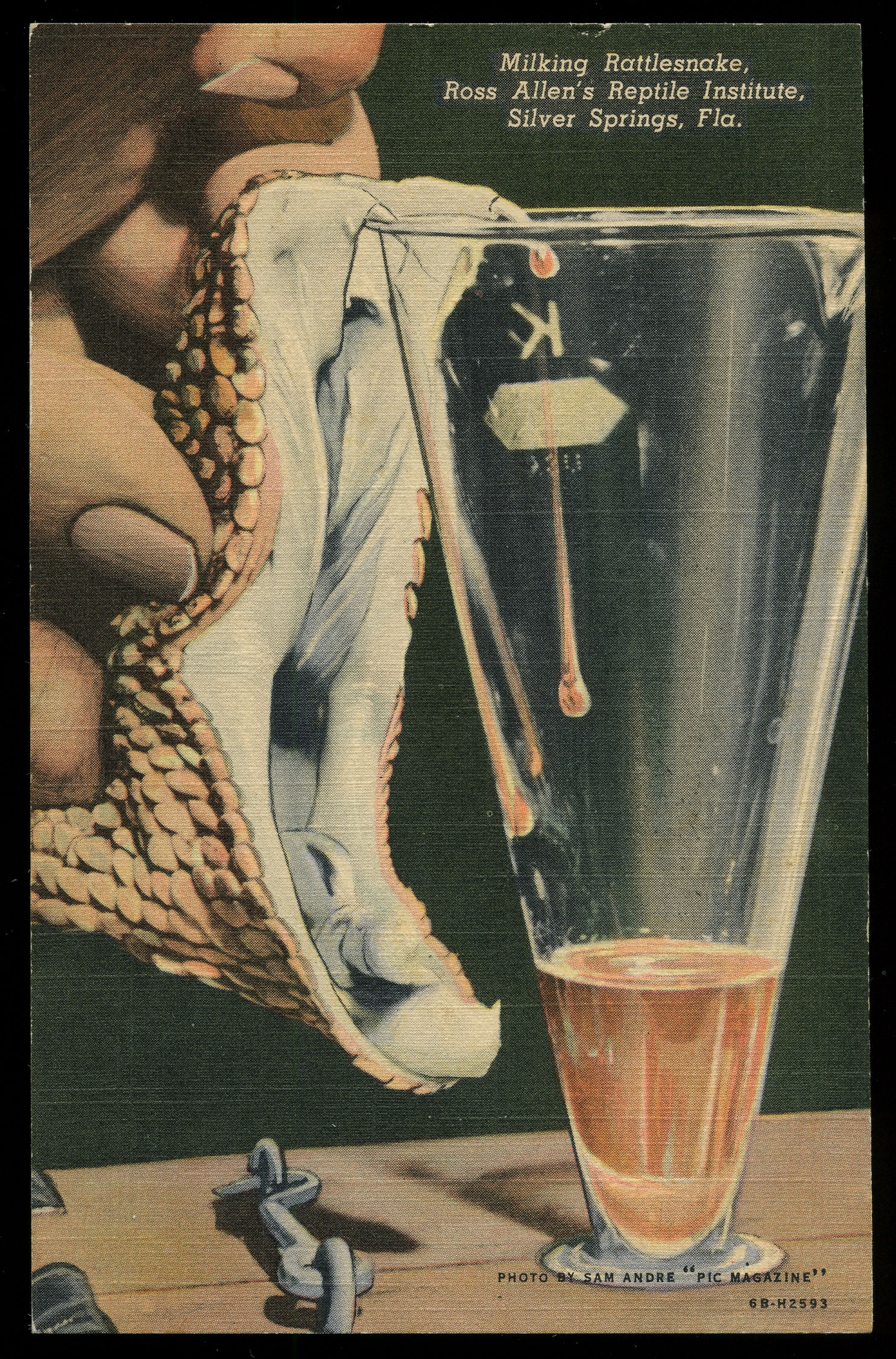
She named a witness, and she chose well. William Haast, of the Miami Serpentarium, injected himself with venom for more than sixty years — the longest deliberate immunisation programme any human being has run — and was bitten well over a hundred times along the way. Stone reports his account, via Kursh’s Cobras in the Garden, of what a krait bite did to him after years of building tolerance. Haast is the one person in the Western record with both sustained sub-lethal elapid exposure and the vocabulary to describe it.
Drake Stutesman, in 2005, put the Greek half of it in one line, and a North American case beside it:
The Sioux believed that if a young, dancing man was bitten by a snake and didn’t die, he would experience a universal awakening… Snake venom was lapped to induce trances at Delphi. Even some scientists testify to experiencing altered states from snakebite, seeing visions and feeling enormous capabilities.
Drake Stutesman, Snake (Reaktion, 2005)
Then the 1994 letter to The Entheogen Review, Rätsch’s encyclopedia entry, Hillman in 2001 and 2013, Ruck from 2016 — and, arriving last and knowing nothing of any of it, the forensic psychiatrists reporting that men in Indian cities are paying to be bitten.
A feminist historian of religion, a psychonaut correspondent, two classicists, an ethnopharmacologist and a body of forensic medicine, mostly unaware of each other, arrived at the same place across fifty years. That is what a real phenomenon looks like when it is being noticed from several directions at once.
Wendy Doniger, working the Indian side, put the whole chemistry into a single sentence without ever calling it that:
Snakes (often symbolizing women) perform an alchemy that women perform by turning blood into milk. In the village ritual, milk is fed to a snake; the snake then turns this into poison, which in turn is rendered harmless by Soma… Yogis, the inverse of mothers in terms of fluid hydraulics, drink poison, which they regard as Soma, and thus have power over snakes.
Wendy Doniger O’Flaherty, Karma and Rebirth in Classical Indian Traditions (1980), p. 54
The serpent in the sanctuary
Now to antiquity, where the argument has always been headed.
Athens, 330 BC. Demosthenes is destroying Aeschines in court, and reaches for his opponent’s childhood: Aeschines had assisted his mother Glaukothea at her mystery rites — the Sabazian rites, the ecstatic Phrygian cult whose god’s emblem was the serpent. The boy is daubed with clay and bran, he leads the cry of euoi saboi, and he handles the snakes: τοὺς ὄφεις τοὺς παρείας θλίβων — squeezing them, and swinging them over his head.
Θλίβειν is the ordinary Greek for rubbing, chafing, pressing, squeezing. Ruck re-accents the following word so the phrase reads “the cheeks of the snakes” — the venom glands — and translates the clause, in his own published rendering, as “milking the serpents for their venom.” His argument for it is practical: a boy has no reason to be pinching the body of a six-foot serpent, and every reason to be working its head. And what the rite produced, Demosthenes says in the same speech, was a potion described as a drink of bull’s blood.
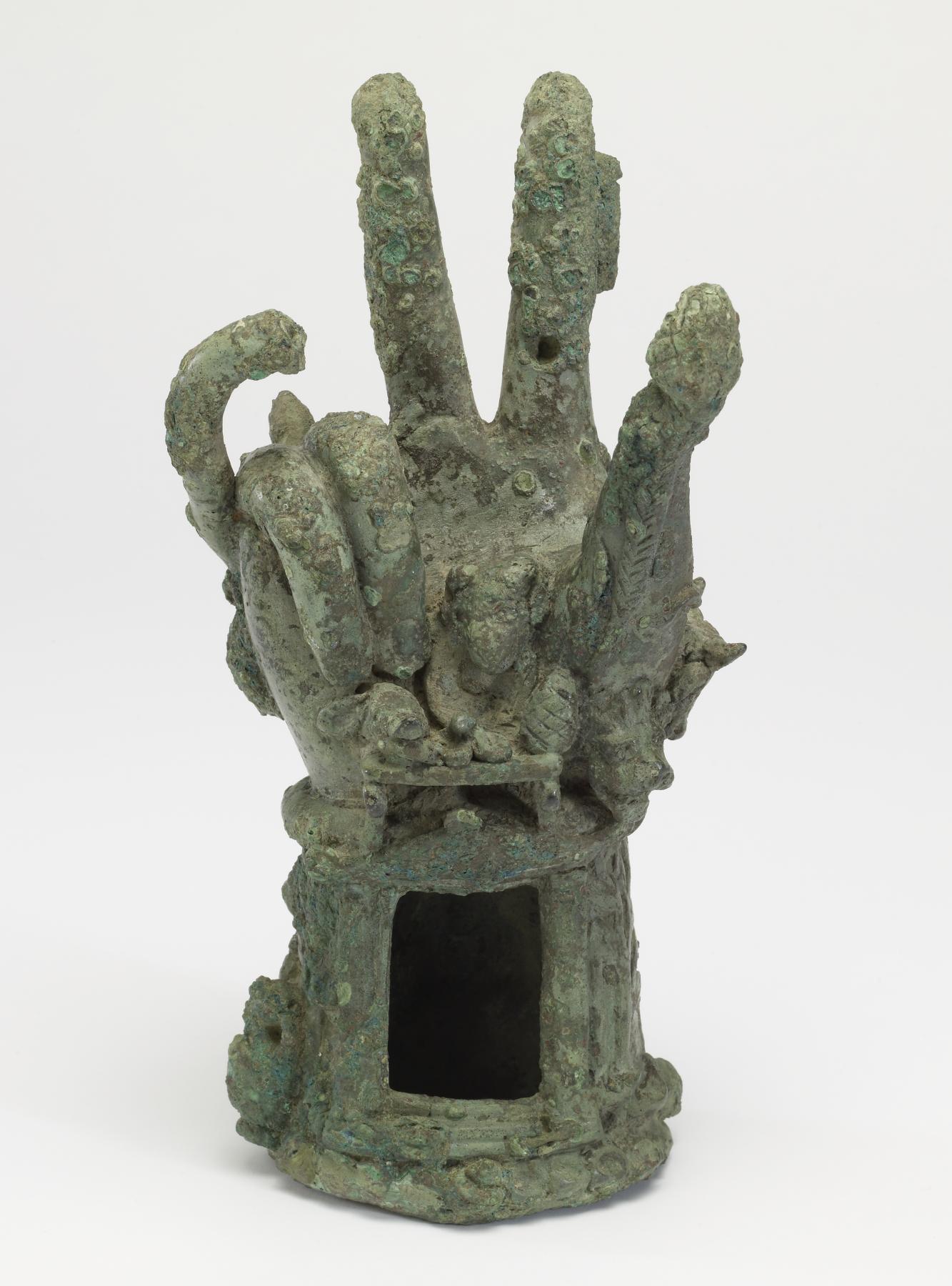
What makes the passage hold is that the snake in it is independently attested, by six ancient witnesses, as a real, specific, named animal kept in Greek sanctuaries for exactly this purpose. It is the parias, and the sources are remarkably consistent about it.
| Witness | What it says |
|---|---|
| Scholion to Aristophanes, Plutus 690 | Annotating this very word and citing Demosthenes by name: this kind of snake is found “in the sanctuaries of Dionysus” |
| Theophrastus, Characters 16.4 | The Superstitious Man sees a parias in his house and calls upon Sabazios — same god, same snake, independently |
| Photius, Lexicon | Gentle, harmless to men, and sacred to the Mysteries |
| Aristophanes, Plutus 689–691 | “I gave a hiss and mouthed it gently, like a sacred snake” |
| Aelian, On Animals 8.12 | πρᾶος — gentle, tractable, not dangerous to handle, on the authority of a servant of Asclepius |
| Harpocration π 26 | Citing Demosthenes, and preserving a lost sentence of Hyperides sorting snakes by kind |
Six independent sources, spread across a thousand years, converge on a fact that has nothing to do with Ruck and everything to do with his case: the Greeks kept a particular serpent in the sanctuaries of Dionysus and Sabazios, specifically because it could be handled. That is not a metaphor; it is a husbandry programme. Somebody was breeding, feeding and housing these animals on temple premises, generation after generation, in order to put them into human hands during the rites.
The physical act is described by hostile witnesses, which is the best kind for this purpose. Clement of Alexandria, writing to disgust his Christian readers, says the Sabazian god is the serpent drawn through the bosom of the initiate. Arnobius: “a golden snake is let down into the lap of the consecrated and is drawn out again from the lower parts.” Firmicus Maternus: “the worshippers of Jupiter Sabazius at their initiations put a snake in their bosoms.” Three men trying to make the mysteries sound repellent, and what they reach for is prolonged, deliberate contact between a live serpent and the bare skin of a person being initiated — and, in Arnobius, contact with the mucosa.
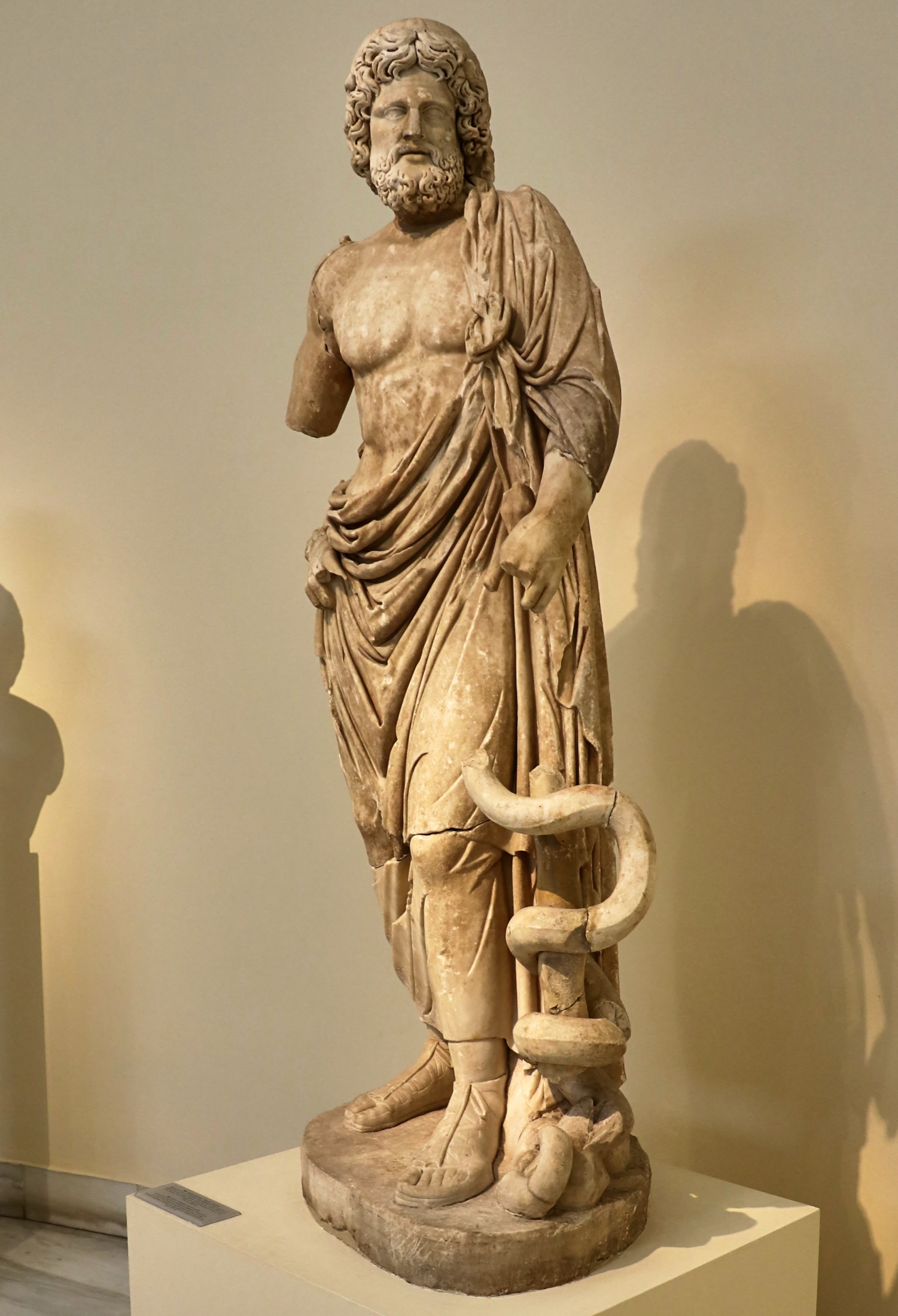
E. R. Dodds, who had no thesis to defend here, noted the same thing and called it what it was: snake-handling is “an obviously primitive element” in the Dionysiac cult, and “in the more primitive cult of Sabazius… the living snake, as vehicle of the god, [was] actually handled in ritual in classical times.” Dodds also records what the god of healing prescribed at his own temples: Asclepius “makes his patients swallow snake-poison,” on the authority of Galen.
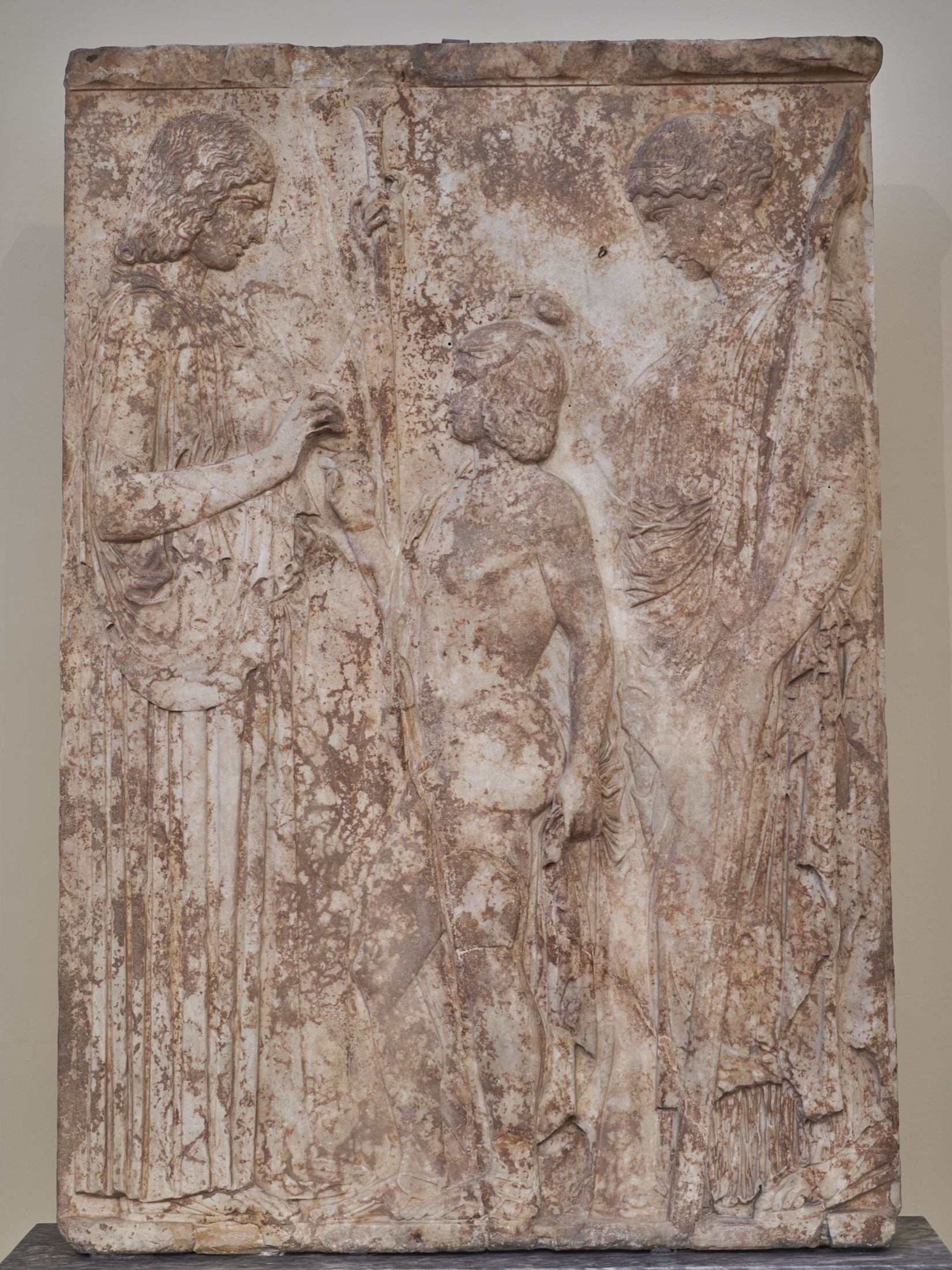
This is the cult world the bullroarer belongs to. The rhombos was sounded in these same rites of the Dionysiac mysteries. A roarer in the Orphic and Dionysian sphere sat inside a sanctuary that kept live serpents on the premises and a boy in the back squeezing them.
The route the myth remembers
There is a family of Greek and Northern stories that becomes obvious the moment you read it as pharmacology.
Melampus, the first Greek mortal to hold prophecy, rears a brood of orphaned snakes. While he sleeps they purge his ears with their tongues, and he wakes understanding the speech of birds. Cassandra and Helenus are found as children in the sanctuary at Thymbra with serpents cleansing their sense-organs, and afterwards they can see the future. Sigurd roasts the heart of the dragon Fáfnir, burns his thumb, puts the thumb in his mouth, and immediately understands the nuthatches in the tree above him. Finn mac Cumhaill does exactly the same with the Salmon of Wisdom — a different animal, the identical gesture, preserved across two branches of Indo-European.
The folklorists even indexed the distinction. The motif index separates the tales where wisdom comes from a serpent that is not eaten — the ear-licking type — from those where it comes from eating the serpent. The tradition kept track of which mechanism was operating.
Across the whole complex, knowledge is transmitted by snake substance contacting the mouth-or-ear membrane. The myth encodes a route of administration.
Look at what those stories specify. Not swallowing. A membrane: the ear canal, the tongue, the inside of the mouth. Sigurd does not eat the heart; he burns himself and sucks the thumb. The snakes do not bite Melampus; they lick the inside of his ears. Every version is careful about the point of contact, and every version picks the one route through which a protein toxin can actually reach a person.
That is the fourth independent arrival at the same fact. Hillman derives the mucosal route from the applicator passage in 2013, and Ruck, reading Hillman, from Greek philology in 2021. The men in the Bombay dens found it by trial and error and take the bite on the tongue. The Aghori smoke the venom crystallised in a chillum, onto the membranes of the lungs. And the myths encoded it thousands of years before any of them, in a detail so specific and so useless as narrative that no storyteller would have invented it.
The ancients also knew the negative half of the rule. Celsus states it flatly: snake poison is not harmful when swallowed, but only in a wound. Antiquity possessed the correct route pharmacology, in writing, and Ruck’s reconstruction requires nothing the ancient physicians did not already know.
Namaqualand, Libya, Walpi
Wherever the ethnographic record is thick enough to see the practice in detail, it shows the same thing: people putting venom into their own bodies, deliberately, on a schedule, over years, under a master, as the making of a religious specialist.
The clearest account in the world literature comes from the Nama of Little Namaqualand:
His father made two small cuts above the elbow of each arm, into which he rubbed a small portion of the dried venom of the cobra and night adder. Two weeks later his father prepared a lump of venom containing several varieties, and gave him a piece to hold upon his tongue until he felt ‘funny and shivery’. This was repeated twice weekly. Then he was given a piece to swallow. The dose was increased daily until it reached the size of a pin’s head… Men immunized in this way are known as !ao/ga aon, snake-bite men, and they treat others bitten by snakes.
Isaac Schapera, The Khoisan Peoples of South Africa (1930), pp. 409–410, after Laidler
Read the middle of that slowly. The dried venom is held on the tongue — the mucosal route again, arrived at independently in southern Africa. And the endpoint of the dose is not a quantity. It is a felt state. The father does not measure the venom; he watches his son for the moment the drug arrives, and that moment tells him the dose is right. Funny and shivery is an initiate reporting a psychoactive effect, in an initiatory context, under the direction of a master, twice a week for years, until he graduates into a named grade with the authority to heal.
Every element of a sacramental pharmacology is in that paragraph: a substance, a route, a schedule, a titration by subjective effect, a lineage, and an office at the end of it. Schapera records the same shape among San doctors, where the venom sacs are pulped, boiled and swallowed in small doses during an apprenticeship “under the direction of a master.”
The same shape appears in North Africa two thousand years earlier. Nicander, in a fragment preserved by Aelian, describes the Psylli of Libya — a people who take no harm from venomous bites and who heal others not with roots but out of their own bodies. Pliny says their bodies engendered a poison deadly to snakes, and that they tested the legitimacy of their newborns by exposing them to an asp. Ancient tradition knew three such families — the Psylli of the Syrtes, the Ophiogeneis of Parium and Phrygia, and the Marsi of Marruvium — and what they do in the texts is take venom into the mouth: the healer sucks the wound, spits, gives the venom to the victim to drink, and can name the species by taste. Lucan gives the fullest version, and Celsus adds the safety rule, that anyone may suck a bite provided he has no sore in his mouth.
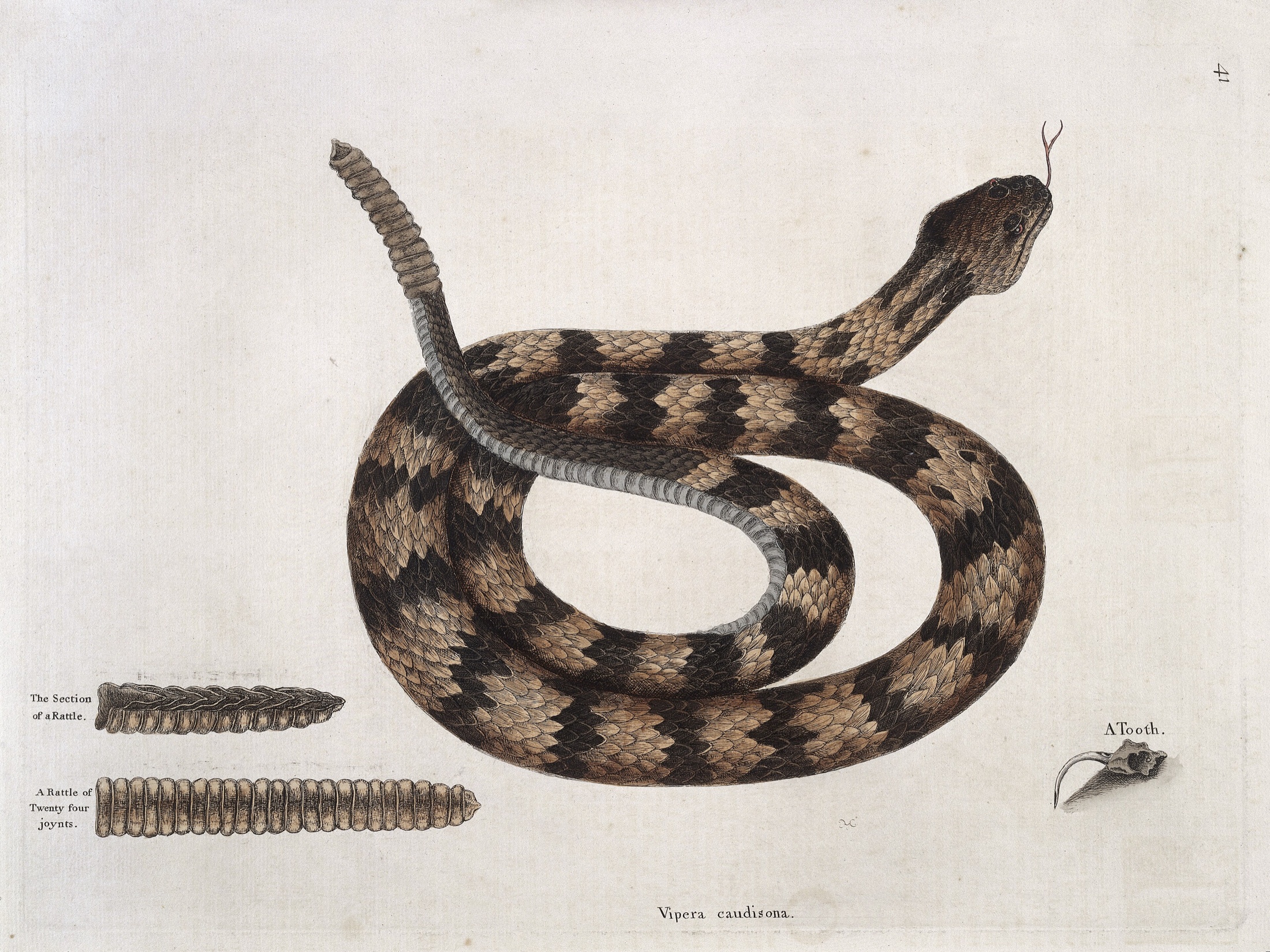
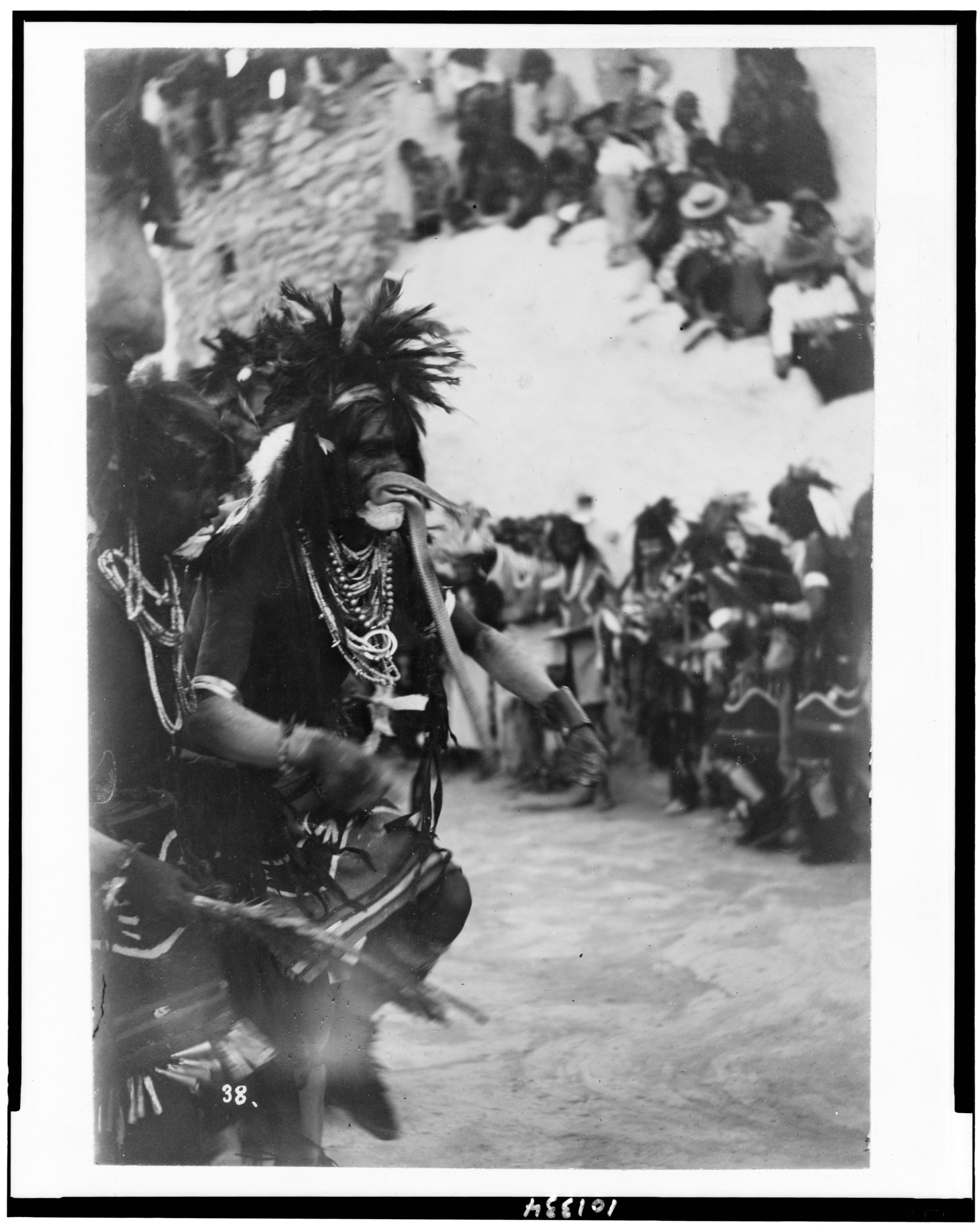
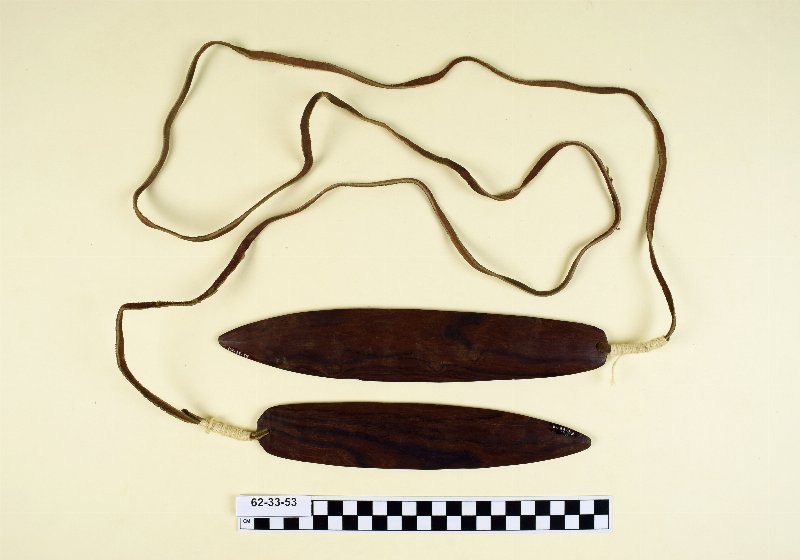
And at Walpi, on the Hopi First Mesa, the Snake society handles live rattlesnakes for four days, carries them in the mouth, is bitten in the course of the ceremony, and drinks a preparation administered by the society’s medicine man on each day of it. At the close, the whole fraternity drinks the tribe’s snakebite antidote in a pint draught on an empty stomach and brings it back up on the kiva roof — and the emetic and the antidote turn out to be made of the same two plants. The men are dosed and the men are bitten, and the ceremony goes on around them. Tylor identified the instrument sounded over it as the Greek rhombos.
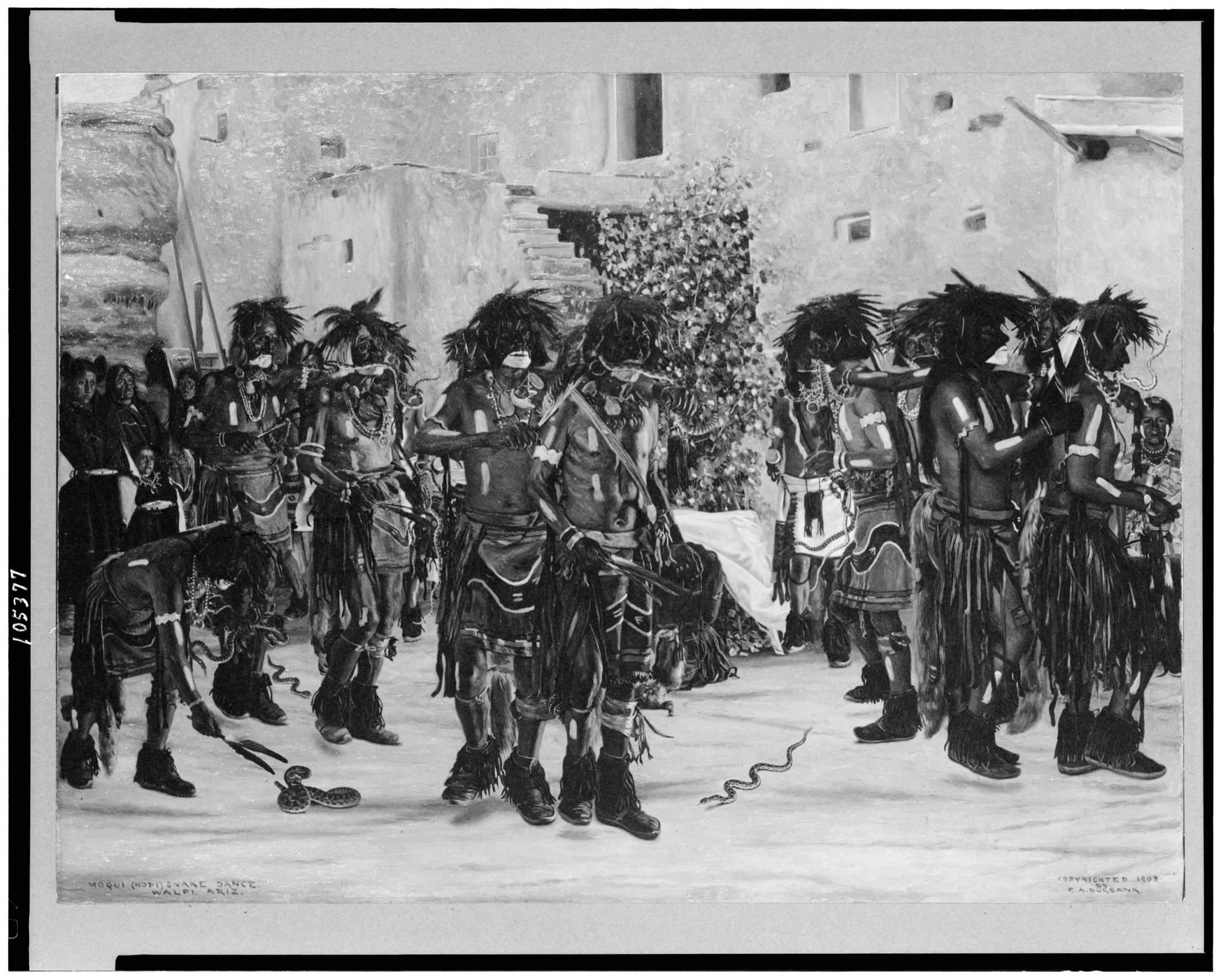
Two continents, three traditions with no contact between them, one procedure: repeated, supervised envenomation, ending in a religious office. Human beings keep doing it: they keep arriving at the same route and the same schedule, and where they do it the practitioner comes out of it a sacred specialist.
The god within
Gather it up.
Venom acts on the brain — on hippocampal neurons, on nicotinic receptors, on the endogenous opioid system — and it is one of the richest sources of nerve growth factor known to biology. This has been in the literature since 1936, in the Proceedings of the National Academy of Sciences, where it was used to take morphine addicts off opiates and its action was placed in the cerebrum. People take it to feel something, and they say what they feel: an extra kick, grandiosity, a sense of well-being and happiness, deep sleep, and a preference for it over heroin. They pay for it. They have graded it by strength and ranked it by species. They have worked out the fastest route, and it is the tongue.
And they take it for God. An ascetic order at Varanasi takes cobra venom to enter the divine consciousness of its master, and smokes it crystallised in a chillum. India’s most widely heard living teacher mixed venom with milk, drank it to consecrate a temple, and says it brings a separation between you and your body — that it took his life away and gave him something more precious than life. A Nama boy in Namaqualand held dried cobra venom on his tongue twice a week until he felt funny and shivery, and became a snake-bite man. Hopi priests carry rattlesnakes in their mouths at Walpi while a bullroarer sounds over the plaza. The Greeks bred a gentle serpent for their sanctuaries and drew it through the clothing of initiates, and Demosthenes could still raise a laugh in court by reminding Athens that Aeschines had spent his boyhood squeezing them.
That is not a hallucinogen. The men in the case reports go out of their way to say they stayed oriented. It is the other thing — the thing the word was built for. ἐν + θεóς: the god within. Hillman found that phrase sitting in the Greek already, attached to venom, in the mystery cults, describing the god the initiate was said to be manifesting in the breast. Ruck, who put the word into the language, has spent five years saying that this is what the serpents were milked for, and on camera he says it is what he is working on now.
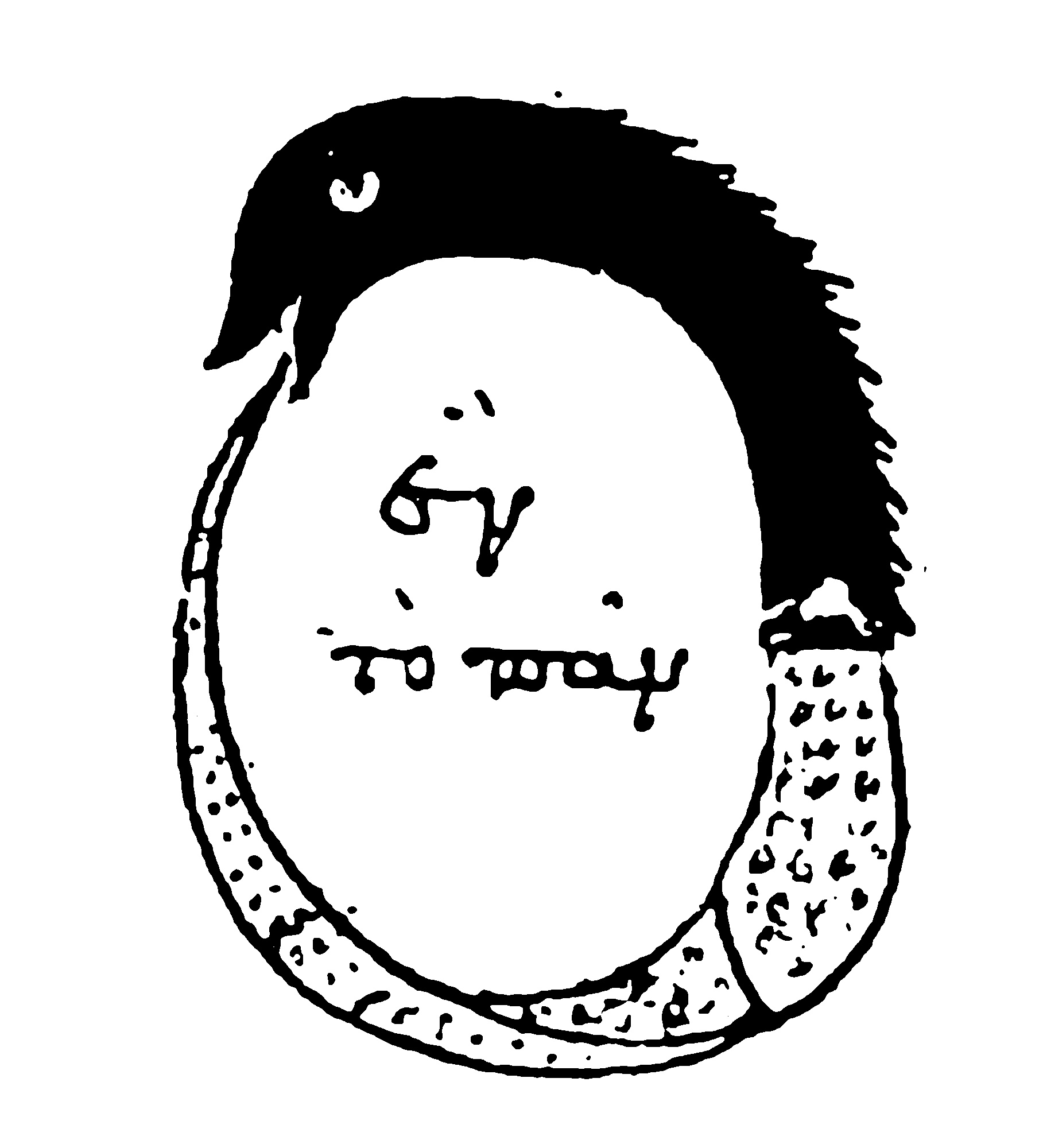
The category was defined as a family, not a formula, precisely so that it could take in whatever turned out to belong there. Snake venom belongs there. It changes consciousness, it is sought for that change, it is taken sacramentally by living traditions and was taken sacramentally by dead ones, and it has been arrived at independently by every people who ever kept snakes.
The oldest intoxicant we can point to did not have to be foraged, cultivated, fermented or synthesised. It came to us on its own legs. Snake venom is an entheogen — the first one, and the one still in use.
Key sources
- Ruck, Bigwood, Staples, Ott & Wasson, “Entheogens,” Journal of Psychedelic Drugs 11:1–2 (1979), 145–146 — the coinage and the two-sense definition, quoted here in full.
- Carl A. P. Ruck, “The Myth of the Lernaean Hydra,” in Goffredo & Dubinsky (eds.), The Cnidaria, Past, Present and Future (Springer, 2016), ch. 48, pp. 798, 801 — the ecstasy sentence, the two-millennium iconographic claim, and the Lerna route.
- Carl A. P. Ruck, Sunshine and Matricide: Dionysus and the Electra Plays (Entheomedia, 2021), pp. 66–68 — route, dose–response, danger, and the philological note on Demosthenes 18.260. Open access at Boston University, handle 2144/44752.
- Carl A. P. Ruck, “Mushroom Sacraments in the Cults of Early Europe,” NeuroQuantology 14:1 (2016), 73, 77; “The Wolves of War,” NeuroQuantology 14:3 (2016), 546; “Femtheogens,” SexuS 2:5 (2017); “Thracian Mystery Religions,” SexuS 3:10 (2018), 851; “The Spiritual Lover in the Cult of Dionysus” (2019), 11. Interview: The Sacred Speaks ep. 65 (2021), at 1:31:50.
- D. C. A. Hillman, Hermaphrodites, Gynomorphs and Jesus (Ronin, 2013), pp. 87–90 and epilogue; “Drugs, Suppositories, and Cult Worship in Antiquity” and “Ancient Mystery Initiation: Toxic Priestesses and Vaginal Communion,” in Wexler (ed.), Toxicology in Antiquity (Elsevier, 2nd edn 2019), chs. 23 and 26, pp. 363–386; “The salamander as a drug in Nicander’s writings,” Pharmacy in History 43 (2001), 93–96. Interview: Danny Jones Podcast #363, at 1:44:42.
- Merlin Stone, When God Was a Woman (1976) — the earliest published statement of the thesis, with William Haast as its witness (via H. Kursh, Cobras in the Garden). Carried forward by Drake Stutesman, Snake (Reaktion, 2005).
- Vittorio Erspamer et al. on 5-MeO-DMT in the parotoid secretion of Bufo alvarius — the assay that arrived after the toad had already been admitted to the canon on iconography and testimony. With Stanley Thompson, Motif-Index of Folk-Literature, B161 and B165, which separates wisdom from a serpent not eaten from wisdom from eating one.
- Christian Rätsch, Encyclopedia of Psychoactive Plants — Aghori Tantrists taking cobra venom “so that they may experience the divine consciousness of their master” (after Svoboda 1993, p. 175); crystallised venom smoked in a chillum; the endnote on insufflation.
- Sadhguru Jaggi Vasudev — “Why I drank snake venom,” youtube.com/watch?v=iyoL8tjB_hc, at 2:36 (with the temple consecration, venom mixed with milk, in the same video); “The Unknown Secret of How Venom Works on Your Body,” youtube.com/watch?v=ROTibYc4irk; on snakes and mysticism, youtu.be/Y5V7tLJAu_I, at 11:18; the Naga consecration with turmeric, youtu.be/NvJMni0GXYQ, at 7:13.
- Pradhan, Shah, Ghodke & Nayak, “Snake venom habituation in heroin (brown sugar) addiction,” Journal of Postgraduate Medicine 36:4 (1990), 233–4, PMID 2132253 — the South Bombay dens, the graded snakes, the tongue bite, and the preference over heroin.
- Jadav et al., “Snake venom — an unconventional recreational substance for psychonauts in India,” Journal of Forensic and Legal Medicine 91 (2022), 102398 — the review that gathers the scattered Indian case series (Ranchi, Chandigarh, Bangalore, Mangalore, Wardha, Jodhpur, Mumbai) and reports the common motive as getting high and the common species as cobra. With Shukla, Reddy, Kandasamy & Benegal, Asian Journal of Psychiatry (2017); the single-dose fang-to-tongue case at PMC5968650; and Substance Use & Misuse on venom dependence. The Noida banquet-hall raid of 3 November 2023 (nine snakes, five cobras, five arrests, charges under the Wildlife Protection Act) was reported across the Indian press.
- Steve Ludwin, in interview — three decades of self-injection with diluted venom; “it’s not like a Jim Morrison trip. You don’t trip — it’s extreme pain,” and the account of the compulsion arriving at seventeen. Widely reported; see the Guardian and Vice profiles, and the Liverpool School of Tropical Medicine work on his antibodies.
- Neurotoxic envenoming and the locked-in picture: the clinical literature on krait and cobra bite mimicking brain death — complete flaccid paralysis with fixed dilated pupils and absent brainstem reflexes, over an EEG showing preserved waking rhythms and normal sleep architecture, with the patient recalling what was said. Reported repeatedly in Indian and Sri Lankan neurology and critical-care journals.
- “Experimental and Clinical Study of Cobra Venom as an Analgesic,” Proceedings of the National Academy of Sciences 22:1 (1936), 61 — morphine addicts maintained on cobra venom, action located in the cerebrum. With Anesthesiology 3:2 (1942), 221, on synergy with opioids.
- “Mechanisms of Analgesic Action of Gln49-PLA2,” Applied Biochemistry and Biotechnology (2009), DOI 10.1007/s12010-009-8573-4 — 54% inhibition of potassium current in freshly isolated hippocampal pyramidal neurons.
- Nerve growth factor: Proceedings of the National Academy of Sciences 42:9 (1956), 571 — venom NGF 3,000–6,000× the potency of the previous best source; Journal of Neurochemistry, DOI 10.1111/jnc.15196 — sustained neuritogenesis from a Naja naja component; Toxins 11:10 (2019), 564 — venoms as “mini-drug libraries.”
- Willer, Dehen & Cambier, Science 212 (1981) — naloxone-reversible stress-induced analgesia in humans, the mechanism under the ordeal. With Translational Psychiatry (2021), DOI 10.1038/s41398-021-01241-w, on the tongue as a route past the blood–brain barrier.
- The Hopi Snake Dance: John G. Bourke, The Snake-Dance of the Moquis of Arizona (1884), on the snakes being undoctored and the fangs intact; H. R. Voth, The Oraibi Summer Snake Ceremony (Field Columbian Museum, 1903), calling the drugging theory “entirely unfounded” and recording three bites during the ceremony; E. B. Tylor on the instrument sounded over it as the Greek rhombos. The emetic, the antidote and the two plants they share are worked out in the companion essay, The God Within the Breast.
- Isaac Schapera, The Khoisan Peoples of South Africa (1930), pp. 216–217 and 409–410, after Laidler (South African Journal of Science 25, 1928) and Schinz — the Nama !ao/ga aon, the dried venom on the tongue, the titration to a felt effect.
- Demosthenes, On the Crown 18.259–260. With the scholion to Aristophanes, Plutus 690; Aristophanes, Plutus 689–691; Theophrastus, Characters 16.4; Photius, Lexicon s.v. ὄφεις παρείας; Harpocration π 26; Aelian, On Animals 8.12.
- Clement of Alexandria, Protrepticus 2.16; Arnobius 5.21; Firmicus Maternus, De errore 10 — the serpent drawn through the bosom of the Sabazian initiate. With E. R. Dodds, The Greeks and the Irrational, on snake-handling and on Asclepius prescribing snake poison (Galen, Subfiguratio empirica 10 = test. 436).
- Nicander fr. 32 in Aelian, On Animals 16.28, and Alexipharmaca 186–194; Lucan, Pharsalia 9.721, 9.924–937; Pliny, Natural History; Celsus 5.27.3 — the Psylli, and the ancient route pharmacology.
- Aeschylus, Choephoroe 527–546, 928; Greek Anthology 9.1–9.2 — venom passing into and through milk.
- Wendy Doniger O’Flaherty, Karma and Rebirth in Classical Indian Traditions (1980), p. 54 — the milk, venom and soma cycle.
- The Entheogen Review III:2 (Summer Solstice 1994), p. 13, letters column; and X:4 (Winter Solstice 2001), 150–151.
Original to this page, as far as we know, is the convergence argument: that four independent lines — Greek philology, the Bombay dens, the Aghori chillum, and the ear-and-tongue motif running from Melampus to Sigurd — all specify the mucosal route, and that the practice keeps being reinvented because the pharmacology permits only one answer.