Atlas Essay —
A Warrant on a Cord
southeast Australia · the Huon Gulf · southern New Guinea · the Papuan Gulf · the upper Yupna Valley
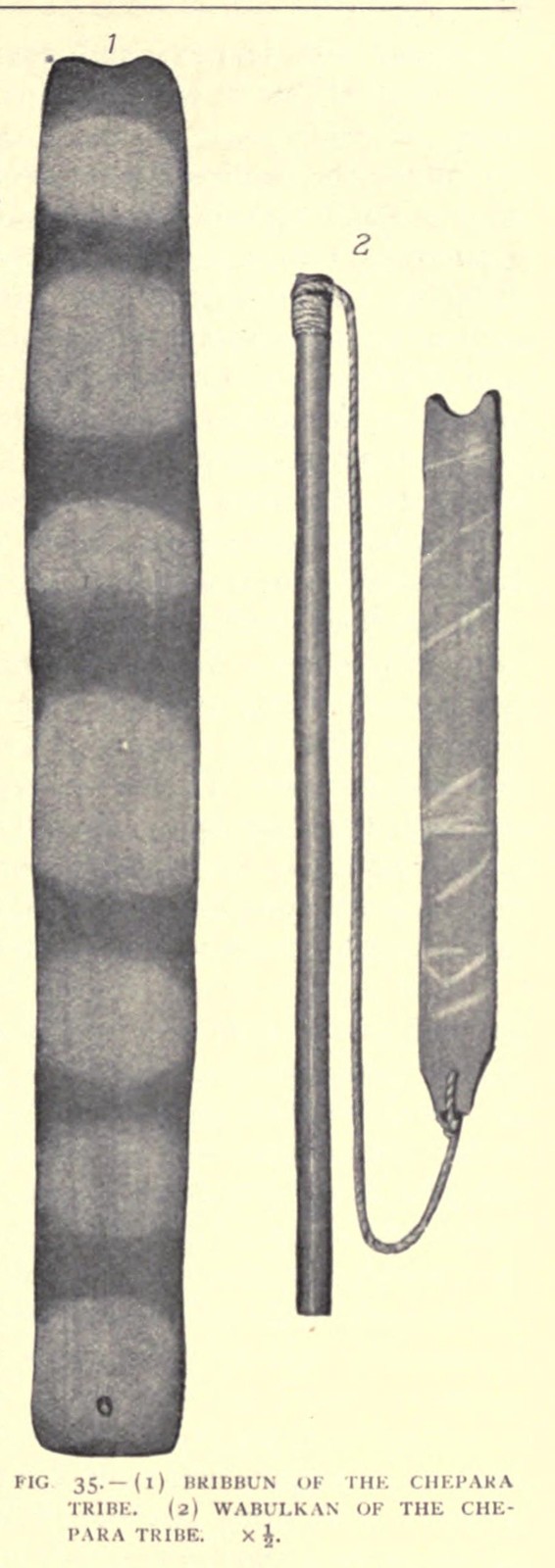
A Chepara messenger did not arrive with words alone. He carried a fixed-pattern message stick and a bullroarer. A. W. Howitt called them the “two objects which certified his message.” That sentence changes the instrument. The slat on its cord is no longer only a disguised spirit voice, a summons by noise, or a frightening prop. In the right hand it proves that the bearer speaks for someone else.
In brief
- Southeast Australian evidence shows object kits certifying messages, identifying messengers, securing passage, obliging councils, and being relayed from community to community.
- New Guinea extends the same logic from mission to status: a Bukaua bullroarer was a badge of membership; a Yei-nan myth hands out territorial authority as a kupör; Papuan Gulf law distributes power among owner, curator, object, sound, and payment.
- Among the Yopno, one lineage bullroarer moved from elders to a colonial subdistrict office, then to a cultural centre, where it invested a modern MP with law-enforcing power. Authority followed the object.
Across Australia and New Guinea, the bullroarer materialized public authority: carried as a credential, relayed with summonses, held as a badge, sounded to compel reparation, and transferred to invest an office.
Two objects certified the message
Howitt's Chepara passage is operational rather than symbolic. A headman chooses the messenger, tells him what is to be announced, and supplies two objects. One is the Bribbun, the large bullroarer. The other is a message stick decorated in a fixed pattern appropriate to the summons. The bearer travels, presents them, and speaks. The objects certify that the voice in front of the recipients is attached to a valid source behind him.
The system is multi-channel. The stick may identify the class of business, aid memory, or bear conventional marks. The bullroarer identifies the ceremonial jurisdiction and the bearer's authorization within it. The spoken message carries names, places, and instructions. Recognition depends on the bundle.
This matters because the phrase “symbol of authority” can become vague. A crown symbolizes authority. A police badge identifies an office. A signed warrant authorizes an act. The Chepara pair did all three jobs in miniature: it connected the messenger to the headman, specified that the journey was official, and made the message actionable to the recipients. The object did not merely represent the command. It altered what the bearer was entitled to do.
Credentials, authentication, relay
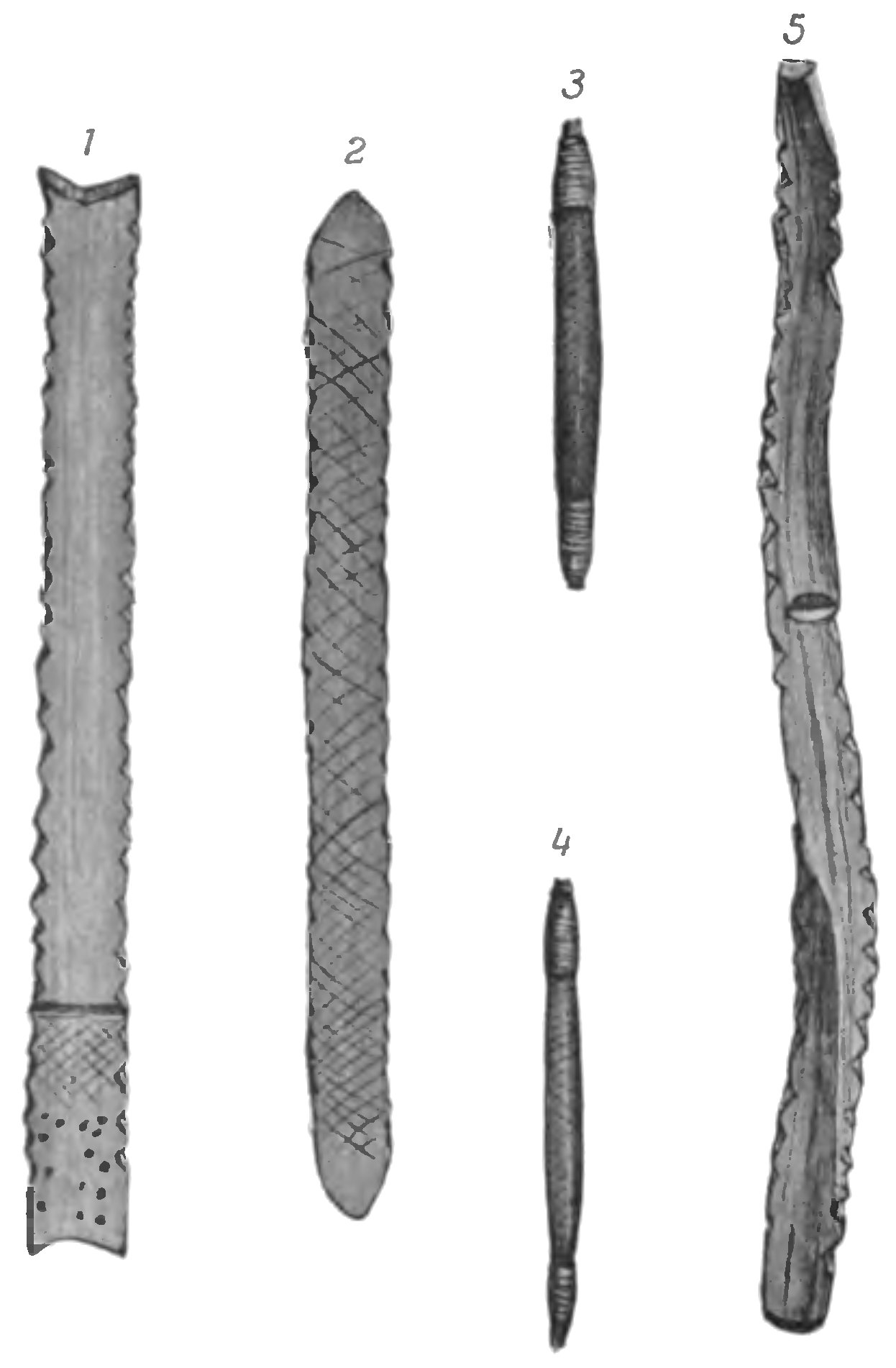
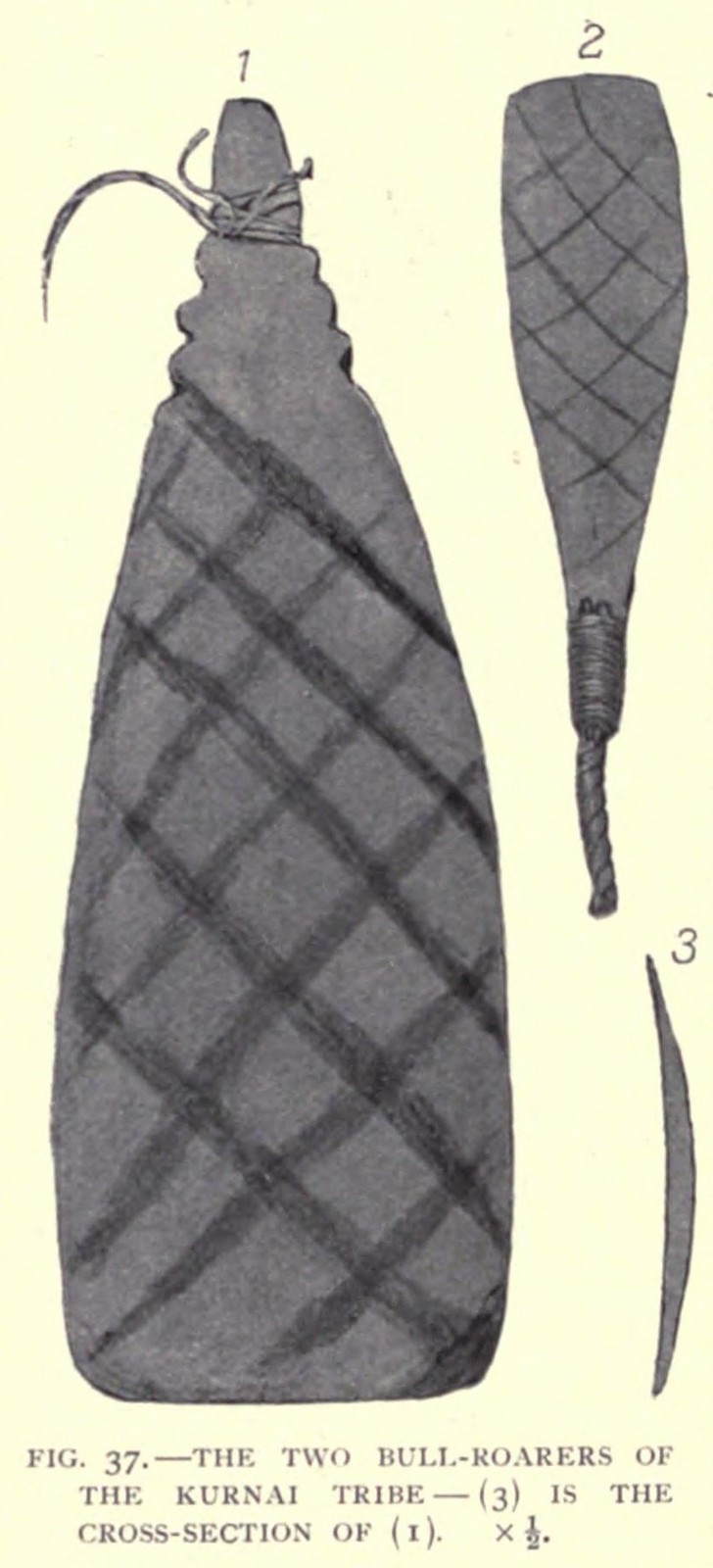
The Chepara sentence is the clearest, but it is not isolated. Howitt says that a Kurnai messenger carried a bullroarer “as his credentials.” A headman could add a club known to belong to him “to authenticate his messenger.” The grammar is recognizably administrative: bearer, issuer, credential, authentication. It is Howitt's own, and it describes a working institution.
Among the Wiradjuri, the objects move through a chain. A messenger arrives, enters the men's private meeting, shows the bullroarer, and delivers to the headmen what R. H. Mathews calls the “emblems of his mission.” Acceptance signals agreement to attend. Howitt describes the kit being shown to a council and then relayed onward by a newly appointed messenger. This is more than a badge flashed at a gate. It is a transferable commission whose custody records the progress of a summons through a political network.
The Wurundjeri evidence is even more discriminating. William Barak told Howitt that different missions called for different object sets. The kit was not a generic token meaning “important business.” Its composition classified the business. For Ngarigo initiation, bullroarer and weapons formed the specific “token” of the ceremony. An object bundle could therefore answer three questions before the speech was finished: who authorized this person, what kind of gathering is being called, and why should the recipients comply?
A warrant can also be safe conduct
Spencer and Gillen describe a central Australian messenger's churinga as a “badge of office showing the bona fides of the bearer.” Displaying it admitted him to the men's camp, secured safety even in foreign country, and attached unusual force to the summons he delivered. The office travelled because a recognized sacred object travelled with it.
Churinga is a broad category that includes sacred wooden and stone objects, and the messenger's churinga stands here as the bullroarer's functional analogue. That breadth sharpens the point: sounding is only one way an authority-bearing object operates. Recognition also works by sight, custody, distinctive form, or a known relationship to the issuer.
Howitt had to present credentials too
The credential system did not remain safely on the ethnographer's page. Alison Petch and Jason Gibson traced a Chepara Bribbun in the Pitt Rivers Museum, accession 1917.53.461, to an episode in which Howitt himself produced it before senior men at a Kurnai Jeraeil. His relationships and explanations were not enough. The object demonstrated that he had been entrusted with restricted knowledge and provided material standing for the encounter.
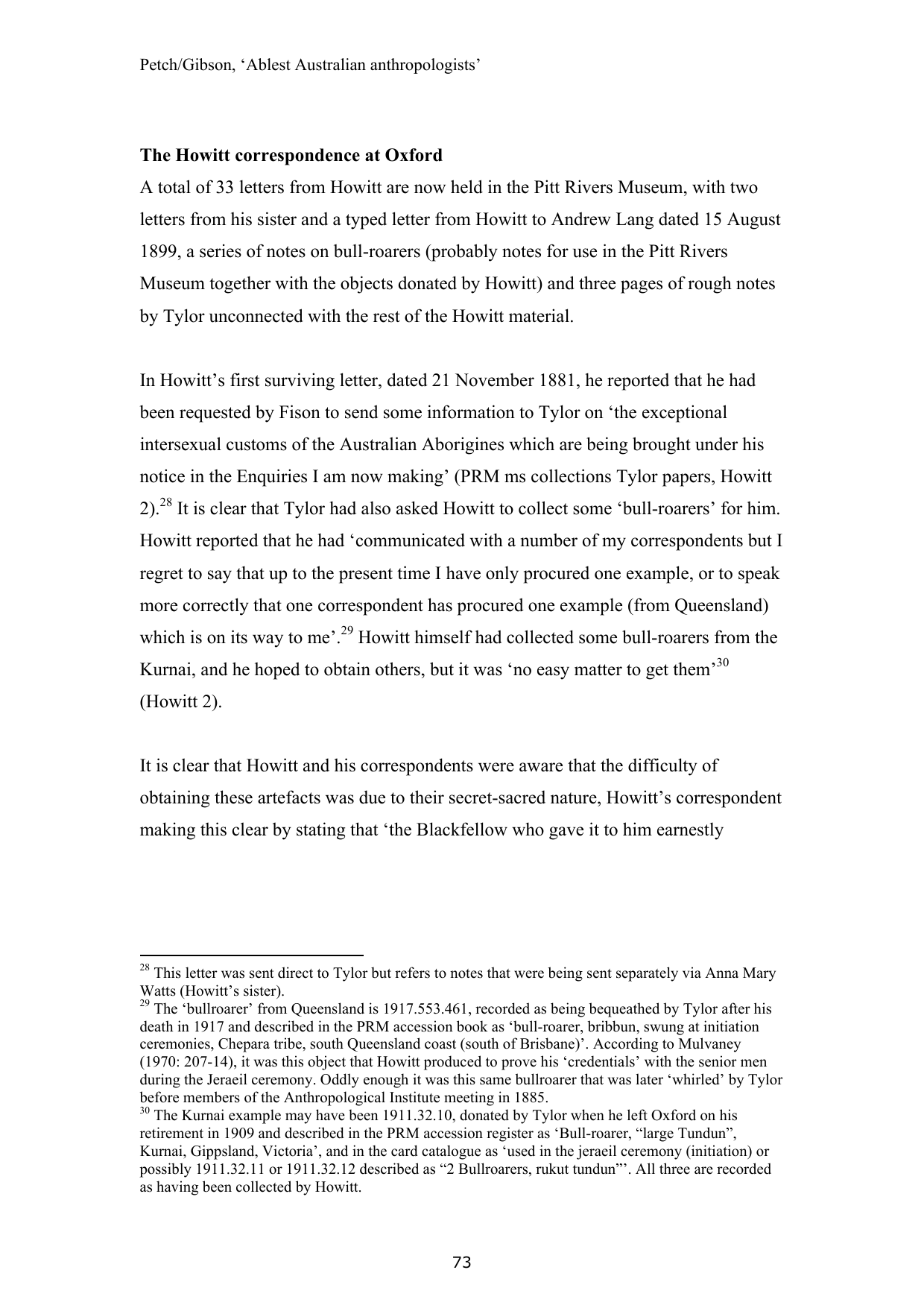
This episode is a rare internal test. If “credential” were only Howitt's loose analogy, the object should not have changed his reception within the very society he was describing. Instead, he entered the protocol. Possession did not automatically make him an elder, but it made a claim recognizable enough to be evaluated. The warrant could authorize an outsider because its force lay in a prior act of entrustment.
The later London demonstration reveals the reverse transformation. Removed from the chain of custody, the same object became an ethnological specimen and an acoustic curiosity. It still roared, but it no longer certified a messenger. Sound survives decontextualization more easily than office. That difference is why museum catalogues can preserve the hardware while hiding the institution that once ran through it.
The Euahlayi split the channels
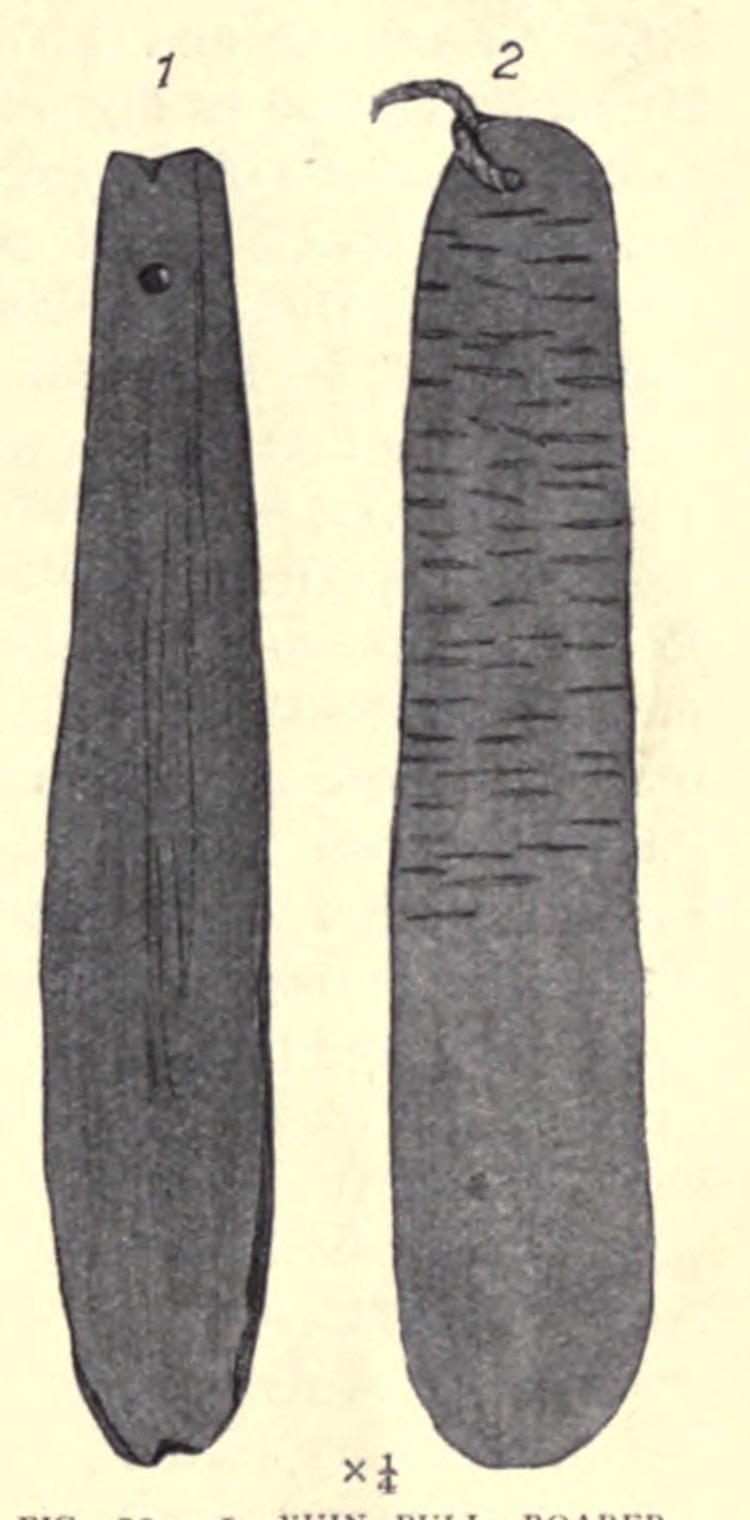
K. Langloh Parker's Euahlayi account is the essential control because it assigns the jobs to different things. A messenger carries a spear topped with a waywah, which protects his passage even through enemy country. In private he gives the chief wirreenun a Doolooboorah message stick as a guarantee of good faith. The receiving community acknowledges the message by sounding the Gayandi bullroarer.
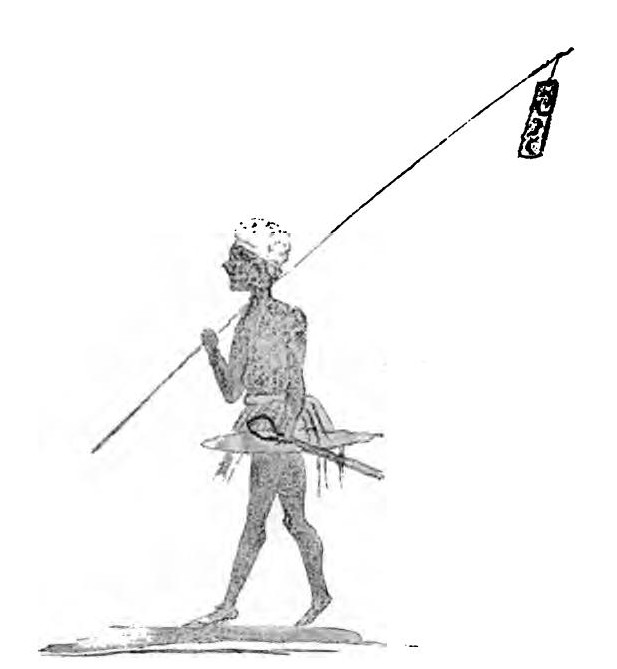
The sequence resembles a protocol: authenticate the courier, deliver the token, verify receipt, transmit onward. The Gayandi's sound is not the credential in this case; it is the acknowledgement. That difference prevents a sloppy conclusion that any bullroarer heard near a gathering is automatically a warrant. Function depends on position in the sequence. A roar before arrival, a blade shown in council, and a roar after acceptance can perform three different acts.
Bukaua: the credential becomes civic status
At the Huon Gulf, A. B. Lewis's field record moves from missions to membership. Among the Bukaua, the balum or bullroarer was the “badge of membership.” A man received one when admitted. An outsider who underwent the procedure became, in Lewis's phrase, “as it were, a member of that village,” with reciprocal hospitality and participation in public affairs. A married man who had not passed through it retained a boy's political disabilities.
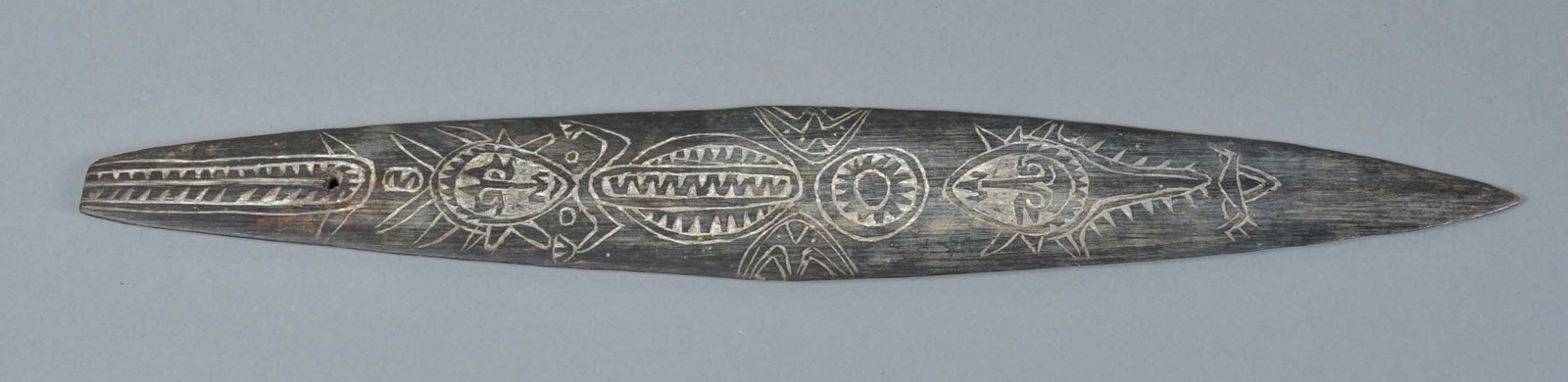
Figure 3.37 in the published Lewis diaries adds an office within the office: a small bullroarer-like stick was worn under the armband by the man who made or caused the balum ceremony. Membership and directorship were materialized at different scales. The object on the body told other members not only that the man belonged but what he was entitled to convene.
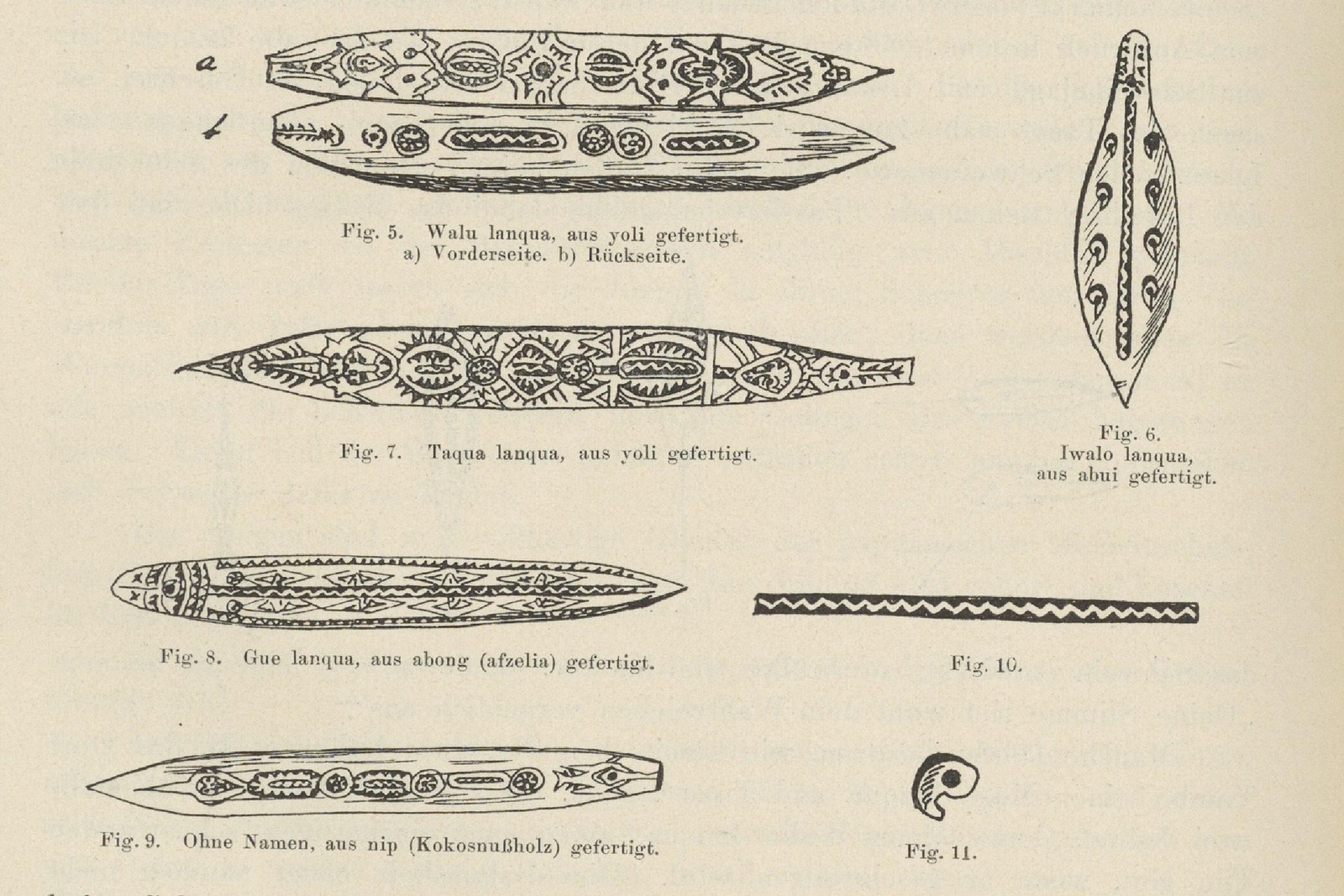
This makes the portable-warrant thesis more precise. The authority does not reside in an aerodynamic shape by itself. It resides in a recognized chain of relation: this object was issued by this institution to this person under this procedure. The blade indexes that chain. A copy in the wrong hands might produce the sound, but not the status.
Yei-nan: office is handed out as an object
Jan Verschueren's Yei-nan materials, edited by Jan van Baal, push the logic into mythic geography. At the Sembe, the culture hero Orei set Jögwul down and gave him his kupör “in token of his authority there.” Other figures carried a kupör as the symbol of their authority. Territory, office, and object arrive together.
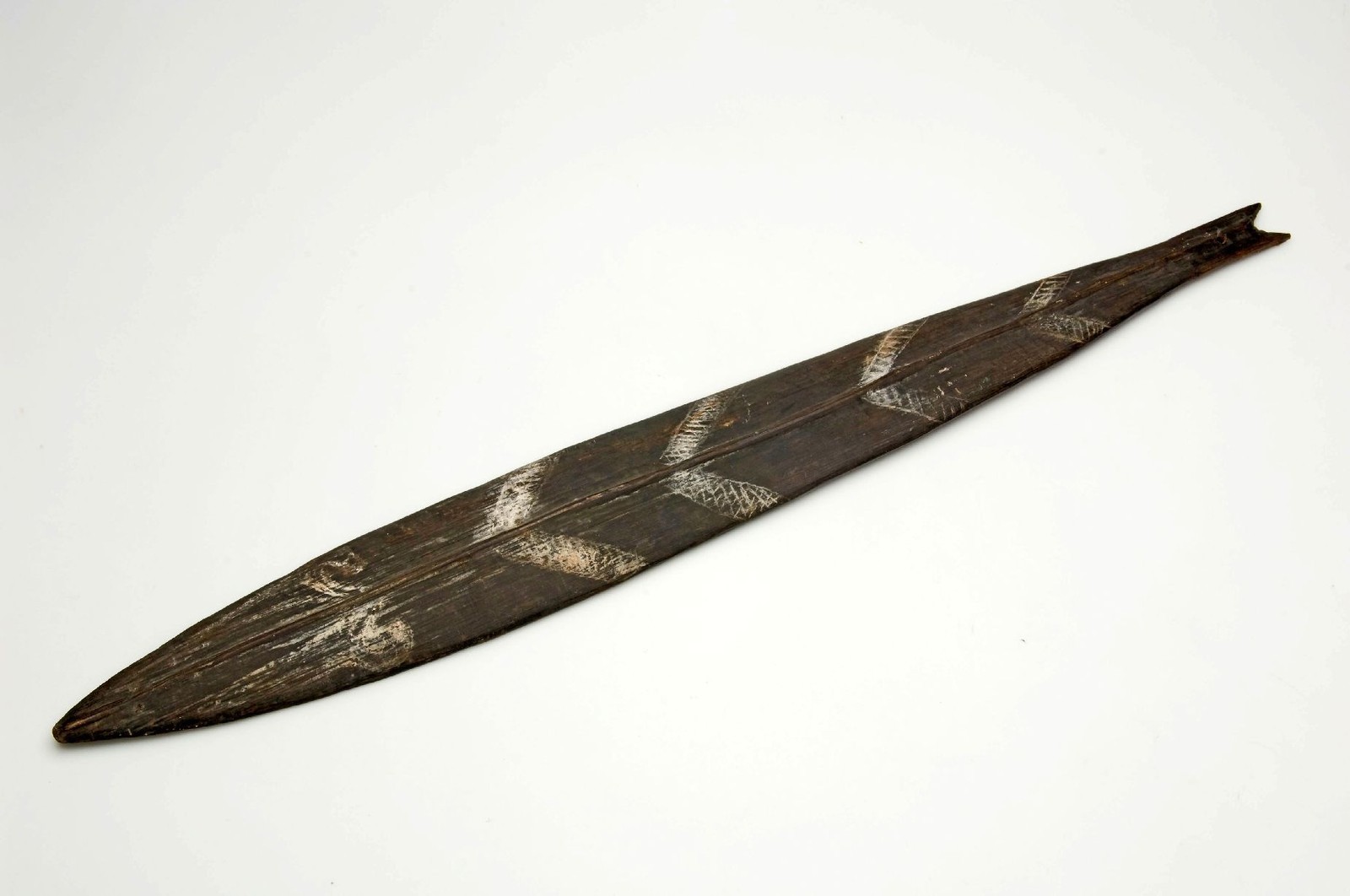
Van Baal draws the same conclusion: the kupör “functions as a symbol of authority,” whether or not it doubles as the pöggul, the war leader's ceremonial club. This mythology imagined jurisdiction as something installable by transferring a recognized sacred implement.
The scene is a charter in miniature. Orei does not merely tell Jögwul that he rules there. He gives him the thing whose possession makes the claim visible. The relation between person and place is externalized, portable, and transmissible. The office can outlast an individual because its token can move to another body.
The Papuan Gulf makes law a procedure
F. E. Williams explicitly called the Papuan Gulf bullroarer's role “politico-legal.” At Karama, Uaripi, and Opau, major instruments belonged within a paired arrangement. A bukari, or owning chief, called up the bullroarer. A mai-karu, its curator, brought it out and sounded it. The noise could compel pigs from an offender, force reparation after an affront, recruit labour for a house or fence, and restore damaged prestige. At Karama, Williams estimated such soundings two or three times a month.

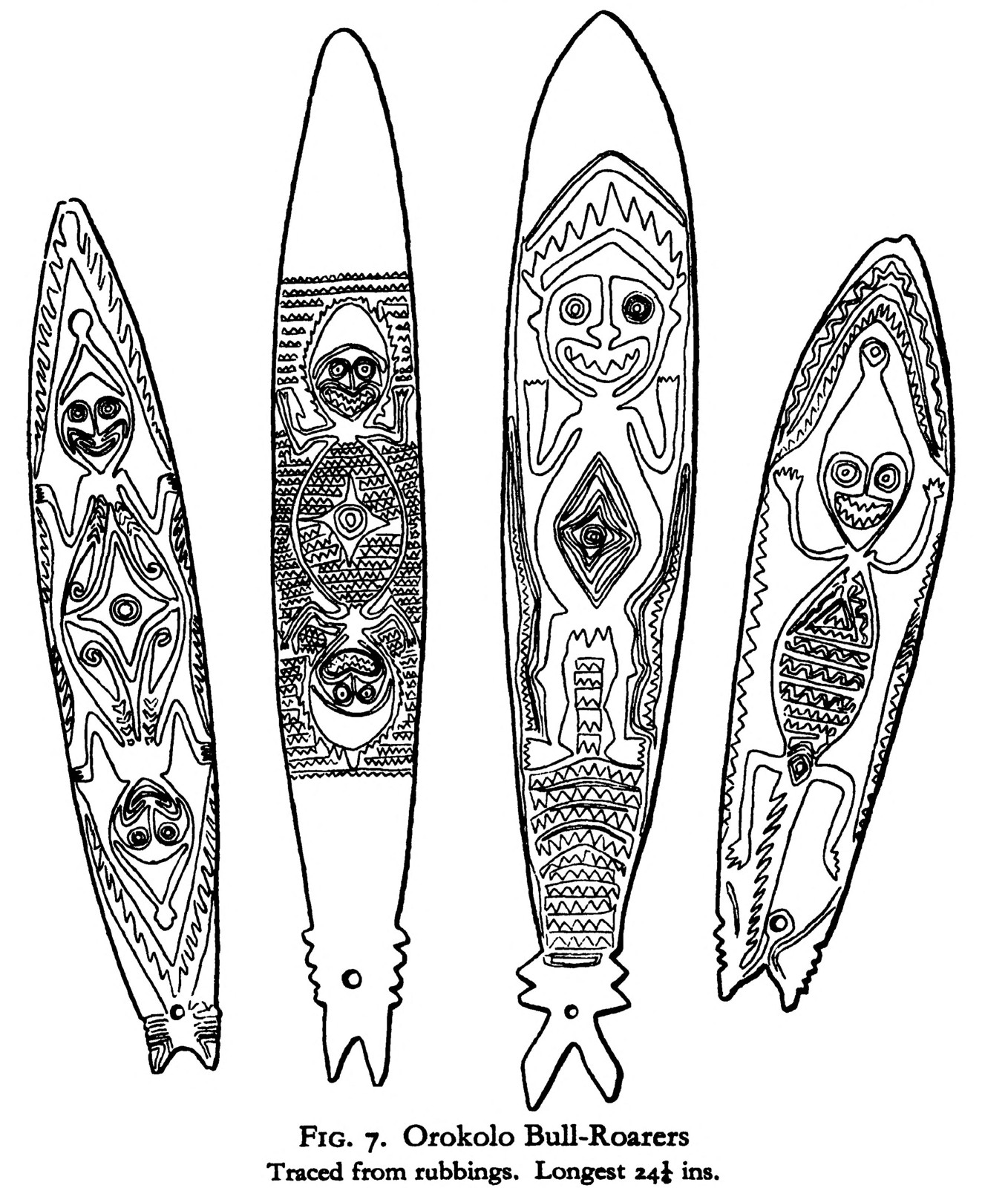
This is not portable commission in the narrow messenger sense. The object may stay under local custody while its force radiates through sound. Yet it clarifies what the warrant actually consists of. Authority is distributed across roles and operations. The owner alone cannot make the legal voice; the curator alone cannot authorize it; the object without the recognized grievance is noise; the sound without payment is an unresolved claim. The “law” is the correctly ordered assembly.
That assembly resembles a small constitution. It separates title from execution and embeds coercion in procedure. The invisible monster may frighten, but Williams's cases cannot be reduced to belief in a monster. People used the institution to negotiate pigs, labour, insult, and compensation. Cosmology gave the sanction its terrifying form; protocol directed that force toward practical disputes.
Yopno: authority follows the object into the state
The strongest test of an authority-bearing object is what happens when political institutions change around it. Christin Kocher Schmid documented a Yopno bullroarer representing the ancestor of the oldest lineage of the eserong and serving as a symbol of traditional law. It was kept in the colonial subdistrict office, where its presence invested the officer in charge with traditional legal authority.
In 1992, lineage elders removed it. Their stated reason was not nostalgia: modern political structures had failed and could no longer enforce law and order. They redirected the bullroarer's law-enforcing power to the Babek Bema Yoma cultural centre. In Kocher Schmid's 2007 follow-up, the transferred object ensured that traditional law governed new concepts and activities and invested the modern member of parliament with “considerable law-enforcing power.” Former colonial intermediaries handed in their insignia; the MP placed himself in their succession; the ancestral object anchored the sequence.
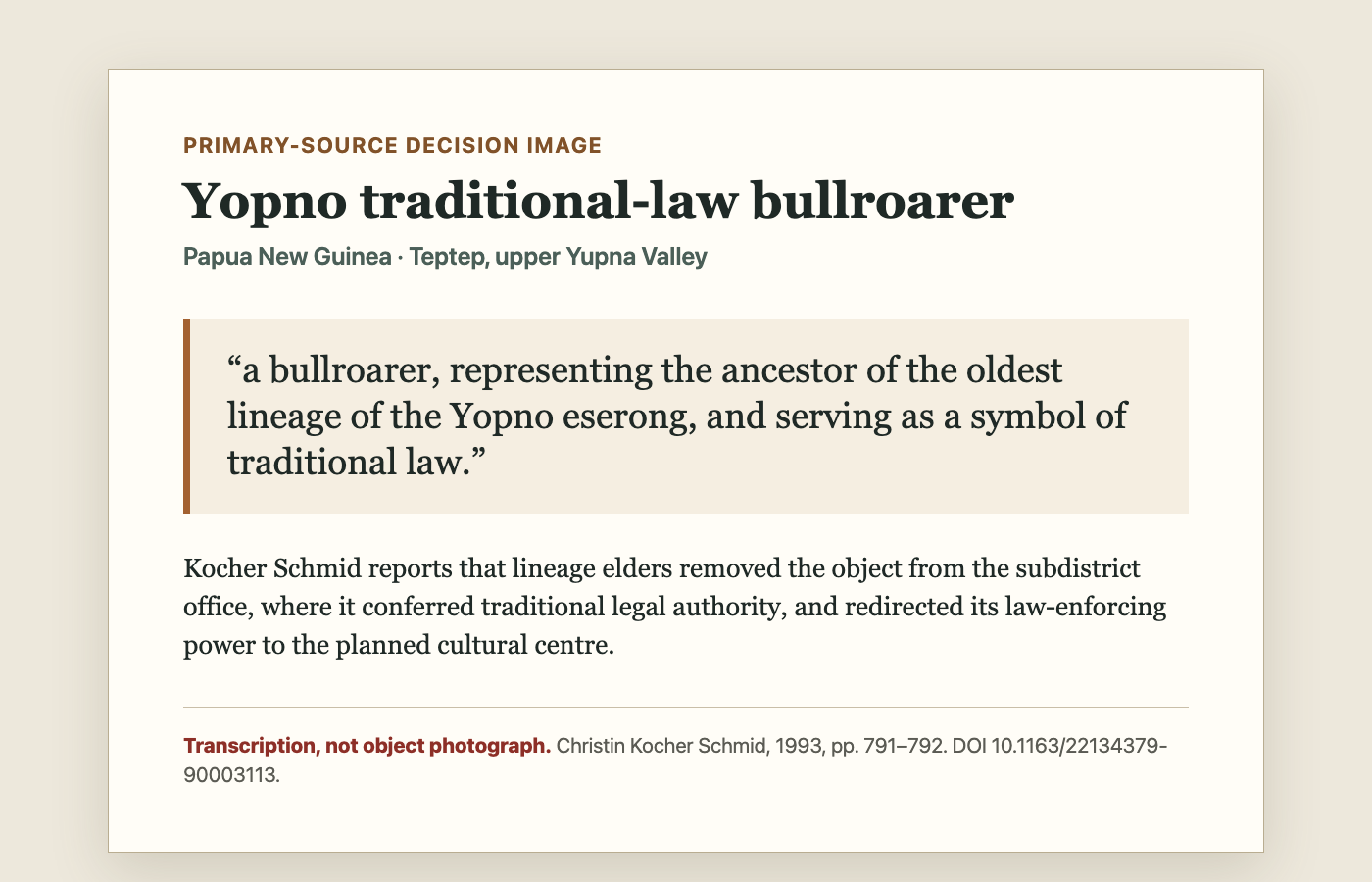
The chain is extraordinary because each transfer is legible: lineage elders to subdistrict office, subdistrict office to cultural centre, cultural centre to a parliamentary project. The object does not remain sealed in “tradition” while modern politics happens elsewhere. It is the connector by which each new apparatus claims continuity with the oldest jurisdiction.
Kocher Schmid says the object invests office and makes sure laws are kept. Its location is politically consequential. Moving it is equivalent to withdrawing confidence from one institution and placing it in another. The closest modern analogy is not an artwork changing galleries but a seal of state being removed from a failed administration.
The office lives partly outside the person
The bullroarer is famous as a spirit's voice at initiation; these records uncover a different cognitive technology. Human beings routinely stabilize invisible relations in things: marriage in a ring, debt in a tally, jurisdiction in a seal, identity in a passport. The bullroarer cases show the same operation without writing. A headman's intention, a council's summons, a member's status, an ancestor's territory, or a lineage's law is made present by a recognizable object in a recognized chain of custody.
That externalization changes action. A messenger does not have to persuade each settlement from zero. A member does not have to narrate his admission every time he enters public business. A Papuan Gulf claimant does not personally embody all coercive force; he activates a distributed office. The object compresses precedent into a portable cue. It lets people coordinate around authority that no single nervous system can hold or enforce alone.
Sound adds something sight cannot. Display certifies the bearer to those near enough to inspect the object. The roar publishes activation across distance and darkness. It can announce receipt, call a council, demand payment, or make a hidden jurisdiction suddenly present. The same blade therefore alternates between seal and siren: stored evidence of office when still, broadcast enforcement when moving.
Diffusion research should follow these operations, not merely the outline of the wood. A lanceolate board is easy to reinvent. A matched protocol—issuer gives distinctive rotor and patterned stick; messenger receives safe conduct; council inspects; recipient acknowledges by sounding; object is relayed—has a much richer signature. If related protocols cluster along travel corridors, they would offer stronger evidence of transmission than shape alone.
The object answers who sent you
Across Australia and New Guinea, the bullroarer materialized public authority: carried as a credential, relayed with summonses, held as a badge, sounded to compel reparation, and transferred to invest an office. The Chepara pair certified a message. Kurnai and Wiradjuri procedures authenticated and relayed the bearer. Euahlayi practice split safe conduct, guarantee, and acknowledgement among different media. Bukaua made the object a badge of civic membership; Yei-nan myth made it a territorial grant; the Papuan Gulf turned it into a recurring legal procedure. The Yopno carried the logic into colonial administration, a cultural centre, and parliament. Beneath the spirit's roar is a political question as old as distance: who sent you? The object answered before the messenger had finished speaking.
Key sources
- A. W. Howitt, The Native Tribes of South-East Australia (1904), pp. 515, 578, 582, 687, 692–693, 700–701, 707, on Chepara, Kurnai, Ngarigo, Wiradjuri, and Wurundjeri messenger credentials and tokens.
- R. H. Mathews, “The Burbung of the Wiradthuri Tribes,” Journal of the Anthropological Institute 25 (1896), pp. 303–304, on the messenger's “emblems of his mission”; “The Burbung, or Initiation Ceremonies of the Murrumbidgee Tribes,” Journal and Proceedings of the Royal Society of New South Wales 31 (1897), pp. 118–119; K. Langloh Parker, The Euahlayi Tribe (1905), pp. 63–64.
- Baldwin Spencer and F. J. Gillen, The Native Tribes of Central Australia (1899), p. 142, on the messenger's churinga as badge of office and proof of bona fides.
- Alison Petch and Jason Gibson, discussion of Howitt's Chepara Bribbun and Pitt Rivers Museum 1917.53.461 (2013), pp. 73–75.
- Robert L. Welsch et al., eds., An American Anthropologist in Melanesia: A. B. Lewis and the Joseph N. Field South Pacific Expedition, 1909–1913, vol. I (1998), pp. 207, 218–220.
- Jan van Baal, ed., Jan Verschueren's Description of Yéi-nan Culture (1982), pp. 47–48, 54–55.
- F. E. Williams, Bull-Roarers in the Papuan Gulf (1936), pp. 39–46, 52; The Drama of Orokolo (1940), fig. 7.
- Christin Kocher Schmid, “Cultural Identity as a Coping Strategy towards Modern Political Structures” (1993), pp. 791–792; “Indigenous Responses to Political and Economic Challenges” (2007), pp. 183–185.
- Piers Kelly, “Australian Message Sticks: Old Questions, New Directions” (2020), on message sticks as passports, seals, mnemonic devices, and semasiographic texts.