Atlas Essay —
The God Within the Breast
Walpi · Oraibi · Mishongnovi · Athens · Mount Dindymon
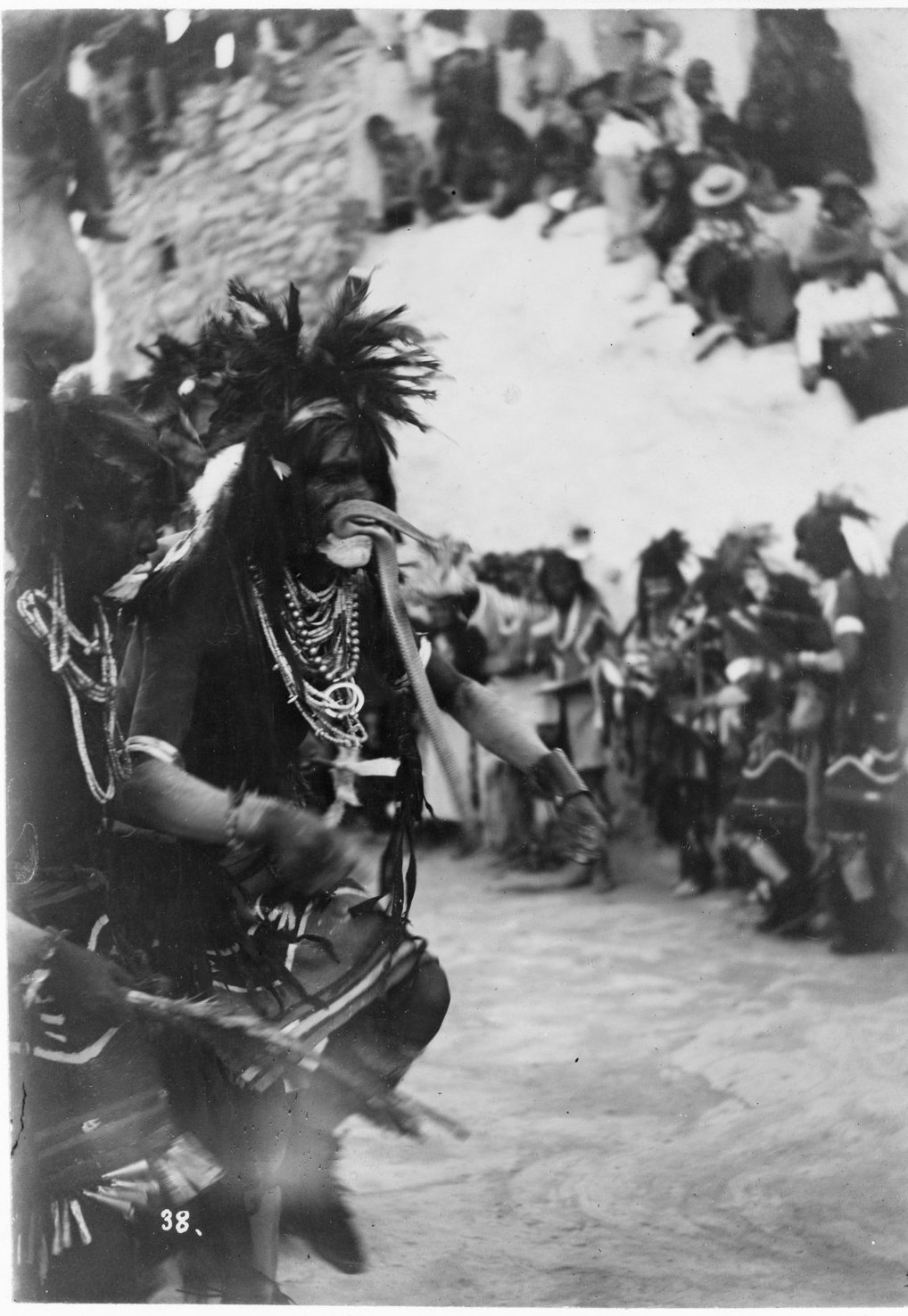
Two initiation cults, on opposite sides of the world, put the same two things in the same room: a live serpent and a bullroarer. At Walpi the serpent rides in the dancer’s teeth; in Athens it was held overhead in a midday procession. A London weekly saw the match in October 1884 and laid it out in two columns. It is reprinted below — and the comparison runs deeper than its author knew.
Walpi and Athens ran the same machine. In both, an initiate takes a live serpent onto his body inside a closed society; in both, a flat slat is whirled on a cord until it roars with a voice that has no source you can point at; in both, the rite is sealed by a fast, a daubing with white earth and a ceremony of re-entry. And both cults hold the same premise about what the serpent does: contact with it puts something into you, and the something must be governed on the way out as deliberately as on the way in. Greece managed it by taking the venom in at a sub-lethal dose. The Hopi manage it by drinking their own snakebite antidote in a pint draught and vomiting it off the kiva roof. The bullroarer makes the god outside the initiate. The serpent makes one inside.
In brief
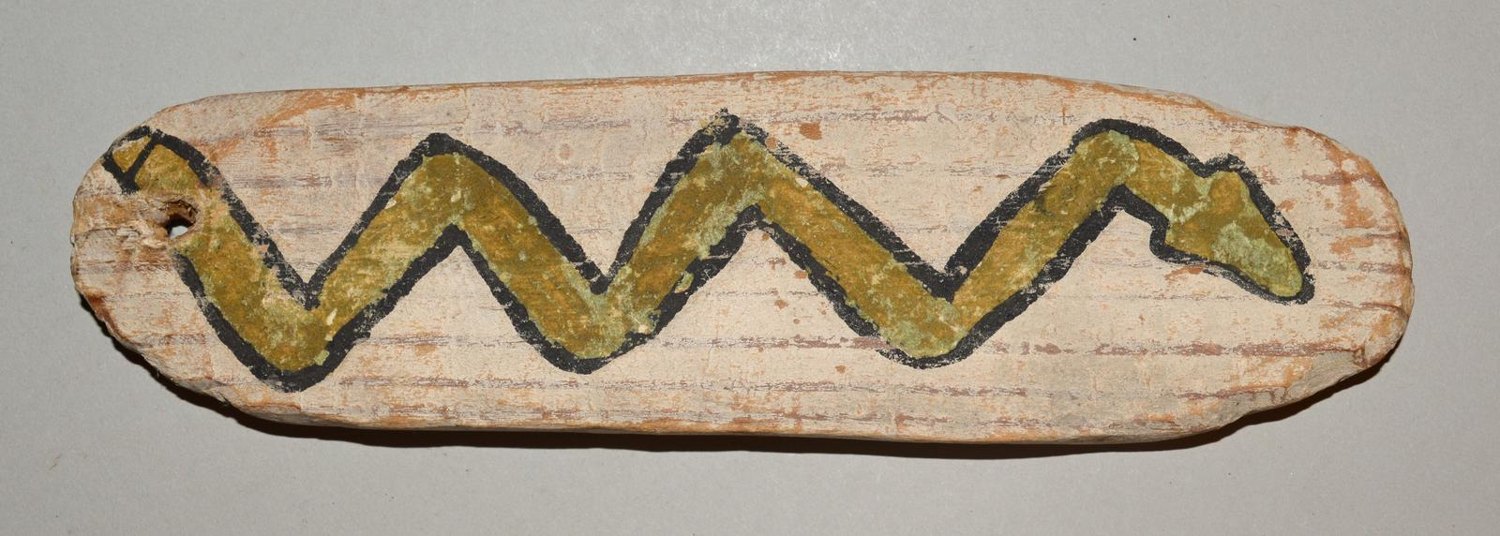
- At the Walpi Snake Dance the dancers carry live rattlesnakes in their teeth while a warrior whirls a bullroarer — and the instrument is itself a serpent, painted down its whole length, its triangular point doing “duty as the snake’s head.”
- In Athens, Aeschines led the Sabazian procession squeezing fat-cheeked snakes above his head, in a mystery cult whose sacred basket held the rhombos. The same serpent, the same roaring wood, the same closed rite.
- The Hopi emetic and the Snake society’s secret snakebite antidote are the same two plants. The whole fraternity closes the ceremony by drinking a pint of its own antidote and vomiting it off the kiva roof — not medicine, they say, but washing the snake charm off.
- The Greek rite takes the venom in — “serpents were milked… to access sacred states of ecstasy” (Ruck). The Hopi rite drives it out. Opposite pharmacologies, one premise: the serpent puts something in you, and it has to be managed.
188 atlas records put a bullroarer in a serpent’s company. See them on the Snake-linked lens.
Snake dances, Moqui and Greek
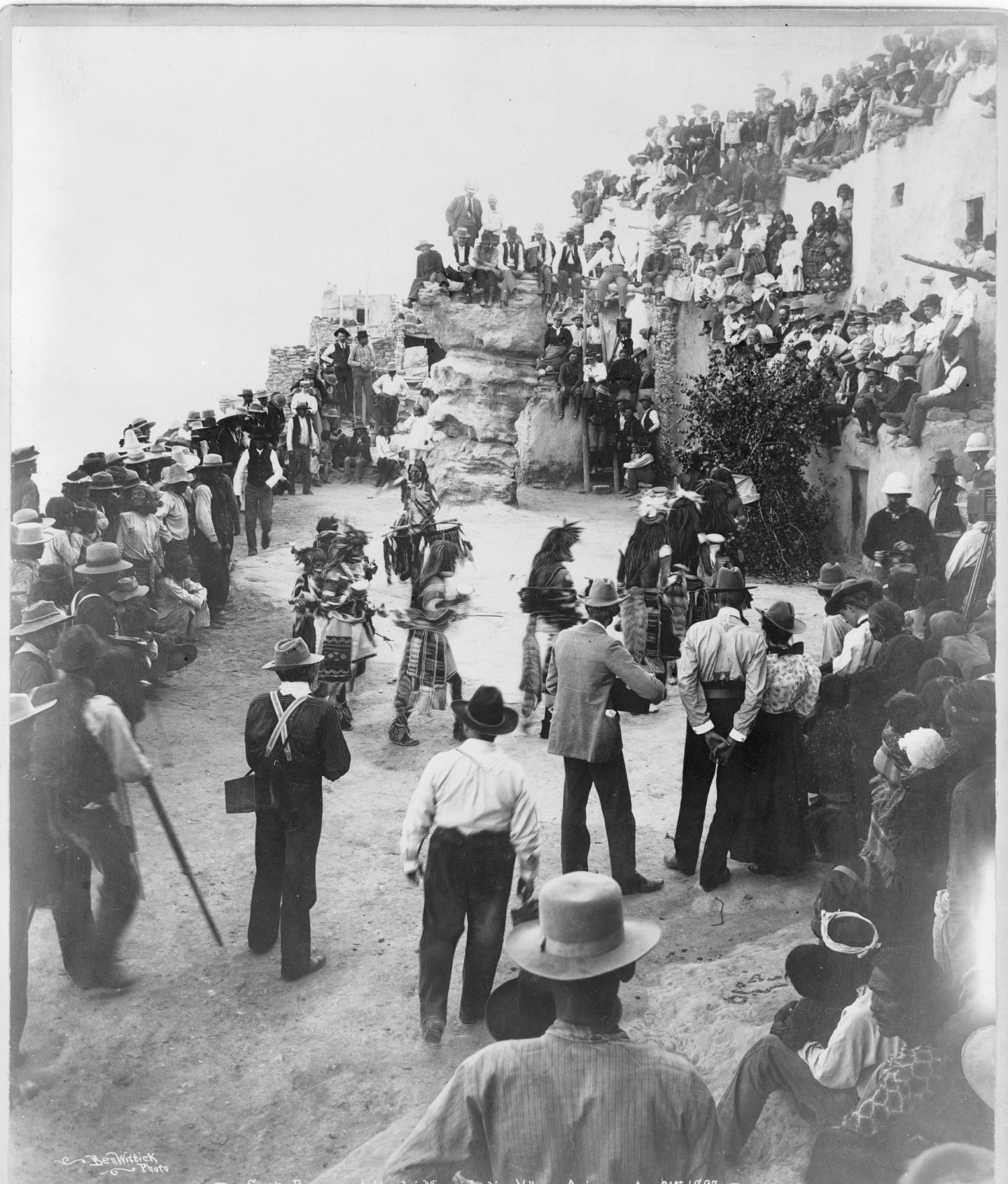
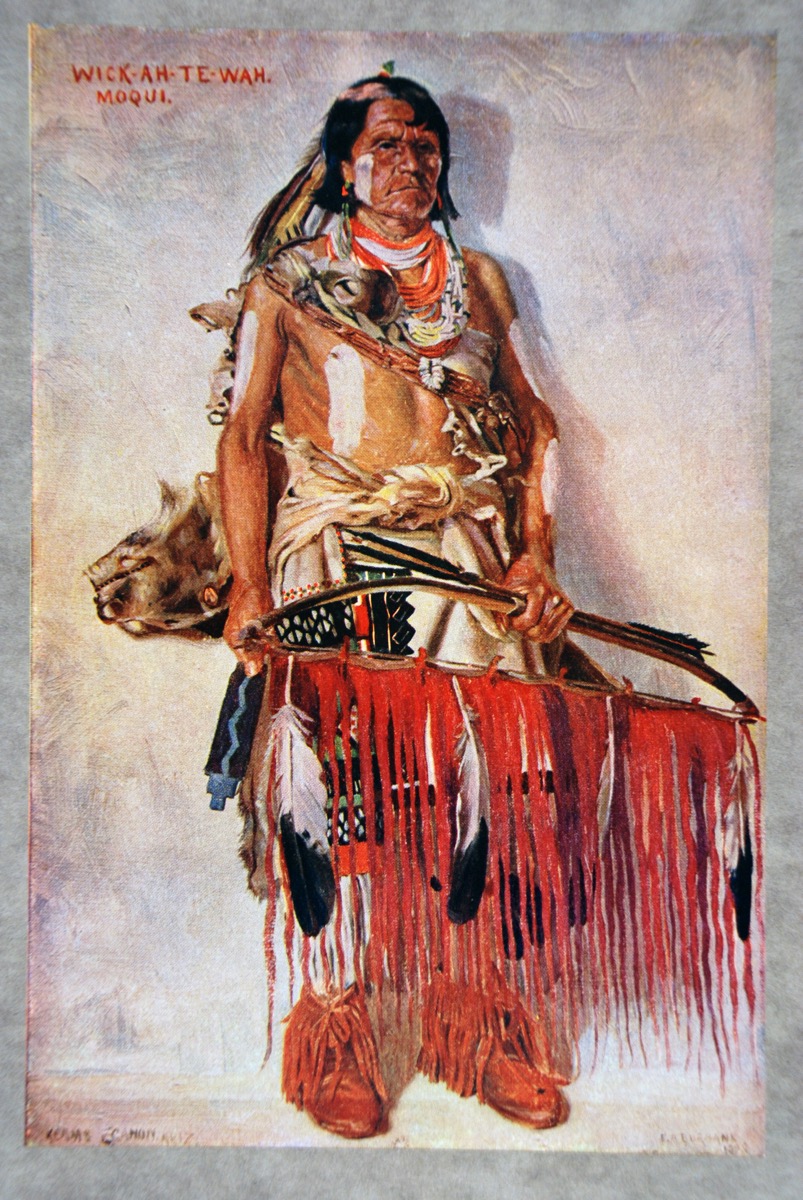
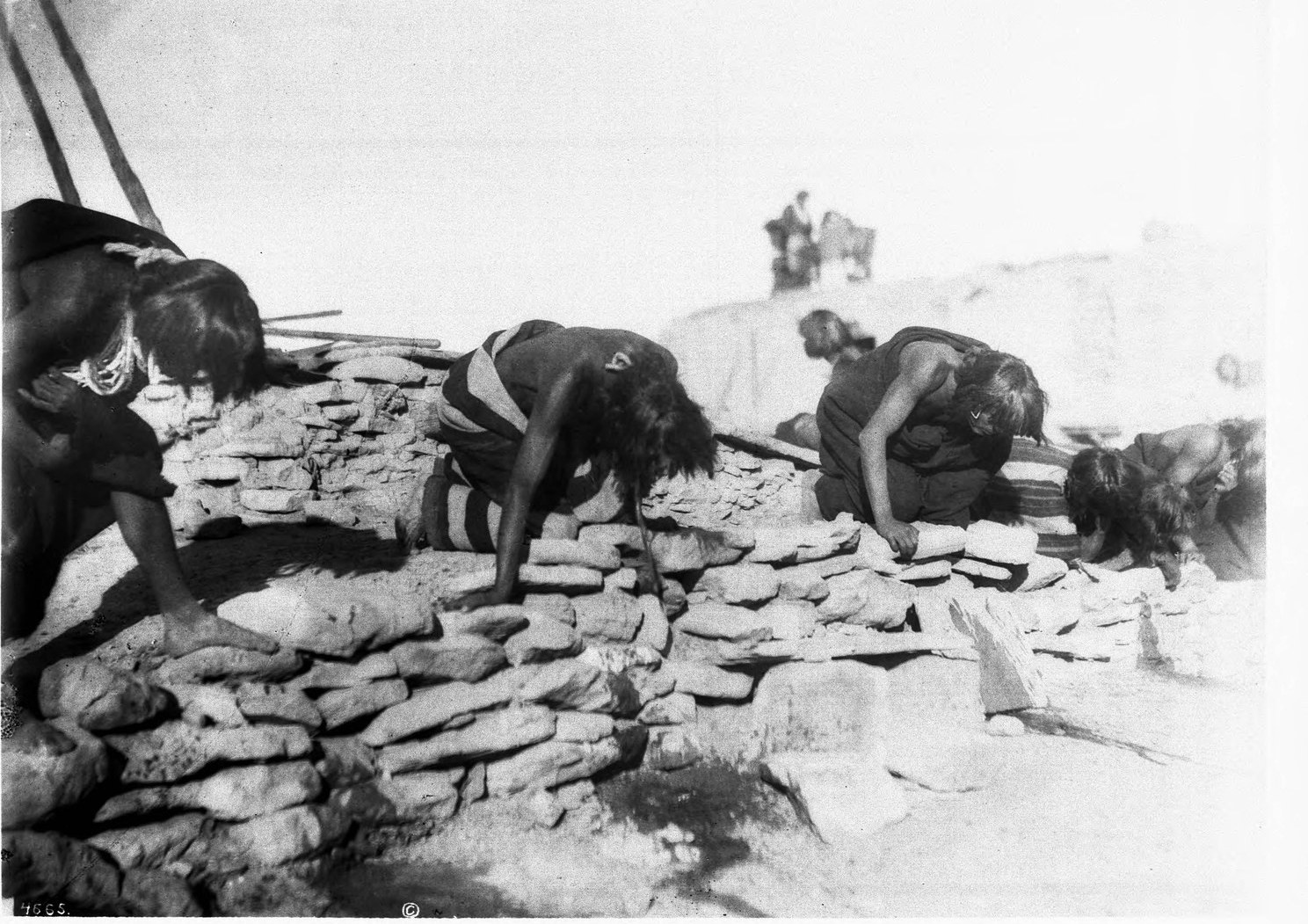
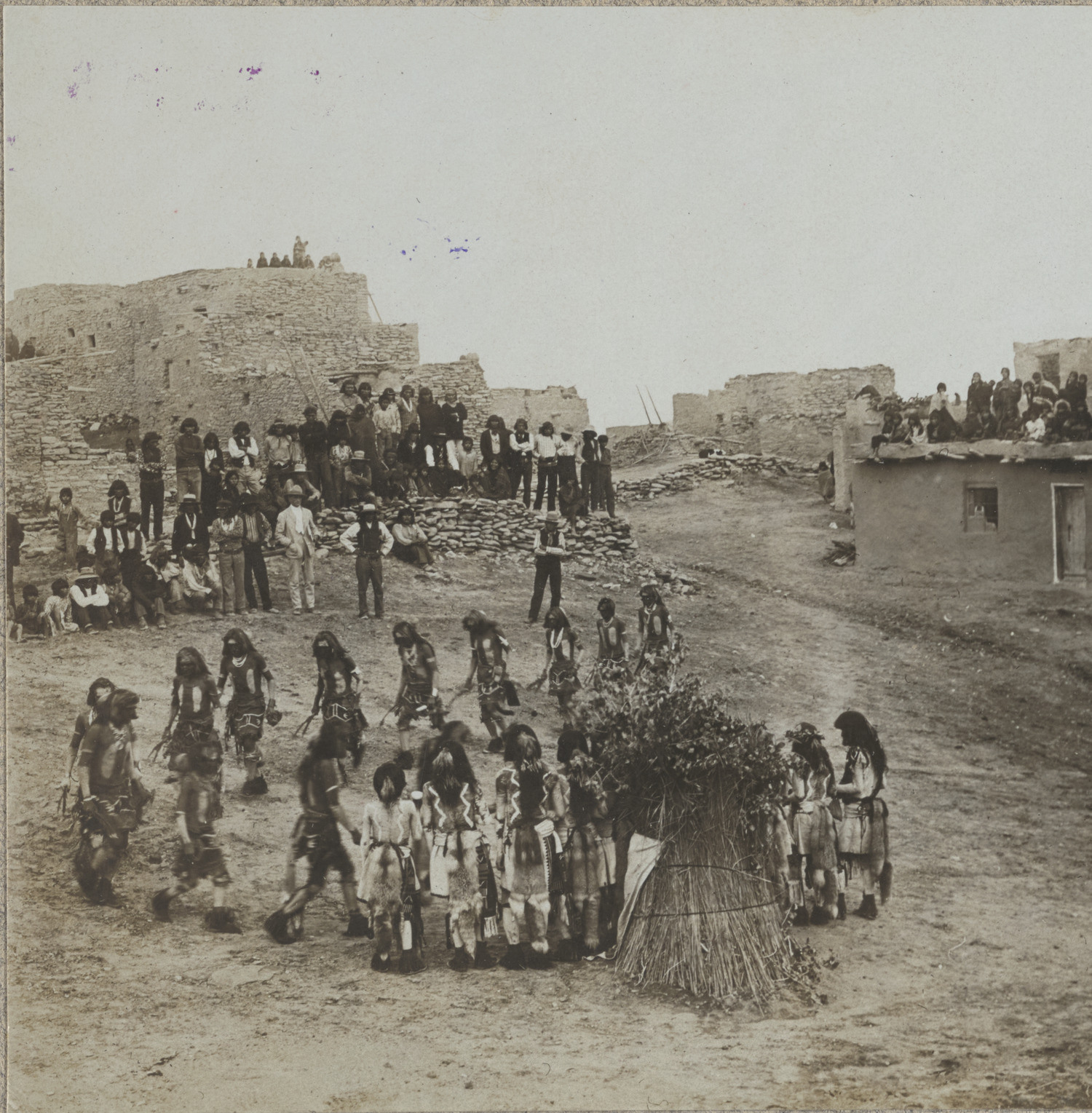
In August 1881 a cavalry captain named John Gregory Bourke stood on the mesa at Walpi and watched the Snake Dance. The procession came out of the arcade in order — the water-sprinkler, the corn-meal bearer, the rattle-men, a five-pace gap — and then an old man who, “with his right hand,” Bourke wrote, “rapidly twirled a wooden sling, which emitted the shrill rumble of falling rain.” A wooden sling. Bourke had no better name for it, and his book went to press with none.
A reviewer in London supplied one within the month — and named everything else in the ceremony too. On 18 October 1884 the Saturday Review ran two unsigned columns on Bourke’s book under the title “Snake Dances, Moqui and Greek.” It is the first matching of the Hopi rite to the Greek mysteries ever printed, and it has sat in a bound volume ever since. Here it is.
The Saturday Review · London · 18 October 1884
“Snake Dances, Moqui and Greek.”
No people display a refinement hitherto unexampled, combined with almost incredible barbarism, so remarkably as the Greeks. In ancient Athens, in the time of Demosthenes, an art, a literature, an eloquence, to which we have never attained, co-existed with a savagery in which we can scarcely believe. This by no means novel reflection insists on recurring when we read Captain Bourke’s most interesting and carefully accurate account of the snake dance of the Moquis… Now we propose to elucidate certain features of Hellenic religion by comparison with certain features of Moqui religion. No one who carefully studies our evidence, the new book of Captain Bourke, will call our evidence untrustworthy. The Captain has had no intention of playing into our hands by supplying barbarous parallels to Greek ritual.
No white man has seen so much of the sacred rites as he… The explanation of the rites, again, as far as the initiate dared to reveal them, he received from Nanahe, who belonged to the snake kindred, and Captain Bourke is himself, by adoption, a snake. “What privilege this distinction confers I know not, unless it be the proud one of dancing and prancing about with a rattlesnake in one’s mouth, once every two years.”
• • •
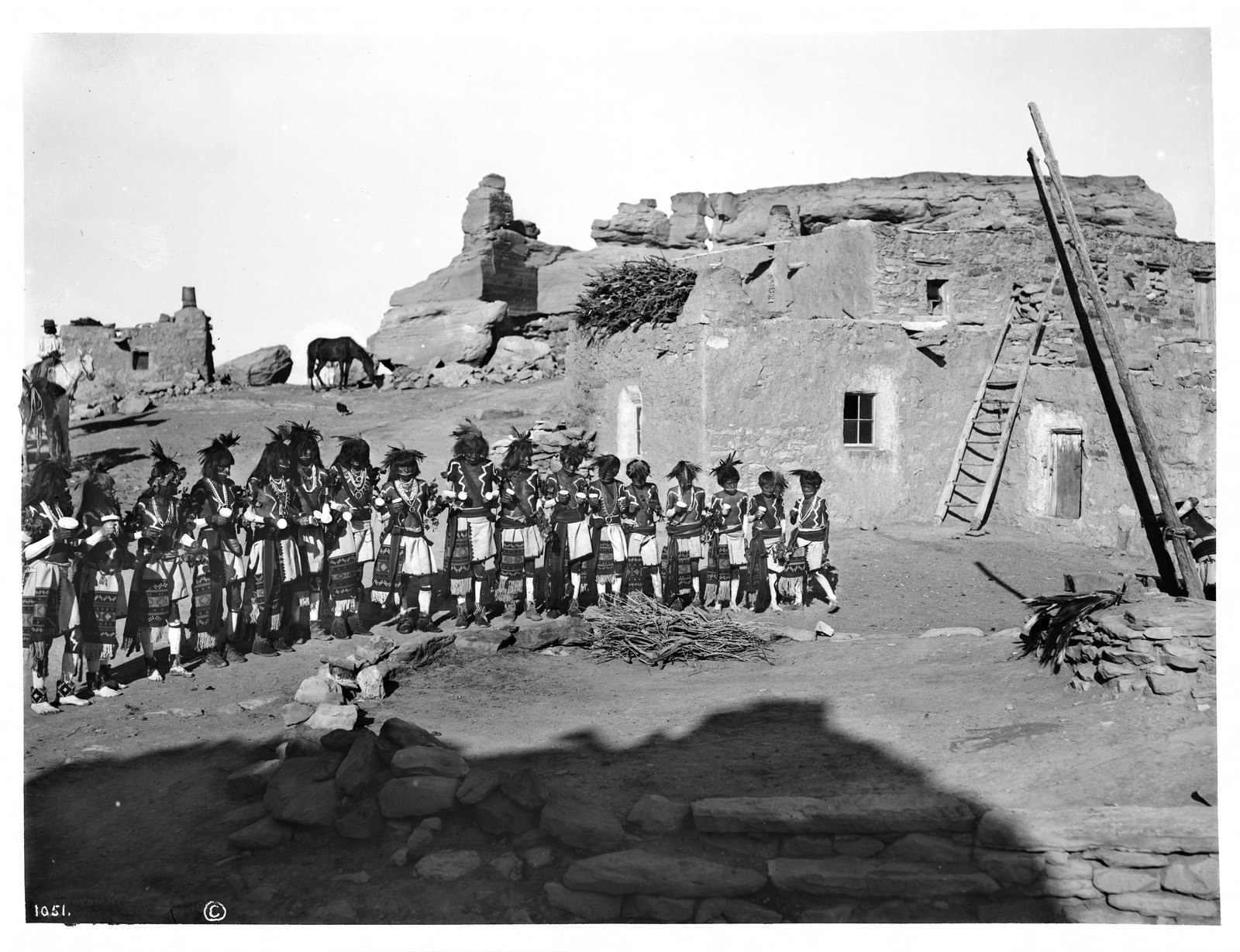
The spectators now move round to the neighbourhood of a sacred rock, with a niche and rude stone idol. They hear a whirring sound as of rain driven by wind, and forth comes the procession. An old man leads it, sprinkling holy water; another carries sacred grain, others bear rattles, and there is a company of rattle-bearing boys. Then arrives an old man, whirling the mystic ῥόμβος of Greece, the Turndun of Australian and African mysteries. This instrument produces the noise of rainy wind. The dancers prance round the idol, making motions as in the sowing of maize. Then come other dancers, “holding slimy wriggling serpents between their teeth.” Each dancer has an attendant who tickles the snake with a sacred wand tipped with eagle’s feathers… Now come the women scattering the grain, as in the Homeric ritual of sacrifice. The snakes are carefully sprinkled, are handed to little children, and then to two old men — great medicine men… Again and again the dreadful procession of men with huge serpents in their mouths circled the sacred rock. The snakes were next placed in a charmed circle, and covered with sacred meal. Lastly, the Indians grasped them in large handfuls, and ran with them down the steep paths leading to the foot of the rock whereon the village is built. There the serpents were released; and while this part of the ceremony went on the noise of the turndun roared, as it roars in Australian mysteries, and roared at the rites of Dionysus.
This was the snake dance of the Moqui, a tribe of people living within our own boundaries, less than seventy miles from the Atlantic and Pacific Railroad, in the year of our Lord 1881.
• • •
We now turn to our task of proving that civilized Greece had much the same mystic ritual as that which, among the barbarous Moquis, astonished Captain Bourke. The main elements in the Moqui rites are: — (1) A kind of ancestor-worship… (2) The propitiation of the powers that make for harvest… (3) The reverence paid to a rock and a rude stone xoanon. (4) The ritual custom of bedaubing the Initiate. (5) The swinging of the sacred bull-roarer, the Australian Bribbun or Turn-dun. (6) The actual snake dance. None of these savage elements of religion fail us in Greece.
(4) The ritual custom of bedaubing the Initiate is alluded to by Demosthenes in a famous passage. He reproaches Æschines for having been a hired acolyte of such rites… Harpocration explains that this dirty trick was part of the Dionysiac mysteries, and says it was derived from the stratagem of the Titans when they attacked Dionysus. They plastered themselves with clay, just as Australian black fellows do before a night onslaught.
(5) The swinging of the mystic ῥόμβος, which we have found among the Moquis, should be studied, on Greek soil, in Lobeck (Aglaoph. i. 700). The ancient scholiast on Clemens Alexandrinus elucidated that Father’s account of the mysteries by notes for the more part unluckily lost. Bastius (ad Gregor.) preserves some of them, among others this: κῶνος = ξυλάριον οὗ ἐξῆπται τὸ σπαρτίον καὶ ἐν ταῖς τελεταῖς ἐδονεῖτο ἵνα ῥοιζῇ. That is, “the κῶνος was a small piece of wood tied to a string, and whirled round in the mysteries to produce a roaring noise.” A coloured picture of the Moqui medicine man in this action is given by Captain Bourke (pl. XIII.; see also the central figure, pl. II.). By a mere accident, the survival of the old scholion, we are enabled to demonstrate that the Greek mysteries retained this peculiar practice of savages.
(6) The actual snake dance was probably not danced with poisonous serpents in the age of Demosthenes. Serpents, however, were used, as we know, not only from other sources, but from Demosthenes loc. cit.… Nothing can possibly be more explicit than this. Athens, like a Moqui village, was accustomed to the spectacle of dancers waving snakes in the midday streets.
• • •
That they have their savagery in common will scarcely be denied; and the most plausible explanation is that these horrors survived in Greek ritual from an age when Greeks were in the social and mental condition of modern savages, and devised the same sort of rites in obedience to the same superstitious needs.
Unsigned notice of Bourke’s Snake-Dance of the Moquis of Arizona, The Saturday Review 58, no. 1512 (18 October 1884), pp. 501–502; excerpted. Read the full notice.
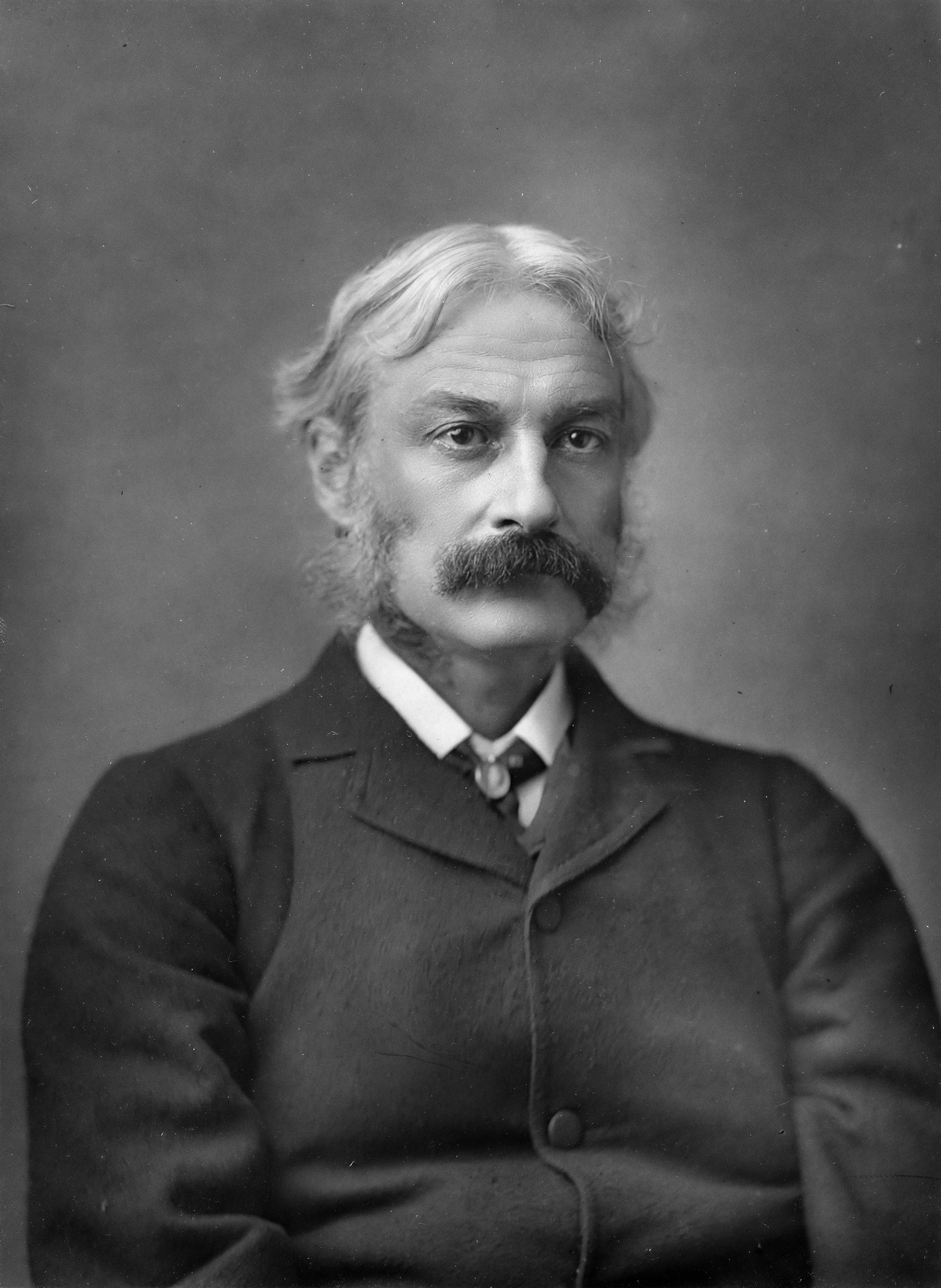
Who wrote it? Bourke always said E. B. Tylor. But the voice is Andrew Lang’s. Lang published his famous bullroarer chapter in Custom and Myth that same season — the same argument, down to the old scholiast — with Bourke’s book commended in a footnote, and he wrote anonymous columns for the Saturday Review for decades. To every appearance the two columns above are Lang, writing at speed with Bourke’s book open on the desk.
Bourke took the correction and ran with it. By 1892 he calls the thing a rhombus on every page and has traced it from Arizona to Australia, New Zealand, West Africa and the Amazon: the Apache tzi-ditindi, the Navajo and Zuni instruments, the Rio Grande Pueblos, the decayed specimen he dug out of a cliff dwelling on the Rio Verde. That whole survey exists because a book reviewer told a soldier what he had been looking at.
The blade is a snake
What the reviewer could not know is that the Walpi instrument is not merely present at a snake ceremony. It is a snake.
Bourke sorted the rhombus into three shapes, all of them “apparently connected in symbolism with the lightning.” The first is a long narrow blade capped with a triangle, and of that form he records the decoration:
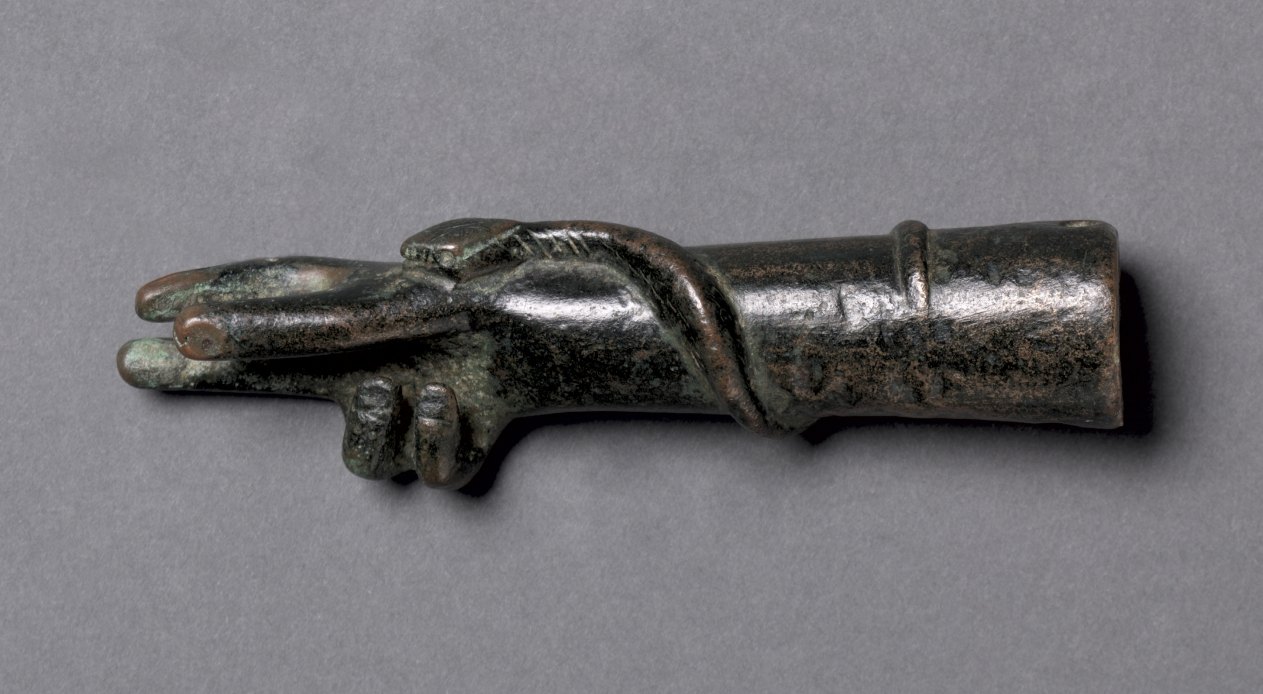
Where the former shape was used, as at the Tusayan snake dance, the tracing of a snake or lightning in blue or yellow followed down the length of the rhombus and terminated in the small triangle, which did duty as the snake’s head.
Bourke 1892, p. 477
A serpent painted the full length of the blade, with the point of the wood serving as its head. His second form was “serrated on both edges to simulate the form of the snake or lightning.” Snake and lightning are one thing here, as the reviewer had already noticed: “the connexion in mythology between lightning and the serpent is very well known, and is strongly believed in by the Moquis. Each class of snake used typifies a kind of lightning.” The Hopi blade the British Museum holds from Mishongnovi is Bourke’s first form with its paint intact.
Nor is the serpent only painted on. At Oraibi, the Mennonite missionary Henry Voth — who spoke Hopi and saw more of the Snake ceremony than any outsider before or since — walked behind the water-messenger as he went to the spring, stopping four times on the road to twirl a bullroarer, lay down a pinch of meal, and spurt honey into the air — and then, as he came within sight of the water:
he stopped and twirled the bullroarer and blew his eagle-bone whistle to announce, he said, to the water deities (the Balölökongwuu and Clouds) his presence.
Voth, The Oraibi Summer Snake Ceremony, 1903, p. 320
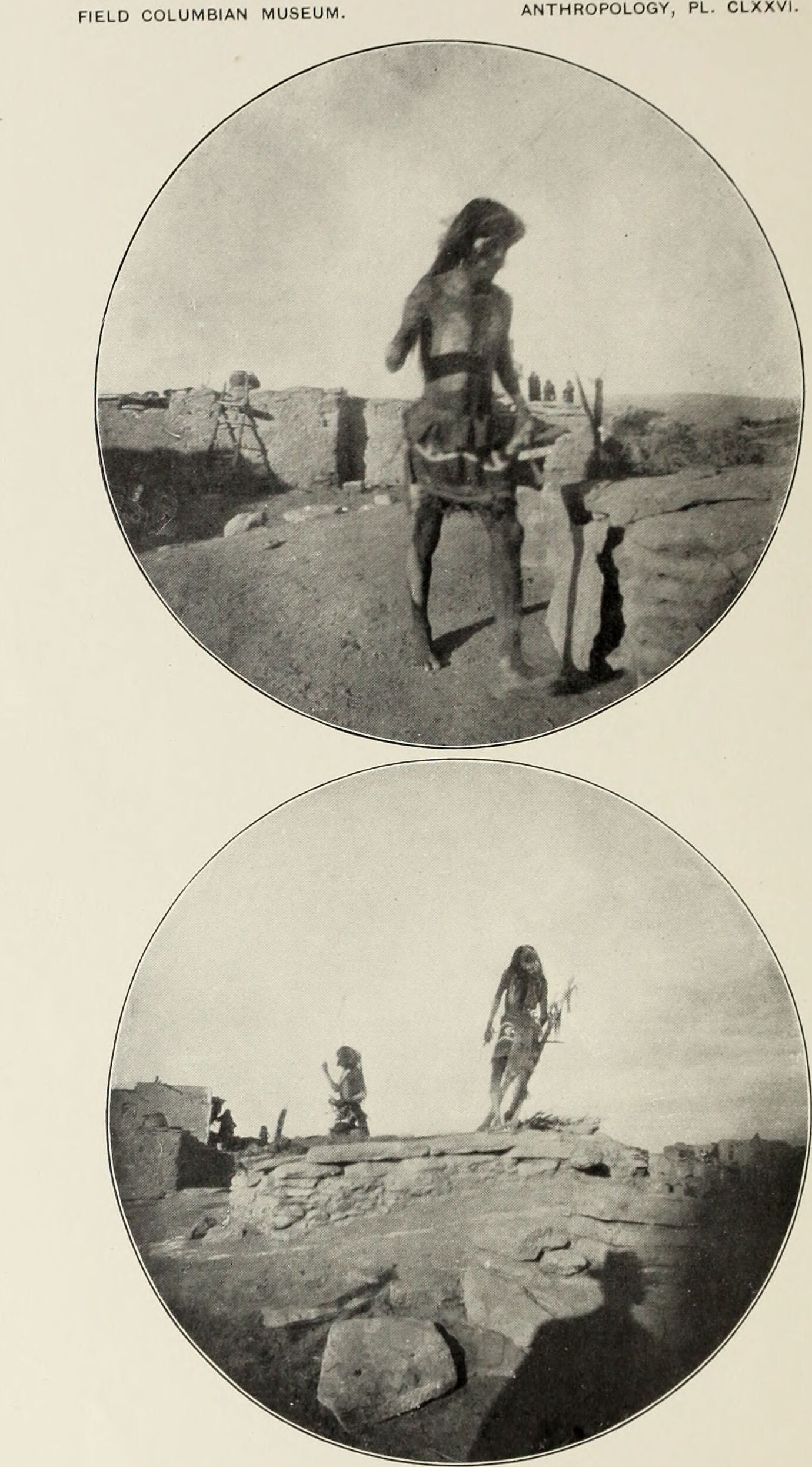
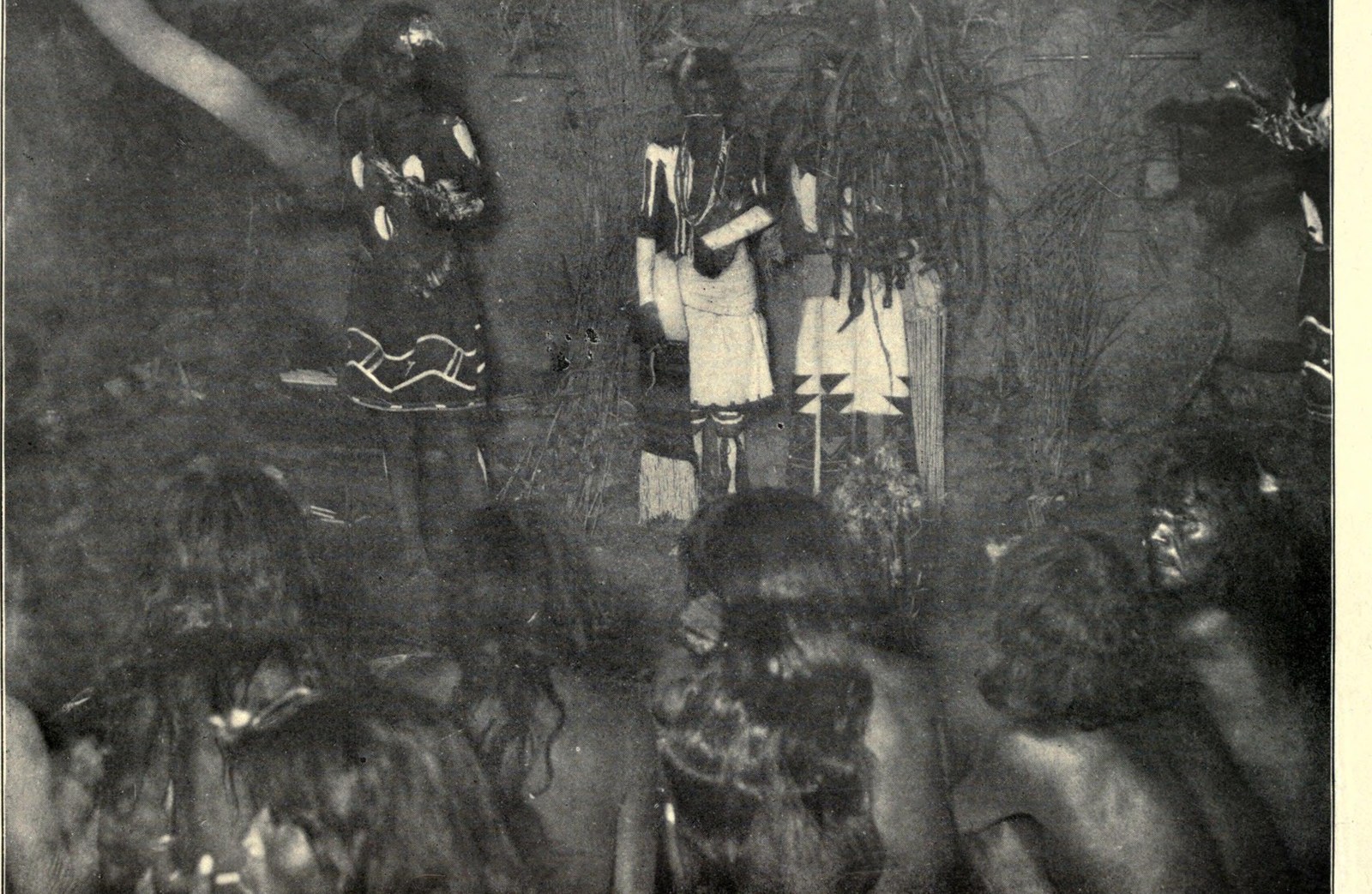
Balölökongwuu is the Water Serpent. The roaring wood is what you sound to tell a serpent a human being is coming, and the messenger twirled it all the way home again, until he reached the edge of the mesa. Two Oraibi warriors carried the same instrument, paired with a jointed lightning-frame, on circuits of the kivas at half past three in the morning. At Zuni it announces Ko’loowisi, the Plumed Serpent, when he is brought into the village for the children’s initiation; at Laguna it whips up the yucca suds, the very medium the Hopi wash their snakes in; and painted whizzers of the same shape were being left as prayer-offerings in shrine caves above the Blue River centuries before any of this was written down. The pairing is regional, it is old, and the atlas tracks it worldwide.
What the priests drink
Men who dance with rattlesnakes in their teeth get asked, sooner or later, how they survive it. Bourke asked, and got a four-part answer that has never been improved on:
“The Moquis themselves say that everything relating to the dance is kept secret from those not initiated; that those who handle the snakes eat nothing for a day before the dance begins; that they have medicine for the bites; and that after the dance is over, all the performers swallow a potion which induces prompt and effective vomiting.” Bourke, The Snake-Dance of the Moquis of Arizona, 1884, p. 173
Secrecy, a fast, an antidote, and a purge. Follow the last two and they turn out to be the same thing.
The purge closes every Snake Dance. Each Snake man drinks about a pint of a dark greenish decoction, bitter, boiled by the women in the Snake maid’s house and carried to the kiva. Then the men kneel along the edge of the kiva roof, put their fingers down their throats, and vomit. This, they told Voth, “cleanses them from the snake charm,” so that they can live among the other people of the village again. Only afterwards, following a discharming song sung over ashes in five stanzas, do they eat; none of them has touched food or water since the previous day.
Voth got the recipe, by picking remnants off the kiva floor and retrieving a discarded bundle after it had been boiled. The emetic is two herbs: masi lachi, gray saltbush — Suaeda torreyana — and pivannga, weasel medicine, the stiff-stemmed flax Linum rigidum.
Sixteen pages later, under the heading The Snake Antidote, he gives up the society’s guarded remedy for a bite. It is the same two plants.
So the ceremony closes with the whole Snake fraternity drinking the tribe’s snakebite antidote and then deliberately bringing it back up — and calling what it does not medicine but the washing off of a charm. Voth printed the two recipes sixteen pages apart and never noticed.
Of the two jobs that decoction is asked to do, it can only do one. As an emetic it is sound chemistry: Suaeda is a saponin-bearing genus, saponins strip the lining of the gut, and an Old World cousin of the Hopi saltbush is prescribed as an emetic on exactly that principle. A pint of it on an empty stomach will come back up. As an antivenom it does nothing, and this was settled by experiment. In 1928 G. E. Coleman of the Antivenin Institute of America obtained a pint of the Hopi antidote, kept it two months, and tried it against dried rattlesnake venom in guinea pigs. It failed completely. Nobody has since found a compound in either plant that touches rattlesnake venom.
The immunity that antidote backs up is a ritual condition. Snake and Antelope men hold that they cannot be harmed while the ceremony is running, and only if their “hearts are good.” Voth recorded three of them bitten by rattlesnakes anyway — one struck on the hand carrying a snake from the plaza, one bitten on the plaza itself, one bitten reaching into the snake jar — and in none of the three cases was any treatment thought necessary. Inside the ceremony, a bite is not a medical event. Outside the ceremonial days the power lapses entirely: Voth once found a rattlesnake near the mission and invited the priests to pick it up. They refused flatly. He picked it up himself and chased an Antelope priest with it, who ran away screaming and went out under a wire fence.
The snakes are exactly what they look like. “Let it not be imagined,” Bourke wrote, “that these snakes were harmless, that their fangs had been extracted, or that they themselves were under the influence of some drug.” Nanahe, a Snake man living at Zuni, made the sharper case: if the snakes could not bite, why be so careful to pray — and if they could, “who would be brave enough to pull their teeth? I shouldn’t try that with an ordinary rattlesnake.” When some young men grumbled that the dance snakes were toothless, they killed two the day after and found fangs like any other. What protects the dancer is craft: handling that is slow, sure and never jerking, and the feather wand holding the snake’s attention up and away. Even the white clay packed into the dancers’ mouths, Bourke was told, is not an antidote — it cushions the snake against the teeth. It protects the snake, not the man.
So nothing in the apparatus touches the venom, and the priests never claimed the purge did. What they are doing with that pint is governing a substance they believe is in them, by the only means a rite has: a drink taken and a drink expelled, in front of the village, at the appointed hour.
Milked
Now cross to Greece, where the other half of the comparison is documented from inside the cult.
A third-century BC papyrus from Gurob in the Fayum — the earliest surviving reference to the Toys of Dionysus — lists the tokens for the sacred basket: a cone, a rhombos, knuckle-bones, a mirror. Clement of Alexandria preserves the same list from a lost Orphic poem, and it is his scholiast who supplies the gloss the 1884 reviewer quoted. On Mount Dindymon the Phrygians propitiated the Mountain Mother with the bullroarer and the drum.
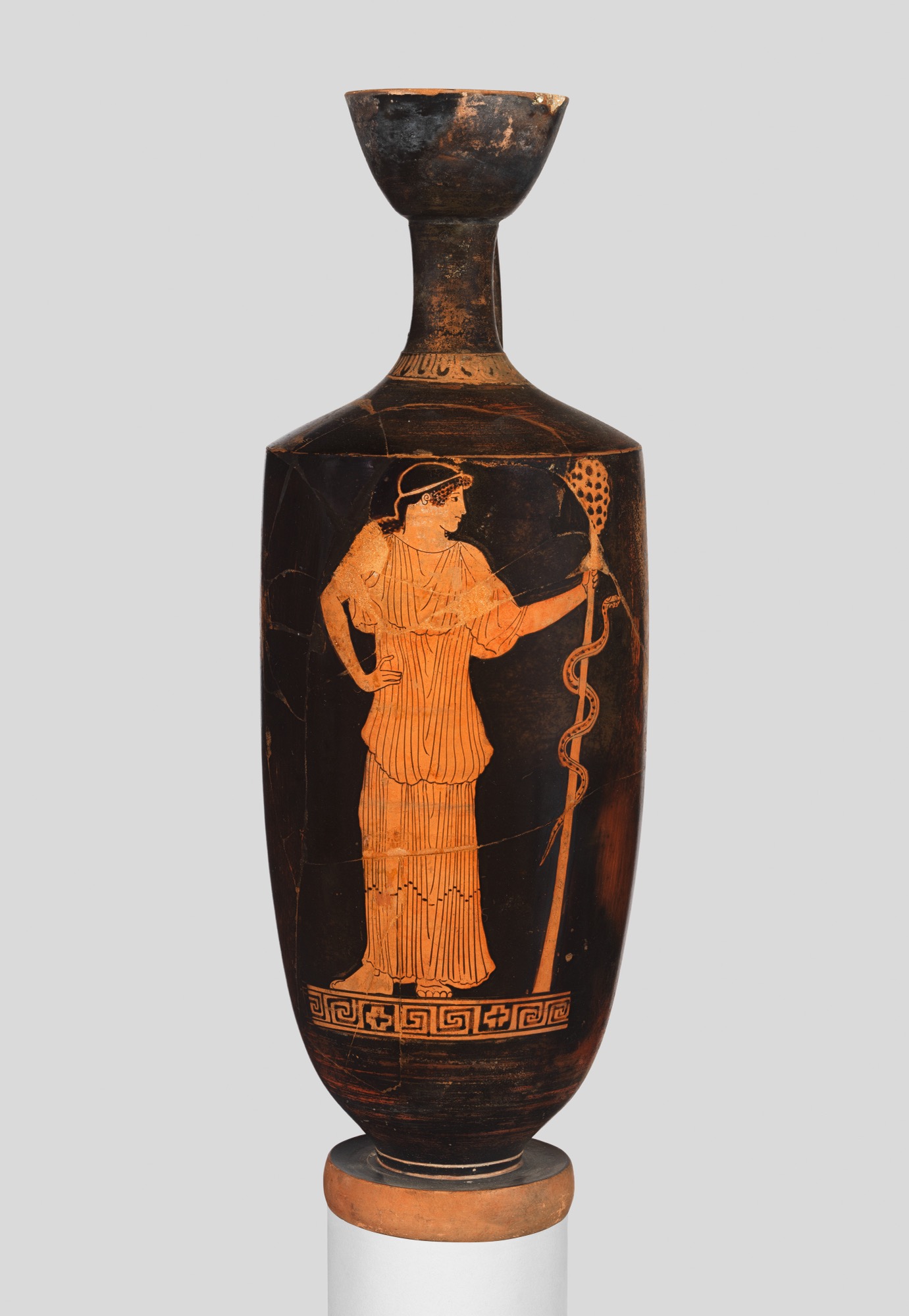
The serpent is right beside it. Demosthenes, prosecuting Aeschines, described the mysteries the orator ran with his mother Glaukothea: by night the fawn-skins and the scouring with clay and bran, by day the procession crowned with fennel and white poplar, Aeschines at its head squeezing fat-cheeked snakes above his head and crying euoi saboi, the shout of the Bacchic mysteries. Snakes overhead in the street, and a bullroarer in the cult’s sacred basket, in the same decades.
What was the serpent for? Carl Ruck — the classicist who helped coin the word entheogen, “generating the god within” — answers: its venom.
Serpents were milked to access their venom as psychoactive toxins, both to serve as arrow poisons, but also as unguents in sub-lethal dosages to access sacred states of ecstasy.
Carl A. P. Ruck, “The Myth of the Lernaean Hydra,” in The Cnidaria, Past, Present and Future (2016), p. 798
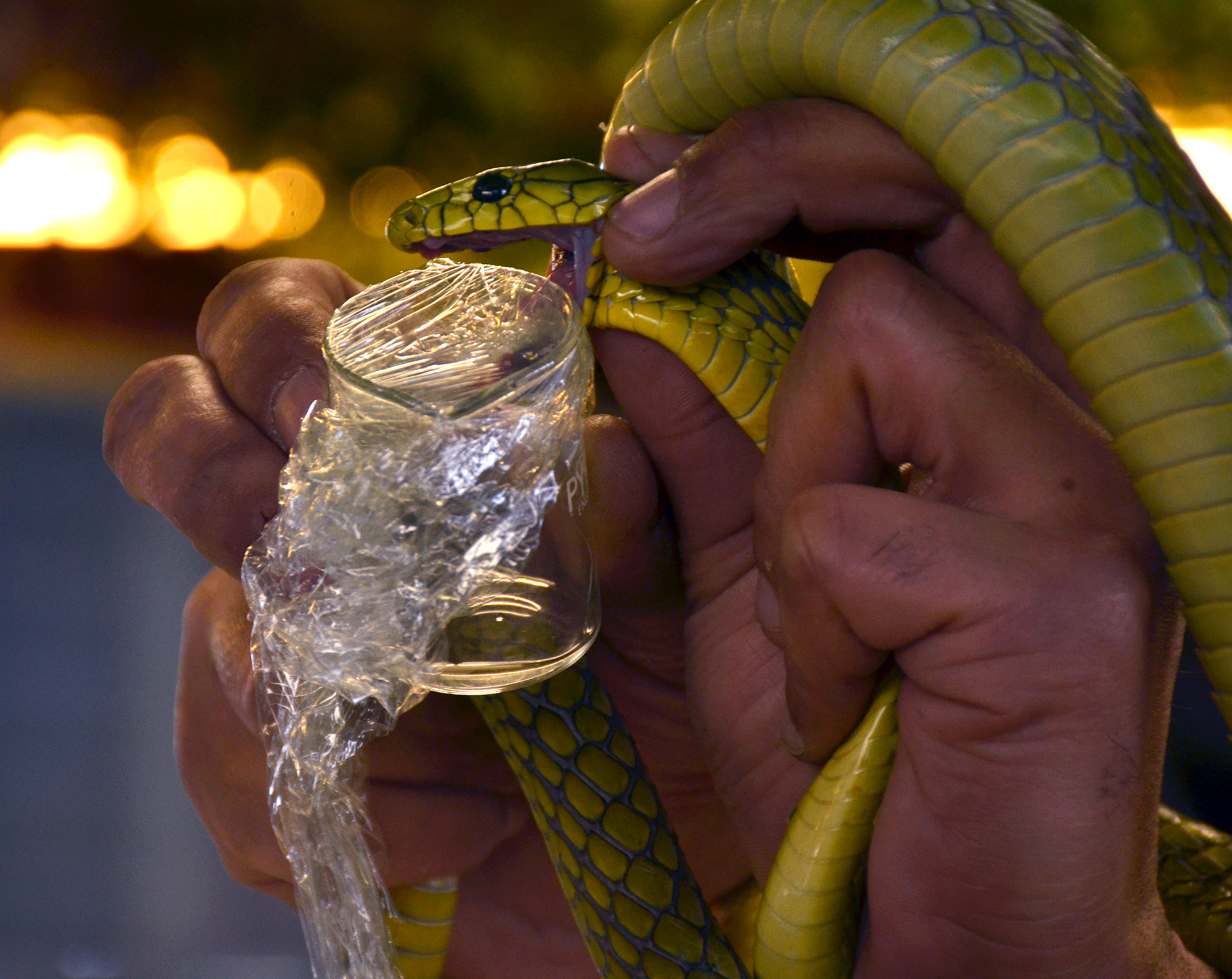
Which raises the obvious objection, and Ruck meets it. Venom is a protein, and a swallowed protein is digested; the ancients knew it, and Celsus states the rule flatly — snake poison is “not harmful when swallowed, but only in a wound.” A venom rite cannot be a cup. It has to be a membrane:
The serpent handling suggests that snakes also were a source of venomous milk. Serpent venom, if ingested, is generally destroyed by the gastric activity… To be effective, it must bypass the activity of digestion, entering the circulatory system via lacerations or dermal application. The procedure would be hazardous, marginal mistakes in dosage proving fatal. The primary effect of viper’s venom is paralysis of its prey… but sub-lethal dosages would induce psychoactive responses.
Ruck, Sunshine and Matricide: Dionysus and the Electra Plays (2021), p. 68
Skin, cut and mucous membrane: exactly the surfaces a procession of snake-handlers presents. D. C. A. Hillman puts the case hardest. Vipers, he argues, run through the celebrations of the Greek and Roman mysteries in the context of oracular transformation — they are what lets an initiate take on the madness of a god like Dionysus. And the cults did not simply dose; they built the counter-dose in the same bodies:
A sophisticated polyvalent pharmacy in which human health was maintained and modified by the administration of viperid venoms and ‘antidotes’ developed in the bodies of priestesses and initiates.
D. C. A. Hillman, “Ancient Mystery Initiation: Toxic Priestesses and Vaginal Communion,” in Toxicology in Antiquity, 2nd edn (2019), ch. 26
Venom in, antidote after — the same two moves as Walpi.
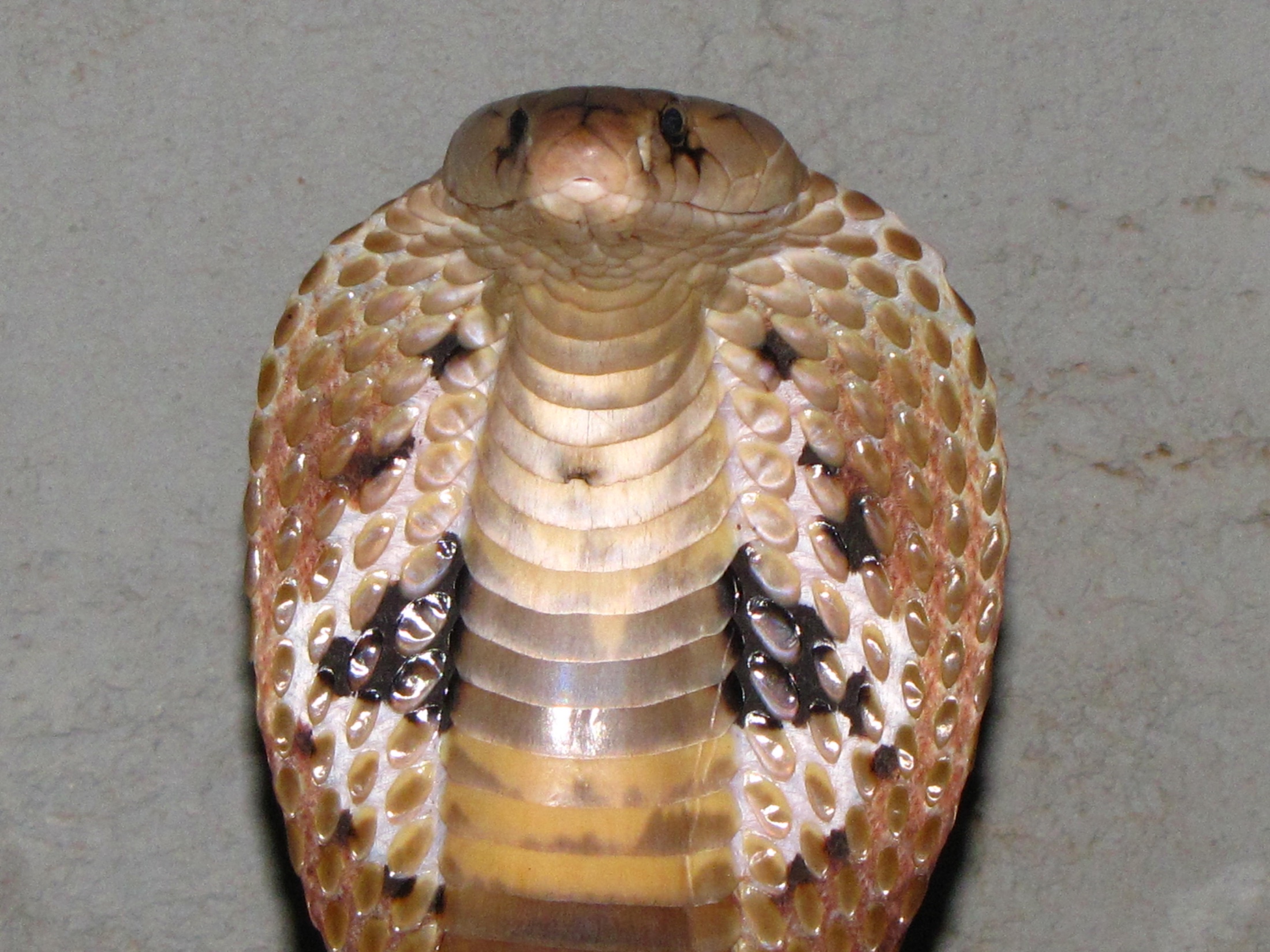
And where venom enters human bodies in a living tradition, it enters exactly this way. Isaac Schapera recorded the making of a Nama snake-doctor in Little Namaqualand: the boy’s father “made two small cuts above the elbow of each arm, into which he rubbed a small portion of the dried venom of the cobra and night adder. Two weeks later his father prepared a lump of venom containing several varieties, and gave him a piece to hold upon his tongue until he felt ‘funny and shivery’. This was repeated twice weekly. Then he was given a piece to swallow. The dose was increased daily until it reached the size of a pin’s head…” Cuts and tongue, graded over years, father to son — and at the end of it a title: !ao/ga aon, snake-bite men, “and they treat others bitten by snakes.” The felt effect is the dosing signal; the destination is authority over the serpent. Venom goes into a man so that he can command what it does.
The instrument is on the antidote side
Again and again, where a bullroarer meets a venom elsewhere in the world, it turns up on the side of the cure.
Among the Wükchamni Yokuts of the southern San Joaquin, the bullroarer was rolled between the palms like a fire-drill and its point pressed to the afflicted part of the body: it was “supposed to extract poison.” The same instrument raised storms — and in a sorcerer’s hands it could be smeared with poison and whirled to send sickness the other way. It is a syringe with a direction.
In June 1899 Walter Roth watched an initiation on the McIvor River in north Queensland. The Koko-yimidirr novices lay down and feigned sleep. Their mentors pinched them on the arm and told them they had been bitten by a snake. Then the mentor whirled a small bullroarer, which killed the imaginary snake and kept the bite from proving fatal — and handed the instrument to the novice, which is how the power passed. A staged snakebite, cancelled by the roaring wood, and the cure is the initiation.
Elsewhere the relation inverts once more, and the poison guards the instrument instead: at Kono in Guinea a woman who saw the bullroarer was put to death by poisoning, and Alfred Russel Wallace reported the same penalty, “generally by poison,” for the sacred flutes of the northwest Amazon.
Every one of these rites treats venom as a thing that moves, and the roaring wood as the hand on the valve: pulled out of a Yokuts patient, cancelled in a Queensland novice, poured into a Kono trespasser. The Hopi apparatus is the fullest version of the same machine — the fast, the prayer, the antidote, the pint of emetic, the vomiting on the kiva roof — a whole liturgy for governing a substance in transit. Walpi does not drink the serpent. Walpi meters it.
The god outside and the god inside
The 1884 reviewer had the parallel right and stopped one move short of the interesting part.
Both rites put a live serpent on the initiate’s body. Both whirl a bullroarer — a low roar with no findable source, the acoustic signature of a voice that comes from everywhere and belongs to nobody. Both stage it inside a closed society with a fast, a secret, a daubing with white earth, and a re-entry rite that hands the initiate back to ordinary company. In Athens the daubing is clay and bran, and its charter myth is the Titans whitening themselves before they fall on the child Dionysus; at Walpi it is white kaolin over blackened faces. They are the same apparatus. The reviewer explained the match the only way 1884 knew how — the same rites devised twice, “in obedience to the same superstitious needs.” The atlas is built on the other reading: that the roaring wood is one instrument with one very long history, and the map is what its trail looks like.
Then the two rites run the substance opposite ways. The Greek line takes the venom in — through a cut or a membrane, at a dose calculated to stop short of the paralysis it is designed to cause — and gets a god manufactured inside the breast of the man who took it. The Hopi line drives it out: nobody drinks it, immunity is a state of the heart and lasts only as long as the ceremony, and the whole thing ends with a pint of bitter antidote and a row of men emptying themselves onto the rock.
What survives the inversion is the premise underneath, which is not pharmacology at all. Both cults hold that contact with the serpent puts something in you — a substance, a charm, a god — and that the something has to be managed on the way out as deliberately as on the way in. That is what makes the emetic necessary at Oraibi and what makes the milked viper intelligible in the Sabazian procession. It is also what the bullroarer is doing in both rooms. The instrument makes a god outside the initiate: in the dark, unlocatable, with no body to point at. The serpent makes one inside.
The same logic is folded into the myth the Greek toy-list encodes. The toys are the lure the Titans use on the child; the rhombos is one of them; the child is torn apart and comes back. The instrument that makes a voice out of nothing belongs, in its own charter story, to a dismemberment and a return. So does the Snake Dance, which re-enacts the culture hero Tiyo’s descent to the underworld kiva of the Snake people and his return with the songs that bring the rain.
A man at Walpi with a rattlesnake in his teeth and a painted serpent roaring on a cord behind him; a man in Athens with a snake held above his head and a roaring wood in the basket at his feet. An anonymous reviewer saw the match in October 1884, from a description of a wooden sling, and it has sat in a bound volume for a hundred and forty years. It is reprinted above.
Key sources
- “Snake Dances, Moqui and Greek,” unsigned review, The Saturday Review of Politics, Literature, Science and Art 58, no. 1512 (18 October 1884), pp. 501–502. Full text.
- John G. Bourke, The Snake-Dance of the Moquis of Arizona (London: Sampson Low, 1884) — the sling-twirler at pp. 158–169, the fast and the emetic at p. 173, the white clay at p. 146n, Nanahe’s testimony at pp. 181–194. Full text.
- John G. Bourke, The Medicine-Men of the Apache, Ninth Annual Report of the Bureau of American Ethnology (1892), pp. 476–478 — the three forms of the rhombus, the painted snake’s head, and the Tylor attribution. Full text.
- H. R. Voth, The Oraibi Summer Snake Ceremony, Field Columbian Museum Anthropological Series III, no. 4 (1903) — the bullroarer on the water-messenger’s road at pp. 318–321, the pre-dawn warriors at pp. 321 and 327–328, the snake washing at pp. 339–342, the emetic herbs at p. 338, the emetic itself at pp. 347–348, the secret antidote and the bite cases at pp. 353–358. Full text.
- J. Walter Fewkes, “Tusayan Snake Ceremonies,” 16th Annual Report BAE (1897), pp. 282–298, with the Tiyo legend at pp. 301–304, and “Tusayan Flute and Snake Ceremonies,” 19th Annual Report BAE (1900), pp. 976–1011 with plate LI.
- Andrew Lang, “The Bull-Roarer,” in Custom and Myth (London: Longmans, Green, 1884), pp. 29–44. Full text.
- Demosthenes, On the Crown 259–260; Clement of Alexandria, Protrepticus II.17–18 with the scholiast in Lobeck, Aglaophamus i.700; P. Gurob 1, ed. Hordern, ZPE 129 (2000), pp. 131–140.
- Carl A. P. Ruck, “The Myth of the Lernaean Hydra,” in Goffredo and Dubinsky (eds.), The Cnidaria, Past, Present and Future (Springer, 2016), ch. 48, p. 798; and Sunshine and Matricide: Dionysus and the Electra Plays (Entheomedia, 2021), p. 68. Celsus, De medicina 5.27.3, on swallowed venom.
- D. C. A. Hillman, “Ancient Mystery Initiation: Toxic Priestesses and Vaginal Communion,” in Toxicology in Antiquity, 2nd edn (Elsevier, 2019), ch. 26 — the quoted “polyvalent pharmacy” sentence. The vipers-and-oracular-transformation argument is developed at length in his Hermaphrodites, Gynomorphs and Jesus (Ronin, 2013), p. 89.
- Alfred Russel Wallace, A Narrative of Travels on the Amazon and Rio Negro (London: Reeve, 1853), p. 501 — the Jurupari instruments of the Uaupés, death “generally by poison” for a woman who sees them.
- Isaac Schapera, The Khoisan Peoples of South Africa (1930), pp. 409–410, after Laidler 1928 — the making of a Nama !ao/ga aon, snake-bite man.
- G. E. Coleman, “Rattlesnake venom antidote of the Hopi Indians,” Bulletin of the Antivenin Institute of America 1, no. 4 (1928), pp. 97–99 — a pint of the antidote, kept two months, tested against dried rattlesnake venom in guinea pigs, and ineffective. On the emetic side, the saponin chemistry of the genus is surveyed in Xu et al., “Genus Suaeda: advances in phytology, chemistry, pharmacology and clinical application,” Biomedicine & Pharmacotherapy (2022).
Two identifications on this page are, as far as we know, original to the atlas: that the emetic Voth records at p. 338 and the secret snakebite antidote he records at pp. 353–354 are the same two plants, and that the Saturday Review notice Bourke credited to Tylor argues from Andrew Lang’s materials throughout. The Walpi instrument itself is browsable at its own record and its relatives on the Snake-linked map.