Atlas Essay ·
The Ritual That
Made a Mind
Tom Froese, the bullroarer, and the discovery of the symbolic self
The voice comes out of the bush. A boy has been promised a sight of his ancestral grandfather. Then his covering is lifted. He sees the men, the cord, the turning wood. Before the day is over, he will make that voice himself. Between those two moments lies an extraordinary possibility: the mystery was teaching him how a mind makes a world.
In brief
- Among the Kurnai of southeastern Australia, initiation takes novices from hearing an ancestral voice to seeing its human production—and then producing it themselves.
- The cult is an inherited ritual institution of Gravettian origin; by the later Magdalenian it had left an ochred antler bullroarer at Lalinde.
- The Snake Cult of Consciousness adds a historical hypothesis: serpent symbolism and rites of rebirth preserve the memory of practices that taught a new relationship to the self.
The boy who learned to make the voice
In Gippsland, in southeastern Australia, the Kurnai called their initiation the Jeraeil. A. W. Howitt described it in 1885. The boys had been separated from familiar life, covered so that they could not see, and placed under the direction of older men. At the central revelation, sixteen men approached with two kinds of bullroarer: the deeper instrument called Tundun and its higher-voiced companion, associated with Tundun’s wife. The instruments sounded together. The boys remained covered.
“Then, pointing upwards with his throwing-stick, the blanket was pulled off the head of each boy by his Bullawang, and the eyes of all the novices being directed to the uplifted throwing-stick, the headman said, ‘Look there! Look there! Look there!’ successively pointing first to the sky, then lower, and finally to the Tundun men.”
Howitt, “The Jeraeil” (1885), p. 313.
The gesture brings their attention down from the sky to the human beings making the sound. Immediately afterward, they receive the ancestral history: Mungan-ngaur taught the Kurnai their arts and instituted the ceremony; his son Tundun made the instruments. The revelation delivers a physical explanation inside an ancestral account. Knowledge of the makers belongs to the mystery.
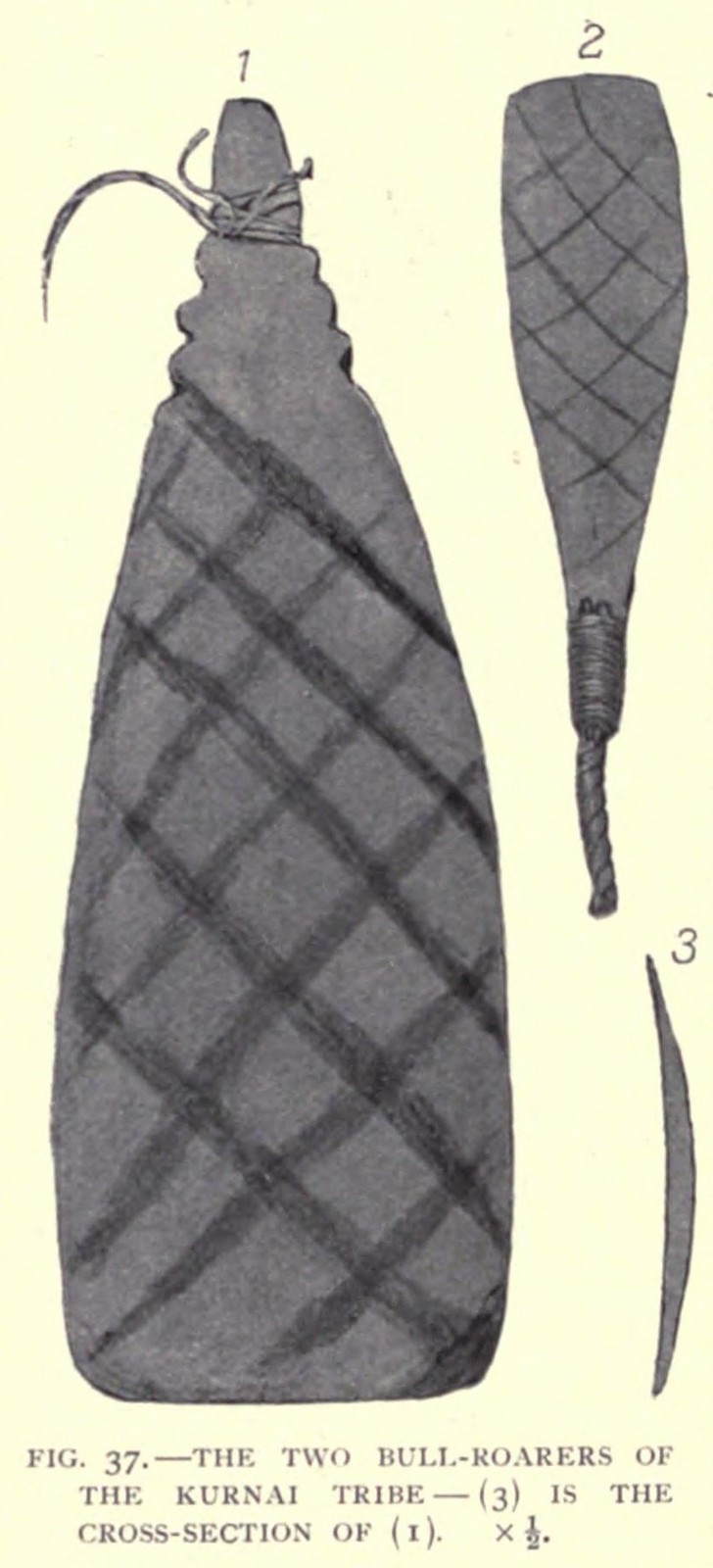
Then comes the part that gives the scene its extraordinary force. The novices learn to swing the instruments. That evening they join the men circling the camp, making the noise that had so recently frightened them. Howitt watched their enthusiasm as they took their turn in mystifying the uninitiated. The hearer has become the maker. Howitt, pp. 314–315.
That sequence is a practical lesson in the difference between an event and an interpretation. The boy can remember the sound as he first experienced it. He can see its physical cause. He can now arrange the same experience for somebody else. The three positions belong to one person, held together across a single initiation.
The cognitive reading is the argument of this essay: Tundun’s revelation trains a person to move between experience, explanation, and deliberate representation. It makes the activity of meaning something the initiate can notice and perform. Tom Froese’s hypothesis tells us why such an institution might reach much deeper into human history than its surviving descriptions.
Experience becomes something to think about
There is a familiar difference between being frightened and realizing that you are frightened. In the first, danger fills the world. In the second, your own fear becomes something you can attend to. You can ask what caused it, whether it is justified, and how it is affecting what you see. Jonathan Schooler calls attention to this distinction between experience and explicit awareness of experience. Reflection can arrive late; a reader may be thinking about something else for several minutes before noticing that the mind has wandered. Schooler, “Re-representing consciousness” (2002).
Metacognition is cognition directed toward cognition: noticing, judging, or regulating one’s own mental activity. Symbolic thought lets a thing stand for something beyond its immediate physical presence. A bullroarer can be wood, an ancestor, a credential, and a voice. Reflective self-awareness brings the person having these experiences into view. These capacities overlap, but they are different targets for explanation. The question here concerns their cultivation, rather than the first appearance of sensation or feeling.
Froese’s approach begins with embodied life. In his work with Ezequiel Di Paolo, cognition grows from an organism’s active engagement with its surroundings and with others. Meaning first appears in what matters to a living being: food, danger, shelter, another person’s approach. Social interaction helps constitute the capacities that individuals develop. The mind’s history therefore includes the practices and relationships through which people learn to perceive and act. Froese and Di Paolo, “Sociality and the life–mind continuity thesis” (2009).
Think of walking a familiar path while talking. Your body negotiates the ground without becoming a subject of inspection. A sudden slip changes that. The ground, your footing, and your attention become separate matters. Something that had worked as a continuous activity is now available for examination. This everyday example gives us a small, accessible model of the transition the evolutionary argument seeks to explain.
In his 2015 ritualised mind alteration hypothesis, Froese proposes that interruptions of absorbed activity could open a reflective stance. Communities could cultivate that stance through increasingly deliberate practices, including seclusion, hardship, and altered states. Puberty rites would help stabilize capacities useful for entering symbolic culture. Subsequent biological and cultural coevolution could make less drastic forms of enculturation sufficient. His explicit expectations include early geometric symbolism and a developmental role for young participants. Froese, “The ritualised mind alteration hypothesis” (2015), pp. 91–93.
The crucial change of scale is from an interruption that happens to somebody to an interruption a community can arrange. At that point, a difficult experience acquires a teacher, an occasion, a sequence, and a way back. It becomes transmissible.
A discovery before there was a designer
The apparent paradox is sharp. How could humans design a ceremony to produce reflective minds before they possessed the reflective minds needed to design it?
They could begin with an effect they did not yet understand. A surprising experience is repeated; a repeated action becomes a custom; a custom acquires specialists. Those specialists can improve the sequence by attending to its consequences, without possessing a theory of what it does. Later participants inherit the sequence and a larger vocabulary for interpreting it. Each generation starts with more than the preceding generation had.
We can recognize this logic in a simpler craft. A person can discover that one way of heating clay makes a stronger pot without understanding the chemistry. The successful procedure can be retained before its mechanism is explained. Applied to ritual, the relevant success might be a memorable change in attention, a recognized passage into adulthood, or an enhanced ability to participate in collective life. Discovery becomes design as communities preserve the effects that matter and refine the practices that produce them.
Froese and David Leavens supply a useful account of transmission. They propose that we often grasp another person’s goal so readily that we overlook the precise movements. When an action is unfamiliar or convention-bound, the movements themselves demand attention. This can encourage faithful imitation, including the copying of steps whose purpose is obscure. Ritual preserves such sequences particularly well because physical usefulness alone cannot tell a learner which steps matter. Froese and Leavens, “The direct perception hypothesis” (2014).
The resulting historical possibility is powerful: a practice can carry more knowledge than any participant can explain. Novices reproduce it because that is how one enters the community. Elders preserve it because that is how they themselves were transformed. Its effects can persist through changes in the story told about it.
A proposed cultural feedback loop
- EncounterAn experience breaks an accustomed way of attending.
- RepeatA group learns to arrange and recognize the experience.
- TeachA ceremony gives it a sequence and an interpretation.
- InheritThe next generation begins inside the resulting culture.
A richer culture changes what the next encounter can become.
There is also a narrower computational demonstration of improvement without foresight. Alexander Woodward, Froese, and Takashi Ikegami modeled a learning neural network whose ordinary activity was occasionally interrupted. As the system visited different stable configurations, changes in its connections made better coordination easier to reach. The result concerns a simplified network; it demonstrates a possible self-organizing process rather than the production of a symbolic mind. Woodward, Froese, and Ikegami, “Neural coordination can be enhanced by occasional interruption of normal firing patterns” (2015), discussion.
The attraction of that model is its logic. A system’s history can change what it will be able to do next. An analogous cultural history would store part of the achievement outside any individual—in the order of a rite, the behavior of its teachers, and the objects through which they teach.
The space between the wood and the ancestor
Froese, Woodward, and Ikegami also developed a neural account of internally generated imagery. Their 2013 paper considers how visual systems can produce organized patterns under unusual conditions. They propose that such activity could reduce the dominance of immediate sensory input and contribute to internally directed cognition. Their 2014 response to critics sharpens the point: altered states might help enable abstraction itself, in addition to furnishing pictures for already symbolic artists. Neither process makes an image’s cultural meaning automatic. “Turing instabilities” (2013), §§3–4; “Are altered states … helpful?” (2014), pp. 89–93.
The bullroarer gives this problem a material form. Its sound can suggest a powerful presence while the source remains hidden. Once the source is revealed, the instrument remains available for sacred use. Understanding the movement of wood and air need not exhaust what the object means. The initiate is being admitted to the use of a representation.
Consider how much must be held together to perform the ceremony knowingly. I can make this sound. Another person may hear an ancestor. I remember hearing it that way. We agree that this object belongs to an ancestral history. These are different relations to the same event. The physical mechanism creates the sound; the institution creates the roles through which the sound is understood.
One sound · three positions
“Something is here.”
“I see how the sound is made.”
“I can make that presence for others.”
This is why the revelation matters more to the cognitive argument than the instrument’s volume. The hypothesis needs a transition in the relation between a person and experience. A loud noise alone supplies no such transition. A staged disclosure, followed by instruction and practice, does.
The relevant achievement is a reflective stance: the ability to regard one’s experience, and one’s participation in producing it, as something available for thought. The ritual makes that stance dramatically tangible.
The Mother swallows, the men reveal
At Port Keats, now Wadeye, in northern Australia, W. E. H. Stanner described a related sequence among the Murrinh-Patha. Karwadi, the Mother of All, was present through the bullroarer’s sound. The novices lost the use of their personal names and their familiar ornaments. They were told that the Mother would swallow them and bring them up again. At the climax, hidden men sounding the instruments suddenly appeared. The youths received newly made bullroarers; subsequent ceremonies continued under a changed atmosphere, with fear giving way to shared performance. Stanner, On Aboriginal Religion, 2014 edition, pp. 4, 6–8.
The Karwadi rite places the revelation inside a remaking of social identity. The novice’s ordinary place has been suspended. He comes back with an object, obligations, and access to a meaning that had previously been withheld. Rebirth makes this change imaginable as a second beginning.
Across the Arafura Sea, at Ilahita in Papua New Guinea, Donald Tuzin recorded the Lefin grade of Arapesh initiation. The uninitiated heard the bullroarer as the enormous voice of a red-haired dwarf. The revelation included the human source of that sound and the tools used to carve drums. A threatening performance ended with instruments being handed to the novices, who began practicing while the older men feasted. Here, too, a frightening attribution is followed by access to production. Tuzin, “Ritual Violence Among the Ilahita Arapesh” (1982), section “Lefin.”
These are societies of fully reflective people, including the children before initiation. The evolutionary proposal concerns the deeper ancestry of practices that now cultivate particular identities and forms of knowledge. A ceremony can continue to shape a capacity long after that capacity has become part of ordinary human development.
That distinction makes the surviving rites more useful to the argument. We can examine what the institution does: it separates, unsettles, interprets, reveals, and recruits. From those operations we can reconstruct a plausible technology of mental formation. A tradition need not preserve an account of its evolutionary role in order to preserve some of its operations.
What travelled with the bullroarer
A flat object on a cord is easy to invent. The historical problem becomes more interesting when the same object repeatedly arrives inside a particular kind of institution. Why the hidden voice? Why the ancestral being? Why revelation to an initiated group? Why the account of a death followed by a new life?
Robert Lowie focused on the restriction of knowledge about the instrument. In Primitive Society (1920), he argued that the recurrence of such restrictions in widely separated societies favored historical transmission. Edwin Loeb then expanded the comparison to the surrounding ritual complex:
“This paper has demonstrated the fact that a form of tribal marking, a death and resurrection ceremony, and an impersonation of ghosts or spirits is found among male tribal initiation rites as the usual concomitants of the bull-roarer.”
Loeb, “Tribal Initiations and Secret Societies” (1929), p. 285.
Loeb interpreted that conjunction as a complex assembled in one place and disseminated. He entertained a Paleolithic age for it. His claim concerns a package of practices rather than the distribution of an isolated invention. Lowie, p. 313; Loeb, pp. 284–285.
Froese gives that proposed package a reason to work. The elements jointly create an interruption of ordinary life, a passage through an unfamiliar identity, and an admission into shared meaning. Their combination is cognitively intelligible. A community adopting it would acquire a way to form members, authorize elders, and reproduce a symbolic world.
The fit between function and history is particularly suggestive. A tradition with effects people valued could travel as a coherent institution, carrying instructions about when to sound the instrument, who should hear it, and what should be disclosed afterward. Its teaching would survive in a performance. The bullroarer is portable, but the decisive cargo is the sequence of experiences arranged around it.
A shared function also makes independent invention possible. The argument for inheritance therefore rests on the conjunction and ordering of distinctive customs, together with demonstrable regional histories, rather than resemblance of shape alone. Froese supplies a mechanism for a successful tradition; diffusion supplies the historical means by which that tradition could become widely shared.

The Gravettian proposal
The proposed deep history places the formation of this initiatory complex in the Paleolithic, with the Gravettian world of Ice Age Europe—roughly 34,000–24,000 years ago—as a center of elaboration and dispersal. The bullroarer cult becomes a cultural inheritance that carried a way of cultivating the self across populations and landscapes.
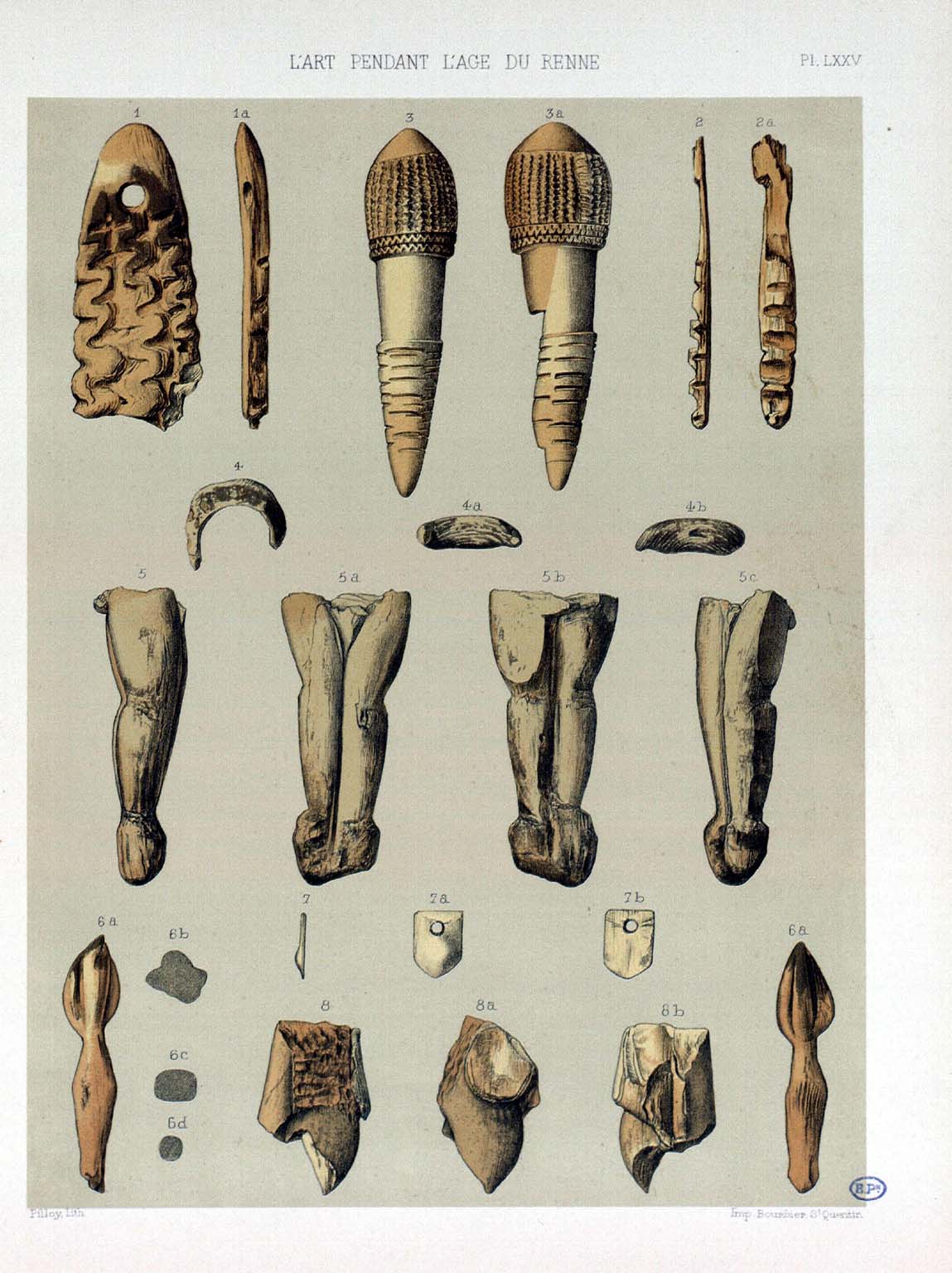
The archaeological objects mark stages in that history. At Brassempouy in southwestern France, a pierced ivory blade bears three raised serpentiform motifs within the site’s Middle Gravettian ivory-working tradition. Its museum identification is a pendant, but its form opens the bullroarer question at the heart of the proposed Gravettian complex. Michel Dauvois places the bullroarer in the Pavlovian world of central Europe as well. Together these traces establish the archaeological path the hypothesis must follow. Musée d’Archéologie nationale, MAN 47137 A; archaeological sources below.
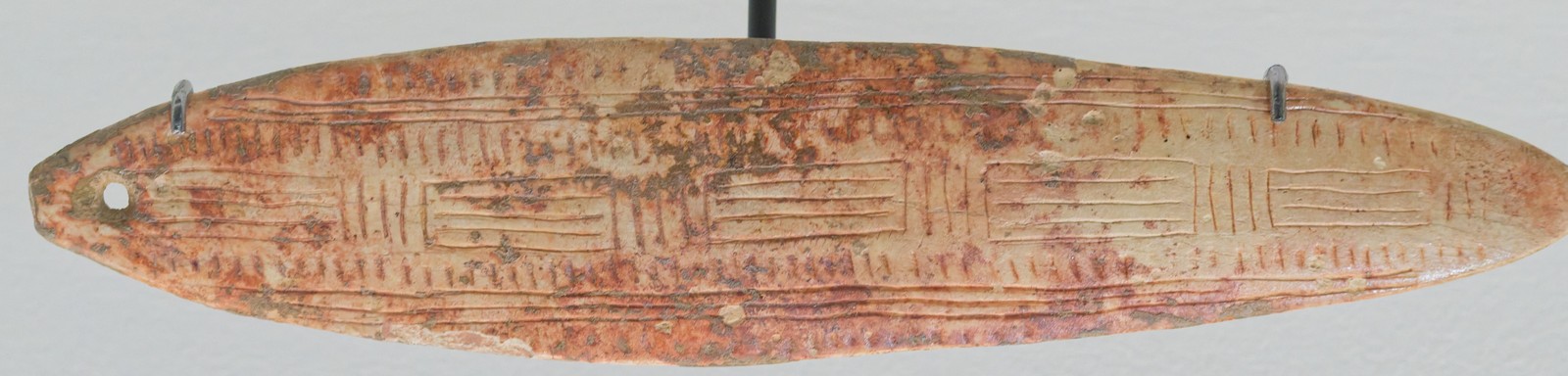
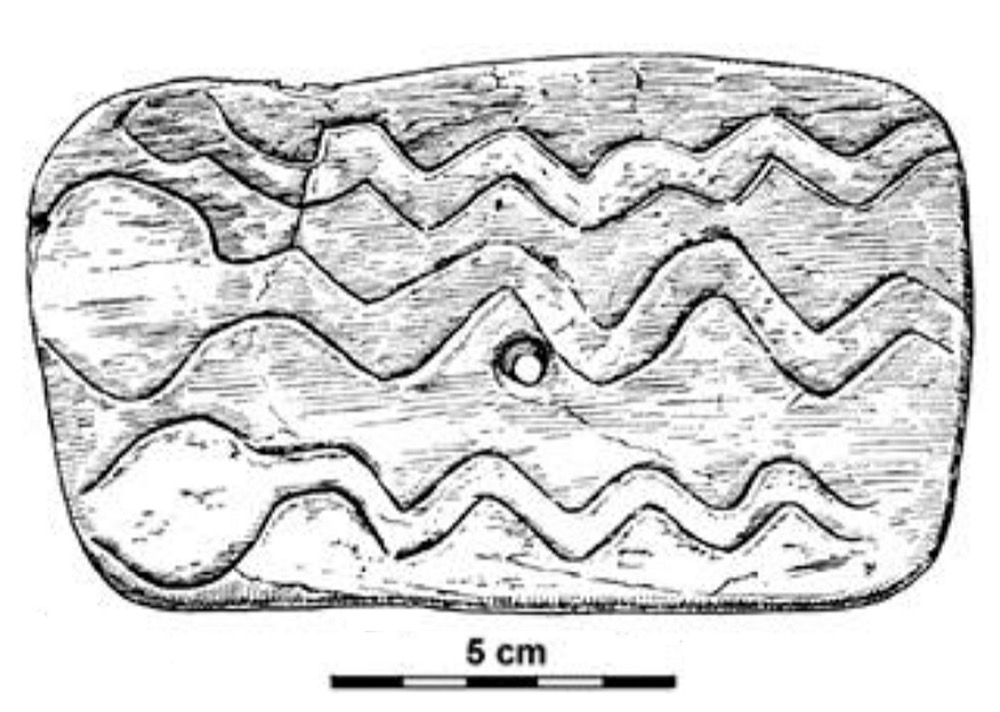
The later Lalinde instrument, from La Roche de Birol in the Dordogne, is a stronger anchor. Its engraved, ochred reindeer-antler blade comes from a Final Magdalenian context, broadly about 15,000–13,000 years ago. Experiments with a replica support its ability to sound as a bullroarer. Here the Paleolithic object can perform the action on which the comparison depends. Its original ceremony is a further historical inference.
Symbolic activity long predates the Gravettian: the engraved ochres from Blombos Cave in South Africa include material from roughly 75,000–100,000 years ago. Against that longer cognitive history, the Gravettian proposal identifies the consolidation and diffusion of a particular ritual technology—a means of making reflective capacities more stable, teachable, and socially consequential. Henshilwood, d’Errico, and Watts (2009).
That longer history is an advantage. An innovation need not create an ability from nothing to transform human life. A dependable way of cultivating a rare or fragile achievement can be more consequential than its first occurrence. The historical prize is a ceremony that can reproduce its results in other people. An insight belongs to a moment; an initiation belongs to a lineage.
The Snake Cult of Consciousness
In The Snake Cult of Consciousness, I proposed that practices of radical transformation helped people discover a new relationship to themselves, and that serpent traditions preserve traces of their history. The central figure is a being associated with knowledge and the passage through death into renewed life. The theory gives ritual a formative role in the emergence of reflective selfhood and asks whether that achievement spread through an inherited cult. Cutler, “The Snake Cult of Consciousness” (2023).
Froese and I discussed these ideas in “The Origins of Human Consciousness with Dr. Tom Froese,” a Vectors of Mind podcast conversation published on 13 November 2024.
The convergence with Froese is exact at its center: an unusual experience becomes a practice for cultivating a capacity. The emphasis differs in a productive way. Froese develops the cognitive mechanism. The Snake Cult asks which historical traditions carried it. In the 2025 follow-up, I explicitly connected Froese’s account with Lowie and Loeb’s bullroarer complex. The joint proposal puts a material instrument and a recognizable ceremonial sequence beside an account of mental development. “The Snake Cult of Consciousness Two Years Later” (2025).
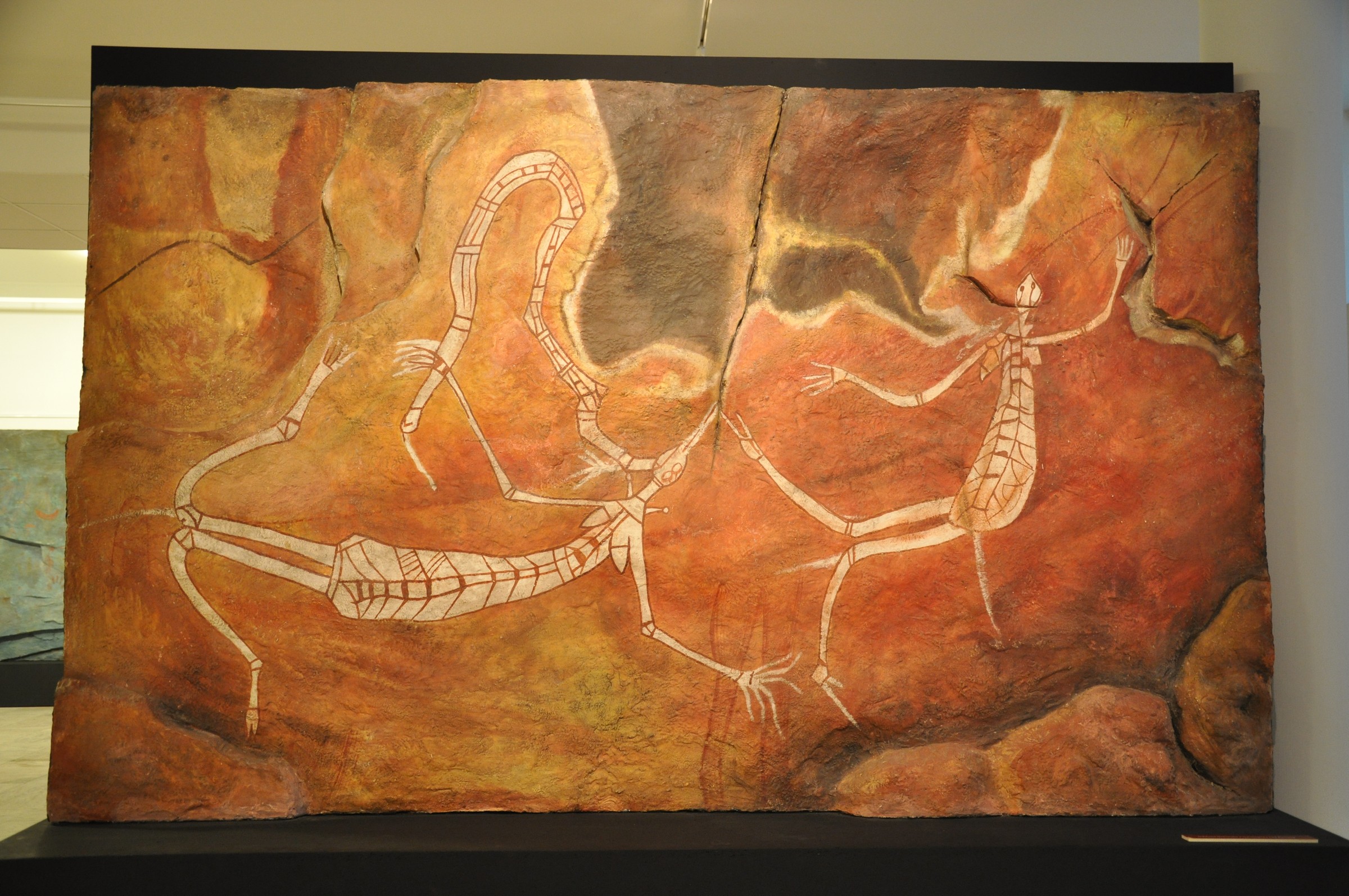
The serpent also belongs to particular bullroarer traditions in concrete ways. In his account of the Yolngu artist Mathaman Marika, James Davidson describes a Kunapipi instrument whose parts form a serpent: the blade represents its body, the human-hair cord its fangs, and the sound its voice. A chant accompanies the swinging. The association joins a being, an object, and a ceremonial performance in one event. The initiate learns how the parts belong together. Davidson, “Mathaman: warrior, artist, songman,” National Gallery of Victoria.
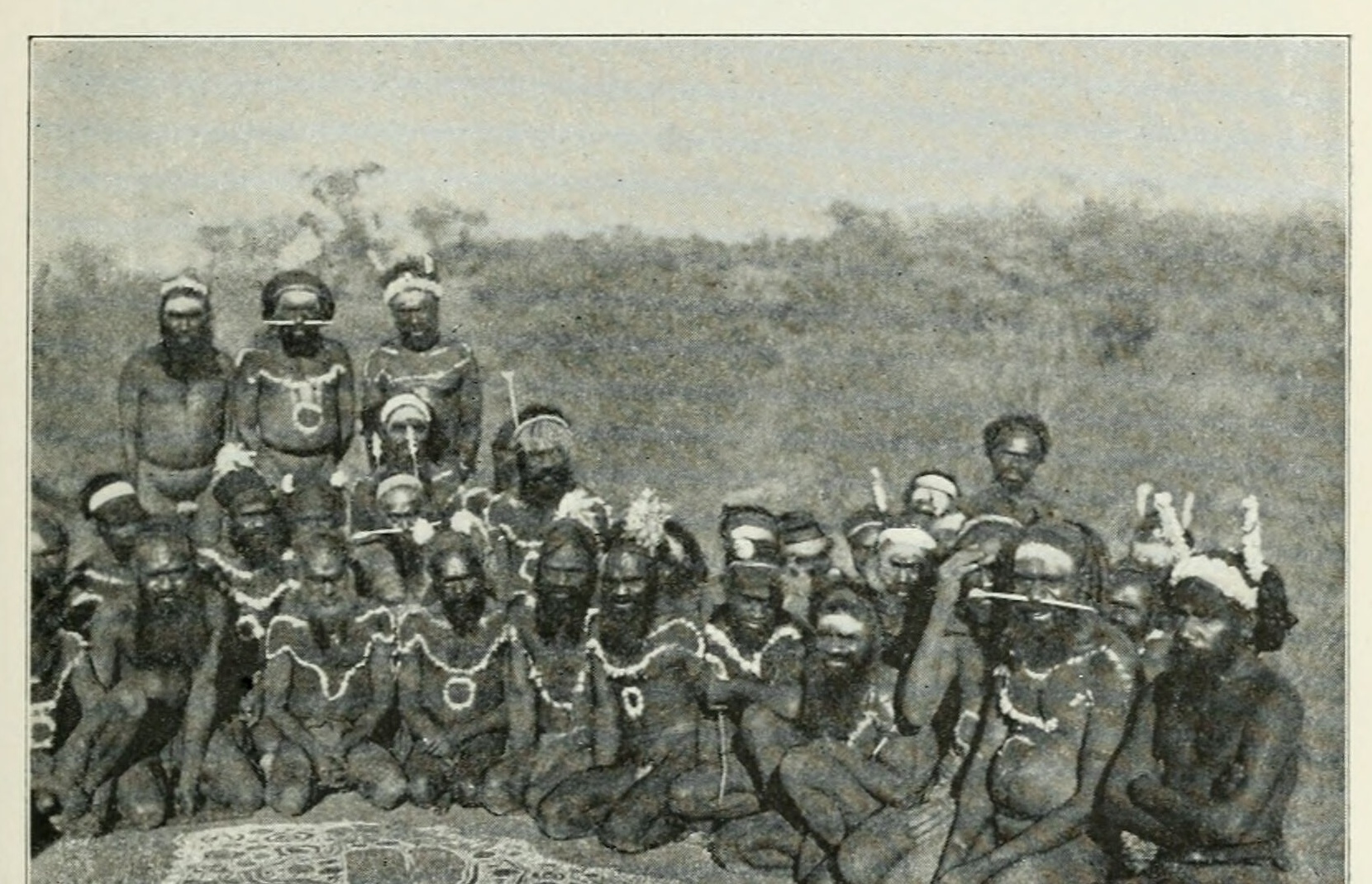
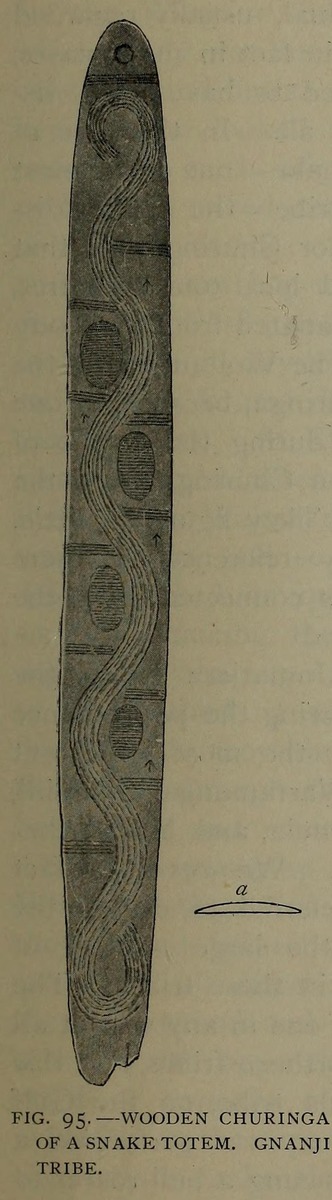
Among the Gudanji of northern Australia, Spencer and Gillen pictured a wooden churinga of a snake totem. They distinguished its totemic value from the idea that a spirit inhabited it. The owner’s relation to the object was cultivated through handling and singing its ancestral history. This matters because the larger argument does not require every sacred board to embody exactly the same theology. It requires practices in which people learn to live with material objects as bearers of meanings.
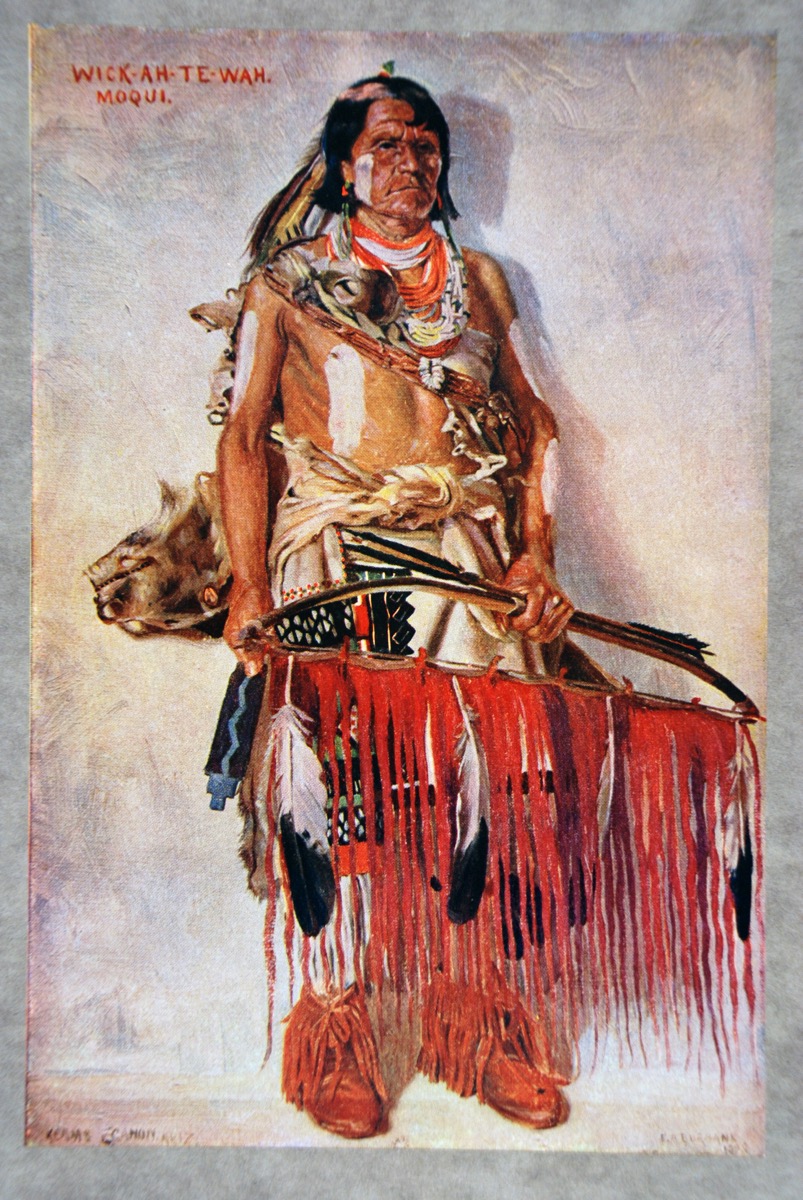
At the American end of the comparison, E. A. Burbank’s 1898 portrait of the Hopi man Wick-Ah-Te-Wah shows a bullroarer as part of Snake Dance regalia. Here the physical instrument and serpent symbolism meet inside an actual ceremonial tradition, extending the comparison across the Pacific in a concrete historical image. Museum of Archaeology and Anthropology, Cambridge, P.8955.ACH1.
The original Snake Cult essay proposed venom as one trigger for formative altered states. Froese’s mechanism widens the range of possible methods: seclusion, ordeal, sensory disruption, or other managed interruptions of ordinary experience can all enter the same ritual structure. Given a serpent’s form, the encounter becomes a lesson about what changes and what persists in a person.
Serpent and rebirth imagery offer a remarkably apt language for such a lesson. An initiate leaves behind an identity, survives an ordeal, and is received as somebody changed. The being through whom this happens also mediates knowledge. Under the proposed history, these are memories of what the institution did. The myth gives the transformation an actor; the ceremony gives it to a participant.
The institution the hypothesis leads us to expect
The bullroarer is the kind of instrument Froese’s hypothesis leads us to look for: one embedded in an institution that interrupts ordinary experience and teaches a new relation to meaning. Applying his mechanism to the ethnography yields a more specific expectation. The strongest cases should combine an altered social setting, a striking experience, a guided reinterpretation, and participation in producing that experience for others.
Kurnai initiation supplies all four operations in an unusually legible order. Stanner’s Karwadi account couples personal transformation with revelation and the gift of an instrument. Tuzin’s Lefin account ends with the novices practicing the very technology that had carried the frightening voice. Their correspondence makes the hypothesis explanatory at the level of a ceremony, where bodies, objects, instruction, and belief actually meet.
Froese’s cognitive mechanism and the existing ethnography illuminate one another. The historical extension developed here and in the Snake Cult essays places that mechanism inside a Gravettian bullroarer tradition: a portable institution whose decisive work occurs through guided changes of perspective, disclosure, and participation.
The hypothesis thus makes the details worth explaining. Concealment establishes one relation to the sound; disclosure changes it; practice makes the initiate responsible for it. Remove those transitions and the object still roars. Preserve them and the ceremony gives a person several standpoints on a single world.
We inherited ways of becoming ourselves
The bullroarer cult fits Froese’s prediction of a ritual technology for cultivating the symbolic self. Its Paleolithic diffusion offers a powerful account of how that discovery spread.
The proposal makes human origins a history of accumulated relationships: bodies capable of learning, people capable of arranging experiences for one another, and traditions capable of retaining the results. What began as an encounter could become an institution. What an institution painfully taught could become easier to learn in the culture it helped create.
That is the depth of the bootstrapping claim. Human beings helped build the conditions under which later human beings could develop. Each successful generation left more than descendants. It left gestures, stories, objects, and occasions through which a mind could find a new purchase on itself.
Return to the boy beneath the covering. First there is a voice. Then there is a man making it. Then the cord is in the boy’s hand. The world has acquired another dimension: his own role in bringing a meaning into being. A piece of wood turns in the air, and he learns that he can stand on both sides of a mystery.
Key sources
The cognitive interpretation of the revelation sequence and its integration with the proposed Gravettian diffusion are the argument of this essay. Froese’s papers supply a general mechanism; the ethnographies describe particular ceremonies.
Mind, development, and ritual
- Tom Froese. “The ritualised mind alteration hypothesis of the origins and evolution of the symbolic human mind.” Rock Art Research 32(1), 2015, pp. 90–97; especially pp. 91–93. It appears inside a larger published debate.
- Tom Froese and Ezequiel A. Di Paolo. “Sociality and the life–mind continuity thesis.” Phenomenology and the Cognitive Sciences 8, 2009, pp. 439–463.
- Tom Froese, Alexander Woodward, and Takashi Ikegami. “Turing instabilities in biology, culture, and consciousness? On the enactive origins of symbolic material culture.” Adaptive Behavior 21(3), 2013, pp. 199–214, especially §§3–4.
- Froese, Woodward, and Ikegami. “Are altered states of consciousness detrimental, neutral or helpful for the origins of symbolic cognition?” Adaptive Behavior 22(1), 2014, pp. 89–95.
- Tom Froese and David A. Leavens. “The direct perception hypothesis: perceiving the intention of another’s action hinders its precise imitation.” Frontiers in Psychology 5:65, 2014.
- Alexander Woodward, Tom Froese, and Takashi Ikegami. “Neural coordination can be enhanced by occasional interruption of normal firing patterns.” Neural Networks 62, 2015, pp. 39–46. Author preprint, discussion.
- Jonathan W. Schooler. “Re-representing consciousness: dissociations between experience and meta-consciousness.” Trends in Cognitive Sciences 6(8), 2002, pp. 339–344.
Ceremonies and historical comparison
- A. W. Howitt. “The Jeraeil, or Initiation Ceremonies of the Kurnai Tribe.” Journal of the Anthropological Institute 14, 1885, pp. 301–325; revelation and practice at pp. 312–315. Also The Native Tribes of South-East Australia, 1904, pp. 628–632, fig. 37.
- W. E. H. Stanner. On Aboriginal Religion. Sydney University Press, 2014 edition of the 1959–1963 essays; pp. 4, 6–8.
- Donald F. Tuzin. “Ritual Violence Among the Ilahita Arapesh: The Dynamics of Moral and Religious Uncertainty.” In Gilbert H. Herdt, ed., Rituals of Manhood, 1982, pp. 321–355, chapter 8, section “Lefin.”
- Robert H. Lowie. Primitive Society. 1920, p. 313.
- Edwin M. Loeb. “Tribal Initiations and Secret Societies.” University of California Publications in American Archaeology and Ethnology 25(3), 1929, pp. 249–288, especially pp. 284–285.
- Baldwin Spencer and F. J. Gillen. The Northern Tribes of Central Australia. 1904, pp. 275–277, fig. 95. For the ceremonial photograph: The Native Tribes of Central Australia, 1899, fig. 29.
- James A. Davidson. “Mathaman: warrior, artist, songman.” Art Bulletin of Victoria 29; NGV web republication, 18 June 2014. Firsthand account of Marika and an explanation of the Kunapipi bullroarer’s body, cord, and voice.
The Paleolithic objects
- Michel Dauvois. “Homo musicus palaeolithicus et Palaeoacustica.” Munibe 57, 2005, pp. 225–241; p. 232 for the Pavlovian bullroarer.
- Ignacio Barandiarán Maestu. “Forma vs. función en tipología prehistórica: el caso de las bramaderas óseas magdalenienses.” Veleia 29, 2012, pp. 307–334; pp. 315–316, 320–323 for Lalinde, context, and functional interpretation.
- Musée d’Archéologie nationale. MAN 47137 A, Joconde 50010008079, Brassempouy ivory pendant. Aurélien Simonet, 2021 Brassempouy reassessment, pp. 130–132, for the old collections’ Gravettian attribution. Édouard Piette, L’Art pendant l’Âge du Renne, 1907, plate LXXV.
- Christopher S. Henshilwood, Francesco d’Errico, and Ian Watts. “Engraved ochres from the Middle Stone Age levels at Blombos Cave, South Africa.” Journal of Human Evolution 57(1), 2009, pp. 27–47.
The Snake Cult of Consciousness
- Andrew Cutler and Tom Froese. “The Origins of Human Consciousness with Dr. Tom Froese.” Vectors of Mind Podcast, 13 November 2024. Audio and show notes.
- Andrew Cutler. “The Snake Cult of Consciousness” (2023); “The Snake Cult of Consciousness Two Years Later” (2025). The latter explicitly connects Froese with the bullroarer diffusion argument.