Atlas Essay —
The Two Gates
Brazil · Vanuatu · Gabon · Central Australia · the Huon Gulf · California
A boy passes into the community of men through a door of noise, swallowed by a roaring being and handed back an adult. Years later, when he dies, the same board is taken down and swung again — now to voice, escort, or mourn the soul on its way out. The bullroarer keeps both doors. It is filed in the handbooks as an “initiation instrument,” but the record shows it working just as steadily at the far end of a life, and on every inhabited continent the two uses turn out to be the same job done twice.
In brief
- Among the Bororo of eastern Brazil, the bullroarer sounds only at funerals, as the cleaned bones are carried out of the village — its buzz the voice of the dead (von den Steinen 1894; Zerries 1953).
- On Mota it is the nanamatea, “death-maker,” swung to drive a ghost off; on neighbouring Merlav the worung-tamb, “a wailer,” sounded the night after a death (Codrington 1891).
- The Kwele namiqwott was “the spirit of the dead” at funeral dances; the Kamoro payu, the voices of the honoured dead; the Caripuna board, untradeable because it belonged to their laments for the dead.
- The Arunta churinga fuses both gates in one object: it is the bullroarer and the store of a man’s external soul (Spencer & Gillen 1899). Frazer shelved all his bullroarer material inside the chapter on the external soul.
- The death gate outlived the cults that carried it: in Minas Gerais the berra-boi is still whirled through Lent to the cemetery gate, praying the souls onward in a Catholic key.

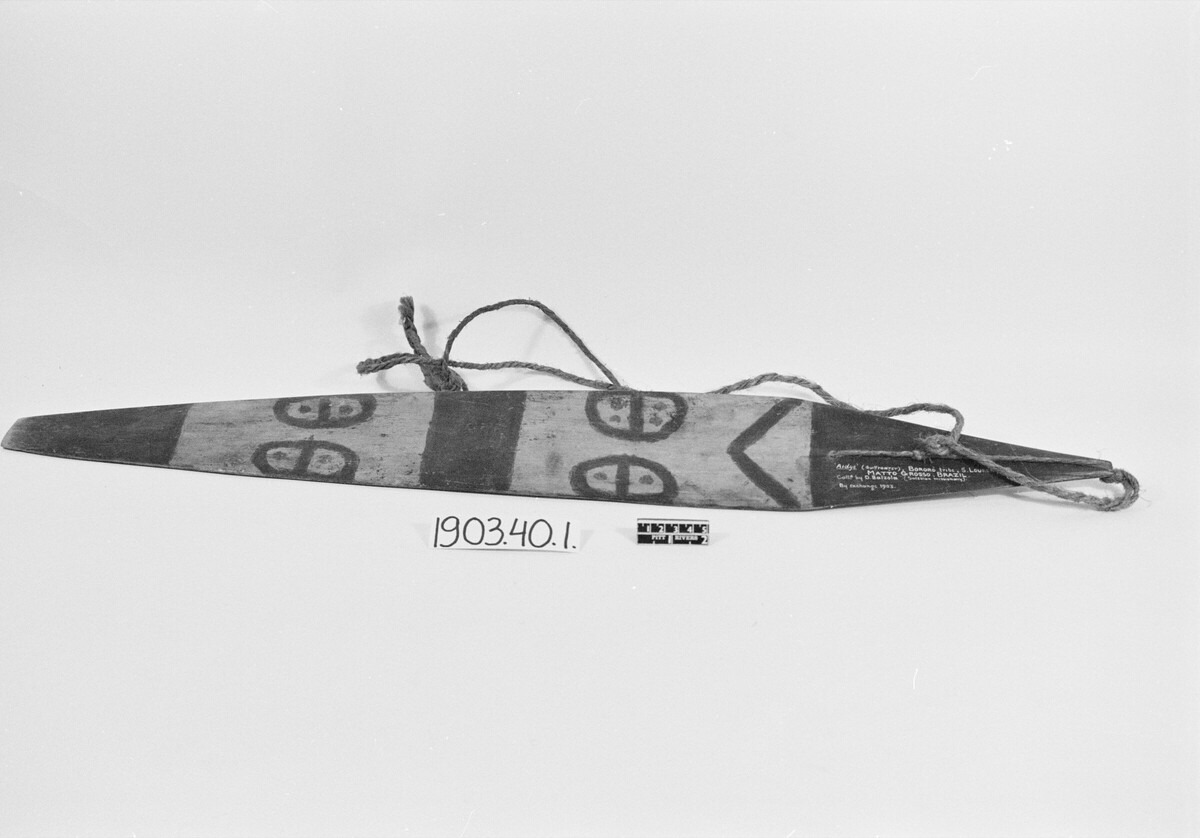
The bullroarer is the tool at both ends of a person’s life. At initiation it installs a social self — swallowing the boy and disgorging a man. At death it sounds again for the self departing — voicing, escorting, mourning, or driving off the soul as it crosses back out of the community. Seen whole, across Brazil, Vanuatu, Gabon, Australia, New Guinea, and California, it is not an “initiation instrument” that happens to turn up at funerals. It is a general soul-traffic device, used wherever a soul passes the membrane between the living and the dead — in either direction.
At the death gate
Begin at the harder gate. Among the Bororo of eastern Brazil, the bullroarer has one occasion and one only. Karl von den Steinen, who saw the eastern Bororo on the São Lourenço in 1888, noted the contrast himself: on the Xingu the whirled boards were toys and mask-dance noise, but here they were reserved for the dead.
“But whereas on the Kulisehu they serve only for the merry mask-dances or otherwise as a toy, on the S. Lourenço they are set in action only at the observances of the funeral feast… For so long the women run off into the forest or hide themselves in the houses. The bull-roarer gives the signal for them… They would die if they saw it.”
Karl von den Steinen, Unter den Naturvölkern Zentral-Brasiliens (1894), p. 497
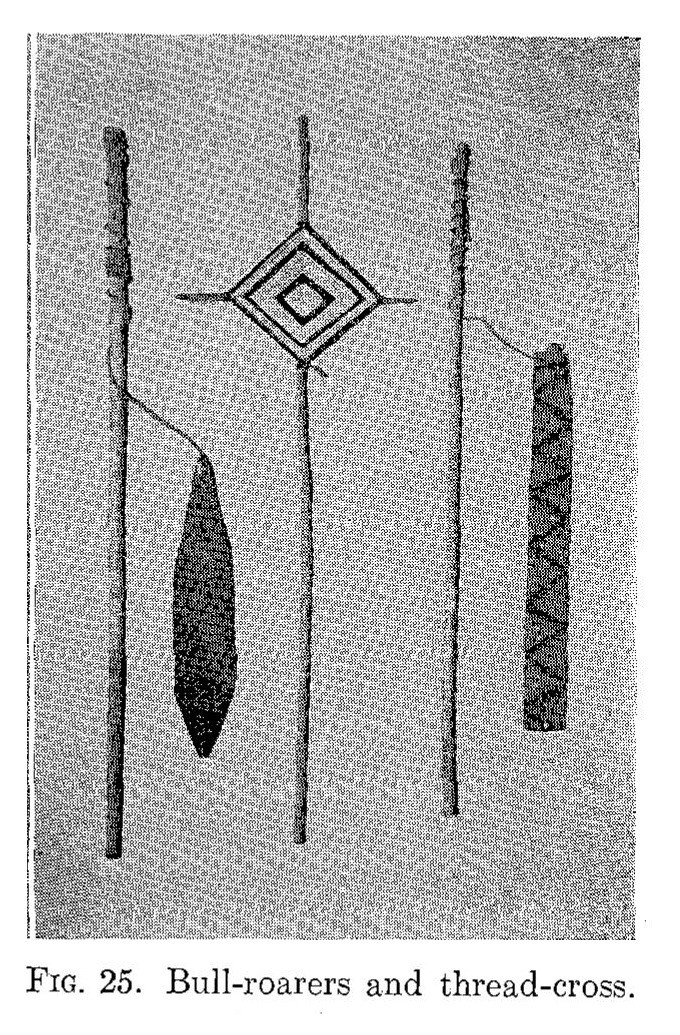
The board is the aige, a fabulous water-monster that lives at the bottom of a lagoon and shares its name with the instrument. As the basket of cleaned bones leaves the village, men whirl the lance-shaped boards on long poles, young men smeared head to foot in clay crawl on all fours as the beast, and the buzzing is understood as the voice of the dead. The rule travelled with the object: when the Bororo gave Claude Lévi-Strauss a large aige at Kejara in 1936, they told him to hide it at the bottom of his locked trunk, out of the women’s sight. Otto Zerries, cataloguing the instrument across South America, wrote plainly that “the conception of the bull-roarer’s buzzing as the voice of a dead person occurs often in South America” — and it was Zerries who first paired initiation and funeral as the two settled poles of the instrument’s serious use.
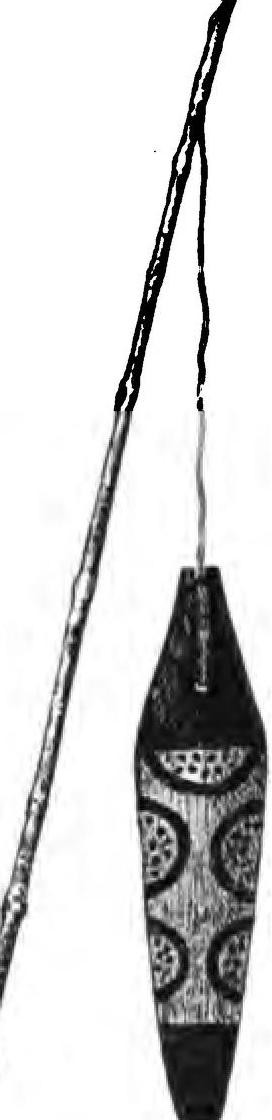
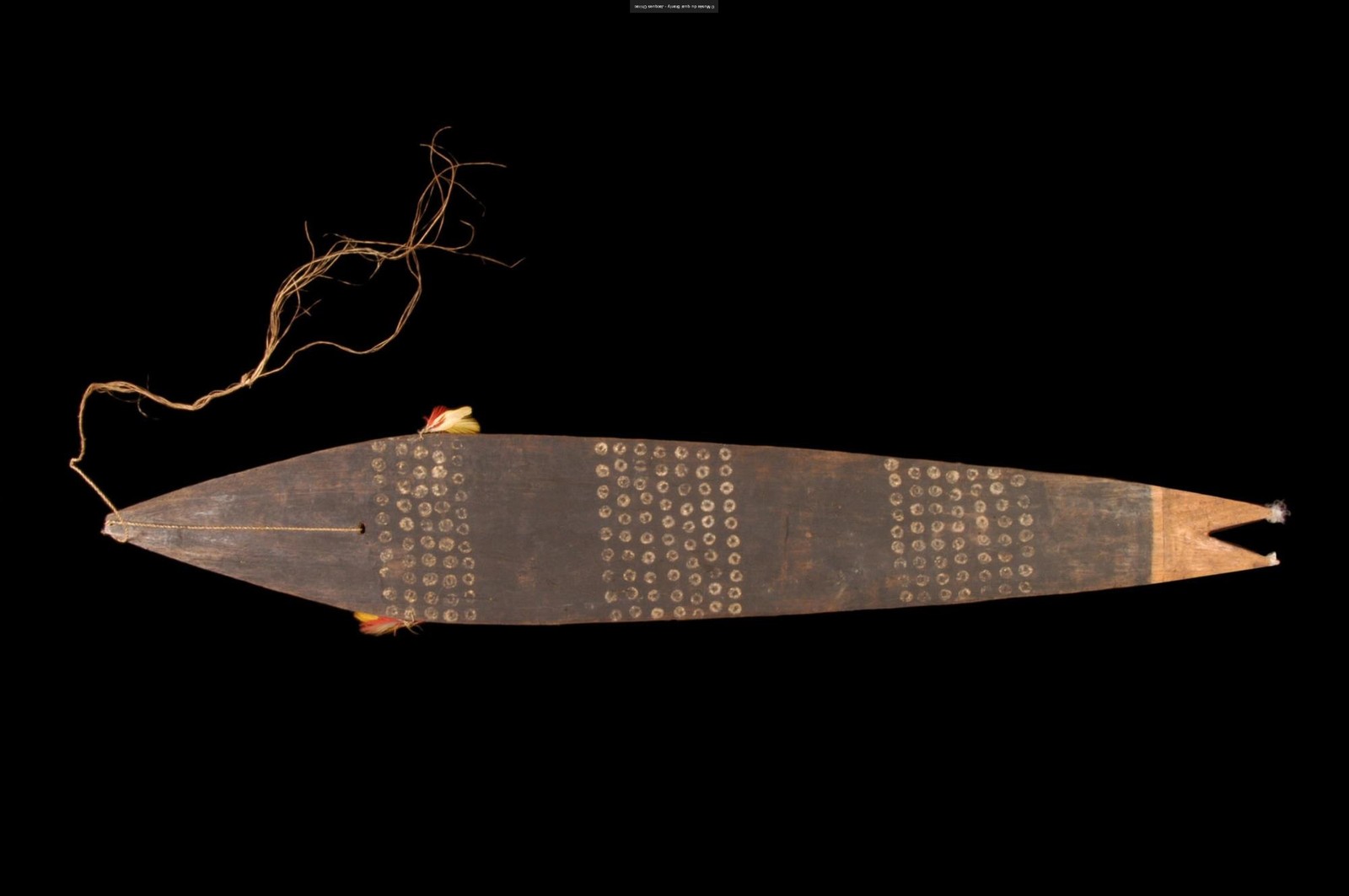
Across the Pacific the same funeral logic surfaces in words as bare as an entry in a dictionary. R. H. Codrington, working the Banks Islands of what is now Vanuatu, gave the death gate its cleanest statement:
“There is no mystery about it when it is used in the Banks’ Islands to drive away a ghost, as in Mota, where it is called nanamatea, death-maker, or to make a mourning sound, as in Merlav, where it is called worung-tamb, a wailer, and used the night after a death.”
R. H. Codrington, The Melanesians (1891), ch. XVII
Two neighbouring islands, two verbs for the same soul-work: to send the ghost off, and to grieve it. In the forests of the Haut-Ivindo in Gabon the Kwele gave Hubert Deschamps the whole thing in a single line — the namiqwott, a small board whirled on a cord at funeral dances, forbidden to women and children, “the spirit of the dead.” On the Mimika coast of southwest Papua the Kamoro hung their “very secret” bull-roarers — payu, or mirapoway — from the roof of the ceremonial house among the lances and the paired hunting-dog carvings, where their whirring stood for the voices of the honoured dead.
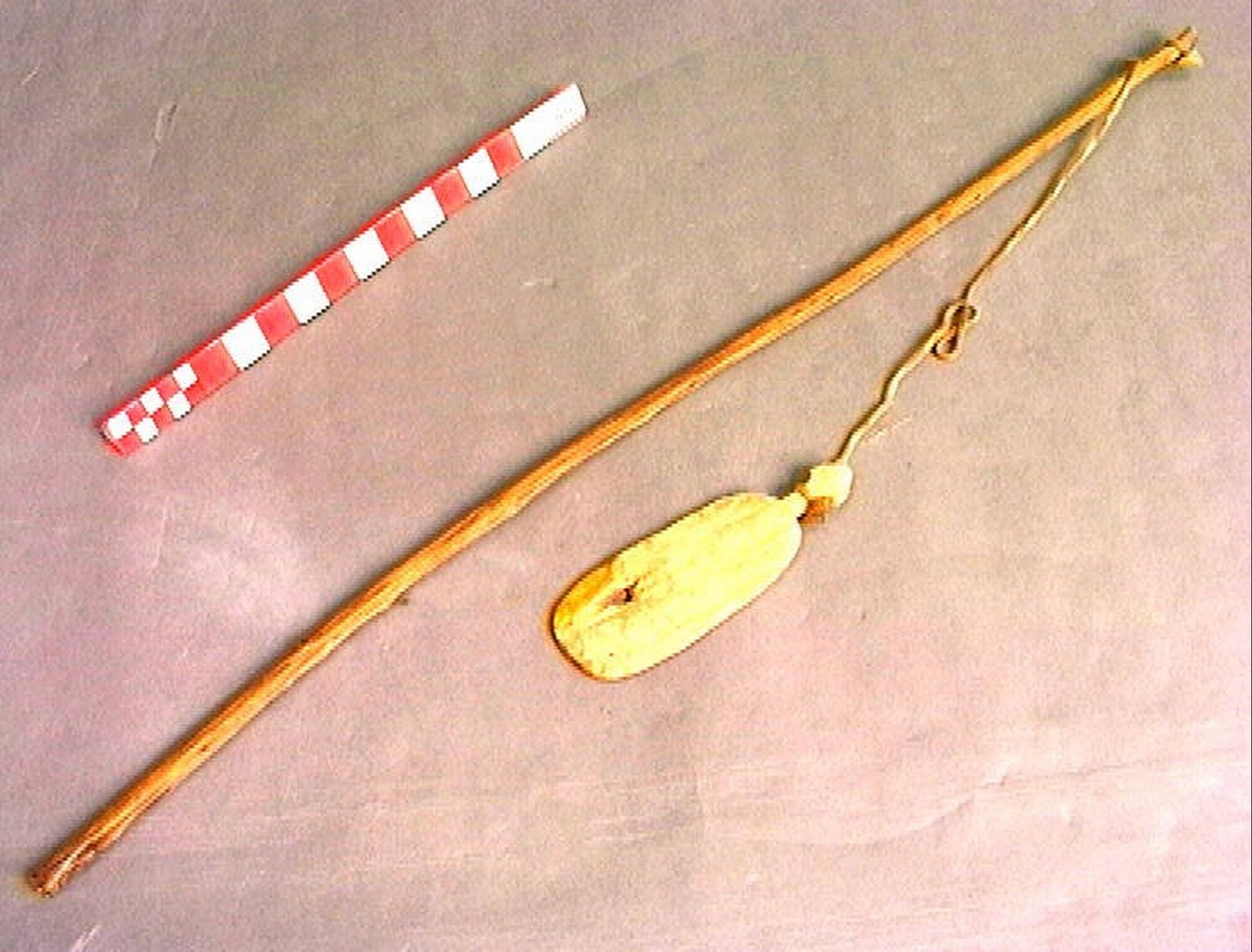
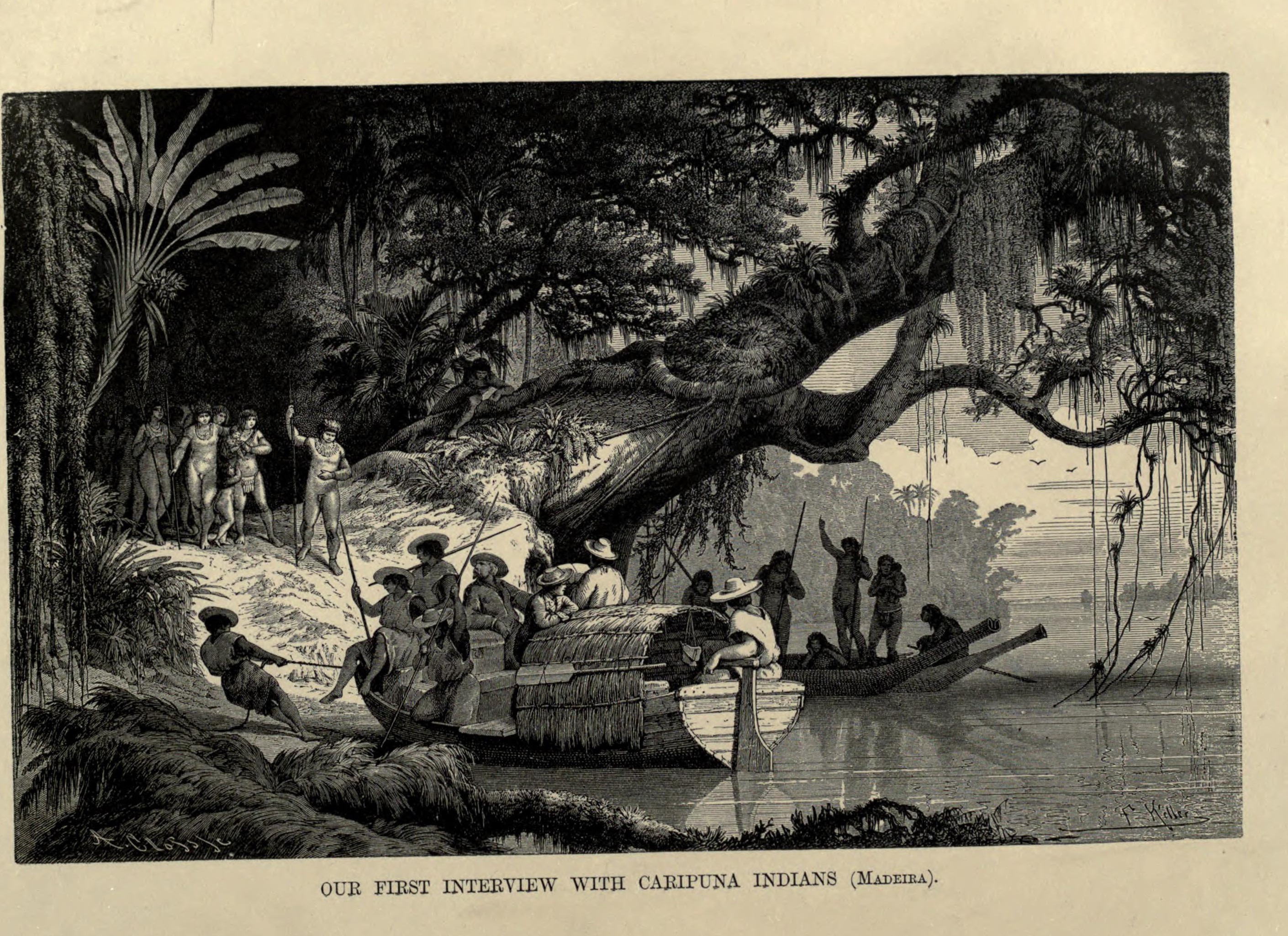
And on the upper Madeira, the explorer Franz Keller-Leuzinger offered a young Caripuna man a pair of scissors for a curious whirring board. The youth turned in alarm to an elder, who answered with a small piece of theatre: pacing solemnly around the burial grounds and imitating the instrument’s howl, he explained that such boards were sounded in their laments for the dead, and for that reason could not be given up in trade. Keller left struck by the reverence these people paid the least object once it touched their dead. The pattern is not one culture’s metaphor. It is the same instrument, in four corners of the world, keeping vigil at the same gate.
The name is a death-word
How deep the identification runs shows in the lexicon. In unrelated languages, far apart, the native word for the bullroarer is not a sound-word and not a spirit’s proper name — it is the common noun for the departed soul. The Bororo aige is the dead-voicing monster. Codrington’s nanamatea is “death-maker.” And among the Apinayé of central Brazil the bullroarer had slipped, by Nimuendajú’s day, into the toy basket — yet it kept the heaviest name in the language:
“Like the Eastern Timbira, the Apinaye call the soul, ghost, shadow, and image by a common term, me-galo; the Apinaye further apply the word to the bull-roarer, which recalls Serente usage.”
Curt Nimuendajú, The Apinayé (1939), p. 140
One word for the soul, the ghost, the shadow, the image of the dead — and for the whirring board. Where a language uses a single lexeme for the instrument and for the departed, the instrument is not representing the soul. It is the soul made audible. That collapse of sign and referent is the same one Frazer flagged in New Guinea, where a single word covers the ghost, the swallowing monster, and the roarer at once — the hinge on which the two gates turn out to be one.
The birth gate
The other door is the one the instrument is famous for, and it has its own essay here: the swallowing-and-rebirth complex, in which a roaring being devours the novice and gives him back a man. That treatment need not be repeated. What matters for the symmetry is a single, astonishing word from the Huon Gulf of New Guinea, because in it both gates are already fused.
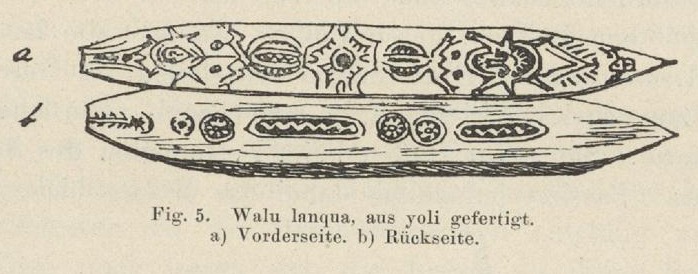
Among the Bukaua (Gawac) and their Yabim neighbours, balum means three things at once: the ghost of a dead person, the monster that swallows boys whole at initiation, and the bullroarer whose droning hum is that monster’s roar. Frazer thought the coincidence decisive.
“It is highly significant that all these tribes of New Guinea apply the same word to the bull-roarer and to the monster, who is supposed to swallow the novices at circumcision, and whose fearful roar is represented by the hum of the harmless wooden instruments. The word in the speech of the Yabim and Bukaua is balum; in that of the Kai it is ngosa; and in that of the Tami it is kani.”
J. G. Frazer, Balder the Beautiful, Vol. II (1913), “The External Soul in Folk-Custom”
The Bukaua, Frazer added, “give the name of balum to the souls of the dead as well as to the mythical monster and to the bull-roarer.” So the very word that voices the swallowing at the birth gate is the word for the ghost at the death gate. The boy is eaten by the soul-object and re-issued; the dead man is escorted out by the same object under the same name. Both gates, in one lexeme — and that is the point where the essay on swallowing and this essay on death meet and become a single door with two sides.
In three languages out of the four the same word which is applied to the bull-roarer and to the monster means also a ghost or spirit of the dead.Frazer, Balder the Beautiful (1913)
The instrument that is a soul
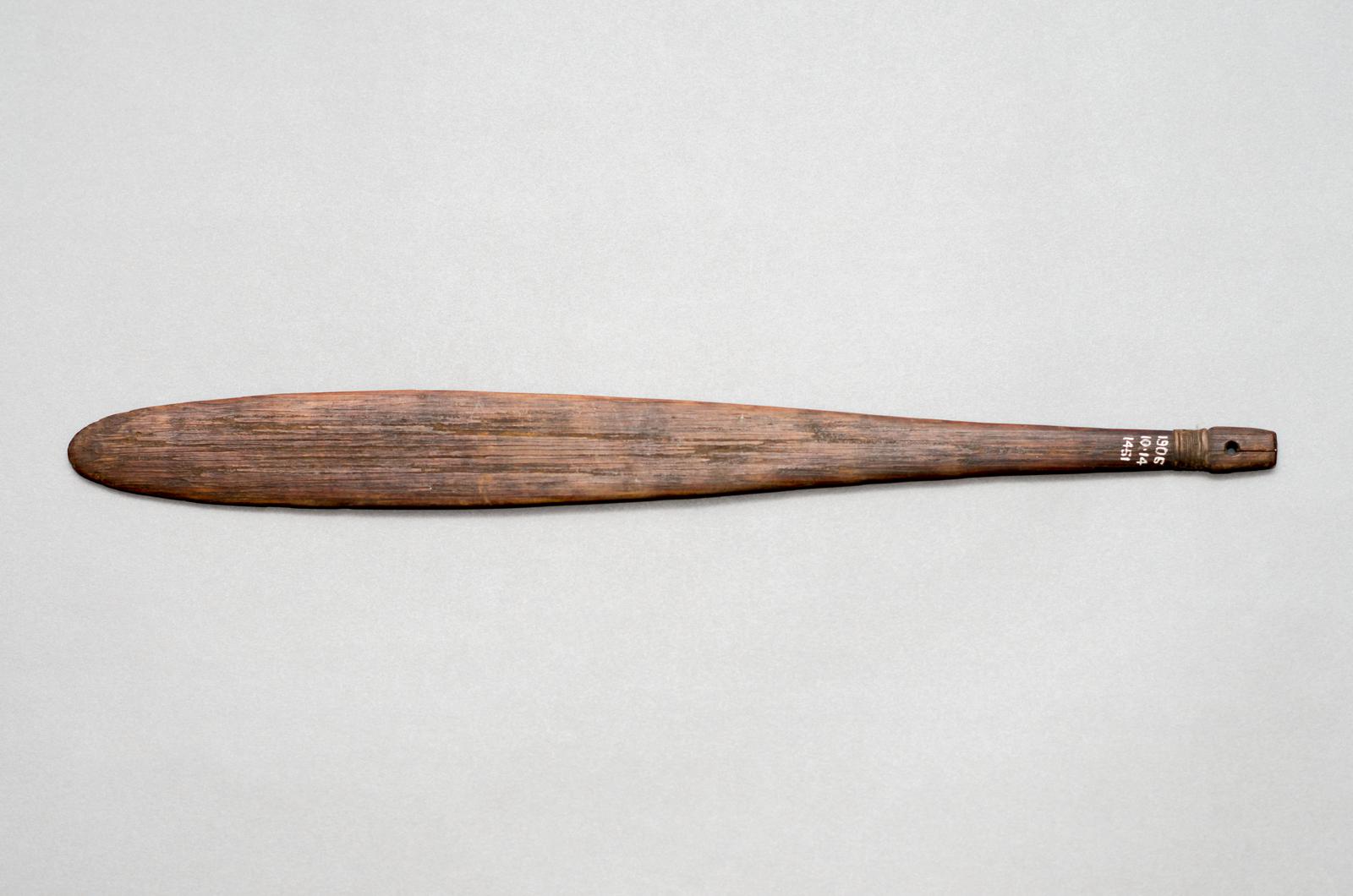
If the roarer carries souls across both gates, one tradition takes the last step and makes the instrument a soul in its own right. Among the Arunta of Central Australia, the sacred wooden slats called churinga were, at once, the bullroarers and the external souls of living men. Spencer and Gillen described the smaller ones — bored at one end, strung on human hair, and whirled — as the bull-roarers proper, called churinga irula, “dressed wood.” And the same objects, they wrote, held the spirit itself: each churinga was held to contain the spirit part of an ancestor of the Alcheringa. At a boy’s initiation, when the sound rose around the ground, the women were told it was the voice of the great spirit Twanyirika, come to carry the boy away — the swallowing idiom again, at the birth gate, spoken through the very object that holds the soul.
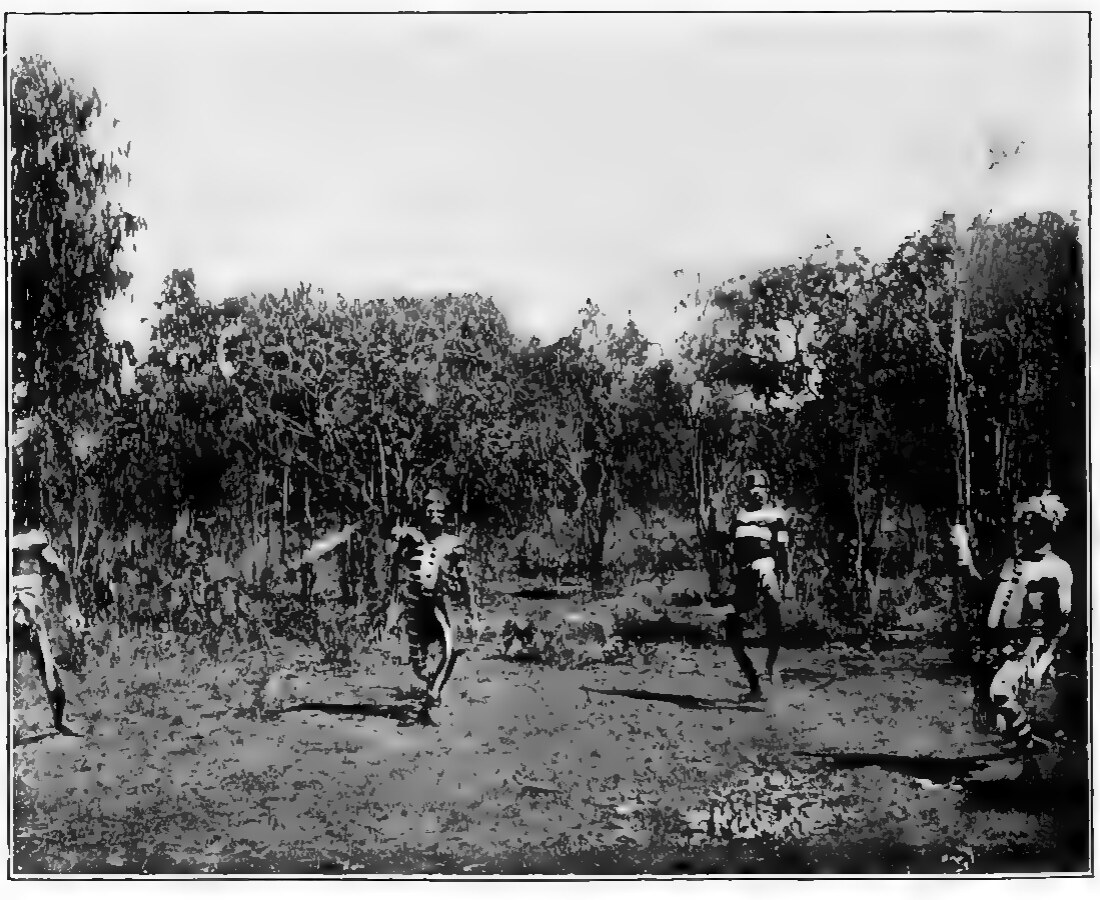
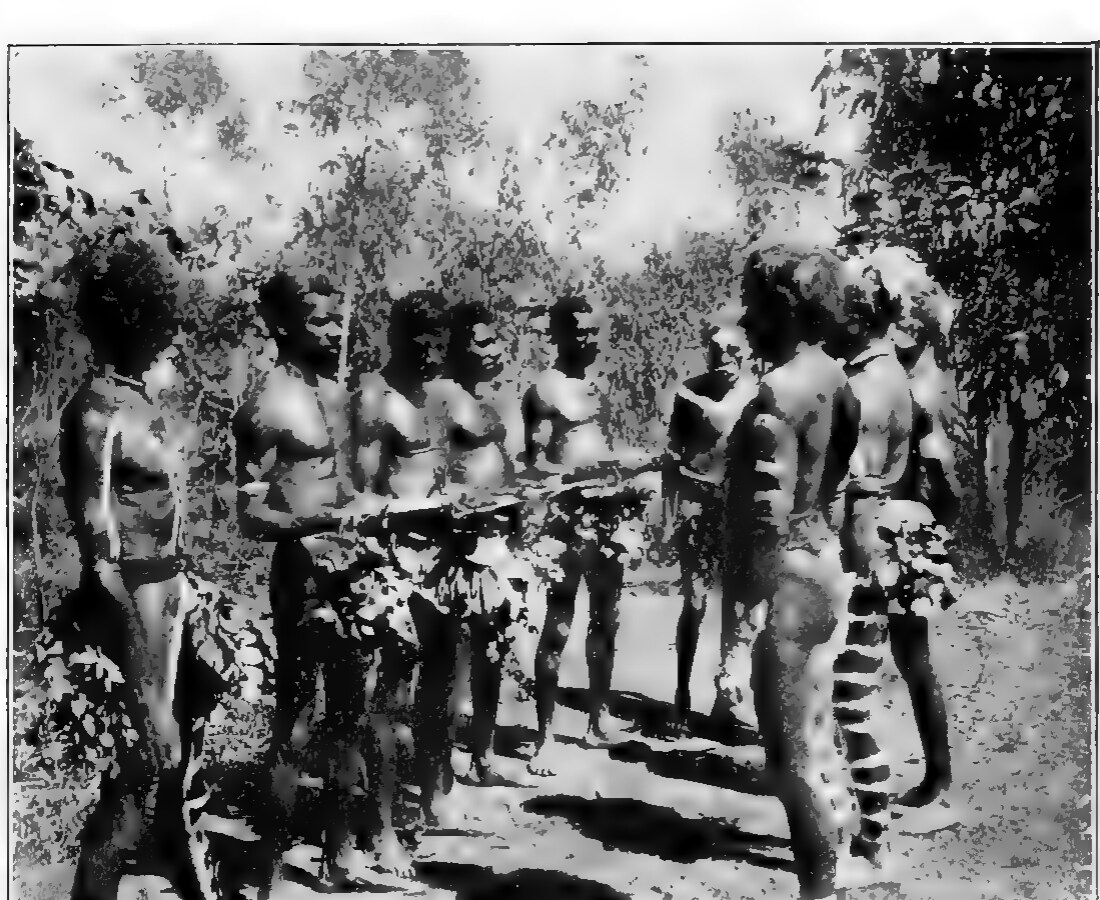
James Frazer saw what this meant and built his architecture around it. He did not file the bullroarer under music, or magic, or even initiation. He placed all of his bullroarer material inside the volume of The Golden Bough devoted to the external soul — Balder the Beautiful — and specifically in its chapter “The External Soul in Folk-Custom.” The connective tissue was exactly this: a man’s self kept outside his body, in a slat of wood hidden in a cave, and that same slat swung at initiation to make the ancestral voice. The instrument that stores the soul and the instrument that voices it are one artifact — the physical substrate of a self you can hold, hide, and make speak.
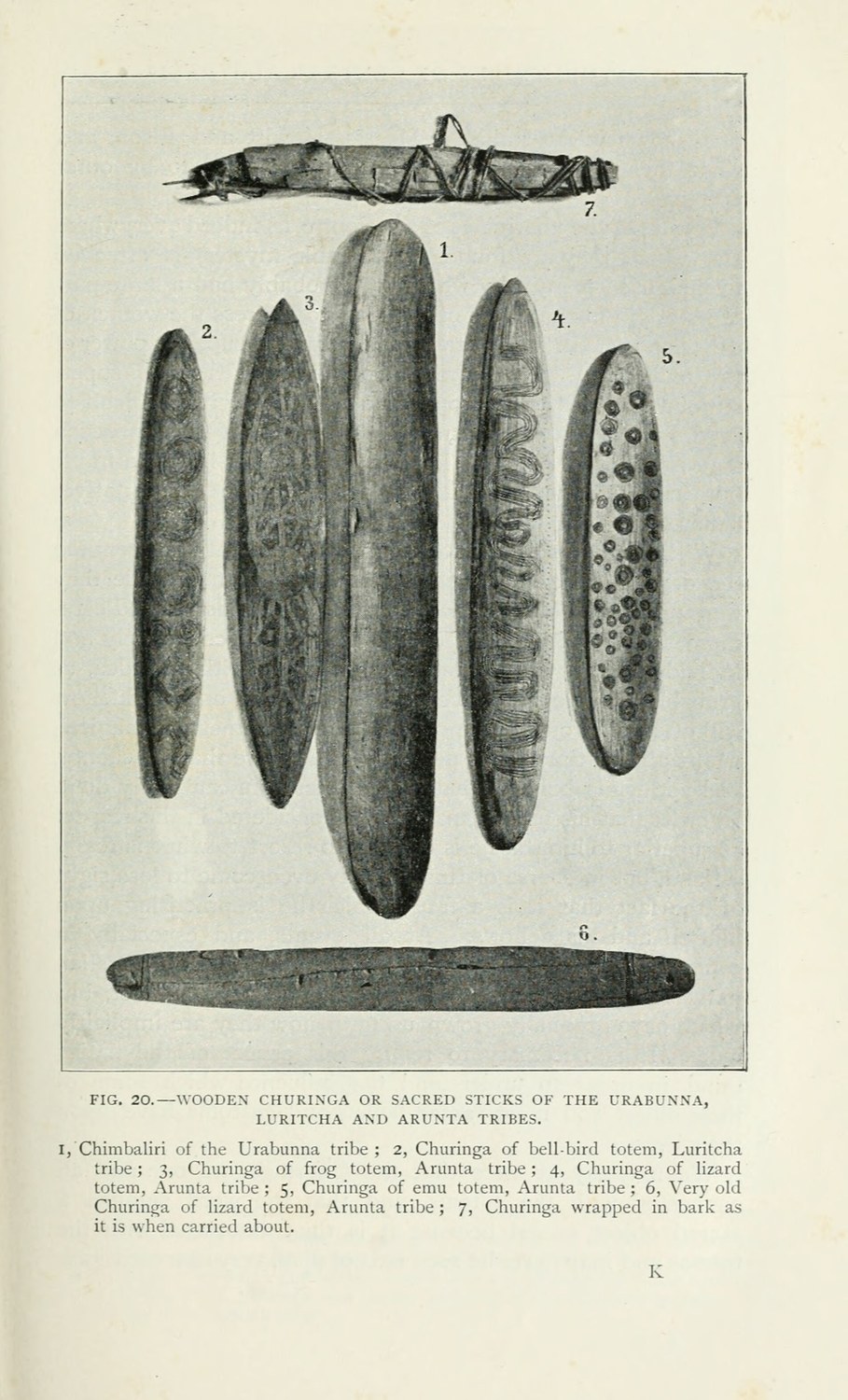
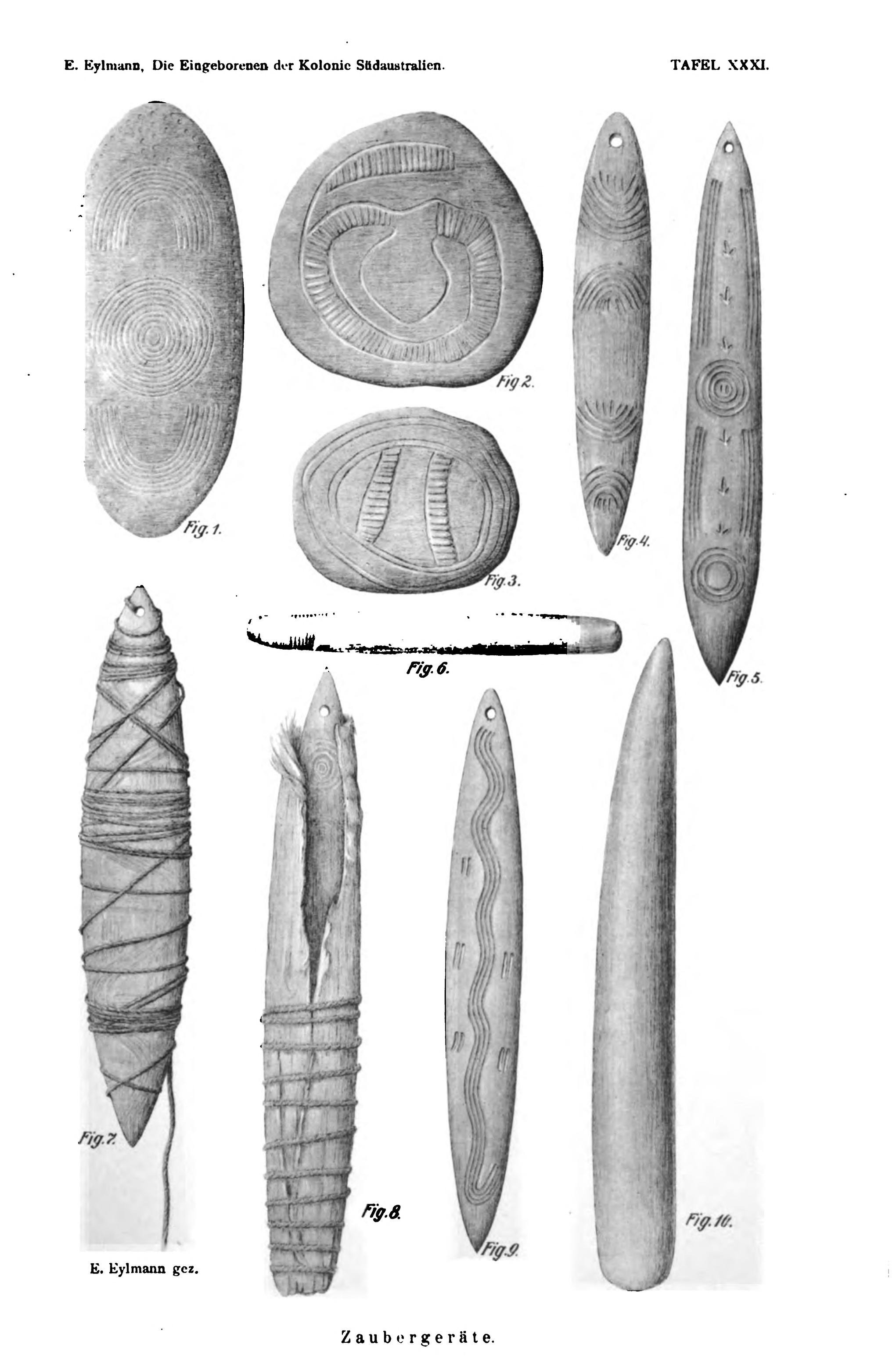
His body died, but the spirit part of him was in a sacred Churinga, which he carried and did not die.Spencer & Gillen, The Native Tribes of Central Australia (1899), p. 229, on the churinga
The gate that survived conversion
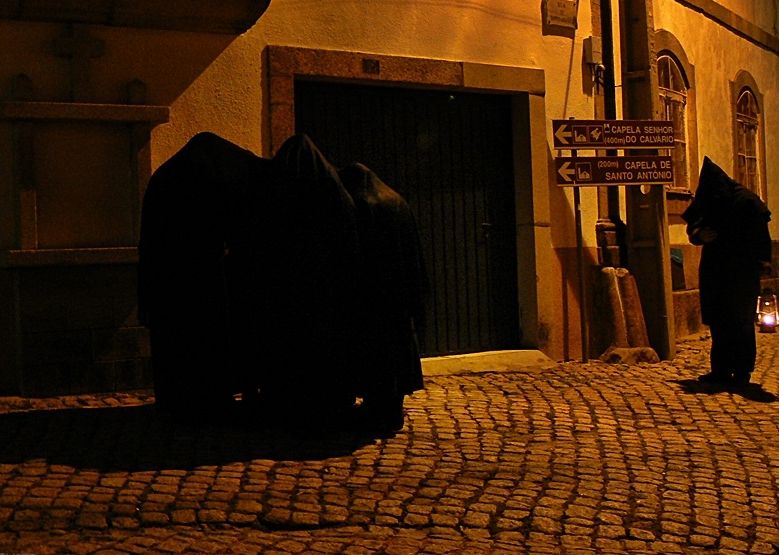
The death gate is robust enough to outlive the cosmology that built it. In the towns of Minas Gerais, in southeastern Brazil, a whirled board called the berra-boi is still carried through the streets in the Lenten Encomendação das Almas — the “commendation of the souls” — a Catholic penitential procession that prays the dead out of purgatory. The route is a psychopomp’s route: it ends at the cemetery gate.
Ulisses Passarelli, describing the Encomendadores do Rio das Mortes, records a procession that begins at the cemetery gate beside Santo Antônio de Pádua and pauses seven times along its way, matracas sounding alongside two or more berra-bois — a bamboo sliver tied to a cord which, forcefully whirled, gives what he calls a “tenebrous hum.” For more than forty years the Folia das Almas of Itajuí has walked Holy Week through the Vale da Gurita with a small board on a strong cord, spun until it booms like a violent wind. In nearby Pirajuba the same procession moves to the sound of matraca and berra-boi until it reaches the cemetery gates, where the prayer for the souls is delivered. And at midnight during Itapecerica’s Week of Sorrows the Sociedade Renasceriana carries a triangular piece of PVC on a one-metre cord through seven prayer stations to the cemetery, whirling it into a “frightening hum.”
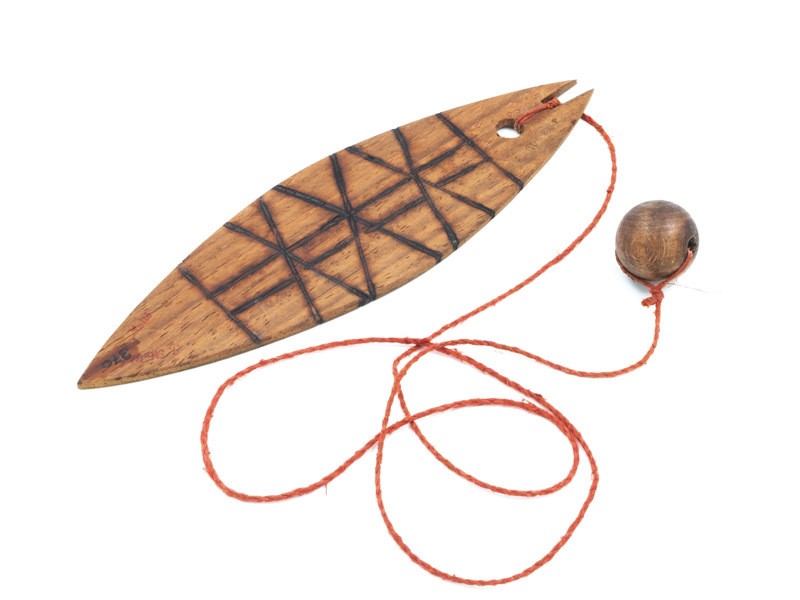
Strip away the theology and the move is the Bororo aige exactly: a whirled board sounded on behalf of the dead, its hum the register in which the living address the departed soul, the procession delivering them at the threshold between worlds. An Iberian Catholic sodality and a Gê funeral cult, meeting in one country and one instrument — a very deep shared inheritance: Brazil puts a soul-escorting roarer at the cemetery gate in both its indigenous and its Christian layer. The ritual technology travels and persists even when the cosmology is replaced beneath it.
The voices of the dead
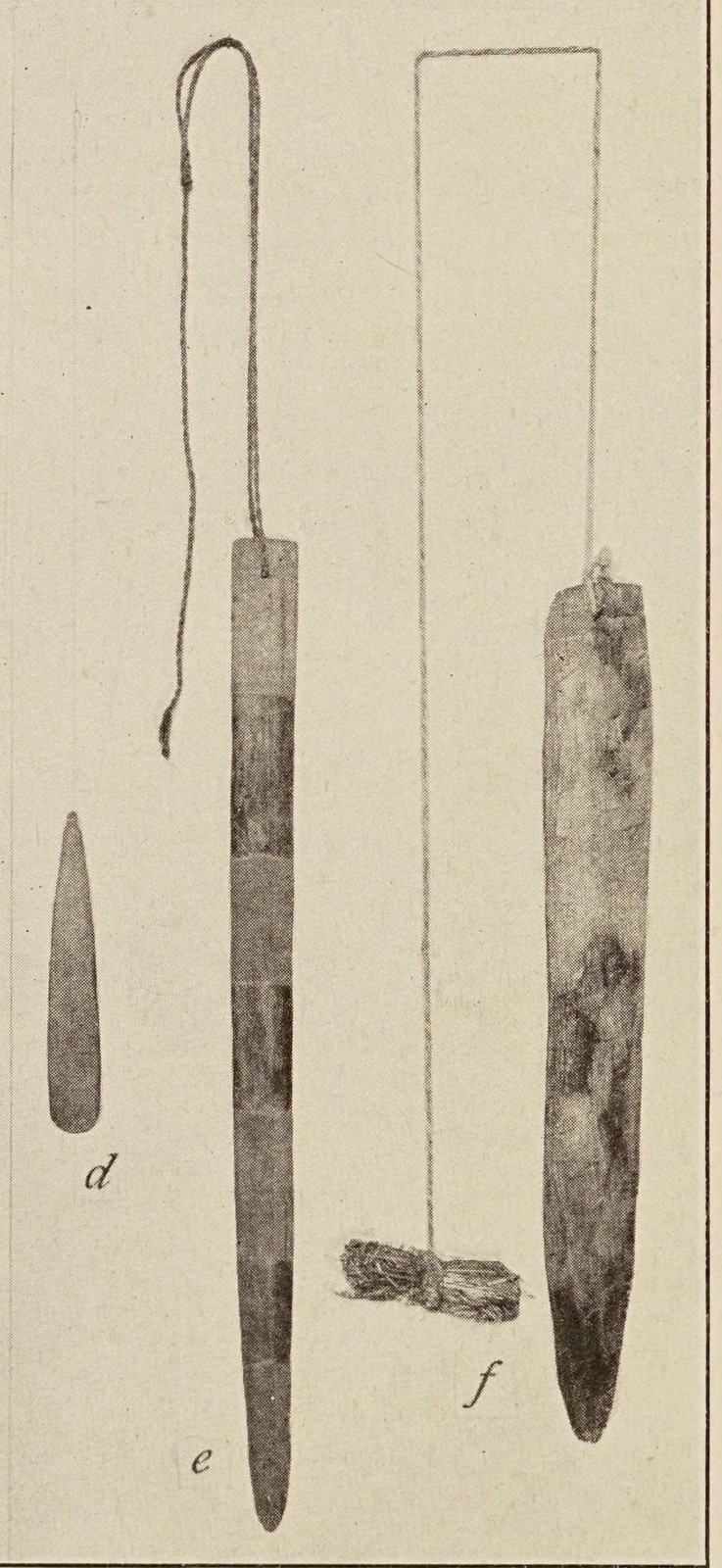
In north-central California the death gate is not a mourning but an initiation — and there the two functions are welded, because the initiation is a return of the dead. In the Ghost and Kuksu ceremonies, men painted with white clay and charcoal impersonated ghosts who came down from the hills, and the roar of the bullroarer was presented to the excluded as the voice of those ghosts. Among the Kato, Edwin Loeb recorded, the boys were shut into the earth-covered dance house for a winter, starved and blackened and laid in rows “like dead people,” and each night the ghost-impersonators entered:
“After the ghosts had entered, the bullroarers were sounded. The women at home believed that the bullroarers were the voices of the ghosts.”
Edwin Loeb, “The Western Kuksu Cult” (1932), the Kato
Among the Lake Miwok of Clear Lake the whirled slat was the ladiladi, sounded between the sets of the ghost-dances to fill the gaps in the song, while women and uninitiated children stayed home “meant to believe the spirits were real.” Loeb heard the same from the inland Pomo, whose roarers were passed off on outsiders as the voice of the dead. To the excluded, the roar was the returning dead themselves; the initiate’s secret was the inverse claim — that it is men, not ghosts. It is the classic two-level revelation of the men’s cult, but located with precision at the death gate: the truth handed over is not merely “it is men, not spirits,” but “it is men, not the dead.” Even here, where the roarer is a fiction to be exposed, it is a fiction about souls, staged at the very threshold a soul is imagined to cross.
One instrument, both gates
The handbooks classify the bullroarer by its most conspicuous appearance and call it an initiation instrument — the noise-maker that frightens boys and women in the men’s cult. That is true, and it is not enough. The same object, under its own name, meets the newborn adult at one end of a life and the departing soul at the other. It swallows the boy into the social body and it sounds the soul back out of it. Zerries, working only with the South American material, came closest: he named initiation and funeral as the two settled poles of the instrument’s serious use, and passed on Izikowitz’s suspicion that the death-connection was the older one. But he confined the pairing to one continent and treated the two rites as two contexts among several.
Laid out across continents, the pairing stops looking like two contexts and starts looking like one function. A boy at initiation and a corpse at a funeral are the same problem from opposite sides: a self crossing the boundary between the living community and the world of spirits — inward at birth-into-society, outward at death. The bullroarer is the technology for that crossing, indifferent to direction. Filed as an “initiation instrument,” it is really a general instrument of soul-traffic, and it keeps both gates.
At a glance
| Name | People & place | Gate | What it does |
|---|---|---|---|
| aige / aidye | Bororo, eastern Brazil | Death | Swung only at funerals, as the cleaned bones leave the village; the voice of the water-monster; women flee on pain of death. |
| nanamatea | Mota, Banks Islands (Vanuatu) | Death | “Death-maker”; swung to drive a ghost away. |
| worung-tamb | Merlav, Banks Islands (Vanuatu) | Death | “A wailer”; sounded the night after a death to make a mourning sound. |
| namiqwott | Kwele, Haut-Ivindo (Gabon) | Death | “The spirit of the dead” at funeral dances; hidden from women and children. |
| payu / mirapoway | Kamoro, Mimika coast (Papua) | Death | “Very secret”; the voices of the honoured dead, hung in the ceremonial house. |
| (unnamed board) | Caripuna, upper Madeira (Brazil) | Death | Sounded in laments for the dead; untradeable for that reason. |
| me-galo | Apinayé, central Brazil | Death (in name) | The one word for soul, ghost, shadow, and image of the dead — and for the bull-roarer. |
| balum | Gawac / Bukaua, Huon Gulf (New Guinea) | Both | One word for the ghost, the boy-swallowing monster, and the bull-roarer; swallows the novice, voices the dead. |
| churinga irula | Arunta, Central Australia | Both | The bull-roarer that is also the store of a man’s external soul; whirled at initiation as the ancestral voice. |
| telbut / ladiladi | Kato & Lake Miwok, California | Death | Sounded in the Ghost initiation as the voice of the returning dead. |
| berra-boi | Minas Gerais (Catholic Brazil) | Death | Whirled through Lent in the Encomendação das Almas to the cemetery gate, praying the souls onward. |
Every record named above is mapped — open the Bororo funeral aige on the map and read outward.
Key sources
- von den Steinen, K. 1894. Unter den Naturvölkern Zentral-Brasiliens. Berlin: Dietrich Reimer, pp. 496–508 (the Bororo funeral aige; “They would die if they saw it,” p. 497).
- Zerries, O. 1953. “The Bull-roarer among South American Indians.” Revista do Museu Paulista, N.S. VII, pp. 275–309 (initiation and funeral as the two poles, pp. 303–304; the Caripuna, p. 288; Izikowitz’s death-primacy proposal, p. 304).
- Codrington, R. H. 1891. The Melanesians: Studies in their Anthropology and Folk-Lore. Oxford: Clarendon Press, ch. XVII, p. 342 (nanamatea “death-maker” on Mota; worung-tamb “a wailer” on Merlav).
- Deschamps, H. 1962. Traditions orales et archives au Gabon. Paris: Berger-Levrault, p. 78 (the Kwele namiqwott, “the spirit of the dead”).
- Keller-Leuzinger, F. 1874. The Amazon and Madeira Rivers (German ed. p. 104; English ed. p. 124) — the Caripuna board sounded in laments for the dead.
- Pouwer, J. 2010. Gender, Ritual and Social Formation in West Papua. Leiden: KITLV Press, p. 54 (the Kamoro payu / mirapoway, “the voices of the dead”).
- Nimuendajú, C. 1939. The Apinayé. Washington: Catholic University of America, p. 140 (me-galo: soul, ghost, shadow, image of the dead, and the bull-roarer).
- Spencer, W. B. & Gillen, F. J. 1899. The Native Tribes of Central Australia. London: Macmillan, pp. 128, 143, 246 (the churinga as external soul and as churinga irula, the bull-roarer proper; the voice of Twanyirika).
- Frazer, J. G. 1913. Balder the Beautiful, Vol. II (The Golden Bough, 3rd ed., Part VII), “The External Soul in Folk-Custom,” New Guinea section — the balum equation (bull-roarer = monster = soul of the dead), after S. Lehner, “Die Bukaua” (1911).
- Loeb, E. M. 1932. “The Western Kuksu Cult.” University of California Publications in American Archaeology and Ethnology 33(1): 27 (Kato), 122 (Lake Miwok), 267 (Pomo).
- Passarelli, U. 2007. Encomendação das Almas, section II (Rio das Mortes, São João del-Rei), p. 8 — the berra-boi’s “tenebrous hum” from the cemetery gate. With Veloso, G. 2019, Penitentes, caption 27, p. 108 (Itapecerica); and Intercom 2007, Folia das Almas de Delfinópolis, p. 13 (Itajuí).
Zerries (1953) paired initiation and funeral as the two poles of serious bullroarer use within South America, and reported Izikowitz’s proposal that the death-connection is the primary one; Frazer housed the instrument within his external-soul doctrine. The generalization stated here — that a single named instrument working both gates across continents makes it not an initiation instrument but a general soul-traffic device — is original to this page.