No. SASIA-010
Punjab ghirknu children’s toy
India · Pakistan (undivided Punjab at time of source) · Punjab villages (undivided Punjab) · South Asia
Play / practical
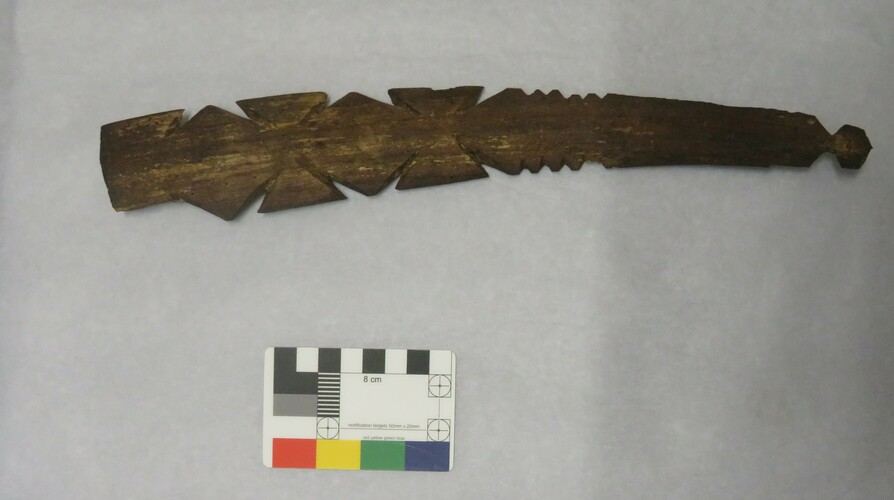
ghirknu
Source term: bull-roarer
ghirknu — Punjabi name for a wooden toy bullroarer.
The colonial name “Chuhra” hid a world of Punjabi Dalit communities—Hindu, Sikh, Muslim, and Christian—whose landless labour helped run the village fields while caste placed them at the bottom of rural society. Their children made their own noise: wooden ghirknu whirled as toys across Punjab. By the early 1920s the game was fading, but Roy found it had not quite disappeared.
...until five or six years ago bull-roarers made of wood and known as Gh[i]rknu were frequently used as toys by children in Panjab villages and even now they have not altogether gone out of use.
Roy, "The Bull-Roarer in India," JBORS XIII (1927), p. 61
Particulars
- Object
- Wooden ghirknu; no dimensions or surviving specimen recorded.
- Function
- Children's village toy, declining but still remembered in the 1920s.
Source
S. C. Roy, "The Bull-Roarer in India," Journal of the Bihar and Orissa Research Society XIII pt. I (1927), p. 61: among the Chuhras, wooden bull-roarers known as ghirknu were frequently used as toys by children in Punjab villages until five or six years earlier, and had not altogether gone out of use