No. NAGA-007
Sema Sumi bird-scarer and doorway-derivative bullroarers
Naga Hills · present Nagaland · South Asia · Northeast India
Play / practical
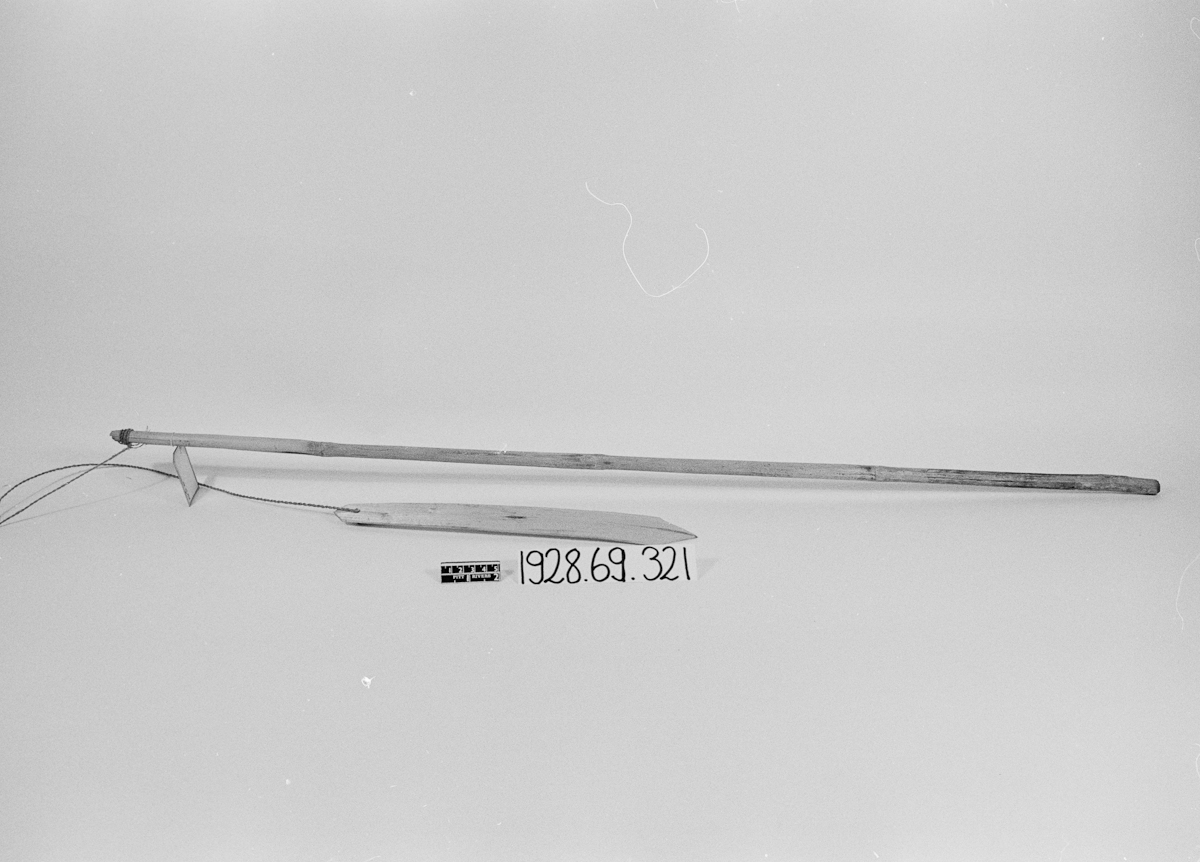
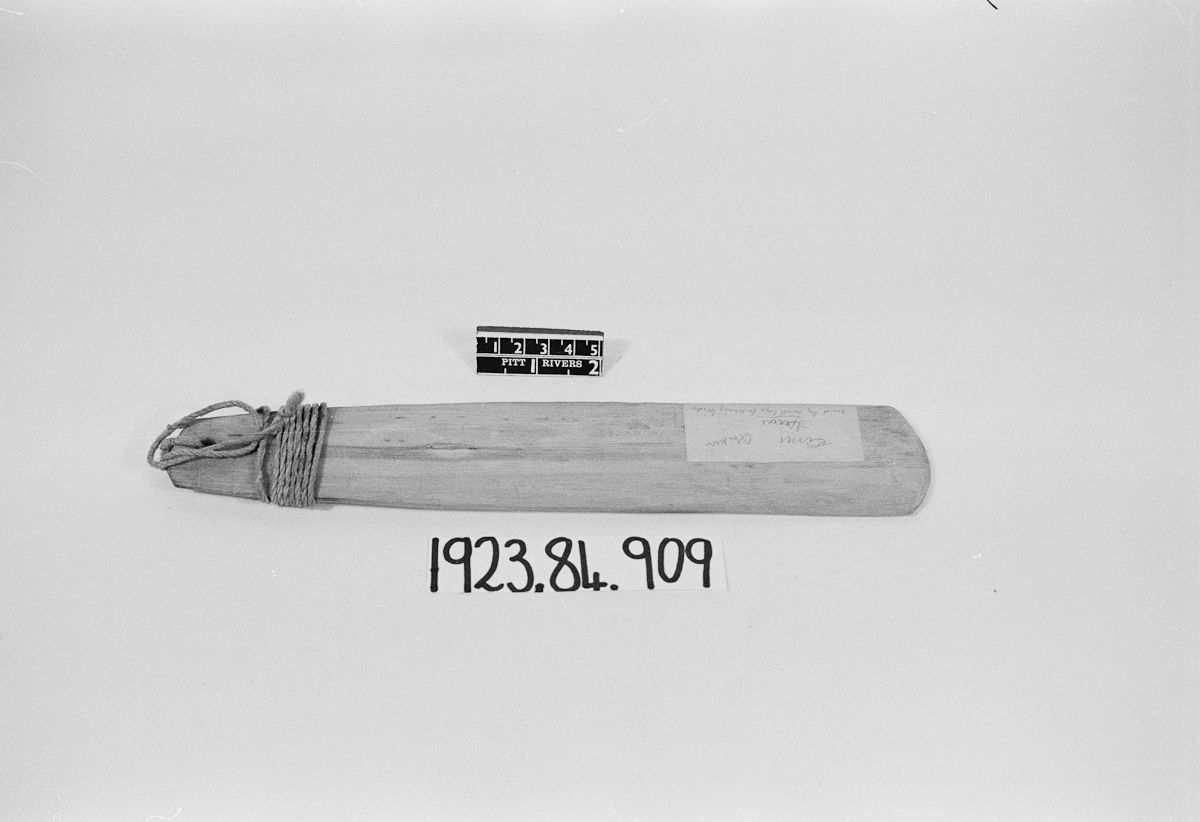
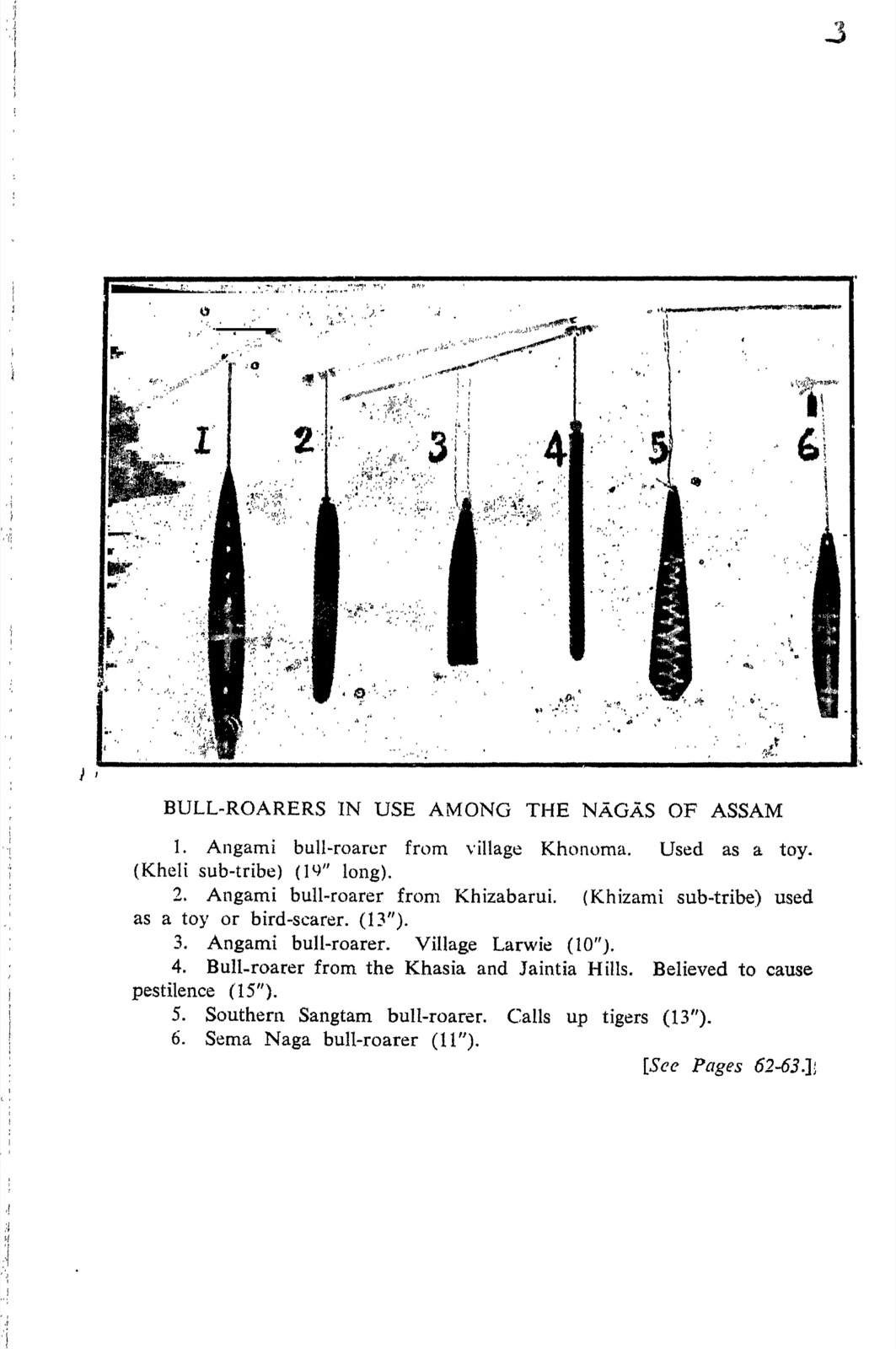
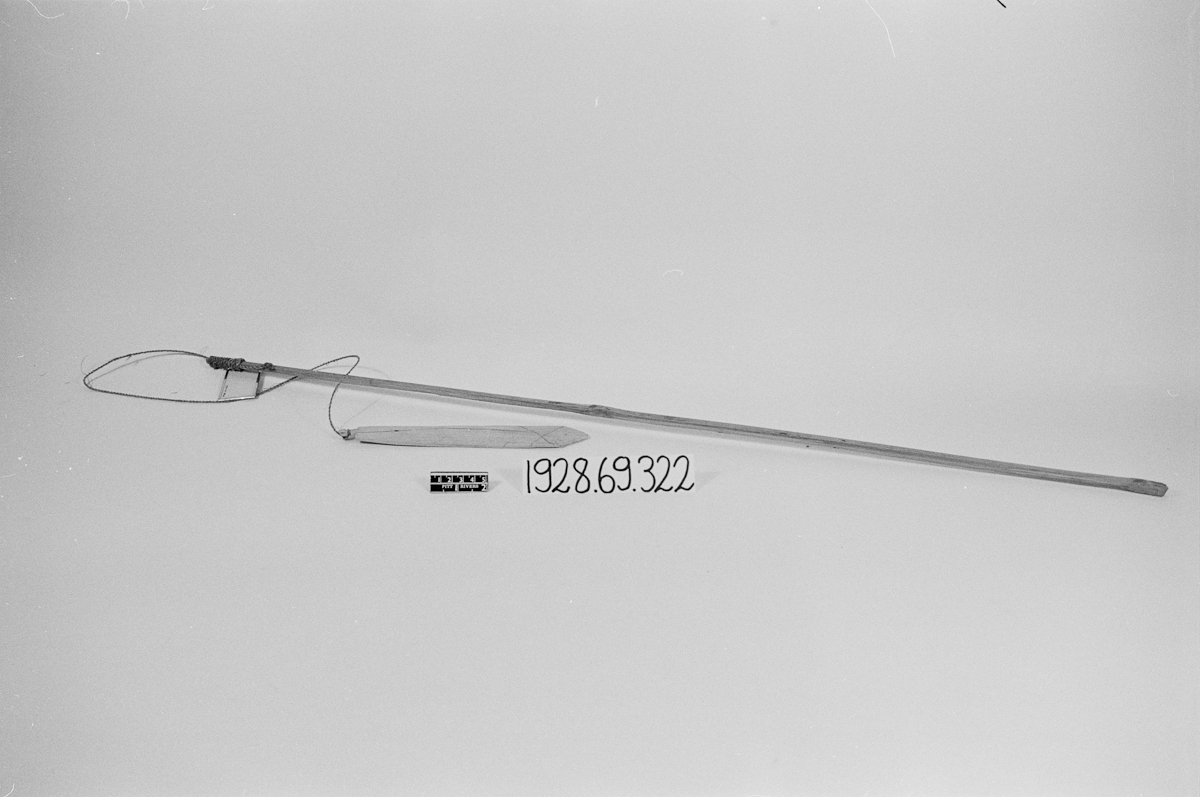
herumu / hewu
Source term: bull-roarer
herumu / hewu — Sümi (Sema) Naga names for the bull-roarer, recorded on the PRM specimens
Sümi boys sent the hewu or herumu roaring over cultivated ground to scare birds from the crops — a working instrument of the fields rather than the men's house. Painted derivatives of the same form hung in house doorways — at Mishilimi, Shaw recorded, "to act as disinfectants in case of illness", the whirring blade's shape doing protective duty even when it never sounded.
bull-roarer used by boys for scaring birds from crops
Pitt Rivers Museum Annual Report 1923, Accessions by Donation (presented by J. H. Hutton; Sema)
Particulars
- Object
- Bull-roarer plus painted doorway derivatives, Pitt Rivers Museum. The sounding rigs are PRM 1923.84.909 (vernacular hewu; J. H. Hutton coll.) and 1928.69.321-322 (herumu), preserving blades and complete corded assemblies; 1923.84.908 is a painted doorway ornament of the same form.
- Function
- Boys' bird-scaring instrument in the fields.
Source
Pitt Rivers Museum, Oxford, 1923.84.908 and 1923.84.909, 1928.69.321-322; Pitt Rivers Museum Annual Report 1923; Shaw 1929 (ed. J. H. Hutton), pp. 156-157