No. SASIA-005
Ho biur-biur, a whirling toy
Bihar and Orissa · Chota Nagpur · South Asia · East India
Play / practical
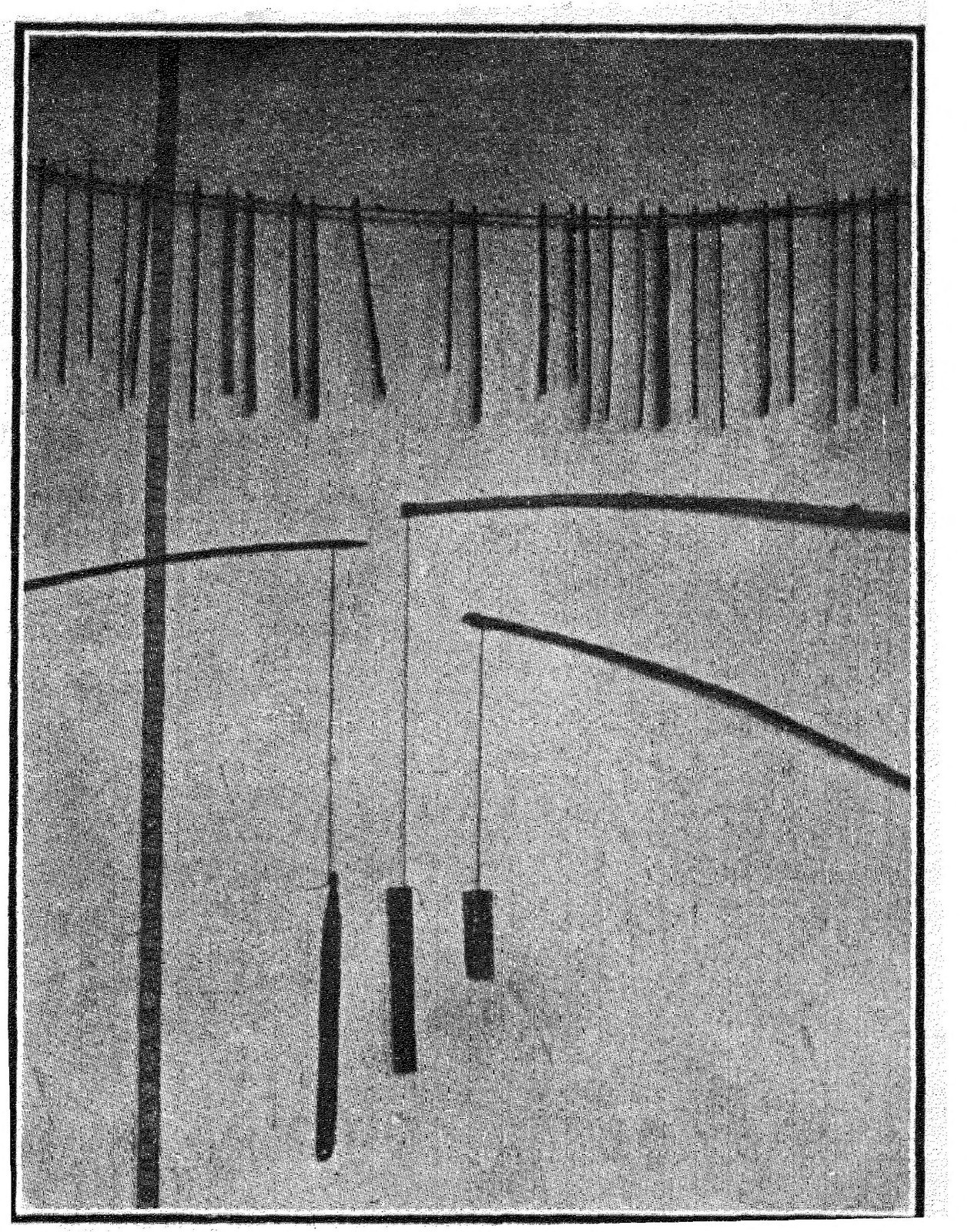
biur-biur
Source term: Bull-roarer
Etymology. biur-biur, the Ho name for the toy bull-roarer, imitates the instrument's whirring sound.
Ho children in Singhbhum called their whirling toy biur-biur. Sarat Chandra Roy, the Ranchi ethnographer who turned up the few Indian specimens he could find and presented some to the Patna Museum, reported the instrument surviving among the Ho, Munda, and Santal only in a very few villages, and there merely as children's toys. The Indian examples were not all bored through for the cord: the Santal one Roy found in a Monghyr village was notched at the neck to take the string rather than perforated, and Munda boys used both kinds. He recovered no ritual behind the Ho toy. Only among the neighboring Oraon did traces of ceremonial use still cling, with hundreds of thin bamboo slats threaded on strings hanging in rows from the beams of the bachelors' dormitories, where it was a sin for women to enter.
As for the Mundas, the Hos and the Santals, the use of the Bull-roarer occurs only in a very few villages amongst them, and that too merely as children's toys.
S.C. Roy, "The Bull-Roarer in India" (meeting summary), Man in India vol. 7 (1927): 63-64
Particulars
- Object
- Bull-roarer use reported among the Hos of Singhbhum District; Roy says Ho, Munda, and Santal use survived only in a few villages as children's toys.
Source
Sarat Chandra Roy, 'The Bull-Roarer in India,' Journal of the Bihar and Orissa Research Society 13(1) (1927): 54-61, at pp. 56-58; summarized in Man in India 7 (1927), p. 63