No. SASIA-001
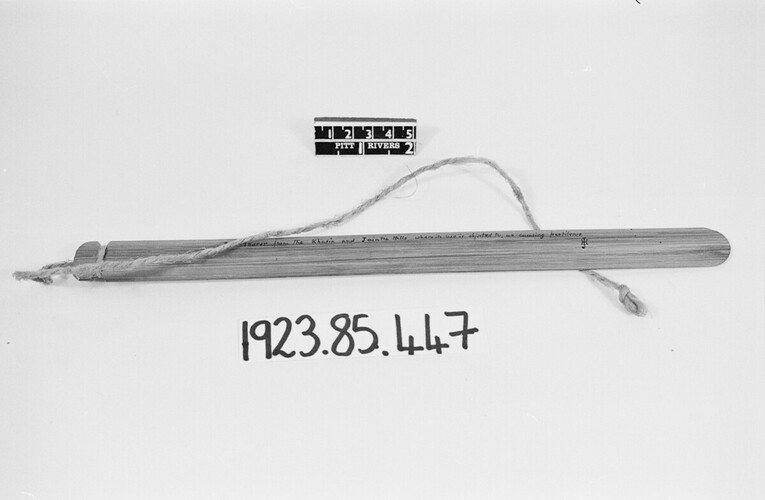
Khasi Hills bamboo bullroarer
Khasi Hills · South Asia · Northeast India
Sacred / spirit
Source term: bamboo bull-roarer
A bamboo blade from the Khasi and Jaintia Hills was believed, when swung on its cord, to carry pestilence into the hills — a bullroarer remembered not as play but as a bringer of sickness.
bamboo bull-roarer, Khasia Hills
Pitt Rivers Museum, Annual Report 1927, accessions presented by J. H. Hutton
Particulars
- Object
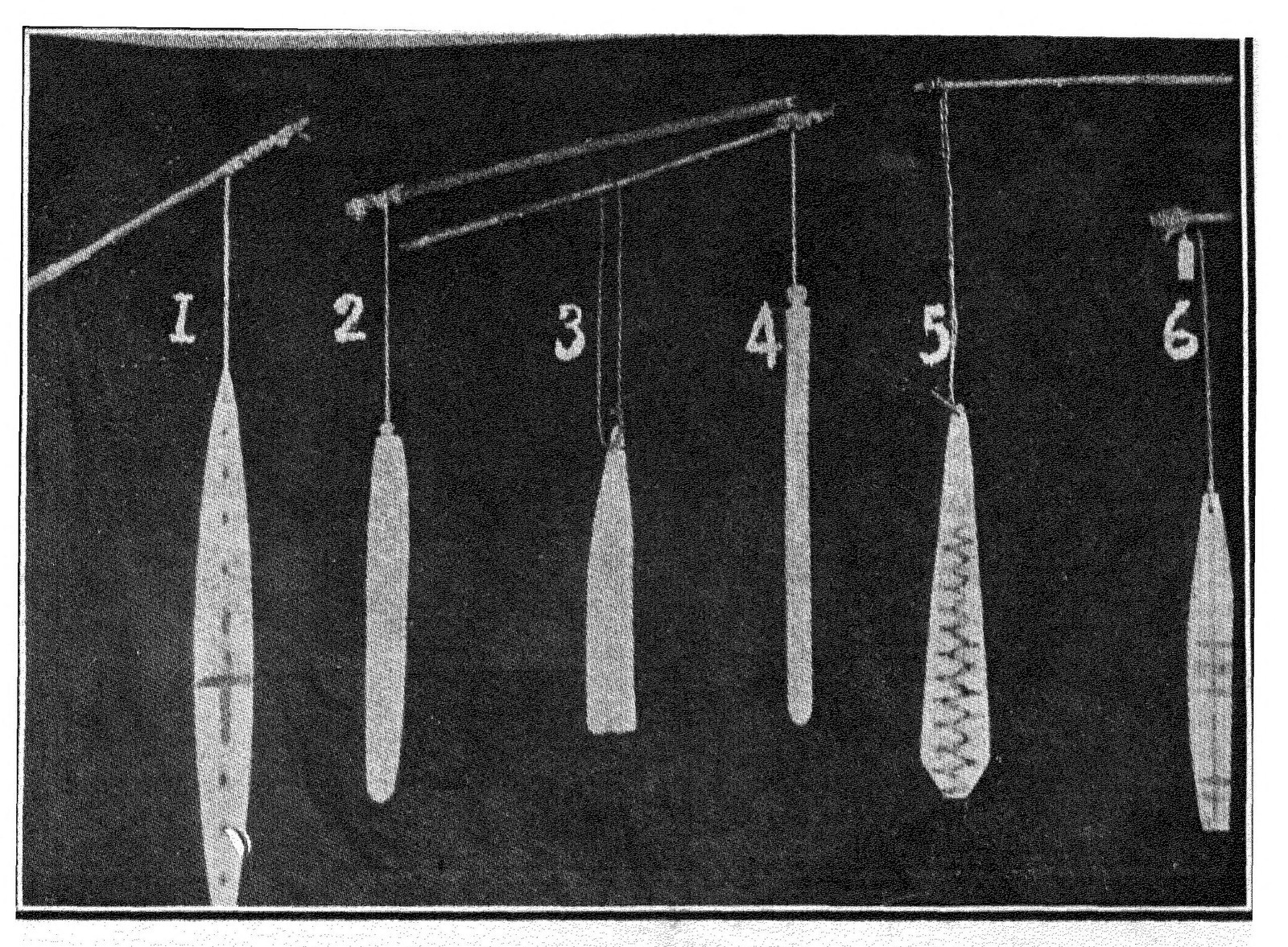
- A bamboo bullroarer 310 mm long, with its string attached, from the Khasi and Jaintia Hills; Roy's 1928 plate shows a second, 15-inch roarer from the same hills.
- Function
- Believed to cause pestilence.
Sources
- Pitt Rivers Museum, Annual Report 1927, accessions presented by J. H. Hutton View · archived
- S. C. Roy, Oraon Religion and Customs (Ranchi, 1928), plate 'Bull-roarers in use among the Nagas of Assam', item 4 View
- Pitt Rivers Museum, Oxford, 1923.85.447 View · archived
- William Shaw, Notes on the Thadou Kukis, ed. J. H. Hutton (1929), p. 156 View