No. SASIA-008
Oraon Ranchi dormitory bullroarer emblem
Chota Nagpur · Ranchi · South Asia · East India
Restricted
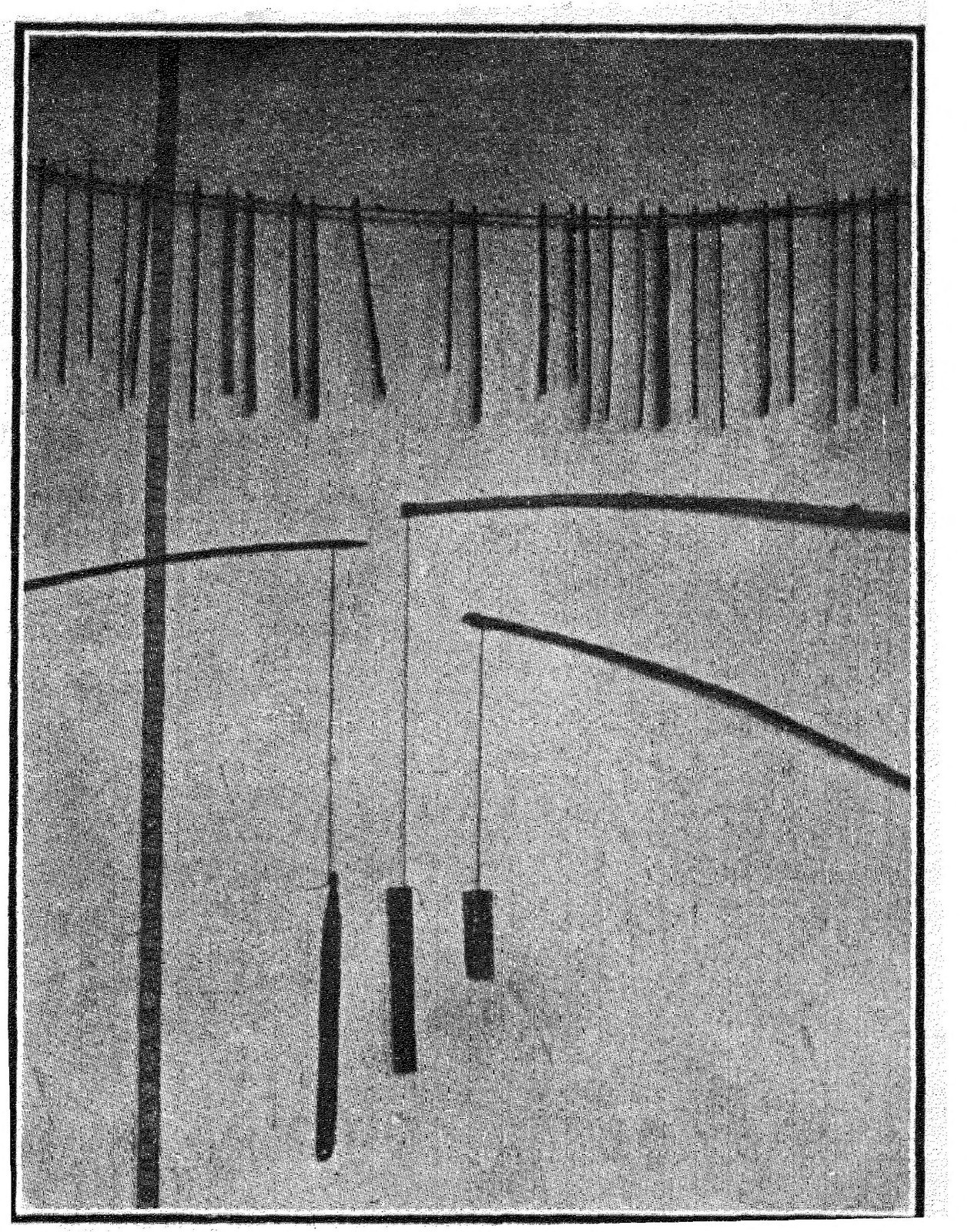
kher-chukna (dormitory strings, "foot-scrapers"); bhurka (toy)
Source term: bull-roarer
Etymology. kher-chukna, "foot-scrapers," is the Oraon name for the strings of bull-roarer slats hung in the bachelors' dormitory; the toy form is called bhurka.
Rows of bamboo blades hung from the beams of the bachelors’ dormitory. On festival days they were taken out and strung above the dancing ground, where breezes shook them into a rattling decoration. Some instruments were made from the valves of silk-cotton seed pods. The blades were carefully treasured in the dormitory; women were forbidden to enter. Villagers explained the festival display through its beauty and sound. Roy suggested another purpose: frightening away the dead who wanted to join the dance by entering a living dancer.
Hundreds of thin slats of bamboo threaded in strings are to be seen hanging in rows from the beams of some of the Oraon Bachelors' dormitories, where it is a sin for women to enter.
Summary of S. C. Roy, "The Bull-Roarer in India," Man in India, vol. 7 (1927), p. 63
Particulars
- Object
- A perforated slat of wood or bamboo, holed at one end, hung in the youth dormitory.
- Function
- Kept in bachelors' dormitories and hung above festival dancing grounds for decoration and wind-driven rattling; Roy interpreted the display as protection against spirits.
Source
Sarat Chandra Roy, 'The Bull-Roarer in India,' Journal of the Bihar and Orissa Research Society 13(1) (1927): 54-61; summarized in Man in India 7 (1927), pp. 63-64; Sarat Chandra Roy, Oraon Religion and Customs (Ranchi, 1928), pp. 62-63; Verrier Elwin, The Muria and their Ghotul (1947), p. 293