Atlas Essay —
What the Women Kept
Nigeria · Angola · Gabon · Zambia · Côte d’Ivoire · the Congo · Guinea-Bissau · Rome · the Vaupés · Tierra del Fuego · Australia
When a great chief of the Efik died, on the Cross River in south-eastern Nigeria, the spirit of the men’s society fled the town. The men went after it with their drums and their summons, and the spirit would not come. So they went to fetch an ancient woman of one of the ruling families, a woman barred on pain of death from ever seeing their rites. She called, and Egbo came home. Asked why their own cult should need her, the men said at last that Egbo had been a woman’s society before they took it.
The men took the voice, but the cults they built on it still cannot work without women. A woman must call the spirit home, strike it first, keep its emblem, sing its birth and take back its new men. What the theft could not take is its receipt, and it proves the rite was hers.
In brief
- Among the Efik and Ekoi of south-eastern Nigeria, only an old woman of a ruling family can recall Egbo when he flees after a chief’s death; in a Humbi circumcision camp in southern Angola, an old woman calls the boys while a man whirls the bullroarer.
- The Mitsogo of Gabon say six women caught the water-being Mwiri, and that, dying in the men’s hands, it begged them to keep it alive by imitating its voice. The growl in the enclosure copies a voice that called to women.
- Among the Ndembu of Zambia the women strike the spirit Kavula first, “because women made the first Chihamba long, long ago.” Among the Senufo of Côte d’Ivoire a novice masked as Kafolo, the Mother, fined his own elders; at Calga in south-eastern Australia the law Daramulan teaches the boys was his mother Bootha’s.
- At Ikorodu in Nigeria the emblem of Orò lives in the women’s shrine; in the Republic of the Congo a mother of twins found the Tsaayi mask; in Rome the Bacchic sanctuary was a women’s until the priestess Paculla Annia initiated her sons.
- Hup women in the north-west Amazon stand up when the sacred trumpets pass, to ease a child’s birth, and Selk’nam women of Tierra del Fuego sing the newborn spirit out of the Hain.
- Murinbata youths at Port Keats in northern Australia crawl back to their mothers once they have seen the bullroarers, and Jóola mothers in Guinea-Bissau send their sons into the sacred forest and welcome them out.

Only she can call him home
Egbo, which its own members call Ekpe, the Leopard, was the greatest of the men’s societies of the Cross River, the power behind the Efik towns of Calabar and the Ekoi villages that run up into Cameroon. It made law, collected debts and executed the people who broke its rules. Women were kept out of it absolutely. Dorothy Talbot, whose husband Percy served as a district officer in the region, set down what happened when one of its great men died:
“When ‘the Egbo’ flees the town, as he is usually supposed to do after such an event, should the surviving members fail to catch and bring him back in triumph, they are forced to enlist the services of an ancient woman who must belong to one of the ruling families. At her call the spirit usually returns, although he has refused to pay attention to the summons of any man. This need to ask the help of a woman seemed strange in a society from which women are excluded on penalty of death from witnessing the rites. My husband therefore inquired as to the origin of the custom and was told, after considerable hesitation, that feminine aid was necessary because Egbo was originally a woman’s secret society, until the men wrested from them its secrets, learnt the rites, and then drove out women from all participation therein.”
D. Amaury Talbot, Woman’s Mysteries of a Primitive People (1915), p. 193.
The men told the rest of the story too. Women of Cameroon, fishing at dawn, found the first Egbo, brought to them by a divine woman who “had come down to earth on purpose to teach the secrets of the cult to her human sisters.” The women carried the image home in triumph and built a hut to shelter it. The men noticed what the women had and persuaded them to share it. “No sooner had they succeeded in learning these than they rose and slew all those to whom the secret had first been revealed, and made a law that for the future only men might become members of the society or be permitted to witness the rites” (p. 195).
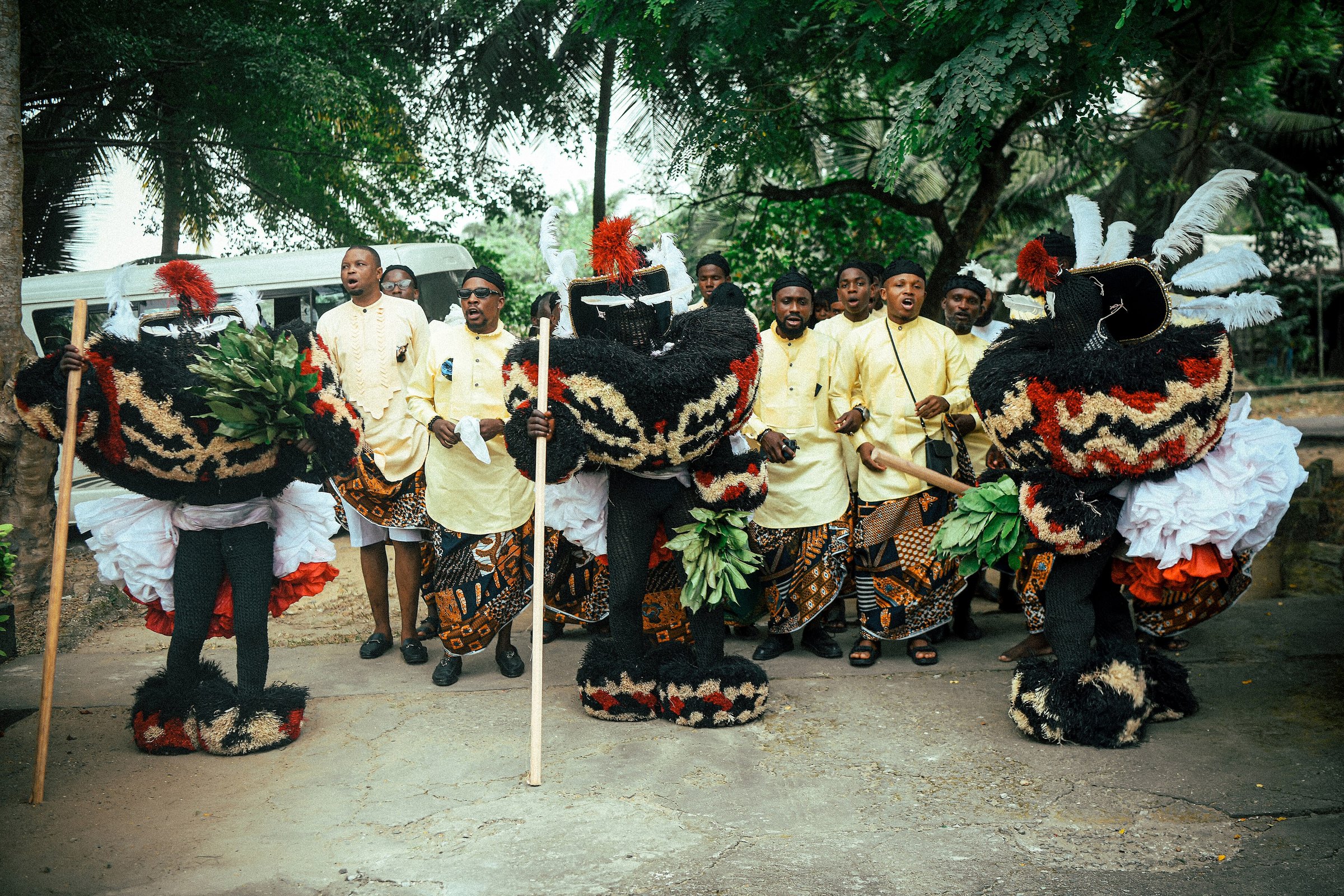
The theft is the first half of the story. The second half is the one that should stop us. When the spirit runs, the cult that killed the women has no voice of its own strong enough to bring him back. The whole male apparatus, with its drums and bells and swords, stands helpless at the edge of town until a woman walks out and calls. The men kept Egbo’s secrets, and a woman kept the one thing those secrets did not reach: his obedience.
The same country kept the bullroarer. Talbot’s husband collected Ekoi blades in the Oban hills, and among the Efik the voices of Ekpo, the society of the ghosts, were whirled boards. In the Ekoi villages a goddess lies under the Egbo house itself: Nimm’s stones are buried in the mud at the foot of its great pillar.
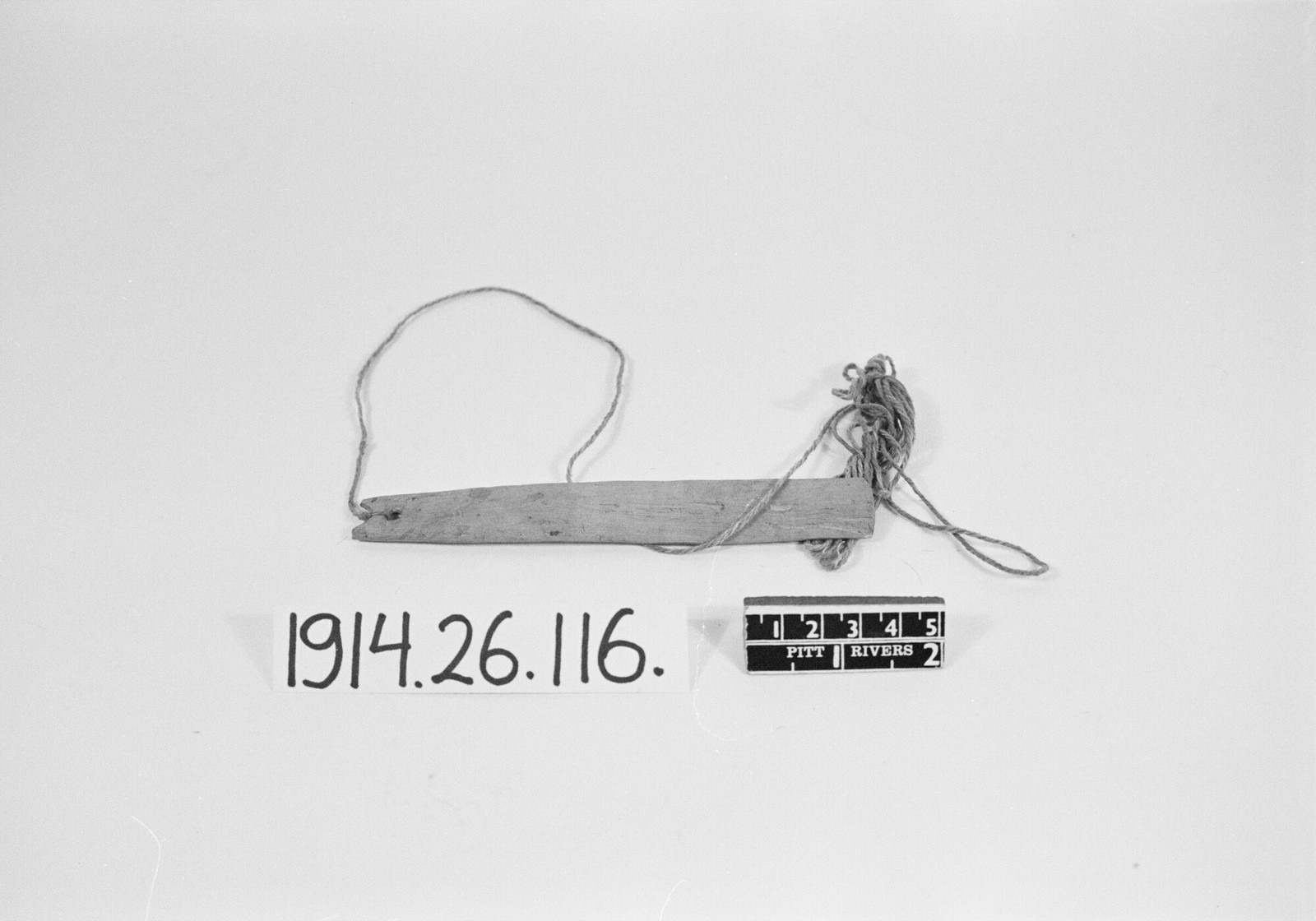
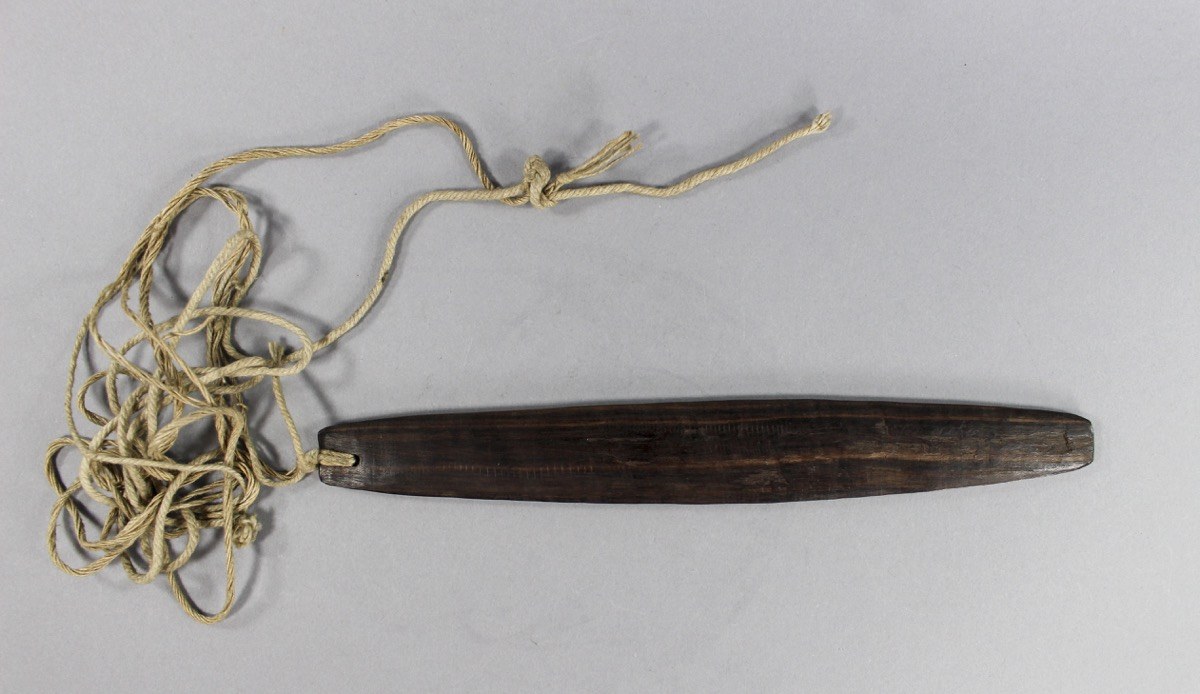
The same summons sounds two thousand kilometres to the south, in the dry country of southern Angola. The Humbi circumcise their boys early in the dry season and keep them for about four months in a camp in the forest. On 18 July 1965 Gerhard Kubik recorded the songs of such a camp at Kamuvia and photographed a man there whirling the bullroarer, lumpoku, a flat board on a two-metre string. He wrote down what went with its sound:
“He whirls the lumpoku round in the air. The sound it produces, rising and falling in glissando, provokes fright among the non-initiated boys, who believe it to be the voice of an all-powerful Being. The man manipulating the bull-roarer shrieks and cries, while one of the elderly women, attending the camp, calls out to tell the non-circumcised boys to prepare themselves for the ceremony.”
Gerhard Kubik, Muziek van de Humbi en de Handa uit Angola, record booklet (Tervuren, 1973), p. 72.
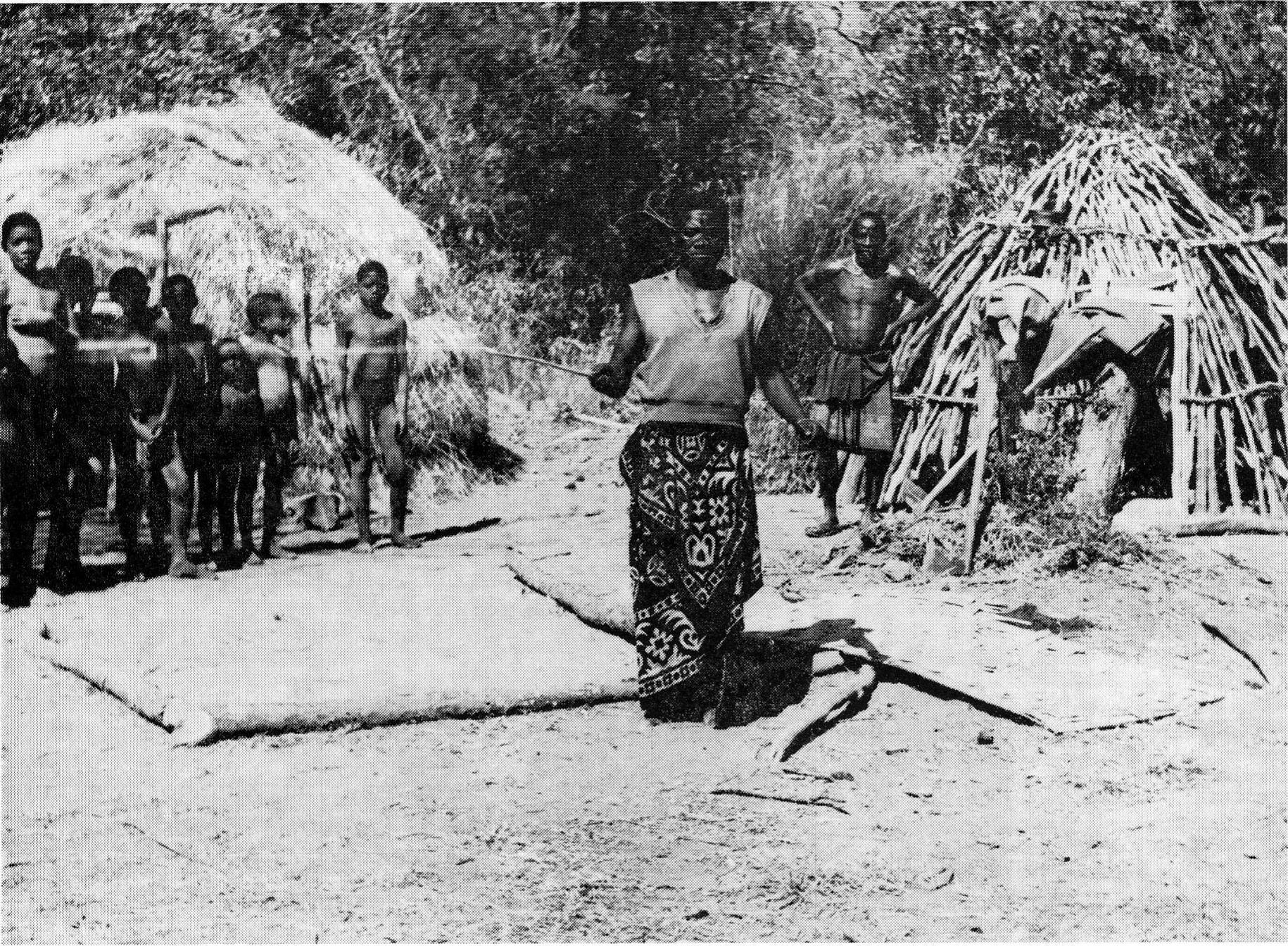
The man has the board and the shriek; the old woman has the summons. The boys hear an all-powerful Being, and the voice that tells them what it wants of them is hers.
In central Gabon the Mitsogo and their neighbours tell why a woman’s call should move the spirit: the spirit called the women first. Their men’s society is named for Mwiri, a creature of the water whose hoarse growl the uninitiated hear from behind a fence of banana leaves. Six women fishing with traps found it in a pool full of catfish, and it bit one of them on the wrist. They caught it, a monster with neither arms nor legs, but it was too heavy and kept growling and spitting water, and they left it at the edge of the village. “Abandoned, Mwiri calls the women.” The men heard the cries from their guardhouse, and came, and took it.
“Without food, without water and under the sun, the monster is soon dying. In its agony it asks the men to perpetuate its existence by imitating its voice. That is the beginning of the Mwiri initiation society. In the enclosure the men find the woman who sweeps the guardhouse and sacrifice her. … In the same way they sacrifice the other women who had discovered the secret of Mwiri before them, so as to keep it for themselves alone. So the men took Mwiri from the women, and gave them in exchange their dance, Nyembe.”
Myth 7, “The origin of Mwiri,” in Julien Bonhomme, Le miroir et le crâne (2005), ch. X. Translated from the French: “À l’agonie, il demande aux hommes de perpétuer son existence en imitant sa voix.”
The novice who at last enters the enclosure finds that Mwiri is “un simple initié grimé,” an ordinary initiate in disguise, and that the growl is “la voix travestie d’un homme,” a man’s voice made strange. By the men’s own account, the voice in the enclosure is a copy of the one that called to the women, kept alive by imitation, and they know whose it was. “The women know Mwiri, because they were the ones who found it first,” they told Julien Bonhomme. “They only pretend not to know.” What Travels When the Bullroarer Doesn’t? follows the whole rite. Here it is enough that on the Cross River, in the Humbi camp and in the Mwiri enclosure, the voice that moves the spirit goes back to a woman.
The women strike first
In north-western Zambia, the Ndembu whose boys hear the bullroarer of the Mukanda lodge keep a great healing cult, Chihamba, built round the killing of its spirit. Kavula, whose name is an old word for lightning, waits white-covered in a sacred enclosure, and the initiates come to kill him. Victor Turner set down the order of the blows: “Each candidate in serial order, Nyamukola first, then struck Kavula on the head with the butt of a chileng’a rattle.” Nyamukola was a woman. The adept Nyaluwema told Turner that the women greeted Kavula first, and “killed” him first, “because women made the first Chihamba long, long ago, and then the men caught it and caught it.”
Chihamba has passed into men’s hands, and men direct it now. Yet every performance must replay who owned it first. The women walk ahead of the men to the spirit, and the first death the god suffers is at their hands. Next day he lives on in the white clay of one shrine and in the crops of another, and The Slain God follows him there.
A woman’s first stroke can harden into a woman’s law. Among the Nafara Senufo of northern Côte d’Ivoire, the Poro, the men’s initiation society, belongs to Kafolo, the Mother. She is a woman’s voice sung by a hidden male orator through a membrane, she is a mask, and she is the law of the society’s assembly. Each seven-year cohort of boys become her children, and everyone knows that men make her. András Zempléni, who went through the Poro with his own cohort, tells what happened when its novices went to a funeral “under the leadership, as is proper, of our masked mother”:
“They committed a ritual fault and were therefore liable to a fine. The other cohorts present, of course, met at once under a tree to fix its amount. But this meeting was illegal, because every fine is imposed by Kafolo, and Kafolo was not there, with the elders; I mean that our masked mother had not yet returned from the village of the funeral. The elders could not fine the novices while they embodied Kafolo without at the same time insulting their ‘mother’, to whom they owe, in every circumstance, respect and obedience.
“The wearer of the mask understood the principle very well and summoned one of the old men imperiously. Embarrassed, the old man answered with something like ‘humm’ instead of tyóó (present!). ‘So!’ said Kafolo, that is, the masked novice, ‘you don’t answer your mother?! Do you want to make war on me?! I’ll leave you there and go back into my forest!’ The elders were dumbfounded, and ended by admitting that they had broken the law of Kafolo. Like the novices, they had to pay a fine afterwards.”
András Zempléni, “L’invisible et le dissimulé,” Gradhiva 14 (1993), p. 13. Translated from the French.
A novice in a mask called an old man to order and made him pay, because for that hour the boy was the Mother. The men built Kafolo, and they still cannot rule against her. The society’s whole authority, its fines and funerals and redistribution, flows through a female person, and the threat she makes is a mother’s: she will go back into her forest and leave them. The theft gave the men her voice. It did not give them a law of their own.
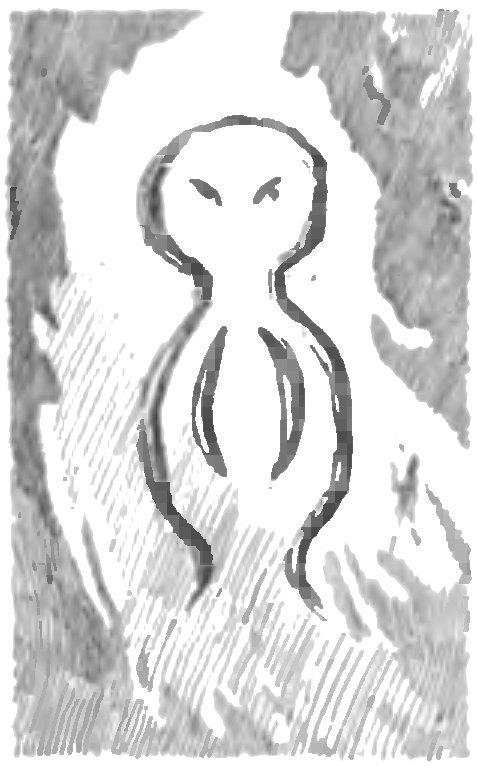
In south-eastern Australia the law is a mother’s gift outright. On the Central Coast north of Sydney, in New South Wales, a sandstone gully at Calga holds engravings of the ancestral family of the region: Baiame the father, Bootha the mother, and Daramulan the son. Daramulan is the one-legged being whose thunder is the bullroarer; his Burbung took the boys from their mothers. The Darkinjung and Guringai people who speak for Calga say where his law came from. As the state heritage listing records their account: “Bootha was originally the holder of the law and gave it to her son Daramulan who in turn gave it to Aboriginal people via initiation ceremony.”
The same people read one of the engravings as Daramulan “calling the mothers to bring their sons to him to be initiated and learn the Law that Bootha had given him.” The voice that calls the boys is his, and the law it calls them to is hers. Aboriginal women recognise the gully’s amphitheatre as the shape of a womb, and its terraces hold a women’s ceremonial ground.
Kept in the women’s house
Orò is the bullroarer cult of the Yoruba of south-western Nigeria, and on its festival the women are shut indoors, on pain of death if they see the god go by. At Ikorodu, on the lagoon north-east of Lagos, the two Orò groups of Magbo and Liwe hold the festival every year, and the women stay in. Yet O. O. Ìdòwú-Òshó, who worked with the singers of both cults, found something at the heart of it that the curfew hides:
“However, there seems to be something paradoxical about the place of women in Orò worship and performance in Ìkòròdú. The ritual object of Orò itself known as Ìtá is kept in the shrine of the Am’basú (female Orò guild). Ìtá is cleansed annually by Basògún – a male priest appointed for the women by the male Orò cult. We may therefore wonder why the justification for the female confinement despite the fact that the emblem of Orò resides among the women in the Am’basú shrine.”
O. O. Ìdòwú-Òshó, “Gender Roles in Orò Tradition in Ìkòròdú of Western Nigeria,” An Encyclopaedia of the Arts 12, no. 1 (2006), p. 47.
Before the festival the women of the guild walk in single file to the Ota River with white clay pots, and none may stumble. They bring back the river water and the wòró leaves of peace, and their leader carries the pots into the shrine. The chief priests of Orò come to the women’s shrine to sacrifice before the emblem, and then all of them leave except the one man the guild admits, who stays behind with the women and washes the emblem in the water they fetched. The singers who returned from the river sing, “My journey to Ifè has been successful.” The local story of the cult’s coming to Ikorodu is a woman’s too: a childless wife from Abeokuta, told by divination to bring Orò from her father’s compound into her husband’s town.
The god whose voice drives the women indoors sleeps in their house. On the night they may not look at him, his emblem has been washed in the water they carried. The confinement is the theft, performed once a year. The shrine is what the theft left standing.
On the Teke plateaux of the Republic of the Congo, the Tsaayi men dance in the round, flat kidumu mask, and in the women’s Mukisi possession cult a decorated board stands on the bed where a possessed woman is displayed. Marie-Claude Dupré asked where the two came from. The priestesses told her that a mother of twins found the mask and the board together, in the pool at the foot of a spring, and brought them to the village, where the men tore them away from her. A man told her a variant: in her first possession a mother of twins ran wild into the forest and snatched the mask from a Pygmy dancer, who had it from Nkita, the spirit of nature and fertility, and the Tsaayi men took it from her.
Then came a scene Dupré had not expected. A third version set her interpreter and his informant, a maker of bed boards, arguing hotly, and at the end of it the interpreter turned to her, disconcerted:
“‘He does not understand why you are asking him where the bed board comes from, because you are the one who brought it.’ After some clarification it became clear that there had been confusion between several registers. It is the women who introduced the mask and the board, and it is a mother of twins who discovered them. Now I am myself the mother of twin girls.”
Marie-Claude Dupré, “Comment être femme,” Archives de sciences sociales des religions 46 (1978), p. 61. Translated from the French.
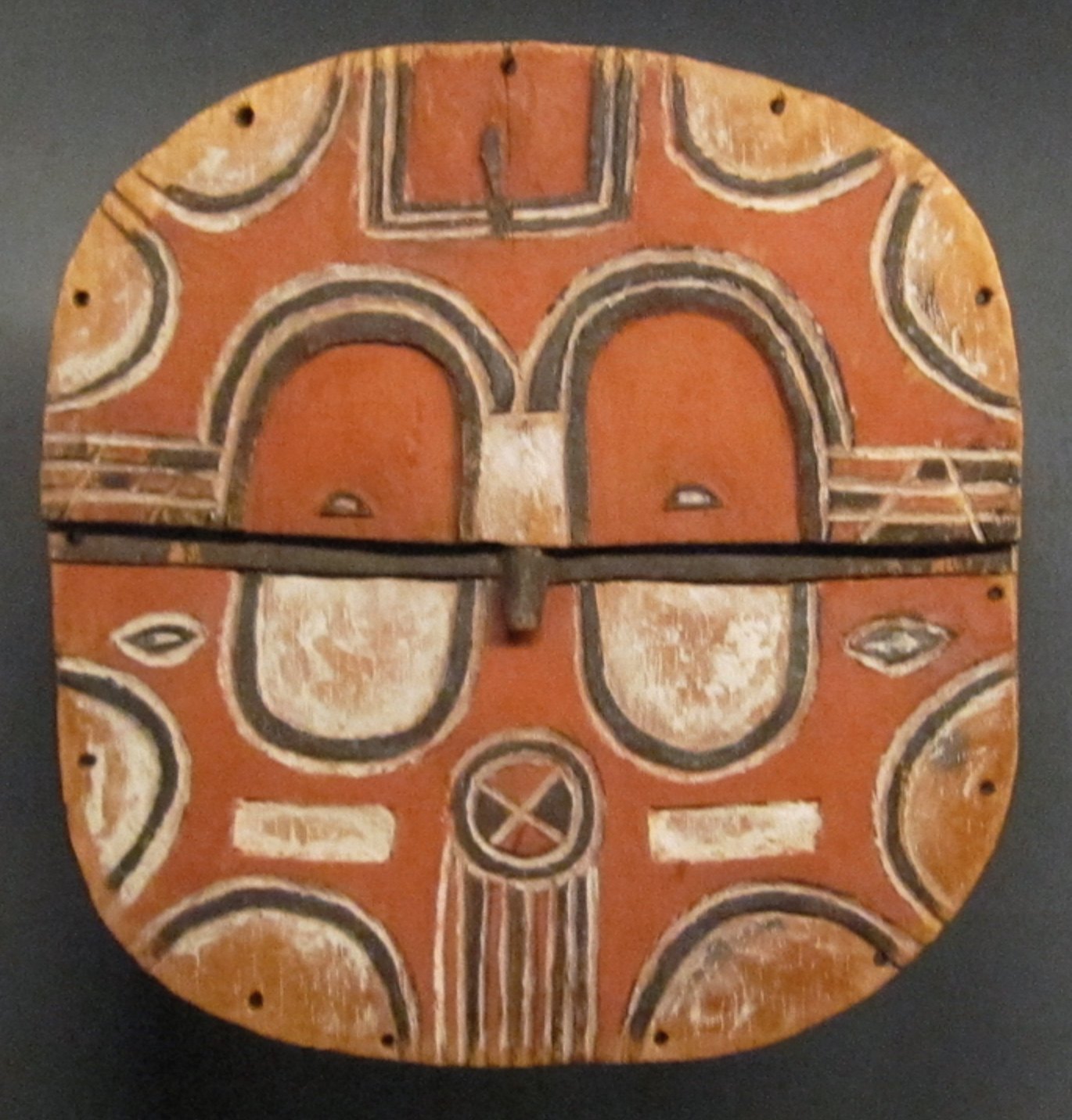
The misunderstanding happened several times, Dupré wrote, and for nearly five years it kept her in the place her hosts had set for her from the start: a participant, even an initiator. The informant she hoped would teach her expected just as much knowledge from her, a mother of twins. The story of the theft did not make the women forget the origin. It made the origin a standing claim: any woman who shared the first discoverer’s condition could be assumed to know where the sacred things came from. Dupré knew the pattern. “This kind of tale of a discovery made by women and then monopolised by men is common in Africa,” she wrote, and gave the Egbo story as her example.
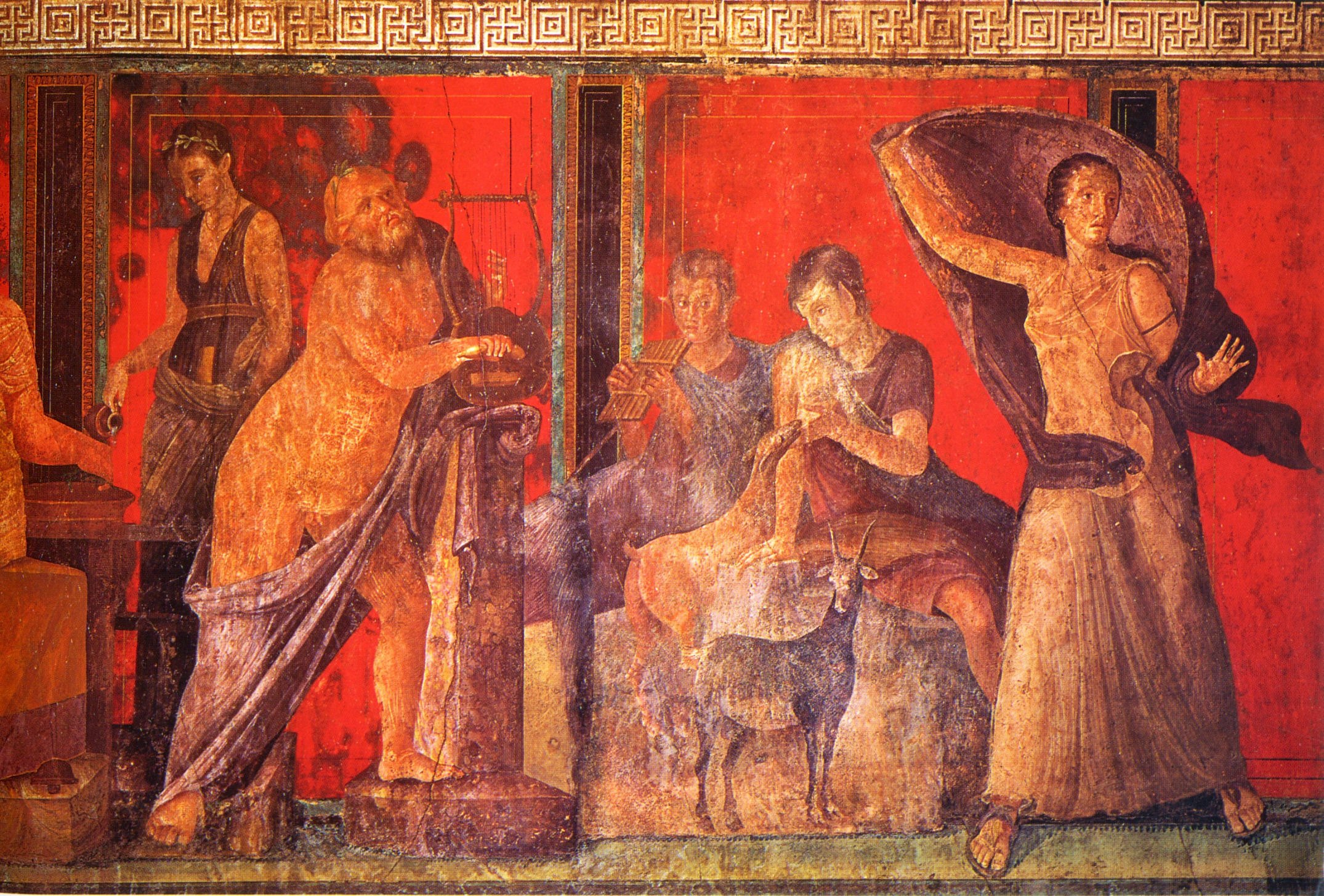
Rome kept the same memory of its own mysteries. In 186 BC the Senate crushed the worship of Bacchus across Italy, and the freedwoman Hispala, a former initiate, told the consul how the rites began:
“At first, she said, it was a ritual for women, and it was the custom that no man should be admitted to it. There had been three days appointed each year on which they held initiations into the Bacchic rites by day; it was the rule to choose the matrons in turn as priestesses. Paculla Annia, a Campanian, she said, when priestess, had changed all this; for she had been the first to initiate men, her sons, Minius and Herennius Cerrinius; she had held the rites by night and not by day.”
Livy, History of Rome 39.13.8–9, trans. Evan T. Sage (Loeb, 1936), p. 253.
The sanctuary was the women’s, and the men came into it as a priestess’s sons, through her, at night. The Women Who Taught the God sets Paculla among the nurses and teachers of Dionysus, whose mystery kept the rhombos, the bullroarer.
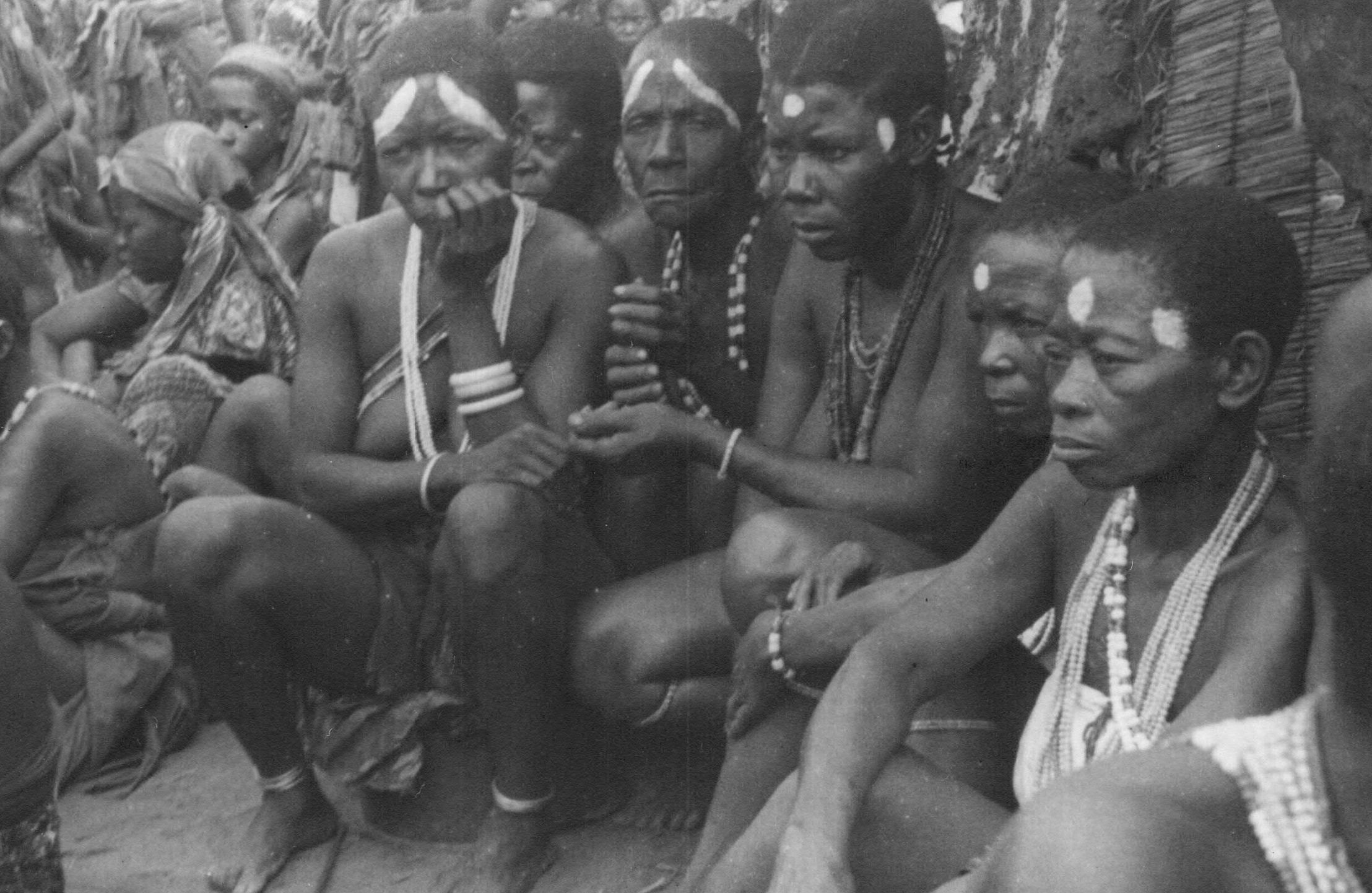
Some of what the women kept was never handed over at all. Among the Bembe, in the mountains above the western shore of Lake Tanganyika in the Democratic Republic of the Congo, the men have Tembwe, the leopard-voiced bullroarer that drives women out of its circle and rules the circumcision. The married women have Buhumbwa. Its senior grade, the women of the hero photograph, drum behind a screen of banana leaves, know a great number of medicines and “guard the basket with their initiation objects.” Daniel Biebuyck recorded what they said of it:
The chorus at the birth
The men’s house claims to give birth to men without women, and the birth still passes through women’s bodies. In the north-west Amazon, along the Vaupés River on the border of Brazil and Colombia, the Yuruparí trumpets are the breath of the ancestors, and women must never see them. The linguist Patience Epps, who lived among the Hup of the Tiquié and Papuri rivers, recorded what the women do when the trumpets come:
“When the Yurupari trumpets enter the village, the listening women of child-bearing age should stand up, so as to ease the passage of a child out of the body.”
Patience Epps, A Grammar of Hup (2008), p. 19.
The women may not look, yet the trumpets’ entry is a birth, and it happens in them. The House That Swallows Boys makes the men’s claim its subject. On the Vaupés the women rise to their feet, unseen and unseeing, to ease the child out every time the trumpets pass.
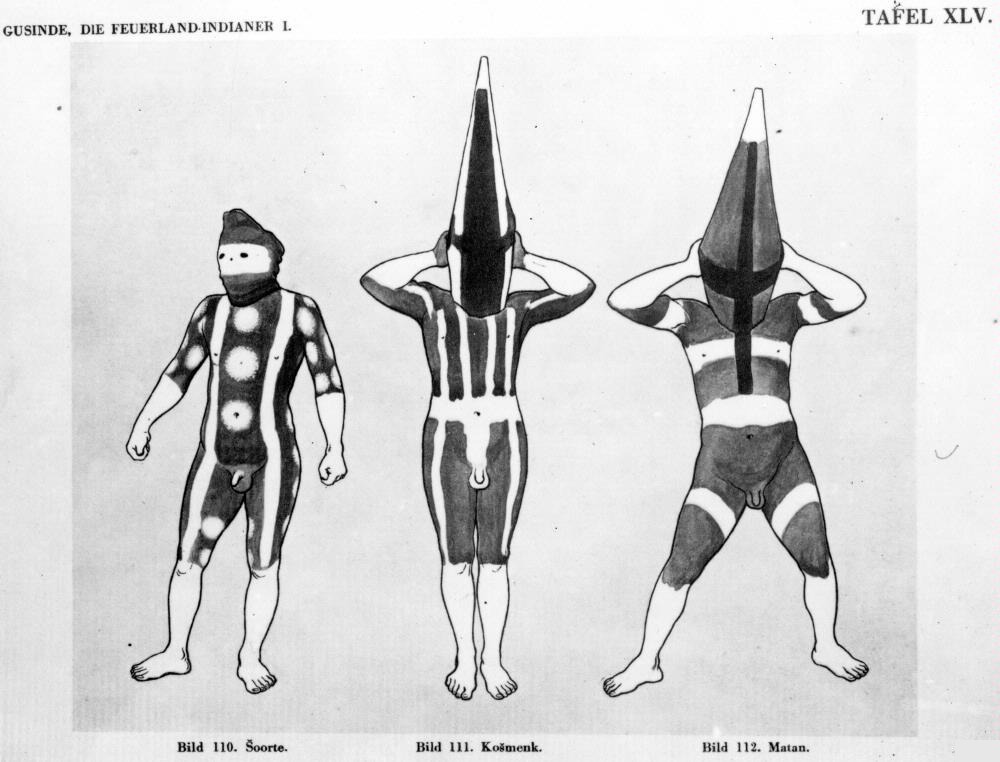
At the far end of South America, on the island of Tierra del Fuego that Argentina and Chile now share, the Selk’nam men acted the birth out in full. Their Hain was a lodge of masked spirits, and they told the women the spirits were real. Anne Chapman, who recorded the last Selk’nam who remembered it, set the climax of the ceremony down from them and from Martin Gusinde’s account of 1923. Xalpen, the cannibal woman of the underworld, is pregnant by a novice; in her labour she disembowels the men inside the lodge; the next day little Olum restores them. Then:
“Soon another marvellous happening, Xalpen gives birth! The baby (either a boy or a girl) is called K’térrnen. It may appear several times during the ceremony. The women especially anticipate this event following the restoration of life by Olum and begin their welcoming héj ká rak? chant (no. 24) to draw the baby out of the Hain so that they delight in admiration of it.”
“As it just emerged from the womb it is covered with feather down, parallel rows of it, from the tip of its conical head to its toes. … The women keep singing their admiration and contentment during the entire scene. Upon reëntering the Hain the men greet the baby with very gentle hand clapping.”
Anne Chapman, Selk’nam (Ona) Chants of Tierra del Fuego, vol. II, record booklet (Folkways, 1977), p. 9.
The men built the womb, the labour and the newborn. But they cannot get the child out of the house alone. The women sing it out. Their song is what draws the baby across the threshold into the open, and the men inside can only clap softly when it returns. The day of the Hain began with the women too. Lola Kiepja, who sang the women’s chants for Chapman in 1966, said of one pre-dawn chant, kai kloketen primero: the novices’ mothers sing first. And Gusinde, as Chapman quotes him, noticed something about those voices: “The Selk’nam women possess very deep and strong, loud and full voices; one sometimes imagines that one is hearing men singing.”
Back to the mothers
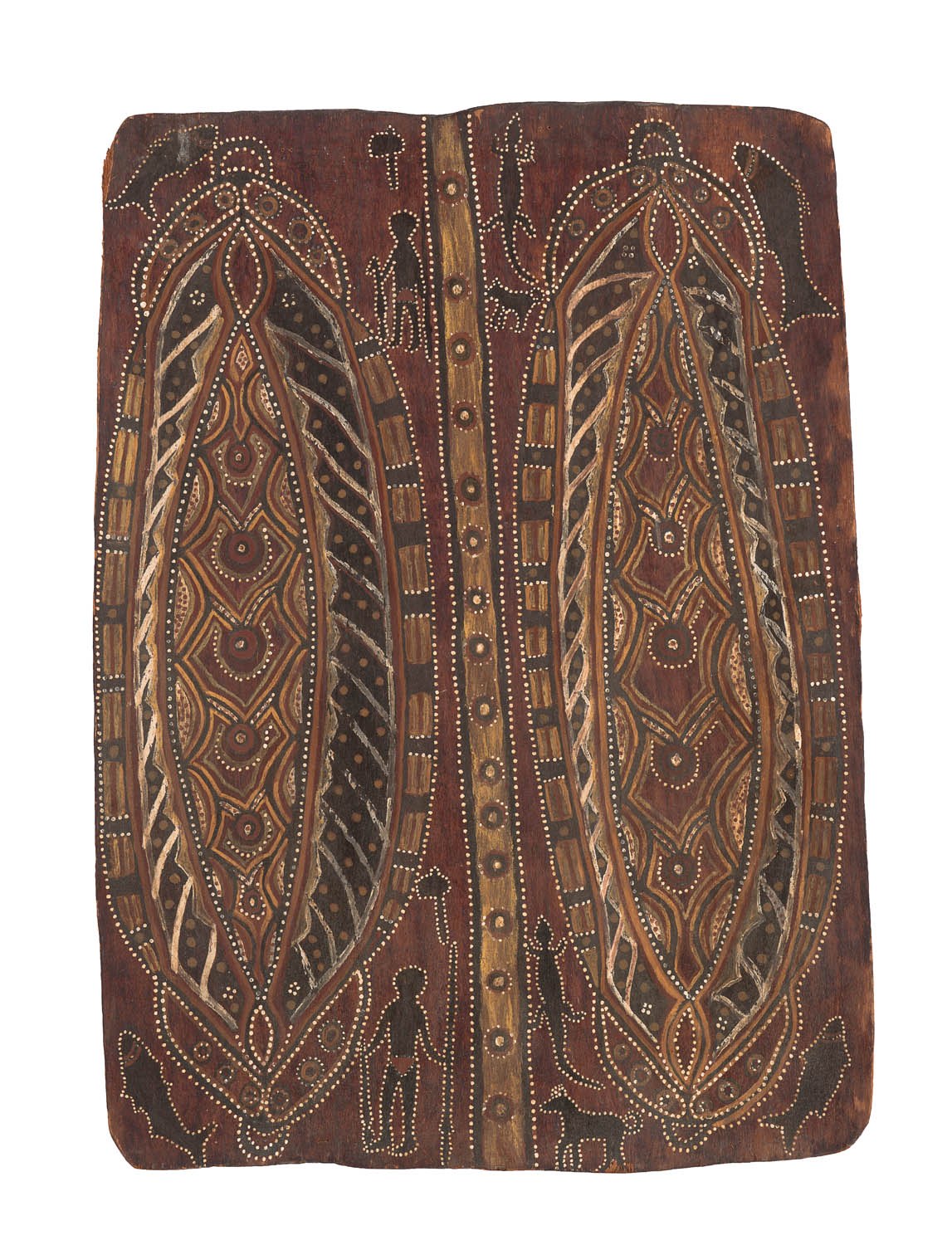
At Port Keats, now Wadeye, on the north-west coast of the Northern Territory of Australia, the Murinbata boys of the Punj rite are told that the Mother, Karwadi, will swallow them. The voice they hear from the bush is hers, and it is the bullroarer. When they are finally shown the roaring boards, the rite is not over. W. E. H. Stanner, who knew the rite at first hand, described what happens when the youths have been blooded and given the ornaments of men:
“At the main camp, which is known in this context as mununuk (which connotes ‘waiting, with gifts prepared’), the female kin and affines of the youths form an arcuate, seated cluster. The initiated men stand in two lines (one for each patrilineal moiety), with backs turned to mununuk. … The lined men stand with legs apart and the youths, on hands and knees, crawl towards mununuk between the legs of the opposite moiety. Thus humbled, they make their way to their mothers: the conception that it is to the mothers they are going is explicit. As each youth emerges he sits momentarily in front of his mother, with his back to her, but not touching or touched by her, while all the women wail and lacerate their heads to draw blood.”
W. E. H. Stanner, On Aboriginal Religion (1959–63; 2014 ed.), p. 9.
The Mother swallowed them, and the bullroarers are her voice. The new men have seen the boards. And the first thing they must do with their new standing is crawl, through the legs of the men of the other moiety, back to the women who bore them, and sit before them in silence while the women bleed. The Mother of All tells the swallowing. The crawl is the women’s part of it, and the men cannot skip it.
On the other side of the world the Kujamaat Jóola of Guinea-Bissau, whose initiates disappear into a sacred forest where the master of the forest roars, keep the same frame round the men’s secret. Odile Journet-Diallo describes the mothers counselling their sons before they leave, the women providing the food, composing the songs and greeting the masked return. When a boy dies in the forest, the men keep up a fiction that he lives until his mother can be told in private. The forest is the men’s. The departure and the return, and the first news of a death, belong to the mothers.
The receipt
Follow the rite through its crossings and a woman stands at each one. When the spirit flees, an old woman calls Egbo home, and an old woman tells the Humbi boys what the roar demands; the growl in the Mwiri enclosure is a copy of a voice that called to women. When the spirit dies, women strike Kavula first, a boy masked as the Mother fines his elders, and the law Daramulan teaches is Bootha’s. Between the rites, Orò’s emblem sleeps in the women’s shrine, a mother of twins is presumed to know where the mask came from, a Roman priestess opens the sanctuary to her sons, and Bembe women keep a basket no man will know. At the birth, Hup women stand and Selk’nam women sing the newborn out. At the return, Murinbata youths crawl back to their mothers, and Jóola mothers wait at the edge of the forest.
None of these is what a male invention would leave behind. A cult that men had made for themselves would need no woman to recall its spirit, no mother to fine its elders, no chorus to bring out its child. These are the places where the theft did not close. The men took the instrument, the enclosure and the secret, and every one of them still runs back to a woman at the point where it matters most: at the call, at the death, at the birth, at the return. Each is a receipt, kept inside the very rite that excludes her, and each says what the myths say. The rite was hers.
The myths could be dismissed as stories. The residue cannot. It is not told. It is done, on the day itself, by people who believe the men own the rite. The Efik men who answered Percy Talbot had every reason to deny that their society needed a woman. They admitted it “after considerable hesitation,” because the custom was there in front of them and they had to account for it. So did Zempléni’s embarrassed old man, who answered “humm” to his mother and paid the fine. The ritual keeps the evidence even where the men would rather not give it.
And the receipts agree, across oceans. From the Cross River to the Teke plateaux, from the Vaupés to Port Keats, the share kept back for women is strikingly close: a summons only she can give, the first blow, a shrine, a song at the door of the lodge, a mother waiting at the edge of the camp. No people sets out to invent a debt to the women it shuts out. A debt like that is inherited. It came down with the rite, passed from people to people because it was part of the rite from the beginning, and every people that took up the cult took up the women’s share inside it. The men who carried the voice across continents carried the record of whose it was. The Stolen Voice follows the theft. What the women kept is its receipt, and the men are paying it still.
Key sources
- D. Amaury Talbot, Woman’s Mysteries of a Primitive People: The Ibibios of Southern Nigeria (London: Cassell, 1915), pp. 193–195. The old woman who recalls Egbo; the divine woman who brought Egbo to the women.
- Gerhard Kubik, Muziek van de Humbi en de Handa uit Angola, record booklet, Koninklijk Museum voor Midden-Afrika (Tervuren, 1973), pp. 71–72 and photograph. The lumpoku at Kamuvia, 18 July 1965, and the elderly woman’s call.
- Julien Bonhomme, Le miroir et le crâne. Parcours initiatique du Bwete Misoko (Gabon) (Paris: CNRS / MSH, 2005), ch. X, “Mwiri,” paras. 6, 11, 28 and myth 7.
- Victor Turner, Revelation and Divination in Ndembu Ritual (Ithaca: Cornell University Press, 1975), pp. 39, 105, 112–113, 183. The killing of Kavula, Nyamukola first (p. 105); Nyaluwema’s account of the women’s first Chihamba (pp. 112–113).
- András Zempléni, “L’invisible et le dissimulé. Du statut religieux des entités initiatiques,” Gradhiva 14 (1993): 3–14, p. 13. Kafolo fines the elders.
- O. O. Ìdòwú-Òshó, “Gender Roles in Orò Tradition in Ìkòròdú of Western Nigeria,” An Encyclopaedia of the Arts 12, no. 1 (2006): 45–60, pp. 47–52. The Am’basú shrine and the Ota River procession.
- Marie-Claude Dupré, “Comment être femme. Un aspect du rituel Mukisi chez les Téké de la République populaire du Congo,” Archives de sciences sociales des religions 46, no. 1 (1978): 57–84, pp. 60–61.
- Daniel P. Biebuyck, “Bembe”: Bahumbwa, field photographs and notes, Lubumba, November 1950.
- Livy, History of Rome 39.13.8–9, in Livy, vol. XI, trans. Evan T. Sage (Loeb Classical Library, 1936), p. 253.
- Patience Epps, A Grammar of Hup (Berlin: Mouton de Gruyter, 2008), pp. 18–19.
- Anne Chapman, Selk’nam (Ona) Chants of Tierra del Fuego, Argentina, vol. II, Folkways FE 4179 (1977), booklet pp. 8–9.
- W. E. H. Stanner, On Aboriginal Religion (1959–63; Sydney University Press, 2014), pp. 8–9.
- Odile Journet-Diallo, Les créances de la terre. Chroniques du pays jamaat (jóola de Guinée-Bissau) (Turnhout: Brepols, 2007), pp. 186–191.
- Heritage NSW, Calga Aboriginal Cultural Landscape, State Heritage Register 5064142, historical notes (Darkinjung submissions, 2018).