The Stolen Voice · Essay II
The Woman Who Made Mimi’unemb
Torres Strait · Fly estuary · Papuan Gulf · Huon Gulf · Middle Fly · the Sepik
New Guinea preserves the charter more nakedly than anywhere else on earth. A woman finds the whirring splinter. A woman carries the board in her net-bag. A woman is pregnant with it. A woman terrifies the village with the first sacred voice. Then the men decide that such a voice should not belong to her, kill her, and rebuild the theft as initiation.
Across New Guinea and Torres Strait, the men’s cult announces itself with a stolen female voice: women discover, make, carry, or give birth to the sacred sound, and men convert that theft into initiation.
In brief
- Kenneth Gourlay counted fourteen bullroarer origin myths, from Madang and the Huon Gulf in the north to Kiwai and Keraki country in the south. Twelve begin with a woman. In a thirteenth the instrument is the woman’s child.
- The local versions differ in detail but not in structure: Méte on Boigu and the Busama firewood-cutter discover the whirring splinter; the Ngaing old woman carries the first board in her net-bag; Engu in the Kwavaru story is pregnant with the instrument.
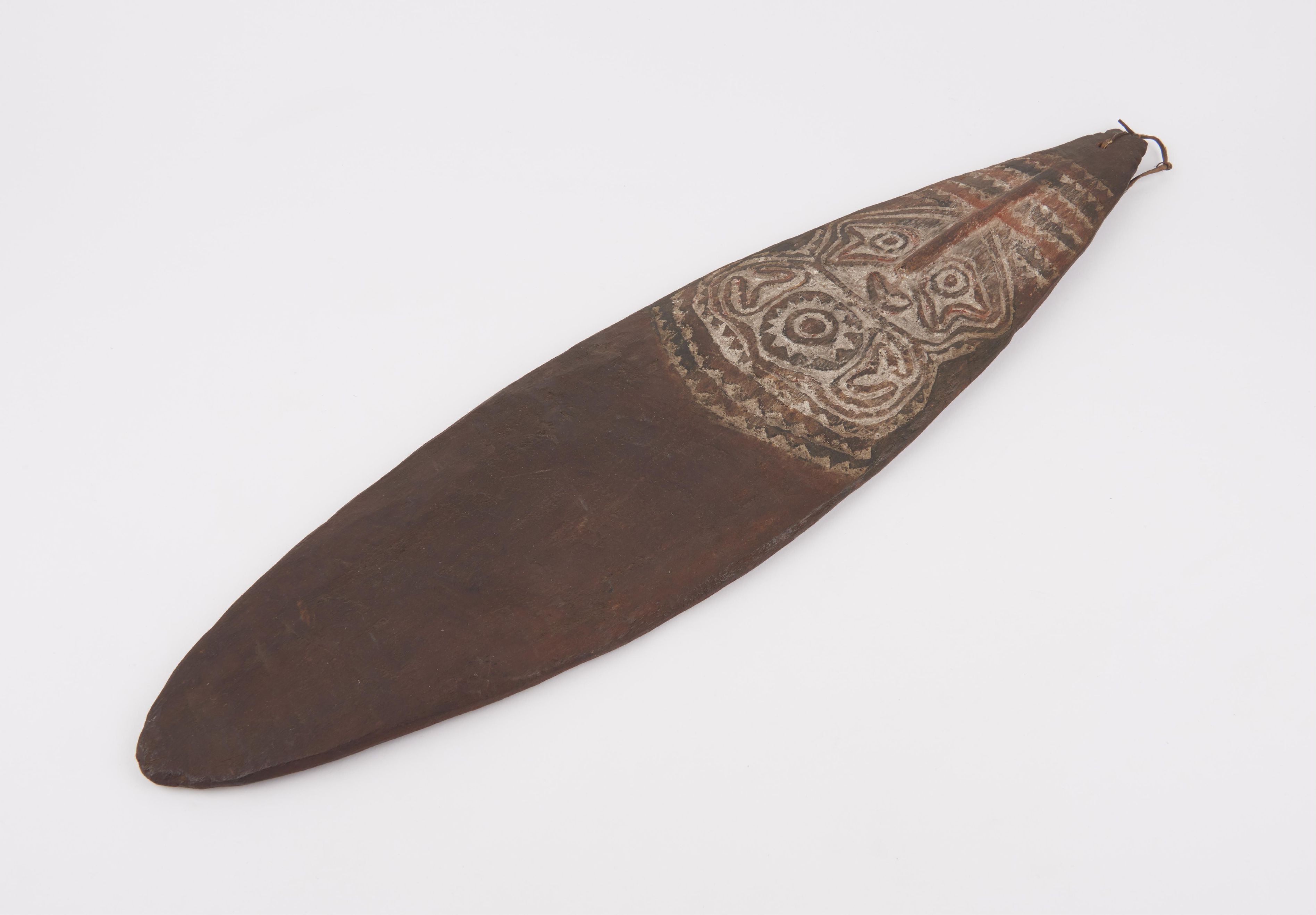
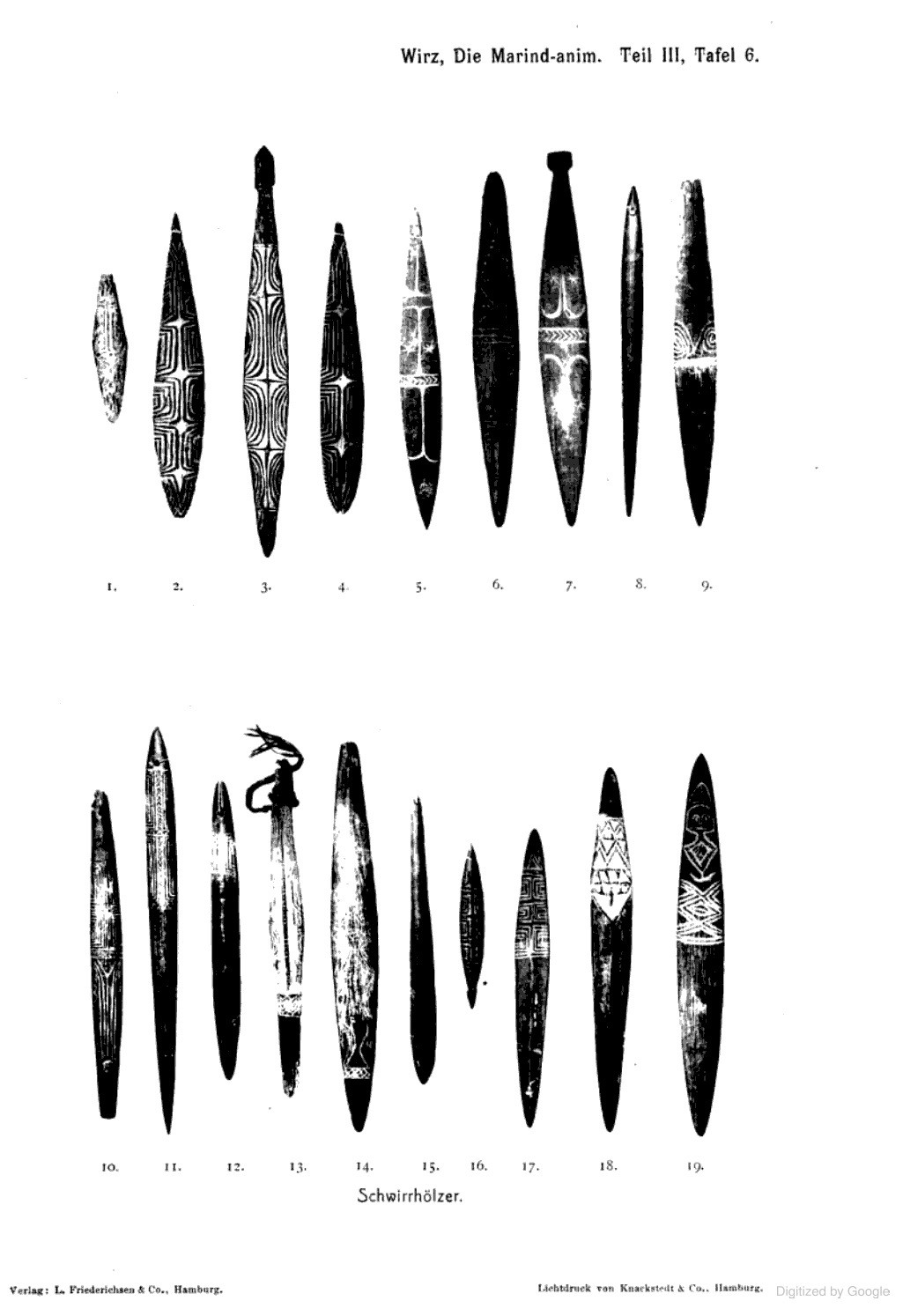
- At Ilahita a woman made the first walop, the board named Mimi’unemb, from which male spirit authority later speaks.
- The cult travels. Ilahita’s Nggwal is a grade borrowed from the Middle Sepik, and Anthony Forge watched Abelam villages buy and sell whole ceremonies with their names, objects, and instructions.
- On the Fly the Boadzi call the bullroarer atu gisagaru, the voice of the old woman, and the Marind remember women whirling sosom before men took the rite.
The Count
Fourteen myths, twelve women
In 1975 Kenneth Gourlay gathered every New Guinea bullroarer origin myth he could find. There were fourteen, from Madang and the Huon Gulf in the north to Kiwai and Keraki country in the south. Twelve of them begin with a woman. Of the remaining two, one makes the bullroarer the woman’s child. On both coasts, wherever the bullroarer has an origin story, the story starts with her.
These are not tales about a toy. In New Guinea the bullroarer lives in the men’s house, in initiation, in crop magic, in the economy of spirits, monsters, and secret names. When the same object enters the world through a woman and leaves her hands under male control in myth after myth, the institution is telling you what it thinks it is.
Of fourteen myths from [Madang, the Huon Gulf and the Papuan Gulf]… all but two associate its first appearance with women.
K. A. Gourlay, Sound-Producing Instruments (1975), p. 79.
Similar themes… are found in such widely separated areas as the Ngaing, the Huon Gulf Busama, the Kiwai and the Keraki Papuans.
Gourlay, p. 81.
The fourteen fall along the coasts: Madang, the Huon Gulf, the Papuan Gulf, the Trans-Fly, Torres Strait. The women-first story runs down the same channels as the names, masks, monsters, and initiation grades that New Guinea is known to have traded.
Torres Strait and Fly
The whirring splinter crosses the water
The lower-Fly and Torres Strait material gives the founding scene in almost storyboard form. An old woman is cutting wood or tending the fire. A splinter or chip flies off with a buzzing sound. She hears the marvel first because she is the one working the wood. The sacred voice enters the world through domestic labor before it enters the men’s house through ritual force.
On Boigu, in the western Torres Strait, Méte picks up the whizzing splinter and learns in a dream that it belongs to yam power. On the mainland coast near Bugi, another woman discovered the madubu; her husband dreamed that the spirit of the wood gave its name and ordered it kept in the men’s house, where no woman or child might see it. The Kiwai, further east at the Fly mouth, said they had brought it from Boigu, and they called it the mother of yams: umamomaramu to Haddon’s informants, burumamaramu to the missionary Chalmers.
The instrument belongs to the gardens, to secrecy, and to men. Its opening scene is a woman’s and its garden name is a mother’s. Women are barred from the thing a woman found.
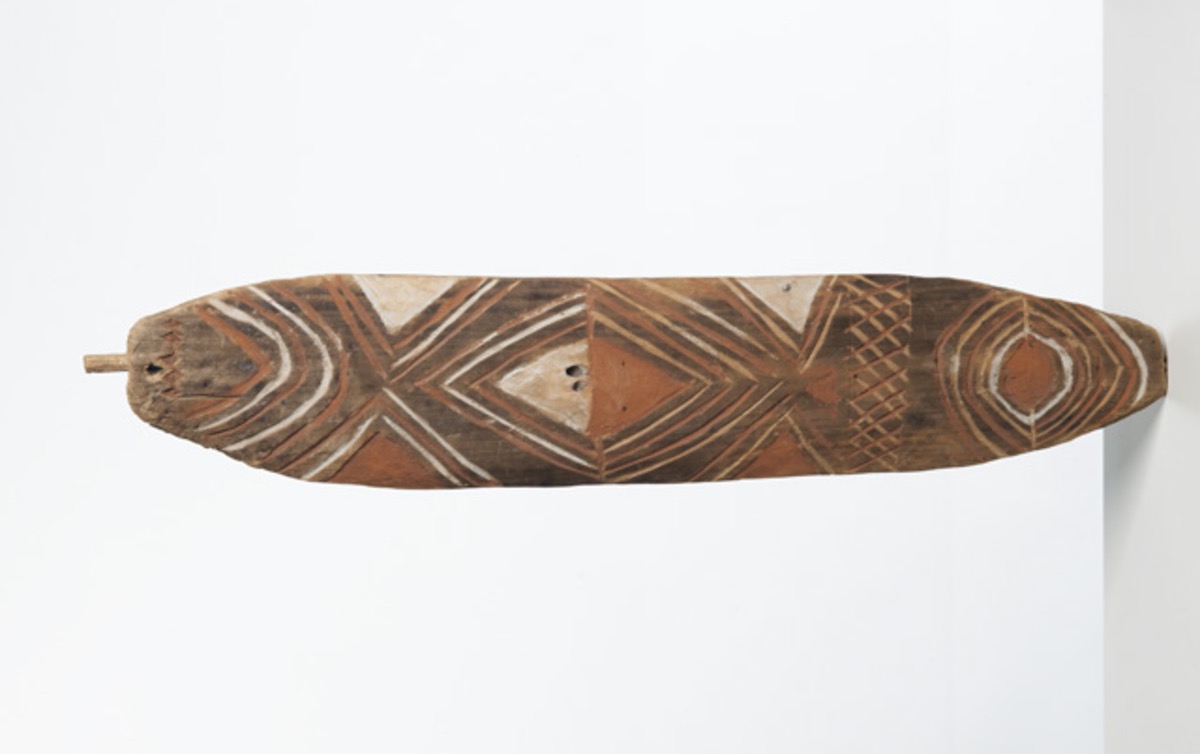
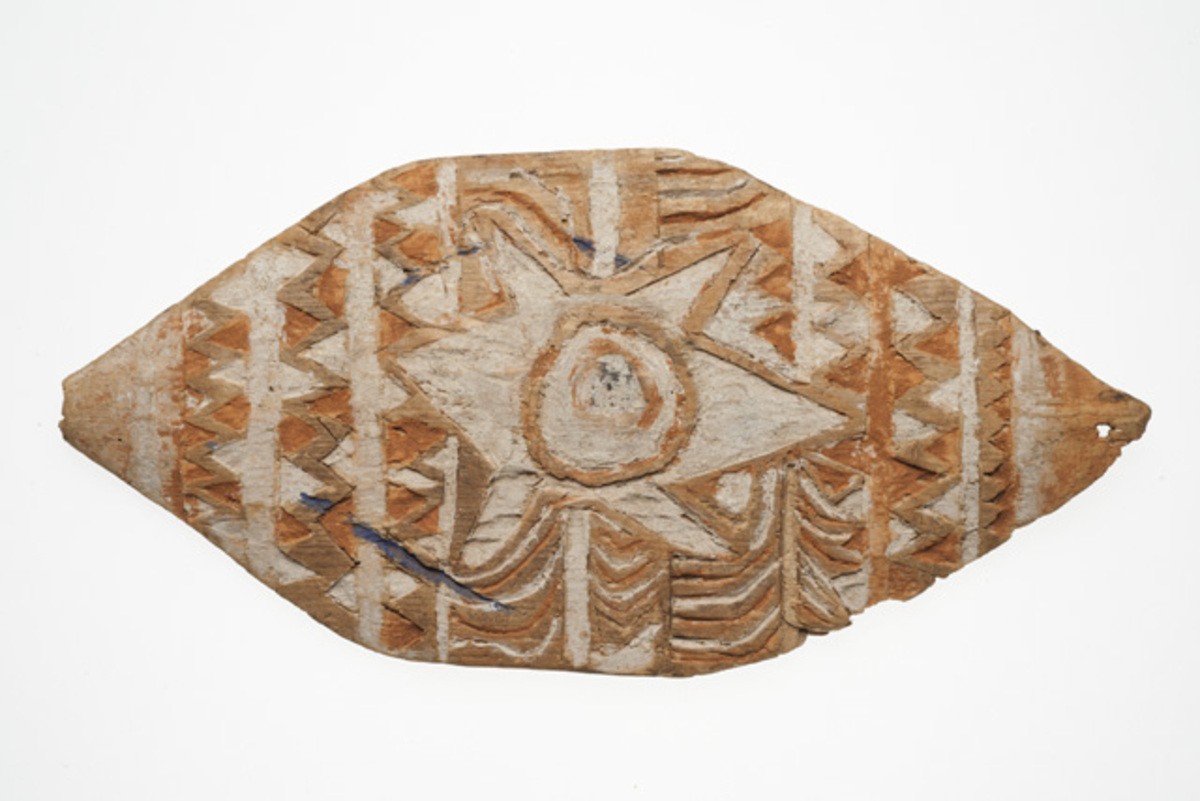
Its discovery was made by a woman. When cutting a tree a chip of wood flew off with a buzzing sound.Jan van Baal, “The Cult of the Bull-Roarer in Australia and Southern New Guinea” (1963), p. 205.
Huon and Madang
The men kill the witness and call that a cult
At Busama on the Huon Gulf the myth is bluntest of all. A woman chopping firewood notices the sounding chip, drills it, strings it, and has made the first bullroarer. Her husband shows it to the men in the club-house. They see at once what it is worth. Tell the women the sound is a spirit, enforce the lie with death, and the men’s cult is secure. One woman knows better. So they kill her. They bury her and tell the women an ogre ate her.
The story founds the whole regime in one breath: the death penalty for women, the spirit lie, the buried inventor, the ogre tale told to cover the murder, the club-house turned secret. The men did not bar women from a revelation of their own. They killed the woman who had it and called the killing holy.
Among the Ngaing of the Madang hinterland the first bullroarer sits in an old woman’s net-bag. She cannot make it sound. Her grandson learns how in a dream, and the secret passes to men. No murder here, only a grandmother carrying the voice before a boy learns to use it.
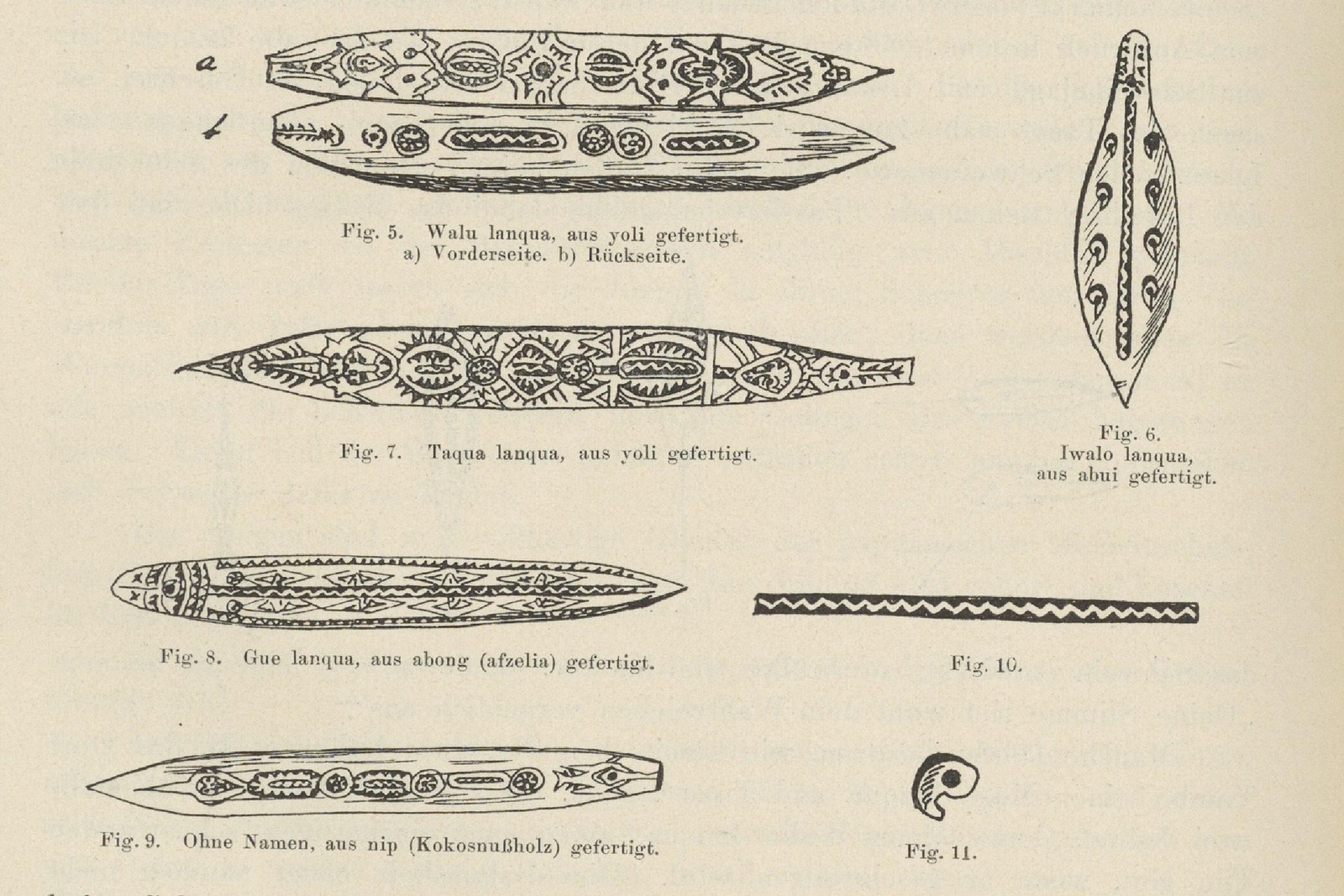
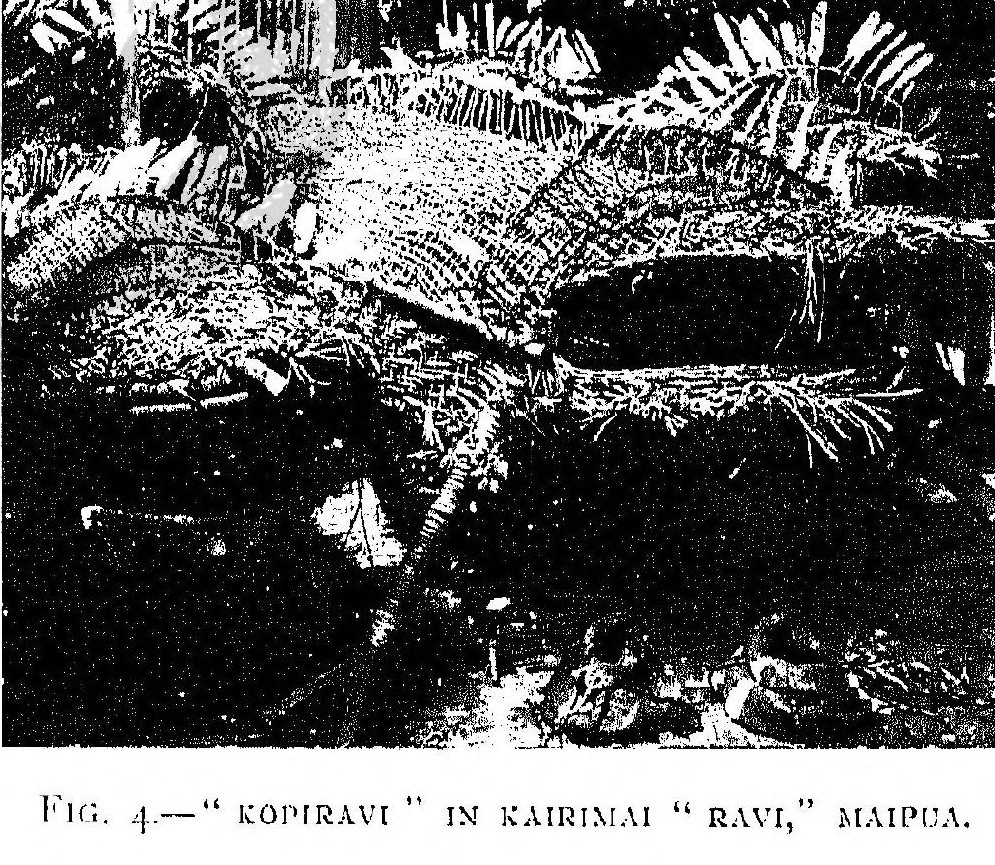
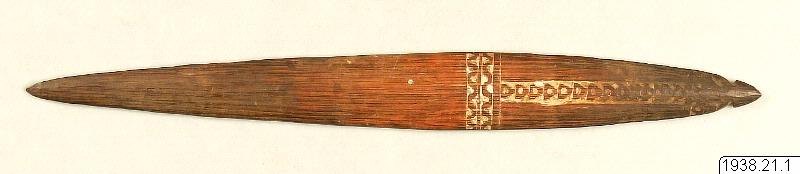
Boigu remembers the flying splinter. Kiwai remembers it. Busama, a thousand kilometres east, remembers it. The same kitchen accident opens the men’s cult at each stop along the coast, and one story carried along one route is the simplest way to get that.
Papuan Gulf and Trans-Fly
The board comes out of the woman’s body
The Papuan Gulf and Trans-Fly materials make a stronger claim than discovery. They treat the bullroarer not merely as female property but as female issue. In the Kwavaru story recorded by F. E. Williams, Engu is pregnant not with a human child but with the bullroarer itself. Whenever she stirs, the unborn instrument hums faintly. Her husband Tiv’r becomes desperate to know the source of the sound. He recruits the little bird Serekute, urges his wife to sweep harder, and waits until the point of the instrument protrudes from her vagina. The bird snatches it out. Engu is left screaming, blood flowing in what Williams identifies as her first menstrual blood, while Tiv’r takes the board to his breast and declares that from then on it will belong to men alone.
That is the charter in its least deniable form. Men do not simply steal a woman’s invention. They steal a firstborn. The sacred sound is extracted from the woman’s genitals, accompanied by menstrual blood, and transferred to the founding male ancestor, who immediately converts it into property and then into the first initiation ceremony for his son. Every later novice enters a ritual order founded on that scene.
The Keraki next door kept the seizure as a rite. In the old form of their initiation a parcel was snatched from between the legs of the ritual leader’s wife and cut open with a bullroarer, and their own myth has Kambel snatch the first moiank from his wife Yumara. The instrument begins as a birth before it becomes an authority.
Here the bullroarer is the first-born child of the wife of the originator… blood, the first menstrual blood, was drawn from her vagina.
Jan van Baal, Dema (1966), pp. 269–270, retelling Williams.
Sepik and Middle Fly
Mimi’unemb gives the case its proper name
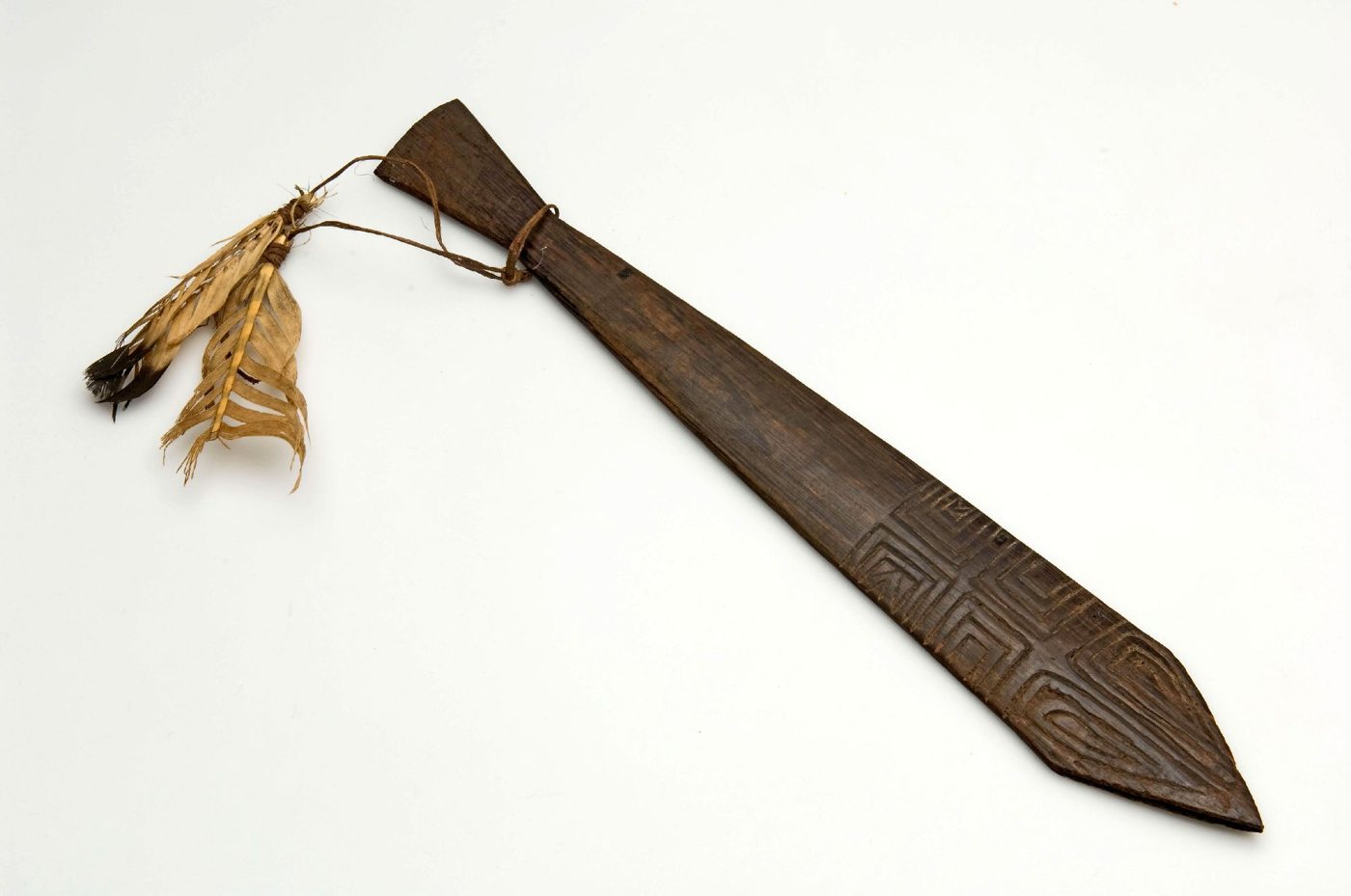
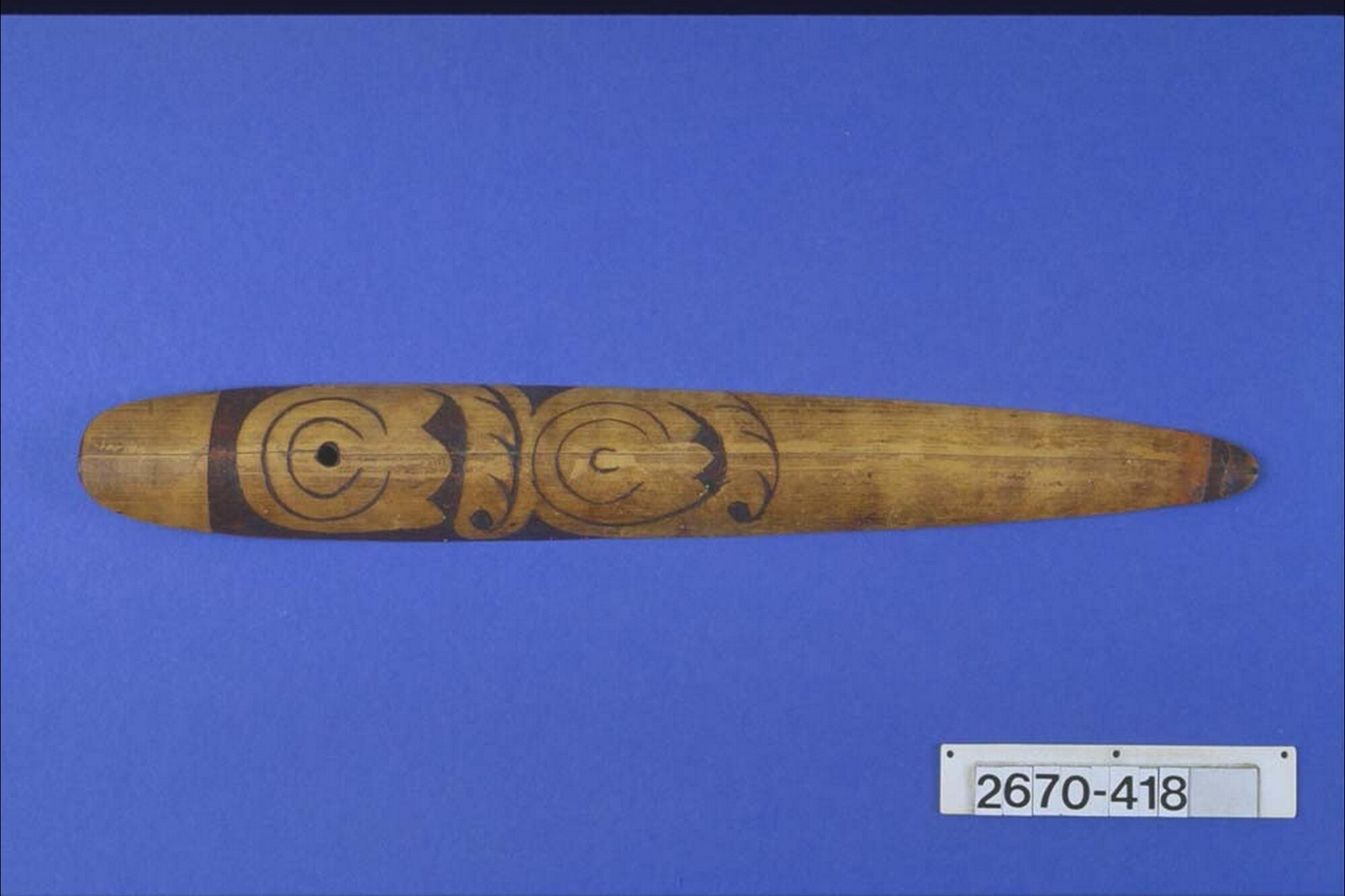
At Ilahita, in the Sepik foothills, the woman has no name, but the board she made does. It was a woman, the cult’s secret myth says, who long ago made the first bullroarer, walop. The men made her teach them, then killed her, and the instrument was named Mimi’unemb. In the cult it speaks as Lefin and summons the power of the Tambaran. Under Lefin’s voice sits a woman’s act of making, and the men of the most elaborate cult-house in New Guinea know it.
Ilahita also shows how such a cult moves. Nggwal, the highest grade of the Ilahita Tambaran, is not an Arapesh inheritance at all. The name and the grade came from the Middle Sepik. Among the neighbouring Abelam, Anthony Forge watched ceremonies, sacred objects, paraphernalia, and rights bought, sold, and leased from village to village, the shared Nggwal names keeping the copies true.
A cult that can be bought whole is a cult that can travel. Nothing frozen need move intact since the Pleistocene, only a complex that is sold, restaged, and sold again.
Marind and Boadzi
The old woman keeps talking inside the male machine
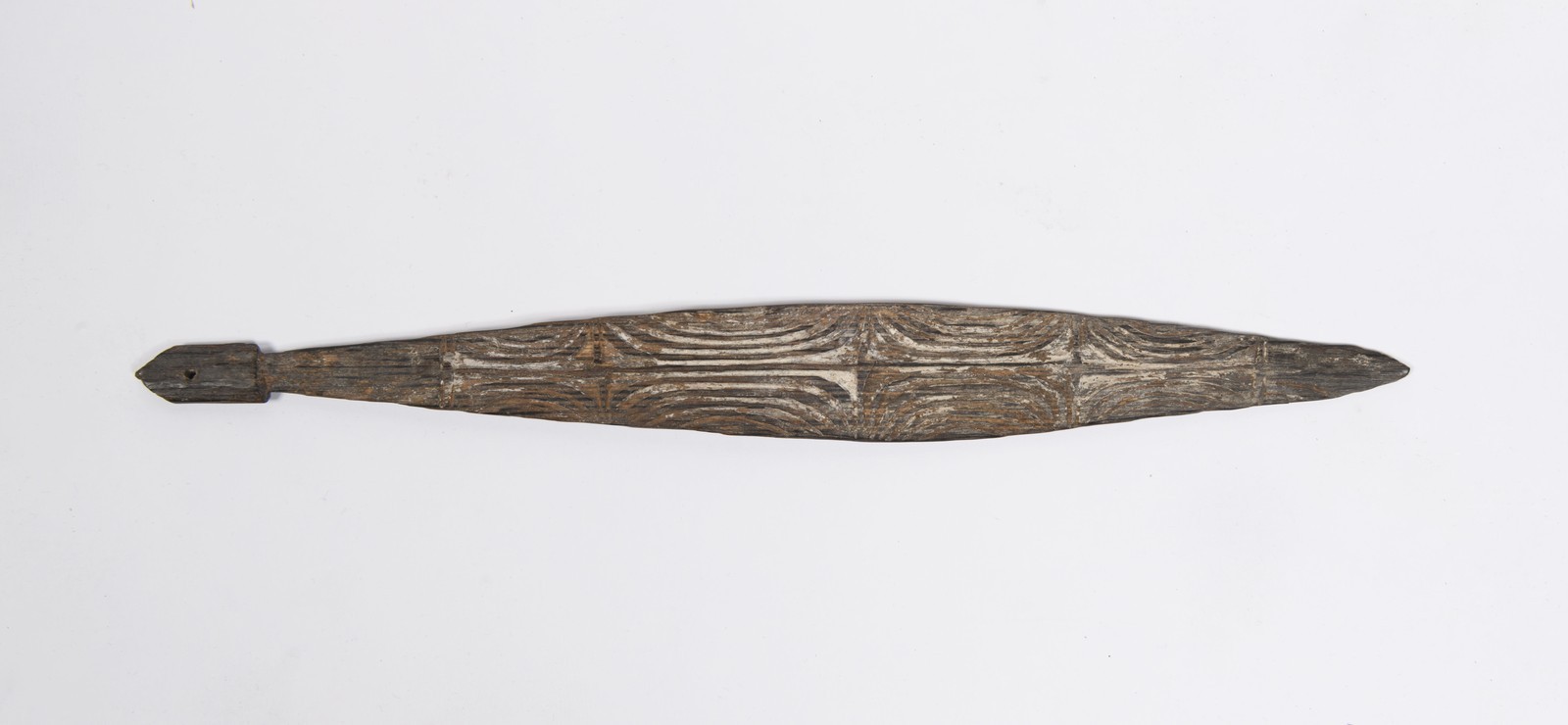
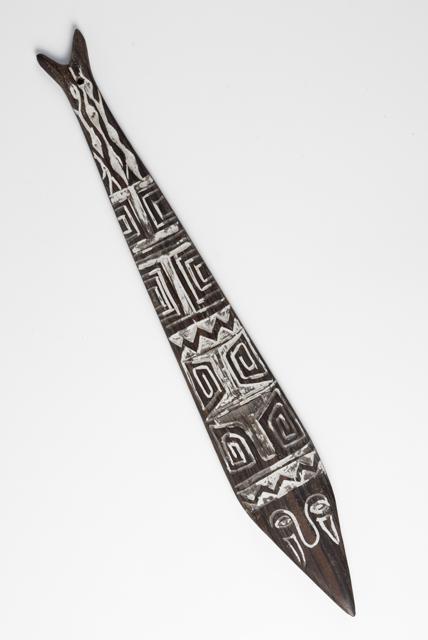
Among the Marind of the southwest coast, Sosom the giant arrives to find women already performing his rites and already whirling the bullroarers. They were doing the men’s thing before there were men to do it. Men displaced them. In a blunter variant Wirz heard, the men invented Sosom to frighten the women.
Inland, among the Boadzi of the middle Fly, the bullroarer is atu gisagaru, the voice of the old woman. At the climax of the gomai the initiates shout that they are killing her. The women outside are told the men are burning her excrement, burying her bones, and have eaten her flesh. The instrument speaks in her voice while the novices learn to take part in her death.
The hidden voice is female. The public authority is male. Initiation holds both at once. Men guard the instrument so jealously because the tradition says the voice was never theirs.
What It Means
The machinery, not an oddity
It would be easy to file all this under male anxiety and move on. But the stories cluster along a real route, from Torres Strait through the Fly and the Papuan Gulf to Morobe and the Sepik. They attach to initiation boards, crop cults, devouring monsters, men’s houses, and secret grades, never to children’s toys. And the same coasts are where named ceremonies were bought, sold, and carried from one language to the next.
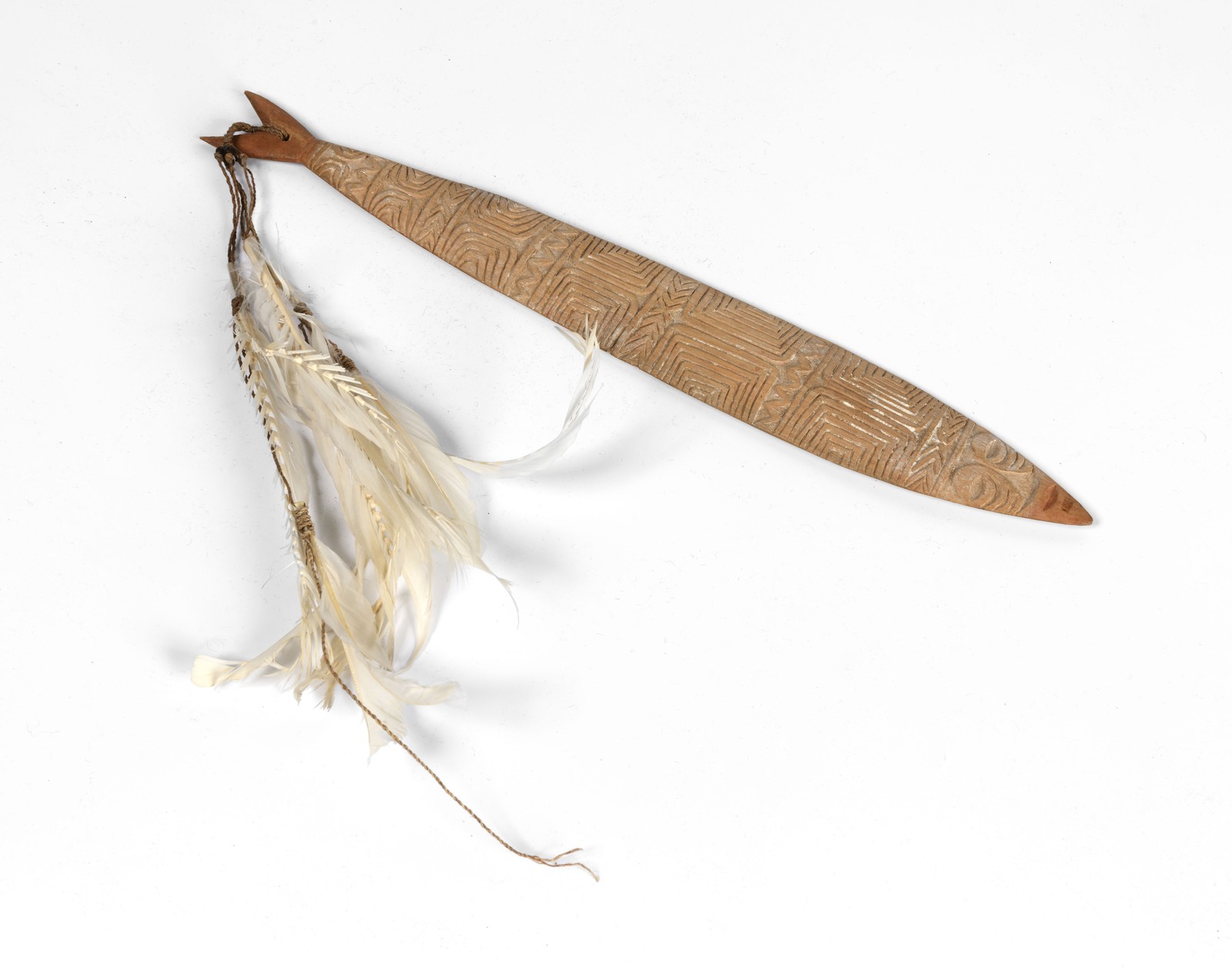
What travelled was not a piece of hardware but a rite. In one place the hidden voice is a bullroarer, in another flutes or slit-gongs or a wicker monster. The sequence stays. A woman finds or bears the voice. Men seize it. Boys are shut in the men’s house. Boys come out men.
The woman who made Mimi’unemb is more than a murder victim in an Arapesh myth. She is the witness to a male cult that advertises its debt to women at the very moment it seizes their power. Engu births the board. Méte finds it. The Busama woman invents it. The Ngaing grandmother carries it. The Boadzi old woman keeps speaking through it after the men declare her dead. The men’s house was not built to erase women from the sacred voice. It was built around the impossibility of erasing them.
The hidden voice was stolen before it was sacred
Across New Guinea and Torres Strait, the men’s cult announces itself with a stolen female voice: women discover, make, carry, or give birth to the sacred sound, and men convert that theft into initiation.
The Kiwai and Boigu say it. The Busama murder says it. The Ngaing net-bag says it. Engu’s bleeding body says it. The nameless woman of Ilahita says it through the board named Mimi’unemb, and the Boadzi old woman says it every time the board sounds in her name. New Guinea does not preserve a faint echo of the initiation complex. It preserves the working machinery by which men seize a female voice, hide it, and use it to manufacture men.
Key sources
- K. A. Gourlay, Sound-Producing Instruments in Traditional Society (ANU, 1975), p. 79 and note 1, and pp. 79–85, for the fourteen-myth count, the twelve explicit women-first charters, the thirteenth birth-from-woman reading, and the individual traditions.
- Ian Hogbin, Transformation Scene: The Changing Culture of a New Guinea Village (1951), pp. 214–215, for the Busama woman’s discovery of the sounding chip and the men’s decision to kill the only woman who knew its source; retold in Tibor Bodrogi, Art in North-East New Guinea (1961), pp. 72–73.
- Peter Lawrence, “The Ngaing of the Rai Coast,” in Peter Lawrence and M. J. Meggitt (eds.), Gods, Ghosts and Men in Melanesia (1965), pp. 205–206, for Gab’me, the old woman’s net-bag, and the grandson’s dream.
- A. C. Haddon, ed., Reports of the Cambridge Anthropological Expedition to Torres Straits, vol. I (1935), pp. 219–220, for the woman’s discovery near Bugi, the dream command, and the Kiwai claim to have brought umamomaramu, the mother of yams, from Boigu; Haddon, The Study of Man (1898), pp. 305–306 and n., for Chalmers’s burumamaramu at the Fly mouth; Gunnar Landtman, The Folk-Tales of the Kiwai Papuans (1917), no. 261, pp. 316–317, for Méte and the first bullroarer on Boigu.
- Jan van Baal, “The Cult of the Bull-Roarer in Australia and Southern New Guinea” (1963), pp. 201–214, and Dema (1966), especially pp. 267, 269–270, 480–485, and 590–597, for the Kiwai, Trans-Fly, Marind, and Boadzi material.
- F. E. Williams, Papuans of the Trans-Fly (1936), pp. 59, 181–186, 307–308, and 331 ff., for the Trans-Fly initiation setting, Engu, Serekute, the declaration that the board shall belong to men alone, and the Keraki rite of the parcel between the wife’s legs.
- Donald Tuzin, Unity in Duality (1973), p. 358 (Appendix E, no. 4) and p. 260 n. 23, for the cult myth of the woman who made the first bullroarer and was killed for it, and pp. 279–281 for Nggwal’s borrowed Middle Sepik name; The Voice of the Tambaran (1980), “Lefin,” for the instrument walop named Mimi’unemb.
- Anthony Forge, “The Power of Culture and the Culture of Power”, in Style and Meaning, pp. 143–145, for the sale or lease of Abelam ceremonial complexes and the transmission of Nggwal names and rights.