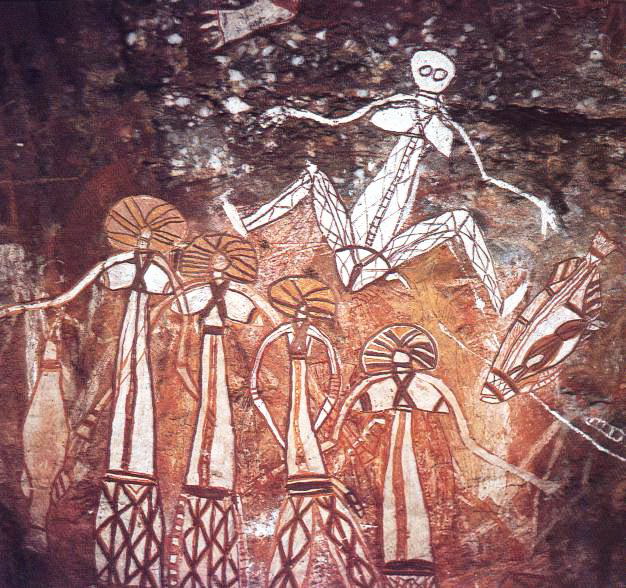
The Stolen Voice · Essay I
The Voice Was Hers
Arnhem Land, Port Keats, the Tanami, Cape York, and the central deserts
Australian initiation says the forbidden thing plainly. The voice in the bush is a Mother, an Old Woman, a snake, or a pair of Sisters. Men may whirl the instrument now, but the myths do not let them pretend they invented it.
Australia remembers the men’s initiation complex as stolen female property: women first owned, carried, or embodied the sacred voice, and men made initiation by taking it.
In brief
- In the Arnhem Land Kunapipi cycle, Ronald Berndt says the roar is the voice of Mumuna herself when she was killed.
- Among the Murinbata, the hidden bullroarer is the voice of the Mother, Karwadi, and the rite men perform was once hers.
- The Djanggawul tradition makes women the source of ceremonial law and sacred bags; the Wawilak cycle makes women the first singers, dancers, and teachers of the rites later taught to men.
- Among the Warlpiri, novices are told the two bullroarers are the Two Sisters themselves; among the Arrernte, the small bullroarer originally belonged to the alknarintja women.
Arnhem Land and Port Keats
The Mother keeps speaking after the men kill her
In the north the voice on the cord is a woman’s. Often she is already dead. Her body has been replaced by a slab of wood and a circle of men who decide when she may be heard.
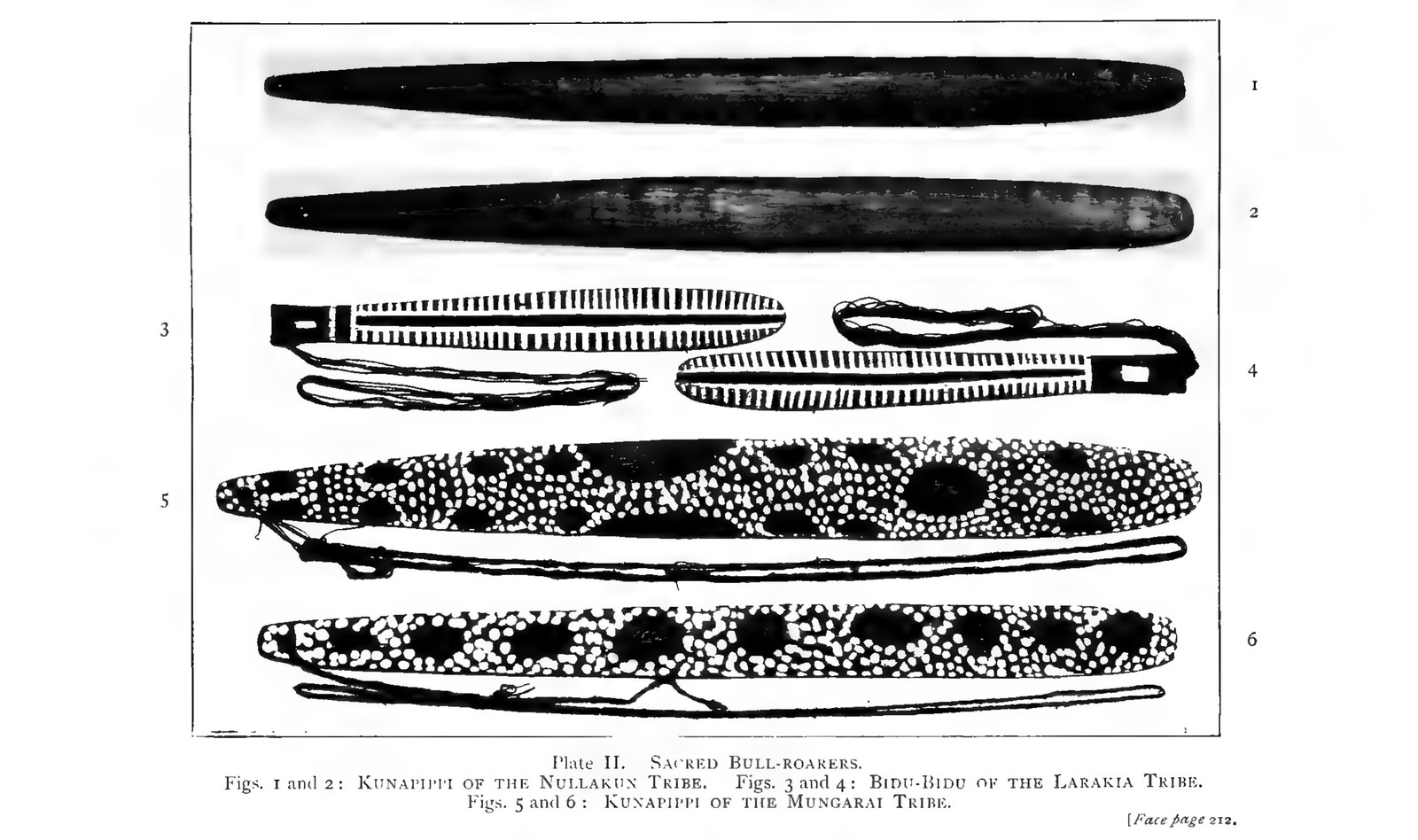
In the Mara telling of the Kunapipi cycle, on the Roper River, the bullroarer’s sound, Ronald Berndt writes, “is its ‘voice’, the ‘voice’ of Kunapipi or Mumuna herself when she was killed by Eaglehawk.” Mumuna is the devouring Old Woman. Eaglehawk kills her, cuts a board, strings it, and gives her cry back as mumuna. The sacred sound enters the world as a murder scream, kept.
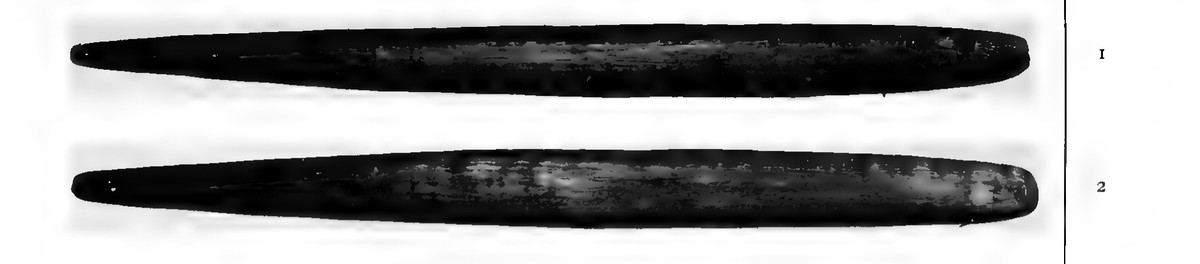
During initiation the boys see men smeared red and are told the red is the liquid of Mumuna’s womb. The rite announces that the boys are passing through a mother’s body. Men have not denied the power of birth. They have seized it and staged it themselves.
The men said as much. One of Berndt’s informants told him that the Dreaming business came out of women, that men had had nothing, and that they took these things from women. The custodians of the ceremony call the order they administer stolen property.
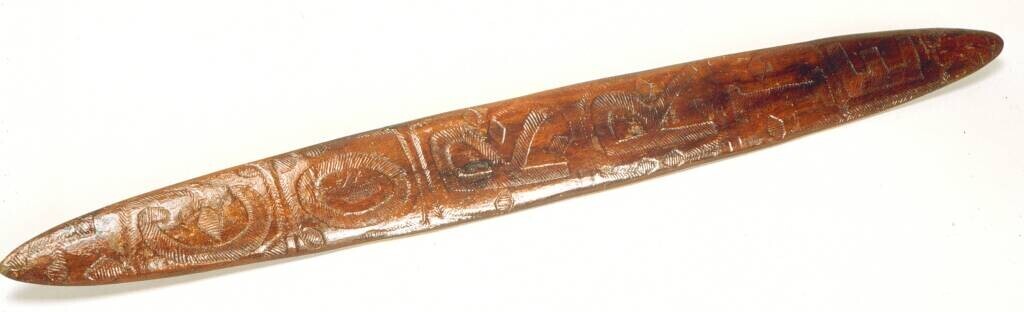
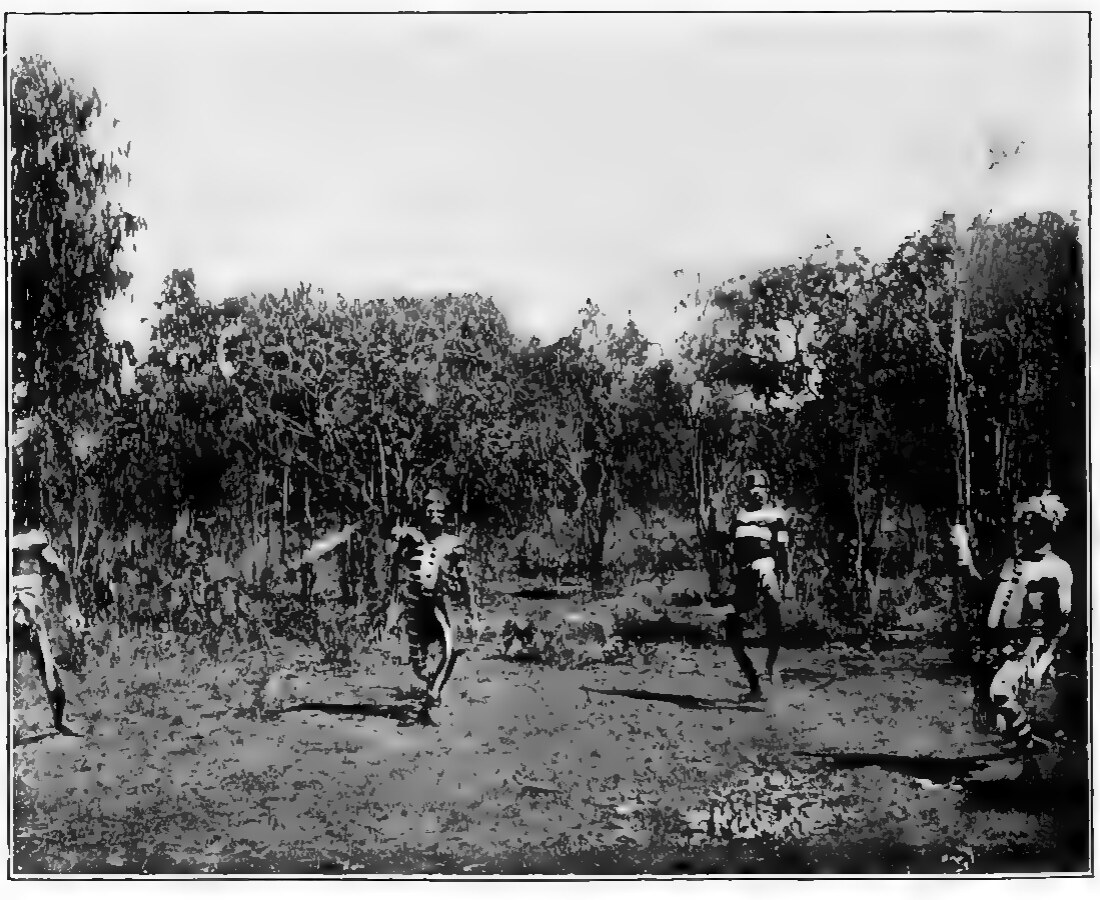
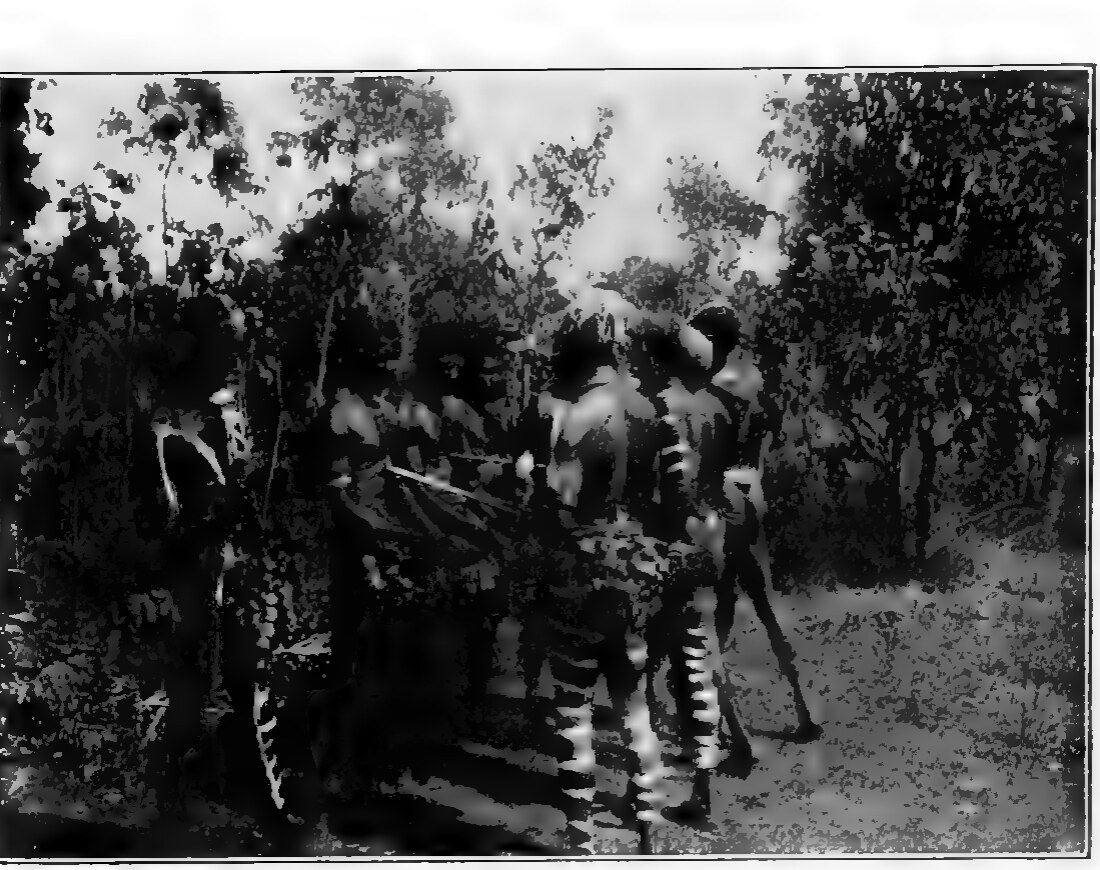
The Mungarai of the Roper River tell the seizure as a plain story. A Kunapipi woman travels with her bullroarer wrapped in bark, swinging it as she walks, and joins other Kunapipi women making ceremony. Kumkum watches them hide their boards, digs them up, and announces that he will keep them. From that day no woman possessed a Kunapipi.
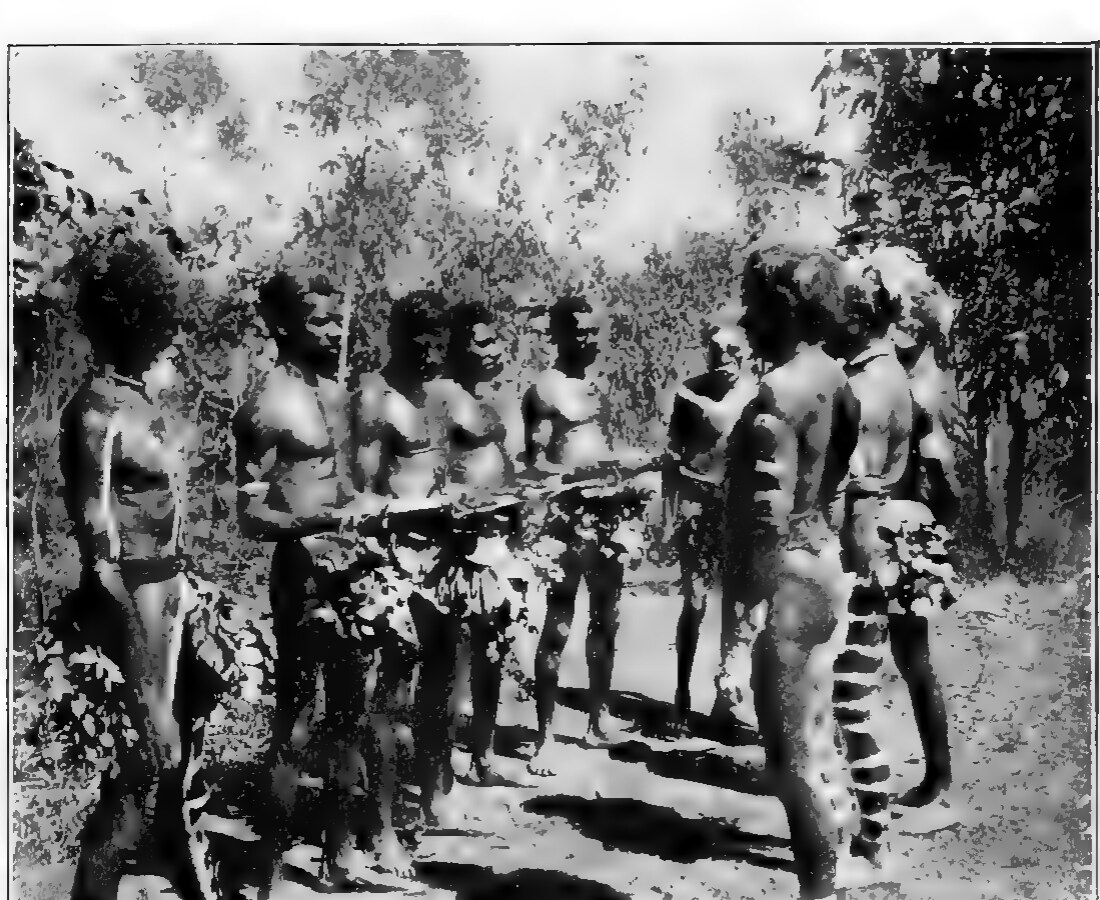
At Port Keats the Murinbata give the Mother another name. In the Punj ceremony the hidden bullroarers are the voice of Karwadi, the Old Woman Mutjingga who swallowed the children. The rite was hers first. Men have stepped into her place with a wooden substitute and made the substitute a deadly secret. One country gives the voice to a snake, another to a cannibal Mother, another to a pair of Sisters. Everywhere the sound stays female while control of it passes to men.
The boys are told the Mother will swallow them and vomit them up. The men make her call, show the boys the wood that makes it, cover them in blood, and send them back through a tunnel of men’s bodies. The men have played Mother, monster, womb, and birth canal in turn.
We have been stealing what belongs to them… all the Dreaming business came out of women… we took these things from women.
A Kunapipi man to R. M. Berndt, Kunapipi (1951), p. 55; quoted by Chris Knight, Blood Relations.
Northeast Arnhem Land
The Sisters owned the law before men owned the house
In northeast Arnhem Land the Djanggawul Sisters carry more than the voice. They carry the law itself: the ceremonies, the sacred objects, the power to people the country. When the men steal their dilly bags, the Sisters shrug.
We have really lost nothing… For aren’t we still sacred, even if we have lost the bags? Haven’t we still our uteri?
R. M. Berndt, Djanggawul (1952), pp. 40–41.
The bags can pass to men. The source cannot. Berndt puts it flatly in his introduction: women are said to be the source of ritual knowledge, and are therefore sacred. Men guard the regalia of a law that still lives in women’s bodies.
The Wawilak Sisters, in the neighbouring cycle, sing and dance the rites first. After the python swallows them they return as spirits and teach the men in a dream. Women gave the ceremonies; men received them. The male monopoly rests on a lesson it remembers taking from women.
In one version the bullroarer is the voice of Yurlunggur, the great python who swallowed the Sisters. Mother, Old Woman, Sisters, or snake: the voice belongs to a being that devours and gives back, and the men who make the sound do not claim to have made the power.
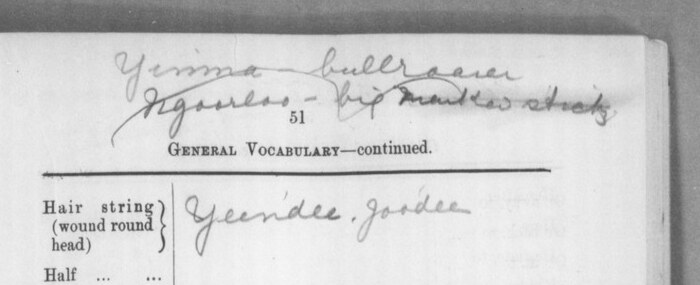
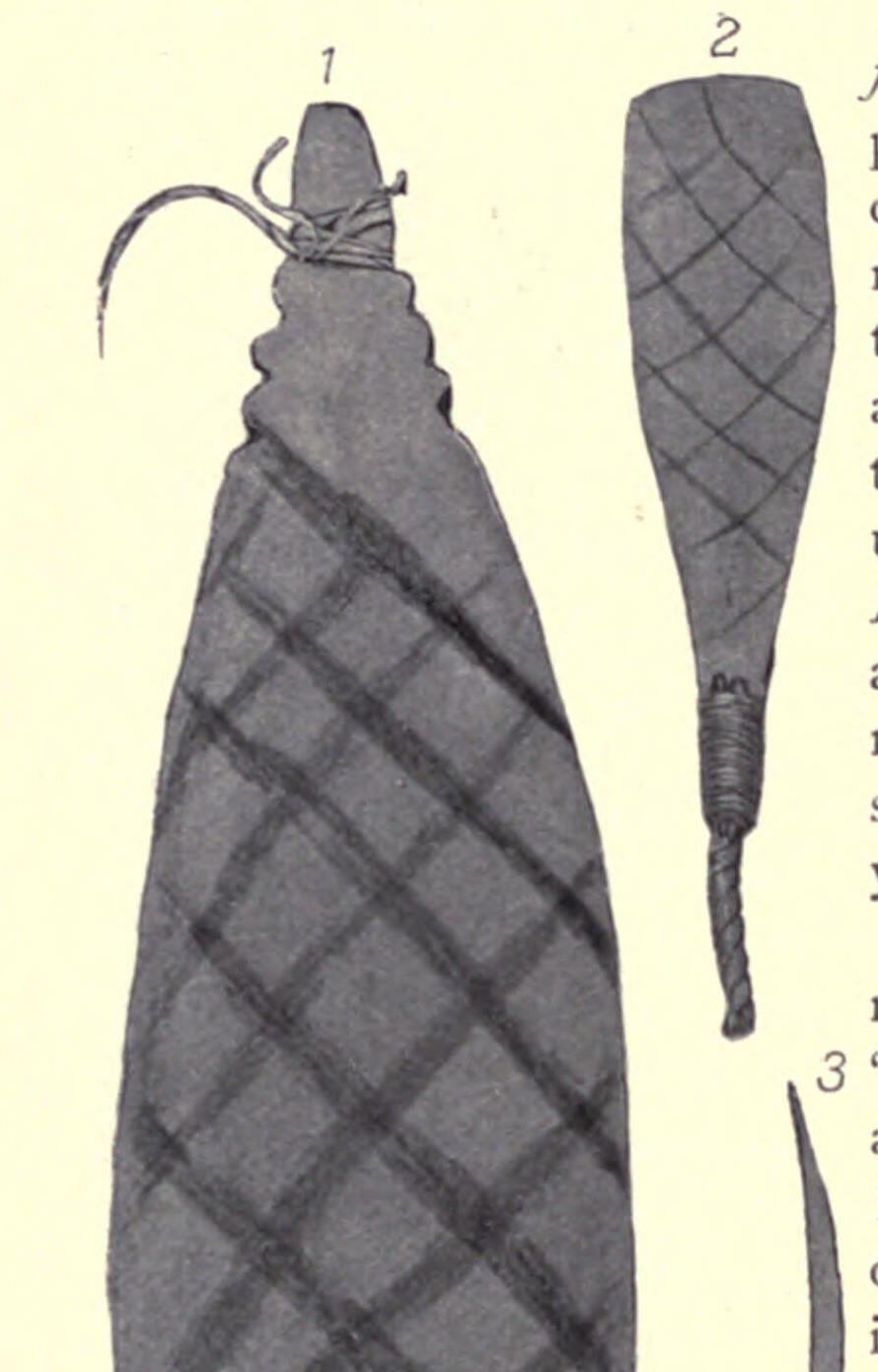
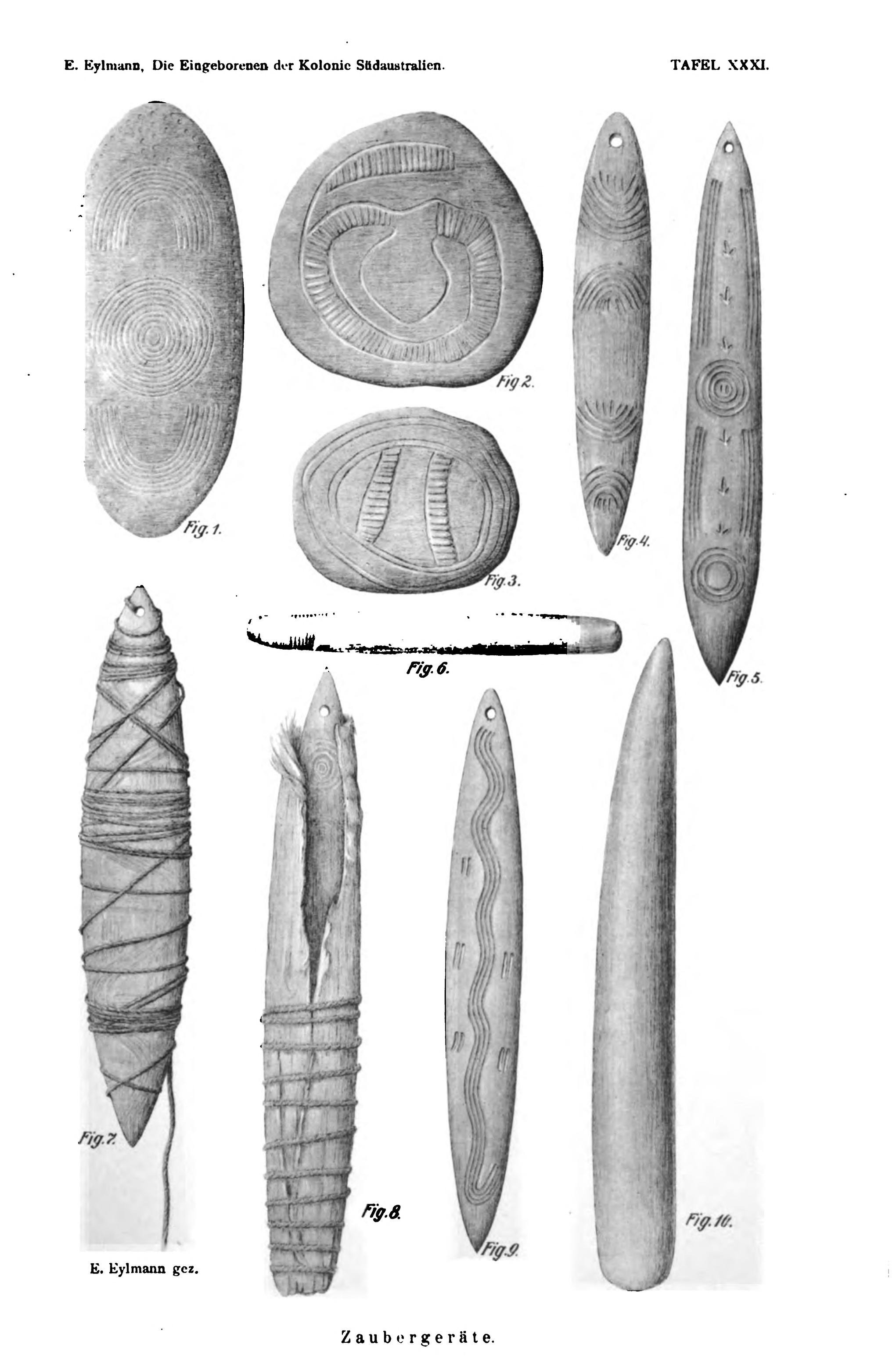
Central Australia and Cape York
The desert remembers that the small bullroarer belonged to women
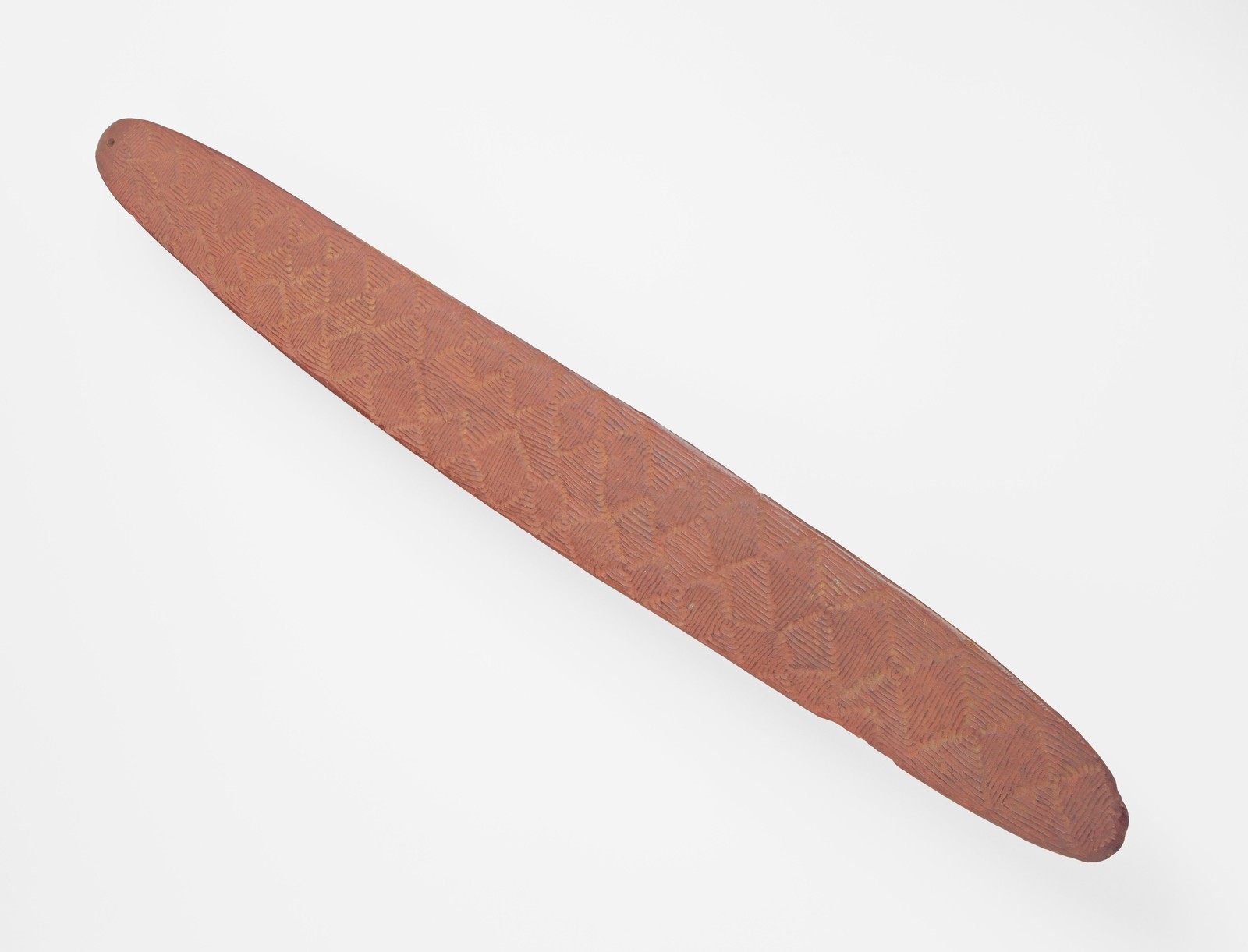
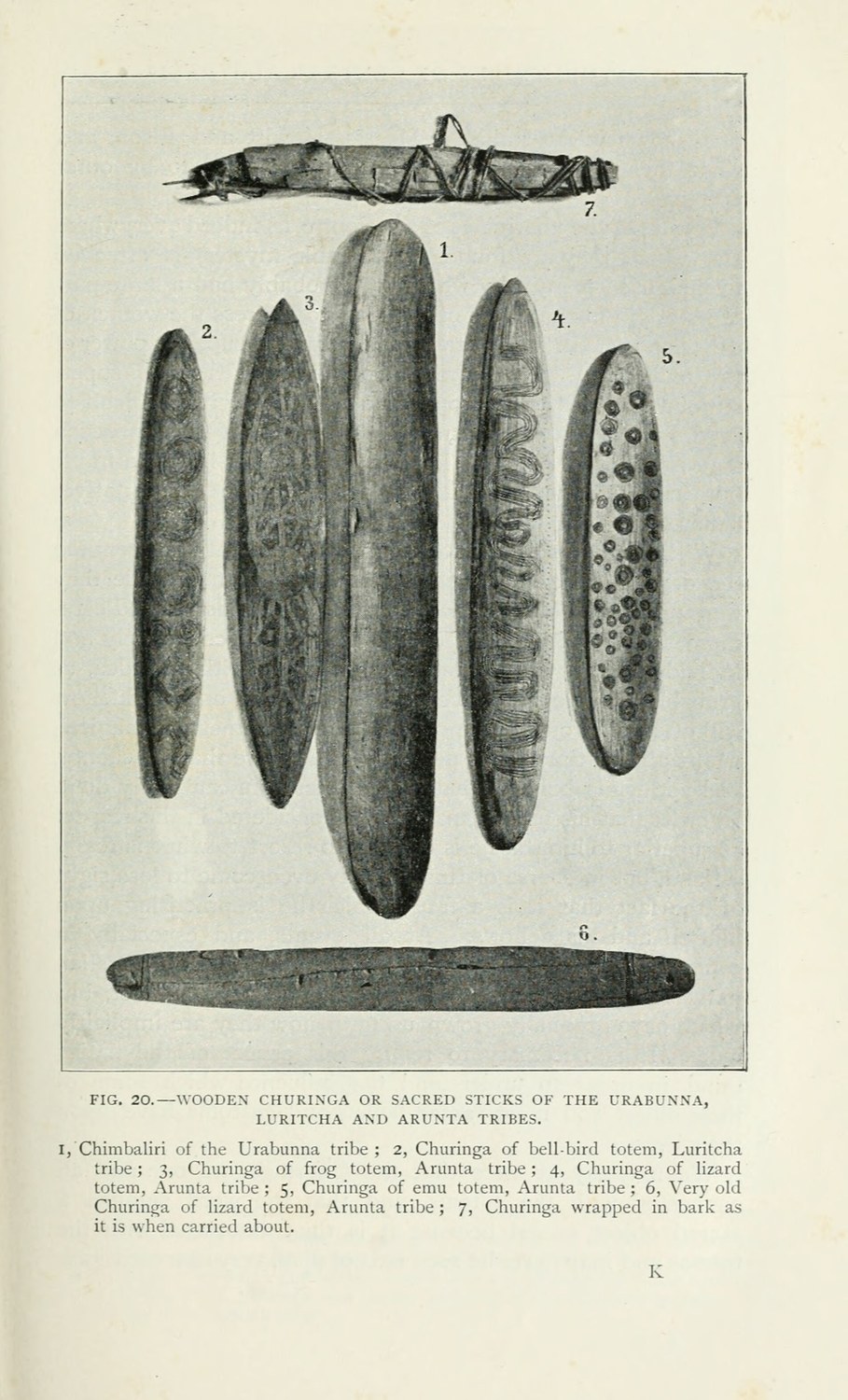
The central desert is churinga country, home of the most jealously male sacred objects on the continent. Even there the Arrernte say the small bullroarer was the women’s first. Géza Róheim heard it in 1929.
In the alknarintja songs the women menstruate, make bullroarers, and whirl them. Blood, wood, sound, and ceremony in one verse. The ban on women is the second regime, not the first.
The small bull-roarer… was originally owned by the alknarintja women themselves. It then passed into the possession of men.
Géza Róheim, The Eternal Ones of the Dream (1945), p. 175; the songs in Children of the Desert (1974), pp. 138–142.
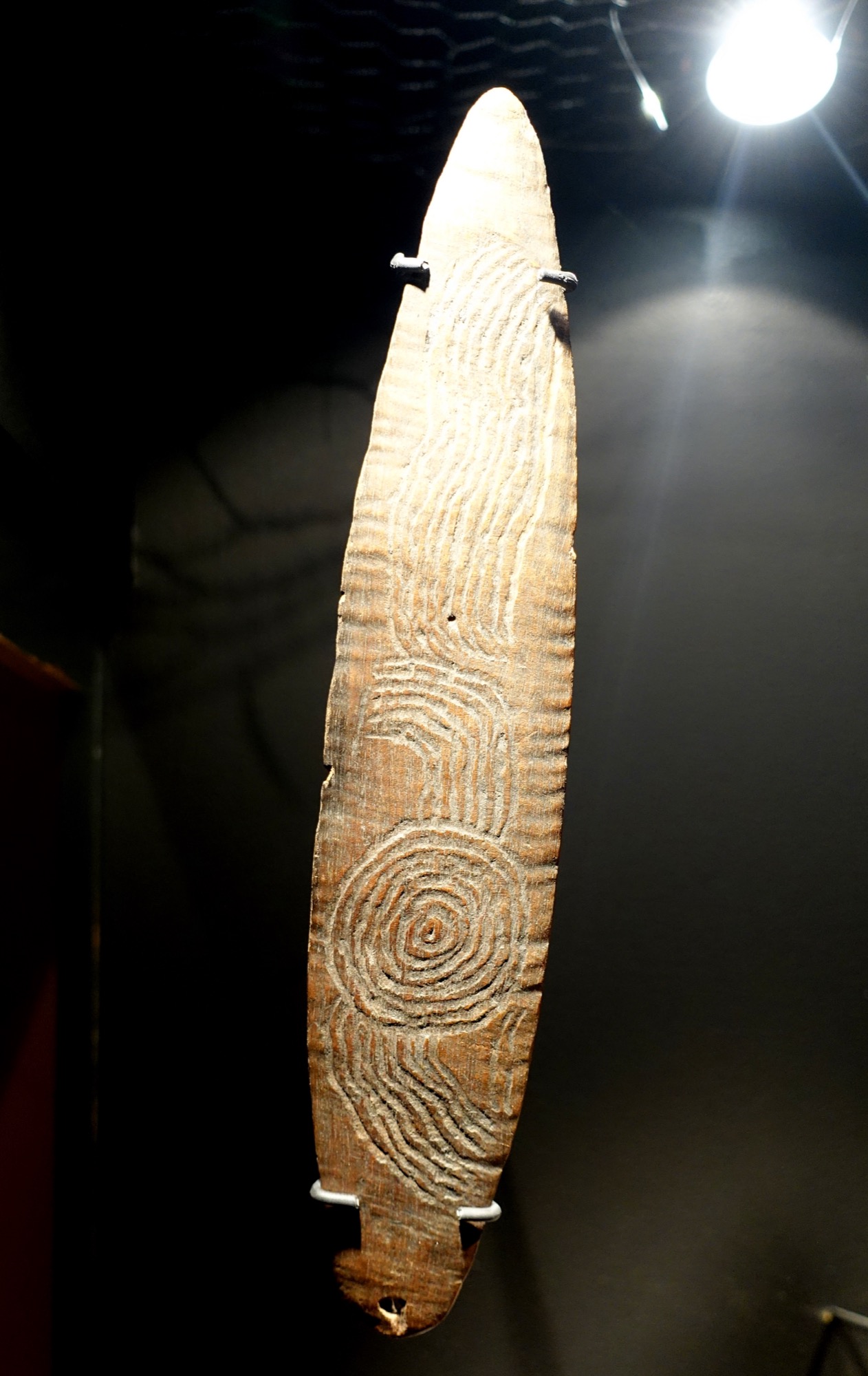
On Cape York a girl finds the first bullroarer. In the Wik-Mungkan story Ursula McConnel heard, she picks the moiya up from a riverbed and sets it sounding. Then it passes into the men’s initiation and becomes forbidden to women. Discovery and taboo sit in one story. A girl made the first sound, and that is why no woman may approach it. The secrecy is severe because the story under it is so clear.
What the continent shows
The repetition is the finding
No single myth carries the whole continent. The repetition does. Arnhem Land says the roar is the Mother’s own voice after her death. Port Keats says the hidden roar is the voice of the Mother and that the rite men now perform began with her. The Djanggawul cycle says women were the source of the sacred bags and ceremonial law; the Wawilak cycle says women first sang, danced, and transmitted the rites men later claimed. The Warlpiri say the bullroarers are the Two Sisters themselves. The Mungarai say Kunapipi women sounded the boards until Kumkum took them. The Arrernte say the small bullroarer once belonged to women. The Wik-Mungkan say a girl found and first sounded it before it became a male initiation secret.
| Region / people | Female prior claim | Ritual result |
|---|---|---|
| Kunapipi, Arnhem Land | Mumuna is the voice in the roarer; women are the source of Dreaming business | Men sound the Mother’s surviving cry in initiation |
| Murinbata, Port Keats | Karwadi is the Mother whose voice the roar reproduces | Men replace the Mother with hidden artificial sound |
| Mungarai Kunapipi | Women possess, carry, and sound the boards before Kumkum takes them | Male confiscation inaugurates female exclusion |
| Djanggawul / Wawilak | Sisters own ceremonial law, sacred bags, songs, and rites | Men receive law only after women teach it or lose its portable forms |
| Warlpiri Gadjari | The two bullroarers are the Two Sisters themselves | Novices enter men’s ritual through female sacred beings |
| Arrernte / Wik-Mungkan | Women owned or found the small bullroarer first | Men inherit the instrument together with the ban on women |
The Seven Sisters enter this machinery too. Andagarinja women perform a Seven Sisters drama for a girl in seclusion. Among the Adnyamathanha the rising Pleiades announce malkada, the season for boys’ initiation. At Ooldea the old men play Nyeeruna, who is Orion, the seven Mingari Sisters of the Pleiades, and Baba the Dingo Father, and the drama ends with the subincision of the new men.
The bullroarer is a machine for producing a hidden voice. Hidden from whom? Not from the men who swing it. From women, from children, and from boys before they are taken. The instrument makes an invisible speaker. Australian initiation gives that speaker a woman’s origin and then rations access to her. The whole institution is built to control contact with a power the myths refuse to make male at the source.
Female beings own the voice. Men take custody of it. Boys are pulled from their mothers and put under the stolen voice in seclusion. The rest of the world shows how far this pattern travelled. Australia shows it confessed, with almost indecent clarity.
The charter does not blink
Australia remembers the men’s initiation complex as stolen female property: women first owned, carried, or embodied the sacred voice, and men made initiation by taking it.
The board is her voice. The law was in her bag. The two roarers are the Sisters. The men say they took what belonged to women. New Guinea carries the confession north and gives the murdered inventor’s board a name.
Key sources
- R. M. Berndt, Kunapipi: A Study of an Australian Aboriginal Religious Cult (Melbourne: Cheshire, 1951), pp. 55, 87–88, 146–148, 160.
- R. M. Berndt, Djanggawul: An Aboriginal Religious Cult of North-Eastern Arnhem Land (London: Routledge and Kegan Paul, 1952), introduction and pp. 40–41.
- W. Lloyd Warner, A Black Civilization: A Social Study of an Australian Tribe (New York: Harper, 1937), pp. 259, 291; the teaching passage is reproduced and discussed in Knight, Blood Relations, chapter 13.
- W. E. H. Stanner, On Aboriginal Religion (Sydney: Oceania Monographs, 1966; open reprint, Sydney University Press, 2014), printed pp. 4–8; see also L. R. Hiatt’s introduction, pp. xxxiv–xxxv, for Karwadi as swallowing Mother, novice revelation, and blood symbolism.
- Baldwin Spencer, Native Tribes of the Northern Territory of Australia (London: Macmillan, 1914), pp. 213–218, for the Mungarai Kunapippi tradition and Kumkum’s seizure of the women’s bullroarers.
- A. W. Howitt, The Native Tribes of South-East Australia (London: Macmillan, 1904), fig. 37, p. 628, for the Kurnai Tundun and Rukut-Tundun.
- Stephen Wild, “Men as Women: Female Dance Symbolism in Walbiri Men’s Rituals”, Journal for the Anthropological Study of Human Movement 4, no. 3 (1987): 166–183.
- Géza Róheim, The Eternal Ones of the Dream (New York: International Universities Press, 1945), p. 175, and Children of the Desert: The Western Tribes of Central Australia (New York: Basic Books, 1974), pp. 138–142, for the alknarintja songs.
- Baldwin Spencer and F. J. Gillen, The Native Tribes of Central Australia (London: Macmillan, 1899), fig. 20.
- Erhard Eylmann, Die Eingeborenen der Kolonie Südaustralien [The Natives of the Colony of South Australia] (Berlin: D. Reimer, 1908), Plate XXXI.
- Ursula H. McConnel, “Myths of the Wikmunkan and Wiknatara Tribes: Bonefish and Bullroarer Totems”, Oceania 6, no. 1 (1935): 66–93, especially pp. 80–83.
- Dianne Johnson, “Interpretations of the Pleiades in Australian Aboriginal Astronomies”, Proceedings of the International Astronomical Union 7, S278 (2011): 291–297, especially pp. 293–294.
- Trevor M. Leaman and Duane W. Hamacher, “Aboriginal Astronomical Traditions from Ooldea, South Australia, Part 1” (2014), pp. 185, 188–191.
- Chris Knight, Blood Relations: Menstruation and the Origins of Culture (New Haven: Yale University Press, 1991), chapters 12–13.